All posts by imreal

In Vitro Sciences Sets Growth Plan for Arizona


News Image

“In Vitro Sciences has been actively looking for partners who share our mission of creating widespread access to the highest quality care for patients facing fertility issues. Advanced Fertility Care has an excellent reputation in Arizona so it’s only natural to combine efforts to help them achieve

In Vitro Sciences (IVS), a prominent network of fertility centers, recently acquired a majority interest in Advanced Fertility Care (AFC), an advanced reproductive services (RE) facility operating in the greater Phoenix area. The two entities are joining forces to expand the availability of RE services to expectant families throughout Arizona and the greater Southwest.

This partnership between IVS and AFC is unique to the specialty in that it will leverage IVS’s affiliation with Women’s Health USA (Whusa), a widely-recognized network of more than 600 ObGyn providers across the nation, including 50 providers in the Phoenix metropolitan area, to drive a new model of comprehensive and high-quality care delivery between obstetrics and fertility services.

Brian Pskowski, President of In Vitro Sciences, commented “In Vitro Sciences has been actively looking for partners who share our mission of creating widespread access to the highest quality care for patients facing fertility issues. Advanced Fertility Care has an excellent reputation in Arizona so it’s only natural to combine efforts to help them achieve their – and our – next level of expansion. We look forward to applying our respective strengths to advancing the care coordination in the reproductive field.”

Dr. Nathaniel Zoneraich, FACOG, the founder and lead physician for AFC, is energized by the new arrangement. “We’ve known for some time about the potential we have to expand our leadership in the Arizona market and beyond. IVS brings us the tools and bench strength to help us realize that goal more quickly. Together we will focus on broadening our strategies to better meet referring ObGyn demand and maximizing quality and convenience of patient care coordination.”

Under this new partnership, the entities will also begin to work on a best approach for geographic expansion throughout the region and on deepening the ancillary services they provide.

Advanced Fertility Care (AFC) serves patients from all over Arizona with the latest fertility treatment options including IUI, IVF, ICSI, embryo biopsy and genetic testing. With primary offices in Scottsdale and Mesa, AFC consistently demonstrates high pregnancy success rates, enabled by the best technology and treatment protocols available. AFC has been recognized as a Center of Excellence by every major insurer.

With a 22-year history in the fertility arena and a comprehensive suite of business management services, In Vitro Sciences (IVS) partners with reproductive endocrinology practices across the United States. IVS got its start in partnership with Women’s Health USA, a national management service organization supporting more than 600 ObGyn providers around the U.S., with more than 50 in Arizona alone. The two entities partner to offer strategic management services for independent practices, including: implementing creative growth strategies supporting streamlined operational costs, payer alignment, merger and acquisition plans, marketing, and risk management services. Its unique partnership model enables physicians and physician groups to maintain their independence while leveraging the resources of a national organization.

Share article on social media or email:

A systems approach to medicine at WesternU’s Pumerantz Lecture


https://www.prweb.com/

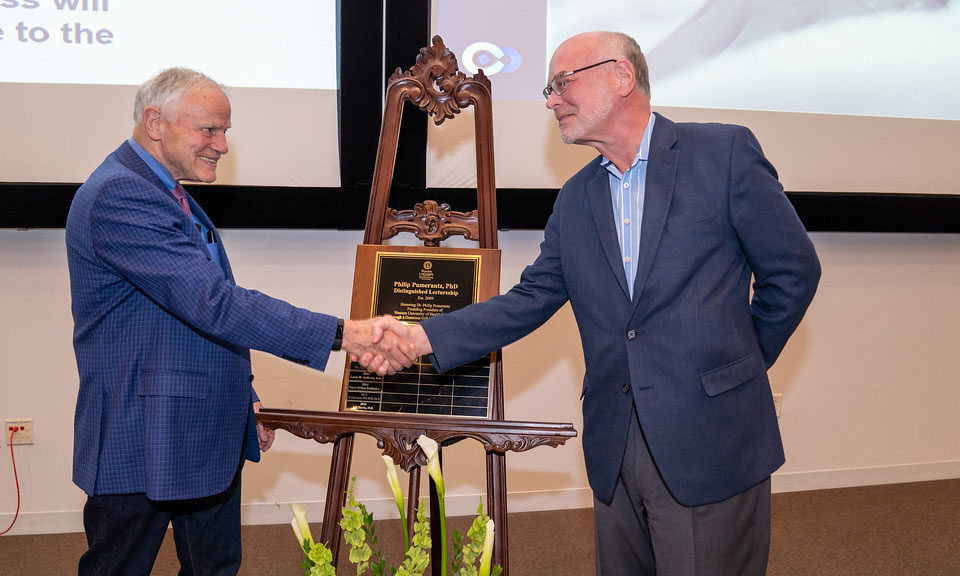
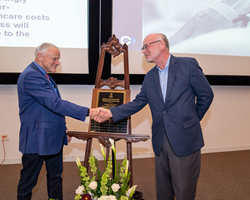
Pumerantz Lecture keynote speaker Leroy E. Hood, MD, PhD, (left) and Western University of Health Sciences President Daniel R. Wilson, MD, PhD. (Jeff Malet, WesternU)

The future of medicine in the 21st century will focus on wellness, mapped and tracked down to the genetic level, resulting in people living longer, healthier lives. But it will be up to each individual to make healthy choices and maximize their extra time on earth.

Leroy E. Hood, MD, PhD, Chief Strategy Officer and Co-Founder of the Institute for Systems Biology and Senior Vice President and Chief Science Officer for Providence St. Joseph Health, served as the keynote speaker at Western University of Health Sciences’ 11th annual Dr. Philip Pumerantz Distinguished Lectureship Oct. 3, 2019 in Pomona, California.

Hood participated in seven paradigm changes in biology that set the foundation for modern molecular biology, including the development of the automated DNA sequencer. He played a significant role in the Human Genome Project, an international effort to map and understand all the genes of human beings. He co-founded the Institute for Systems Biology in 2000.

“Systems biology is this fascinating idea that when you look at biological complexity and study it, you can’t do it one gene or one protein at a time,” Hood said. “You have to think about it in terms of the systems that operate in the biological organism and how you can assess whole systems and not just whole genes.”

Hood and his collaborators pioneered techniques in systems approaches to biology and disease. He developed systems medicine as the fundamental tool for dealing with the complexity of pathology and the idea that health care should be predictive, personalized preventative and participatory (P4 medicine).

In the past 100 years, medicine underwent two big paradigm changes. The Flexner Report, published in 1910, reviewed medical education in the U.S. and Canada and found much of it to be abysmal. As a result, many medical schools closed and the profession turned to science to train physicians and treat patients, Hood said. The sciences in the 20th century created medicine that focused on identifying and fixing disease but ignored wellness, he said.

The next paradigm change is happening now, with a more global approach toward the complexity of disease. P4 medicine is strikingly different from contemporary medicine in almost every way, Hood said. It is proactive, not reactive, and is all about the individual.

“Everyone is going to be uniquely treated and uniquely assessed,” Hood said. “It’s really about understanding wellness, understanding disease, and understanding the transitions between the two so you can reverse them immediately.”

What systems biology gave systems medicine was two important intellectual concepts. One is dense phenotyping, where billions of measurements are taken on an individual to provide a key to understanding that person’s wellness and disease, and the transitions between the two. The second realization is that complex biological systems operate by virtue of biological networks that are interactions of proteins and other informational molecules that are the mediators of development, of physiological responses and of aging, and if they become disease-perturbed, they cause disease.

“If you can see how a disease-perturbed network differs from its normal counterpart, you get deep and fundamental insights into how to create biomarkers that can detect the disease or drug targets that might be able to cure the disease,” Hood said. “The networks can be derived from the dense phenotyping measurements that you make. So the two are beautifully interrelated.”

This P4 approach can change how clinical trials are performed, Hood said. The fundamental assumption made in all trials is each of the individual units (humans) are identical. But we are not identical. We are different genetically and environmentally, he said.

“We think that clinical trials in the future ought to be done as N-of-1 (single subject) experiments,” Hood said. “In a cancer trial we can use the individual data clouds to actually identify biomarkers that distinguish the responders from the non-responders. Then what we will do is a second trial of 50 patients with all responders. And if you get a 98 percent response rate, the FDA will approve your drug in the blink of an eye. You go from spending $1.5 billion on a clinical trial to spending hundreds of thousands of dollars on a clinical trial.”

Hood and his collaborators completed a study that used dynamic data clouds to improve wellness. “A wellness study of 108 individuals using personal, dense, dynamic data clouds,” published in Nature Biotechnology in 2017, involved collecting the complete genome sequences of 108 volunteers, including Hood. The subjects each gave blood draws every three months to measure 1,200 analytes of three classes: clinical chemistries, metabolites and proteins. They measured gut microbiome every three months and used Fitbit and other devices for digital health measurements.

“What these gave us for each individual was longitudinal data clouds that, when analyzed, led to actionable possibilities that if executed by the individual could either improve their wellness and/or let them ameliorate or avoid disease,” Hood said. “The big question in all of this is: How do you change social behavior? What we used were wellness coaches, trained in psychology and nutrition and nursing, who were magnificent. They would elicit from the individual exactly what they wanted in their health objectives, and this is not easy to do.”

Hood said he has a “gruesome family history of cardiovascular disease, diabetes and Alzheimer’s. Those are things you want to be aware of as you’re optimizing your wellness. I lost weight really easily by looking at my genetics and seeing how optimally I can eat to lose weight without really dieting.

“I changed my exercise regiment,” Hood added. “You can look at your genes and see how to optimize your energy output. You can use continuous glucose monitoring to experiment with different foods and what they do to your glucose level.”

His participation led to one realization.

“Wellness or health is all about you,” Hood said. “That participatory piece is really critical.”

Those who participate in scientific wellness and have data prior to the diagnosis of any disease can have that data used as a baseline, allowing health care practitioners to detect early transition points from analytes, disease-perturbed networks, and other factors, Hood said.

“I would say in a five-year period, we will have the diagnostic earliest markers for virtually all of the major chronic diseases, and we will be well on the way to using those markers to determine what therapeutic targets we can hit at that earliest transition point,” Hood said. “It’s going to be an extreme form of preventive medicine in the 21st century. This changes us to this new N-of-one approach to disease, where your wellness is specified by your early parameters. We will see your transitions and we will be able to see the increase in networks, and we will look for the therapies that can reverse the earliest kinds of transitions.”

In 2007, for the first time, half the children born can expect to live to be 100, Hood said. This generation will have to go through a series of job transitions as they age so they have enough money in their later years.

“I think what the 21st century will give you is the ability to age really well, and to be well,” Hood said. “Also, the ability to see early transitions to disease and reverse them. This is going to staggeringly reduce the cost of health care.

“Alzheimer’s costs us half a trillion dollars a year today,” Hood added. “Suppose in five years we’ve reduced it to 10 percent of what we have now. You’re talking about hundreds of billions of dollars in savings.”

Health care systems also will change.

“As we migrate to wellness, we’re going to migrate from big hospitals, with complicated buildings, to the home,” Hood said. “We are going to have a tricorder in 10 or 15 years that can prick your thumb and make 5,000 measurements on a drop of blood, send that information to an analytics center, and they will send it to your coach and to your physician.

You will get everything done at home easily, checking it once a month or two months.

“The really important point is you are going to have a chance, all of you, to live a lot longer,” Hood said. “Take advantage of it.”

The lectureship, in honor of WesternU Founding President Philip Pumerantz, PhD, is made possible by a gracious donation from the Sarkaria family of Orange, California.


KnowBe4 Launches New Multi-Factor Authentication Security Assessment Tool


This new tool is intended to assist organizations in their overall security program analysis by revealing how MFA can be maliciously hacked in a number of ways. -Roger Grimes, data-driven defense evangelist, KnowBe4

KnowBe4, the provider of the world’s largest security awareness training and simulated phishing platform, today announced a new complimentary tool called the Multi-Factor Authentication Security Assessment (MASA), which provides security professionals with advice on implementing a multi-factor authentication (MFA) strategy as well as practical advice on how to defend against MFA hacks.

According to Deloitte’s Addressing Cyber Threats: Multi-Factor Authentication for Privileged User Accounts report, 48% of cybersecurity breaches are not preventable by strong multi-factor authentication, leaving the MFA open to be hacked.

MASA is a survey-based tool that security professionals use by answering relevant technology questions about how their MFA solution works. MASA then uses those answers to determine that individual’s particular risks. The tool generates a summary report that highlights the specific risks that the particular MFA solution has with best practice information and recommendations on how to better defend the environment.

“Implementing MFA is usually a security improvement over single-factor authentication, however, like any security solution, it’s still hackable,” said Roger Grimes, data-driven defense evangelist, KnowBe4. “This new tool is intended to assist organizations in their overall security program analysis by revealing how MFA can be maliciously hacked in a number of ways. By providing security professionals with this information, we hope to better inform them of the decisions they make when it comes to security.”

This tool was authored by Grimes. He has over 30 years of experience in computer security and has provided risk assessments to some of the world’s largest companies.

For more information on KnowBe4’s Multi-Factor Authentication Security Assessment tool, visit https://www.knowbe4.com/multi-factor-authentication-security-assessment.

About KnowBe4

KnowBe4, the provider of the world’s largest security awareness training and simulated phishing platform, is used by more than 28,000 organizations around the globe. Founded by IT and data security specialist Stu Sjouwerman, KnowBe4 helps organizations address the human element of security by raising awareness about ransomware, CEO fraud and other social engineering tactics through a new-school approach to awareness training on security. Kevin Mitnick, an internationally recognized cybersecurity specialist and KnowBe4’s Chief Hacking Officer, helped design the KnowBe4 training based on his well-documented social engineering tactics. Tens of thousands of organizations rely on KnowBe4 to mobilize their end users as the last line of defense.

Number 161 on the 2019 Inc. 500 list, #34 on 2018 Deloitte’s Technology Fast 500 and #2 in Cybersecurity Ventures Cybersecurity 500. KnowBe4 is headquartered in Tampa Bay, Florida with European offices in England, the Netherlands, Germany and offices in Brazil, Australia, Japan, South Africa and Singapore.

Share article on social media or email:

Industrial Internet Consortium Smart Factory Machine Learning for Predictive Maintenance Testbed Enters Phase 3 with Commercial Deployment


With predictive maintenance, operators can be alerted before system failure, and in some cases without operator interaction, avoiding costly unplanned downtime and improving energy efficiency.

The Industrial Internet Consortium® (IIC™) today announced that its Smart Factory Machine Learning for Predictive Maintenance Testbed has successfully completed phases 1 and 2 is entering into phase 3 with a commercial deployment. This testbed is deployed at a tier one automotive OEM, was granted two US patents, was featured in a recent book and profiled in two peer-reviewed technical journals.

IIC members Aingura IIoT and Xilinx developed the testbed to evaluate and validate machine learning techniques for predictive maintenance of high-volume production machinery. The testbed has been successfully deployed to production environments at machining and automotive OEM manufacturing facilities. Machine learning techniques enable these facilities with high-volume machinery to move away from regularly scheduled preventative maintenance to predictive maintenance for optimized system operation and asset utilization.

“Today’s methodology of preventative maintenance is not cost efficient and doesn’t address problems that lead to system failure,” said Dan Isaacs, IIC Testbed Lead, and Director of Customer Marketing, Xilinx. “With predictive maintenance, operators can be alerted before system failure, and in some cases without operator interaction, avoiding costly unplanned downtime and improving energy efficiency. With the Zynq UltraScale+ MPSoC at the heart of Aingura IIoT’s system Aingura Insights, both sensor hub, Time Sensitive Networking (TSN) and machine learning functionality are performed efficiently and effectively, all within a single device.”

“This testbed focuses on exploring the application of machine learning techniques and algorithmic approaches using new innovative technology,” said Javier Díaz, IIC Testbed Lead, and CTO at Aingura IIoT. “With proper analysis, the information can provide a wealth of insight into a company’s system operations, overall operating and maintenance costs. Furthermore, companies can pass the savings they achieve during product manufacturing on to their customers.”

The testbed team was granted two US Patents US20180253084A1, US20180253084A1 for “Device and system including multiple devices for supervision and control of machines in industrial installation.” The testbed is mentioned in a book entitled, “Industrial Applications of Machine Learning,” of which Diaz is an author. The testbed results are also published in the Journal of Innovation, “Making Factories Smarter Through Machine Learning,” and IEEE Journal, “Clustering of Data Streams with Dynamic Gaussian Mixture Models: An IoT Application in Industrial Processes,” May 24, 2018.

About the Industrial Internet Consortium

The Industrial Internet Consortium is the world’s leading membership program transforming business and society by accelerating the Industrial Internet of Things (IIoT). The IIC delivers a trustworthy IIoT in which the world’s systems and devices are securely connected and controlled to deliver transformational outcomes. The Industrial Internet Consortium is a program of the Object Management Group (OMG). For more information, visit http://www.iiconsortium.org.

Note to editors: Industrial Internet Consortium is a registered trademark of OMG. For a listing of all OMG trademarks, visit http://www.omg.org/legal/tm_list. All other trademarks are the property of their respective owners.

Share article on social media or email:

Fitness Machine Technicians Enters Sacramento and Northern California


News Image

Fitness is an important part of life, and we’re looking forward to offering a service that enables people to partake in a workout with peace of mind, knowing their equipment is running at its best.

Fitness Machine Technicians, specialists in the maintenance and repair of exercise equipment for corporate gyms, universities, hotels, apartment complexes, and private residences, announced today it is expanding into Northern California. The local owners are husband and wife team Bart and Joy Stevans of Sacramento.

Fitness Machine Technicians offers service/repair and maintenance on a variety of exercise equipment on a contract and non-contract basis. The company is headquartered in Philadelphia and currently operates in more than 70 markets across the country.

Bart and Joy are lifelong Californians. They grew up in Northern California and met at Pepperdine University where they received degrees in History and English. Bart spent his career as a regional manager with Nordstrom, overseeing a large team of IT technicians. Joy homeschooled their five daughters and continues to teach locally. Together, Bart and Joy bring years of expertise in customer service and a deep knowledge of the region to their new venture – Fitness Machine Technicians.

“Fitness is an important part of life, and we’re looking forward to offering a service that enables people to partake in a workout with peace of mind, knowing their equipment is running at its best,” says Joy. “It’s also a great opportunity for us to share our passion for customer service – we strive to treat everyone with respect,” adds Bart.

CEO & Founder Don Powers notes, “Bart and Joy are exceptional people with a real sense of what it means to run a successful business. It’s refreshing to see their commitment to the service we offer and we’re thrilled to have them on board.”

For more information about having a fitness machine or exercise facility serviced, please contact Bart and Joy Stevans at 916-526-7072 or visit http://www.FitnessMachineTechnicians.com/NorCal.    

About Fitness Machine Technicians

Fitness Machine Technicians specializes in the maintenance and repair of equipment for commercial and home exercise facilities. Clients include health clubs, corporations, hotels, condos, education, government, and residential homes across the United States. Fitness Machine Technicians also offers franchise opportunities to individuals with an interest in fitness and looking to run a service-based business based on a proven operating model. For more information, visit the website at http://www.FitnessMachineTechnicians.com or call 844-FMT-FIXX.

Share article on social media or email:

TPA Partnership with Medical Travel Program is Saving Plan Members Up to 80%


Cypress Benefit Administrators

This program not only gives plan members an option to save substantially on surgical care, but it also provides access to some of the most skilled specialists in the world.

A third party administrator (TPA) specializing in self-funded benefits, Cypress Benefit Administrators, a Lucent Health Company, has announced that its newly formed partnership with SkyMedicus is saving the health plans it manages as much as 80% when members travel internationally for medical care.

With this collaboration, Cypress employer-clients are able to offer their employees an option for top-quality care outside the U.S. through carefully credentialed providers and facilities that meet Joint Commission International (JCI) standards and save them significant amounts of money in the process. Surgical procedures are costing considerably less through the network of international providers selected by SkyMedicus, and this medical travel program – also referred to as medical tourism – is eliminating much of the members’ responsibilities for out-of-pocket and deductible costs.

Some of the average savings rates Cypress plan participants are experiencing through SkyMedicus on commonly performed procedures include knee replacements (67%), hip replacements (68%), rotator cuff (70%), gastric bypass (63%), coronary bypass (83%) and angioplasty with stent (42%). Plan participants are also realizing savings on more alternative treatment options for things like cancer care and stem cell therapies.

A TPA since 2000, Cypress has long operated with a focus on containing health benefit costs while still offering top-quality care on behalf of its employer-clients and their employees. The medical travel program has been a solution that addresses both.

“This program not only gives plan members an option to save substantially on surgical care, but it also provides access to some of the most skilled specialists in the world,” explained Tom Doney, president of Cypress. “In working together, we found that SkyMedicus goes through an extremely diligent vetting process and only accepts facilities with a hospital-acquired infection rate of 2% or less.”

As one savings example, SkyMedicus shared that a patient who required surgery for the removal of a large, precancerous breast mass and reconstruction was quoted approximately $18,750 for two separate procedures in the U.S. Using the medical travel program, she was able to have a single procedure done in El Salvador for $6,970 with all travel accommodations included and the deductible waived.

In addition to procedures being coordinated on their behalf, Doney explained that Cypress health plan members benefit from having other corresponding care needs/consults arranged, medical records transferred and travel/lodging accommodations planned. All international locations included in the medical travel program’s network are also visited and assessed for safety before being accepted.

“We are extremely pleased with the results the SkyMedicus program has had for our self-funded clients so far, and the Cypress team is excited to see how this partnership will evolve,” Doney shared.

About Cypress Benefit Administrators

Cypress Benefit Administrators, a Lucent Health company, has been pioneering the way toward cost containment in self-funded health benefits since 2000. Privately held and headquartered in Appleton, Wis., the third party administrator (TPA) is the country’s first to bring claims administration, consumer driven health plans and proven cost control measures together into one package for companies ranging from 50 employees to thousands of employees. It serves employer-clients across the U.S. with additional locations in Portland, Ore., Omaha, Neb. and Denver, Col. For more information on Cypress and its customized employee benefits, visit http://www.cypressbenefit.com.

Share article on social media or email:

AssuredPartners Acquires Ventura Pacific Insurance Services


News Image

“We feel this team is a great partner for us in a great territory. They value cultivating relationships with customers, and we look forward to collaborating with their team of experts,” stated AssuredPartners President and COO Tom Riley.

AssuredPartners, Inc. is pleased to announce the acquisition of Ventura Pacific Insurance Services located in Agoura Hills, CA. The team of 9 will remain under the leadership of Vincent Lopez and Keith Tisherman while the operation structure will report into Tolman & Wiker Insurance Services. Tolman & Wiker of Ventura, California recently joined AssuredPartners and will continue to operate their multiple locations while integrating Venture Pacific into the fold. The agency currently reports $1.6 million in annualized revenues.

“Ventura Pacific Insurance Services has 50 years of combined experience in providing personal and commercial insurance. We are dedicated to offering our clients the best available products and advice,” stated Vincent Lopez. “We are excited to join AssuredPartners and we believe that a larger partner allows us to better service our clients as we continually strive to provide quality services,” said Keith Tisherman.

AssuredPartners Regional President Mike Paschke stated, “Ventura Pacific Insurance Services possesses a strong dedication to understanding their client’s needs. We are pleased to have new members added to our growing team who are knowledgeable and passionate in delivering customer service excellence and industry expertise.”

“We would like to welcome the staff and clientele of Ventura Pacific Insurance Services to AssuredPartners,” stated AssuredPartners President and COO Tom Riley. “We feel this team is a great partner for us in a great territory. They value cultivating relationships with customers, and we look forward to collaborating with their team of experts.”

For more information on Ventura Pacific Insurance Services, please visit:

http://www.venturapacificinsurance.com.

ABOUT ASSUREDPARTNERS, INC

Headquartered in Lake Mary, Florida and led by Jim Henderson and Tom Riley, AssuredPartners, Inc. acquires and invests in insurance brokerage businesses (property and casualty, employee benefits, surety and MGU’s) across the United States and in London. From its founding in March of 2011, AssuredPartners has grown to over $1.2 billion in annualized revenue and continues to be one of the fastest growing insurance brokerage firms in the United States with over 250 offices in 30 states and London. For more information, please contact Dean Curtis, CFO, at 407.708.0031 or dean.curtis@assuredpartners.com, or visit http://www.assuredpartners.com.

Share article on social media or email:

Anvyl Appoints Executive Leader to Prepare for Next Stage of Growth


https://www.prweb.com/

Bill Hobbs joins Anvyl as CRO

“The innovative platform Anvyl has built will transform the landscape of how companies manage and optimize supply chains. I am excited to work with Rodney and the Anvyl team to rapidly scale the business and deliver actionable supply chain solutions that drive transformational efficiency.” – Bill H.

Anvyl, an intelligent supply chain platform delivering automation and predictive analytics to the world’s largest global supply chains, announced the appointment of Bill Hobbs as Chief Revenue Officer. In this role, Hobbs will be responsible for go-to-market operations, expanding Anvyl’s presence globally. Hobbs’ appointment follows the company recently being named a Forbes Cloud 100 Rising Star and the completion of its Series A round of funding led by Redpoint Ventures.

“Over the past year, Anvyl has continued to grow at an accelerated pace, doubling our revenue and customer count, and launched a new Production Hub platform for those responsible for supply chain workflow across retail, DTC, and manufacturing companies,” said Rodney Manzo, CEO and Co-Founder of Anvyl. “As we enter another growth phase, Bill’s expertise in building top-line customer success, sales, and marketing teams and developing tested go-to-market product strategies will be critical.”

Recognized as one of the Top 100 Global Sales Leaders and Customer Success Strategists, Hobbs has built top-performing business units in the Fortune 500 world, led large-scale business transformations optimizing supply chains in manufacturing and distribution, and delivered consistent growth for software companies in New York and Silicon Valley. Prior to Anvyl, Hobbs led global sales at Totango, a leading enterprise customer success software company.

“Working with Anvyl allows me to not only leverage my experience in software transformation, but also apply much of the supply chain experience I gained while working in manufacturing and distribution,” Hobbs said. “The innovative platform Anvyl has built will transform the landscape of how companies manage and optimize supply chains. I am excited to work with Rodney and the Anvyl team to rapidly scale the business and deliver actionable supply chain solutions that drive transformational efficiency.”

About Anvyl:

Anvyl’s Intelligent Supply Chain Platform streamlines supply chain communication, automates workflows, and delivers real-time production analytics from order to delivery. Companies across the globe use Anvyl to mitigate risk across their supply chains and save millions of dollars in operational costs. Anvyl’s digital platform delivers transparency across the supply chain, surfaces key production insights for users, and provides predictive analytics to improve operational efficiency. A variety of customers across manufacturing and distribution rely on Anvyl for their operational success from COOs, global supply chain managers, and procurement leaders. You can find more information and see customer examples at anvyl.com/customers.

Share article on social media or email:

New Laboratory of Industrial Fluidic Translation (LIFT) to Develop Microfluidic Device Tests for the Diagnostic Market


Cryopak Canada and Launchworks Manufacturing Lab are announcing a collaboration with the National Research Council of Canada (NRC) to create the Laboratory of Industrial Fluidic Translation (LIFT).

New Laboratory of Industrial Fluidic Translation (LIFT) to Develop Microfluidic Device Tests for the Diagnostic Market

“The NRC’s 20 years of experience in scientific development combined with Launchworks ISO 13485 manufacturing capabilities will provide point-of-care diagnostic companies a complete and cost-effective service solution,” said Jeff Kelly, VP of Corporate Development for Cryopak.

Cryopak Canada and Launchworks Manufacturing Lab are announcing a collaboration with the National Research Council of Canada (NRC) to create the Laboratory of Industrial Fluidic Translation (LIFT). By joining their knowledge in nanofabrication and lab-on-a-chip technologies and in manufacturing, LIFT will offer a competitive capacity to accelerate the creation, certification and deployment of microfluidic bio-devices, a one-stop shop expertise and service not available in North America.

LIFT will support the diagnostic device industry’s objectives by combining the NRC’s expertise in sciences, materials, and design with Launchworks’ expertise in cGMP and ISO 13485 manufacturing at clinical and industrial scale. Through this partnership, the organizations will work with diagnostic companies to translate microfluidic application ideas into workable devices.

“Microfluidic diagnostic companies are driving device development to be faster, easier to use and more cost effective,” said Jeff Kelly, VP of Corporate Development for Cryopak. “The NRC’s 20 years of experience in scientific development combined with Launchworks ISO 13485 manufacturing capabilities will provide point-of-care diagnostic companies a complete and cost-effective service solution to rapidly bring their ideas to successful commercialization.”

Design and development will be done at the NRC in Montréal, with manufacturing to be done initially at the LaunchWorks facility in Beverly, MA, and plans to develop an additional manufacturing facility with Cryopak Canada in the near future. Cryopak and LaunchWorks are affiliate companies both owned by TCP Reliable.

For further information, please visit http://www.LaunchWorksML.com, http://www.cryopak.ca, or https://nrc.canada.ca/en

Share article on social media or email:

UMD Researcher Discovers a New Mechanism in the Liver that Helps Prevent Invasive Fungal Infections


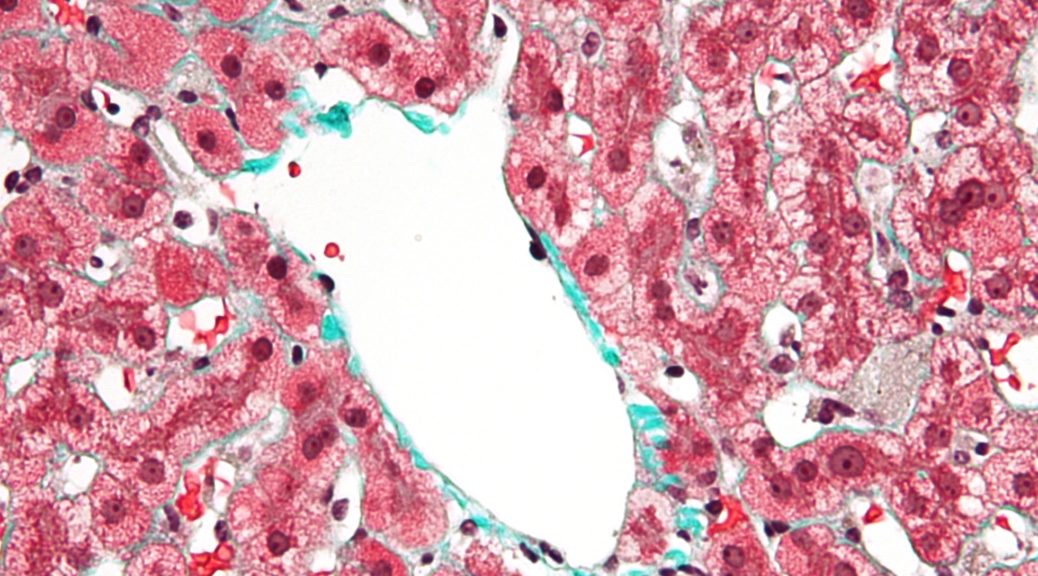
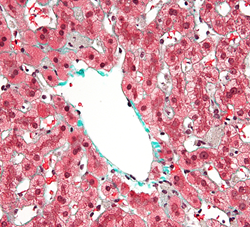
Liver macrophage cells

Liver macrophage cells, Credit: Nephron

“This is a protective mechanism that is working once the fungus becomes invasive, or gets into the bloodstream, to prevent it from spreading. Stopping the dissemination process throughout the body is so important, because once you get dissemination, you get the disease.”

As a world-renowned expert using intravital microscopy to observe fungal infection progression in live samples, Meiqing Shi, associate professor with the University of Maryland Department of Veterinary Medicine, continues to make new breakthroughs in the field. In his latest paper published in Nature Communications, Shi and his lab have discovered a new pathway by which liver macrophages called Kupffer cells (KCs) capture potentially fatal fungi in the bloodstream before dissemination to target organs like the brain or kidney. This mechanism not only provides an explanation as to why individuals with liver disease tend to have enhanced risk of contracting fungal infections, but it also points to therapeutic options that could be used in the future to prevent fungal dissemination and invasive fungal infections, which kill 1.5 million people worldwide each year.

“Under intravital microscopy, we can directly see how the KCs catch fungi in real time,” says Shi. “This is a protective mechanism that is working once the fungus becomes invasive, or gets into the bloodstream, to prevent it from spreading. Stopping the dissemination process throughout the body is so important, because once you get dissemination, you get the disease. These findings suggest therapeutic strategies for preventing dissemination, and this could be applied across many types of fungal infections, since they work in similar ways.”

Fungal infections affect 1.2 billion people globally each year. In the current paper, Shi specifically examined two types of fungi – Cryptococcus neoformans and Candida albicans. Both of these fungi, if disseminated to their target organs (the brain for Cryptococcus and the kidney for Candida), are fatal infections that are very difficult to treat once contracted. Cryptococcus, for example, is the main cause of meningitis. Each year, more than a million people are infected and contract meningitis, and 60% of those who are infected will die from the disease.

“Cryptococcus and Candida are fungi that are actually everywhere,” says Shi. “People with healthy immune systems can usually control the fungi after infection, but once it gets into the bloodstream, either one of these fungi can get into the target organs and become fatal. For Cryptococcus, this is especially a problem for those with impaired immune systems, like HIV patients or organ transplant patients. Patients with liver disease are also more prone to Cryptococcus infection, and no one understood why before.”

This new discovery that KCs or liver macrophages are responsible for catching free fungi in the bloodstream to prevent further dissemination helps explain this phenomenon, since if the liver is impaired as it is in patients with liver disease, it would stand to reason that this protective mechanism would also be impaired.

“This finding is very interesting and very unusual, because in the field of fungal infections, nobody focuses on the liver,” says Shi. “Researchers tend to look at the target organs like the brain or kidney. The liver is not a target organ, but it tries to clean out the fungus in the bloodstream. As the whole body is connected, this paper gives a more whole system approach to how fungal dissemination interacts in the entire body.”

With this whole body approach in mind, the discovery of this mechanism has implications not just for those with liver disease, but for the treatment of fungal infections as a whole by targeting this mechanism, preventing fungal dissemination, and treating invasive fungal infections.

The paper, entitled “Fungal dissemination is limited by liver macrophage filtration of the blood,” is published in Nature Communications, DOI: 10.1038/s41467-019-12381-5.

This work is funded by the National Institutes of Allergy and Infectious Diseases, National Institutes of Health, grant AI131219.

Share article on social media or email: