All posts by imreal

Roll-Kraft Adds Electrical Discharge Machine to Mentor, Ohio, Factory


https://www.prweb.com/

Roll-Kraft’s Newly Installed Sodick EDM Machine

Roll-Kraft has installed a new Electrical Discharge Machine (EDM) on the factory floor at the headquarters facility in Mentor, Ohio. This is the fourth EDM machine at this location and is by far the most technologically advanced. The new machine will allow Roll-Kraft to cut 2-4 times as many rolls in the same amount of time as previous machines.

Roll-Kraft manufactures steel rolls for the tube and pipe and roll forming industry. Many custom-made rolls require keyways and other more intricate profiles to be cut into their rolls. Using more traditional techniques, like broaching, to cut tool steels, was very difficult, time consuming, and not as accurate as the EDM technology. The EDM process saves time and provides excellent, repeatable results. Roll-Kraft prides itself on quality, and the investment in this new machine guarantees the continuation of that tradition.

Roll-Kraft has its headquarters in Mentor, Ohio, and maintains other facilities in Lombard, Illinois (Chicago Roll Company); Houston, Texas (Roll-Kraft Texas); and Ontario, Canada (Roll-Kraft Ltd.). Calls to the company’s main line, (888) 953-9400 or (440) 205-3100, are greeted by a live operator who can assist callers in quickly reaching a technician, engineer, or sales staff, who can provide immediate assistance. The company’s fax number is (440) 205-3110.

Learn more about Roll-Kraft products and services by visiting http://www.roll-kraft.com. For easy and immediate contact with Roll-Kraft that transcends time zones and working hours, the website features an easy-to-use contact form.    

Share article on social media or email:

Windmill International, Inc. Secures Key Contract Extension


Windmill is proud of its three decades of service to NAPMA and is looking forward to continuing this relationship in order help our allies maintain a critical war fighting capability.

Windmill International, Inc. was recently awarded a two-and-a-half-year extension to its existing Acquisition and Program Support Services contract with NAPMA. NAPMA has been one of Windmill’s most important customers for over 30 years.

Windmill serves as a prime contractor to NAPMA under a Multinational Memorandum of Understanding for which the United States is a participant. Working closely with the U.S. Airborne Warning and Control System (AWACS) Program Office at Hanscom Air Force Base, Massachusetts, Windmill provides a wide range of technical and management services in support of mission critical technology upgrades to NATO’s E-3A AWACS fleet. This support includes acquisition and program management, financial management, logistics planning, cost estimating, software, systems and test engineering, configuration management and business operations support. This extension will allow Windmill to continue its successful legacy of support to the base program and to critical aspects of the NATO AWACS Final Life Extension Program (FLEP).

About Windmill International Inc.

For three decades, Windmill International Inc. has been one of the defense industry’s leaders in providing Advisory and Assistance Services (A&AS) to a diverse set of U.S. Defense Department and international defense customers. It delivers comprehensive program management, engineering, logistics and training support to major defense acquisition programs across the globe. A veteran-founded, employee-owned company, Windmill is headquartered in Nashua, NH.

Share article on social media or email:

Rimidi Tackles Obesity Epidemic by Adding Specialized Disease View to its EHR-Integrated Platform


News Image

Obesity is a global epidemic in both children and adults, and it’s associated with numerous comorbidities, which manifest differently in each individual patient.

Rimidi, a cloud-based software platform that enables personalized management of chronic cardiometabolic conditions across populations, today announced a new disease ‘view’ within its platform – obesity. Obesity becomes the fifth disease state being managed within the software, along with type 2 diabetes, heart failure, nonalcoholic fatty liver disease and cardiovascular disease. Rimidi’s platform works within the electronic health record (EHR) to preemptively identify and manage cardiometabolic diseases by combining data from multiple sources into disease ‘views’ that provide a holistic overview of a patient.

The addition of obesity to Rimidi’s platform addresses the evolving policies and care around obesity, as the chronic disease requires increased medical attention. Today, obesity affects nearly 40% of Americans and remains one of the biggest contributors to preventable chronic disease and rising US healthcare costs. In fact, this global epidemic is associated with an increased risk of disease and mortality, and costs anywhere from $147 billion to nearly $210 billion to manage per year.

“Obesity is a global epidemic in both children and adults, and it’s associated with numerous comorbidities, which manifest differently in each individual patient,” said Lucienne Ide, M.D., Ph.D., founder of Rimidi. “With new innovations in healthcare, however, clinicians are better equipped to combat the obesity epidemic head-on. That’s where Rimidi comes into play. By adding this condition into our existing platform, we can empower physicians with the tools and technology they need to better identify patients who may be at risk.”

The Rimidi platform works within the electronic health record (EHR) to support better management of cardiometabolic conditions through distinct disease views. With the addition of the new obesity view, clinicians can better manage patients based off the latest evidence and guidelines, as well as offer virtual care support, such as remote monitoring and digital health education. In addition to consolidating pertinent information from the EHR that impacts clinical decision making, the new view performs the following:

Alerts clinicians to risk factors associated with obesity – including hypertension, type 2 diabetes, sleep apnea, PCOS, depression, thyroid disease and nonalcoholic fatty liver disease – and flags whether standard of care for screening and risk-reduction are being met.

Displays patient’s atherosclerotic-cardiovascular-disease (ASCVD) risk scores so clinicians can easily see patient’s 10-year risk for heart disease or stroke.

Identifies gaps in prescribing standards, including anti-diabetic and anti-obesity medications, lipid lowering agents, ACE inhibitors, ARBs and aspirin.

“As health systems move to value-based contracting, accurately documenting chronic conditions – such as obesity – is not only important for patient care, but also for risk-adjustment payment models,” said Josh Claman, CEO of Rimidi. “With Rimidi, clinical teams will now be prompted when diagnostic codes and biometrics, such as BMI, are discordant, allowing physicians to address Hierarchical Condition Category coding opportunities at the point of care.”

Obesity is now broadly recognized as a chronic disease. Rimidi is aligned with supporting clinicians, patients and payer in recognizing this disease, optimizing its medical management, reducing cardiovascular risk and supporting self-management efforts.

For more information on Rimidi’s Platform View for Obesity, please visit https://rimidi.com/solutions/obesity.

About Rimidi

Rimidi is a cloud-based software platform that enables personalized management of chronic cardiometabolic conditions across populations, with specific views for diabetes, heart failure, fatty liver, cardiovascular disease and obesity. Created by doctors, Rimidi avoids the disconnect in connected care by combining patient-generated health data with EHR systems to drive patient-specific clinical insights and actions. The net effect is a better health system with optimized clinical workflows that enable better decisions, better relationships, better outcomes and ultimately a better healthcare system. For more information, visit rimidi.com and follow us on Facebook, Twitter and LinkedIn.

Media Contact:

Emily Keough

Emily.Keough@rimidi.com

513.240.5352

Share article on social media or email:


RevSpring Announces Digital First Solution for Patient Financial Engagement


The solution takes a more holistic view of the patient’s digital profile and uses digital options early in the financial conversation. Using digital channels first, the patient receives the message three to five days before they would have received a mailed statement.

RevSpring, a leading provider of healthcare financial engagement and payment solutions, announced today a new solution that prioritizes digital delivery in advance of printed communications. This digital-first approach, which is an enhancement to RevSpring’s eVoke™ omni-channel platform, combined with a more strategic balance of printed communications, allows healthcare organizations to shift confidently to digital delivery, which is faster, more easily actionable, and less expensive than print and mail for patient billing and payments.

“People expect digital convenience, flexibility, and ease across work, business, and personal interactions. Yet, in healthcare, digital adoption remains low due to disconnected systems and a reliance on more familiar printed processes,” said Marty Callahan, RevSpring’s president of healthcare. “We’re confident this new solution will close the digital gap in healthcare financial communications to deliver the digital experience that patients want, and providers need, to optimize effectiveness.”

RevSpring’s eVoke platform enables providers to strategically move “digitally forward” by prioritizing digital communication delivery above traditional print and mail. Providing important financial information to patients using SMS/text messages and email allows patients to act on that information sooner and at a lower cost. Because patients who engage digital tend to pay digitally, by reducing lockbox and human-assisted call center payments, providers can carve out costs using more cost-effective channels.

The solution takes a more holistic view of the patient’s digital profile and uses digital options early in the financial conversation. Using digital channels first, the patient receives the message three to five days before they would have received a mailed statement.

In an early pilot of the solution, one provider realized the following immediate results:

  •     Patients receiving a text notification in advance of a paper bill paid their balance 12 days faster.
  •     12.6 percent of patients who made a payment paid their bill before they received a printed statement.
  •     Mobile payments increased, and more patients paid online.

The solution supports digital consent gathered inside and outside of traditional billing and payment channels, such as during registration. Providers can choose to suppress statements that are delivered digitally based on patient preference, and can automatically send the printed content based on patient action. Once engaged digitally, patients are more likely to expect and act on additional communications from digital channels.

To understand market needs, RevSpring frequently surveys providers and patients across the country to understand their goals and obstacles. In recent surveys, the company learned that despite investments in digital communication technology, digital adoption remains low with only eight percent of patients receiving their statements digitally—yet 25 percent prefer digital only. Over 69 percent of patients surveyed said they weren’t offered digital options or don’t remember being offered the option of paperless billing at time of service.

“Digital isn’t right for everyone but knowing the most effective engagement channel and balancing the use of digital and paper communications is the right approach in healthcare,” Callahan added. “We know that providers want digital success to control costs, improve performance, and meet patient expectations. Our intent is to help providers make digital innovations a priority in 2020.”

With more than 1.5 billion pre-and post-service communications sent annually, RevSpring is leading the digital transformation providers want and patients crave. More details on the platform can be found at revspringinc.com/transformingdigitalnow.

About RevSpring

RevSpring leads the market in financial communications and payment solutions that inspire patients to pay. Since 1981, the company has built the industry’s most comprehensive and impactful suite of patient engagement, omni-channel communications and payment solutions backed by behavior analysis, propensity-to-pay scoring, contextual messaging and user experience best practices. Using proprietary data analytics to tailor the engagement from pre-service to post-service, we improve the financial experience and outcomes for providers and their patients.

To learn more, visit revspringinc.com. For information about RevSpring’s focus and leadership in healthcare, visit revspringinc.com/healthcare.

Share article on social media or email:

4 Simple Ways To Train Your Brain and Supercharge Your Daily Routine


News Image

“Meditation trains the brain to be in the present moment,” says Carter “meditation is the ‘bench press’ equivalent for your brain and helps breakdown the neural connections in the brain that induce feelings of fear or anxiety.”

An estimated 80 to 90 percent of patients visit their doctors because of health issues that are traceable to chronic, unmanaged stress. Given recent advances in engineering and medical technology, we now know that the brain is affected by every experience, thought, emotion, and every second of stress. However, there is no magic prescription that works across the board for brain fitness. NATIONAL TRAIN THE BRAIN DAY is observed annually on October 13. What will you do TODAY to Train Your BRAIN?

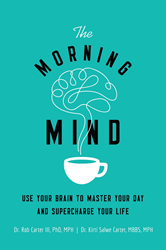
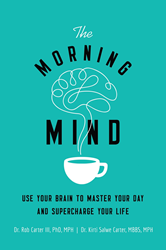
“There are many different ways to train your brain and improve your cognitive skills such as mindful reading, writing, brain teasers, —along with getting enough sleep, physical activity and of course a few minutes of meditation,” says Carter, co-author with his wife, Dr. Kirti Salwe Carter, of The Morning Mind: Use Your Brain to Master Your Day and Supercharge Your Life, Amazon Bestseller & Forbes Best Self-Help. (http://www.themorningmind.com).

Carter offers 4 ways to train your brain and supercharge your life

1. Reflect On What Makes You Happy To Be Alive. “The subconscious responds very powerfully to feeling, and the more of a sensory experience you can make your ref, the more effective it will be,” says Carter “Utilize all your senses, can you see, hear, smell, touch, and taste that happy memory?”

2. Get enough shut-eye. “Sleep is an essential part of physical health,” says Carter “when we sleep, the body performs a vast array of therapeutic and healing functions that detox, repair, and heal the body and brain.”

3. Exercise your body as well as mind. “Take a 15 to 30 minute walk each morning, — or yoga, swimming, dance or do yard work if you prefer,” Carter. “ Exercise stimulates the brain plasticity by stimulating-growth of new connections between cells in a wide array of important cortical areas of the brain.” Carter says, “From a behavioral perspective, the same antidepressant-like effects associated with “runner’s high” found in humans is associated with a drop in stress hormones.”

4. Take control and train your brain with meditation.“Meditation trains the brain to be in the present moment, and to return to that focus when negative thinking and emotions intrude,” says Carter. “Meditation is the ‘bench press’ equivalent for your brain,” says Carter “meditation helps breakdown the neural connections in the brain that induce feelings of fear or anxiety.”

How much of your life do you spend in the present moment? How much time do you spend daydreaming, ruminating about the past, or worrying about the future?

Carter says offers 8 simple steps to happiness and achieving a relaxed state of mind in only five to eight minutes. 1) Sit comfortably, 2) Perform a shoulder roll, 3) Gently close your eyes, 4) Breathe in through your nose and count to four, 5) Exhale through your nose and count to four, 6) Be aware of the sensation of the breath entering the nostrils, 7. Keep attention on the breathing and when you become distracted by thoughts, do not try to stop thinking, just observe the loss of presence and return your attention to breathing, and 8) continue this exercise for five to ten minutes or until you experience a calm mind, and practice daily.

About Dr. Rob Carter III and Dr. Kirti Salwe Carter

Dr. Rob Carter III and Dr. Kirti Salwe Carter are co-authors of The Morning Mind: Use Your Brain to Master Your Day and Supercharge Your Life (http://www.themorningmind.com). Rob Carter is a Lieutenant Colonel in the U.S. Army, an expert in human performance, and has academic appointments in emergency medicine at the University of Texas Health Science Center at San Antonio, in public health at Azusa Pacific University, and in nutrition at the University of Maryland. He holds a PhD in biomedical sciences, is a Gates Scholar, and completed postgraduate studies at Harvard School of Public Health.

Kirti Carter was born in Pune, India, and received her medical education in India, where she practiced as an intensive-care physician at Breach Candy Hospital before moving to Texas to complete postgraduate training in public health. She is a Fellow of the American Institute of Stress (FAIS), has more than 18 years of experience in meditation and breathing techniques, and has been facilitating wellness seminars for the past decade.


Share article on social media or email:

Alera Group Appoints Employee Benefits Practice Leader


News Image

Sally is an outstanding addition to Alera Group’s leadership team, and we look forward to the impact of her expertise on our employee benefits practice.

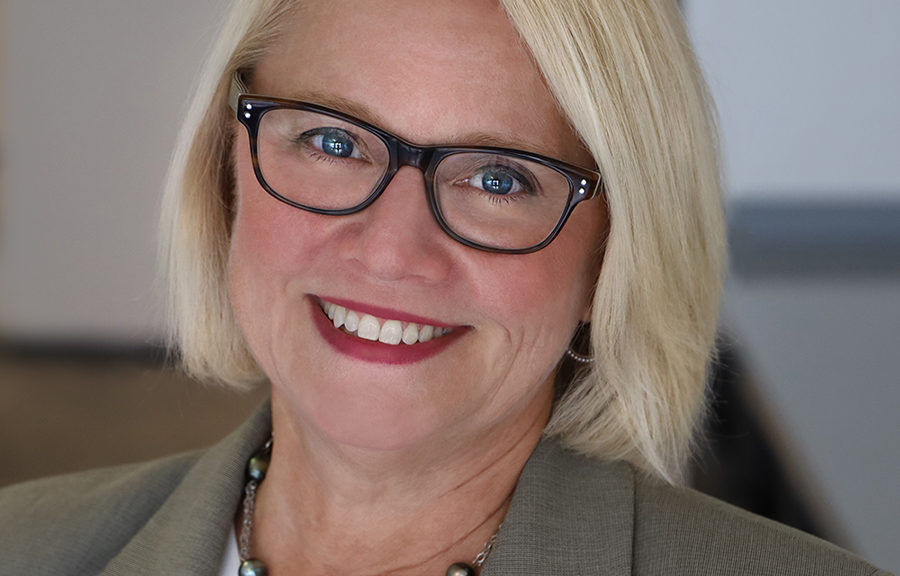
Alera Group, a national employee benefits, property & casualty, risk management and wealth management firm, is excited to announce that Sally Prather has recently been appointed as its national Employee Benefits Practice Leader.

Prather’s responsibilities will include the continued development of the organization’s employee benefits practice, including platform expansion and resource coordination.

“Sally is an outstanding addition to Alera Group’s leadership team, and we look forward to the impact of her expertise on our employee benefits practice,” said Jim Blue, President of Alera Group. “Her years of industry experience, combined with her collaborative management style, makes her an ideal leader of our benefits team as we continue to expand organically and acquisitively.”

Prior to joining Alera Group, Prather served as Vice President, Paychex Insurance Agency. She brings more than 25 years of experience to her role with Alera Group.

“I am thrilled to lead the employee benefits division of Alera Group, and look forward to the true collaboration happening among the Alera Group firms,” said Sally Prather. “Together, we will strengthen our value proposition through unparalleled benefits resources and strategy.”

As Employee Benefits Practice Leader, Prather joins Alera Group as the latest member of an industry-leading team of professionals across the United States. For more information about Alera Group, visit http://www.aleragroup.com.

About Alera Group

Based in Deerfield, IL, Alera Group’s over 1,700 employees serve thousands of clients nationally in employee benefits, property and casualty, risk management and wealth management. Alera Group is the 15th largest independent insurance agency in the country. For more information, visit http://www.aleragroup.com or follow Alera Group on Twitter: @AleraGroupUS.

Share article on social media or email:

Society for the Advancement of Blood Management Selects Talley Management Group, Inc. as AMC


https://www.prweb.com/

The Society for the Advancement of Blood Management (SABM)

The foundation SABM was built on and the dedication the Society has to its Mission are two of the key factors the SABM TMG team will keep as their primary focus, regardless of the task. -Talley Management Group, Inc. COO Joseph Sapp, CAE

The Society for the Advancement of Blood Management (SABM) a Society recognized as a key educational resource for Patient Blood Management, has joined Talley Management Group, Inc. (TMG), a leading association management company dedicated to creating stronger communities and human connections to enhance global society for over 30 years. TMG will provide full-service management while assisting SABM with advancing its Mission of improving health, increasing safety and reducing healthcare costs through the advancement of scientific knowledge and practice in patient blood management.

“The foundation SABM was built on and the dedication the Society has to its Mission are two of the key factors the SABM TMG team will keep as their primary focus, regardless of the task,” said Talley Management Group, Inc. COO Joseph Sapp, CAE. “TMG has extensive knowledge and experience partnering with scientific and evidence-based groups and we are excited to bring our expertise to this growing Society.”

Founded in 2001, the Society for the Advancement of Blood Management (SABM) was started by a group of dedicated volunteers who saw a need for a new way of thinking. The SABM founders realized that patient blood management (PBM) ought to be the standard of care, and that blood transfusion should be viewed as the alternative. SABM is dedicated to improving patient outcomes through optimal blood management.

SABM works to promote education and training to achieve change through a multidisciplinary approach to patient blood management and utilization. This is done by creating a source of knowledge for all types of blood management strategies. The Society’s goal is to work toward incorporating patient blood management modalities into clinical practice and help the public and medical communities to embrace the benefits of simple, safe and effective patient blood management strategies.

For more information about Talley Management Group, Inc. and its services, visit talley.com.

About Talley Management Group, Inc. (TMG) 

Talley Management Group, Inc., (TMG) is a full-service association management company. Founded in 1987, TMG has over 20 full-service association clients and provides event planning and consulting services to many more. Its mission is to create stronger communities and human connections to enhance global society. For more information on TMG, its services and full client partner list, visit talley.com, on Facebook @talleymanagement, on Twitter @TalleyMgmt and on LinkedIn. 

About the Society for the Advancement of Blood Management (SABM)

Founded in 2001, the Society for the Advancement of Blood Management (SABM) was started by a group of dedicated volunteers who saw a need for a new way of thinking. The SABM founders realized that patient blood management (PBM) ought to be the standard of care, and that blood transfusion should be viewed as the alternative. SABM is dedicated to improving patient outcomes through optimal blood management. For more information on SABM including patient resources, visit sabm.org.

Share article on social media or email:

University of Maryland Extension Awarded $1M to Combat the Opioid Epidemic


The misuse and opioid addiction is a national public health concern that kills over 130 people every day nationwide.

According to the National Institute on Drug Abuse, Maryland ranks in the top five in the nation for opioid-related overdose death rates with the largest increase attributed to cases involving synthetic opioids (mainly fentanyl). University of Maryland Extension faculty and partners have been awarded a grant of over $1M to build capacity within rural communities to help deal with the growing opioid issues throughout the state.

The Rural Opioids Technical Assistance Grant, awarded by the Substance Abuse and Mental Health Services Administration (SAMHSA), funds an effort to utilize the successful Extension education model to deliver training to the rural Maryland communities struggling with mental and behavioral health issues.

“One of the things we noted while conducting a needs assessment was gaps in understanding the opioid crisis and available resources to help or get information,” said Dr. Jinhee Kim, Professor and Family & Consumer Sciences Program Leader with the University of Maryland Extension and principal investigator on the grant.

“The overarching goal of this grant is to strengthen the understanding of the epidemic and prevention strategies in rural Maryland and to provide technical assistance with cutting-edge research,” said Ali Hurtado, Co-Principal Investigator and Assistant Professor in the School of Public Health at the University of Maryland.

Partnering with the Center for Substance Abuse Research, the UMD School of Public Health, MayaTech, and the Maryland Rural Health Association, Extension educators will deliver evidence-based training programs to local residents that will help strengthen the ability of rural communities to recognize, understand, and respond to opioid misuse and other behavioral health issues.

Over the next two years, UME will train 120 educators in the evidence-based program Mental Health First Aid. That curriculum will also be delivered to 500 community leaders and service providers within the identified rural regions. Several organizations, including the Rural Maryland Council, the Mental Health Association of Maryland, the Maryland Association of Conservation Districts, and the Maryland Department of Agriculture, have already made commitments to work with UMD Extension and partners to assist in the program’s delivery.

“The misuse and opioid addiction is a national public health concern that kills over 130 people every day nationwide,” said Hurtado. “Our study team will collaborate with local partners that have the expertise and are trusted in the community.”

“Ideally, increasing their capacity will help them acknowledge, be aware, and understand the mental and behavioral health issues impacting their community,” said Kim. “You don’t have to be dealing with someone who has an opioid issue to gain resources and knowledge from this training – it trains people to assist anyone with a mental or behavioral health issue.”

A second goal of the project is to deliver a proven prevention program, the Botvin LifeSkills curriculum, to middle-school aged children as well, thereby decreasing youth susceptibility to substance abuse. Training will be provided for 40 educators throughout the next two years, and the program will be provided for 650 students, as well as parents or caregivers.

The team will also increase community capacity for combating the opioid epidemic in rural Maryland by creating an advisory group on Rural Maryland Opioid Issues and creating a virtual network of Extension and community educators, partners, and local practitioners. Six virtual trainings will be available for educators and practitioners, and eight webinars will be produced for individuals, families and communities, all available through an online platform.

“Extension’s role is very important because we are a trusted source of health and wellness information within our communities,” said Kim. “Great work has been, and is being done in the opioid crisis here in Maryland, and we’re helping and supporting those programs by building out the capacity of rural Maryland for a comprehensive approach.”

For more information, contact Laura Wormuth, Communications Coordinator, at 301-405-6869 or lwormuth@umd.edu.

Share article on social media or email:

Cardea Bio and Nanosens Innovations Inc. Merger-Acquisition Finalized


With Nanosens as our internal Innovation Partner, and a handful of external Innovation Partnerships soon to be signed, we are ready to take in the investments we have been offered and scale up Cardea” – Michael Heltzen.

Cardea is excited to announce the finalization of their merger-acquisition of Nanosens Innovations, Inc., the creators of CRISPR-Chip™. Cardea first broke the news of the proposed merger in September, along with the announcement of their Early Access Program for the Genome Sensor™. Built with CRISPR-Chip technology, the Genome Sensor is the world’s first DNA search engine. It can google genomes to detect genetic mutations and variations.

Merging the two companies allows the power of Nanosens’ CRISPR-Chip technology to be combined with Cardea’s graphene biosensor infrastructure. This enables Cardea to build an advanced DNA version of its “biology-based transistors” which would otherwise normally work with proteins. Via the “Powered by Cardea” strategy, a series of new CRISPR-Chip DNA-focused products will be developed and marketed via Cardea’s partnerships with large companies in different markets.

“We are thrilled to announce that both companies’ Board of Directors and Shareholders have strongly supported the merger by voting yes to combining the two companies. I’d like to thank everyone who has made this possible. We here at Cardea are excited to expand our team of talents with the talents from Nanosens,” says Cardea’s CEO, Michael Heltzen. 

Nanosens will continue as a Cardea brand for the Genome Sensor and other tools made for the research market. They are currently accepting applications to the Genome Sensor Early Access Program where a select few will have exclusive access to the Genome Sensor before the rest of the world.

“With Nanosens as our internal Innovation Partner, and a handful of external Innovation Partnerships soon to be signed, we are ready to take in the investments we have been offered and scale up Cardea. This will take us to the next level on our venture to build the biology-based transistor company that allows for people to connect computers directly with biology,” continues Heltzen. 

Cardea is actively looking for companies to partner with and co-develop new products through their Innovation Partnership Program. Partners will be able to utilize the unique features of Cardea’s “biology-based transistors” for future products. These features include near real-time detection, outside-the-lab DNA detection, and handheld user-friendly devices that enable insight to the biology systems in and around us. For more info, please visit http://www.cardeabio.com

Share article on social media or email:

Public Supports Antonio Brown Suspension, but Not as a Standard Procedure for NFL


News Image

“Having the flexibility to go case-by-case does provide for a more complete review before taking the bold step of suspending an unconvicted player.”

By more than a 2-1 margin, the American public believes suspension of players being investigated for sexual misconduct by the NFL should be conducted on a case-by-case basis, without making the suspension standard procedure.

But the case of Antonio Brown, who was signed and then released after one game by the New England Patriots, appears to be one of the “case-by-case” cases in which the public supported his suspension during the investigation.

These were the findings of a Seton Hall Sports Poll conducted last week among 714 adult Americans across the country, either on landline or cellphone. The poll has a margin of error of +/- 3.8 percent.

Fifty-one percent of the public believed Brown should have been suspended during the investigation with only 32 percent saying he should have been allowed to play. Seventeen percent did not know or had no opinion.

But as a general procedure, only 30 percent of the public felt it should be standard procedure to suspend, with 64 percent saying it should be a case-by-case matter. Six percent did not know or had no opinion.

“Brown did not exactly arrive with a clean slate when the Patriots signed him,” noted Rick Gentile, director of the Seton Hall Sports Poll, which is sponsored by the Sharkey Institute within the Stillman School of Business at Seton Hall. “Having the flexibility to go case-by-case does provide for a more complete review before taking the bold step of suspending an unconvicted player.”

(Questions and results below; an online version of this release may be found at http://blogs.shu.edu/sportspoll/2019/10/08/public-supports-antonio-brown-suspension-but-not-as-a-standard-procedure-for-nfl/

About the poll:

This poll was conducted by telephone September 30 – October 2, 2019 among adults in the United States. The Seton Hall Sports Poll is conducted by the Sharkey Institute within the Stillman School of Business. Phone numbers were dialed from samples of both standard landline and cell phones. The error for subgroups may be higher. This poll release conforms to the Standards of Disclosure of the National Council on Public Polls. The Seton Hall Sports Poll has been conducted regularly since 2006.Recently chosen for inclusion in iPoll by Cornell’s Roper Center for Public Opinion Research, its findings have been published everywhere from USA Today, ESPN, The New York Times, Washington Post, AP, and Reuters to Fox News and most points in between.

Media: Media: Marty Appel, AppelPR@gmail.com;

Michael Ricciardelli, Associate Director of Media Relations, Seton Hall

michael.ricciardelli@shu.edu, 908-447-3034

The results:

The New England Patriots signed and played wide receiver Antonio Brown while he was under investigation by the NFL for accusations of sexual assault. He was subsequently released when more accusations of sexual misconduct surfaced. Do you think Brown should have been allowed to play while being investigated or should the Patriots and the NFL have suspended him from playing while the investigation was ongoing?

1 – Allowed to play                                                 32%

2 – Suspended during investigation                        51

3 – Don’t know/No opinion                                     17

Do you think it should be standard procedure in professional sports for players to be suspended from playing during investigation of sexual misconduct or should these situations be looked at on a case-by-case basis?

1 – Standard procedure to suspend                         30

2 – Case-by-case basis                                            64

3 – Don’t know/No opinion                                         6

ABOUT SETON HALL UNIVERSITY

One of the country’s leading Catholic universities, Seton Hall has been showing the world what great minds can do since 1856. Home to nearly 10,000 undergraduate and graduate students and offering more than 90 rigorous academic programs, Seton Hall’s academic excellence has been singled out for distinction by The Princeton Review, U.S. News & World Report and Bloomberg Businessweek.

Seton Hall embraces students of all religions and prepares them to be exemplary servant leaders and global citizens. In recent years, the University has achieved extraordinary success. Since 2009, it has seen record-breaking undergraduate enrollment growth and an impressive 110-point increase in the average SAT scores of incoming freshmen. In the past decade, Seton Hall students and alumni have received more than 30 Fulbright Scholarships as well as other prestigious academic honors, including Boren Awards, Pickering Fellowships, Udall Scholarships and a Rhodes Scholarship. The University is also proud to be the third most diverse national Catholic university in the nation.

During the past five years, the University has invested more than $165 million in new campus buildings and renovations. And in 2015, Seton Hall launched a School of Medicine as well as a College of Communication and the Arts. The University’s beautiful main campus in suburban South Orange, N.J. is only 14 miles from New York City — offering students a wealth of employment, internship, cultural and entertainment opportunities. Seton Hall’s nationally recognized School of Law is located prominently in downtown Newark. The University’s Interprofessional Health Sciences (IHS) campus in Clifton and Nutley, N.J. opened in the summer of 2018. The IHS campus houses the University’s College of Nursing, School of Health and Medical Sciences and the Hackensack Meridian School of Medicine at Seton Hall University.

For more information, visit http://www.shu.edu.

Share article on social media or email: