
Category Archives: Health

What is new in the field of Health. Trending topics, and cutting edge research in the are of Health. Press Releases that give us updates on Health.

CODAC Behavioral Healthcare to Present at 2019 AATOD Conference


https://www.prweb.com/

It is an honor to share our models, best practices and outcomes alongside some of the most cutting-edge topics and presenters in our field, nationally and internationally

CODAC Behavioral Healthcare, the largest non-profit, outpatient provider for opioid treatment in Rhode Island, today announced that it will be presenting at two sessions during the 2019 American Association for the Treatment of Opioid Dependence, Inc. (AATOD) Conference to be held October 19 — 23, 2019 at Disney’s Coronado Spring Resort in Walt Disney World, FL. The goal of this year’s national and international conference is to educate, and promote the acceptance and integration of Medication Assisted Treatment (MAT) options by all stakeholders and systems affected by the opioid crisis, according to organizers. CODAC experts plan to highlight two of its most innovative programs: expansion of its nationally renowned addiction treatment behind bars initiative; and utilization of telehealth to provide MAT.    

“We are thrilled to be presenting once more at this important annual meeting that brings together an unprecedented number of peers and other key decision makers interested in exploring viable solutions to our nation’s opioid epidemic,” said Linda Hurley, President/CEO of CODAC. “It is an honor to share our models, best practices and outcomes alongside some of the most cutting-edge topics and presenters in our field, nationally and internationally.”

CODAC’s presentations at AATOD 2019 will be as follows:


  • Tuesday, October 22, 2019 — 1:30 PM – 3:00 PM


Workshop: Opioid Abuse as a Public Health Crisis and Overdose as an Epidemic

D5 – Implementing Telehealth in MAT to Better Serve Rural Areas

Primary Presenter(s): Dustin Alvanas, MBA — Vice President of Operations, CODAC

Co-Presenter(s): Christine Atkin, Program Analyst & Health Home Team Coordinator, and Mary Walton, Assistant Medical Director, CODAC

From program/schedule: CODAC Behavioral Healthcare, Rhode Island’s oldest and largest provider of Opioid Treatment Program (OTP) services, has developed a telehealth care model for immediate induction onto buprenorphine in rural and underserved areas. CODAC has established partnerships with federally qualified community health centers and EDs in rural areas to increase immediate access to and availability of care, reducing potential overdoses and mitigating stigma associated with MAT. The presentation outlines the telehealth model, program workflow, prescribing practice, and the use of technology in providing care. Participants will be provided with a transferable framework for establishing a telehealth program in their community.

  • Wednesday, October 23, 2019 — 8:00 AM – 9:30 AM


Workshop: Community Partners & Continuum of Care

E2 – Implementing and Sustaining Enhanced MAT in Corrections: Considerations for Diversion, Recidivism and Saving Lives

Primary Presenter(s): Linda Hurley, MA CAGS, President and Chief Executive Officer, CODAC

Co-Presenter(s): Leslie Bridgman, MA, JD, LCDP, Director of Correctional Services, CODAC, and Rosemarie Martin, PhD, Assistant Professor of Behavioral and Social Sciences, Brown University School of Public Health

From program/schedule: Presentation examines an expanded treatment program for opioid use disorder (OUD) implemented at the Rhode Island Department of Corrections, in collaboration with CODAC Behavioral Healthcare (contracted vendor) and Brown University. Called a model for all 50 states, this program has dramatically reduced overdose and mortality rates among newly released inmates. Impact on criminal justice concerns, along with barriers, challenges and outcomes, will be discussed from multiple perspectives. Participants will leave with information and tools needed to initiate or expand MAT for OUD in their own correctional settings.

About CODAC Behavioral Healthcare

CODAC Behavioral Healthcare, a non-profit organization founded in 1971, is Rhode Island’s oldest and largest provider of outpatient services for opioid use disorder, other substance use disorders, and concurrent behavioral health challenges. With eight locations across Rhode Island, CODAC has attained Center of Excellence designations for each of its treatment sites. CODAC has done extensive work with individuals involved in the criminal justice system since 1994 and, in 2016, launched a program with the Rhode Island Department of Corrections (RIDOC) that was the first of its kind in the United States to screen all inmates for opioid use disorder and provide medication-assisted treatment (MAT) for those in need. Results from CODAC’s RIDOC program have been studied and published, and the program has been recognized as “a model for all 50 states” by the Department of Justice, SAMHSA and multiple other national agencies. In addition, CODAC is now licensed in Massachusetts to operate an Opioid Treatment Program (OTP). For more information about CODAC, visit: http://www.codacinc.org

About AATOD 2019

The 2019 American Association for the Treatment of Opioid Dependence, Inc. (AATOD) Conference theme, “Out of the Shadows: Managing the Opioid Epidemic through the Continuum of Care,” highlights the issues and challenges of medication assisted treatment (MAT) in the context of the current opioid use/abuse epidemic, per organizers. The intent is to educate and promote acceptance and integration of MAT options by patients, families, clinicians, the medical system, judicial systems, government, policy makers, social service administrations, and the general public. For more information, visit https://www.eventscribe.com/2019/AATOD

Contact:

Alisha Bourdeau,CFO; CODAC

(401) 275-5038

abourdeau@codacinc.org

Bill Gordon; PR/Media Relations

646-924-6146

billgordon37@hotmail.com

Share article on social media or email:

Interim HealthCare Inc. Executive Speaks at Miami Women’s Leadership Summit


Lesly Cardec joins other seasoned professionals from across the region to share their experiences in establishing and building their own value within the companies they work at and among other members of leadership.

Interim HealthCare Inc.’s Senior Vice President of Marketing and Public Relations, Lesly Cardec, will participate in a panel discussion, “Building Your Value,” at the Miami Women’s Leadership Summit, October 17. The summit is a motivational event established to inspire other businesswomen rising into leadership roles. Headquartered in Sunrise, Fla., Interim HealthCare Inc. is a leading national franchisor of home care, hospice and healthcare staffing.

WHEN: Thursday, Oct. 17, 2019 at 10 a.m. to 11 a.m.

WHERE: Miami Marriott Dadeland, Grand Ballroom

            9090 S Dadeland Blvd. Miami, FL 33156

WHAT: “Building Your Value”

Cardec joins other seasoned professionals from across the region to share their experiences in establishing and building their own value within the companies they work at and among other members of leadership. Attendees will learn best practices from other leaders, uncover how to overcome key challenges and hear about new solutions to solve them.

WHO: Lesly Cardec, Senior Vice President of Marketing and Public Relations at Interim HealthCare Inc.:

Lesly Cardec joined Interim HealthCare Inc. in 2017 as Senior Vice President of Marketing and Public Relations. Cardec is responsible for the overall strategic direction and execution of marketing, branding and communications strategies, which support Interim HealthCare’s franchise network across the country.

For more information on the Miami Women’s Leadership Summit, please visit http://miamiwomenleaders.org/.

About Interim HealthCare Inc.

Interim HealthCare Inc., founded in 1966, is a leading national franchisor of home care, hospice and healthcare staffing. It is part of Caring Brands International, which also includes UK-based Bluebird Care and Australia-based Just Better Care, both well-known franchise brands in their countries. With more than 530 franchise locations in seven countries, Caring Brands International is a global healthcare leader.

Interim HealthCare in the United States is unique in combining the commitment of local ownership with the support of a national organization that develops innovative programs and quality standards that improve the delivery of service. Franchisees employ nurses, therapists, aides, companions and other healthcare professionals who provide 25 million hours of home care service to 190,000 people each year, meeting a variety of home health, senior care, hospice, palliative care, pediatric care and healthcare staffing needs. For more information or to locate an Interim HealthCare office, visit http://www.interimhealthcare.com.

Share article on social media or email:

Design Your Ideal Life in 3 Steps with Guidance from a Happiness Coach and First-Time Author, Susan Balogh


Sue Balogh new book

Sue Balogh, Author

You’re meant to be feeling happy and free and in charge of your own destiny and wellbeing. You’re invincible in your new mindset and become a magnet for all your life’s wishes!

Susan Balogh, an author and holistic healing and happiness coach, announced her first book is now available on Amazon for purchase.

Specifically designed to help you practice your thoughts and intentions until you are feeling aligned with a state of blissful wellbeing and abundance, “100 Days of Actions & Intentions to Create the Life You Wish For” has something for just about anyone looking to relieve stress or pain or just enjoy their life more on a daily basis.

“You’re meant to be feeling happy and free and in charge of your own destiny and wellbeing. You’re invincible in your new mindset and become a magnet for all your life’s wishes!” ~ Susan Balogh, Author.

“100 Days of Actions & Intentions to Create the Life You Wish For” has been carefully written in great detail to guide the reader to feel how they wish to feel on very relatable topics.

It offers multiple thought-provoking intentions, affirmations, and questions in every chapter, as well as many self-healing mind-body practices. It can easily be read one page or “day” at a time.

It’s been called “enlightening” and “life-changing” and “fun.”

If you are feeling stuck or ready for a fresh start or personal transformation, this step-by-step guidebook could be just what you are looking for.

Susan Balogh is a coach, writer, and speaker who has a passion for helping others tap into their true power to achieve any state of mind that allows them to attain their goals and dreams. With a desire to heal herself and help others, she sought training for over 20 years in many healing modalities.

Susan is from Western New York but travels the country in her custom RV to provide donation-based teaching. She is a certified Reiki Master/Teacher, Qi Gong instructor, and happiness coach.

“100 Days of Actions & Intentions to Create the Life You Wish For”

Instagram: https://www.instagram.com/wishmore_wellness/

Facebook: http://www.facebook.com/wishmorewellness/

Share article on social media or email:



Physical Activity Is an $828 Billion Market – To Reach $1.1 Trillion+ by 2023


https://www.prweb.com/

This new global data stream is meant to encourage business leaders and policymakers to see physical activity as a comprehensive sector, and one that’s critical in supporting lifestyles that are crucial to good health.

The Global Wellness Institute™ (GWI), a nonprofit research and educational resource for the world wellness industry, today released its major research report for 2019: “Move to be Well: The Global Economy of Physical Activity.” In 2018, the GWI found that the fitness/mind-body market was worth $595 billion, and this new research broadens the scope of that segment to the “physical activity economy,” which is now valued at $828.2 billion globally, and includes the sports and active recreation, fitness, and mindful movement core segments—along with the supporting markets of equipment and supplies, apparel and footwear, and technology.

With this new data, wellness jumps to a $4.5 trillion global market.

ACCESS THE FULL REPORT HERE

In GWI’s decade of wellness industry research, this is the most data-packed study to date: The 180-page report goes in-depth on the consumer spend within all six markets (at global, regional and national levels); participation rates for 150 nations; the big emerging trends and business opportunities across countries; and market growth projections—while providing deep insight into public and private sector initiatives that can help bring more movement to all.

“This new global data stream is meant to encourage business leaders and policymakers to see physical activity as a comprehensive sector, and one that’s critical in supporting lifestyles that are crucial to good health,” noted Ophelia Yeung, GWI senior researcher and report co-author. “Yes, physical activity has become a massive $828 billion commercial segment, but the conundrum is that sedentary lives, obesity and chronic disease are all exploding right alongside the fitness market’s explosive growth.”

Katherine Johnston, GWI senior researcher and co-author, added: “When people think ‘fitness industry’ they think gyms, boutique studios, yoga and fit-tech like wearables, but there are so many ways we can get enough exercise to stay healthy—from playing sports to dancing to biking to work. And there are huge opportunities for businesses to get more people active—beyond affluent urbanites/suburbanites, the young and the already-healthy.”

Recreational Physical Activity Markets

Sports & Active Recreation: $230.1 billion

Fitness & Gym: $108.6 billion

Mindful Movement: $29.1 billion

Total: $367.7 billion (44% of market)

Supporting Segments

Apparel & Footwear: $333 billion

Equipment & Supplies: $109 billion

Technology: $26 billion

Total: $465.9 billion (56% of market)

This data represents the direct consumer spend for each category and doesn’t include the vast expenditures made by governments/the public sector. GWI estimates that just 35 percent of the world population regularly participates in recreational physical activities.

The Regional Picture: Market Size & Spend/Participant

North America: $282.7 billion – $1,345

Asia-Pacific: $240.4 billion – $176

Europe: $225 billion – $528

Latin-America/Caribbean: $42.2 billion – $176

Middle East-N. Africa: $22.6 billion – $181

Sub-Saharan Africa: $15.3 billion – $45

Ninety percent of the world’s spending on recreational physical activities takes place in North America, Asia and Europe. Globally, spending averages $306 per participant per year: $136 on activities and $172 on equipment, apparel/footwear and technology. That number may seem low, but this study captures a much broader range of physical activities than the $200/month elite gym membership or $35 spinning class out of reach for most of the world. Per participant expenditures are very high in North America ($1,345) and Europe ($528) while significantly lower in the rest of the world.

Top 10 Recreational Physical Activity Markets

US: $264.6 billion

China: $109.3 billion

Japan: $43.9 billion

UK: $40.9 billion

Germany: $39.4 billion

France: $26.3 billion

South Korea: $23.5 billion

Italy: $19.3 billion

Canada: $18.1 billion

Australia: $16.7 billion

The US and China are by far the world’s largest national consumer markets for recreational physical activity, together accounting for 45 percent of global expenditures.

Highest Recreational Physical Activity Participation Rates = Happiest Nations

Market size and the highest rates of recreational physical activity participation don’t often correlate, and the report looks at what percentage of the population of 150 nations regularly take part in sports and active recreation, fitness or mindful movement. Australia and Taiwan lead the world with 84 percent recreational physical activity participation rates. And when you compare the happiest nations from the 2019 World Happiness Report to the countries with the highest rates for recreational physical activity, there is very striking overlap: Fourteen nations make both top-20 lists, with Nordic countries such as Norway, Iceland, Sweden, Finland and Denmark all ranking in the top 10 for “happiest” and most physically active. The movement and “mood” connection seems powerful.

I) RECREATIONAL PHYSICAL ACTIVITY MARKETS

1) Sports & Active Recreation: $230 Billion

The sports and active recreation category generates two-thirds of all recreational physical activity spending because these activities are the most diverse, accessible, affordable and prevalent across every region and population group. Thirty-three percent of the world’s population regularly engages in sports and active recreation, spending $90/annually on average. The top five markets for participation are 1) Taiwan 2) Norway 3) New Zealand 4) Australia, and 5) Iceland—all seeing 75 percent or higher participation rates.

2) Fitness: $108.6 Billion

The fitness industry is fast and furious in its growth and devising new approaches, whether indoor spinning, HIIT or CrossFit. The GWI estimates that 3.7 percent of the world’s population are members of gyms or fitness studios, take independent fitness classes regularly, or work out in public facilities or on their own, spending $384 per participant yearly. Within the wider fitness market, 190 million people spend money on memberships/training at commercial gyms and studios (258,000 locations across 211 countries), generating $83 billion in annual expenditures. Another 58 million participate in fitness classes at (26,000+) public and nonprofit venues that cost much less or nothing. Twenty-eight million people subscribe to on-demand and streaming fitness services online or via apps.

North America is the #1 fitness market ($40.5 billion and a 29 percent participation rate), followed by Europe ($33.8 billion market with a significantly lower participation rate of 9.2 percent).

3) Mindful Movement: $29 Billion

In our frenetically paced, stressful, sleepless and chronic-pain-plagued world, the demand for slower, mindful movement—which includes yoga, Pilates, tai chi, qigong, stretch, barre, Gyrotonic, etc.—is skyrocketing. Of the world’s population, 3.8 percent now regularly participates in mindful movement, spending on average $101/year. While the market is now concentrated in wealthier countries, practices are spreading fast throughout the world.

Global Participants & Market Size

Yoga: 165 million – $16.9 billion

Tai Chi & Qigong: 94.7 million – $5.4 billion

Pilates, Barre & other modalities: 28.9 million – $6.7 billion

The US is by far the largest mindful movement market in terms of participation rate (17.7 percent) and expenditures ($10.4 billion), followed by China ($5.8 billion), Japan ($1.9 billion), Russia ($1.3 billion) and Germany ($1.2 billion). Other countries with high participation rates include Australia, Canada, Denmark and New Zealand (all over 10 percent). (Note: The meditation market isn’t included in this study, as it’s not movement, but will be analyzed in a 2020 GWI study on the mental wellness sector.)

II) SUPPORTING SECTORS

Apparel & Footwear: $333 Billion

Within this market, $198.2 billion is spent on apparel and $134.6 billion on footwear. North America is by far the largest market, followed by Asia-Pacific and Europe: These regions make up 87 percent of the market, while the US comprises over one-third.

Equipment & Supplies: $109 Billion

For equipment and supplies related to physical activity (sporting goods and fitness training equipment), North America, Europe, and Asia-Pacific make up 94 percent of all spending, and the US and China together comprise 44 percent of the market.

Fitness Tech: $26 Billion

Technologies that make exercise more fun, affordable, personalized, portable, social, gamified and trackable are seeing an extraordinary uptake by consumers all over the world—even in countries that haven’t had developed gym/fitness offerings. Wearables and trackers ($14.7 billion), streaming and on-demand fitness ($6.1 billion), and apps ($2.4 billion) are the three biggest fit-tech segments.

Asia-Pacific is the world’s #1 market ($10.8 billion) because all across the region, consumers are wild for the latest fitness tech, wearables and trackers. North America ranks second, at $8.6 billion. The US ($8.1 billion), China ($6.6 billion), and India ($1.8 billion) are the three national leaders, accounting for over half of the physical activity tech market.

The Future: $1.1 Trillion+ Market by 2023

The physical activity economy will grow 6.6 percent annually from 2018–2023, to surpass $1.1 trillion. Asia-Pacific will overtake North America as the largest market, accounting for 40 percent of all global growth through 2023. China and India together will drive nearly one-third of growth, while the US will account for one-quarter.

Growth 2018–2023 (US Billions) + (Annual Growth Rate)

Asia-Pacific: $240–$373.5 (9.2%)

North America: $283–$366 (5.3%)

Europe: $225–$288 (5.1%)

Latin America-Caribbean: $42–$57 (6%)

Middle East-N. Africa: $22.6–$33 (7.8%)

Sub-Saharan Africa: $15–$23 (8.2%)

WORLD TOTAL: $828 Billion–$1.14 Trillion (6.6%)

Mindful movement will be the fastest-growing sector (12.4 percent annually), jumping from a $29 billion market in 2018 to $52 billion by 2023. Technology will be the second-fastest-growing market (8.6 percent annually), expanding from $26.3 billion in 2018 to $39.8 billion by 2023.

About the Global Wellness Institute: The Global Wellness Institute (GWI), a nonprofit 501(c)(3), is considered the leading global research and educational resource for the global wellness industry and is known for introducing major industry initiatives and regional events that bring together leaders to chart the future. GWI positively impacts global health and wellness by advocating for both public institutions and businesses that are working to help prevent disease, reduce stress, and enhance the overall quality of life. Its mission is to empower wellness worldwide.

In response to JCAHO’s new pain assessment and management standards, ACHT announces event to combat the opioid crisis, discuss effective non-pharmacological treatments.


https://www.prweb.com/

ACHT is a trusted source of support to Boards of Directors, healthcare executives, physician and nurse leaders, entrepreneurs and others.

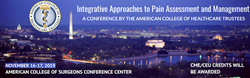
The American College of Healthcare Trustees (ACHT) is conducting an important conference to help combat the opioid crisis and to discuss non-pharmacological treatments of pain. The conference, titled Integrative Approaches to Pain Assessment and Management: Solutions to the Opioid Crisis, will include the Joint Commission on Accreditation of Healthcare Organizations’ (JCAHO) new standards for the adoption of integrative techniques for the evaluation and management of pain. The 1.5-day conference will take place on Saturday, November 16 and Sunday, November 17 at The American College of Surgeons’ Conference Center in Washington, D.C.

This effort is part of ACHT’s mission to support good governance, management, and decision making in healthcare. The goal of the conference is to provide health facility executives, medical and nursing leadership and staff involved in pain assessment and management with the latest knowledge and processes for pain assessment and the integration of non-invasive, non-pharmacological modalities for effective treatment of pain to ensure the new standards are met. The conference will also include sessions on opioid abuse and the medical use of cannabis. Participants will be offered Continued Medical Education (CME) credits and Clinical Education Units (CEU).

An article by Lawrence O. Gostin, James G. Hodge Jr, and Sarah A. Noe, in the Journal of the American Medical Association indicated that opioid abuse was one of the most serious preventable public health issues in America with over 600,000 deaths occurring at the time of publication and another 180,000 deaths predicted by 2020. Authors pointed out that about one-third of the United States population report chronic pain. They opined that although pain relief is an important aspect of healthcare, the dramatic increase in overdose deaths, including among teenagers and the dangers of spreading hepatitis and HIV by sharing drug paraphernalia, and the addictive nature of opioids, show that we are at a crisis level. The magnitude of the problem and the need for innovative solutions provided the impetus for The American College of Healthcare Trustees’ decision to hold this conference.

Pillars of the American College of Healthcare Trustees curriculum include quality and safety, ethics and compliance, health law, information technology management, human resources, healthcare innovation, and business decision making. The venue for past conferences included the Johns Hopkins Mt. Washington Conference Center, Georgetown University, Asilomar on the California coast, and the Westin Hotel in Philadelphia. More information about last year’s Healthcare Innovation Conference can be obtained here.

ACHT offers remote learning resources for which people can earn badges, consistent with the modern trend of nano-credentialing.

About ACHT

The American College of Healthcare Trustees (ACHT) is a national professional association dedicated to promoting high performing, competent, qualified, ethical governance and leadership in healthcare that is person-centered and accountable by providing continuing education, resources, and networking. ACHT’s upcoming conference Integrative Approaches to Pain Assessment and Management: Solutions to the Opioid Crisis will be held at the American College of Surgeons in Washington, DC on November 16-17, 2019. For details, conference registration and sponsorship opportunities, visit: http://bit.ly/ACHTconf.

For more information or to become a Fellow of the American College of Healthcare Trustees visit: http://www.facht.org/aws/FACHT/pt/sp/membership_howto.

Share article on social media or email:

Cremation Society of Virginia Hosts Open House of Charlottesville Location


News Image

Cremation Society of Virginia invites the community to join us in celebrating our new location at an open house and ribbon-cutting ceremony on Wednesday, October 23, 2019.

The event will be held at our new office, 305 Rivanna Plaza Drive, Suite 102, Charlottesville, VA, 22901, and hosted by location manager Bobbi Dymacek.

The ribbon-cutting ceremony will begin at 2 p.m. Guests will then be able to tour the new location and learn more about how Cremation Society of Virginia serves families across the country. Light refreshments will be served, and the first 100 guests will receive a special gift.

Guests can RSVP by calling the Charlottesville office at (434) 244-0046.

Members of the community will have the opportunity to get to know our Charlottesville team, and learn how they work each day to help families through a difficult time by carrying out the wishes of loved ones who have passed away.

Cremation Society of Virginia is a direct cremation provider, specializing in affordable cremation services. The staff assists families with both preplanning cremation services ahead of time and with immediate need services after a loved one has passed away.

By providing varied and affordable plans, Cremation Society of Virginia helps you craft cremation plans that honor your life or that of your loved ones, without overspending. This allows members to choose how they want to be remembered, and it allows families to decide how to best celebrate the life of their loved one.

Taking time to preplan a cremation service can lift a huge burden off the shoulders of families. Having a plan in place ahead of time makes the entire cremation process simpler and less stressful for those left behind. It also allows prepayment for services, locking in current prices and potentially saving families hundreds of dollars.

If a loved one passes away unexpectedly, Cremation Society of Virginia is also prepared to take them into our care and serve the family at any hour and on any day of the year. Simply call (888) 967-9194.

For more information about cremation services, contact us online. Cremation Society of Virginia is proud to open its doors in a new community, and we strive to serve our new neighbors in our tradition of dignity and compassion.

Share article on social media or email:
CosMedical Technologies® Launches Cutting-Edge Sunscreen with Blue Light and Pollution Protection


Ultra Replenishing Sunscreen SPF 40, designed to shield skin from three major sources of environmental damage: UV light, blue light, and pollution.

CosMedical Technologies Announces Launch of Ultra Replenishing Sunscreen

We decided to create a sunscreen that goes beyond SPF.

CosMedical Technologies®, a leading dermatologist-founded global private label skincare provider, released today their Ultra Replenishing Sunscreen SPF 40, designed to shield skin from three major sources of environmental damage: UV light, blue light, and pollution.

Studies have shown that high energy visible (HEV) blue light and environmental pollution play a significant role in premature skin aging. According to recent findings, exposure to HEV light may cause even more short-term and long-term damage to the skin than ultraviolet light. Gina Stabile, CosMedical Technologies® Chief Executive Officer believes the time has come to rethink photoprotection.

“CosMedical is committed to offering medical-grade skincare solutions based on the very latest dermatological science, and the research is clear — in the fight against aging, UV protection just isn’t enough,” says Stabile. “We decided to create a sunscreen that goes beyond SPF.”

An update on the original Replenishing Sunscreen, the reformulated Ultra Replenishing Sunscreen SPF 40 now includes 8% zinc oxide, reef-safe UV-absorbers, and concentrated new actives to deliver enhanced photoprotection and anti-aging benefits. Chief among these is the strongest antioxidant on the market, Lipochroman®, with coverage against all three classes of free radicals. Withania somnifera extract, or White Cherry, offers natural protection against HEV light-related discoloration and dark spots. Firming peptides improve the appearance of lines, wrinkles, and loss of firmness.

Stabile states, “Light damage happens year-round, while pollutants and digitally-emitted blue light are practically everywhere, both indoors and out. Our new Ultra Replenishing keeps you protected through it all for visibly vibrant, younger-looking skin.”

Ultra Replenishing Sunscreen SPF 40 is available to existing customers through their designated CosMedical Technologies® account executive. New accounts may contact the CosMedical Technologies® sales team to place an order or make inquiries.

About CosMedical Technologies®: Founded in 1993 by board-certified dermatologist Loretta Ciraldo, M.D., FAAD, CosMedical Technologies® provides custom label skin care to licensed professionals around the world. A forerunner in the private-label skincare industry, CosMedical Technologies® is known for staying ahead of emerging industry trends, offering a wide range of dermatologist-developed formulas created with advanced ingredients and innovative technology. Visit CosMedical Technologies® online at cosmedicaltechnologies.com for more information.

Share article on social media or email:
MemoryCare.com Names the Best Facilities for Senior Memory Care in Mesa, AZ


News Image

MemoryCare.com, a comprehensive resource for caregivers and older adults living with memory impairment, has announced the Best Memory Care Facilities in Mesa, Arizona. The guide identifies 16 memory care communities based on location, access to experts, facility features and amenities.

According to the Alzheimer’s Association, 5.6 million people age 65 and older are living with Alzheimer’s dementia. In Mesa, the number of senior deaths related to Alzheimer’s increased by 30 percent between 2013 and 2017. Memory care facilities offer activities and therapies to help delay or halt cognitive decline. They also give family members and caregivers peace of mind by providing a safe environment for loved ones.

“There’s a high demand for quality memory care all across our nation; specifically, in cities like Mesa, which experienced a rapid increase in Alzheimer’s related deaths,” says Joyce Collins. “MemoryCare.com provides free resources to help families find the best facilities.”

Through hours of research and an intensive selection process, MemoryCare.com was designed to help caregivers find effective solutions for their loved ones. The website not only highlights the best facilities in the city, it also shares information about cost, reviews from residents, type of care offered and more. For a detailed listing of the Best Memory Care Facilities in Mesa, AZ, please visit https://www.memorycare.com/mesa-az-facilities/.

2019 Best Memory Care Facilities in Mesa, Arizona (in alphabetical order)

American Orchards

Phone: (480) 887-0599

Address: 765 North Lindsay Rd., Gilbert, AZ 85234

Web: americanorchardsaz.com

Broadway Mesa Village

Phone: (877) 561-7262

Address: 7231 E. Broadway, Mesa, AZ 85208

Web: pegasusseniorliving.com

Chandler Memory Care

Phone: (480) 719-2171

Address: 850 South Pennington Dr., Chandler, AZ 85224

Web: chandlermemorycare.com

Courtyard Towers

Phone: (480) 649-3000

Address: 22 North Robson, Mesa, AZ 85201

Web: courtyardtowersaz.com

Emerald Glen

Phone: (480) 234-0126

Address: 3558 E. McDowell, Mesa, AZ 85213

Web: emeraldglenmemorycare.com

Grand Court Mesa

Phone: (480) 844-7336

Address: 262 E. Brown Rd., Mesa, AZ 85201

Web: grandcourtmesa.com

Heritage Village Assisted Living

Phone: (480) 686-8540

Address: 8035 E. Brown Rd., Mesa, AZ 85207

Web: heritagevillageassistedliving.com

LivGenerations Agritopia

Phone: (480) 485-2000

Address: 2811 E. Agritopia Loop S., Gilbert, AZ 85296

Web: livgenerationsagritopia.com

Mariposa Point of Mesa

Phone: (480) 331-9957

Address: 1248 South Crismon Rd., Mesa, AZ 85209

Web: mariposa.surpassliving.com

Quail Park Morrison Ranch

Phone: (480) 793-7000

Address: 3333 E. Morrison Ranch Pkwy., Gilbert, AZ 85296

Web: qpmorrisonranch.com

Savanna House

Phone: (480) 842-5541

Address: 1415 N. San Benito Dr., Gilbert, AZ 85234

Web: savannahouseseniorliving.com

Scottsdale Village Square, A Pacifica Senior Living Community

Phone: (480) 267-9080

Address: 2620 N. 68th St., Scottsdale, AZ 85257

Web: pacificaseniorliving.com

Sunrise of Gilbert

Phone: (520) 433-4723

Address: 580 S. Gilbert Rd., Gilbert, AZ 85296

Web: sunriseseniorliving.com

The Citadel Senior Living

Phone: (480) 832-7600

Address: 520 South Higley Rd., Mesa, AZ 85206

Web: citadelretirement.com

The Summit at Sunland Springs

Phone: (480) 418-6727

Address: 2415 S. Signal Butte Rd., Mesa, AZ 85209

Web: avistaseniorliving.com

Visions Senior Living at Mesa

Phone: (480) 247-9880

Address: 537 South Higley Rd., Mesa, AZ 85206

Web: visionsassistedliving.com

ABOUT MEMORYCARE.COM

MemoryCare.com provides tools and resources to help adults living with memory impairment and their families. The online guide uses data-driven research and expert evaluations to identify the best facilities across the nation. The MemoryCare.com team includes medical and elder care professionals as well as board of directors. For more information, visit https://www.memorycare.com/.

Share article on social media or email:

Partners with Dakota Valley Oral and Maxillofacial Surgery


https://www.prweb.com/

USOSM President and CEO Richard Hall says company is honored to partner with Dakota Valley Oral and Maxillofacial Surgery, one of the leading OMS practices in the state.

This is our first partnership in Minnesota, and we will continue building relationships in this important market and throughout the United States.

U.S. Oral Surgery Management (USOSM) – a specialty management services company headquartered in Irving, Texas, that exclusively serves premier oral and maxillofacial surgeons – has formed a new partnership with Dakota Valley Oral and Maxillofacial Surgery, an oral and maxillofacial surgery practice with five locations in the Minneapolis, Minnesota area. The partnership is USOSM’s first in the state of Minnesota. The management services company now has 17 partner practices that span five states: Texas, Colorado, Georgia, Tennessee and Minnesota. Collectively, they represent 69 oral/maxillofacial surgeons and 51 locations.

“Dakota Valley Oral and Maxillofacial Surgery is one of the leading OMS practices in Minnesota, and we’re honored to have the opportunity to partner with them,” says Richard Hall, USOSM president and CEO. “This is our first partnership in Minnesota, and we will continue building relationships in this important market and throughout the United States.”

With six doctors and five locations, Dakota Valley Oral and Maxillofacial Surgery treats patients in Eagan, Lakeville, Shakopee, Owatonna and Burnsville, Minnesota. The surgeons of Dakota Valley Oral and Maxillofacial Surgery have specialized knowledge in pain control and advanced training in anesthesia. Each surgeons is a certified diplomat of the American Board of Oral and Maxillofacial Surgery. They specialize in mouth, face and jaw surgery for adults and children. Their expertise ranges from corrective jaw surgery to wisdom tooth removal, dental implants, bone grafting and more.

“We believe in providing our patients with the highest standards of oral and maxillofacial care in a professional, safe and inviting office setting,” says Dr. Scott Rake, DMD, of Dakota Valley Oral and Maxillofacial Surgery. “Anyone we work with has to have the same level of commitment to excellence and patient care. That’s why we chose U.S. Oral Surgery Management as our business partner.”

A shared services organization, USOSM collaborates with premier oral and maxillofacial surgeons to offer a partnership solution for continued and accelerated practice success. USOSM provides operational, marketing and administrative support services, reinvests resources, and applies best practices to improve clinical and financial performance and produce steadier, more profitable growth for all.

Share article on social media or email:

Loma Linda University Health study finds diet rich in non-indispensable amino acids is better for cardiovascular health


Non-indispensable amino acids

Non-indispensable amino acids are found in foods like pumpkin seeds, walnuts, lentils and soybeans.

There is a growing interest in protein and amino acids for cardiovascular health, in particular as plant and animal protein sources are concerned.

A study conducted by researchers in California and France has found that intakes of amino acids largely consisting of indispensable amino acids, such as those found in animal protein, are associated with a sharp increased risk of heart disease, while intakes rich in so-called non-indispensable amino acids, richer in plant protein, are beneficial for the human heart.

The study — which was recently published online by the International Journal of Epidemiology — found that people with a high intake of indispensable amino acids experienced a 60% increase in cardiovascular disease (CVD), while people who consumed large amounts of some non-indispensable amino acids experienced a 35% reduction in CVD.

The study, titled, “Patterns of amino acids intake are strongly associated with cardiovascular mortality, independently of the sources of protein,” was a joint project of researchers from Loma Linda University School of Public Health in California and INRA and AgroParisTech in Paris, France.

The study included data from 80,000 participants and is the first of its kind to examine overall patterns of amino acid intake. The intake of amino acids has been studied in the literature, but almost always in isolation. Amino acids come from protein, so the levels of their intake are interconnected, resulting in patterns of intake with likely complex effects.

This study built on a previous groundbreaking study published last year from the same consortium of researchers. That study had reported that proteins from meat were inversely associated with cardiovascular mortality, whereas proteins from nuts and seeds were healthy. Combining those results with the detailed amino acid approach in this new study, the authors could conclude that a part of the effect of the proteins could indeed originate from their composition in amino acids.

Amino acids are building blocks for protein, and the so-called indispensable amino acids — found in foods such as eggs, cheese, and poultry — have long been considered as the most important because they are strictly required for the body to synthesize protein. In contrast, non-indispensable amino acids — in foods like pumpkin seeds, walnuts, lentils and soybeans — are classically deemed of little importance, because they do not limit protein synthesis. However, those amino acids are not just building blocks for protein as they are also involved in many other biological processes with potential impact on vascular health.

Gary Fraser, MB ChB, PhD, from Loma Linda University, and François Mariotti, PhD, from AgroParisTech and INRA, served as co-principal investigators.

“There is a growing interest in protein and amino acids for cardiovascular health, in particular as plant and animal protein sources are concerned,” Fraser said. “Reports regarding amino acids have been sparse and largely fragmented so far.” He added that he and Mariotti have long suspected that some amino acids could protect against heart and vascular disease, whereas others might increase risk.

Mariotti said nutritionists have traditionally defined protein quality as the ability for dietary protein to be used efficiently for making new protein in the body, which is supposed to be mainly influenced by their content in indispensable amino acids; but protein quality should also be considered with regards to cardiovascular health, especially when cardiovascular disease rather than denutrition is the health burden in some countries. Mariotti said these new findings suggest the dietary intake of many indispensable amino acids (such as the well-known BCAA [branched-chain amino acids], lysine and methionine) could indeed be detrimental, whereas that of other non-indispensables amino acids (such as arginine, glycine and aspartate/asparagine) could be beneficial.

The authors insist that these associations seem largely mediated by the specific effects of the amino acids and not by potential confounders such as patterns of protein food intakes and related dietary patterns (such as fat intake). They however recognize that, as in any observational study, we cannot be sure that the associations are not, in part, resulting from residual confounding with other strongly influential dietary and lifestyle factors. The model used was intended to account for all confounders and analyze the extent to which amino acids mediate or explain the relations found.

Fraser said the study leaves other questions open for further investigation, such as identifying the factors other than amino acids that convey the other part of the association between dietary protein type and cardiovascular health. This could be phytochemicals tightly associated with the amino acids found in foods such as nuts and seeds.

Share article on social media or email: