All posts by imreal

J-Pac Medical Announces Implementation of Electronic Quality Management System


J-Pac Medical, a leading medical device outsourcing partner announced that it has adopted an electronic Quality Management System that seamlessly integrates all of its quality and regulatory compliance processes. The suite of validated, FDA/ISO compliant electronic business processes is designed to comply with strict regulatory requirements and enable industry best practices.

“Implementing an electronic Quality Management System takes our compliance system to the next level in order to better serve our medical device customers,” said Jeff Barrett, President and CEO. “The new system will allow us to maintain regulatory compliance while we continue to grow. Our customers are increasingly outsourcing more medical device assembly and packaging while regulatory requirements continue to become more burdensome. The new system gives customers peace of mind and allows us to scale our business while ensuring compliance to FDA and ISO regulations.”

About J-Pac Medical

J-Pac is an ISO 13485:2016 certified supplier of assembled, packaged and sterilized medical and diagnostic devices. J-Pac is a manufacturing solution for both large and small medical device and diagnostic companies that need a one-stop manufacturing partner for single-use medical devices, biotextile products, and point-of-care diagnostic consumables.

For more information contact:

Todd Oehlerking

Director, Sales

toehlerking@j-pacmedical.com

603-692-9955

Share article on social media or email:

Grand Homes Builds New Home in McKinney for Hope International


Grand Homes invites members of the community to attend a groundbreaking celebration of their eighth Home for HOPE. The groundbreaking ceremony will take place on Thursday, October 24 from 12:00 until 1:30 at 5908 Augustine Rd, McKinney, TX in their Wilmeth Ridge neighborhood.

The charity home will be built as part of Grand Homes’ master-planned neighborhood on Wilmeth Road just west of Lake Forest Dr. Grand Homes’ trade partners – subcontractors, suppliers, and consultants – will donate or discount their labor, materials and services to help secure a large donation upon the sale of the home. The donation from the sale of the 4 bedroom, 2,500 square foot home, priced at $444,900, will benefit HOPE International, a microfinance network dedicated to alleviating world poverty by providing financial services for impoverished families. The house can be purchased at any phase of construction – even pre-sold to allow the customer to make the house uniquely their own. Wilmeth Ridge is a master planned neighborhood with a swimming pool, trails along the neighborhood pond and walking distance to Baker Elementary in Prosper ISD.

HOPE’s primary service is to provide loans to poor families in 16 of the world’s most desperate countries. Starting at only $50, these loans enable entrepreneurs to start or expand their small businesses, creating a steady income that will lift their families out of poverty. By providing loans, HOPE gives a “hand up” not a “hand out” to families that will create sustainable business income for future entrepreneurs. Across the country, Homes for HOPE has reached out to over 100 builders and Grand Homes has answered the call a sixth time to participate in the initiative that allows builders to have a worldwide impact simply by doing what they do best: build homes.

Grand Homes will be contributing all proceeds from the sale including donations from their trade partners in the final sum given to Homes for HOPE. Stephen Brooks, CEO and owner of Grand Homes, believes in the idea of giving back. “Grand Homes has always supported, and will continue to support, many local charities to benefit the communities in which we build; Homes for HOPE allows us to have an impact beyond our own community to help eliminate poverty in areas of need throughout the world,” says Mr. Brooks.

For more information on the groundbreaking or Homes for HOPE, please contact Mary Jo Fogle with Grand Homes at (972) 387-6091 or mjfogle@grandhomes.com.

About HOPE International: HOPE International empowers those living in need around the world to escape poverty by providing microloans, savings services, training, and mentoring to help people become self-sufficient. Working in 12 of the poorest, least-served countries in Africa, Asia, Eastern Europe, and the Caribbean, HOPE is a Christian faith-based 501(c)(3) non-profit organization focused on alleviating the many dimensions of poverty – physical, social, and spiritual – through microenterprise development.

About Homes for HOPE (H4H): H4H is a 501(c)(3) non-profit organization whose mission is to generate funding within the building industry to support the work of HOPE International and like-minded organizations who are helping to eradicate poverty in some of the poorest countries in the world. Visit Homes for Hope online at http://www.homes4hope.org.

The impact of HOPE International and Homes for HOPE can be seen online at http://bit.ly/1rGzhn8.

Share article on social media or email:

$19 Free Account Credit for Any Plan Above $19 on Tello.com


News Image

Hunting for the best deals can be complicated and frustrating. With different networks offering similar-looking contracts at wildly different rates, it’s easy to feel like you might be missing out on the best deal. In this context, Tello mobile launches a new, contract-free offer, focused on savings, the focus that has helped the mobile carrier consistently rank in the customers’ preferences for money-saving options: $19 Tello Dollars for any plan order above $19.

When, for whom, and why?

The reason is clear: becoming no.1 go-to MVNO for all those customers in search of a pocket friendly option. This offer is valid for newcomers only, between 17-28 October, 2019. For any plan between $19 and $39, customers get the $19 Tello Dollars bonus added automatically into their account. In terms of data, the promo covers any plan combination that has between 4GB and 12GB. All Tello plans include unlimited text.

Wondering how much data is enough?

While 1GB of data might be enough for someone who mostly uses their phone for calling and texting (and the occasional Google search), it may not be enough for most of data hogs. If customers stream a lot of videos, they should be looking at 12GB plans. For a lot of Internet browsing and Instagram use, somewhere in the ballpark of 4GB may be enough. Thankfully, even if the customers use up all of their high speed data, Tello continues to provide data at a lower speed, so they can still upload their Instagram photos.

How to use the $19 free account credit?

Customers can use the $19 account credit, aka Tello dollars to pay their next phone bill or to get a new phone. No partial payments are allowed at the moment.

How does Tello’s Referral program work?

After joining Tello, customers can earn extra credit anytime with Tello’s Referral Program. They just need to share their referral link with their friends via email or social media and they need to open a Tello account. Once a friend places their first successful order, the customer gets $10 Tello Dollars and the friend gets $10 Tello Dollars. Any extra Tello Dollars offered by a promo will be added to the standard $10 Tello Dollars customers earn from referring a friend.

Join Tello and enjoy the extra benefits

Also, the porting in process is fast and easy, and the new customers are welcomed with:

  • Complete Freedom to choose their own plan – instead of predefined packs. They can build their ideal phone plan according to their needs, by adding data, minutes, texts as they like
  • Free tethering
  • No contracts. No extra fees.
  • Guaranteed Customer satisfaction – Tello Mobile is the only wireless service labeled as Great on TrustPilot


About Tello

Tello is a telecom provider operating on the US market. Tello.com is a KeepCalling brand, a global telecommunications company registered in 2002 in USA. Presently, KeepCalling provides its services to hundreds of thousands of consumers, with a focus on customer satisfaction. KeepCalling was listed by Inc 5000 as one of the fastest growing companies in the USA for 5 consecutive years.

Share article on social media or email:

User1st Issues Statement on Veterans Affairs Study Bill, H.R.1199


News Image

User1st, the provider of the most innovative web accessibility solutions on the market for testing, remediation, monitoring and compliance, today released the following statement from Vice President of Communications Raegan Bartlo regarding passage of H.R. 1199, regarding the Veterans Affairs study on web accessibility:

“We appreciate the U.S. House passing any legislation in support of our veterans and calling attention to the important need for website accessibility. We agree that eliminating digital barriers will help veterans get the medical and disability care as well as access to vocational and educational services they need.

“However, our veterans with disabilities – as well as senior citizens and persons with varied and changing abilities – need web accessibility now. The means to understand the scope of the problem already exists. We can start making meaningful progress today toward fixing the most critical digital services for veterans, and all citizens, immediately without a lengthy and costly study. All government services and information should be accessible to all citizens.”

About User1st

User1st provides the most advanced web accessibility solutions on the market for testing, remediation, monitoring and compliance. User1st is the only company that offers both customized short-term fixes and tailored long-term solutions for meeting the international specifications of the Web Content Accessibility Guidelines. Trusted by organizations of all sizes, including Fortune 500 companies and large government organizations, User1st’s solutions are deployed in a variety of industries worldwide, including financial services, retail, government and healthcare. For more information, visit http://www.user1st.com/ and follow on Twitter @User1st.

Share article on social media or email:


HealthCAWS Chairman & CEO Rose Maljanian to Provide Welcome Address Achieving Value by Addressing Social Determinants of Health at Population Health Alliance Summit


https://www.prweb.com/

Rose Maljanian Chairman & CEO HealthCAWS and Chairman of the Board Population Health Alliance

Addressing consumers most basic needs as part of this holistic approach must be the first step of engagement rather than an afterthought if we are to make meaningful headway in delivering value to individuals and across populations”, says Rose Maljanian, Chairman and CEO HealthCAWS

HealthCAWS Inc., a consumer-provider engagement and population health advancement company, announced today that on October 29 2019, Chairman and CEO Rose Maljanian will provide the welcome address entitled “Achieving Value Targets by Addressing Social Determinants of Health as a Critical Population Health Management Strategy” at the Population Health Alliance Innovation Summit and Capital Caucus: Improving Health through Financial Security, the Common Denominator Across Social Determinants and Populations.

“Population Health Management, including a comprehensive and integrated strategy to address behavioral and Social Determinants of Health, is the single most important strategy to drive improvement in quality, consumer experience and cost. Addressing consumers most basic needs as part of this holistic approach must be the first step of engagement rather than an afterthought if we are to make meaningful headway in delivering value to individuals and across populations,” says Rose Maljanian, Chairman and CEO HealthCAWS and Chairman of the Board for the Population Health Alliance.

The healthcare industry at large is evolving to a more consumer focused, accountable system made up of evolved legacy organizations and new entrants all striving to achieve better quality more simply, conveniently and affordably. Community based organizations have for decades worked with health system partners to identify hard to reach individuals and provide a social and cultural context for accessing health care services. Today, substantial momentum has built to invest in greater availability of affordable housing units, more access to meal delivery especially after a hospitalization, transportation and support for combating issues such as financial insecurity and social isolation. While it seems obvious, more recent studies have documenting the link between addressing basic needs, now coined social determinants of health (SDoH), and health status and healthcare costs. This has given rise to new companies focused exclusively on SDoH, hundreds of millions in investments by large managed care companies and foundations, and traditional social service organizations partnering with healthcare organizations to build sustainable business models to systematically identify those with needs and develop capacity to provide services to the resultant larger cohort of individuals identified.    

“I am pleased to lead off this important event for the Population Health Alliance (PHA) and the industry at large as PHA members and partners share insights to fuel further progress on behalf of consumers amongst organizations that serve commercial employers, Medicare, Medicaid and communities at large,” added Maljanian.

About HealthCAWS:

HealthCAWS is a consumer-provider engagement and population health advancement company. By Combining Accountability With Support™ in an adaptable technology Platform along with advisory services, HealthCAWS mobilizes consumers and providers in a unified effort to achieve the common goals of better health, high quality and affordable care, and a differentiated experience-“the CAWS™.” For more information, please visit healthcaws.com.

About Population Health Alliance (PHA):

Population Health Alliance (PHA) is a corporate 501(c)6 nonprofit organization established in 1998. PHA is the industry’s only multi-stakeholder professional and trade association solely focused on population health management, representing stakeholders (e.g. health systems, health plans, employer solutions, academia, biopharma and technology companies) from across the health care ecosystem that seek to improve health outcomes, optimize the consumer and provider experience and drive affordability.

Share article on social media or email:

Understanding the Difference Between Neck Pain and Neck Spasms


https://www.prweb.com/

Dr. Kaliq Chang

Spasms occur when the muscles in your neck contract suddenly and involuntarily, triggering severe, sharp pain; trouble moving the neck and shoulders; a headache; or even dizziness or tingling in the base of the neck.

Talk about a real pain in the neck: Neck spasms take a common form of discomfort to the next level. But fortunately, a variety of home-based treatments can help, according to Kaliq Chang, MD, of Atlantic Spine Center.

What’s the difference between run-of-the-mill neck pain and neck spasms? Spasms occur when the muscles in your neck contract suddenly and involuntarily, triggering severe, sharp pain; trouble moving the neck and shoulders; a headache; or even dizziness or tingling in the base of the neck, Dr. Chang explains.

“When neck spasms strike, the effects can be extreme,” says Dr. Chang, an interventional pain management specialist who’s double board-certified in interventional pain management and anesthesiology. “The muscles in your neck feel tight, hard and painful, and tender spots in your neck – often called trigger points – can prompt pain in areas around your neck. It’s difficult to do anything else when your neck is in spasms.”

Causes of neck spasms

What brings on neck spasms? Culprits range from the minor to the serious, Dr. Chang says, and include:


  • Sitting for extended periods in front of a computer
  • Turning suddenly while sleeping
  • Repetitive neck movements
  • Wearing a heavy bag on one shoulder
  • Carrying a heavy item, especially with just one arm
  • Cradling a phone against the neck
  • Emotional stress
  • Poor posture
  • Whiplash or other physical trauma
  • Back conditions such as spinal stenosis or herniated disc
  • Medical conditions such as meningitis, an infection of the membranes surrounding the brain and spinal cord

If you’re not sure what triggered your neck spasm and are experiencing other alarming symptoms, such as weakness, numbness or fever, see a doctor.

Unfortunately, it’s usually tricky to predict how long pain from neck spasms can last, Dr. Chang says. “It can linger from a few days to a few weeks,” he notes. “If you can trace your symptoms to a particular activity, it’s important to stop doing that activity until your muscles have healed and the pain has eased. Otherwise, it will take longer to recover.”

Treatment and prevention tactics

In the meantime, a variety of exercises and home-based remedies can help speed up the recovery process after experiencing necks spasms. Treatment tactics include:

  • Stretches: This may be the quickest, most effective remedy, Dr. Chang says. “Gently stretch the muscles in spasm, repeating these stretches as needed as the muscles calm down,” he adds.
  • Massage: Placing pressure on the neck muscles – either with your own or someone else’s hands – can help knead tightness away.
  • Ice or heat: Ice packs, gel packs or frozen vegetables are the cold form of this treatment, while moist heating pads or wet washcloths are the heated form. Apply whichever temperature therapy feels best. Repeat every few hours for 20 minutes or so at a time.
  • Medications: Over-the-counter NSAIDs (nonsteroidal anti-inflammatory drugs) such as ibuprofen or naproxen can ease pain and calm inflamed muscles, Dr. Chang says, or your doctor can prescribe a higher-strength version.
  • Physical therapy: Your doctor may prescribe a course of physical therapy to provide certain exercises and other treatments for neck spasms.
  • Steroid injections: If non-invasive treatments don’t help, your doctor may inject a steroid or pain reliever into the affected neck area.

As always, of course, prevention is far preferable to experiencing neck spasms in the first place – or suffering a recurrence, Dr. Chang says.

“You can avoid the most common triggers of neck spasms by practicing good posture while you walk and sit at a computer, taking frequent breaks, and stretching your neck muscles several times a day,” he advises.

Atlantic Spine Center is a nationally recognized leader for endoscopic spine surgery with several locations in NJ and NYC. http://www.atlanticspinecenter.com, http://www.atlanticspinecenter.nyc

Kaliq Chang, MD, is an interventional pain management specialist, double board-certified in interventional pain management and anesthesiology, at Atlantic Spine Center.

Share article on social media or email:

Why Car Insurance Tends To Be Really Expensive In Some States


News Image

“Auto insurance can be really expensive in some areas of the United States. Local legislation, population density, geographical layout, and criminality are the main reasons why carrying car insurance will cost you more,” said Russell Rabichev, Marketing Director of Internet Marketing Company.

Carinsurancehints.com has launched a new blog post that explains the main reasons why car insurance is extremely expensive in some parts of the United States

For more info and free quotes, visit http://www.carinsurancehints.com/car-insurance-expensive-states/


  • Legislation. For the fifth time in a row, Michigan receives the title of the most expensive state. It’s extremely high average premium of $2,239 (64 percent higher than the national average) is linked with the state’s legislation. Michigan has a “unique” no-fault system that allows the victim to ask for unlimited compensation. PIP limits are regulated at the state level, but in the case of Michigan, there are no limits to medical benefits. Premiums are high in other states with generous PIP coverage limits.
  • The number of uninsured and underinsured drivers. A high number of uninsured/underinsured drivers means that the insurers will have problems recovering reimbursement money from guilty drivers. Florida and Louisiana are perfect examples for this case. In Florida, more than 25% of drivers are uninsured, while in Louisiana, the number is around 13%. As a result, the premiums in Florida is $2,050, which is 50 percent higher than the national average. Louisiana drivers will have to pay on average, $2,126, which is 56 percent higher than the national average.
  • Population density. A higher density means more cars on the roads and more exposure to traffic accidents. Rhode Island is the smallest state, but it has a population of over 1 million people. The traffic is highly congested and lots of drivers jam-packed in a small area usually leads to accidents. The average premium in Rhode Island is $1,852 or 36 percent above the national average.
  • Criminality. Car theft, riots, and vandalism rates differ by state. These factors are taken into consideration by each insurer. States like Alaska, New Mexico or Nevada has the highest car theft rates and premiums reflect this sad reality.

For more car insurance info and money-saving tips, please visit http://www.carinsurancehints.com

Carinsurancehints.com is an online provider of life, home, health, and auto insurance quotes. This website is unique because it does not simply stick to one kind of insurance provider, but brings the clients the best deals from many different online insurance carriers. In this way, clients have access to offers from multiple carriers all in one place: this website. On this site, customers have access to quotes for insurance plans from various agencies, such as local or nationwide agencies, brand names insurance companies, etc.

Share article on social media or email:

Axonius Appoints Lenny Zeltser As Chief Information Security Officer


News Image

Axonius, the cybersecurity asset management company, today announced Lenny Zeltser has been named Chief Information Security Officer (CISO). Previously serving as VP of Product, Zeltser will now focus on protecting the company’s information assets, expanding its security architecture, and advocating a strong security culture to help enable the business.

“We are demonstrating our commitment to securing our product, our data, and our customers’ data with this appointment,” said Dean Sysman, CEO and co-founder of Axonius. “As we continue to onboard some of the most impressive brands on earth, being able to demonstrate the strength of our internal security program is critical. We’re incredibly fortunate to have someone with the expertise of Lenny Zeltser to take on this crucial role.”

Prior to joining Axonius, Zeltser led security product teams at Minerva Labs and NCR. Before that, he spearheaded the U.S. security consulting practice at a leading cloud provider acquired by CenturyLink. Zeltser also helps shape cybersecurity practices by teaching at SANS Institute and by sharing knowledge through writing, public speaking, and community projects. He has earned the prestigious GIAC Security Expert designation and developed the Linux malware analysis toolkit REMnux. Lenny is also on the Board of Directors of SANS Technology Institute.

“After several years leading teams that build products for security professionals, I’m glad to be back in a role that is building an information security function,” said Zeltser. “It’s exciting to develop a business-enabling security program in an environment as fast-paced as Axonius.”

One of the primary challenges facing CISOs today involves an ever-expanding attack surface, which many attempt to solve by adopting emerging technologies. Yet the more solutions present within an IT environment, the harder it is to answer even the most basic questions about the state of an organization’s security coverage.

“Asset management is such a foundational aspect of IT and security, enabling CISOs and others to fully understand what they have, discover security coverage gaps, and validate and enforce security measures,” Zeltser continued. “As CISO at Axonius, I have a unique opportunity to validate Axonius’ mission to solve the asset management challenge by addressing it first-hand.”

About Axonius

Axonius is the cybersecurity asset management platform that gives organizations a comprehensive asset inventory, uncovers security solution coverage gaps, and automatically validates and enforces security policies. By seamlessly integrating with more than 150 security and management solutions, Axonius is deployed in minutes, improving cyber hygiene immediately. Covering millions of devices for customers like the New York Times, Schneider Electric, ThermoFisher, Landmark Health, AppsFlyer, and many more, Axonius was named the Most Innovative Startup of 2019 at the prestigious RSAC Innovation Sandbox and Rookie Security Company of the Year by SC Magazine in 2019. For more information, please visit http://www.Axonius.com.

Share article on social media or email:

Houston’s Biggest Fall Foodie Event Raises Over $275,000 in Proceeds for the American Cancer Society and Hope Lodge Houston


https://www.prweb.com/

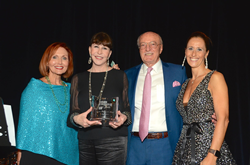
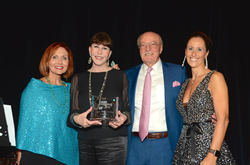
Mary Grace Gray-Event Chair, Shelby Hodge and Shafik Rifaat- Event Honorees, and Tiziana Triolo-American Cancer Society Development Manager

Over 400 guests gathered at The Ballroom at Bayou Place on Thursday, October 3rd, for Corks and Forks 2019. The event benefited the American Cancer Society and Hope Lodge Houston, southeast Texas’ first and only no-cost, high quality residential facility exclusively for cancer patients who travel to Houston for treatment but have limited resources for lodging. Hope Lodge Houston will be one of the country’s biggest Hope Lodge facilities and will open in early 2020. 

During the four-hour evening, guests enjoyed the live musical stylings of David Caceres, as KHOU’s Deborah Duncan emceed the event. Attendees placed bids on silent auction items, while auctioneer Alan Helfman led the live auction. Up for grabs were a range of donations from sponsors, including Astros tickets, exclusive restaurant tastings, vacations, jewelry, and even a 5-day trip to Italy.

Corks and Forks, otherwise known as Houston’s premiere fall foodie event, also boasted a culinary competition between fourteen of the city’s top restaurants. The award-winning chefs competed for both a culinary crown, selected by celebrity judges, and a Vignette Award, selected by attendees. In attendance were Joe Cervatez of Brennan’s of Houston, Stephen Conklin of La Table, Uchi’s Chris Davies, Liberty Kitchen’s Lance Fegen, Giancarlo Ferrara of Amalfi Ristorante Italiano and Bar, Ristorante Cavour’s Maurizio Ferrarese, Verdine’s Stephanie Hoban, Toulouse Café and Bar’s Emmanual Hodencq, Thomas Laczynski of Ouzo Bay, Le Colonial’s Hassan Obaye, Alex Padilla of The Original Ninfa’s on Navigation, Frank’s Americana Revival Chef Colin Shine, Jeffrey Taylor of Steak 48, and Bisou’s Laura Taylor.

Celebrity judges Mai Pham, Greg Morago, Whitney Mercilus, Kate McClean and Tony Vallone awarded Giancarlo Ferrara of Amalfi the top honors. Ferrara delighted both judges and guests with his Capesante in Padella con Crema Di Zucchine e Tartufo: sea diver scallops pan-seared in olive oil and sea salt, served with baby zucchini mousse, pioppini mushrooms, and black truffle cream sauce. His Sfogliatella Napoletana dessert was also a guest-favorite, and featured shells filled with ricotta cheese pastry cream, semolino, and candied orange, served alongside vanilla bean sauce.

Brennan’s of Houston Executive Chef Joe Cervantez took home the Vignette Award, after impressing guests with his Tasso and Grits Dumplings, served with NOLA-style barbeque shrimp.

Beyond the culinary competition and auctions, Corks and Forks spent part of the evening honoring special guests PaperCity Journalist Shelby Hodge, and Architect/UH Professor Shafik Rifaat. The event also honored VICTORY Houston, a volunteer branch of the American Cancer Society, whose award was accepted by long-time member Bebe Falik. Corks and Forks’ final honoree was 3 year-old Giovanni Albelice, who was diagnosed with Leukemia at just 18 months old. Albelice is still undergoing treatment. His parents spoke to attendees about the importance of giving.

Corks and Forks and its contribution to ending cancer as a major health concern was possible due to the event’s generous volunteers, donors, sponsors, and participants, as well as Event and Committee Chairs Mary Grace Gray, Tiziana Triolo, Sherri Zucker, Tracey Cleckler, Jeri Sonnier, Gabriella Dror, Rachel Boyd and Katherine Orellana Ross.

About Houston Corks and Forks

Houston Corks and Forks is a fundraising event hosted by the American Cancer Society, and has taken place in Houston for four years. The goal of the event is to raise critical funds to support the American Cancer Society’s continued mission to eliminate cancer as a major health concern. To learn more, visit houstoncorksandforks.org.

Share article on social media or email:

A Legacy of Gross Negligence Toward the World’s Children Described in New empty tomb Book


One child dying is hard to ignore. Yet, apparently, one million children dying around the world each year are hard to see.

History recounts great deeds by people in the past, with examples given in the new edition of empty tomb, inc.’s The State of Church Giving series.

In contrast, people in the U.S. are building a legacy of gross negligence toward the one million children of the world who are dying from preventable causes each year.

Who Is Ignoring the Dying Children?

One child dying is hard to ignore. Yet, apparently, one million children dying around the world each year are hard to see.

Contacts made with both secular and religious institutional and media leaders have not produced interest in mobilizing to help the dying children.

Too often, global tragedies are only recognized in the rearview mirror: “Never again.” Yet, these child deaths that are happening now are well documented, with calls to stop them going back decades. Still, these children die in what James Grant, then UNICEF executive director, described in 1985 as a “silent emergency.” The silence continues on a broad scale.

Who Are the Children Dying?

The one million children dying each year from preventable causes are not dying as the result of some villain’s willful actions. The children are dying from collective gross negligence among the rest of the world.

The one million children are caught in what is called the “Promise Gap.” In 1990 and again in 2000, world leaders met and “promised” to lower the world’s Under-5 Mortality Rate (U5MR) by setting target reduction goals.

Those goals were not met. The difference between the U5MR target reduction goals, and the actual U5MR numbers, is the Promise Gap. Had the goals been met, if the gap did not exist, one million more children would be alive each year. These are the children the rest of the world is ignoring.

It should be noted that progress was, in fact, made toward the U5MR reduction goals between 1990 and 2015. This progress is due, in large part, to the work of the Gates Foundation, as well as academics and governments, churches, religious organizations, and nonprofits.

However, the gap between the target reduction goals and the actual U5MRs has stayed fairly constant from 2000 through 2017, at about 25% between the goals and the actual U5MR. And that 25% difference results in one million children dying a year. Over the 27 years of goal-setting, at least 27 million children died in that Promise Gap.

Who Is in a Position to Lead?

The new book points to the church (across Christian denominations) to lead toward a solution.

The church is in a unique position to provide the leadership for an extra effort at this point in history to close the Promise Gap: 70% of the U.S. population still self-identifies as Christian; the church still maintains a global delivery network, including for medical needs; the church has a broad communication system; and the church has a common basis for holding its constituents morally accountable for the children’s survival.

The church should be a leader in vision-casting for the society, demonstrating through service in Jesus’ name the power to do good at a scale that matches both the church’s potential and the world’s need.

Instead, the church has allowed itself to become cultural wallpaper. The new book documents declines in giving as a percent of income, and membership as a percent of population, between 1968 and 2017.

At the same time, the book finds that both youth and adults in the U.S. are struggling. Citing various sources, the book notes young people are evidencing more anger and depression. “Deaths from despair (drugs, suicide, alcohol)” are on the rise, and experts refer to “an epidemic of loneliness.”

The mobilization of the church from cultural wallpaper to at-scale vision-casting resulting in broad-based giving by Christians, will not happen without the leadership of one or more key individuals.

Who Is the Church’s George Marshall?

The new book cites historical events accomplished in short timeframes, for example: the Victoria Falls Bridge (1903-1905); elimination of malaria in the U.S. (1947-1949); and the Marshall Plan for the post-World War II redevelopment of Europe (1948-1951).

The book quotes an entry about General George Marshall from President Henry Truman’s diary: “Marshall is the greatest man of World War II. He managed to get along with Roosevelt, the Congress, Churchill, the Navy and the Joint Chiefs of Staff …” It was General Marshall, as Secretary of State, who guided the plan for the European recovery. Countries in Europe, then facing potential famine and devastated industry, were able to raise their Gross National Products by 15% to 25%.

Today, a movement building on church people’s resources and the church’s networks is needed to quickly bring 40 countries on track to meet their U5MR target reduction goals by 2025. This extra effort is needed in addition to the ongoing activities that have contributed to the progress made so far.

What Can Be Done?

Based on the information in empty tomb’s new book, The State of Church Giving through 2017 (29th edition, October 2019), a proposal was drafted to build capacity for the church in the U.S. to work with the 40 countries to achieve their U5MR target reduction goals by 2025. The proposal suggests one possible strategy: expand empty tomb’s Mission Match[R] effort. Mission Match is described in the new book. An excerpt from the proposal follows:

“Background: Because the church in the U.S. does not understand affluence and the need for leadership: 1) Since the 1960s, trends are downward in church giving as a percent of income, and membership as a percent of U.S. population; 2) The church in the U.S. is weakening as an institution, increasingly seen as ‘boring’ and ‘irrelevant’; 3) U.S. society is floundering, for example as reported by Scientific American, ‘deaths from despair (from suicide, drugs and alcohol abuse)’ are rising (3/20/2019); 4) The percent of income given for the larger mission outside the church shrank faster than that for operations inside the church; 5) A Promise Gap exists between target goals set by world leaders for 2000 and 2015 to reduce the global U5MR, and the actual U5MR, though churches still maintain large global frontline networks where many of these deaths occur; 6) The church has not offered a positive agenda for the more than 60-year old affluence in the U.S. to engage church people’s imaginations on a scale both with their financial potential, and the global need of closing, in Jesus’ name, the Promise Gap.

“The Solution: Provide a positive agenda for affluence and close the Promise Gap by expanding Mission Match[R] exponentially, focusing on the 40 countries that were behind the curve in reducing their U5MRs to target levels, helping them be on track by 2025.

“Mission Match has been shown to interrupt the standoff between the Finance Committee/Trustees and the Mission Committee about congregational spending. From 2002-2016, over 80 congregations applied for and matched over $200,000 to do 113 different mission projects. In 15 congregations that received more than one Matching Contribution, spending on international projects as a percent of total congregational spending increased a weighted average of 34% between the first and last Matching Contributions. Relaunched with the focus on the 40 countries, congregational applications have not yet been received.

“empty tomb uses available UNICEF/IGME data to track progress on achieving target reduction goals for both global, and country-specific, U5MRs. With leadership from the Gates Foundation, UNICEF and other government agencies, and academics, e.g., Johns Hopkins University, progress has been made on global U5MR reduction. However, the Promise Gap continues. According to empty tomb’s analysis, the actual U5MR minus the global target reduction goal as a percent of the goal base was 14.6% in 1995, 24.2% in 2000, 26.4% in 2005, 25.8% in 2010, and 24.4% in 2015. However, data indicates it increased to 25.3% in 2017: reduction target, 31 under-5 deaths per 1,000 live births; actual, 39. During the 27 years world leaders ‘promised’ to reduce the U5MR, an average of at least 1 million children under 5 have died each year in this Promise Gap. This selective genocide, based on place of birth and parents’ lack of access to simple solutions experts say could address the 22 causes of death, continues.

“The church, with its delivery networks, theological framework, and potential audience of 70% of the U.S. population that still self-identifies as ‘Christian,’ can provide interventions to help put the 40 countries on track to achieve their U5MR target goals.

“The Budget: The goal budget is $9.6 billion a year, with 85%, or $8.2 billion, matched by congregations. The resulting $16 billion annually reflects need estimates to help achieve the global U5MR reduction goal.

“Stepwise, over five years, a popular movement, with up to about half of the U.S. population donating $50 a year to Mission Match, would build toward the $9.6 billion.

“To reach that point, initial investment from an estimated one-third of those on the Forbes 400 list who may self-identify as Christian, could provide the $9.6 billion with less than 1% of their wealth the first year (2021), with $8.2 billion of that doubled when matched by congregations. The second year, the super rich donations could decrease by 20%, with increasing popular support of $50 donations from the ‘regular rich’ (by world standards). Each year, the super rich could decrease their support by 20% of the original amount, with more broadly-based donations from the regular rich.

“An estimated 98% of $15.5 trillion (2018) U.S. Disposable Personal Income is in the hands of the regular rich, those not on the Forbes 400 list. Why, then, focus on Christians on the Forbes 400 list? Because the super rich bring something the regular rich don’t have: the confidence that actions they take can make a difference. Too many regular rich just don’t believe that their $50 a year can make an impact. The super rich can lead.

“The goal is to close the Promise Gap by 2025, with a global reduction target U5MR of 22.5. The method: assist the 40 countries to reach their 2025 target reduction goals of 30.3 to 36.3.

“For 2019, a suggested amount from a few super rich might be $250 million, with a 2020 amount of $2.5 billion, to build capacity.”

The question remains: Will the church contribute to a legacy of gross negligence toward the one million children dying in the Promise Gap, or will the church provide the vision-casting to mobilize Christians to give what’s needed to address this critical need?

empty tomb is committed to continue to look for the leader(s) who can mobilize church giving on behalf of the children dying in the Promise Gap, whether through networking to reach self-identified Christians on the Forbes 400 list, or working with a gifted capacity-builder who can take this idea from zero to 100 in a short timeframe.

The new book, The State of Church Giving through 2017: What a Can-Do Attitude in the Church+$16 Billion Can Do in Jesus’ Name for the Children Dying in the Promise Gap, the 29th edition (October 2019) is available from Wipf and Stock Customer Service by phone at 541-344-1528 or orders[at]wipfandstock.com. For more information, contact empty tomb at (217) 356-9519.