Category Archives: Health

What is new in the field of Health. Trending topics, and cutting edge research in the are of Health. Press Releases that give us updates on Health.

87% of Workers Say They’ve Had At Least One Toxic Boss: FlexJobs Reports


“Especially for those in a leadership role, we hope these findings underscore how important healthy workplace relationships are to shaping positive employee experiences and supporting strong health and wellness for all workers,” said Toni Frana, Lead Career Expert at FlexJobs.

FlexJobs’ survey, which ran from August 2 to August 17, 2023, explored professionals’ experiences with both toxic managers and toxic co-workers in order to better understand the prevalence of toxic behaviors in the workplace and their impact on employee well-being. Summarized findings below.

State of the Workplace: Toxic Managers

Experience with Toxic Bosses: The majority of people (87%) said they’ve had one (57%) or more than one (30%) toxic bosses or managers in their career, compared to 13% of respondents who said they’ve never had a toxic boss or manager.

When asked which qualities made a boss or manager toxic, workers overwhelmingly listed being a “poor communicator” (43%), acting “dismissively” (41%), and “micromanaging” (40%) as the top three reasons. Other factors specified were:

  • Passive-aggressive behavior (40%)
  • Failure to foster growth (34%)
  • Rude or offensive behavior; used sarcasm and put-downs (33%)
  • Had unreasonable expectations (30%)
  • Didn’t praise or give credit appropriately (26%)
  • Gossiped (22%)
  • Lacked boundaries (21%)
  • Used threats or intimidation (20%)
  • Gaslighting (20%)
  • Discriminatory or sexually inappropriate comments or actions (18%)

Dealing with Toxic Managers: While the majority of workers (43%) said they “quit or left” their job because of a toxic boss or manager, respondents also addressed toxic behavior by:

  • Giving feedback directly to their boss, which was ignored (28%)
  • Giving feedback to HR, which was ignored (21%)
  • “Quiet quitting” their job (12%)
  • Giving feedback directly to their boss, which was applied (11%)
  • Giving feedback to HR, which was applied (8%)

Effects of a Toxic Boss: More than half (51%) of respondents said they’ve experienced “increased anxiety” as a result of having a toxic boss or manager, followed by mental fatigue (44%), and physical symptoms (33%), such as headache, stomach troubles, sleep troubles, or changes in appetite. Job performance also suffered, as specified below.

  • Increased depression (32%)
  • Decline in engagement (30%)
  • Questioning of skill set (30%)
  • Decline in productivity (24%)
  • Decline in performance (24%)
  • Misdirected stress on friends/family (21%)
  • Imposter syndrome (16%)

Notably, “increased anxiety” and “mental fatigue” were the two leading responses across generations, signaling the far-reaching repercussions toxic behaviors from managers can impart across both new and seasoned workforces:

  • Gen Z – Increased anxiety (34%), mental fatigue (25%)        
  • Millennials – Increased anxiety (49%), mental fatigue (41%)
  • Gen X – Increased anxiety (61%), mental fatigue (55%)
  • Boomers – Increased anxiety (52%), mental fatigue (43%)

State of the Workplace: Toxic Co-workers

Experiences with Toxic Co-workers: Similarly to respondents’ experiences with toxic managers, the survey found that the majority of people have also dealt with one or more toxic co-workers:

  • Yes, I have had a toxic co-worker (57%)
  • Yes, I have had more than one toxic co-worker (27%)
  • No (16%)

When asked what made their co-worker(s) toxic, 44% said “excessive complaining and negativity,” as well as “acting unprofessionally” (41%), and “not being a team player” (40%). Other toxic traits cited were:

  • Manipulative or self-serving behavior (35%)
  • Lack of accountability (34%)
  • Passive-aggressive behavior (33%)
  • Gossiped (32%)
  • Focused on blame rather than solutions (32%)
  • Poor communicator (30%)
  • Rude or offensive (30%)
  • Lacked boundaries (29%)
  • Took credit inappropriately (29%)
  • Discriminatory or sexually inappropriate comments or actions (17%)
  • Gaslighting (14%)

Dealing with Toxic Co-workers: Providing feedback directly to the co-worker (26%) or HR (20%), although ignored, were the leading ways people said they’ve handled a toxic colleague. Other methods included: 

  • Quit/left their job (16%)
  • Gave feedback directly to the co-worker, which was applied (15%)
  • Gave feedback to HR, which was applied (14%)
  • Quiet quit (8%)

For more information, please visit https://www.flexjobs.com/blog/post/toxic-managers-coworkers-make-toxic-workplace or contact Shanna Briggs at [email protected].

*FlexJobs created the survey, which was promoted to general audiences and its subscribers/members primarily through social media and newsletters. FlexJobs used a multiple choice and multi-select question format via SurveyMonkey’s online platform. The survey ran from August 2, 2023, to August 17, 2023.

Demographic breakdown of the 8,487 respondents: Gender: women (65%), men (33%) prefer not to identify/self-describe (2%); Generation: Gen Z (12%), millennial/Gen Y (40%), Gen X (31%), baby boomer (16%), silent generation (1%); Education: less than a high school degree (2%), high school degree or equivalent (11%), some college but no degree (21%), associate’s degree (11%), bachelor’s degree (34%), graduate degree (21%); Career level: entry-level (11%), experienced (51%), manager (22%), senior level manager (11%), executive (5%); 43 percent had children 18 or younger living at home with them.

About FlexJobs
FlexJobs is the leading career service specializing in remote, hybrid, and flexible jobs, with over 135 million people having used its resources since 2007. FlexJobs provides the highest-quality database of vetted remote and flexible job listings, from entry-level to executive, startups to public companies, part-time to full-time. To support job seekers in all phases of their career journey, FlexJobs also offers extensive expert advice, webinars, and other resources. In parallel, FlexJobs works with leading companies to recruit quality remote talent and optimize their remote and flexible workplace. A trusted source for data, trends, and insight, FlexJobs has been cited extensively in top national outlets, including CNN, the Wall Street Journal, the New York Times, CNBC, Forbes magazine, and many more. FlexJobs also has partner sites Remote.co and Job-Hunt.org to help round out its content and job search offerings. Follow FlexJobs on LinkedIn, Facebook, Twitter, Instagram, TikTok, and YouTube.

Media Contact

Shanna Briggs, FlexJobs, 866-991-9222, [email protected], www.flexjobs.com

SOURCE FlexJobs


ISPE Unveils First of Its Kind Guidance Document and Launches New Community of Practice on Pharmaceutical Compounding


ISPE Guide: 503B Compounding – Regulatory Basis and Industry Good Practices for Outsourcing Facilities

In response to industry demands and regulatory complexities, ISPE developed this comprehensive guide to serve as an invaluable resource for 503B outsourcing facilities, aiding them in understanding the regulatory requirements outlined in the FD&C Act Section 503B. The Guide combines FDA regulations and recommendations with pharmaceutical industry standards, providing a go-to document for 503B facilities of all sizes. Various aspects of the compounding process are covered, from the importance of CGMPs to establishing a quality system (including qualifying suppliers and vendors), receipt of raw materials/active ingredients, and shipping of finished drug products. The Guide also provides recommendations for facility and equipment design, drawing from aseptic manufacturing practices and scaled to meet the needs of 503B facilities, and presents industry best practices for aseptic manufacturing, emphasizing personnel training and qualification.

The Guide addresses microbiological and analytical testing, including verifying the suitability of compendial methods and validating non-compendial methods. It covers beyond-use dating, offering essential insights into limited stability testing along with stability best practices. A dedicated chapter on preparing for regulatory inspections provides facilities with a valuable resource for this key aspect in ensuring compliance.

ISPE Community of Practice on Pharmaceutical Compounding

Recognizing the pressing need for best practice sharing, training, and guidance for creative problem solving in compounding pharmacies, ISPE launched a new ISPE Community of Practice (CoP) on Pharmaceutical Compounding. This CoP is designed to serve as a dynamic and collaborative community for ISPE members to exchange insights, share best practices, and engage in discussions related to pharmaceutical compounding through the ISPE Engage online platform.

The CoP seeks to foster innovation to improve the practice of pharmaceutical compounding, and to disseminate ideas, knowledge, and best practices through generation of ISPE content, including guidance documents, Pharmaceutical Engineering® Magazine articles, webinars, blog posts, conference presentations, and training materials. The new CoP will provide a venue for industry and regulatory informal interactions to drive practical and effective design and operational practices, while addressing regulatory expectations and providing solid scientific justification for practices accepted by industry and regulators alike.

Individuals interested in being considered for participation on the newly forming Steering Committee to lead the ISPE CoP on Pharmaceutical Compounding are urged to email ISPE at [email protected].

“ISPE is proud to provide critical guidance to the pharmaceutical compounding industry with the release of the “ISPE Guide: 503B Compounding – Regulatory Basis and Industry Good Practices for Outsourcing Facilities” and the launch of the ISPE CoP on Pharmaceutical Compounding,” said Tom Hartman, ISPE President & CEO. “These comprehensive resources signal a transformative step towards fostering collaboration, innovation, and excellence among professionals in this vital sector, and underscore our commitment to advancing knowledge and enhancing compliance within the industry. We believe these initiatives will play a pivotal role in shaping the future of pharmaceutical compounding, ultimately benefitting patients and communities worldwide.”

About ISPE
The International Society for Pharmaceutical Engineering (ISPE) is a global nonprofit association serving its members through leading scientific, technical, and regulatory advancement across the entire pharmaceutical lifecycle. The 21,000+ members of ISPE provide solutions to complex pharmaceutical industry challenges through innovation, member and workforce development, and technical, regulatory, and compliance collaborations in more than 120 countries worldwide. Founded in 1980, ISPE has its worldwide headquarters and training center in North Bethesda, Maryland, USA, and its operations center in Tampa, Florida, USA. For more information, visit ISPE.org.

Media Contact

Brad Ettinger, VP Marketing & Business Development, ISPE, 3013649203, [email protected]www.ispe.org

SOURCE ISPE

CS Analytical Expands USP 1207 Container Closure Integrity Testing Programs for IV Bag Systems


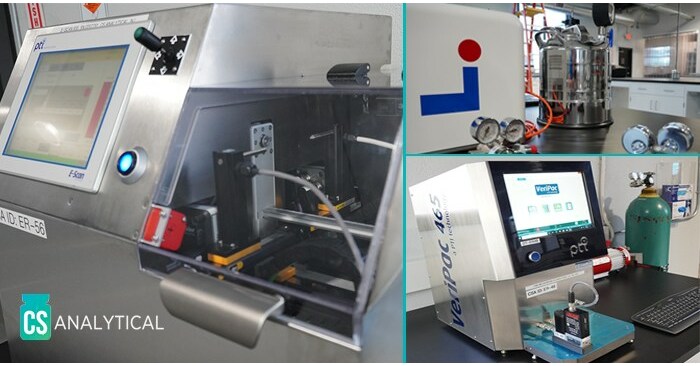
Flexible IV bag systems have been in use for many decades. However, with recent regulatory expectations that require a more extensive approach to verifying container closure integrity, highlighted by USP 1207, the ability to effectively test these systems present many unique challenges. The size and fill volume, as well as the placement and quantity of ports, can drastically impact the overall integrity of the package system. While in some cases, technologies documented in USP 1207, such as vacuum decay may still be viable, in cases where these limiting factors play a critical role in method selection, the CS Analytical Team has developed methodologies that can be customized to your specific IV Bag configuration that still offer the ability to use positive controls and validate to specific micron level leak rates. Additionally, CS Analytical remains committed to exploring new technologies and applications in support of container closure integrity testing flexible IV bag systems.

About CS Analytical Laboratory
The only FDA regulated, cGMP laboratory dedicated exclusively to the complex world of drug and medical device container and package qualification testing, the CS Analytical Team includes the world’s leading experts on all relevant USP and EP requirements and the thought leaders and pioneers on CCI (container closure integrity – CCI) testing. Offering a full suite of laboratory services to include all USP, EP and JP procedures specific to glass, plastic and elastomers as well as complete USP 1207 services that span basic feasibility studies, component qualification programs and advanced method development and validation for helium leak testing, vacuum decay, high voltage and headspace analysis leak testing. CS Analytical is the one source that can ensure your medical product container and package system meets the strict and complex regulatory requirements.

Media Contact

Brian Mulhall, CS Analytical, +1-888-571-1207, [email protected], https://csanalytical.com/ 

SOURCE CS Analytical

NovaBone’s New Bioactive Glass Syringe for Foot & Ankle


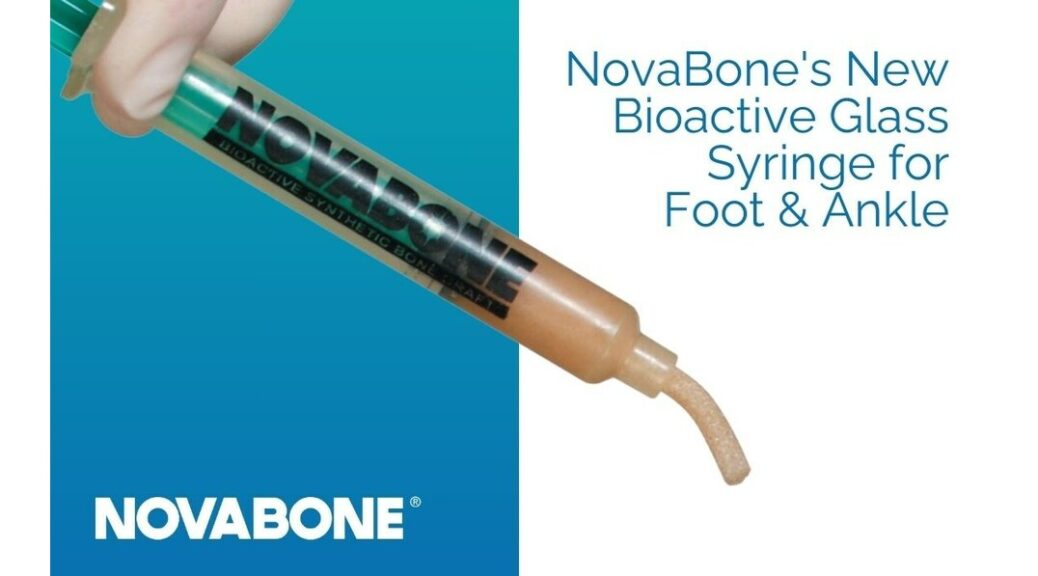
NovaBone Products launches a first foot and ankle-specific syringe delivery system for its bioactive glass delivery system.

ALACHUA, Fla., Sept. 18, 2023 /PRNewswire-PRWeb/ — NovaBone Products, leader in synthetic biologics, is pleased to announce the company has made commercially available a new syringe for targeted delivery of its 45S5 bioactive glass putty device for the foot and ankle market. The newly launched syringe comes in both a 2.5cc and a 5cc formulation.

“We are excited to provide our foot and ankle surgeons with a specific solution to deliver our best-in-class synthetic putty to their patients. This is NovaBone’s first product specifically designed for the foot and ankle market. Along with our NovaForm Wound Matrix clearance earlier this year, this shows our commitment to diversifying our portfolio, leveraging our Bioactive Glass manufacturing expertise, and providing surgeons in multiple specialties with solutions best suited for their patients.” said Sean Finnerty, Executive Vice President of Sales and Marketing at NovaBone.

NovaBone’s Putty, cleared by the FDA in 2006, is a highly effective bone graft substitute that closely mimics the mineral composition of natural bone. NovaBone provides an ideal environment for new bone formation, facilitating the integration of graft material and host tissue.

The foot and ankle syringe is commercially available in the US Market. Dr. Charles E. Cook of Dallas, Texas, was the first foot and ankle surgeon to use the new product designed for medical use of bioactive glass.

“I had the opportunity to use the new 2.5cc syringe delivery system in the OR today. The putty met all my needs and expectations. The putty flowed nicely into the osseous defect, and the putty’s viscosity provided a nice tapenade effect, providing hemostasis. I have been using the larger volume delivery system of NovaBone putty in my practice with great success, and these smaller delivery systems are a much-needed addition for diverse applications.”

For more information on the new bioactive glass syringe, contact us today by visiting our website, novabone.com.

About NovaBone

NovaBone, a Halma company, is privately held and based in Florida since 2002. NovaBone developed the first bioactive glass for bone healing offered to the orthopedic community and has long been at the forefront of bioactive glass bone graft devices. It has developed numerous formulations and delivery systems of its patented, bioactive glass technology platform that results in accelerated bone growth. In total, their exclusively formulated bone graft substitute has been used for the repair of osseous defects throughout the skeletal system for over a decade and used in over a million clinical applications with unparalleled success, validating the safety and efficacy of NovaBone’s technology.

Media Contact

Sean P. Finnerty, NovaBone Products, 1 908 432 3353, [email protected], www.novabone.com 

SOURCE NovaBone Products

AltaPointe Health Recognizes Suicide Prevention Month by Shedding Light on a Dark Issue


Across the US, September is set aside as National Suicide Prevention Month, an annual observance dedicated to raising awareness about suicide, its prevention, and the importance of mental health.

“National Suicide Prevention Month is a great opportunity for us at AltaPointe Health to help educate the public about the warning signs of suicide, provide information about available resources, and promote open conversations about mental health and suicide prevention,” explained Ashley Blount, a licensed marriage and family therapist (LMFT) with AltaPointe Health. “Our mental and emotional health is just as important as our physical health for our overall well-being and ability to function in our daily lives.”

UNDERSTANDING THE CRISIS

The first step in suicide prevention is understanding the factors that contribute to this crisis. Mental health struggles, such as depression, anxiety, and substance abuse, often play a significant role. Isolation, loneliness, and the feeling of being a burden can exacerbate these struggles.

“And when the pandemic hit, all of these risk factors only increased. When the spread of COVID-19 reached our community here in Alabama, we began to see an increase in the number of individuals coming in for mental health assessments,” explained Blount. “Seeing sickness and loss, both on a local and larger scale, can be frightening. Many of our patients experienced an increase in anxiety, fearfulness, sadness, grief, as well as isolation.”

Another major contributor to the current crisis is that societal stigma around mental health can deter people from seeking help when they need it most. Research by the National Violent Death Reporting System found that 3 out of 4 persons who died by suicide between 2003 and 2018 were not in treatment for a mental health or substance use disorder at the time of their death, and 2 out of 3 had never received any treatment.

BREAKING THE SILENCE

One of the most important aspects of suicide prevention is encouraging open conversations about mental health. People should feel safe discussing their feelings and seeking support.

“One way that you can start a conversation about mental health is by simply checking in with your family members, friends, coworkers, and neighbors. Ask them how they are doing in their everyday lives,” said Blount. “If they seem to be struggling emotionally, you can remind them that they are not alone and that there are resources available to help support them in their time of need.”

Talking regularly about emotions and feelings helps to destigmatize mental health issues and can make it easier for individuals to seek help before their problems escalate to a crisis point.

SPOTTING THE WARNING SIGNS

Awareness of the warning signs of suicidal ideation is another crucial aspect of prevention. Some common signs include talking about wanting to die, feeling hopeless or trapped, increased substance use, withdrawing from friends and family, and giving away possessions. Recognizing these signs and taking them seriously can make a life-saving difference.

“We cannot ignore the warning signs and symptoms associated with suicidal ideation when we recognize them in our own lives or the life of someone else. One simple conversation about how they may be feeling, a kind word of encouragement, or an offer to help them reach out for treatment in their time of struggle may be the very thing that helps them realize their worth and know that their life matters,” added Blount.

SEEKING HELP

If you or someone you know is struggling with suicidal thoughts, it is essential to seek help immediately. One of the easiest ways to do that is by dialing 988. The 988 Suicide and Crisis Lifeline provides 24/7, free, and confidential support for people in distress and their loved ones.

“It’s okay to ask for help. Realizing our own needs and limitations is actually a strength, and having the courage to reach out to others is one of the first steps in recovery and finding the solutions we are looking for,” explained Blount. “Everyone was created for a purpose. Every life has value and great worth, even if you don’t believe that right now. We live in a world full of people, and we all carry burdens or experience stressful situations that may require us to seek help beyond our everyday social circle of influence. As a professional working in the mental health field, I want people to realize that partnering with them to help them realize their worth and getting to know their story is one of my greatest passions and something I am honored to take part in.”

LOCAL RESOURCES

AltaPointe Health is an extensive healthcare system providing primary and behavioral healthcare. Each year it provides more than 1 million services to 45,000 patients across Alabama. AltaPointe operates two psychiatric hospitals serving children and adults, a Behavioral Health Crisis Center, 27 outpatient behavioral and primary health care clinics, and BayView Professional Associates, its private practice arm serving southwest Alabama. AltaPointe’s access to care team can help an individual find the right program to fit their needs by calling (251) 450-2211.

Media Contact

April Douglas, Director of Public Relations, AltaPointe Health, (251) 544-4639, [email protected]www.AltaPointe.org 

Twitter Facebook

SOURCE AltaPointe Health