
Category Archives: Industry: Healthcare

Healthcare is an ever evolving industry, and field. These Press Releases, will keep you up to date on the newest, greatest, best, solutions available.

Gensuite Responds Rapidly to COVID-19 with New Pandemic Exposure Tracking Tools Available Now to Its Entire Subscriber Group


“As a software provider whose core mission is partnering to support the health and safety commitments of our subscribers, we understand that our role is more critical now than ever. Gensuite is committed to quickly supporting the community to address the challenges of the COVID-19 pandemic.”

Gensuite, a cloud-based compliance and management systems software solutions provider, responds to the Coronavirus (COVID-19) outbreak with new pandemic management capabilities to help its subscribers manage the impact of the virus in their operations.

Following an early and seamless transition to remote work globally, Gensuite quickly established an executive collaboration forum across its subscriber group to share key needs and solutions to respond to the crisis. Developed in concert with this forum, Gensuite’s Incident Management module now offers a Pandemic Exposure event reporting form championed by the EHS & Security leadership team at Trane Technologies. The new capability was developed on an expedited basis during the week of March 16, 2020 to enable tracking of workplace exposure incidents involving COVID-19; and has been made available to all subscribers. As of March 31, over 40 Gensuite subscribers have activated the new tracking module as part of their standard subscription and available for use by their respective operating sites worldwide.

A Pandemic Exposure Log extension is scheduled for release the week of April 6 to enable tracking of exposures to individual persons (employees, contractors, or visitors) resulting from an exposure event at a site. Key features of the event and the associated log include the ability to track follow-up actions taken at the site, and the status of individual exposed persons, as well as testing, quarantine and return to work dates. The new module conforms with HIPPA and GDPR requirements, with robust access and privacy controls, reporting and analytics through the integrated Tableau platform, and Google mapping capabilities to visualize exposure events and data.

Gensuite has shared a detailed summary of key functionality in its core suite that is immediately helpful to its subscribers for managing key needs and issues arising from COVID-19. Gensuite’s 2020 Product Roadmap is also being pivoted to focus on supporting subscribers with solutions to help manage the risks associated with COVID-19, such as the upcoming release of Gensuite Reg Tracker updates on April 3 to allow subscribers to report and track COVID-19 regulatory changes.

“As a software provider whose core mission is partnering to support the health and safety commitments of our subscribers, we understand that our role is more critical now than ever. Gensuite is committed and working quickly to support our global subscriber community with the challenges of the COVID-19 pandemic,” says Gensuite CEO, R. Mukund.

About Gensuite

Gensuite® enables companies to implement robust cross-functional compliance & management systems – locally, globally and across diverse operating profiles. Our comprehensive cloud-based software suite features intuitive, best-practice process functionality, flexible configurations and powerful extensions. For over two decades, we’ve helped companies manage safe & sustainable operations worldwide, with a focus on fast return on investment (ROI), service excellence and continuous innovation. Join over 1,000,000 users that trust Gensuite with their compliance and EHS&S software system needs.

Share article on social media or email:
Clareto Announces Partnership with Diameter Health to Streamline Insurance Processes


News Image

Clareto, an innovator in acquiring electronic health data for insurance underwriting and claims processes, today announced its partnership with Diameter Health, developer of the leading platform for clinical data normalization and enhancement. Clareto will now offer an additional product, powered by Diameter Health’s technology, to significantly improve the look, feel and usability of electronic health data acquired through the Clareto network of HIEs, provider organizations, and technology vendors.

Clareto recognized that existing health records have a lot information that can be duplicative or not important for the insurance use case, making it difficult to digest and time-consuming for end-users to review. Combining multiple records from different sources magnifies these problems. It sought a technology partner that would provide insurance carriers with the clean, reliable clinical data needed to make accurate risk assessments and adjudicate claims. It ultimately selected Diameter Health for its platform’s ability to cleanse and enrich clinical data from any certified EHR – and for the company’s proven success with dozens of the nation’s leading HIEs as well as national and regional health plans.

“The insurance industry has access to more clinical information than ever before, but end-users aren’t able to derive much value when they have to trudge through disorganized, redundant data,” said Dave Dorans, CEO at Clareto. “We’re excited to work with Diameter Health to deliver clean clinical insights across our entire network so our customers can modernize the underwriting processes and accelerate their time-to-value.”

Now working with Diameter Health, Clareto will provide clients with a carrier-friendly view of clinical data that is normalized, consolidated, enriched and deduplicated. This output reduces the likelihood of a carrier missing a crucial condition or impairment by highlighting abnormal or critical pieces of information. The improved presentation of the data will allow carriers to both expedite their review of records and enable more accurate decision-making.

“Just as we have seen with our health insurance customers, life and disability insurance carriers face the same data quality challenges that arise from the variability that pervades the healthcare data ecosystem,” said Eric Rosow, CEO at Diameter Health. “We look forward to working with Clareto to relieve administrative burden so analysts and underwriters in its network have easy access to the information they need, when they need it.”

About Clareto

MedVirginia, Inc., doing business as Clareto, has been a long-time innovator in the field of health information exchange. Today, the combination digital health and insurtech company is translating its unique history and experience in healthcare interoperability to commercialize novel use cases and pursue emerging market opportunities, with an initial focus on modernizing insurance underwriting and claims processes. Based in Richmond, Virginia, Clareto is led by a multi-disciplinary management team with deep expertise in the healthcare and insurance sectors. For more information about Clareto, please visit http://clareto.com/.

About Diameter Health

info@diameterhealth.com [Diameter Health enables organizations to better leverage healthcare data through the normalization, cleansing, deduplication and enrichment of data from EHRs and other clinical data source systems. By creating a single, unified source of longitudinal structured patient information, Diameter Health helps organizations that depend on multi-source data streams (such as health plans, Health Information Exchanges (HIEs), and health systems) with quality reporting, risk adjustment, care coordination and population health initiatives. Diameter Health is the first organization to earn eMeasure Certification from the National Committee for Quality Assurance (NCQA) and then Health IT Certification from the Office of the National Coordinator for Health Information Technology (ONC). For more information, visit the website http://www.diameterhealth.com or email us at info@diameterhealth.com

Share article on social media or email:
Virginia Removes Barriers to Students’ Sunscreen Use with ASDSA’s SUNucate Model Legislation


ASDSA SUNucate logo

I congratulate Virginia for adopting this important, common sense legislation that will help protect students from overexposure to the sun, which is essential to preventing skin cancer later in life.

Virginia’s public school students will now be able to possess and use sunscreen on school buses, school property and at school-sponsored events without a note thanks to the passage of Senate Bill 44, signed by Governor Ralph Northam on March 31.

Virginia is the 25th state to incorporate policies from model legislation developed by the American Society for Dermatologic Surgery Association (ASDSA). The legislation is a key part of the SUNucate initiative that addresses barriers to sunscreen use in school and camps and promotes sun-safe behavior. ASDSA advocated for this legislation together with the 60+ member SUNucate Coalition, including the Medical Society of Virginia and the Virginia Dermatology Society (VDS).

“I congratulate Virginia for adopting this important, common sense legislation that will help protect students from overexposure to the sun, which is essential to preventing skin cancer later in life,” said ASDSA President Marc D. Brown, MD. “ASDSA looks forward to working with partners in the states that have not yet passed SUNucate policies to advocate for the removal of barriers to sunscreen use in schools that still exist.”

“VDS was pleased to support this critical effort in Virginia,” said ASDSA member and VDS Board member Farhaad Riyaz, MD. “Virginia’s students will now have the opportunity to learn sun-safe habits from an early age.”

The need for such legislation arose after concerns were raised by dermatologists and reports in the national media about broad “medication bans” that are in place in schools across the country requiring students to have a note or prescription from a physician in order to have these medications. Sunscreens are regulated as over-the-counter drugs under the Federal Food, Drug and Cosmetic Act, making them subject to these bans. Although these policies are meant to protect children, they also hinder them from accessing sunscreen during outdoor school activities and put them at risk of damaging sun exposure.

To learn more about SUNucate, visit http://asds.net/SUNucate.

# # #

About ASDSA

With a membership of 6,400+ physicians, ASDSA is a 501(c)(6) association dedicated to education and advocacy on behalf of dermatologic surgeons and their patients. For more information, visit http://asds.net/ASDSA

Follow @ASDSAdvocacy on Facebook, Twitter and Instagram!

Share article on social media or email:



ConsenSys Health Launches Global STOP COVID-19 Ethereum Hackathon


ConsenSys Health issued a call for hundreds of healthcare and life sciences leaders worldwide to serve as mentors, lending their industry expertise to Web3.0 technologists as they come together to develop solutions.

Today, ConsenSys Health announced the Stop COVID-19 Virtual Hackathon launching April 13 and running until May 11, 2020. The hackathon is co-sponsored by Gitcoin, Hyperledger, ConsenSys, One Million Developers, and OpenMined, leveraging blockchain and other emerging technologies to improve data access and veracity for researchers, healthcare experts, and life sciences professionals attempting to better understand and stop COVID-19 and prevent future pandemics. ConsenSys Health is seeking to accelerate the launch of operational technology as part of the fight against COVID-19, and has issued a call for hundreds of healthcare and life sciences leaders worldwide to serve as mentors, lending their industry expertise to Web3.0 technologists as they come together to develop solutions.

“In the face of the COVID-19 crisis, our goal for this global competition is to bring together healthcare and life sciences domain experts with engineers from three open source software communities: Ethereum, Hyperledger, and OpenMined. Working together for the first time with a very specific toolset, this interdisciplinary group will rapidly create highly-relevant solutions with the potential to have both immediate- and long-term positive impact,” said Heather Leigh Flannery, Founder and Chief Executive Officer of ConsenSys Health. “The core of our effort is to leverage converging innovations like blockchain, tokenization, zero-knowledge cryptography, and federated machine learning to advance immediate and long-term public health goals while preserving individual privacy.”

The STOP COVID-19 Hackathon solutions will be evaluated by each phase of the pandemic they address, leveraging the model proposed by McKinsey & Company: Resolve, Resilience, Return, Reimagination, and Reform. The healthcare and life sciences expert volunteers serving as mentors will help software developers understand key topic areas in those phases. Some of these areas include clinical trials for treatments and vaccines, global screening data, vulnerable and at-risk populations, identity provenance and consent, privacy-preserving location tracking, and supply chain optimization for ventilators and other vital medical supplies.

The Hackathon is hosted on Gitcoin, a platform for developers to collaborate and monetize their skills while working on open source projects through bounties, grants, and hackathons. Gitcoin has facilitated over 4 million dollars of value transfer for open source work within their community of 36,000 developers. For those looking to compete, the prize money for the STOP COVID-19 Hackathon totals $20,000, including $10,000 for first place, $7,000 for second place and $3,000 for third place. Winning entries will be fast-tracked for additional funding sources through Gitcoin and ConsenSys grants, as well as other funding opportunities within ConsenSys Health. For those looking to learn more about blockchain, ConsenSys Academy is offering two full weeks of training for free to novice Web 3.0 developers who want to get up to speed quickly to contribute to the hackathon. Kaleido, an industry leading enterprise blockchain platform, will be available for “Technical Tuesday” and “Walkthrough Wednesday” virtual sessions throughout the Hackathon, and ConsenSys product Infura will also have open hours with engineering every Thursday.

“To take on the challenges brought forth by COVID-19, it’s vital to marshall experts from across disciplines and markets,” said Brian Behlendorf, executive director at Hyperledger. “This Hackathon brings together the medical and scientific communities and elite developers with the singular goal of developing operational solutions, built on cutting-edge software, to mitigate damage and speed recovery from this pandemic. Hyperledger fully embraces this opportunity to help accelerate innovation on this front and will engage its community and technologies in this incredibly important work.”

Starting April 6, Hackathon participants will be able to join Q&A-based virtual panels with mentors from academia, public and private sector healthcare and life sciences organizations to better understand the problem space, as well as identify mentors as the right fit for future endorsements of projects. Close collaboration of industry mentors and software engineers ensures that the solutions generated will meet the complex requirements of the healthcare and life sciences ecosystem.

The confirmed judges for the Hackathon to date include Joseph Lubin, Founder and CEO of ConsenSys and Co-Creator of Ethereum; Brian Behlendorf, Executive Director of Hyperledger; Dr. Alex Cahana, Chief Medical Officer and EMEA Market Leader of ConsenSys Health; Dr. Sean Manion, Chief Scientific Officer of ConsenSys Health, Dr. Jonathan Holt, Chief Medical Informatics Officer of ConsenSys Health, and Debbie Bucci, Director, Patient-Mediated and Institutional Data Exchange at ConsenSys Health.

To join the STOP COVID-19 Hackathon as a mentor, partner or participant, visit ConsenSysHealth.com/COVID-19.

To learn more about the development resources and training available, register to join an introductory virtual event on Monday, April 6 at 12 EDT.

About ConsenSys Health

ConsenSys Health is a spin-off from ConsenSys, one of the world’s largest blockchain companies, focused on solving the biggest problems in healthcare. We are part of an ecosystem of technology and industry partners seeking to drive positive, inclusive change in healthcare and the life sciences. As a member of the Covid-19 Healthcare Coalition, we are committed to developing solutions to fight the current pandemic and advance the healthcare ecosystem to protect our future privacy and security. For more information, please visit http://www.ConsenSysHealth.com.

About Gitcoin

Gitcoin is a community and platform for developers to collaborate and monetize their skills while working on Open Source projects through bounties.

Share article on social media or email:

RIT leads regional response to ventilator shortage, creating prototype to aid coronavirus fight


The prototype ventilator plugs into the oxygen source available in most hospital rooms or into a tank of oxygen.

The prototype ventilator plugs into the oxygen source available in most hospital rooms or into a tank of oxygen.

“Rochester has always been a leader in innovative technology—and now, we are using our unique expertise to help fill a critical need for ventilators during the global COVID-19 pandemic. … I am profoundly grateful to RIT.” – U.S. Congressman Joseph Morelle

Rochester Institute of Technology is leading an effort involving local companies and healthcare experts to produce a prototype ventilator designed to help meet the continuing surge of respiratory cases as a result of the coronavirus.

According to Nabil Nasr, associate provost and founding director of the Golisano Institute for Sustainability (GIS), the collaborative project between RIT researchers—working in tandem with regional experts and healthcare providers—resulted in the creation of an emergency prototype ventilator that will help doctors and nurses on the front lines in the medical treatment of patients fighting COVID-19.

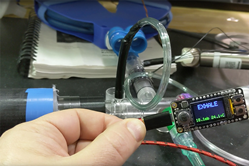
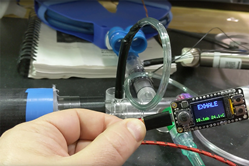
The prototype ventilator plugs into the oxygen source available in most hospital rooms or into a tank of oxygen. Laboratory testing so far has shown performance successfully meeting clinicians’ requirements for COVID-19 patients.

“This has been a collaborative effort between the project team and the clinicians working together with only one focus: meeting the needs of our community and beyond,” Nasr said.

He credited U.S. Congressman Joseph Morelle with getting the project started three weeks ago when Morelle called him immediately after receiving a briefing about the critical ventilator shortage from New York Gov. Andrew Cuomo.

“Rochester has always been a leader in innovative technology—and now, we are using our unique expertise to help fill a critical need for ventilators during the global COVID-19 pandemic,” Congressman Morelle said. “In times of crisis, we must come together to help our fellow Americans. I am profoundly grateful to RIT for their collaboration and commitment to this project, which will have life-saving implications for our community and our country.”

Nasr moved quickly to assemble a team comprising nearly two dozen research engineers and staff at GIS as well as senior engineers from the Center for Integrated Manufacturing Studies (CIMS) and the New York State Pollution Prevention Institute (NYSP2I), along with several RIT co-op students.

Led by Michael Thurston, director of the New York State Center of Excellence in Advanced and Sustainable Manufacturing at RIT as well as technical director and research faculty at GIS, team members have worked virtually around the clock with project partners since mid-March to develop the prototype ventilator for production, pending final U.S. Food and Drug Administration (FDA) approval.

“Our partners promised all of their resources and made their facilities available to help us,” said Nasr, who has worked in the fields of sustainable manufacturing, remanufacturing and sustainable product development for more than 30 years and is considered an international leader in those disciplines.

The team identified a proven, simpler portable ventilator, continued to source materials, and modified it to fit COVID-19 cases before designing a prototype unit and a manufacturing plan. It then was tested and demonstrated for doctors from Rochester Regional Health on March 30.

After making a number of modifications to the prototype based on feedback from doctors, RIT is working with collaborators from the University of Rochester assisting with final FDA approvals and providing feedback on certain ventilator functions.

Nasr cited additional collaborators for their significant efforts, including RIT Trustee and Vice Chair David J. Burns, principal and founder of Global Business Advisory Services LLC; G.W. Lisk; Mark Schiesser, principal of Adaptive Automation; and Appcon Group, Inc.

“The modification of the device needed significant testing and consultation with the clinicians,” he said. “We are at the final phase of testing and units are being produced in small numbers for validation. We expect that we will be ready for a higher number within a few weeks.”

Nasr added the research team has opted for an injection molding process—made possible by consultation with Century Mold, Tessy Plastics Corp., Harbec Plastics and Currier Plastics—in the manufacturing of the units and he estimated that the tooling would “last up to a million cycles.”

“So once we can get the production moving with our manufacturing partners, we could meet the needs of medical facilities in the U.S. and beyond,” he said. Realizing that time is critical to get the prototypes produced as soon as possible, Nasr noted, the team working on the prototype ventilator transferred all design knowledge and documentation as well as prototyped parts to a large manufacturer to use its supply chain to produce the prototype ventilator in high volume. The team is continuing to support the manufacturer to ensure a fast production cycle.

He’s hopeful that RIT’s tireless work over the past month will go a long way in the ongoing fight against the coronavirus pandemic.

“The hospitals are the ones on the front lines of this medical battle,” Nasr said. “It has been an emotional rollercoaster to hear their stories and see what the doctors, nurses and patients are going through. It’s been extremely tough. It’s such a crisis.”

For more information, contact Rich Kiley at 585-880-7227, Rich.Kiley@rit.edu, or on Twitter: @rakiley.

Share article on social media or email:
Lumiata Successfully Completes Sixth Annual SOC 2 Type 2 Examination with 360 Advanced, Together With 2019 HIPAA Security Compliance Assessment


“Lumiata takes the security of our data and our customers’ data seriously,” noted Jessica McCarthy, Vice President of Marketing for Lumiata. “We have completed the annual SOC 2 audit successfully and consecutively six times, [and] are unique within our vertical.”

Lumiata, a provider of AI-powered software for the healthcare industry, today announced the successful completion of their 2019 SOC 2 Type 2 examination, together with their 2019 HIPAA security compliance assessment. The effort reflects their long-standing commitment to data security, while giving them a competitive edge in their industry.

“Lumiata takes the security of our data and our customers’ data seriously,” noted Jessica McCarthy, Vice President of Marketing for Lumiata. “We have completed the annual SOC 2 audit successfully and consecutively six times, [and] are unique within our vertical.”

Lumiata took a proactive approach to compliance, and now security assessments are becoming increasingly prevalent within the healthcare space – especially among organizations that handle patient data records and clinical risk information.

“Healthcare requires security diligence,” explained Saurav Chatterjee, VP of Engineering and Security Officer for Lumiata. “SOC 2 compliance assures our customers that we treat their data with the highest level of integrity and are committed to their members’ privacy.”

Lumiata was audited against the AICPA Trust Services Criteria for Security, Availability, and Confidentiality. The examination provided assurance regarding the effectiveness of the company’s controls over a period of time. Meanwhile, the HIPAA Security Compliance Assessment confirmed that the company follows appropriate procedures for storing, processing, and handling their clients’ protected health information.

The examination was completed by the professional and independent third-party audit firm, 360 Advanced, Inc. “They have been an outstanding partner,” noted McCarthy.

About Lumiata

Based in the heart of Silicon Valley, Lumiata is an Artificial Intelligence company purpose-built for the healthcare industry. Powered by over 100 million patient data records, clinical, risk, and financial algorithms, Lumiata employs some of the nation’s leading data science and machine learning talent. Lumiata enriches payers’ and providers’ analytic and predictive capabilities with tools and pre-trained models that help to manage healthcare costs and risk. For more information, visit lumiata.com or follow @lumiata on Twitter.

For Lumiata inquiries, please contact:

Jessica McCarthy

Vice President of Marketing

jessica@lumiata.com

About 360 Advanced

360 Advanced is “Making Better Businesses” through their national Cybersecurity and Compliance offerings. Services provided include SOC 1, SOC 2, SOC 3, SOC for Cybersecurity, CSA STAR, HIPAA/HITECH, ISO 27001, PCI-DSS, HITRUST CSF, Microsoft SSPA Attestation, Penetration Testing, GDPR, CCPA and more. In certain states, 360 Advanced may operate under the name of Hiestand, Brand, Loughran, P.A. to meet State Board of Accountancy requirements. To learn more about 360 Advanced, visit http://www.360advanced.com.

For more information on compliance solutions, contact Jim Brennan at jbrennan@360advanced.com.

Share article on social media or email:
Quantiphi Wins Google Cloud Social Impact Partner of the Year Award


We are believers in the power of human acumen and technology to solve the world’s toughest challenges. This award is a recognition of our mission driven culture and our passion to apply AI for social good,” said Asif Hasan, co-founder, Quantiphi, Inc

Quantiphi, an award-winning applied artificial intelligence and data science software and services company, announced today that it has been named “2019 Social Impact Partner of the Year” by Google Cloud. Quantiphi was recognized for its achievements for working with nonprofits, research institutions, and healthcare providers, to leverage AI for Social Good.

“We are believers in the power of human acumen and technology to solve the world’s toughest challenges. This award is a recognition of our mission driven culture and our passion to apply AI for social good,” said Asif Hasan, Co-founder, Quantiphi. “Partnering with Google Cloud has given us the opportunity to work with the world’s leading nonprofit, healthcare and research institutions and we are truly humbled by this recognition.”

“We’re delighted to recognize Quantiphi’s commitment to social impact,” said Carolee Gearhart, Vice President, Worldwide Channel Sales at Google Cloud. “By applying its capabilities in AI and ML to important causes, Quantiphi has demonstrated how Google Cloud partners are contributing to positive change in the world.”

A few initiatives that helped Quantiphi earn this recognition:


  • AI to Promote Tobacco-free Lifestyle – Partnered with one of the largest nonprofit public health organizations dedicated to tobacco cessation, to support its mission. Quantiphi used its AI expertise to automate the detection of tobacco imagery in popular media. Insights were published in academic journals to examine the correlation between the rise of tobacco use in young adults and its presence in popular media.
  • Assistive AI for Better Diagnostics for Brain Trauma Patients – Partnered with one of the world’s leading academic health institutions to build a machine learning-powered solution that assists physicians in diagnosing life-threatening clots in the human brain with increased accuracy and speed.
  • Automated Tagging of Cancer Recurrence in Patients – Partnered with a large, multi-state non-profit health system to automate the process of tagging cancer recurrence in patients. This automation helps researchers with the availability of high quality outcomes data on cancer patients.

Quantiphi previously earned the Google Cloud Machine Learning Partner of the Year twice in a row for 2018 and 2017 and is a premier partner for Google Cloud and holds Specializations in machine learning, data analytics and marketing analytics.

About Quantiphi

Quantiphi is an award-winning applied AI and data science software and services company driven by the desire to solve transformational problems at the heart of business. Quantiphi solves the toughest and the most pressing business problems by combining deep industry experience, disciplined cloud and data-engineering practices, and cutting-edge artificial intelligence research to achieve quantifiable business impact; making products smarter, customer experiences frictionless, and processes autonomous while uncovering anomalies, threats and risks that make businesses safer. For more on Quantiphi’s capabilities, visit http://www.quantiphi.com

Follow us on LinkedIn

Share article on social media or email:

Jump Technologies expands inventory tracking and reporting capabilities in free hospital supply chain platform to help track critical hospital supplies during COVID-19


We hope that by automating key workflows and providing free access and training on how to use our supply chain solution, we can help hospitals manage the valuable resources they need to protect healthcare workers and give patients the best possible treatment.

Three weeks after offering its inventory management platform free of charge to hospitals battling the COVID-19 pandemic, Jump Technologies today announced enhancements that address the rapidly changing needs of hospital supply chain. The new capabilities are designed to allow hospitals and health systems to quickly automate physical inventories and essential reporting of crucial supplies, including personal protective equipment (PPE).

According to John Freund, CEO of Jump Technologies, recent enhancements to the company’s JumpStock platform allow hospitals to:

●    Generate a single report to forecast days of supply, show performance against allocations, and see current outstanding orders and average daily velocity;

●    Quickly and easily identify and locate on-hand inventory;

●    See where inventory is going and who’s using it;

●    Identify potential hoarding of supplies; and

●    Export data for reporting requirements to management and government agencies.

“We have heard frequently since this pandemic that clear communication and data about inventory levels is critical, because when nurses and other frontline staff know what’s available, they can better plan how they use supplies to keep everyone safe,” said Freund. “We commend the efforts of all hospital and supply chain workers across the country who are pushed beyond their limits day in and day out. We hope that by automating key workflows and providing free access and training on how to use our supply chain solution, we can help hospitals manage the valuable resources they need to protect healthcare workers and give patients the best possible treatment.”

According to Freund, the JumpStock solution runs in the cloud and leverages any Android or iOS device for recording inventory transactions. In addition, tracking COVID-19 supplies does not require access to sensitive patient information.

Jump Technologies will continue to offer free access to the platform through June of 2020, at which time they will reassess the market needs. Hospitals and health systems can access this free solution by filling out a form at http://www.jumptech.com/covid19. A representative from Jump Technologies will contact the hospital to discuss setup options, configure the account, and upload data.

###

About Jump Technologies

Jump Technologies creates safe, simple, and cost-effective solutions that help hospitals reduce stockouts, overordering, and waste while increasing inventory turns and improving billing accuracy across a facility or system. The company’s JumpStock solution facilitates data-driven decision making that allows hospitals to save time, free up cash, and improve nurse satisfaction with supply chain. To learn more, visit http://www.jumptech.com or call (888) 373-7226. Follow Jump Technologies on LinkedIn and Twitter @JumpTechNews.

Media contact: Barbara Tabor, APR / (651) 230-9192 / barbara@taborpr.com

Share article on social media or email:



Curiox Biosystems and STEMCELL Technologies Announce Method to Safely Prepare COVID-19 Blood Samples for Vaccine Research


News Image

“We are always aspiring to help scientists perform their research in a more accurate and safe manner” said Dr. Namyong Kim, CEO of Curiox Biosystems.

Curiox Biosystems in conjunction with STEMCELL Technologies today announced a new system that will help researchers develop vaccines to SARS-CoV-2, the virus that causes COVID-19.

A new configuration of the Laminar Wash™ HT1000 System will allow scientists to completely process blood samples from COVID-19 positive patients in a safe environment. The package will consist of an updated Laminar Wash HT1000 system, Buffer Exchanger, and STEMCELL Technologies’ EasySep™ RBC Depletion Reagent.

Laminar Wash technology enables researchers to more accurately study immune responses for vaccine research and clinical trials without the need for centrifugation, eliminating the aerosolization of potentially infectious samples. Laminar Wash technology is especially helpful in flow cytometry applications in vaccine research. The new HT1000 configuration allows containment of blood samples within a biosafety cabinet, ensuring the protection of laboratory staff and other samples.

“We are always aspiring to help scientists perform their research in a more accurate and safe manner” said Dr. Namyong Kim, CEO of Curiox Biosystems.

Traditionally, unwanted red blood cells (RBCs) are removed from blood samples using lysis buffers, which can be harmful to white blood cells, the cells responsible for immune response. By working with STEMCELL Technologies’ RBC depletion kits, researchers can easily remove unwanted RBCs from blood samples without the need for lysis, resulting in superior data quality.

“It is always a proud moment when the reagents and tools we develop can help enable scientific discoveries and treatments. This new application will facilitate the safe processing of blood samples so that researchers can better understand the immune response to current and future infectious disease outbreaks” said Dr. Andy Kokaji, Director of Immunology at STEMCELL Technologies.

Enabling safe and efficient handling of virus-positive blood samples ultimately helps patients by accelerating treatment and vaccine research. The new package of products is available starting, March 23, 2020. Curiox and STEMCELL Technologies are offering to assist institutions in obtaining the product as easily as possible, with donations considered in some cases.

About Curiox Biosystems

Curiox Biosystems is a bioinstrumentation company spun out of the Agency for Science, Technology, and Research (A*STAR) in Singapore. Curiox has become a leader in the development and commercialization of innovative assay platforms based on its expertise in surface chemistry and engineering. Curiox’s vision is to accelerate the progress of life sciences, drug discovery and diagnostics through the miniaturization and improved automation of bioassays.

About STEMCELL Technologies

STEMCELL Technologies is Canada’s largest biotechnology company. STEMCELL supports life sciences research with high-quality cell culture media, cell separation technologies, instruments, accessory products, and educational resources. STEMCELL’s products are used globally by scientists advancing the stem cell, immunology, cancer, regenerative medicine, microbiology, and cellular therapy fields. Find more information at http://www.stemcell.com

Share article on social media or email:

New Study Accurately Predicts Pregnant Woman’s Risk of Spontaneous Very Preterm Birth


Nixxi, a biotech company deeply committed to tackling and improving human behavior and biological conditions through advanced analytics, announces the results of new research on its preterm birth biomarkers in the peer-reviewed publication Human Reproduction Open. The study demonstrates that a ratio of maternal steroid hormones, when tested in the first trimester, accurately predicts a pregnant woman’s risk for having a spontaneous preterm birth prior to 32 weeks (called “very preterm birth”). Babies born at less than 32 weeks have higher rates of complications and a greater likelihood of long-term care needs, and these pregnancy outcomes result in significant costs to the healthcare system. The findings are important as early detection allows clinicians to identify those women at the greatest risk for preterm delivery and implement behavioral and clinical interventions to mitigate risk.

“Nixxi has taken a fresh look at more than 40 years of research in the area of preterm birth to identify opportunities to advance the science,” said Avi Patil, MD, Nixxi founder and chief executive officer. “By utilizing an advanced targeted steroid metabolic approach, our team discovered an imbalance in hormonal pathways highly correlated to preterm delivery resulting in a promising new test that can be used early in pregnancy to identify women at risk for spontaneous preterm delivery less than 32 weeks’ gestation. This data will arm healthcare providers with valuable insights on identifying their at-risk patient population and proactively caring for these patients with heightened needs.”

About the Study

Ninety-three pregnant women who had plasma samples obtained during the late first trimester/early second trimester were included in the study. Of those women:

  •     28 delivered prior to 32 weeks
  •     40 delivered between 33-37 weeks
  •     25 delivered after 37 weeks


Plasma samples were processed for mass spectroscopy and the amount of progesterone and progesterone metabolites in the samples were measured. Mean values of each measured steroid metabolite were calculated and compared among women delivering less than 32 weeks, less than 37 weeks and greater than 37 weeks. Maternal serum levels of 11-deoxycorticsterone (DOC) measured during the late first trimester or early second trimester correlate with an increased risk for preterm delivery prior to 32 weeks. When the ratio of DOC to 16-alpha-hydroxyprogesterone was measured, the association with delivery prior to 32 weeks was stronger.

About Preterm Birth

Preterm birth is defined as the delivery of a baby before 37 completed weeks of pregnancy. A full-term pregnancy term lasts between 37-40 weeks or about nine months. Preterm babies tend to have more health problems and stay in the hospital longer than babies born full-term. The earlier in pregnancy a baby is born, the greater the chance of serious health problems, both immediate and long-term, including slower growth, cerebral palsy, sudden infant death syndrome (SIDS), diseases of the ears and eyes and even blindness.

Preterm birth affects one in 10 pregnancies in the U.S. and the overall rate has continued to increase for the past four consecutive years. Preterm birth and its complications are the largest contributors to infant death in the U.S. and globally. In the U.S. alone, the annual economic burden associated with preterm birth amounts to $26.2 billion. The majority of these costs stem from those babies born before 32 weeks.

Common causes of preterm birth include a woman having had multiple pregnancies, infections and chronic conditions such as diabetes and high blood pressure. There could also be shared genetic factors among family members that affect risk. Women who live in poverty, both in low-income countries and more developed nations, also have a much higher risk. Often, however, no cause will be identified.

Other known risk factors for preterm birth include having had a prior preterm birth, pregnancy with twins or other multiples, a short interval between pregnancies, fertility treatments, and problems with the major organs involved in the pregnancy. Smoking, drug use, inability in maintaining a healthy weight and stress can all contribute to preterm birth risk as well. Lifestyle choices and decision-making play a critical role in eliminating some of these risk factors and give women a better chance of having a healthy pregnancy and baby.

About Nixxi

Nixxi, based in Phoenix, AZ, is a biotech company deeply committed to tackling and improving human behavior and biological conditions through advanced analytics, led by a group of experienced, determined professionals with a variety of healthcare backgrounds.

Nixxi’s mission is to reduce pregnancy risk and enhance neonatal outcomes through early and cost-effective testing paired with actionable insights for physicians and patients.

For more information or to see the full study, please go to http://www.nixxihealth.com.

# # #

Share article on social media or email: