Category Archives: Health

What is new in the field of Health. Trending topics, and cutting edge research in the are of Health. Press Releases that give us updates on Health.

Meridian Clinical Research Continues to Support Trials at Sites Nationwide, Will Remain Operational Amid COVID-19 Pandemic


Meridian Clinical Research Logo

Meridian Clinical Research Logo

“We’re fully prepared to address any COVID-19 opportunity and support novel research and development programs. Our clients can expect Meridian to be fully staffed and operational throughout this pandemic.”

Meridian Clinical Research, a leading investigative research network, will remain open to support the research of investigational tests, vaccines, and medications intended for commercial release.

Meridian sites are working with Sponsors and contract research organizations (CROs) to ensure patient safety while continuing to enroll patients during the COVID-19 pandemic. The company has enrolled more than 25,000 subjects into vaccine and infectious disease clinical trials in the past 20 years. Nicole Osborn, CEO, says Meridian has always focused on protecting healthy participants and patients with acute conditions.

“We’re fully prepared to address any COVID-19 opportunity and support novel research and development programs,” said Osborn. “Our clients can expect Meridian to be fully staffed and operational throughout this pandemic. Our patients can be confident that every Meridian site is meeting and exceeding safety standards, and that we’re operating in line with state-specific regulations.”

To maintain proper social distancing, Meridian is supporting over-the-phone visits, telemedicine visits, and in-office visits with minimal exposure to others and intensified cleaning processes. In early March, Meridian began restricting work-related travel and in-person meeting attendance.

As a leading investigative site network for vaccine trials, Meridian has conducted first-in-human studies for emerging diseases. In 2015, the company supported a Phase I study for the Ebola vaccine when the outbreak occurred, and conducted research for Zika virus and anthrax vaccines in the past year.

Headquartered at its dedicated research center in Omaha, Nebraska, the company operates additional sites in Nebraska (Norfolk), Georgia (Savannah), Louisiana (Baton Rouge), Maryland (Rockville), New York (Binghamton, Endwell, Johnson City, Vestal), South Dakota (Dakota Dunes), and Virginia (Norfolk).

Sponsors and CROs interested in leveraging Meridian’s network for infectious disease trials should contact Andrew Kimball, vice president, business development, at akimball@mcrmed.com.

“We’re here to educate patients and people interested in the research process,” said Osborn. “The spread of COVID-19 gives us a chance to engage and inform more people about the importance of clinical research to address viruses like SARS-CoV-2.”

Patients who are currently enrolled in a Meridian trial are encouraged to call the site they’re visiting or the Meridian call center: (402) 934-7563 (LA, NE, SD) • (912) 623-2240 (GA, MD, NY, VA).

Visit mcrmed.com/vaccine to learn more about Meridian’s infectious disease capabilities. To view current studies and sign up to learn about new opportunities at Meridian’s locations across the U.S., visit mcrmed.com.

ABOUT MERIDIAN CLINICAL RESEARCH

Meridian Clinical Research partners with pharmaceutical and biotechnology companies to research new pharmaceutical drugs, medical devices, and diagnostics that could improve human health and wellbeing. Founded in 1999, Meridian is headquartered at a dedicated research center in Omaha, NE, and conducts Phase I-IV studies at investigative sites across North America. Meridian supports research across numerous therapeutic areas and specializes in high-volume vaccine trials. For more information, visit http://www.mcrmed.com.

Share article on social media or email:

Northern Virginia Community College’s Education Foundation Launches COVID-19 Emergency Student Relief Fund


NOVA remains open and committed to supporting students through remote learning and services

NOVA remains open and committed to supporting students through remote learning and services

Northern Virginia Community College’s Education Foundation Launches COVID-19 Emergency Student Relief Fund

Northern Virginia Community College (NOVA) Educational Foundation has launched a new emergency student aid fund to assist students struggling with the personal and economic fall-out from the COVID-19 pandemic. More than 60% of NOVA’s 85,000 students work full- or part-time jobs. For many, what little income they have is diminishing rapidly. Financially vulnerable students face furloughs and layoffs as a result of the pandemic, and as child-care options and schools close, student-parents are facing extreme challenges in keeping any employment.

The NOVA COVID-19 Emergency Student Aid Fund will help with the rapid delivery of emergency aid to students who need it most. NOVA’s aim is to meet students’ basic needs to help them stay in school and complete the semester. The goal is to raise $750,000 to provide at least 1,500 grants of $500 each.

The NOVA Foundation has committed $250,000 to kick-off the effort to encourage individual and corporate donors to join the Foundation in helping our future workforce stay strong.

“Ensuring every NOVA student succeeds is our highest priority always,” said Dr. Anne Kress, NOVA’s President. “But especially now, as our students face unprecedented challenges, we have an obligation to ensure they have our support. Our students will help our community rebuild and prosper but they can only do this if we provide the assistance they need. I encourage everyone to consider donating to the Emergency Student Aid Fund.”

Background

With an enrollment of more than 85,000 credit and non-credit students, NOVA is the 14th largest institution of higher learning in the United States. It offers 73 associate degree programs that lead to employment or university transfer opportunities and 61 certificate programs that teach specific skill sets such as healthcare and IT that are in demand across our region. NOVA graduates more than 6,000 students annually, making the College a leading source of talented hires for the region.

However, statistics only tell part of the story. NOVA students attend classes and succeed, often against great odds. More than 20% of NOVA students are the first in their families to attend college, and 76% of first-generation students belong to a racial or ethnic minority. NOVA students hail from more than 160 countries and speak nearly 120 different languages.

In January 2020, The Hope Center for College, Community, and Justice at Temple University (Philadelphia, Penn.) conducted a survey of NOVA students after the college held a ‘Student Needs Symposium’. The survey assessed the basic needs (defined as food or housing insecurity/homelessness) of NOVA students. More than 1,400 students participated and the assessment has become a telling benchmark of the challenges faced by students at two-year colleges across the nation.

The survey results confirmed what many faculty and staff long suspected about our student body – basic needs insecurity is a very real challenge to many students. The survey revealed:


  • 32% of respondents experienced food insecurity in the prior 30 days
  • 39% of respondents experienced housing insecurity in the previous year
  • 15% of respondents experienced homelessness in the previous year

49% of students at Northern Virginia Community College experienced at least one of these forms of basic needs insecurity in the past year

Challenge

This information has caused the college to mobilize quickly in the changing public health crisis caused by the COVID-19 pandemic. Northern Virginia Community College is dedicated to doing everything in its power to keep students in school to complete the current semester and continue progress toward their degrees.

Please consider making a tax-deductible donation to assist NOVA students during this challenging time. You may donate:

Online: https://nova.cbo.io

By Email: foundation@nvcc.edu

By Phone: 703-323-3023

###

For more information about NOVA and its programs or services, call 703-323-3000 or visit the College’s Web site, http://www.nvcc.edu.

Share article on social media or email:

The Sullivan Group & CareLoop Partner to Improve Patient Safety in Post-Discharge Care


We are now able to automate communication with every patient to perform timely and meaningful post-discharge check-ins, reducing the likelihood of adverse events and improving patient safety.

The Sullivan Group Innovation Lab and CareLoop, Inc., announced a new software development that improves patient safety during post-discharge care. SafeDischarge™, co-developed by CareLoop and The Sullivan Group, provides hospitals, health systems and physicians groups with a software solution to avoid adverse events by proactively communicating with patients and flagging those patients that are at increased risk of an adverse outcome.

Over the last decade, various alternative payment models have been proposed to help the U.S. healthcare system move toward value-based care and become more cost effective. In October 2019, US Department of Health and Human Services (HHS) Secretary Alex Azar endorsed an alternative payment model proposed by ACEP called Acute Unscheduled Care Model (AUCM). For organizations considering the adoption of these new models or having issues with adverse events related to discharge, this new platform helps mitigate risk by automating a series of patient safety protocols during the first 72 hours of post-discharge care.

“Most emergency physicians and nurses have probably practiced a call-back program by selecting a few concerning patients to check in,” stated Dan Sullivan, MD, JD, FACEP, President and CEO of The Sullivan Group. “Working with CareLoop, we are now able to automate communication with every patient to perform timely and meaningful post-discharge check-ins, reducing the likelihood of adverse events and improving patient safety.”

SafeDischarge™ draws from over 40 different algorithms developed from The Sullivan Group’s research into adverse events and litigation. Leveraging CareLoop’s mobile platform, patients are prompted to answer a series of questions related to their presenting complaint, condition or procedure. In the event patients are experiencing any of the symptoms in question, the care team is immediately notified and the patient is advised to seek the appropriate care.

While patient safety is paramount during a patient’s time in the acute care environment, it has been very difficult for the care team to stay informed on the patient’s condition after they leave. One well-recognized study by Dr. Alan Forster et al. found that over 19% of patients discharged from a teaching hospital sustained an adverse event within two weeks of leaving the hospital. Of those patients with adverse events, approximately one-third were deemed preventable, and another one-third were found to be more severe than necessary.

“As patient volumes shift toward virtual care over admission, the importance of safely discharging patients and staying connected with those patients post-charge is vitally important,” stated Dr. Foster Goss, an emergency physician, biomedical informaticist, and co-founder of CareLoop. “Safe Discharge™ will drive improved patient outcomes through enhanced communication, care coordination and an exceptional experience.”

About The Sullivan Group Innovation Lab

The Sullivan Group (TSG) has worked with over 1,000 acute care facilities, has been used by 95,000 clinicians, and has an impact on over 20 million patient visits annually. Its RSQ® Solutions platform has been used by some of the nation’s largest hospital systems to successfully reduce adverse outcomes. The TSG Innovation Lab partners with healthcare technology companies to co-develop new software products that lead to making a greater impact on patient safety, patient outcomes and the patient experience.

About CareLoop

CareLoop® is a healthcare communication experience company. CareLoop is reinventing the patient experience by extending the conversation beyond the legacy provider/patient engagement-only channel, empowering patients to loop in their healthcare providers, caregivers and family. This makes CareLoop a first-in-category player in the emerging conversational, omni-channel, always-on, always-connected solution space. CareLoop is building the advanced enterprise solution that enables providers to scale communication with consumer-based networks, stay in the loop throughout the individual’s journey in and out of the healthcare system, and therefore drive better health outcomes and care coordination. As a SaaS (Software as a Service) platform, CareLoop scales quickly within identified markets. That scalability is leveraged through a partnership with Redox, an EHR (electronic health record) integration company that has performed thousands of integrations among the largest EHRs (e.g., Epic Systems, Cerner Corp, Athena).

To learn more about how we are transforming healthcare, visit http://www.careloop.co.

Share article on social media or email:

Creating a Sustainable Future for the Chesapeake Bay Watershed and Its People


Urban farm in Baltimore, Md.

The thriving urban agriculture study will look at how we can help mitigate environmental degradation in the Bay watershed while providing economic feasibility to farmers. Photo by Edwin Remsburg.

Considering the current pandemic and associated food shortages, research in food systems to determine the options available to city planners is a necessity.

University of Maryland College of Agriculture and Natural Resources (AGNR) is collaborating with multiple universities, partners, farmers, and stakeholders from throughout the Chesapeake Bay watershed region in a 5-year sustainable agriculture systems study, led by Penn State College of Agricultural Sciences, and funded by a prestigious $9 million grant awarded by the U.S. Department of Agriculture’s National Institute of Food and Agriculture (USDA NIFA).

This comprehensive, multi-institutional project entitled “Thriving Agricultural Systems in Urbanized Landscapes,” and headed by principal investigator David Abler of Penn State, is an interdisciplinary framework developed to conduct practical research into sustainable agriculture practices that will mitigate environmental degradation in the Chesapeake Bay watershed while providing economic feasibility to farmers and farming communities for the long-term.

Considering the current pandemic and associated food shortages, research in food systems to determine the options available to city planners is a necessity. Population growth, as well as sprawl, affects how people access food, and the availability of nutritious food and clean water. The unpredictability of other factors such as climate change and infectious diseases like the COVID-19 crisis, can further exacerbate issues of supply and demand.

“The goal we are envisioning is to predict what agriculture will look like in a rapidly urbanizing Chesapeake Bay watershed in 25 years; can we sustain the agriculture that already exists, and how we can advance our systems to go beyond where agriculture is today?” said Gurpal Toor, professor and extension specialist with the Department of Environmental Science and technology in AGNR, who is the grant team’s expert on nutrient management and water quality.

Toor will be working with a diverse team including researchers from Penn State, Virginia Tech, University of Maryland Center for Environmental Science, The Ohio State University, Nancy Nunn with the Hughes Center for Agro-Ecology, as well as Professor Ray Weil, preeminent soil scientist with AGNR. Recognizing that consumers within these urban communities value the local foods, open space, wildlife habitats, and agritourism associated with urban farm operations, the team of almost 20 scientists will create feasibility studies to maintain those systems in the face of intensifying competition for land, population sprawl, and water pollution.

Toor’s part in this ambitious, multi-faceted project is to determine mass balances of nutrient distribution to farm fields — the inputs and outputs of nitrogen and phosphorus — essential nutrients needed to grow more fruitful yields of crops, but which can be detrimental to the Bay environment when introduced in excess.

Traversing across Maryland, Toor will assess mass balances of nutrients in farm fields for different regions to determine how much runoff occurs. “If we can do that, maybe there are inefficiencies in the production systems, where nutrients runoff because they aren’t applied at the right time the plant needs them, or some other scenario,” Toor said. “So the idea is to do a quantifiable study of mass balances, finding where they’re inefficient and looking at the types of best management practices that could be implemented in those regions to reduce nutrient losses to receiving waters in Maryland and the Chesapeake Bay.”

Ray Weil, a world-renowned soil scientist with AGNR, will lead a separate effort under the umbrella of the grant developing case studies on innovative farms in and around urbanized areas and looking at how management practices can protect soil and groundwater health.

“I’ve been working with a number of small, highly diverse, commercial farms that are doing some innovative things,” said Weil. “This is a forward looking project so we will examine the progressive things those farmers are doing, like composting leaves collected by municipalities and community supported agriculture, to determine how successful those practices are, how those farms interact with the urban environment, and what are the environmental and soil health impacts.”

Weil’s project will also involve a second component using test plots at the Central Maryland Agricultural Research and Education Center. Also focusing on progressive farming techniques and soil health, the experimental plots will look at the impact of advanced cover cropping techniques and how they affect nutrient flows and groundwater quality.

“This is important because most of our studies on cover cropping are short term,” said Weil. “We look and compare different cover crops, or no cover crop, and ask how this affects yields the following year. But this project will look at some of the benefits that carry over four or five years — organic matter, improving the soil — there’s very little data on the long term effects of cover cropping.”

The data derived from the field researchers like Weil and Toor will be compiled by modelers who will extrapolate that information to be effective throughout the Chesapeake Bay watershed region. Armed with these models and visualizations of potential future scenarios, the team will work with stakeholders who have a vested interest in the future of farming, urban agricultural systems, environmental and economic impacts, to make recommendations regarding how to move forward with policies that are acceptable and economically beneficial to communities.

This rigorous project also involves economists, and a human component that will be examined to better understand people’s perceptions, said Toor. “There is a social dimension that comes into play into everything that we do to help ensure that the things we offer though research will be accepted by the larger community,” he said. “We do all of this research, but when it comes to the cost to implement…it’s useful information but can it be practically implemented? No one is willing or should have to take a financial loss.”

While still in the beginning phases of the project, the end goal is to communicate that message to other farmers, says Toor. “We can’t perform nutrient mass balance studies for every single field, but we will find similarities between environmental regions and provide best management practices that will be profitable by reducing unnecessary overfertilization,” Toor said. “When we offer these best management practices to farmers, we’re telling them that not only are you helping the health of the Bay, but it’s also about sustaining agriculture and agricultural communities.”

For more information on the USDA NIFA grant or the University of Maryland’s role in this project, please contact Laura Wormuth, Communications Coordinator, University of Maryland Extension at lwormuth@umd.edu.

Novel Therapies for Treatment of Diabetes Patents for Sale on the Ocean Tomo Bid-Ask™ Market


OceanTomoBidAsk.com

By combining an immune tolerance agent with shorter bioactive Reg peptides, the potential now exists to address the underlying cause of diabetes, which neither insulin nor any current diabetes therapies on the market address.

Ocean Tomo Transactions, LLC will auction a portfolio of 10 US patents covering novel therapies for the treatment of diabetes. The patents in lot 108 disclose an invention that increases pancreatic beta cells and protects them through a generalized immune tolerance agent, such as cyclosporine. Even though new therapies are available to treat type 2 patients and numerous insulin preparations are available to treat both type 1 and 2 diabetes, none address the underlying cause of diabetes: too few beta cells. The patents in auction lot 108 disclose the use and efficacy of shorter bioactive Reg peptides to transform progenitor cells within the pancreas into new islets that generate new beta cells that produce insulin.

By combining an immune tolerance agent with shorter bioactive Reg peptides, the potential now exists to address the underlying cause of diabetes, which neither insulin nor any current diabetes therapies on the market address. In the US, the number of people diagnosed with diabetes is projected to increase to nearly 42 million by 2030. Projected diabetes‐related medical costs are likewise expected to increase to $472.0 billion by 2030.

The patents in this lot were issued from 2014 to 2016. They will expire from 2032 to 2034.

You can view the patents in Ocean Tomo Bid-Ask™ Market auction lot 108 here. To request bidder credentials or for further information on this auction or other auctions on the Ocean Tomo Bid-Ask™ Market, contact Layna Guo at Layna@OTI.com or 1-312-327-8179.

About the Ocean Tomo Bid-Ask™ Market

The Ocean Tomo Bid-Ask Market is an open on-line platform to buy and sell patents. This market is an important step forward, both as a simplified solution for patent transactions as well as a source of information on patent pricing. The Ocean Tomo Bid-Ask Market uniquely combines the efficiency of an online platform with an experienced team of brokers fluent in both English and Mandarin. The market uses standard transaction documents and is open, transparent and free to view.

Share article on social media or email:

High Impact Demonstrates How Coronavirus Impacts Your Body


3D rendered model of the Coronavirus, which causes COVID-19.

“We’re grateful for the dedication our healthcare professionals have exhibited in the treatment for those that have been stricken with the Coronavirus. We hope our 3D animation in some way contributes to their heroic efforts.”

Coronavirus, which causes COVID-19, originated in the city of Wuhan, China, and has since spread across the globe at an alarming rate.

High Impact – a visual media studio based outside Denver, CO – produced this 3D coronavirus animation to show how COVID-19 is believed to be transmitted, while educating the public on the symptoms that may be caused by COVID-19.

“We’re grateful for the dedication our healthcare professionals have exhibited in the treatment for those that have been stricken with the Coronavirus. We hope our 3D animation in some way contributes to their heroic efforts,” said High Impact CEO Jordan Halperin.

Most people who contract COVID-19 experience mild symptoms, such as sore throat, headache, fever, a dry cough, shortness of breath, and fatigue. However, in a subset of patients, the virus attacks the lungs, causing a more serious infection, such as pneumonia.

Small air sacs in the lungs add oxygen to your blood cell. This oxygen is then transported to organs and tissues throughout the body. When the coronavirus attaches to a cell, it begins to replicate within the cell.

The body’s immune system attempts to destroy the virus, which results in an inflammatory response that causes fluid accumulation in the lungs. As the lungs fill with fluid, the body’s available oxygen decreases, which can lead to organ injury and death.

The risk of serious complications increases if a person is elderly or has associated medical conditions. Once infected, a person may show no symptoms, but can still infect others.

What began in Wuhan has now spread across the globe as international efforts to contain the virus and minimize its spread to the larger population continue.

If you are currently leading government or private efforts to combat the coronavirus outbreak and you think our visualizations could help in your mission to educate the public or relevant stakeholders about this virus, we encourage you to visit our website, view some of our medical work, and reach out to learn how we can help.

About High Impact, LLC:

High Impact is the nation’s leading visual litigation and science studio, providing illustrations, animations, interactive presentations, and virtual reality exhibits for companies spanning biomedicine, engineering, and litigation. Their award-winning team of visual strategists, artists, doctors, and developers build and customize visual strategies for any project in which complex information needs to be simplified and communicated accurately and understandably.

Share article on social media or email:

KOVAL Distillery and MedSpeed Partner to Deliver Free Hand Sanitizer to Chicagoland Institutions


News Image

Our goal is to provide this vital product free of charge to as many organizations in need as we possibly can.

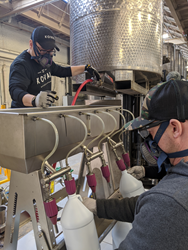
During these unprecedented times of the COVID-19 pandemic, communities are pulling together to do what they can to help keep healthcare workers and those vulnerable to the virus as safe as possible. KOVAL Distillery, one of the largest independent and woman-owned craft distilleries in the U.S., has partnered with MedSpeed, the market-leader in healthcare intra-company logistics – the movement of the items needed to provide care between all the places where care is delivered – to distribute the hand sanitizer the distillery is now producing. MedSpeed will distribute hand sanitizer to the medical community and other Chicagoland institutions that need it.

KOVAL began production with 150 gallons of hand sanitizer on March 23, 2020 and expects to produce hundreds, or even thousands, of gallons over the next few weeks. MedSpeed will begin delivery to a designated list of healthcare facilities in need on March 27, 2020.

“The demand for alcohol-based sanitizers is great, and our communities are experiencing extreme shortages,” said Dr. Sonat Birnecker Hart, Co-Founder and President, KOVAL Distillery. “Our goal is to provide this vital product free of charge to as many organizations in need as we possibly can. We are grateful to everyone who has come together to donate on our GoFundMe page to help us and to MedSpeed for helping out as well.”

“MedSpeed’s mission is to deliver health to the communities we serve,” said Bonni Kaplan DeWoskin, Vice President, Marketing and Strategic Partnerships, MedSpeed. “While we are laser-focused on keeping our MedSpeeders safe and protected and serving our healthcare customers during this challenging time, we are thrilled to be able to partner with KOVAL to get this much needed product out to healthcare organizations in need.”

KOVAL has noted that the company will not have hand sanitizer available for the general public at this time.

About KOVAL

KOVAL Distillery is known for creating a line of organic & kosher certified whiskey, gin, and specialty spirits using unique grains, a signature “heart cut” technique, and only the absolute best quality ingredients. As one of the largest independent and woman-owned craft distilleries in the US, KOVAL is frequently awarded internationally for its bright flavors and eye for design. As of March 2020, KOVAL has shifted 100% of its operations to help provide alcohol-based sanitizer to those on the front lines in the fight against COVID-19. For more information about KOVAL’s hand sanitizer production or to donate to help KOVAL continue to be able to offer hand sanitizer to health systems in need for free, visit bit.ly/kovalsanitizer. Please send requests for hand sanitizer to sanitizer@kovaldistillery.com.

About MedSpeed

With 140+ locations in 29 states, MedSpeed is the market-leading organization in healthcare intra-company logistics. Since 2000, MedSpeed has partnered with healthcare organizations to transform same-day transportation (courier) from a cost center into a strategic intra-company logistics asset that delivers long-term returns. Using transportation to drive economic value in areas well beyond transportation itself, enables MedSpeed’s customers to share equipment between facilities, reduce capital expenses and disintermediate the use of third-party shipping for the delivery of medical supplies to physician offices and clinics. Creating a strong, fully connected logistics network supports the centralization or outsourcing of other functions including redundant laboratories and fill pharmacies, print shop, mail, linen and more.

Share article on social media or email:

Impact on Consumers’ Financial Health—How to Pivot in Time of Market Crisis


These are the conditions of real people, so people trying to cope with the consequences of the coronavirus from an investment perspective must have the support to build a financial plan that is human-centered—not one that replicates an institutional method

In just one day, the S&P 500 dropped 9.5% and entered a bear market for the first time since the financial crisis when the Dow endured its biggest one-day percentage drop during the 1987 crash. The bigger story is that this economic fallout driven by coronavirus fears is likely the tip of the iceberg to what may impact average consumer finances systemically. According to disruptive financial advisor trainer and CEO of Real Intelligence, LLC, Jeff Mount, the fear of recession and a host of other investment challenges have everyone understandably worried. “People have a lot of scary investment questions they need answered in the wake of COVID-19, but there are sound ways to navigate investments in financial storms,” says Mount.

Navigating Investments in Financial Storms

Every consumer is facing uncharted waters as COVID-19 unfolds in real time. On March 11, The World Health Organization (WHO) deemed COVID-19 a pandemic and the president soon after declared the coronavirus a national emergency, which momentarily sent the Dow soaring upward from its historic drop.(2)(3) But bad news keeps coming in the form of estimates showing projected Q1 and Q2 GDP growth cut in half.(4)

The Fed seems to be moving forward on a $1.5-trillion stimulus package to provide temporary paid sick and family medical leave; health, food, and unemployment security; and free coronavirus testing.(5) Just days later, the stock futures dropped 1,000 points.(6) It is clear from such volatility that finding the best approach to money management will hinge on financial planning tactics designed for the average person rather than institutions.

Financial Planning for Real People

Financial markets are waking up to the new reality—but average consumers with 401(k)s, retirement accounts, and investments for everything from homeownership to college tuition aren’t finding solace in passive investment management.(7) According to Mount, people should not invest like institutions nor should they judge their investment strategies based on how they performed versus a stock index. “These are the conditions of real people, so people trying to cope with the consequences of the coronavirus from an investment perspective must have the support to build a financial plan that is human-centered—not one that replicates an institutional method,” explains Mount.

While a COVID-19-induced recession is a strong possibility, its severity and length still remain in question. (8) There are a number of sound approaches for consumers in terms of financial strategies regarding their investments in the event of a COVID-19 fallout. The uncertainty of when and how the market will bottom out is not the challenge—it is avoiding emotional mistakes as the market swings.

401(k) investors may have COVID-19 financial market fallout fears that spur them to seek out safer assets, but sound actions depend on several factors. The rush to judgement can be noticed in net trading activity in 401(k) saving plans becoming higher during the last week of February than compared to all the combined activity in the fourth quarter of 2019. (9)

In response to COVID-19, the Fed dropped interest rates to near zero. But financial advisors and average investors will need different options geared towards the average person whose concerns and trajectories are worlds away from those of big investors and institutions. (10)

Better Financial Planning Requires Better Tools

Although experienced advisors will be looking at providing solutions that match the needs of different investors based on age and circumstances, it’s not always a straightforward or obvious choice. According to Mount, advisors and investors have the capability to make more reliable decisions with the right financial planning tools. If they have an ability to match each asset to its corresponding future liability, they have a better context for advisement, investing, and strategic thinking.

The goal is to lower risk closest to the distribution date for each account depending on its purpose (college tuition funding, wedding planning, retirement planning, etc.) and “aging” the portfolio. This “aging” versus a risk profile-based allocation strategy ensures an investor’s required short-term assets are never in jeopardy. In this age of uncertainty with the coronavirus, every consumer and advisor will need financial planning methods that are adaptable to specific needs while adjusting to volatile financial times.

About Real Intelligence, LLC

Real Intelligence, LLC is the brainchild of entrepreneurs and industry experts Jeffrey Mount and Mike Helgesen. With 55 combined years of industry expertise and the alliance of their strategic financial planning methods: Dynamic Mapping and the Essential Family Office—Real Intelligence, LLC is poised to offer a complete essential tool kit to the next generation of elite financial advisors. With strategic, industry-proven training, patented technology, and the ability to introduce middle-class millionaires to exceptional financial advisors, the paradigm of financial services is shifting from status-quo. This human-centered approach to financial planning is a consultant’s greatest tool in combatting the competitive threat of free programs through robo-advisers and the dangers of irrelevancy. To learn more, visit http://www.realintelligence360.com

1.    Jessica Menton, Nathan Bomey. “Dow endures worst day since ‘Black Monday’; S&P 500 enters bear market as coronavirus spreads economic gloom.” USA Today, March 12, 2020, usatoday.com/story/money/2020/03/12/dow-plunges-trump-speech-fails-quell-coronavirus-fears/5029964002/

2.    “WHO characterizes COVID-19 as a pandemic,” WHO 11 March 2020, who.int/emergencies/diseases/novel-coronavirus-2019/events-as-they-happen

3.    Derek Hawkins, Miriam Berger, Marisa Iati, Meryl Kornfield, Brittany Shammas. “Trump declares coronavirus outbreak a national emergency.” Washington Post, March 13, 2020, washingtonpost.com/world/2020/03/13/coronavirus-latest-news/

4.    “COVID-19’s Potential Effects In U.S. Public Finance Vary By Sector,” S&P Global, March 5, 2020, spglobal.com/ratings/en/research/articles/200305-covid-19-s-potential-effects-in-u-s-public-finance-vary-by-sector-11378013

5.    Nick Timiraos, Julia-Ambra Verlaine. “Fed to Inject $1.5 Trillion in Bid to Prevent ‘Unusual Disruptions’ in Markets,” WSJ, March 12, 2020, wsj.com/articles/fed-to-inject-1-5-trillion-in-bid-to-prevent-unusual-disruptions-in-markets-11584033537

6.    Fred Imbert. “Stock futures drop — hit ‘limit down’ — even as Fed slashes rates; Dow futures off 1,000 points.” CNBC, March 15, 2020, cnbc.com/2020/03/15/traders-await-futures-open-after-fed-cuts-rates-launches-easing-program.html

7.    Neil Irwin. “Wall Street Is (Finally) Waking Up to the Damage Coronavirus Could Do.”

New York Times, Feb. 25, 2020, nytimes.com/2020/02/25/upshot/coronavirus-wall-street-analysis.html

8.    Philipp Carlsson-Szlezak, Martin Reeves, Paul Swartz. “What Coronavirus Could Mean for the Global Economy,” Harvard Business Review, March 03, 2020, hbr.org/2020/03/what-coronavirus-could-mean-for-the-global-economy?ab=hero-main-text

9.    Lorie Konish. “You might be tempted to move to safer 401(k) assets amid coronavirus market swings. What to know before you shift your money.” CNBC, March 6, 2020, cnbc.com/2020/03/05/investors-move-to-safer-401k-assets-amid-coronavirus-market-swings.html

10.    Heather Long. “Federal Reserve slashes interest rates to zero as part of wide-ranging emergency intervention.” The Washington Post, March 15, 2020, Washingtonpost.com/business/2020/03/15/federal-reserve-slashes-interest-rates-zero-part-wide-ranging-emergency-intervention/

DaVinci Education Supporting Families in Suffolk County


Kerry Leo, CEO and founder of Davinci Education and Research Center, has been using her time in quarantine to guide students, teachers and school districts in developing a new technology-based curriculum that can be easily applied in this remote learning climate. Leo is working tirelessly with school boards and superintendents to ensure Long Island’s students are able to continue their education seamlessly with the proper support of their teachers and families.

“In times of crisis, problem solving is what DaVinci does best,” Leo. “This is our number one skill. We are using technology to customize plans that will resolve any forks in the road allowing students and teachers to prosper in this current, chaotic climate. We’re in our element. Our main purpose is to serve and support our students, districts and their families, which is why we are taking this unfavorable circumstance as an opportunity to expand our teaching methods and continue to grow.”

DaVinci’s team of teachers and professionals has been aiding their community during this sudden transition in the educational system by providing remote distance learning for countless districts, creating open source material via social media in math, history, book reads, etc., and offering one on one services to students whose specialized instruction intervention has been disrupted. Additionally, the education and research center is offering support to teachers and professionals, regarding how to best utilize the technology to enhance each student’s virtual learning experience.

In the new world of online education, remote learning is still relatively new to the elementary and high school level. Leo wants to ensure to all students, parents and teachers, that they are ready and available to support them through this process. DaVinci is making plans to enhance its resources and assist its districts with any backlog of services, once we are through this chaotic time and back online. They are equipped and ready to not only help school districts adapt to virtual learning, but also ensure their students succeed at it.

For more information, visit their website http://www.davincicenter.com or contact nicole@roosadvisors.com with any questions or concerns.

About DaVinci Education & Research

DaVinci Education and Research is dedicated to bringing diagnostic and prescriptive strategies to students, parents and school districts to help them support learning needs and maximize their unique academic potential.

The mission of The DaVinci Institute is to identify and acknowledge the gold standard in education by gathering the latest in top quality, research-based and proven methodologies, techniques and programs and providing access and training to those in the professional learning community who value lifelong learning.

Share article on social media or email:

Medical Design Technologies Adds Telemedicine Capability


As part of MDTech’s enterprise secure text messaging application, MDMessage (mdcoder.com/md-message-for-telehealth/), MDTech recently developed video-enabled telemedicine functionality. This capability is available as part of the MDMessage standalone solution or as part of MDTech’s award-winning mobile charge capture solution, MDCoder.

“Developing a robust telemedicine solution always existed as part of our product strategy, and with the onset of Covid-19, we prioritized this offering to help our subscribers better manage this pandemic and continue serving their patient population with greater flexibility,” said Damon Spiegel, CEO.

MDMessage simplifies and secures enterprise communications while MDCoder provides an automated billing process that can easily be customized to fit any clinician’s workflow. Both applications support individual physician groups as well as large multi-specialty hospitals. Physicians, mid-level providers, nurses, residents and administrative staff can all use the suite of applications from their favorite device, tablet or desktop web browser.

“The demand for telehealth solutions soared over the past few weeks. And in addition to maintaining critical contact with their patients, physicians also understand that communicating clearly with their back-office team is paramount. To further support this need, we enabled screen sharing through the product,” added Damon.

Medical Design Technologies (MDTECH), a leader in providing electronic charge capture solutions, was founded in 1999 and is an established independent software vendor (ISV) specializing in state-of-the-art healthcare applications with specific expertise as a mobile applications provider. For more information about Medical Design Technologies, please visit http://www.mdcoder.com, call 888.253.8813 or send a note to info@MDTech.com.

Share article on social media or email: