Category Archives: Health

What is new in the field of Health. Trending topics, and cutting edge research in the are of Health. Press Releases that give us updates on Health.

RTB-MED Offering Reliable PPE and Medical Supplies as U.S. Braces for Next Wave of COVID-19 Infections


News Image

The advantage of this revolutionary material is that it reduces the amount of “single-use” plastics in this PPE, shrinking the carbon footprint of our COVID-19 response.

As the United States surpasses 10 million diagnosed cases of COVID-19, RTB-MED — formerly ROTANIBOC, one of the United States’ leading importers of personal protective equipment (PPE) — is today making several announcements that will help protect Americans during this global pandemic. Chiefly among them, RTB-MED announces it has acquired and will distribute another wave of surgical masks, biodegradable melt-down fabrics for PPE, FDA registered alcohol prep pads that will be used for skin disinfection before injectingCOVID-19 vaccines, and medical nitrile examination gloves for doctors, nurses, and other frontline workers. Additionally, all of this PPE and medical equipment is available to order (or pre-order) at http://www.rtb-med.com.

RTB-MED is noted for its quality control and reputation as an importer and supplier of medical products including: FDA-registered and “Made in the USA” surgical 3-ply masks, N95 respirators, its own branded alcohol prep pads, surgical & isolation gowns and much more. Many of these devices, which are critical for reducing virus transmission, have been in short supply over the past 9+ months. Securing this critically needed PPE is an ongoing national requirement, as a third wave of infections hits the United States.

“Given the surge of (120,000+) new coronavirus cases per day in the United States, and the expectation of a possible and more serious wave ahead, it is critical for businesses to continue protecting employees, customers, and the civilian population,” an RTB-MED spokesperson said. “RTB-MED offers ‘Made in the USA,’ FDA-compliant, Level III surgical masks, which are now available to anyone who is low on supplies and must stock up.”

At a time when the national need for these products has never been higher, many brokers and retailers who lack experience in this space have entered the market, creating uncertainty among buyers and institutions. With RTB-MED, these institutions can purchase, distribute, and apply this equipment with confidence, knowing both that these supplies are of the highest quality, and that they are getting the best possible price — a result of our working directly with manufacturers and customers. This also ensures the shortest possible lead times.

RTB-MED has partnered on a cutting-edge, earth-friendly, biodegradable, spun-bond, melt-blown fabric, which is used to make surgical masks. The advantage of this revolutionary material is that it reduces the amount of “single-use” plastics in this PPE, shrinking the carbon footprint of our COVID-19 response. RTB-MED has also developed and ordered 50 million of its own branded alcohol swab pads to be used in the vaccine injection process. The pads, which have the 70 percent isopropyl alcohol content required by medical professionals, were manufactured in anticipation of the tens of millions of vaccines expected to be administered in the coming months.

Beyond acquiring and distributing PPE and other medical supplies, RTB-MED will help educate Americans on how to stay safe and healthy this year and beyond as it participates in Mediaplanet’s “Fighting the Flu” campaign, which launched Dec. 8, 2020 in USA TODAY and online at https://www.futureofpersonalhealth.com/campaign/fighting-the-flu/

About RTB-MED

RTB-MED, formerly known as ROTANIBOC LLC, is an established healthcare supplier with over 15 years of global sourcing and import experience. RTB-MED has sold millions of critically needed PPE products during the COVID-19 crisis and is dedicated to working around the clock on many high demand orders for several U.S. states, medical centers, and other organizations.

For more information, go to http://www.rtb-med.com.

About Mediaplanet

Mediaplanet specializes in the creation of content marketing campaigns covering a variety of industries. We tell meaningful stories that educate our audience and position our clients as solution providers. Our unique ability to pair the right leaders with the right readers, through the right platforms, has made Mediaplanet a global content marketing powerhouse. Our award-winning stories have won the hearts of countless readers while serving as a valuable platform for brands and their missions. Just call us storytellers with a purpose. Please visit http://www.mediaplanet.com for more on who we are and what we do.

Share article on social media or email:

Ravi Somayazula, MD, Opens New Specialized Surgical Center in Houston, Texas


News Image

Distinguished plastic surgeon Ravi Somayazula, MD, is pleased to announce that the brand-new Houston Plastic Surgery Center at Body by Ravi Plastic Surgery and Aesthetics is now open. The AAAASF accredited surgical suite is conveniently attached to the renowned Body by Ravi Plastic Surgery and Aesthetics office and will provide private, concierge-level care. Patients will experience outstanding, personalized cosmetic care and exceptional results at the ultra-modern national and state-licensed surgery center.

Dr. Ravi is devoted to creating beauty and has over a decade of plastic and cosmetic surgery experience. The Houston Plastic Surgery Center has been a labor of love and is a significant accomplishment, as not all board-certified plastic surgeons can establish a surgery center onsite. Dr. Ravi has hundreds of positive reviews and testimonials and is one of Houston’s top cosmetic surgeons. He has dedicated his surgical career to ensuring each patient’s utmost safety and comfort while providing the best outcomes possible.

Body by Ravi Plastic Surgery and Aesthetics is one of Houston’s most trusted cosmetic surgery practices. The surgeons and staff are pleased to provide cutting-edge technology for patients at their new surgical center. The on-site surgical suite is fully equipped with the latest and most advanced body contouring technology. The center is only staffed by highly-skilled staff members who are committed to safety and advanced patient care with multiple years of experience. Plastic surgeons Dr. Ravi and Dr. Gopathi are elite specialists who proudly offer innovative and reliable cosmetic solutions.

Dr. Ravi is widely-respected and well-known for his phenomenal results and dedication to patient care. He specializes in a variety of breast and body contouring cosmetic procedures including Breast Augmentation with Implants, BodyTite PRO for minimally-invasive skin tightening by InMode and Mommy Makeover transformations. Photos of Breast Augmentations, Mommy Makeovers, Tummy Tucks, BodyTite Pro, Evolve System and other popular procedures are available on Body by Ravi Plastic Surgery & Aesthetics on Facebook.

Dr. Swapna Gopathi, MD, is a popular board-certified cosmetic and anti-aging physician with over ten years of experience in the Houston area. Dr. Gopathi focuses on advanced, non-invasive facial rejuvenation, injectables, fillers, physician-quality skincare, and micro-needling. She helps each patient rediscover their youthful appearance.

Dr. Ravi Somayazula and Dr. Swapna Gopathi are known for delivering the highest level of surgical and nonsurgical care in a comfortable and easygoing environment that ensures each patient feels cared for as soon as they walk through the door. Body by Ravi Plastic Surgery and Aesthetics offers a boutique experience coupled with the latest technology at the newly opened Houston Plastic Surgery Center for maximized results, safety, and convenience.

###

Call 281-242-1061 or visit bodybyravi.com to schedule a consultation to learn more about the advanced cosmetic options available at Body by Ravi Plastic Surgery and Aesthetics in Houston, Texas.

Share article on social media or email:

Murphy Research Releases Top 10 Food and Fitness Trends for 2021 Showing an Enduring Impact of COVID-19 on Americans’ Overall Health & Wellness


Changing fitness behaviors just one of many 2021 health trends informed by Murphy Research’s State of Our Health comprehensive food and fitness tracker

Many research studies focus on food or fitness, but Murphy Research’s State of our Health is the only ongoing syndicated study that examines both and their interconnectivity, which provides for a more comprehensive and accurate picture of consumer health and wellness trends.

Murphy Research, a 10-year-old leading market research firm known for creative research design, rigorous execution and enduring insights, today released its top 10 fitness and food trends for 2021. The trends are derived from Murphy Research’s State of Our Health (SOOH) syndicated study, the largest and most comprehensive ongoing food and fitness tracker in the U.S. These trends clearly show the enduring impact COVID-19 will have on many aspects of health and wellness in the new year, with “new normals” being created in several categories, and extended recovery times from pandemic-related behaviors.

Since 2018, SOOH has been continuously collecting data from 1,000 U.S. consumers aged 13 and up each month, providing for in-depth insights over time that uniquely examine trends that lie at the intersection of fitness and food. The vast amount of information collected through SOOH allows for exceptionally clear insights into how COVID-19 continues to impact almost every facet of American health- and wellness-related behaviors, and informed the following 2021 food and fitness trend predictions:

  • Trend One: The new year will bring a LOT of resolutions, especially for Gen Z. Living through months in a pandemic has left many consumers saddled with less-than-healthy habits, extra weight, and reduced physical activity, as well as an almost desperate desire to put this year behind them and start fresh. This will likely lead to an influx of New Year’s resolutions heading into 2021, especially for younger people who are more likely to make resolutions. In particular, Gen Z ended 2020 giving themselves lower performance grades on almost every personal priority than they did at the beginning of the year, including improving mental health, personal relationships, fitness, and appearance – classic resolution areas. More detailed resolution data will be available in early 2021 via Murphy Research’s annual resolutions survey, which is part of the overall SOOH study.
  • Trend Two: Detoxing 2020 will become a theme. Unsurprisingly, engagement in socially-oriented aspects of food and fitness has declined throughout 2020. Appearance has become less important, as has losing weight, meeting people through fitness, and more. All of this will come roaring back with a vengeance once we’re able to see and be seen again. As a result, expect a surge of interest in cleanses, diets, and exercises that promise quick results as consumers seek to “reset” their systems as we get ready for more face time and less screen time.
  • Trend Three: Online grocery shopping is here to stay, kind of. Online grocery ordering and delivery became much more important this year for Boomers and women, previous online ordering holdouts. Among women, online ordering increased in importance by 7 percentage points compared to 2019, and delivery by 6 percentage points. Among Boomers, the importance of online ordering increased almost 10 percentage points from the beginning to the end of the year. In 2021, many consumers will likely keep shopping online, but may be hesitant to pay delivery fees, especially for small trips. Online retailers and grocers who’ve adapted to online shopping will need to prepare for this price sensitivity.
  • Trend Four: Immunity takes center stage. Supporting immune health has become a key motivation for many food and fitness behaviors in 2020, but particularly when it comes to vitamins and supplements. Between 2019 and 2020, consumers of these products reported an 11 percentage point increase in taking vitamins and supplements to support their immune systems, while most other motivations stayed relatively stable. Where trend-setters are looking to novel ingredients like mushrooms, adaptogens and probiotics, mainstream consumers just want immune support as a functional benefit. This claim is likely to have increased salience into 2021, and can be expected to be everywhere.
  • Trend Five: Women are in for a longer post-pandemic recovery period. The pandemic has been harder on women in many ways, including large swings in health engagement. In March, 39 percent of nutritionally-engaged women were on a formal food plan. By May, this number dropped by more than 10 percentage points and has never recovered. Men, on the other hand, have been more likely to stick to eating plans in 2020, suggesting that men and women are coping differently with the pandemic. As a result, recovery from 2020 will likely take longer and be more difficult for women. This will probably look like more fitness and nutrition engagement ups and downs and decreased feelings of motivation around health goals.
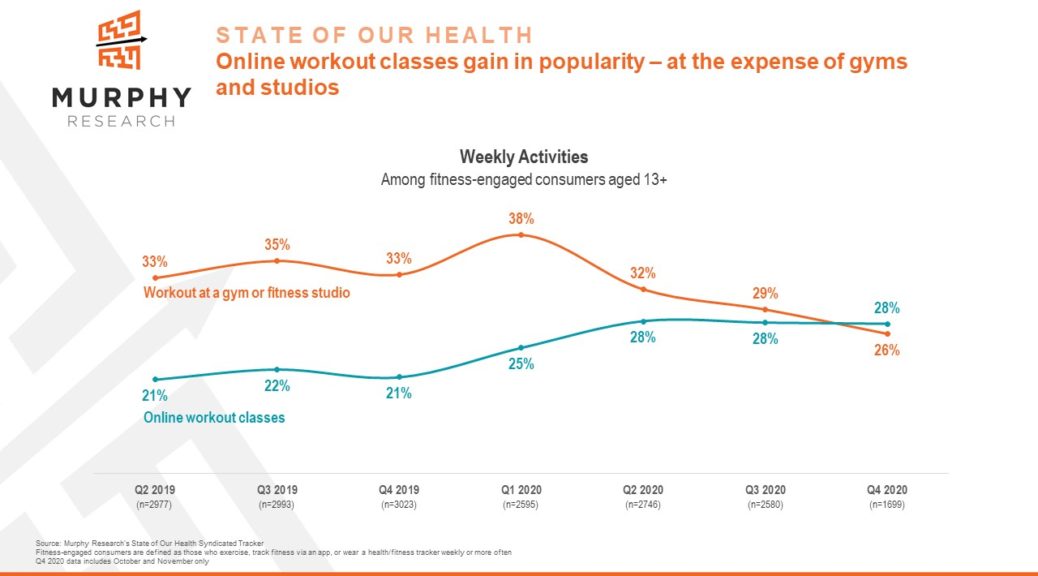
  • Trend Six: Online fitness or gym? Both, please. The pandemic prompted fitness-engaged consumers to find new ways to get their fix, and online fitness was it. Data suggests this is no flash in the pan. But, there’s a catch. Online fitness users are also more likely to be gym members. This means that, while online fitness is here to stay, it’s likely to shift toward occasions and activities that are complements to the gym rather than replacements once gyms open again in 2021.
  • Trend Seven: But, only some former gym rats will return to the gym, and not (only) because of online fitness. COVID-19 lasted long enough that former gym buffs who could build a home gym did it. These were gym regulars who are unlikely to return. This group is mainly older, more well-off exercisers because building a home gym takes space and money. Most Millennials don’t have either, so they’ll return to the gym once it’s safe to do so, along with exercisers who are social, competitive and seek variety.
  • Trend Eight: Mental health and exercise become more aligned. Interest in exercise as a mental health strategy is spreading from younger consumers to older ones, along with yoga and meditation for stress relief. While younger generations, who already are more likely to do things like meditate and journal, remained steady in their activities, Gen X began to take their cue. Gen Xers who do weekly yoga for mindfulness increased by 7 percentage points in 2020, as did the number who report journaling for mindfulness or gratitude. The number of consumers in this group who meditate has also been increasing.
  • Trend Nine. Health as a hobby is poised to make a return in summer. In March, 27 percent of consumers were reading health-related content or talking to others about diet on a weekly basis. In June, this dropped to 20 percent and has stayed low. As pandemic news coverage dominated, it took away the pleasure many health-engaged consumers previously got from keeping up with health news, particularly among Gen X and Boomers, who saw even steeper declines. This interest is expected to quickly shift back to “normal” with the vaccine. Consumers will crave inspiration and guidance as they deal with the fallout from 2020.
  • Trend Ten. Wellness-related spikes and crashes are expected well into 2021. The first wave of the pandemic prompted a huge increase in wellness-related behaviors, from exercise to dieting to meditation. This was followed by a crash in those same behaviors that lasted for months. This roller-coaster pattern continued with subsequent COVID-19 surges and is expected to continue in early 2021 with lofty health aspirations followed by an extended crash that will continue until widespread vaccination.

“A lot of research studies focus on food or fitness, but SOOH is the only ongoing syndicated study that examines both and their interconnectivity, which provides for a more comprehensive and accurate picture of consumer health and wellness trends,” said Chuck Murphy, founder and president of Murphy Research. “This unique approach, combined with ongoing robust quantitative and qualitative data collection, points to 2021 trends that redefine what were routine approaches to health and wellness prior to the pandemic.”

SOOH is the standard reference point for uncovering the underlying truths and trends that propel people’s food and fitness attitudes and behaviors. The concept for SOOH was born from Murphy Research’s cutting-edge custom research with category-leading consumer brands like Gatorade, Nike and Athleta. This work demonstrated the powerful insights derived from examining food and fitness together. Murphy Research recognized the need for an ongoing, far-reaching syndicated study that could better answer questions about consumer health behaviors and trends than was achievable by exploring food or fitness in isolation and during a snapshot in time. Today, SOOH is the only syndicated tracker examining both food and fitness, and how the two are related. To date, more than 35,000 consumers have participated in the 45-minute SOOH questionnaire, providing both incredible breadth and unparalleled depth. SOOH employs gold standard quantitative and qualitative research methods informed by decades of experience.

About Murphy Research

Murphy Research is a full-service market research firm that understands groundbreaking research lies at the intersection of science and creativity. Based in Santa Monica, but with offices in Dallas, Chicago, Minneapolis and Washington D.C, the firm is known for its creative research design, rigorous execution and enduring insights. Murphy Research offers quantitative and qualitative services to help clients with market assessment, brand strategy, product development, customer loyalty and engagement and communications research. The firm works with leading Fortune 500 companies, like PepsiCo, Sony, YouTube, Disney and Google, among many others, along with emerging technology, CPG, retail, media, communications and financial services organizations.

Share article on social media or email:
Patient and Care Partner Community Introduced by The Beryl Institute


News Image

Reinforcing its commitment to elevate the human experience in healthcare, The Beryl Institute introduces the Patient and Care Partner Community in partnership with its Global Patient and Family Advisory Board.

Reinforcing its commitment to elevate the human experience in healthcare, The Beryl Institute introduces the Patient and Care Partner Community in partnership with its Global Patient and Family Advisory Board. Joining the Institute’s other special interest communities, the Patient and Care Partner Community is a place for Patient and Family Advisors (PFAs), patients and care partners, defined as a patient’s circle of support, to make connections and find resources curated and created by their peers.

The community offers a resource page including patient and care partner reflections on white papers published through the Institute, an art series reflecting the lived experience of patients and their loved ones and relevant webinars, podcasts and blogs. These resources are intended as companions to the full breadth of patient experience offerings from the Institute. While these valuable resources were written specifically for PFAs, patients and care partners, they also provide insight for healthcare professionals seeking a deeper understanding of patient and care partner perspectives.

In addition to sharing content, the community will offer periodic events and networking opportunities for patients and care partners, including an annual gathering at The Beryl Institute’s global patient experience event, Elevate PX.

“We are so excited to welcome patients and care partners to this community,” said Tony Serge, member of the Institute’s Global Patient and Family Advisory Board Member and Co-Lead of the Patient and Care Partner Community Workgroup. “We believe they will find the content we created through our lived experiences to be exciting and helpful.”

To learn more about The Patient and Care Partner Community, please visit: https://www.theberylinstitute.org/page/PatientCarePartnerCommunity


###

About The Beryl Institute:

The Beryl Institute is the global community of practice committed to elevating the human experience in healthcare. We believe human experience is grounded in experiences of patients & families, those who work in healthcare and the communities they serve. We define patient experience as the sum of all interactions, shaped by an organization’s culture, that influence patient perceptions across the continuum of care.

Share article on social media or email:

State’s older LGBTQ residents experience higher rates of depression, poverty, and injuries due to falls than their straight, cisgender peers, according to a new report from The Fenway Institute


“Although a lot of the information in this report focuses on health risks and disparities, we also found that LGBTQ older adults are resilient, in part, because they’ve had dramatically different life experiences than their straight and cisgender peers,” said Sean Cahill of The Fenway Institute

A new report from The Fenway Institute finds that older LGBTQ adults in the Commonwealth report being diagnosed with depression at twice the rate of their straight, cisgender peers, and are twice as likely to fall and be injured in a fall over the past year. It also finds that while older LGBTQ adults are more likely to hold a college degree, they are more likely to report having had difficulty paying for housing or food over the past year. LGBTQ older adults living in rural areas of the state expressed concern about the lack of options for LGBTQ-affirming health care, as well as their on-going experiences with strong anti-LGBTQ prejudice and harassment in public settings and senior housing.

Titled “LGBT Aging 2025: Strategies for Achieving a Healthy and Thriving LGBT Older Adult Community in Massachusetts,” the report is based on data collected during nine listening sessions—five in-person and four virtual—organized between June 2019 and June 2020. The report also contains new information about LGBTQ people age 50 to 75 based on new analyses of public health data from the Massachusetts Department of Public Health and the state’s Executive Office of Elder Affairs.

Problems related to social isolation and the lasting impact of trauma associated with systemic anti-LGBTQ discrimination were raised most frequently at each of the nine listening sessions. LGBTQ older adults who are also Black, Indigenous, and People of Color reported feelings of deep alienation from the LGBTQ community when they experienced racism from White LGBTQ older adults. Long-term survivors of HIV expressed concerns about being able to find doctors skilled in providing HIV care. LGBTQ adults of every race and gender expressed concern about their ability to pay for health care.

The public health data show that as compared with their straight, cisgender peers, LGBT older adults report higher rates of fair/poor overall health. They experienced suicidal thoughts in the past year at four times the rate of their peers, and were more likely to report serious difficulty in concentrating, remember, or making decisions.

“These findings are deeply troubling and point to the need for vigorous enforcement of existing state and federal law prohibiting anti-LGBTQ discrimination, as well as targeted interventions to reduce social isolation among LGBTQ older adults and meet their unique health care needs,” said Sean Cahill, PhD, Director of Health Policy Research at The Fenway Institute and author of the report.

One successful intervention witnessed in real-time as the listening sessions proceeded was the creation of online, virtual social gatherings in response to the COVID-19 pandemic. While the first five listening sessions were conducted in person in Barnstable, Boston, Pittsfield, Salem, and Worcester, the last four were conducted online. Although many listening session participants reported difficulties with accessing the Internet and navigating online platforms such as Zoom, some said that they were able to connect more easily with others because everything is online. Many isolated elders with mobility issues are less socially isolated now because so much programming is virtual.

Other themes brought up in the listening sessions include:

  • Lack of reliable and affordable transportation, especially in rural and suburban areas
  • The need for affirming, ongoing mental health care, including grief support for widows and widowers
  • Anti-LGBTQ discrimination in assisted living and senior housing facilities
  • Gender-based anti-LGBTQ sexual harassment in businesses and health care settings in the Berkshires
  • The need for LGBTQ-friendly housing
  • The need for computers and tablets and assistance using them, and Internet access in order to participate in virtual support groups that have been created during the COVID-19 pandemic
  • The need for assistance navigating Medicare insurance options and the health care system
  • The need to change existing rules so that HIV-positive individuals younger than 60 can access home care services

Although much of the data documented health disparities, some data evidenced resilience. For example, despite decades of anti-LGBTQ policies, LGBTQ older adults in Massachusetts were almost as likely as straight, cisgender older adults to be raising children and to be veterans.

“Although a lot of the information in this report focuses on health risks and disparities, we also found that LGBTQ older adults are resilient, in part, because they’ve had dramatically different life experiences than their straight and cisgender peers,” Cahill added. “They came of age when same-sex behavior or crossing gender boundaries was subject to imprisonment or institutionalization. Homosexuality was against the law in all 50 states into the early 1960s, and classified as a mental illness until 1973. Many LGBTQ people were shunned by their families. Many LGBTQ elders lost their life partners and social networks to HIV/AIDS. This is a population that has experienced a lot of trauma and its effects are on-going. But they are survivors.”

The report “LGBT Aging 2025: Strategies for Achieving a Healthy and Thriving LGBT Older Adult Community in Massachusetts,” is available online: https://fenwayhealth.org/wp-content/uploads/LGBT-Aging-2025-Report-December-2020.pdf

About Fenway Health & The Fenway Institute

Since 1971, Fenway Health has been working to make life healthier for the people in our neighborhoods, the LGBTQIA+ community, people living with HIV/AIDS and the broader population. The Fenway Institute at Fenway Health is an interdisciplinary center for research, training, education and policy development focusing on national and international health issues.

Share article on social media or email:

TRC Companies Selects Kent Kading as National Director of EHS Services


Kent Kading

“Kent’s experience developing and implementing EHS compliance management programs, his diverse industry experience, and leadership capabilities make him an ideal fit to advance our strategic growth,” said Mark Robbins, President of TRC’s Environmental Sector.

TRC Companies (“TRC”), a leading end-to-end engineering, consulting, construction management, and technology services firm selects Kent Kading as National Director of Environmental, Health and Safety (EHS Services). With the addition of Kading to the environmental sector leadership team, TRC continues to focus on the enhancement and growth of its EHS compliance and management services offerings, including auditing programs, multi-media permitting services, health and safety consulting, management systems and digital services for EHS information systems. This strategic step will enable TRC to integrate EHS services with its existing air quality services, EHS compliance and industrial hygiene services. Additionally, Kading will be instrumental in helping TRC to deliver comprehensive EHS services to clients by leading and addressing the new and unique EHS challenges in the various market sectors of focus.

“Following TRC’s recent acquisition of 1Source Safety and Health, a firm with expertise in industrial hygiene and occupational health and safety services, hiring Kent is another step in our commitment to providing the best and most comprehensive services and technologies,” said Mark Robbins, President of TRC’s Environmental Sector. “Kent’s experience developing and implementing EHS compliance management programs, his diverse industry experience, and leadership capabilities make him an ideal fit to advance our strategic growth, foster key client relationships and help us expand the markets and geographies we serve. We are very excited that Kent has joined the TRC team.”

Based in the Greater Seattle area, Kading has over 30 years of experience in leadership roles at ERM, AECOM and the Shaw Group. Kading led global client programs such as air quality permitting, EHS management system design and development and, process safety management for global organizations. Additionally, his experience in EHS expands over many industries including manufacturing, transportation, aerospace, oil and gas, power generation, chemical, retail/logistics and solid waste management.

“I was attracted to TRC and this role because of the executive team’s clear commitment to increasing the breadth and depth of their EHS services and their aggressive growth strategy to further support our clients’ needs. I knew of their excellent technical solutions and client focused reputation in the market. TRC, being an established technical solutions and environmental engineering firm as well as a premier air quality service provider, presented an exciting opportunity for me to help lead the growth of the EHS service line.”

Kading is a licensed professional engineer, a certified professional environmental compliance auditor and he received his B.S. & M.S. in Chemical Engineering from San Jose State University.

About TRC Companies

A pioneer in groundbreaking scientific and engineering developments since the 1960s, TRC is a leading consulting, engineering and construction management firm that provides technology-enabled solutions to the power, infrastructure, environmental and energy markets. We serve a broad range of public and private clients, steering complex projects from concept to completion to help solve the toughest challenges. TRC is ranked #20 on ENR’s list of the Top 500 Design Firms in the United States. Learn more at TRCcompanies.com and follow us on Twitter, LinkedIn and Facebook.

Communications Contact:

Dora Rosiclair

prosiclair@trccompanies.com

1 (860) 298-9692

Share article on social media or email:


CareDx Constantly Revolutionizing Personalized Care for Transplant Recipients


News Image

“CareDx is 100% dedicated to transplant patient care…We are at an exciting inflection point as we build comprehensive solutions to enable direct patient engagement and personalized care,” said Peter Maag, Executive Chairman at CareDx.

One of the biggest worries in organ transplantation is how well the transplant recipient’s body will receive the organ that is donated. The first successful kidney transplant happened back in 1954 when the recipient’s donor was his identical twin. But not everyone is lucky enough to have someone in their lives with such similar genetic makeup.

In the newest episode of Tomorrow’s World Today, field reporter Darieth Chisolm heads to CareDx headquarters where she learns how they focus on the transplant journey of each individual recipient to make sure all transplant recipients receive personalized care specifically for their transplanted organ.

“CareDx is 100% dedicated to transplant patient care, and has driven innovation to improve long term outcomes over the last 20 years. We are at an exciting inflection point as we build comprehensive solutions to enable direct patient engagement and personalized care,” said Peter Maag, Executive Chairman at CareDx.

Chisolm learns about AlloSure, which is CareDx’s noninvasive test measuring organ health and also learns how drones are safely helping to get organs to hospitals.

“AlloSure has revolutionized transplant management, and gives clarity into how the transplanted organ is performing. The majority of transplant centers in the US now use AlloSure to care for their patients, and we are continuing to innovate with multi-modality solutions for better insights,” said Sham Dholakia, MD, SVP of Medical Affairs at CareDx.

To learn more about how CareDx is revolutionizing patient care for transplant recipients, tune in for a brand new episode of Tomorrow’s World Today on Saturday, December 19 at 8:00 am ET/PT on Science Channel and Sunday, December 27 at 6:30 am on Discovery.

About Tomorrow’s World Today

Season three of this family-friendly, cutting-edge television show travels the world in search of innovative pioneers who are creating new ways to utilize our natural and technological resources for a more sustainable lifestyle. Tomorrow’s World Today has a home base in Pittsburgh, PA, one of the nation’s most progressive tech landscapes, home to Duolingo, the most downloaded educational app in the world, and UBER’s flagship location for autonomous transportation. http://www.tomorrowsworldtoday.com

About CareDx

CareDx, Inc. is a leading precision medicine solutions company focused on the discovery, development and commercialization of clinically differentiated, high-value healthcare solutions for transplant patients and caregivers. CareDx offers products, testing services and digital healthcare solutions along the pre- and post-transplant patient journey, and is the leading provider of genomics-based information for transplant patients. http://www.caredx.com

Share article on social media or email:

HMP Global Announces Launch of Neurology Week Conference


News Image

“Neurology Week will be an innovative educational opportunity for all stakeholders within the neurological community,” said Dr. Clyde Markowitz. “Attendees will gain a comprehensive understanding of best practices to enhance patient care in one streamlined – and streaming – educational event.”

HMP Global, a leading healthcare event and education company, today announced the launch of Neurology Week, adding to its robust portfolio of year-round in-person and virtual educational offerings.

The weeklong program will take place virtually, July 14-18, 2021, and will feature a multitrack scientific agenda comprised of advanced, practical educational sessions for neurologists via video patient cases, panel discussions, and case-based clinical workshops. Relevant programming, including how to treat a broad-based patient population, will be discussed in alignment with daily themes focused on specific areas within the neurology space.

The newly formed Neurology Week advisory board is comprised of distinguished industry leaders specializing in focused areas of neurology. Members include Joohi Jimenez-Shahed, MD, Mt. Sinai (movement disorders); Stephanie Nahas-Geiger, MD, Jefferson University (headache); David Liebeskind, MD, UCLA (stroke/vascular disorders); Clyde Markowitz, MD, Pennsylvania School of Medicine (multiple sclerosis); and Rachel Salas, MD, Johns Hopkins (sleep). Several more advisors are slated to be added in the coming weeks.

“Neurology Week will be an innovative and forward-thinking educational opportunity for all stakeholders within the neurological community,” said Dr. Clyde Markowitz. “With a robust agenda of sessions, discussions and workshops, attendees will gain a comprehensive understanding of best practices and strategies to enhance patient care in one streamlined – and streaming – educational event. We are committed to ensuring busy clinicians unable to break away from practice can still receive the very latest information and insight.”

Educational content will be delivered consecutively over the event’s five-day agenda. On-demand bonus content will also be available through HMP Global’s Neurology Learning Network, the premier digital destination for the field, featuring breaking news, relevant insight, and expert analysis.

Neurology Week is one in a series of virtual-only events HMP Global will launch in new markets, and additional announcements are planned for the coming weeks. The company will produce nearly 400 virtual and in-person conferences in 2021.

For more information about Neurology Week, please visit neurologyweek.com.

ABOUT HMP GLOBAL

HMP Global is the force behind Healthcare Made Practical—and is a multichannel leader in healthcare events and education, with a mission to improve patient care. The company produces accredited medical education events, in-person and online, and clinically relevant, evidence-based content for the global healthcare community across a range of therapeutic areas. Its brands include Consultant360, the year-round, award-winning platform relied upon by primary care providers and other specialists; Psych Congress, the largest independent mental health meeting in the U.S.; EMS World Expo, the world’s largest EMS-dedicated event; and the Symposium on Advanced Wound Care (SAWC), the largest wound care meeting in the world. For more information, visit hmpglobal.com.

Share article on social media or email:

“Countdown to 2021” tips from GrandPad to navigate end-of-year holidays and nurture well-being for caregivers and seniors


Courtesy of GrandPad.

Courtesy of GrandPad.

If you are one of the 53 million Americans who take on the responsibility of ensuring the well-being of older adults, it’s essential that you allow yourself to recognize your value, because caring for yourself is as important as caring for your aging loved one.

The end-of-year holidays are upon us, and to help family caregivers navigate and maintain balance and well-being in the weeks ahead, GrandPad, creator of the purpose-built tablet for seniors over the age of 75, is providing “Countdown to 2021” caregiving tips.

It’s currently estimated that 1 in 5 American adults are unpaid family caregivers; that’s a total of 53 million adults. The continued COVID-19 pandemic has broadened and intensified the responsibilities of caregivers, who say caregiving has become more emotionally, physically, and financially difficult during the pandemic. Meanwhile, 77% of caregivers say the pandemic is affecting their holiday plans. To help families cope with these changes, Dr. Kerry Burnight, Ph.D., chief gerontologist for GrandPad, is recommending that family caregivers take steps to maintain good health and mental well-being during this stressful season, while taking extra time to ensure that seniors do not experience isolation and the resulting negative physical side effects.

Self-care tips for family caregivers

According to Dr. Kerry, there are six primary areas of well-being that caregivers should be mindful of, and simple ways they can bolster their own well-being.

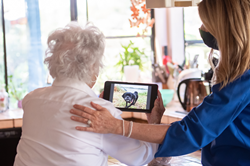
  • Social. A daily video call makes all the difference. It not only in provides needed social connection to your loved one, but also diminishes your worry or guilt. If your loved one lives with cognitive impairment, GrandPad’s “auto-answer” feature is life-changing. The senior does not have to press any buttons to accept your video call, your face pops up on their screen automatically.
  • Mental. Encourage family members to take turns calling older family members who are living alone and have restricted visiting access. Use multi-party video features like Zoom to schedule a call with the whole family. GrandPad is currently rolling out Zoom on a limited basis, with plans to expand access in 2021.
  • Physical. When caring for others it is all too easy for caregivers to put their own needs aside. Skipping sleep, exercise, downtime, and nutritious foods is a quick route to burnout. Caring for others becomes even more stressful if you do not make your own health a priority.    
  • Occupational. Many caregivers are balancing unpaid caregiving responsibilities with employment and/or child care. And, because of the pandemic, caregivers may also be living with the financial strain of unemployment or underemployment. Tame self-criticism with the mantra “my best is enough.” Your hard work matters, even when (especially when) no one thanks you for it.
  • Intellectual. With the added strain of caregiving in a pandemic, the last thing you feel like doing is learning something new. But consider this: learning and growth are energizing and can put a spring back in your step. There are great, cost-free, online resources to learn almost anything. It’s never too late.
  • Spiritual. To help calm your mind and maintain focus on your faith and things that bring you peace, try practicing four-count breathing. Simply shut your eyes, breath in for a count of four, hold your breath for a count of four, and exhale for a count of four. Then start over again. Do this a few times a day to help focus on your faith tradition or a word that evokes peace.

“The COVID-19 pandemic has made it clear that caregivers truly are the unsung heroes of this era. If you are one of the 53 million Americans who take on the responsibility of ensuring the well-being of older adults, it’s essential that you allow yourself to recognize your value, because caring for yourself is as important as caring for your aging loved one,” said Burnight.

Tips to ensure safety and connections for seniors

The pandemic has heightened the challenge of staying connected, maintaining everyday health, and managing existing conditions for seniors because of restrictions on family visits and clinical interactions. While self-care is vital, Dr. Kerry also suggests that family caregivers pay attention to the following aspects of well-being for their aging family members.

  • Social. Caregivers can surround loved ones with connections and reduce isolation by asking other family members and friends to take turns checking in with older adults each day, whether through a short phone call or video chat.
  • Emotional. Boost emotional well-being for seniors by sharing memories and talking about things that bring them joy. Use GrandPad’s family photo and video stream feature to share pictures and videos, and keep loved ones up to date on family events. This is also an ideal way to share favorite family photos of past holidays.
  • Intellectual. Intellectual stimulation is important at every stage of life. Activities like listening to music, playing games, or catching up on current events and speaking to others via phone or video calls provides needed stimulation. GrandPad features a wide variety of engaging options that come built in, for reliable and secure connection to activities anytime, anywhere.
  • Physical. Use video technology to check on things that can indicate health concerns or a decline in cognition, such as a sudden change in appearance, speech, energy, and grooming.
  • Spiritual. Seek the wisdom of older adults. Ask your loved one about how they have persevered through hard times in the past and how their faith played a role. These conversations are mutually beneficial and can be among the most meaningful moments you will share together.

GrandPad has become a favorite technology gift for older adults and people who have difficulty using traditional mobile devices because it is designed to address the most common points of frustration for these individuals. Features that make GrandPad a perfect fit for seniors include:

  • Ready to use, right out of the box — no setup required.
  • Enables pre-loaded “trusted circle” family contacts, photos, and apps
  • Built-in LTE (no home WiFi needed)
  • 24×7 always-on, live, personal tech support
  • Closed network for greater security (no one outside the “trusted circle” can contact a GrandPad user)
  • Secure internet browsing
  • Video and voice calling
  • Multi-party Zoom calling (currently being rolled out on a limited basis)
  • Texting and emailing
  • Family photo and video sharing
  • Curated entertainment content, music, and brain games
  • Streaming radio stations
  • Ergonomic design and enhanced speakers and camera
  • Transportation by Lyft app

To learn more or to purchase GrandPad, visit https://buy.grandpad.net/.

For more information:    

Barbara Tabor, APR / (651) 230-9192 / barbara@taborpr.com

About GrandPad

Based in Orange, CA, GrandPad is a digital health company that develops engagement solutions to improve the health and well-being of older adults by reconnecting them to families, friends, and caregivers through technology that is safe, reliable, and easy to use. The GrandPad purpose-built tablet for people over the age of 75 — the first mobile device of its kind — addresses usability, security, and connectivity issues that are often roadblocks for integrating remote monitoring and telehealth into professional and familial caregiving settings. The company’s secure cloud platform with built-in LTE and web applications allows care teams and family members to engage remotely with older adults without depending on WiFi connectivity. GrandPad enables a variety of interactions, including video calls, sharing essential care-related emails and messages, and conducting multi-party video care conferences between family members and a patient’s continuum of caregivers. For professional caregivers, GrandPad offers connected device capabilities that support enhanced telehealth and remote monitoring services provided by a growing number of in-home healthcare organizations. To learn more, visit GrandPad.net or connect with us on LinkedIn, Facebook, and Twitter @grandpad_social.

Share article on social media or email:

More COVID Cases Mean More Cardiac Episodes that could Benefit from Remote Monitoring


With cardiovascular injury a long-term effect for COVID-19 survivors, healthcare needs a proven means of telemetry style remote cardiac monitoring.

Desperate times may call for desperate measures, but remote cardiac monitoring provides a win-win solution that doesn’t add to the burdens of the healthcare system.

As the U.S. closes in on 20 million cases of COVID-19 and the potential for 500,000+ deaths, some patients’ problems are just beginning. Both doctors and patients call them “long-haulers,” those for whom recovery doesn’t come easily, and often experience virus after-effects that can last for years—or permanently. “With cardiovascular injury a long-term effect for COVID-19 survivors, healthcare needs a proven means of telemetry style remote cardiac monitoring that can facilitate faster interventions and improve health outcomes,” said Infobionic CEO Stuart Long.(1)

In the first week of December, COVID-19 became the leading cause of death in the United States, surpassing heart disease and cancer,(2) the former of which will only get worse. Cardiologists, physicians providing emergency room care, and cardiac medicine units are painfully aware that the disease has the potential to cause lasting damage to the heart.

Thankfully, doctors have a better idea about what’s happening. Cardiac treatment isn’t easy in the best of times, when hospitals devote care teams to mitigating the effects of cardiac episodes ranging from basic arrythmias to cardiac fibrillation (Afib) to heart attacks. But, as the curve of COVID-19 infection rises, the potential for dangerous outcomes rises too.(3) It’s clear that the nation’s healthcare system is bursting at the seams. ICU capacity across the United States is being overrun, but less attention is being paid to the virus after-effects, not only on cardiac patients, but also on health providers and health insurance companies.

“It’s simple math. The worse the COVID wave, the more cardiac after-effects our strained healthcare system will have to dealt with,” said Long.

Traditionally, cardiac episodes are addressed via the ER and barrages of tests. In a situation where some hospitals are turning away patients, those interventions add to the strain. As the dominos fall, cardiologists and physicians struggle more, the healthcare system loses manpower to the virus and fatigue, and patients face healthcare decisions that would have been unimaginable before COVID-19.

One solution is remote, 24-hour cardiac monitoring. Before modern advances, cardiac telemetry was complicated at best. Ambulatory cardiac monitors were bulky and sometimes unreliable in delivering actionable data. In contrast, a wearable device such as Infobionic’s MoMe® Kardia cardiac monitoring platform streams the patient’s ECG in near real-time to central monitoring centers, with a modern easy to use device that shortens the distance between patients and physicians, eliminating the need for intermediaries to access care

Consequently, with remote patient monitoring, heart rhythm problems are detected and flagged for treatment much earlier than they were with traditional ambulatory cardiac monitors. This is important in the long run, because COVID-19 is increasingly linked to a risk of problems that include myocardial infarction, myocarditis and heart failure. This problem stretches far beyond the country’s filling ICU beds, as studies reveal that patients who are not hospitalized are subsequently at risk for cardiac injury.

“Desperate times may call for desperate measures, but remote cardiac monitoring provides a win-win solution that doesn’t add to the burdens of the healthcare system. Although the healthcare industry is starting to pay attention, the secret, largely undetected cardiac damage from COVID-19 hasn’t even been quantified yet,” Long said.

“There is recognition that some of those COVID-19 patients not hospitalized are experiencing cardiac injury,” says Dr. Gregg Fonarow, chief of the division of cardiology at UCLA. “This raises concern that there may be individuals who get through the initial infection but are left with cardiovascular damage and complications. RPM then becomes a necessity” (4)

About InfoBionic

InfoBionic is a digital health company transforming the efficiency and economics of ambulatory remote patient monitoring processes by optimizing clinical and real-world utility for the users that need it most – physicians and their patients. The Massachusetts-based team of seasoned entrepreneurs have had successful careers in healthcare, IT, medical devices and mobile technology, and bring specific expertise in remote monitoring and cardiology. They have seen first-hand the complexities of traditional cardiac arrhythmia detection and monitoring processes and designed the transformative MoMe® Kardia platform to remove the roadblocks hindering faster, more effective diagnosis and decision-making. Frost & Sullivan bestowed the 2019 North American Remote Cardiac Monitoring Technology Leadership Award upon InfoBionic. More information at http://www.infobionic.com.

1.    Infobionic. “Telehealth, Remote Patient Monitoring Crucial to Long-Term Cardiac Health Implications of COVID-19” infobionic.com/infobionic-telehealth-remote-patient-monitoring-crucial-to-long-term-cardiac-health-implications-of-covid-19 | Accessed December 2020

2.    Romero, Dennis; “Covid now leading cause of death in U.S., researchers say”; 05 December 2020; NBC News Live Blog; nbcnews.com/news/us-news/live-blog/2020-12-5-covid-live-updates-vaccine-news-n1250101/ncrd1250091#liveBlogHeader

3.    Physicians Weekly. “AHA: Out-of-Hospital Cardiac Arrest Outcomes Worse During COVID-19” physiciansweekly.com/aha-out-of-hospital-cardiac-arrest-outcomes-worse-during-covid-19/ Accessed December 2020

4.    American Heart Association. “What COVID-19 is Doing to the Heart, Even After Recovery.” heart.org/en/news/2020/09/03/what-covid-19-is-doing-to-the-heart-even-after-recovery Accessed December 2020

Share article on social media or email: