Category Archives: Health

What is new in the field of Health. Trending topics, and cutting edge research in the are of Health. Press Releases that give us updates on Health.

Magic Weighted Blanket Honors Autism Awareness Day On April 2nd With Month Long 20% Off Sale


We’re giving back to the community that gave us our start.

April 2 is Autism Awareness Day and part of a month long effort to draw attention to the fact that autism is the fastest growing developmental disorder in the United States. 1 in 54 children are diagnosed with autism spectrum disorder, totaling over 5 million young people and adults.

As weighted blankets continue to thrive in the mainstream marketplace, The Magic Weighted Blanket http://www.magicweightedblanket.com is going back to its roots to honor and celebrate the autistic community, from which the company first found its calling. According to Keith Zivalich, the inventor of the weighted blanket, and owner of the Magic Weighted Blanket, “Before weighted blankets caught on with the mass market, our weighted blankets were almost exclusively bringing deep pressure calming and comfort to children and adults with autism.”

“Before anyone had heard of a weighted blanket, we showed our ‘heavy blanket’ to potential customers at swap meets,” Keith remembers. “People were dumbfounded, not quite sure what to make of such a thing. Their expectation was that a blanket should be light and fluffy. It wasn’t until a friend of ours, who is a special needs teacher, took our ‘heavy blanket’ for her autistic students to try, that we found our niche. Not surprisingly, that niche has expanded into a world-wide phenomenon.”

Weighted blankets have become a global sensation in the autistic community for their ability to provide deep pressure stimulation. This causes the body to release naturally calming hormones, like dopamine and serotonin, the feel-good neurotransmitters of the brain. These hormones help with impulse control, attention, memory, social behavior, and sleep.

Mr. Zivalich invented the weighted blanket in 1997 after his daughter placed a Beanie Baby on his shoulder. “The weight of the stuffed toy felt like it was hugging my shoulder. The next thing I thought was, ‘Wouldn’t it be cool if an entire blanket was filled with these beads. It would be the blanket that hugs you back.’ It was an idea I was instantly convinced would be a hit.” 24 years later, his invention http://www.magicweightedblanket.com is helping hundreds of thousands of people, both in the autistic community and general population, who need a little calm and comfort in an increasingly stressful world.

Share article on social media or email:

Helping Caregivers Navigate the Challenges Brought to Light by the COVID-19 Pandemic


News Image

The National Alliance for Caregiving and Adira Foundation have joined forces to address the needs of caregivers as they navigate the many challenges brought to light by the COVID-19 pandemic. A recent study from the National Alliance for Caregiving (NAC) and AARP found that the United States has 9.5 million more family caregivers now than in 2015, encompassing more than one in five. “Caregiving in the U.S. 2020” also revealed that caregivers are in overall worse health than five years ago. As caregivers face the COVID-19 pandemic with greater risk in managing government orders to stay at home and isolate, the need for caregiving resources is growing.

Caregivers that live with the person who needs care and those that support someone in a facility both face added challenges with care responsibilities given such widespread “stay at home” restrictions. One caregiver living in Florida said, “the COVID-19 pandemic has brought new concerns about the care my mother is receiving. Since visits to her assisted living facility aren’t allowed, I haven’t been able to witness the care received and haven’t been informed of any of my mother’s health changes.”

“These combined challenges indicate that any strategy to support family caregivers during this time must strengthen efforts to contain the spread of COVID-19—while also maintaining the support that families provide in health and long-term care settings,” says C. Grace Whiting, President and CEO of the National Alliance for Caregiving.

“That is why the National Alliance for Caregiving and Adira Foundation have collaborated on a digital education platform, Take Care, for family caregivers,” she said. They have enlisted a steering committee of industry experts to guide the project, including: Emily Skehill, Program Manager of Public Education and Awareness, Mental Health America; Madison Mason, Senior Associate of Policy, National Health Council; David Banda, Patient Advocacy and Community Engagement Lead, Clara Health; Jennifer Levin, Founder, Caregiver Collective; Patricia D’Antonio, Vice President of Professional Affairs, Gerontological Society of America.

This platform aims to provide support to caregivers by offering meaningful resources to support state, local, and national public health efforts. As respite is not available to most families, this program will also identify and share tips for families on how to practice self-care at home.

The site allows caregiver stakeholders to submit resources that support caregivers’ needs through a wiki-type collaborative content platform. The website will seek feedback from visitors on the COVID-19 Caregiving Framework, developed by NAC and Adira, that reflects the reality of caregiving during a crisis and beyond and that ensures the content improves and grows in the direction people need.

Founder and CEO of Adira Greg Smiley said Adira is proud to fund such a vital program. “A central library of online caregiving resources, designed and tended by those who live these struggles day in, day out, is a dream,” he said. “How something so foundational doesn’t already exist surprises us. We believe common community is what will see us through to better places. Nothing is more common amongst those dealing with complex conditions than caregiving. We couldn’t be happier than to give liftoff to such a vital resource.”

In this time of particular uncertainty, take time to take care of yourself and the caregivers in your life. Visit http://www.takecare.community for more information and to access important resources.

###

About the National Alliance for Caregiving

Established in 1996, the National Alliance for Caregiving is a non-profit coalition of national organizations focusing on advancing family caregiving through research, innovation, and advocacy. NAC conducts research, does policy analysis, develops national best-practice programs, and works to increase public awareness of family caregiving issues. Recognizing that family caregivers provide significant societal and financial contributions toward maintaining the well-being of those in their care, NAC supports a network of more than 80 state and local caregiving coalitions and serves as Secretariat for the International Alliance of Carer Organizations (IACO). Learn more at http://www.caregiving.org.

About Adira Foundation:

Adira Foundation is a national nonprofit public foundation whose mission is to invest in better lives for people with neurodegenerative diseases. We work by bringing disease communities together, listening and learning from their point-of-view, naming and setting priorities for grants, then co-financing and funding programs. We monitor, evaluate, and learn from the work to improve over time. Our initial focus is the community of five neurodegenerative diseases: Alzheimer’s disease, ALS, Huntington’s disease, multiple sclerosis, and Parkinson’s disease. Learn more at http://www.adirafoundation.org.

For more information, press only:

Charlotte Davidson, National Alliance for Caregiving

781-913-4288

charlotte@caregiving.org

Kelli Yoder, Adira Foundation

(804) 417-0270

kyoder@adirafoundation.org

For more information on the research:

http://www.caregiving.org/caregiving-in-the-us-2020/

Share article on social media or email:

New Study Identifies Mental Health as a Risk Factor for COVID-19


News Image

“We believe this study is among the first to discover that mental/behavioral health in interaction of physical diseases with depression, anxiety, and other related conditions, is a strong predictor of COVID-19,” notes Thomas Wilson, PhD, DrPH Founder Trajectory Healthcare, LLC.

The Population Health Impact Institute (PHII)™ announces a complimentary webinar, which will highlight how mental health conditions can increase the likelihood of COVID-19 infections. This innovative research study used Trajectory® Healthcare’s epidemiological-based AI software using the Colorado All Payer Claims Data Base to track how co-morbidities impact the likelihood of becoming infected with the coronavirus.

The presentation will feature two nationally known thought leaders in the population health field and will include a respondent panel made of experts in public health, medicine, and health economics. The study found several key population health trends:

  • Preexisting mental health conditions are a strong independent predictor of COVID-19; and
  • A mental health diagnosis, in combination with known COVID-19 physical conditions (i.e., diabetes, asthma, chronic obstructive pulmonary disease, chronic kidney disease, and hypertension) acts as a strong multiplier on predicting COVID-19 incidence.

The webinar will take place on April 12, 2021 at 12 p.m. to 1 p.m. (ET). To register for this complimentary webinar, click here.

“We believe this study is among the first to discover that mental/behavioral health conditions, including depression and anxiety, interact with physical diseases (i.e. hypertension, diabetes, COPD, asthma, and chronic kidney diseases) in such a way to become a strong predictor of COVID-19,” notes Thomas Wilson, PhD, DrPH Founder and Chief Science Officer Trajectory Healthcare, LLC and PHII Board Chair.

“As a result of the study findings, current immunization strategies and outreach should consider putting individuals with prior mental and behavioral health history in high priority groups,” adds Janet (Jessie) Sullivan, MD, Principal, SE JNS, LLC; former CMO, Hudson Health Plan

Dr. Wilson and Dr. Sullivan are the study authors. A pre-print version of the study is available at SSRN: https://ssrn.com/abstract=3807198.

Garry Carneal, JD, MA, CEO Schooner Strategies and PHII Advisory Board Chair will moderate the webinar, which will feature Dr. Wilson and Dr. Sullivan. The webinar panel responders will feature:

-Rachel Nolan, PhD, Assistant Professor, University of Cincinnati’s College of Medicine

-Patricia Salber, MD, MPH, CEO and Editor-in-Chief of The Doctor Weighs In

-Deborah Viola, MBA, PhD; Vice President, Data Management and Analytics, Westchester Medical Center Health Network.

A follow-up webinar will be hosted in June with additional findings on pandemic related changes in general utilization patterns over time, the relationship between social determinants of health (SDOH) and COVID-19, and medical and behavioral health issues subsequent to a COVID-19 diagnosis. For more information about PHII, see http://www.phiinstitute.org. For more information about Trajectory Healthcare, see http://www.trajectoryhealthcare.com

# # #

About Population Health Impact Institute (PHII) – http://www.phiinstitute.org

The Population Health Impact Institute is a 501(c)(3) non-profit organization founded in 2004 to promote credible, transparent, standardized, and replicable impact evaluations of defined population health programs (e.g., wellness, health promotion, payment for provider performance, disease management, case management, medical management, etc.). PHII promotes independent, impartial, accurate, and credible evaluation of the economic and clinical outcomes of defined population health programs, using impact methods that are transparent and replicable and standardized.

Trajectory® Heathcare, LLC – http://www.trajectoryhealthcare.com

Trajectory Healthcare, LLC is a population health analytics solutions company. We help evaluate, improve, and design population health management programs using your evidence and our patented analytics tools. Founded in 2002, Trajectory HealthCare has provided epidemiologic consulting services to a full range of health-related organizations, including Medicare programs, Medicaid Agencies, commercial health plans (large and small), care management vendors, employer groups, investment bankers, the Blue Cross Blue Shield Association, Disease Management Association of America (now the Population Health Alliance), Academy Health, accreditation agencies such as URAC, and the Agency for Healthcare Research and Quality (AHRQ).

About Schooner Strategies – http://www.schoonerstrategies.com

Schooner Strategies is a leading force in healthcare policy development, accreditation programs, government relations support, operational management, and business development, benefiting dozens of clients since 2007. Schooner arms clients with the tools, resources and industry knowledge to optimize their business mission and goals. Schooner provides the ideas, strategies and tactics to conduct original research, gather vital industry-specific data and acquire important market intelligence and trends information. Schooner also can help clients manage and staff their organizations. The consulting firm is located in downtown historic Annapolis, Maryland.

ASNC, SNMMI Issue Guide for Using PET Myocardial Blood Flow to Improve Diagnosis of Coronary Artery Disease


ASNC

American Society of Nuclear Cardiology

“This document is a valuable tool for learning the essentials of measuring PET myocardial blood flow, and it will be a helpful resource for practitioners at all levels,” says ASNC President Randall C. Thompson, MD, FASNC.

New How-to Document Provides Step-by-Step Approaches for Interpretation and Reporting

The ability to measure myocardial blood flow (MBF) as part of myocardial perfusion imaging (MPI) is one of the most useful developments in contemporary nuclear cardiology. Now, a new practical primer provides clinicians with clear instruction for using this powerful diagnostic tool to improve patient care. Developed by the American Society of Nuclear Cardiology (ASNC) and the Society of Nuclear Medicine and Molecular Imaging (SNMMI), “Practical Guide for Interpreting and Reporting Cardiac PET Measurements of Myocardial Blood Flow” was published online yesterday in the Journal of Nuclear Cardiology (JNC) and the Journal of Nuclear Medicine (JNM).

Measuring blood flow through coronary arteries provides clinicians with valuable information that helps them to determine the extent and severity of blockages that can cause a heart attack. MBF measurements also can identify microvascular disease, which occurs when the tiny arteries of the heart become blocked. In the past, microvascular disease has been difficult to diagnose using traditional imaging techniques. The information obtained through cardiac PET measurements of MBF also inform risk stratification, which helps guide treatment decisions.

“It is important that all cardiac PET providers be empowered to routinely incorporate quantification of myocardial blood flow as part of their daily workflow,” says Timothy Bateman, MD, MASNC, a lead author of the writing committee composed of world-renowned leaders in cardiac PET. “While there are many excellent publications on all aspects of PET blood flow quantification, we felt that there existed a gap, especially for nuclear physicians practicing in non-academic centers. This practical guide was written to be a relatively easy read, and we hope will be helpful to expand implementation of blood flow measurements into daily clinical cardiac PET practice.”

The guide includes –

  • An overview of the clinical value of quantifying MBF, including “six distinctive areas” of benefit;
  • Tips for ensuring consistent high-quality MBF measurements;
  • Essential technical requisites for accurate MBF quantification;
  • Guidance on retention and compartment software models;
  • A step-by-step approach to quality control for interpreting physicians;
  • Recommendations for interpretation and reporting, including cutoffs for classification of risk and examples of useful sentences for reporting PET MBF;
  • Explanation of challenges, such as for discordance between perfusion and MBF results;
  • A glossary with key words and acronyms; and
  • Case examples demonstrating how blood flow data should influence study results and clinical decisions.

Clinicians will find the guide to be both practical and user-friendly, with “important points” listed throughout the document, several figures and charts, and a dedicated section of case examples. Each case includes teaching points as well as recommended text to include to ensure reports will be helpful for referring clinicians.

“PET myocardial blood flow is perhaps the most important advance in nuclear cardiology in recent years,” says ASNC President Randall C. Thompson, MD, FASNC. “The authors of this important statement for interpreting and reporting PET myocardial blood flow have succeeded in providing a clear and practical guide that lays out the essential issues for the practicing nuclear physician and technologist. This document is a valuable tool for learning the essentials of measuring PET myocardial blood flow, and it will be a helpful resource for practitioners at all levels.”

“Practical Guide for Interpreting and Reporting Cardiac PET Measurements of Myocardial Blood Flow” is available for download from the Journal of Nuclear Cardiology (JNC) and the Journal of Nuclear Medicine. For more guidance on using MBF, ASNC offers Cardiac PET Intensive Virtual Workshops, which includes three days of live case review, including a session dedicated to integrating MPI, MBF, and coronary calcium scoring.

About the American Society of Nuclear Cardiology: For over 25 years, the American Society of Nuclear Cardiology and its 4,000 members have been improving cardiovascular outcomes through image-guided patient management. As a #PatientFirst imaging society, ASNC establishes standards for excellence in cardiovascular imaging through the development of clinical guidelines, professional medical education, advocacy and research development. ASNC provides peer-reviewed original articles through its Journal of Nuclear Cardiology and operates the nation’s first noninvasive cardiac imaging registry, ImageGuide Registry®, to benchmark quality and improve patient care. For more information, visit https://www.asnc.org and follow us on @MyASNC and Facebook.

Share article on social media or email:


New Report from DataPoints Gives Advisors Insights to Achieve Greater Alpha for Clients


Advisors can proactively guide each member of a household to achieve financial success with behavioral assessments.

Behavioral assessments can pinpoint which clients will benefit from additional guidance and advice when it comes to investing.

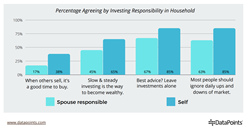
DataPoints released its first quarterly client financial psychology report brief, the Client FinPsych Report. This quarter’s report focuses on the investing-related attitudes of nearly 1,600 financial planning clients spanning over 140 financial planning firms in the United States. The report examines client attitudes related to long-term investment strategies as well as short-term actions such as following minute-to-minute market news.

“Many clients embrace long-term investing strategies such as ignoring daily market fluctuations. For those clients who embrace more of a short-term attitude about investing, our research highlights areas where advisors can provide guidance,” reported Sarah Stanley Fallaw, Ph.D., founder and President of DataPoints. “Particularly for those clients who are not primarily responsible for investing-related decisions in the household, 65% of whom are women, there is an opportunity for advisors to educate and ultimately to empower all investors to achieve success.”

The research brief, based on a sub-sample of data from the FinPsych Database from DataPoints, highlights critical areas where advisors can provide advice, education, and communication to clients concerning investing behaviors, thereby improving the likelihood of achieving so-called “advisor alpha,” a term referring to the outperformance relative to a benchmark as a result of working with the advisor.

Some of the findings from the report include the following:

  • More than three-quarters of clients (77%) agree that most investors should ignore daily market fluctuations. Stated another way, 23% of clients are neutral/unsure or agree that investors should monitor daily fluctuations.
  • Over 70% of clients (71%) disagreed with the idea that focusing on short-term gains is important. Nearly 30% of clients (29%) were either neutral or agreed that short-term gain is important in investing.
  • Nearly 60% of clients (58%) agree that a “slow and steady” investing strategy leads to building wealth.
  • More than half of financial planning clients (53%) reported agreeing or being neutral when asked if investors can beat the market if it is studied.
  • Less than half of clients who report being primarily responsible for investing-related decisions are women (43%). Of clients who report that their spouse is primarily responsible for investing-related decisions, 65% of them are women.
  • Attitudes differed depending on the client’s role in making investment decisions in the household. While 85% of clients who report being responsible for investment decisions in the household agree that most should ignore market fluctuations, only 63% of clients who report the spouse is responsible agree with the statement.

“A client’s investing mindset and subsequent decisions can make or break even the best financial plan. Advisors who tailor their services and guidance based on a client’s unique personality have an advantage in helping them to avoid behavioral pitfalls and achieve long-term investing success,” said Dr. Fallaw. “Advisors who implement behavioral assessments from DataPoints have ongoing access to the unique attitudes of their clients so that they can proactively guide them to make sound investing decisions.”

The DataPoints Q1 2021 Client FinPsych Report is available for download here.

About DataPoints

At DataPoints, we know client mindset impacts spending, saving, and investing decisions. We’ve created a suite of tools for financial professionals to identify financial personality so that clients avoid behavioral pitfalls and achieve financial success. Our financial psychology solutions are based on more than 40 years of behavioral, consumer, and demographic data that shaped the best-selling book, The Millionaire Next Door. Learn more about DataPoints here.

Share article on social media or email:

Front Line COVID-19 Critical Care Alliance Statement on Weak Guidance on Ivermectin from the World Health Organization (WHO)


The Front Line COVID-19 Critical Care Alliance (FLCCC)

Allowing large, conflicted bureaucracies to do the thinking for us will only lead to continued and unnecessary suffering from the pandemic.

The Front Line COVID-19 Critical Care Alliance (FLCCC), a group of highly published, world-renowned critical care physicians and scholars, is disappointed by what appears to be a deliberate omission of data by the World Health Organization in arriving at its decision to not recommend ivermectin to prevent and treat COVID-19. The latest guidance from WHO ignores several large clinical trials where ivermectin was proven to prevent mortality by more than 68%. If the WHO guidance is followed, it will result in a further deprivation of a lifesaving drug and will only prolong the pandemic as it will continue to threaten the health of the global population.

The latest guidance from the WHO is out of alignment with many national and local health authorities around the world where ivermectin has been proven to prevent and treat COVID-19. These countries include, Bulgaria, Slovakia, India, Egypt, Peru, Zimbabwe, and Bolivia, and in several regions a growing number of health authorities have advocated for, or adopted ivermectin across Japan, Mexico, Brazil, Argentina, and South Africa and it is now the standard of care in Mexico City.

“I am deeply troubled that the WHO made this hasty decision on guidance before reviewing all available data,” said Pierre Kory, MD, MPH, president and chief medical officer of the FLCCC. “Their recommendation ignores the evidence, creates more controversy, and will only lead to continuing suffering and death from COVID-19. There are now over 24 randomized trials results that have been reported to the Unitaid/WHO team yet todays guidance was inexcusably based on a faulty analysis of just 16 of the available trials. Further, these erroneous findings directly conflict with numerous other peer-reviewed expert analyses that have found the data overwhelmingly demonstrates that ivermectin saves lives from COVID-19. There is no reason not to recommend it for everyone as a safe drug for prevention and treatment.”

The recent results of a comprehensive assessment of existing ivermectin trials demonstrated that it reduces the risks of transmission of COVID-19 by more than 90%. The Technical Working Group of the British Ivermectin Recommendation Development (BIRD) group presented the results to their Recommendation Development Panel and the presentation laid out the detailed results of a systematic review and meta-analysis of 21 randomized controlled trials (RCTs) of ivermectin on over 2,500 patients.

“To ignore the data the way the WHO has, does a disservice to science and to public health. It is time that as physicians we trust our own knowledge on how best to treat our patients.” said Pierre Kory, MD, MPH, president and chief medical officer of the FLCCC. “Allowing large, conflicted bureaucracies to do the thinking for us will only lead to continued and unnecessary suffering from the pandemic.”

About the Front Line COVID-19 Critical Care Alliance

The FLCCC Alliance was organized in March 2020 by a group of highly published, world renowned Critical Care physician/scholars – with the academic support of allied physicians from around the world – to research and develop lifesaving protocols for the prevention and treatment of COVID-19 in all stages of illness. Their MATH+ Hospital Treatment Protocol, introduced in March 2020, has saved thousands of patients who were critically ill with COVID-19. Now, the FLCCC’s new I-Mask+ Prophylaxis and Early At-Home Outpatient Treatment Protocol with Ivermectin has been released – and is a potential solution to the global pandemic.

For more information: http://www.FLCCC.net

Share article on social media or email:

Mercy Center announces the retirement of Sister Carol Ann Henry after 39 years of service


News Image

Sister Carol Ann Henry

“We are forever grateful to Sister Carol for recognizing the need to serve the City of Asbury Park,” said Mary Beth Radke, Board Chair of Mercy Center.

Mercy Center, a nonprofit organization founded by the Sisters of Mercy, announces the retirement of Sister Carol Ann Henry from her role as Executive Director, effective June 30, 2021. Mercy Center will move forward with Sister Carol’s vision after her 39 years of service to Asbury Park.

Sister Carol’s journey to Asbury Park began in the early 1980s, when she saw that the city by the sea was suffering. “After meeting with members of the city council, it became clear there was a great need to help people who were hungry and battling mental illness – many of them living in the city’s overpopulated boarding homes,” said Sister Carol.

In 1986, with a loan from the Sisters of Mercy, 1106 Main Street was purchased and Mercy Center was established. Mercy Center’s Emergency Services was its first program that offers food, clothing and utilities assistance in order to help sustain families facing financial difficulties.

After ministering for nearly a decade, Sister Carol became aware that Mercy Center was now serving the daughters of the women she had helped years before. “Generational poverty was evident and the cycle was repeating itself within families,” she added.

To address these concerns, Sister Carol researched new ways to help families and empower young women to become self-sufficient. “I was convinced that appropriate guidance for families and an education of excellence for young women were the best ways to create systemic change,” she said.

Under the leadership of Sister Carol, Mercy Center is now a comprehensive social service agency that includes a Family Resource Center (FRC) and Sisters Academy of New Jersey (SANJ), both of which were created in 1997.

The FRC is a “one-stop-shop” for information, resources and services related to the support and preservation of families. It offers a range of cultural and relevant services such as group counseling, individual and family counseling, psycho-educational workshops, case management and referrals to appropriate providers that help strengthen and stabilize the lives and situations of families.

Sisters Academy of New Jersey is an independent girls’ middle school for grades 5-8, accredited by the New Jersey Association of Independent Schools (NJAIS) and the Middle States Association (MSA). “Our young women are provided an education of excellence and we are proud to say that 100 percent of Sisters Academy students graduate from high school,” said Sister Mary Louise Miller, Principal.

Mercy Center’s Board of Trustees, dedicated staff and committed volunteers supports Mercy Center and its many programs. Looking to the future, Mercy Center’s Board of Trustees is in the final stages of selecting its first new Executive Director since the nonprofit’s inception. “We are forever grateful to Sister Carol for recognizing the need to serve the City of Asbury Park,” said Mary Beth Radke, Board Chair of Mercy Center. “Each day, Sister Carol impacts lives through her kindness, compassion and understanding of the needs of the people we serve. We are all truly inspired by Sister Carol’s decades of service and wish her the very best as she embarks on the next chapter of her life.”

About Mercy Center

Mercy Center, founded by the Sisters of Mercy, provides programs and services that empower, enrich and educate people facing socio-economic challenges to realize their full potential, with a special emphasis on women and children. To learn more, visit http://www.mercycenternj.org.

Share article on social media or email:

Studio Sculpt + MOXXI Join Exclusive Haute Beauty Network


Studio Sculpt + MOXXI consists of two women-owned businesses that have collaborated to meet a demand in our area offering the most cutting-edge non-invasive technology on the market.

Studio Sculpt + MOXXI consists of two women-owned businesses that have collaborated to meet a demand in our area offering the most cutting-edge non-invasive technology on the market. We specialize in body aesthetics and have some exciting body collaborations that will be announced soon.

Studio Sculpt

Studio Sculpt is passionate about helping patients achieve their best body using the latest non-invasive technology on the market. Jackie Pantalone and Olivia Hennig are both health and wellness advocates and will work with you to set and achieve body goals. Our medical director Dr. John Santa Ana DO is a physician specializing in interventional sports, joint, and spine treatments and oversees our practice with his extensive knowledge of the body.

Visit Studio Sculpt’s Instagram and Facebook!

MOXXI

My name is Courtney McCracken, FNP-C, and I am the proud owner of MOXXI.

At MOXXI, we believe in revitalization and renewal. Our goal is to help you feel confident in your own skin and inspire you to live your best life. Early on, I developed a passion for making others feel exceptional inside and out, which is why I chose a career in healthcare. My journey started at Oakland University when I became a licensed Family Nurse Practitioner. Professionally, I work alongside leading physicians that focus on Urology and sexual wellness. After being trained by nationally recognized aesthetic injectors, I am confident in achieving your specific needs.

Our team looks forward to meeting you and exceeding your expectations.

Visit MOXXI’s Instagram and Facebook!

Additional Information

Please visit our websites: https://ihavemoxxi.com and https://mystudiosculpt.com for more information.

Additional contact emails: courtney@ihavemoxxi.com, jgiroux@jagfc.com, and info@mystudiosculpt.com

Learn more about Studio Sculpt + MOXXI by visiting: https://hauteliving.com/hautebeauty/member/studio-sculpt-moxxi/

ABOUT HAUTE BEAUTY NETWORK:

Haute Beauty is affiliated with the luxury lifestyle publication Haute Living. As a section of Haute Living magazine, Haute Beauty covers the latest advancements in beauty and wellness, providing readers with expert advice on aesthetic and reconstructive treatments through its network of acclaimed doctors and beauty experts.

For more about Haute Beauty, visit https://hauteliving.com/hautebeauty/

Share article on social media or email:


Seniorly’s March Senior Sentiment Report shows improving financial health, as lockdown policy divides the nation


Today, Seniorly, the fastest growing online marketplace to find senior living and care services, announced the results of its March Senior Sentiment Report.

To produce this monthly report, active Seniorly users were surveyed on topics such as their community support, finances, stress and physical and mental health. The March 2021 report reveals the impact of COVID-19 vaccination on seniors behavior as they grapple with re-opening protocols throughout the United States.

Results from the March 2021 report revealed three significant findings:

  • Vaccines Don’t Change Behavior
  • Seniors Divided on Lockdowns
  • Economy Improves Seniors’ Finances


The rolling out of the vaccine has not contributed to a growing connectedness score. The vast majority of seniors report that vaccines have not changed their interpersonal behavior or their thoughts around returning to senior living.

In parallel, Seniors are divided on what should be done about the lockdowns. Roughly 50% voice an opinion that lockdowns should be extended or held in place until the end of the pandemic, while the other 50% would like lockdowns eased or eliminated entirely.

Lastly, Seniors finances improved over the last month as well. The share of seniors who reported improving finances rose from 9% to 12% and the share who reported worsening finances fell from 18% to 14%

The survey data reveals many insights into how living conditions and support from family and friends correlate to current happiness or feelings of discontent. This month’s report includes responses from hundreds of older adults who are actively searching for senior living options with nearly 65% of respondents over 70 years old. The full report, along with our top data takeaways, is available here: https://www.seniorly.com/press-releases/articles/senior-sentiment-report-march-2021

About Seniorly

Seniorly helps families and older adults find the right senior living for their needs and budget. Combining the power of its advanced technology with the high-touch support of a national network of local advisors, Seniorly is modernizing senior living discovery. Through its online platform, Seniorly provides access to thousands of senior living communities, expert insights, and personalized recommendations based search preferences. Seniorly also has a growing marketplace of trusted companies, offering other services and products that are helpful to families at this stage of life. Founded in 2014, Seniorly currently supports over 4.5 million visitors every year on their senior living journey. Visit http://www.seniorly.com for more information.

Share article on social media or email:

D. Robert Frisina, founding director of RIT’s National Technical Institute for the Deaf, who changed the face of deaf education, has died at age 96


black and white photo of man using sign language.

D. Robert Frisina, pictured here in the 1970s, enjoyed interacting with students at RIT/NTID, where he served as founding director.

“Few leaders anywhere in the nation could have matched [Frisina’s] dynamic leadership in charting the course for the National Technical Institute for the Deaf.” – Arthur L. Stern, who chaired RIT’s Board of Trustees from 1961 to 1976.

The founding director of Rochester Institute of Technology’s National Technical Institute for the Deaf, D. Robert Frisina, died in Florida on Monday, March 29. He was 96.

An international author and lecturer, Frisina was a visionary and a pioneer in the field of deaf education. He was selected by the RIT Board of Trustees as the first director of NTID in January 1967, and he went on to quite literally build NTID from the ground up. Arthur L. Stern, who chaired RIT’s Board of Trustees from 1961 to 1976, said of Frisina, “Few leaders anywhere in the nation could have matched his dynamic leadership in charting the course for the National Technical Institute for the Deaf.”

At the time he was appointed NTID director, less than 1 percent of all college-age deaf individuals were enrolled in postsecondary education. Of those employed, most held unskilled or semi-skilled positions, and there were virtually no deaf people in technical or managerial positions. Frisina’s goal from the start was to improve education opportunities for deaf and hard-of-hearing students to open to them successful career paths on par with those of their hearing peers.

He brought with him to RIT/NTID a background in education and deafness as well as an acute understanding of the need for RIT to fulfill its contract with the federal government for operating NTID. When he saw a challenge, he doggedly pursued a solution. He scrupulously selected faculty and staff who were experts in a variety of technical and educational fields and who understood they were embarking on what he called “The Grand Experiment,” an entirely new venture to educate a large number of deaf and hard-of-hearing students at the postsecondary level on a mainstream college campus.

Well known for encouraging faculty and staff to develop innovative ideas, Frisina was known to say that he had two pockets—one for problems and one for solutions. He often would tell people that if they brought him a problem for one pocket, he also expected them to bring a solution for his other pocket.

“Bob was instrumental in developing, encouraging, and mentoring many of NTID’s best leaders over the years,” said Gerry Buckley, current NTID president and RIT vice president and dean. “His foresight, wisdom, and perseverance helped make NTID what it is today.”

Stepping down as leader of NTID in 1976, Frisina continued to serve as an RIT senior vice president for 15 years. In 1993, he formed the International Center for Hearing and Speech Research (ICHSR), which was housed at RIT/NTID, and served as director of ICHSR for 17 years. He also served as a board member and adviser for a number of organizations and earned many RIT awards, including the Presidential Medallion, the Principal Investigator Award, and the RIT Diversity Trailblazer Award. In 2007, RIT/NTID dedicated the D. Robert Frisina Quadrangle in his honor. In 2009, he was named vice president emeritus of RIT.

Among other awards, Frisina also received the Distinguished Alumnus Award from Westminster College, the Bicentennial Medal of Excellence Award from the New York State Board of Regents, the Civic Award for Education from the Rochester Chamber of Commerce, the Lyon’s Founder Award from the Rochester School for the Deaf, and the Special Recognition Award from the University of Buffalo.

He held a bachelor’s degree in biology from Westminster College in Fulton, Mo.; a master’s degree in education of the deaf from Gallaudet College; and a Ph.D. in audiology and psychology from Northwestern University.

“He always spoke with tremendous pride about the mission of NTID and the positive impact it has had on the lives of thousands of deaf individuals,” Buckley said. “He said that one of the highlights of his career was receiving a standing ovation from the thousands of alumni who attended NTID’s 50th anniversary celebration in Rochester in 2018.”

Frisina leaves behind children Dr. Robert D. Frisina, Karen Moses, Sandy Richter, Tom Frisina, and Chris Frisina, as well as 10 grandchildren. RIT/NTID will hold a memorial service on campus at a later date.

Share article on social media or email: