Category Archives: Science: Biology

Cutting edge research is happening on a daily basis in our modern world, Keep up to date with our Press Release services.

Innovative EdTech Solutions Chosen as Winners of ‘Educators Pick Best of STEM(TM) 2021’ Awards


Educators Pick Best of STEM 2021

Educators Pick Best of STEM 2021

“From young learners to college scholars, it is vital for students to have multiple, sustained opportunities to engage in science exploration,” said Eric Pyle, president of NSTA. “Congratulations to the winners for providing STEM opportunities to help build students’ scientific skills.”

In collaboration with the National Science Teaching Association (NSTA) and MCH Strategic Data, Catapult X has named the winners of the Educators Pick Best of STEMTM 2021, the only awards program judged by STEM educators for STEM educators. This year’s winning K-12 and higher education products, technologies, and services were selected for their positive impact on student learning and STEM education in today’s schools. Winners were chosen based on reviews by the educator judges, as well as by a popular vote by more than 2,500 educators.

“Our exceptionally-qualified educator judges were highly impressed with the classroom utility of the products they reviewed,” said Annie Galvin Teich, judge coordinator for Educators Pick Best of STEM and CEO of The Teich Group. “From emerging technologies to tried-and-true solutions, the range and variety of winning STEM and STEAM programs provide teachers with ample opportunities to excite students about science.”

This year’s winners are:

Extended Reality (AR/VR)

  •     MEL Science (co-winner)
  •     Carolina Biological: Bacterial Transformation Simulator (co-winner)

Inspiring Computational Thinking

  •     Sphero, Inc.: INDI (winner for PreK-2)
  •     Game Salad (winner for Grades 6-12)

Earth Science

  •     IRIS Consortium: IRIS Station (co-winner)
  •     TWIG: TWIG Science Next Generation (co-winner)

Space Science

STEM Innovation

  •     MEL Science (co-winner)
  •     Unruly Studios: Unruly Splats (co-winner)

STEAM Excellence

  •     Great Minds: PhD Science

Best Resource for Analyzing and Interpreting Data

  •     Pivot Interactives

Bridging the Gap: Math Intervention Resource

  •     US Math Recovery Council: Math Recovery Specialist

Hybrid Learning Superhero

  •     Accelerate Learning, Inc.: STEMscopes

Breakthrough Technology for STEM

  •     Pivot Interactives

Social Impact Awards

Outstanding Provider, Customer Service—Co-winners

  •     Bio-Rad Explorer: Hands-On Laboratories, Grades 9–University (co-winner)
  •     Labster: Computer Program Simulation Lessons (co-winner)

Tried and True STEM Resource

  •     Explore Learning Gizmos (co-winner)
  •     Generation Genius (co-winner)

Best Freebies for STEM

  •     Bio-Rad Explorer: Bio-Rad Explorer (co-winner)
  •     Carolina Biological Supply: Carolina Essentials (co-winner)

“From young learners to college scholars, it is vital for students to have multiple and sustained opportunities to engage in science exploration,” said Eric Pyle, president of NSTA. “Congratulations to all of the companies that developed and shared these standout technologies for providing STEM opportunities and innovative approaches to help build students’ scientific skills, knowledge, and literacy.”

“We had a robust selection of products for educators to evaluate this year. This includes a number of technologies teachers and students can use either from home or in the classroom, suggesting a shift in how product developers are adapting to meet the future of education,” said Daylene Long, founder of Catapult X. “We are seeing a trend to simplify hands-on experimentation by having students conduct investigations with everyday household products while, at the same time, leveraging advanced technologies such as AR/VR where students engage with STEM ideas through whole-body interactions, complex simulations, and virtual laboratory experiences.”

All of this year’s award winners are featured on the Educators Pick Best of STEM, Catapult X, and NSTA websites. They will additionally be featured in the January 2022 issues of NSTA’s Science and Children, Science Scope, and The Science Teacher.

To learn more about Educators Pick Best of STEM and the 2021 winners and finalists, visit http://www.bestofstemawards.com.

About Catapult X

Founded by Daylene Long, Catapult X is a market and product development company that consults with science and STEM/STEAM education industry partners—organizations, businesses, and associations—to catapult their brand and products forward by using data-driven insights.

Long catapults brand, product, and sales growth through alignment of data and strategy, using progressive research techniques and customer discovery. Long publishes national surveys on STEM education and STEM marketing infographics to guide edtech marketers across the globe. Long is an affiliate member of the Council of State Science Supervisors, a member of NSELA, and a seventeen-year member of NSTA. Long connects her clients to administrators, educators, distributors, and media to build strong global partnerships.

Share article on social media or email:

Front-Line Responders Fight Plant Invaders That Fuel Fires


News Image

“It’s like calling in firefighters or the Marines,” Curt Deuser says. “We can send in expert crews equipped to work with local staff to fight weed infestations and to prevent them from becoming even larger-scale issues.”

Fires have had a devastating impact on communities and public lands across the western U.S. in recent years. But scientists with the Weed Science Society of America (WSSA) say effective weed control can make a difference. That’s why invasive plant managers with the National Park Service make it a priority to eliminate weeds that can dry out, tumble, and provide fires with a continuous source of fuel.

Fire prevention and containment measures are just one example of the important role front-line responders play in protecting native ecosystems. In addition to promoting fires, unwelcome, nonnative weeds can crowd out native species, reduce biodiversity, spread disease and inflict costly damage to roads, canals, levees and other infrastructure.

The First Response Team

Curt Deuser, a supervisory ecologist with the National Park Service, was instrumental in the launch of the first specialized team devoted to invasive plant management. His focus at the time was tamarisk (also known as salt cedar), a plant first introduced in North America as an ornamental. A single mature tamarisk plant can consume many gallons of water a day – reducing the water table and robbing moisture that cottonwoods, willows and other native species need to survive.

Nearly 30 years ago, Deuser noticed inconsistent and ineffective methods were being applied to fight tamarisk across various public lands. He worked to develop an effective, science-based methodology for managing tamarisk at 15 national park units in five western states. A traveling team trained local land managers and provided much-needed continuity and expertise. The approach was successful and the concept gained steam.

Today there are 17 Invasive Plant Management Teams tasked with fighting invasive species across nearly 300 national parks. These teams of early responders focus on identifying, containing and treating invaders, restoring native plant communities and protecting our natural ecosystems. Over the past three years, they have actively monitored as many as 210,000 acres a year and have actively controlled weeds on an average of about 8,300 acres annually.

Early Detection/Rapid Response

Deuser says the teams strive for early detection and rapid response to prevent invasive weed species from doing significant harm to park resources. A few examples:


  • The Lake Mead Inter-Regional Invasive Plant Management Team is taking steps to prevent fountaingrass from colonizing in Mojave Desert park units and along the Colorado River system. This invasive ornamental is extremely flammable and easily spread. One sign of the risk: A recent study shows that fire-prone grassy invaders like fountaingrass can increase the occurrence of wildfires by up to 230 percent compared to native habitats like sage brush. Invasive plant management specialists have worked with the park staff to remove fountaingrass from landscaping and to treat and eradicate escaped populations – preventing what might have been a catastrophic infestation.
  • The Southwest Invasive Plant Management Team is focusing on early detection and control of stinknet, also known as globe chamomile. This noxious weed dries out in the summer and becomes fuel for wildfires that threaten native Sonoran Desert ecosystems.
  • Park Service teams have discovered that invasive plants often make major leaps in the aftermath of a fire – creating an opportunity for early intervention. After a 2018 blaze that burned 97% of California’s Whiskeytown National Recreation Area, they anticipated a vigorous flush of invasive annual grasses. By taking aggressive control actions, they were successful in keeping major infestations at bay.

Partnering to Control Weeds That Know No Borders

Invasive Plant Management Teams work closely with other agencies and organizations. One of those is U.S. Fish and Wildlife, which has its own version of the National Park Service model called “Strike Teams.” Such interagency cooperation makes it easier to control invasives across broad areas.

“It’s like calling in firefighters or the Marines,” Deuser says. “We can send in expert crews equipped to work with local staff to fight weed infestations and to prevent them from becoming even larger-scale issues.”

Like many other tactical teams, Invasive Plant Management Teams travel where the action is. And they have to be physically fit. “It’s hard work,” Deuser says. “You might have to hike for miles with a heavy backpack to reach problem areas, and then camp out when you get there.”

But above all, team members need to understand invasive plants. Almost all have degrees in biology or environmental sciences, backed by extensive, on-the-job training in effective management techniques. They are also experienced both in sharing what they know and in marshalling teams of volunteers to extend their reach.

Jacob Barney, Ph.D., a WSSA member and associate professor of invasive plant ecology at Virginia Tech, says the ‘roving expert’ model adopted by the Park Service has proved to be an effective tool for managing plant invaders across our vast national parklands.

“Invasive Plant Management Teams bring strategic focus and expertise that might be lacking at the local park level,” he says. “They offer the skills needed to detect and prevent the spread of new species, reduce existing infestations, and restore our native plant communities and ecosystems.”

About the Weed Science Society of America

The Weed Science Society of America, a nonprofit scientific society, was founded in 1956 to encourage and promote the development of knowledge concerning weeds and their impact on the environment. The Society promotes research, education and extension outreach activities related to weeds, provides science-based information to the public and policy makers, fosters awareness of weeds and their impact on managed and natural ecosystems, and promotes cooperation among weed science organizations across the nation and around the world. For more information, visit http://www.wssa.net.

EDITORS: Supporting photos are available for download on the WSSA website at https://wssa.net/supporting-photos.

Share article on social media or email:

Slone Partners Places L’Oréal USA Consumer Products Division President Nathalie Gerschtein Keraudy on Board of Directors at DermTech


DermTech

“Her extensive strategic and operational experience and innovative spirit will be valuable additions to the DermTech Board of Directors and great support for the company’s leadership team,” said Slone Partners President Tara Kochis.

Slone Partners, a nationwide executive search firm for life sciences, biotechnology, and diagnostics companies, has announced the placement of Nathalie Gerschtein Keraudy, President of the Consumer Products Division of L’Oréal, on the Board of Directors at DermTech, a leading genomics company in dermatology.

Gerschtein Keraudy has more than 20 years of experience at L’Oréal in progressive leadership roles across Europe, Asia, and America. In her current role as president of the largest division in L’Oréal Group’s top subsidiary, Gerschtein Keraudy is responsible for accelerating growth, innovation, and sustainable practices across its mass market portfolio of brands and product categories, from skin care and makeup to hair care and color. This extensive portfolio includes some of the most iconic brands including L’Oréal Paris, Maybelline New York, Garnier, and NYX Professional Makeup, in addition to Essie, Thayer’s Natural Remedies, Carol’s Daughter, and Softsheen-Carson.

Under her leadership, the consumer products division generates more than $4.5 billion in U.S. retail sales annually. She leads a team of thousands of employees and remains committed to building a dynamic and inclusive culture.

“Nathalie Gerschtein Keraudy is a tremendously talented and highly respected business leader with a stellar track record of success managing a range of high-profile international product lines and brands,” said Slone Partners President Tara Kochis. “Her extensive strategic and operational experience and innovative spirit will be valuable additions to the DermTech Board of Directors and great support for the company’s leadership team.”

“Nathalie has tremendous experience in building brands that consumers, clinicians, and the world recognize and trust,” said Matt Posard, Chairman of DermTech’s Board of Directors. “Her unique and diverse perspectives will complement our efforts to make DermTech the trusted brand for genomic products that transform dermatologic care.”

“I’m honored to join the DermTech Board of Directors, not only because of the innovative and life-saving work I see the company doing, but also because we share a common mission – to transform and democratize skincare for all,” said Gerschtein Keraudy.

Gerschtein Keraudy graduated from HEC School of Management in Paris and received a Master of Business Administration (MBA) with a focus in Corporate Strategy from London Business School. She also completed executive coursework at INSEAD’s senior executive leadership program.

ABOUT SLONE PARTNERS

Slone Partners delivers the leaders who build amazing and diverse life sciences and healthcare organizations – People Are Our Science®. Founded in 2000, Slone Partners specializes in delivering world-class C-suite leadership, executive, and upper management talent to the most promising and established biotech, diagnostics, research tools, healthcare, precision medicine, CRO, and laboratory services companies. With national and global clients, Slone Partners uniquely and precisely provides an array of executive search and advisory services, including diversity, equity, and inclusion strategy, to innovative life sciences and healthcare companies. To learn more about Slone Partners’ value proposition and processes, visit http://www.slonepartners.com or call 888.784.3422.

ABOUT DERMTECH

DermTech is a leading genomics company in dermatology and is creating a new category of medicine, precision dermatology, enabled by our non-invasive skin genomics platform. DermTech’s mission is to transform dermatology with our non-invasive skin genomics platform, to democratize access to high quality dermatology care, and to improve the lives of millions. DermTech provides genomic analysis of skin samples collected non-invasively using an adhesive patch rather than a scalpel. DermTech markets and develops products that facilitate the early detection of skin cancers and is developing products that assess inflammatory diseases and customized drug treatments. For additional information on DermTech, please visit DermTech’s investor relations site at: http://www.dermtech.com.

Share article on social media or email:
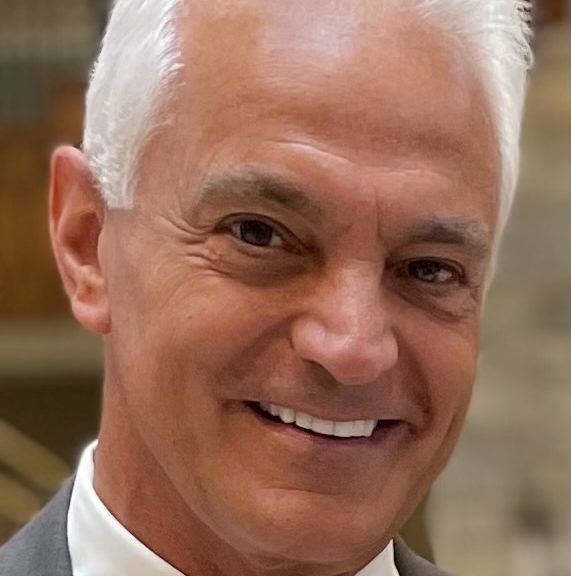
Damian Colehan Joins USDM Life Sciences to Lead European Expansion


Damian Colehan, VP of Business Development Europe, USDM Life Sciences

Damian Colehan, VP of Business Development Europe, USDM Life Sciences

Damian Colehan joins USDM Life Sciences as the Vice President of Business Development in Europe. USDM is scaling to deploy transformative solutions in regulated environments as pharma, biotech, and medical device companies adopt cloud technologies faster than ever before. Damian is chartered with leading this mission for USDM and its customers in the UK and European Union (EU) markets. He is responsible for ensuring that all regional requirements are met for growth and adaptation, and delivering a continuously exceptional USDM experience.

Damian has spent more than 30 years in the life sciences industry and his expertise lies in his knowledge of Software as a Service (SaaS) and Platform as a Service (PaaS), Customer Relationship Management (CRM), and content management solutions.

“Damian understands the importance of working with solution partners; collaboration is key for customer success,” says Todd McKendrick, Head of Accounts at USDM. “This role will challenge him to use all his skills and experience in sales, business development, and software technology to drive growth for USDM and our flagship Cloud Assurance product.”

Damian can be reached at dcolehan@usdm.com and you can connect with him on LinkedIn.

USDM is hiring for the UK and Germany offices. See our Careers page for more information.

About USDM Life Sciences

USDM Life Sciences provides strategy and technology solutions to regulated life sciences companies accelerating their transformation and innovation. USDM focuses exclusively on the regulated biotechnology, pharmaceutical, and medical device industries and is a trusted partner with the world’s top technology companies. For more information, visit http://www.usdm.com.

Share article on social media or email:
TN Aquarium’s Freshwater Science Center Celebrates 5 Years of Conservation


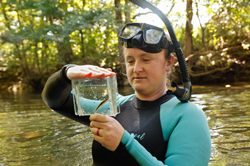
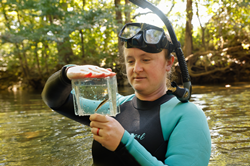
Tennessee Aquarium Conservation Institute Recovery Biologist Shawna Fix holds a portable aquarium with a Bridled Darter collected from Holly Creek in North Georgia.

Tennessee Aquarium Conservation Institute Recovery Biologist Shawna Fix holds a portable aquarium with a Bridled Darter collected from Holly Creek in North Georgia.

“The Tennessee Aquarium has always focused on the rivers and streams of the Southeast. Opening this freshwater science center five years ago has allowed us to expand our impact across the region.” – Dr. Anna George, the Aquarium’s VP of conservation science and education

From its solar water heater and rainwater collection cistern to the buzzing meadow of native plants that serves as its front yard, everything about the Tennessee Aquarium’s state-of-the-art field station resonates with its commitment to the environment and freshwater conservation.

Since opening its doors on Oct. 27, 2016, this 14,000-square-foot, $6 million facility has served as the Tennessee Aquarium Conservation Institute (TNACI) headquarters. The Conservation Institute existed long before this grand opening, but having a dedicated facility to serve as the nexus of the Aquarium’s conservation efforts was an important moment in its mission to protect freshwater.

“The Aquarium had always wanted to invest more heavily in our conservation efforts,” says Dr. Anna George, the Aquarium’s vice president of conservation science and education. “We’ve always focused on the rivers and streams of the Southeast. That made us unique among other aquariums, and opening this facility allowed us to expand our impact.

“It was important to all of us that we not only displayed and celebrated these animals but also did something to protect them.”

In the first five years of operation at the new facility, TNACI staff have tackled a sweeping scientific agenda, from spawning nearly extinct freshwater fish and evaluating the conservation status of Alligator Snapping Turtles to studying the impact of microplastic debris on rivers and streams.

As the epicenter of the Aquarium’s conservation work celebrates its first significant anniversary, however, its scientists haven’t slowed their pace. During the summer and fall, TNACI staff juggled many active projects alongside partnering organizations and agencies throughout the region.

In September, TNACI biologists and Aquarium staff donned wetsuits and snorkels to evaluate the health of Bridled Darters in Holly Creek in the Northeast Georgia foothills. In addition to surveying the Bridled Darters’ population size, scientists also collected fin samples that were sent to the University of West Alabama for further analysis. Combined, these data will help scientists determine if this rare fish warrants listing as an endangered species in years to come.

Two weeks later, TNACI’s crew was in the field (and submerged) again, this time in the pristine waters of the Tellico River near Tellico Plains, Tenn. On this occasion, they were in pursuit of charismatic, colorful Tangerine Darters. These enormous — for a darter, at least — freshwater fish aren’t of any particular conservation concern, but they have an essential role to play in saving another endangered Tennessee native: the Cracking Pearlymussel.

Like more than 70 percent of all Southeastern freshwater mussels, Cracking Pearlymussels are endangered and at risk of extinction in the next 100 years. Mussels are especially sensitive to changes in water quality and have seen a massive decline in their populations in recent decades due to habitat degradation caused by human activity.

The mussel life cycle requires the help of freshwater fish through a beautifully bizarre interaction that aids in their dispersal through rivers. Female mussels that are ready to release their larvae (baby mussels) draw in specific fish species, sometimes using astonishingly elaborate lures. This biological smoke and mirrors display takes various forms, from mimicking the fish’s prey to imitating the enticing motions of a potential mate.

Once near enough, the mussels infect the duped fish with their larvae, either by clamping their shell closed around their target or releasing their offspring in an unavoidable cloud. After harmlessly attaching to the fish’s gills, the larvae use it as a kind of underwater Lyft service. After a few days’ ride, they detach and sink to the waterway’s bottom, enabling the otherwise sedentary mollusks to colonize new areas.

Cracking Pearlymussels are uniquely adapted to use Tangerine Darters to expand their range. The Tangerine Darters that TNACI scientists collected from the Tellico will spend the winter at the Aquarium’s field station and will be spawned in the spring. Any produced offspring will be sent to the Cumberland River Aquatic Center, a Tennessee Wildlife Resources Agency (TWRA) mussel propagation and restoration facility near Nashville.

This work is being carried out during a crucial period in freshwater mussel conservation. In September, the U.S. Fish and Wildlife Service proposed a declaration of extinct status for 23 American animals, including nine mussel species, six of which are native to Tennessee. USFWS has listed another 51 mussel species in Tennessee as endangered or threatened under the Endangered Species Act.

“Freshwater mussels are ecologically and economically important,” says Dr. Dan Hua, TWRA senior scientist, and manager of the River Center. “As filter feeders, they ‘clean’ the water by removing suspended particulates, detritus, and harmful elements.

“In addition, freshwater mussels … are recognized as useful indicators of water quality.”

In addition to launching new projects and partnerships, TNACI’s headquarters is also the heart of long-term programs to raise, release and restore iconic Southeastern species such as the Southern Appalachian Brook Trout and Lake Sturgeon.

This summer, the Aquarium and its partners began stocking a new Appalachian stream with Brook Trout that were spawned and raised at the TNACI field station. On the last day of summer, a team from TWRA hand-delivered ten new adult “Brookies” to the Aquarium’s field station. These fish, collected from Brookshire Creek in the Cherokee National Forest, will add their unique genetics to the juveniles released into the new stream next year.

The restoration effort, which TNACI joined in 2012, dates back to the 1980s. At the time, genetically distinct Southern Appalachian Brook Trout had all but disappeared from their range due to competition with introduced species and poor logging practices that degraded native streams. Scientists also remain concerned about the effect of changing temperature and precipitation patterns on Brook Trout’s future prospects in the region.

The decision to shift restocking efforts to a new stream system this year was reached because previous release sites now host self-sustaining populations. This is an important milestone in the effort to bring Brook Trout back to the Southern Appalachians, says TNACI Reintroduction Biologist Sarah Kate Bailey.

“That shows that our reintroduction program has been successful,” she says. “Adding new broodstock to our current adult trout population ensures we will be adding genetic diversity to these streams, which is a key component of a healthy population.”

On Oct. 7, the Aquarium and other Lake Sturgeon Working Group members celebrated the latest release of juvenile Lake Sturgeon into Watts Bar Reservoir near Kingston, Tenn. This year is the 22nd in the marathon effort to reintroduce these native river giants to the Tennessee River and other Southeastern waterways.

With winter-bare branches still scraping the skies in central Wisconsin this April, TNACI scientists made the 800-mile drive to the Wolf River to help collect and fertilize eggs from wild-spawning Lake Sturgeon. Weeks later, juvenile Lake Sturgeon were sent to the Conservation Institute. They spent the summer months growing to a releasable size of about six inches.

The Wolf River’s still-healthy population of Lake Sturgeon stands in stark contrast to the Tennessee River. Lake Sturgeon had disappeared by the 1970s due to a combination of overfishing, river damming, and low water quality.

The 650 juvenile Lake Sturgeon released earlier this month resulted from the Wolf River spawning and are welcome transplants to the Southeast. Their introduction to the river marks the latest chapter of a project started in the mid-1990s when improvements to the health of the Tennessee River suggested a restoration was possible.

In all, more than 250,000 Lake Sturgeon have been released into the Tennessee River and other Southeastern waterways since 2000. Of these, more than 30,000 (about one in nine of those released) were raised by the Aquarium. Even after all this time, however, the work by TNACI and its partners will remain important for the foreseeable future, says TNACI Aquatic Conservation Biologist Dr. Bernie Kuhajda.

“These are long-lived animals — some can reach 150 years old — so it’s a long-term commitment to restore them,” he says. “It takes 20 years, at least, before females are ready to spawn for the first time, and we’re getting near that time when the first sturgeon we released will have reached that point. When that happens in the Tennessee River, it’ll be an amazing event.”

Learn more about the history of the Conservation Institute’s flagship science facility.

Learn more about the Tennessee Aquarium’s conservation efforts.

The Passive House Network Announces Launch of Specialized Thermal Bridging Course


The Passive House Network (PHN) announced today the launch of the Thermal Bridging course, as an on-demand online training for architects, engineers and consultants working on Passive House residential and commercial building construction.

“Thermal bridge calculations are essential for delivering predictable building performance and cost effective construction,” said Sharon Gaber, PHN Managing Director. Gaber noted, “With this advanced course, architects, engineers and consultants can close the loop on making truly continuous insulation and be assured of high-performance that addresses occupant needs and our climate crisis.”

The Thermal Bridging course is available at any time, on demand, over a six month period. This availability allows students to access the lessons at their own pace, review calculations step-by-step as needed and master this critical aspect of Passive House design. The cost is $595. 14 AIA LU/HSW credits are available. Topics will cover:


  • Introduction & THERM setup
  • Assemblies
  • Junctions
  • Windows
  • Ground
  • Next Steps

The course was developed in collaboration with Ed May and BLDGtyp. Ed May, a BLDGtyp partner, stated, “For a building enclosure to provide predictable Passive House high-performance, the comprehensive consideration of thermal bridges is required. The course we’ve developed carefully takes students through that path, clarifies critical aspects, and provides the skills needed to close the loop, and support Passive House energy balance calculations.”

The course, Thermal Bridging, is part of a larger Passive House education pathway, that begins with introductory classes, including a suite of on-demand introductory topics offered by the Building Energy Exchange (BEEx), based in NYC, the core Certified Passive House Designer and Certified Passive House Tradesperson courses, and other specialized expert training.

“The courses in the training pathway are all organized to build on each other and support growing high-performance competency as we work to make buildings a solution to our climate, health, and social crises,” stated PHN Executive Director, Ken Levenson. “Our climate emergency demands nothing less.”

This course can be accessed at: https://naphnetwork.org/education/specialized/thermal-bridging-course/

# # #

About The Passive House Network:

The Passive House Network (PHN), formerly known as NAPHN, is a high-performance building literacy program. We provide comprehensive, high-quality Passive House education to stakeholders across the building industry – from architects and engineers to builders and developers, to regulators and policymakers. We demystify the impact of design and construction choices, form knowledge-sharing networks, raise expectations, and transform how professionals fundamentally think and work.

PHN is an independent national non-profit educational organization affiliated with the International Passive House Association (iPHA) and the Passive House Institute (PHI), located in Darmstadt, Germany.

PHN has chapters based in New Jersey (http://www.njpassivehouse.com), Washington DC (http://www.naphnetwork.org), the Rocky Mountain Region (http://www.phrockymountains.com), Minnesota (http://www.passivehouseminnesota.org) and Pennsylvania (http://www.passivehousepa.org).

PHN supports the widespread adoption of the international Passive House design and construction standards, building science principles and protocols, as a critical response to our climate crisis – providing unparalleled effectiveness in mitigating climate disruptions and adapting to rapidly changing environmental conditions.

http://www.naphnetwork.org

About Passive House:

Passive House is an international building standard and methodology, applicable to buildings of all kinds from office buildings to hospitals, new-build and renovations, that results in a dramatic drop in operational energy use, and more comfortable and healthy occupants – meant to aggressively mitigate our climate crisis while providing resilient adaptation.

The Passive House Standard was developed by the Passive House Institute (PHI), an independent scientific research organization, located in Darmstadt, Germany, and includes specific requirements for energy use and comfort of occupants. The Passive House Standard is being successfully applied to thousands of buildings and millions of square feet around the world, from Boston to Beijing.

The Passive House methodology starts with reducing cooling, dehumidification, and heating loads by focusing, not on gadgets and active technology, but instead on fully integrated durable passive building components, such as proper continuous thermal-bridge-free insulation, continuous airtightness, high-performance windows and doors, and ventilation that includes a high-efficiency heat/energy recovery core, carefully calculated, and all integrated with the entire architectural process of design and construction. http://www.passivehouse.com http://www.passipedia.org

Share article on social media or email:

Brenntag forms distribution agreement with biobased solvents experts NXTLEVVEL Biochem


News Image

Brenntag (ISIN DE000A1DAHH0), the global market leader in chemical and ingredients distribution, forms a distribution agreement with NXTLEVVEL Biochem to expand its growing Household, Industrial, & Institution (HI&I) portfolio in providing sustainable biobased solvents in North America.

This current agreement covers a new product line including the below product names and consists of levulinates and levulinate ketals. These products are all biobased solvents offering high performance and improved safety and sustainability:


  • NXT SOLV 100
  • NXT SOLV 200
  • NXT SOLV 300
  • NXT SOLV 400

“We are excited to have the opportunity to bring a new innovative solution to our customers from NXTLEVVEL. Having a sustainable alternative solvent will allow our customers to better meet the increasing consumer demands for sustainable cleaning products,” said Jeffrey M. Carey, Ph.D. Vice President HI&I Americas.

These biobased products can reduce dependence on fossil fuels and play a role in reducing carbon emissions. They are used in applications such as hard surface cleaners, floor cleaners, and laundry detergents.

“I’m very excited that NXTLEVVEL and Brenntag are embarking on a relationship to promote our range of biobased solvents in the HI&I industry by leveraging the strength of our technology along with Brenntag’s market-leading position,” commented Aris de Rijke, CEO of NXTLEVVEL Biochem. “NXTLEVVEL’s technology is highly innovative, proprietary and, for the first time, allows the production of levulinate derivatives at industrial scale. The cornerstone is the patented biomass-derived levulinic acid technology and its esters enabling the affordable production of biobased solvents and other biobased chemicals,” de Rijke notes.

About Brenntag:

Brenntag is the global market leader in chemicals and ingredients distribution. The company holds a central role in connecting customers and suppliers of the chemical industry. Headquartered in Essen, Germany, Brenntag has more than 17,000 employees worldwide and operates a network of more than 670 sites in 77 countries. In 2020, Brenntag generated sales of around 11.8 billion EUR. The two global divisions, Brenntag Essentials and Brenntag Specialties, provide a full-line portfolio of industrial and specialty chemicals and ingredients as well as tailor-made application, marketing and supply chain solutions, technical and formulation support, comprehensive regulatory know-how, and digital solutions for a wide range of industries. In the field of sustainability, Brenntag pursues specific goals and is committed to sustainable solutions in its own sector and the industries served. Brenntag shares have been listed at the Frankfurt Stock Exchange since 2010, initially in the MDAX and since September 2021 in the DAX. In addition, the Brenntag SE shares are listed in the DAX 50 ESG and DAX 50 ESG Target. For more information, visit http://www.brenntag.com.

About NXTLEVVEL:

A privately held company headquartered in The Netherlands, NXTLEVVEL is a commercial scale manufacturer of next generation biomass-derived chemicals. As a joint venture formed in 2018, NXTLEVVEL brings together the industrial expertise of the Towell Engineering Group (Sultanate of Oman) with advanced technology developed by GFBiochemicals. GFBiochemicals was founded in 2008 and holds 200 patents for its world leading proprietary technology in bio-solvents, polyols, and plasticizers based on levulinic acid. Levulinic acid is considered a key biobased building block that enables the production of an extensive portfolio of derivatives. For more information, visit http://www.nxtlevvel.com.

Share article on social media or email:

Clear Labs Automated NGS Technology Platform (Clear Safety™) Approved by USDA’s National Poultry Improvement Plan for Salmonella Detection


News Image

For food-borne illnesses, like Salmonella, faster and more insightful results are critical for maintaining flock health and safety of food products, as well as operational efficiency.

Today, Clear Labs, a leader in providing fully automated, next-generation sequencing (NGS) platforms for turnkey diagnostics, is announcing that Clear Safety Salmonella has been approved by the National Poultry Improvement Plan (NPIP) for interim use in the detection of Salmonella. Established in the 1930s to provide a cooperative federal-state-industry mechanism for controlling certain poultry diseases, NPIP focuses on the integration of new diagnostic technologies to support the improvement of poultry and poultry products throughout the country. NPIP is part of the United States Department of Agriculture’s (USDA) Animal and Plant Health Inspection Service (APHIS) and aims to safeguard the health of the nation’s agricultural resources.

“For food-borne illnesses, like Salmonella, faster and more insightful results are critical for maintaining flock health and safety of food products, as well as operational efficiency,” said Dr. Ramin Khaksar, Chief Scientific Officer at Clear Labs. “The approval from NPIP is a big validation for the power and promise of our platform that focuses on timely detection providing deeper insights. This accreditation is a major milestone for Clear Labs and we see this as the beginning of a fruitful partnership with the USDA that will help improve food safety worldwide.”

Clear Labs is widely recognized as a pioneer in fully automated NGS-based food safety for Salmonella and Listeria detection. The Clear Safety™ platform leverages the power of its automated and intelligent next-generation sequencing platform to replace PCR, culturing, and antigen-based methods to not only validate pathogen presence, but also provide simultaneous deeper characterization, such as serotyping or strain typing. Clear Labs helps companies gain greater operational awareness and leverages its turnkey NGS food safety testing platform to protect brands and ensure consumer safety.

With Clear Safety, users can efficiently perform root cause analysis more quickly, reducing costs and ultimately, reinventing the way food is tested and analyzed before it’s consumed by millions of people each day.

About Clear Labs

Clear Labs harnesses the power of next-generation sequencing (NGS) to simplify complex diagnostics for clinical and applied markets. By creating a fully automated platform that brings together DNA sequencing, robotics and cloud-based analytics, Clear Labs democratizes genomics applications to deliver increased clarity. Clear Labs’ turnkey platform accelerates outcomes and improves accuracy – from food-borne pathogens to infectious diseases, including SARS-CoV-2. With a novel approach, Clear Labs is helping the world better understand, track and mitigate tomorrow’s novel pathogens.

About The National Poultry Improvement Plan

The National Poultry Improvement Plan was established in the early 1930’s to provide a cooperative industry, state, and federal program through which new diagnostic technology can be effectively applied to the improvement of poultry and poultry products throughout the country. The development of the NPIP was initiated to eliminate Pullorum Disease caused by Salmonella pullorum which was rampant in poultry and could cause upwards of 80% mortality in baby poultry. The program was later extended and refined to include testing and monitoring for Salmonella typhoid, Salmonella enteritidis, Mycoplasma gallisepticum, Mycoplasma synoviae, Mycoplasma meleagridis, and Avian Influenza. In addition, the NPIP currently includes commercial poultry, turkeys, waterfowl, exhibition poultry, backyard poultry, and game birds. The technical and management provisions of the NPIP have been developed jointly by Industry members and State and Federal officials. These criteria have established standards for the evaluation of poultry with respect to freedom from NPIP diseases.

Share article on social media or email:
Biotech Inc. Welcomes Marc Brignola Vice President of Global Sales Accelerating Its Growth and Expansion Plans


Marc Brignola Joins Biotech Inc.

Biotech Inc. is pleased to announce that Marc Brignola, ART Device Sales Executive is joining the company as the Global Vice President of Sales.

Marc’s responsibilities will encompass sales team leadership, accelerating Biotech Inc’s revenue through expanding Biotech’s presence in new geographies, development of new channels, and contributing to the company’s marketing and business strategies. Marc was most recently the Senior Director, Worldwide Sales for FUJIFILM Irvine Scientific.

“Marc is an outstanding addition to our Biotech team. He brings a deep understanding of the Biotech business model as well as IVF sales experience and knows what it takes to deliver client success”, said Biotech Inc. Patty Bernal. Biotech Inc. Founder – Research and Development.

“I am honored to work with Biotech, exploring new growth avenues within my current base of strong IVF/ART relationships.” said Marc Brignola, VP of Global Sales, Biotech Inc.

Biotech Inc. designs and produces instruments and/or tools for laboratory use on human and animal bioscience research.

Established in July 2008, Biotech Inc. focuses on the quality and performance of its products for satisfaction of the final user.

Biotech Inc is ISO 13485 : 2003 registered, as a Medical Device Manufacture Company based on United States.

Share article on social media or email: