All posts by imreal

MilesTek Debuts Line of In Stock, IP67-Rated, Ethernet & USB Cables with Glenair Mighty Mouse Connectors


MilesTek Debuts Line of In Stock, IP67-Rated, Ethernet & USB Cables with Glenair Mighty Mouse Connectors

“This new line fills a growing need in the market, providing Mighty Mouse assemblies without the usual 10-16 week lead times….we can help our customers working with mission critical applications in harsh environments and in line down situations,” said Dustin Guttadauro, Product Line Manager.

MilesTek, an Infinite Electronics brand and a leading manufacturer and supplier of products designed to address military and avionics applications, announced today that they are now stocking a series of Ethernet and USB cable assemblies featuring Glenair’s 801 Series Mighty Mouse connectors. These assemblies are rugged, tactical and built to Category 5e, Category 6 or USB 2.0 standards.

MilesTek’s Mighty Mouse cables are available with either a male or female Mighty Mouse connector on one end, and a standard USB type-A or RJ45 connector on the other end. The Mighty Mouse connectors offer IP67 protection, even when unmated, and provide exceptional grounding and lock-down characteristics compared to standard connectors. These cables are constructed with PVC or low-smoke zero-halogen jackets. All of the assemblies in this line can withstand outdoor environmental conditions and are shielded for EMI/RFI resistance.

“This new line fills a growing need in the market, providing Mighty Mouse assemblies without the usual 10-16 week lead times. By offering these assemblies off-the-shelf, we can help our customers working with mission critical applications in harsh environments and in line down situations,” said Dustin Guttadauro, Product Line Manager.

MilesTek’s new Ethernet and USB Mighty Mouse cable assemblies are in stock and available for immediate shipment.

About MilesTek:

MilesTek designs and manufactures a broad range of MIL-STD-1553B and Ethernet connectivity products to address Military Avionics, Aerospace, Industrial and government applications. In addition to a wide selection of off-the-shelf products, MilesTek can custom manufacture cable assemblies and harnesses. MilesTek is headquartered in Lewisville, Texas and is ISO-9001:2015 certified. MilesTek is an Infinite Electronics brand.

About Infinite Electronics:

Based in Irvine, Calif., Infinite Electronics offers a broad range of components, assemblies and wired/wireless connectivity solutions, serving the aerospace/defense, industrial, government, consumer electronics, instrumentation, medical and telecommunications markets. Infinite’s brands include Pasternack, Fairview Microwave, L-com, MilesTek, Aiconics, KP Performance Antennas, PolyPhaser, Transtector, RadioWaves, ShowMe Cables, INC-Installs and Integra Optics. Infinite Electronics serves a global engineering customer base with deep technical expertise and support, with one of the broadest inventories of products available for immediate shipment.

Share article on social media or email:

BullFrog AI and EastBanc Technologies Seek to Fast-Track Biopharma Clinical Development


News Image

“This relationship brings us much closer to fulfilling our mission of finding the link between patients and therapies to improve lives,” said BullFrog AI’s Founder and CEO, Vin Singh.

BullFrog AI, Inc., a precision pharmaceutical company built around a powerful artificial intelligence (AI) platform, proudly announces its technology partnership with EastBanc Technologies. EastBanc Technologies will serve as a technical partner providing a world class team of AI scientists, mathematicians and software developers to enable BullFrog AI to strengthen their efforts and bring value to late stage clinical development programs in the biopharma industry.

“We are very excited about partnering with EastBanc Technologies. They have exceptional leadership and a world class team of engineers and scientists that will play important strategic and operational roles for BullFrog AI. This relationship brings us much closer to fulfilling our mission of finding the link between patients and therapies to improve lives,” said BullFrog AI’s Founder and CEO, Vin Singh. “This partnership puts us in a great position going into the launch of our extended seed round in June.”

“In these uncertain times, partnering with a leading AI provider like BullFrog AI is more critical than ever. Take the industry’s top data scientists, provide them with scientific algorithms developed by John Hopkins and the right technology and you will potentially fast track the search for vaccines or medications — this could be a game changer in times like the current COVID 19 crisis,” explained EastBanc Technologies’ CEO Philippe Lanier. “Our teams specialize in assisting customers to adopt an emerging approach to AI through automated, process-oriented data analytics that reduce insight-delivery-time and improve insight quality. Our methodology streamlines messy data pipelines and affirms the unified transparent app development and delivery processes.”

For more information on BullFrog AI, visit http://www.bullfrogai.com.

About BullFrog AI

BullFrog AI is an innovator in artificial intelligence. Its proprietary bfLEAPTM analytics engine is the only tool of its kind, designed to analyze massive, complex, multi-factorial clinical data sets. BullFrog AI’s technology is poised to revolutionize drug development, enabling researchers and clinicians to match therapies to patients, streamlining clinical trials, reducing development costs and accelerating R&D cycle time to drug approval and commercial launch. BullFrog AI has an exceptional team of life science industry leaders, AI technologists, scientists, physicians and advisors, all determined to make BullFrog AI become the undisputed leader in precision medicine.

About EastBanc Technologies

EastBanc Technologies has been working at the frontier of technology since 1999. Today, the firm provides full-lifecycle software development delivering flexible technology solutions that seamlessly integrate with existing systems—whether on premise or cloud. EastBanc Technologies partners with public and private sector clients to solve their most difficult technology challenges. Headquartered in Washington DC, the firm employs 200 people. To learn more, visit eastbanctech.com.

For more information regarding BullFrog AI, contact:

Vin Singh

Founder and CEO

Vin@Bullfrogai.com

301-367-2055

http://www.BullFrogAI.com

Baltimore, Maryland

For Media Inquiries, please contact:

Liz Thibodeau

Thibodeau Media Group

Liz@thibmedia.com

Share article on social media or email:

Everything You Need to Know About Profound RF Treatment


Profound is a new revolutionary non-surgical energy-based facial treatment designed to create new elastin, collagen and hyaluronic acid – the building blocks that keep your skin smooth and elastic. Profound dramatically improves ageing skin without surgery, fillers or toxins..

What to prepare before a Profound treatment?

  • Hydrate, we recommend that for seven days pre-treatment you moisturise skin in the morning and evening, and drink at least 8 glasses of water per day to completely hydrate your skin and optimise treatment results.
  • You may be provided an antiviral prophylaxis 1 day prior to the Profound treatment and to continue after the treatment
  • Topical retinoid therapy should be discontinued 3-4 days prior to treatment.
  • Avoid any prolonged exposure to the sun, if you must be in the sun use a zinc oxide sunscreen of at least SPF 30+.
  • Remove all substances from the intended treatment area, including topical anaesthetics, hairspray, gel, makeup, lotions, deodorants, self-tanning products and ointments. Do not use flammable products in the vicinity of the Profound device.

Is there any downtime?

After the treatment, you can resume normal activities but there will be signs of redness, swelling and bruising which may last up to 7 days.

How many treatments will you need?

Profound RF is a one-off treatment with clients reporting results seen from one treatment.

Is it painful?

Clients describe the treatment as uncomfortable as the needles are inserted into the skin and held. A pain relief can be used before treatment and discussed at your consultation.

What is Elastin?

Elastin is a protein that coils and recoils like a spring within the elastic fibers of connective tissue in the body – like your skin. Elastin is what makes your skin, heart, lungs and many other tissues elastic so that they can get snap back into shape after stretching or contracting. Elastin is important as it works together in your skin with collagen. Elastin provides elasticity and collagen (another protein in your skin) provides structure to keep your skin smooth and firm.

How do you build new elastin?

Elastin is normally no longer made after puberty and ageing begins. In order to build new elastin, you need to cause a certain amount of damage to the skin by heating for example, so that the elastin starts to break down. Then a healing process can begin to build new elastin.

What is the best method to build elastin and collagen?

Profound is clinically proved* to build elastin. By carefully heating the skin’s elastin and collagen to an exact temperature for an exact amount of time, Profound leads to the creation of new elastin and collagen to repair ageing skin.

Share article on social media or email:

National Study Finds Most States Lack Healthcare Price Transparency Laws


“Robust price transparency laws are clearly not widespread in the U.S.” – Barbara Anthony, Pioneer Institute

At a time when the coronavirus pandemic has caused massive shifts in state policies on telehealth and scope of practice in healthcare, a new Pioneer Institute study underscores that most of the 50 states continue to suffer from weak laws regarding price transparency. The study identified states that have laws that require carriers, providers or both to provide personalized cost information to consumers before obtaining healthcare services. Fully 33 states placed in the lowest of the three broad analytic tiers on the strength of their state healthcare transparency laws.

“Robust price transparency laws are clearly not widespread in the U.S.,” said Barbara Anthony, a co-author of “Status of Healthcare Price Transparency Across the United States.”

Alaska, Massachusetts, and Minnesota placed in the highest tier, which requires both providers and insurance carriers to supply price information that reflects, to the greatest degree possible, the amount a consumer would have to pay for a medical procedure.

“This study provides a snapshot of the statutory requirements in our 50 states. That’s the baseline where the conversation on patient access to prices must start,” said Jim Stergios, executive director of Pioneer Institute. “While Massachusetts and five other states have, according to our analyses, the strongest legal requirements in the country, the competition is not steep. We have a long way to go.”

Under Massachusetts law, both providers and carriers are required to make price estimates available within two business days of a request received via email or phone.

Carriers are required to provide a website and toll-free number that allow consumers to obtain real-time estimates and facilitate comparisons among care options. The carriers must not only show a consumer’s out-of-pocket costs, but also the amount remaining on his or her deductible.

Rounding out the six states with the strongest laws are Florida, Nebraska, and Tennessee, which require either providers or carriers to supply price information.

The remaining states fall into Tiers 2, 2A and 3:

  • The study categorizes laws in nine states as Tier 2, which means they require price estimates when certain conditions are met.
  • New Hampshire and Washington are categorized as Tier 2A, which means they offer web tools that provide comprehensive price estimates even though the tools are not required by law.
  • About two thirds of the states – 33 in all – fall into Tier 3, meaning they have no laws regarding personalized price estimates, although about half of these states offer some type of web tool that provides some more general, non-personalized, cost information.

The authors offer states three main recommendations to improve healthcare price transparency. First, states should require or create incentives for making personalized cost estimates available in all non-emergent cases.

A recent Massachusetts survey of insured workers found that while 70 percent wanted to know the out-of-pocket cost for any medical procedure before it was performed, most do not know how to access such information even though it is available. Given this under-utilization of so-called cost estimator tools, the authors recommend that states partner with employers, carriers, and providers to create methods to educate individuals about the tools and resources available to them.

According to Anthony, “It’s no surprise that patients want to know how much treatments will cost, given that health insurance policy deductibles can be more than $7,000.”

Finally, Pioneer calls for leveraging the value of cost estimator tools by requiring that the tools make it easy for consumers to not only access cost information, but to make it easy to compare prices among various providers. In addition, the report recommends that carriers and employers focus more on providing cash rewards to incent consumers to choose high value/lower cost providers.

“With the pandemic upending many long-term arrangements among the various industry players, now is the time to give patients the same kind of information they have in every other part of their lives,” said Jim Stergios. “The polling shows that, while Massachusetts fares better on its statutes, the implementation of the law shows that patients want action and less talk.”

The study also describes recent efforts by the federal government to require more hospital and carrier price transparency. Readers will find the report heavily annotated and rich with references to state laws across the country as well as to numerous websites operated by various states.

About the Authors

Caterina DiBiase, the primary author of this report, is graduating this Spring with a Masters Degree in Public Policy from the University of Massachusetts in Amherst where she specialized in social justice and public health. She was a member of the accelerated masters degree cohort. From September 2019 to January 2020, Caterina served as a Pioneer Research Assistant in Healthcare Policy working with Senior Fellows on various healthcare projects including healthcare price transparency and direct primary care in Massachusetts.

Lauren Corvese is Pioneer’s Annual Fund Director. She joined Pioneer in 2015 as a co-op student, writing on education, healthcare, and transportation policy in Massachusetts. Lauren recently earned a Bachelor of Arts in Political Science from Northeastern University, where she graduated summa cum laude.

Scott Haller graduated from Northeastern University with a Bachelor’s Degree in Political Science. He started working at Pioneer Institute through Northeastern’s co-op program and was the Lovett C. Peters Fellow in Healthcare. He previously worked at the Massachusetts Office of the Inspector General.

Barbara Anthony, lawyer, economist, and public policy expert, is a Senior Fellow in Healthcare Policy at Pioneer Institute. She was also a former Senior Fellow and Associate at the Harvard Kennedy School’s Center for Business and Government where she researched and wrote about Massachusetts market reform and healthcare cost containment efforts. She served as Massachusetts Undersecretary of the Office of Consumer Affairs and Business Regulation from 2009 to 2015 and has worked at the intersection of federal and state commercial regulation and the business community for many years. Anthony’s work has appeared in numerous state and national publications

Josh Archambault is a Senior Fellow at Pioneer Institute. Prior to joining Pioneer, Josh was selected as a Health Policy Fellow at the Heritage Foundation in Washington, D.C. In the past, Josh served as a Legislative Director in the Massachusetts State Senate and as Senior Legislative Aide in the Governor’s Office of Legislative Affairs. His work has appeared or been cited in numerous news outlets. He is the editor and coauthor of The Great Experiment: The States, The Feds, and Your Healthcare. Josh holds a Master’s in Public Policy from Harvard University’s Kennedy School and a BA in Political Studies and Economics from Gordon College.

Seher Chowdhury is graduating this Spring from the Boston University School of Public Health (BUSPH) with a Masters Degree in Public Health; her areas of specialization include Health Policy & law and Epidemiology and Biostatistics. She has been a Pioneer Research Assistant in Healthcare Policy since June 2019. She has worked extensively in the area of healthcare price transparency along with Pioneer’s Senior Fellows.

About Pioneer

Pioneer Institute develops and communicates dynamic ideas that advance prosperity and a vibrant civic life in Massachusetts and beyond.

Vision

Success for Pioneer is when the citizens of our state and nation prosper and our society thrives because we enjoy world-class options in education, healthcare, transportation and economic opportunity, and when our government is limited, accountable and transparent.

Values

Pioneer believes that America is at its best when our citizenry is well-educated, committed to liberty, personal responsibility, and free enterprise, and both willing and able to test their beliefs based on facts and the free exchange of ideas.


Brown & Crouppen Law Firm Partners with the American Red Cross Amid Coronavirus Pandemic


The Brown & Crouppen Law Firm has announced a partnership with the American Red Cross encouraging healthy individuals to donate blood and platelets to prevent a shortage caused by the COVID-19 pandemic.

As part of the partnership, the partners of the law firm Terry Crouppen, Andy Crouppen, Ed Herman and spokesperson Tammie Holland invite the donation of blood in a series of recently released videos and through various community outreach. These campaign videos, making the ask and reassuring potential donors of the safety of the process, can be found at https://www.brownandcrouppen.com/brown-crouppen-in-partnership-with-the-american-red-cross/.

“Our firm shares a strong sense of community. Our lawyers and team members are committed to giving back in a variety of ways,” said Terry Crouppen, co-founder of Brown & Crouppen. “We wanted to find a way to show our support during these challenging times and couldn’t think of a better partner than the American Red Cross.”

Brown & Crouppen and the American Red Cross encourage healthy, eligible individuals to schedule a blood or platelet donation appointment at https://rcblood.org/browncrouppen to help maintain a sufficient blood supply and avoid potential shortages. It’s important to emphasize that there is no data or evidence that COVID-19 can be transmitted by blood transfusion, and there have been no reported cases of transmissions for any respiratory virus, including the coronavirus, worldwide.

About Brown & Crouppen

The law firm Brown & Crouppen, P.C. has practiced since 1979 in St. Louis, Eastern and Central Missouri, Kansas City and Southern Illinois. Founders Ron Brown and Terry Crouppen, along with a team of nearly 100 legal professionals, have built a strong reputation for success in personal injury, medical malpractice, workers’ compensation and Social Security Disability. Collectively the firm has more than 180 years of combined legal experience. For more information, visit http://www.GetBC.com.

Share article on social media or email:

Jvion Collaborates with Augusta University Health to Launch AI-Powered COVID-19 Back-to-Work Assessment


News Image

“As states begin reopening and employers plan to bring employees back, we’re proud to apply the lessons we’ve learned over the last decade to inform their strategies and keep employees safe.”

Jvion, a leading provider of clinical AI, today announced that it has launched a first-of-its-kind online COVID-19 back-to-work assessment, in collaboration with Georgia-based Augusta University Health System (AUHS). The initial assessment will be used by employers in the Augusta, Georgia area, but the solution is ready to scale nationally for employers, health systems and government agencies. The AI-enabled survey combines self-reported employee information, including answers to CDC-identified COVID-19 symptom questions to capture presumptive positivity, and pairs it with Jvion’s AI algorithms to identify employee risk for exposure and infection and provide personalized back-to-work guidance.

Jvion’s proven AI technology was coupled with the expert knowledge of a Medical College of Georgia physician panel to produce an accessible yet sophisticated solution intended to safely get the country back to work. “We’ve been focused on caring for those affected by COVID-19, but now we must shift to thinking about reopening safely,” said AUHS CEO Katrina Keefer. “I know other business leaders join me in wanting to assure that we reopen in a manner that uses every tool at our disposal. We’re proud to leverage Jvion’s clinically-focused data science and the clinical expertise of our great physicians within the Medical College of Georgia to help keep higher-risk workers at home, ensure vulnerable employees remain out of harm’s way, and provide assurance that workers can more fully participate without fear when they reenter the workplace.”

The back-to-work assessment comes as businesses prepare to reopen, after over a month of shutdowns have inflicted acute economic pain upon millions of families. Employers have a legal and social responsibility to provide a safe workplace for their employees, and as cases plateau, they must remain vigilant to protect their employees from infection. Some individuals are more likely to spread the virus for a longer time than others, so identifying these individuals will keep everyone safer. Jvion’s back-to-work assessment also helps build trust between employers, their workforce and their customers by instilling confidence that proactive measures are being taken to mitigate exposure and infection.

The assessment showcases the ability of Jvion’s AI to pivot to any patient situation quickly. Using the Jvion CORE™ (Care Optimization and Recommendation Enhancement), anonymous clinical data from 30 million Americans is combined with social determinants of health data to develop a questionnaire for employers to distribute to their employees. The joining of employee responses with intelligence from the Jvion CORE™ produces one of three return-to-work dispositions: cleared to return, medical clearance required, or cannot return to work. Details behind the disposition are shared directly with the employee to maintain privacy. Employers may choose to receive a report of the disposition without details.

“As states begin reopening and employers plan to bring employees back, we’re proud to apply the lessons we’ve learned over the last decade to inform their strategies and keep employees safe,” said Jvion CEO Jay Deady. “We all want things to return to normal, but we need to be extremely careful not to trigger a second wave of infections when businesses reopen. The Jvion CORE has demonstrated value in identifying individual and community level risks and will be a valuable tool for helping healthcare and other employers make that transition as safely as possible.”

The back-to-work assessment has been rigorously validated by teams of data scientists, and builds on the success of the Jvion CORE™, which has helped over 300 hospitals reduce preventable harm incidents by an average of 30%. The survey questions are informed by the latest COVID-19 symptoms identified by the CDC, and validated by a panel of medical experts within the Medical College of Georgia at Augusta University. The Jvion CORE™ is HIPAA compliant and HITRUST CSF certified, reflecting Jvion’s commitment to information security and patient privacy.

The back-to-work assessment is part of the Employer Recovery Package, the latest offering in Jvion’s COVID Response Suite. To learn more about the COVID Response Suite, visit jvion.com/jvionclinicalai.

About Jvion:

Jvion enables healthcare organizations to prevent avoidable patient harm and lower costs through its clinical AI solution. An industry first, the Jvion CORE goes beyond simple predictive analytics and machine learning to identify patients on a trajectory to becoming high risk and for whom intervention will likely be successful. Jvion determines the interventions that will more effectively reduce risk and enable clinical action. And it accelerates time to value by leveraging established patient-level intelligence to drive engagement across hospitals, populations, and patients. To date, the Jvion CORE has been deployed to nearly 50 health systems and 300 hospitals, who report average reductions of 30% for preventable harm incidents and annual cost savings of $6.3 million. For more information, visit http://www.jvion.com.

Jvion PR Contact:

Lexi Herosian

lexi@scratchmm.com

Share article on social media or email:

INTIMINA and PERIOD. Team Up to Fight Period Poverty in Honor of Menstrual Hygiene Day


News Image

INTIMINA, the international women’s health care brand, has teamed up with PERIOD., the largest youth-powered NGO and prominent thought leader at the forefront of the Menstrual Movement, to raise awareness around period poverty.

From May 18 to June 14, INTIMINA will embark on an activation to celebrate Menstrual Hygiene Day and all that it stands for, donating $5 for every menstrual cup sold on intimina.com to PERIOD.’s charitable efforts. The event, lasting 28 days OR the length of an average menstrual cycle, aims to distribute relief and spread the message of period poverty far and wide, in order to ensure fairness is reflected in legislation for menstruators everywhere.

Officially taking place on May 28, 2020, Menstrual Hygiene Day is dedicated to solving the issue of period poverty around the world through education and advocacy. In the US, feminine hygiene products have traditionally not been considered ‘essential goods’, which prohibits women from purchasing them using federally funded financial aid programs. In addition, period products are taxed in many US states, whereas products that are labeled as ‘essential goods’ such as toilet paper are not! This tax, in conjunction with frequency of need and heightening price points, causes menstrual products to be inaccessible for disadvantaged menstruators.

BUT times are changing, as PERIOD. continues to bring awareness to the subject, working to distribute product donations for marginalized communities through youth-based chapters of bright-eyed volunteers on a daily basis. To date, PERIOD has addressed over 1 million periods through product distribution and registered over 700 PERIOD chapters in all 50 US states and in over 40 countries. In the United States, 30 states still allow a tax on menstrual products. PERIOD. and INTIMINA share the same goal of living in a world where the importance of eliminating the period tax is reinforced in legislation by all 50 states.

Throughout the COVID-19 health crisis, PERIOD. has been continuously working to relieve the drastic deficit of feminine hygiene products in marginalized communities that are being hit hardest by the crisis. During this recent time of crisis, PERIOD has added 85 new PERIOD chapters and has had over 2 million period products donated. PERIOD Warrior activists attend online policy bootcamps on period advocacy efforts to designate menstrual supplies as essential goods.

“Supporting PERIOD with this purchase allows us to distribute period supplies to menstruators in need. In these urgent times, your donation will help lessen period poverty across the country,” says Nadya Okamoto, Founder of PERIOD. Inc.

INTIMINA’s current #WhileBleeding campaign celebrates resilient women’s stories like that of Nadya’s, who throughout history, blazed through struggles and achievements that forged their successes. The new #WhileBleeding video story series by INTIMINA shines a spotlight on the unique strengths found in women that makes them unstoppable while dealing with challenges and while bleeding, all at the same time. The videos bring light to modern women’s stories, empowering and inspiring viewers to never give up on their dreams.

Emily (25) didn’t start her periods until the age of 20 because she had a very severe eating disorder, anorexia. These days she runs her successful nutrition business in London. In her video she shared her experience: “Because I was so malnourished I lost the year process which gave me the willpower to want to recover. So, getting my period was a goal that I was so happy to reach. To know I was bleeding was exciting because I got to a point when I could conceive and reverse the effects of the lost year process and I reached a certain life stage where I could move forward. That was a special moment for me. It felt like an award.”

Annie (26) is a professional sprinter for Team GB and she shared her story: “I have always had painful periods but learned never to use medication because of what I do. I just have the mindset to keep training, it is something embedded in me, so I always just keep going. I remember getting ready for the 4x100m relay and I was crouching down in pain before the race when one of my competitors came to comfort me saying Come on, Annie, you need to run for just 10 seconds and it will all be over. I had to quickly forget about the pain because I couldn’t let my teammates down. And I got on the line and ended up winning. It was a challenge!”

Emilie (26) has polycystic ovary syndrome (PCOS) so initially suffered from painful periods, vomiting, heavy bleeding, and diarrhea until she went on the birth control pill at 15 years old. In her video, she says: “My periods being so painful and the diagnosis made me feel stuck and worried I would be like this 12 times a year. I asked the doctor if I could have a hysterectomy at 15 – it was that bad. Today, I am in a good place and my strength is due to looking after myself physically and mentally.”

With the COVID-19 epidemic, these are one of the most challenging times the world has seen. We can all find comfort and strength in others, like in so many women around us that inspire and bring hope. We can share these and other stories alike and help ourselves and people around us to face all fears and challenges and come out from all battles as winners.

About INTIMINA: Established in 2009, INTIMINA is a Swedish brand, offering a complete line of products for women’s intimate well-being. With three areas of specialization, Menstrual Care, Pelvic Floor Strengthening, and Feminine Wellness, INTIMINA’s offering encompasses products for women of all ages and all stages of life. Each product is made from the highest quality of body-safe material, and has been designed and tested with the support of a worldwide group of medical consultants and gynecologists. For more information visit intimina.com.

About PERIOD.: PERIOD. was founded in 2014 by Nadya Okamoto, a 22-year-old Harvard student from Portland, Oregon PERIOD is a global, youth-powered non profit that fights to end period poverty and period stigma through service, education and advocacy. Since 2014 they have addressed over one million periods and registered over 700 campus chapters in all 50 states and 40 other countries. Nadya recently published her debut book, Period Power: A Manifesto for the Menstrual Movement with publisher Simon & Schuster, which made the Kirkus Reviews list for Best Young Adult Nonfiction of 2018. She is included in the latest cohorts of Forbes 30 under 30, Bloomberg 50 “Ones to Watch” and People Magazine’s Women Changing the World.

Share article on social media or email:

Exposing the Myths of “Safe” Indoor Tanning


Jayme Bashian

One routine that skin specialists hope people won’t continue post COVID-19 is their regular tanning-bed session.

“Now more than ever, we all crave our normal routines,” notes Jayme Bashian, lead medical aesthetician of Simply Posh Aesthetic Spa, a division of Advanced Dermatology PC. “But one routine that skin specialists hope people won’t continue post COVID-19 is their regular tanning-bed session.”

While cancer-awareness campaigns have helped reduce the number of indoor tanners, millions still make appointments to tan. “A tanning routine,” advises Bashian, “has the opposite effect of what is desired: Indoor tanning accelerates our skin’s aging, making us look older. Indoor tanning also makes us less healthy, increasing our risk of skin cancer, including its deadliest form, melanoma.”

Skin cancer is the most common cancer in the world. In the United States, cases outnumber all other cancers combined, according to the not-for-profit Skin Cancer Foundation.

Just one indoor tanning session can increase cancer risk by almost seventy percent, the American Academy of Dermatology reports. Tanning devices’ threat is so great that the World Health Organization lists them as Group 1 carcinogens, alongside plutonium and cigarettes. Underscoring the danger, in 2014, the FDA upped its own specified level of cancer risk for tanning equipment, which must carry warning labels.

“Indoor tanning,” emphasizes Bashian “is implicated in more cases of skin cancer than cigarettes are in lung cancer. This frightening reality can be obscured by what some consider a tan’s ‘healthy’ appearance. Add in that gyms across the country offer tanning beds alongside exercise, and people may be getting mixed messages.”

“Also,” continues Bashian, “there may be confusion with phototherapy skin treatments. But a skin specialist’s application of light rays is very different than an indoor tanning bed.”

To help people separate the fact from the fiction, Bashian offers the following advice:    

Real Facts to Bust 5 Indoor-Tanning Myths

Myth 1: Indoor tanning provides a protective ‘base tan’: “There is no such thing as ‘base tan’ protection,” says Bashian. “The darker pigment that UV rays trigger equals skin damage. What’s more, indoor tanners may think they don’t need outdoor sun protection and end up with additional sunburn: Research shows those who tan indoors also report getting more sunburns.”

Myth 2: Indoor tanning boosts vitamin D, supporting your immune system: “Tanning beds primarily rely on UVA rays,” explains Bashian, “which do not help with vitamin D. Rather, the sun’s UVB rays trigger our vitamin D production. Fortunately, we can also get our D from foods, like fish and fortified milk and orange juice, as well as supplements. Getting D from our diet does not carry any risk of skin cancer.”

Myth 3: Indoor tanning will help you look younger: “Just the opposite,” notes Bashian. “The UVA rays primarily produced in tanning beds are the prime culprits of skin aging: They penetrate our skin more deeply, accelerating wrinkles. The more time we spend in a tanning bed, the older our skin looks.”

Myth 4: Indoor tanning is like phototherapy at the dermatologist’s: ”Skin specialists use light therapies to treat different conditions,” Bashian states. “However, these treatments are very different than a commercial tanning bed’s UV exposure. A skin specialist precisely applies specific wavelengths to targeted areas, for example using certain UVB wavelengths to treat psoriasis. On the other hand, tanning salon devices are not designed for dermatological applications: They lack control over specific wavelengths and are neither precise nor targeted. In fact, tanning beds can exacerbate skin problems.”

Myth 5: Industry research proves indoor tanning is safe: “We need to check sources carefully,” advises Bashian. “Unfortunately, some ‘research’ gets funding from the indoor-tanning industry. When we separate out independent studies, the consensus is overwhelming regarding the dangers of indoor tanning.”

“The familiar routines of our lives may be comfortable and comforting,” concludes Bashian. “But the choice to protect our skin from cancer can become part of our routines – and help us to live healthier lives.”

Advanced Dermatology P.C. and the Center for Laser and Cosmetic Surgery (New York & New Jersey) is one of the leading dermatology centers in the nation, offering highly experienced physicians in the fields of cosmetic and laser dermatology as well as plastic surgery and state-of-the-art medical technologies. http://www.advanceddermatologypc.com.

Bio: Jayme Bashian is the lead medical aesthetician for the Simply Posh Aesthetic Spa, a division of Advanced Dermatology PC and the Center for Laser and Cosmetic Surgery. She is board-certified in aesthetics and works alongside leading cosmetic surgeons, who specialize in advanced aesthetics and cosmetic surgery. http://simplyposh.com/

Share article on social media or email:

COVID-19 Fuels Growth for Remote Mental Health Services as Cerebral Expands to New York, Illinois, and Michigan


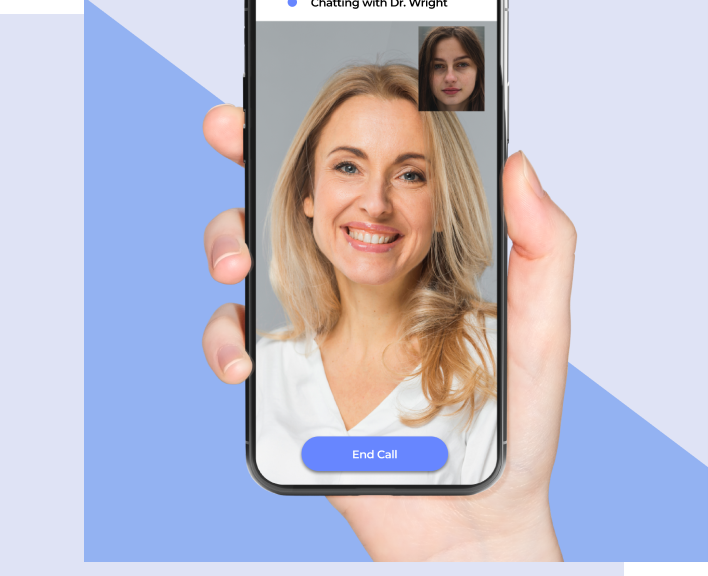
Cerebral video call with prescribing provider

With parts of the nation still in quarantine, COVID-19 has impacted the way most people go about their day to day lives. 30.3 million people have filed for unemployment in the past 6 weeks and the number continues to rise. As many find themselves out of work and school or mandated to stay at home, social isolation continues to challenge mental health. Telemedicine companies like Cerebral are offering mental health care and prescriptions through live video meetings to support people during this time.

The company was founded by CEO Kyle Robertson and Chief Medical Officer Dr. Ho Anh, who was previously the Founding Medical Director at the telemedicine upstart Hims and Medical Group President at Lemonaid Health. It has been available to residents in California, Florida, Georgia, Maryland, Ohio, Pennsylvania, and Texas for months and has just launched in New York, Illinois, and Michigan. Those who find themselves struggling with mental health in those states can now access the care they need without risking exposure to COVID-19 at physical clinics.

Cerebral clients report feeling heard, supported, and more focused. Because of their work with Cerebral, one of its clients has successfully managed their anxiety, allowing them to help out with food supply chain disruptions caused by COVID-19. They were able to stay focused and set up new supply chains for the farmers, moving nearly 100,000lbs of food in one week that was otherwise going to go unused.

Specialists fear the long-term impact of institutional closures on public health—the 2008 recession claimed over 10,000 lives by suicide in the United States and the UK, and this time, the impacts could be even more devastating. Cerebral is tackling the rising mental health crisis by providing over-video diagnosis and support. Those seeking treatment may set up an initial meeting with a provider and continue to meet with a personal Care Counselor each month to track treatment outcomes. Care Counselors are also available to support clients outside of regularly scheduled meetings through online messaging and text. Cerebral’s services are now available in New York, Illinois, and Michigan.

Cerebral is creating an easy and accessible process by which people are treated for anxiety and depression through the screen. The startup is growing rapidly due to additional demand for remote mental health services, having hired more than 30 new mental health clinicians in the past month alone.

If you would like more information, please visit Cerebral’s website at getcerebral.com or email support@getcerebral.com.

Share article on social media or email:

How is Mobile Technology Driving the Lab of the Future?


Xtalks Life Science Webinars

Mobile technology also allows scientists to access data and information, hands-free while working at the bench. The technology has the potential to enhance connectivity between data, devices, and people.

Researchers in today’s labs often find it challenging to capture data while running experiments. The fact that researchers need to move locations to record or transfer handwritten data can be, at the very least, inefficient and at worst, a way to introduce substantial error. This can ultimately lead to experimental failure.

In this roundtable-style webinar, R&D IT leaders from LabTwin, AbbVie and Genentech will discuss how mobile technology can overcome these pressing problems. Mobile apps can capture data from anywhere in the lab and automatically upload these data into laboratory informatics systems.

Mobile technology also allows scientists to access data and information, hands-free while working at the bench. The technology has the potential to enhance connectivity between data, devices, and people.

Join the live session on Wednesday, May 13, 2020 at 11am EDT (4pm BST/UK) to learn how the inevitable rise of mobile technology in the laboratory is starting to create the smart, integrated lab of the future and maximize R&D efficiency.

For more information or to register for this event, visit How is Mobile Technology Driving the Lab of the Future?

ABOUT XTALKS

Xtalks, powered by Honeycomb Worldwide Inc., is a leading provider of educational webinars to the global life science, food and medical device community. Every year thousands of industry practitioners (from life science, food and medical device companies, private & academic research institutions, healthcare centers, etc.) turn to Xtalks for access to quality content. Xtalks helps Life Science professionals stay current with industry developments, trends and regulations. Xtalks webinars also provide perspectives on key issues from top industry thought leaders and service providers.

To learn more about Xtalks visit http://xtalks.com

For information about hosting a webinar visit http://xtalks.com/why-host-a-webinar/

Contact:

Sydney Perelmutter

Tel: +1 (416) 977-6555 x 352

Email: sperelmutter@xtalks.com

Share article on social media or email: