
All posts by imreal

Quartic.ai Announces Partnership with Sparta Systems to Connect Real-Time Manufacturing Insights to QMS


Quartic.ai and Sparta Systems Logos

“For the first time in the life sciences industry, we are able to directly and systematically harness processing equipment’s ‘eyes and ears’, its integrated sensors, and deploy AI/ML agents that continuously verify process performance and pre-empt deviations,” said Rajiv Anand, CEO of Quartic.ai.

Quartic.ai, provider of the award-winning Quartic AI and IoT Platform™ for Smart Industry, announced a partnership with Sparta Systems, Inc., provider of industry-leading Quality Management System (QMS) platforms TrackWise® and TrackWise Digital®, to bring forward next-level AI capabilities for early risk detection during the manufacturing process to reduce product quality impact and enable near-real-time product release.

The assurance of quality output during drug and medical device manufacturing is a critical lynchpin in assuring the safety and efficacy of those products in market. Since quality cannot be “controlled into” a process, sole reliance on post-development/post-production identification of defective or unacceptable product is not an effective means of quality assurance and places supply chain continuity at risk of disruption. Furthermore, this model requires development and production of a product before the quality of that product can be measured; the result being consecutive, rather than concurrent, manufacturing and quality assurance. And finally, the growth in both batch scale and increase in continuous manufacturing processes inhibits the establishment and maintenance of demonstrative sampling plans that adequately represent the production process.

With Quartic’s award-winning Quartic AI and IoT Platform™ for Smart Industry, the Sparta TrackWise, and Trackwise Digital will acquire production equipment data during development to create and train algorithms that detect product and process anomalies. Once the product development is completed and the product is approved for commercial distribution, users are able to deploy trained algorithms on commercial-scale equipment data streams to identify performance “drift” before nonconforming product is manufactured. If performance drift is identified, the joint capability of the two platforms contemporaneously creates records in TrackWise Digital associated with the available data and connects operators with development insights and just-in-time process correction instructions to secure the production run. Since decision makers using TrackWise Digital connect with raw data both identifying and correcting apparent manufacturing issues, the potential for under-informed decisions is further reduced.

“Innovation in quality management is at the core of Sparta Systems,” said Dana Jones, CEO of Sparta Systems. “With this new combined capability, we’re putting meaningful quality insights and intelligence in the hands of our customers. The ability to not only capture but distribute the information to all levels and across all operating units empowers our customers to make faster and better decisions while assuring the quality of medical products and safety of patients and users.”

“For the first time in the life sciences industry, we are able to directly and systematically harness processing equipment’s ‘eyes and ears’, its integrated sensors, and deploy AI/ML agents that continuously verify process performance and pre-empt deviations. The ultimate goal is to be certain that all critical parameters are met, that we capture process and human knowledge, and that we are certain product coming off the line is not just okay, but perfect – the absolute highest quality,” explained Rajiv Anand, CEO of Quartic.ai.

About Sparta Systems

Sparta Systems is the provider of industry-leading Quality Management System (QMS) platforms TrackWise® and TrackWise Digital®. Our expert solutions enable manufacturers to speed quality and compliance, lower risk, increase efficiency, and protect consumers while seamlessly collaborating with suppliers and distributors. Sparta is privately owned and headquartered in Hamilton, NJ, with offices across Europe and Asia. We support close to 1 million users across 700+ implementations in more than 30 countries. For over 25 years, companies in life sciences, consumer products, and discrete manufacturing have relied on Sparta solutions to assist in assuring the quality of medical products and safety of patients and users.

For more information about Sparta Systems’ QMS solutions visit http://www.spartasystems.com or schedule a demo.

About Quartic.ai

Quartic.ai is a technology company based in Toronto, Ontario, and San Jose, California with a development center in Bengaluru, India. Quartic.ai provides AI enabled solutions specific for life sciences industry to enable pipeline acceleration, tech transfer, Qbd (Quality by Design), CPV (Continued Process Verification), RTR (Real-time-release) and continuous manufacturing. Its flagship product, the Quartic Platform, accelerates the adoption of Industry 4.0 for process manufacturing practitioners to develop and deploy their own AI and IIoT-based solutions. The Quartic Platform was recognized with the 2019 Pharma Innovation Award for Pharma 4.0.

For more information, contact Quartic.ai at 1-866-QUARTIC or visit http://www.Quartic.ai.

Share article on social media or email:
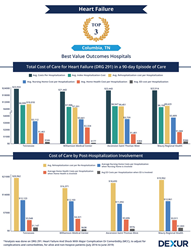
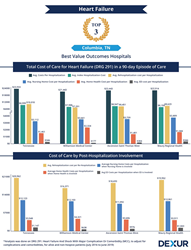
Williamson Medical Center, Ascension Saint Thomas West, and Maury Regional Health have the best value outcomes for Heart Failure in Columbia, TN


best value outcomes for Heart Failure in Columbia, TN

“Dexur’s value analysis tracks a patient’s episode of care from the date of admission for 90 days and includes the index hospitalization, rehospitalization, home health, nursing home, and ED costs.”

Dexur’s analysis of medicare claims of hospitals within a 50-mile radius of Columbia, TN, showed that Williamson Medical Center, Ascension Saint Thomas West, and Maury Regional Health had the best value outcomes over a 90 day episode for Heart Failure. Dexur’s value analysis tracks a patient’s episode of care from the date of admission for 90 days and includes the index hospitalizations, rehospitalization, home health, nursing home, and ED costs. Total cost of care data helps patients make appropriate choices and helps local ACOs, such as Maury Regional Health Network, LLC, make appropriate referral choices. The analysis was risk-adjusted, for alive and non-hospice patients and was done at the DRG level, specifically DRG 291: Heart Failure and Shock with Major Complication or Comorbidity (MCC), to adjust for complications and comorbidities.

Williamson Medical Center’s total cost of care over a 90 day episode was $21,443 (for the period between July 2016 and June 2019). The index hospitalization cost was $7,988 and the average rehospitalization cost per hospitalization was $7,291. The cost per rehospitalization was at an average of $16,371. Meanwhile, the average ED costs per hospitalization (when ED is involved) was $638.

Ascension Saint Thomas West’s total cost of care over a 90 day episode was $22,443 (for the period between July 2016 and June 2019). The index hospitalization cost was $8,547 and the average rehospitalization cost per hospitalization was $8,451. The cost per rehospitalization was at an average of $18,693. Meanwhile, the average ED costs per hospitalization (when ED is involved) was $976.

Maury Regional Health’s total cost of care over a 90 day episode was $22,514 (for the period between July 2016 and June 2019). The index hospitalization cost was $8,150 and the average rehospitalization cost per hospitalization was $8,623. The cost per rehospitalization was at an average of $19,952. Meanwhile, the average ED costs per hospitalization (when ED is involved) was $1,043.

Share article on social media or email:
FOLIO Libraries Announcing Implementations and Timelines as the Open Source Library Platform Nears Significant Milestone


News Image

Being able to test FOLIO extensively in a real-world environment has helped direct development and demonstrates the viability of this innovation-driven open source library services platform.

Libraries around the world are beginning to implement FOLIO, the open source Library Services Platform (LSP), as it approaches a named release that signals a significant achievement in the development of initial apps, features and functionality.

The open source project, which leverages expertise from libraries, developers and service providers, is building a fully functional open source LSP that is being implemented around the world. The Goldenrod Release, coming in mid-July, includes additional functionality that will allow more libraries to move to FOLIO from their current, traditional Integrated Library System (ILS) or LSPs.

Institutions of all sizes have been implementing FOLIO since last year. These libraries represent a wide range of collection sizes and students, faculty and researchers and demonstrate that FOLIO makes open source a viable alternative for institutions of all sizes. Sites live or going live have collections that range between 61,000 to 5.5 million bibliographic records and serve between 2,300 and nearly 50,000 users.

Chalmers University of Technology in Sweden went live in 2019 as the first library using FOLIO. Missouri State University was the first academic institution in the United States to go live with FOLIO and Simmons University, Warner University, St. Thomas University and Washington & Jefferson College have now fully implemented FOLIO.

The University of Alabama is planning its implementation by the end of 2020. University of Alabama Dean of Libraries Don Gilstrap says, as an original EBSCO beta development partner, the University of Alabama has played a leading role in design and testing at the scale required to develop the features and functionalities for large, working research libraries. “Being able to test FOLIO extensively in a real-world environment has helped direct development and demonstrates the viability of this innovation-driven open source library services platform. As the University of Alabama development team prepares to implement FOLIO, it is gratifying to know that we do it as an institution that has provided actionable information to both EBSCO and to the FOLIO Community, as well to the open source community at large.”

Several libraries have also chosen to implement the Electronic Resource Management (ERM) apps in FOLIO. GBV network library ZBW Leibniz Information Centre for Economics Kiel/Hamburg has been live with FOLIO ERM since May 2020. Leipzig University Library is also currently live with ERM. Leipzig University Library Deputy Head of IT Bjӧrn Muschall says the university’s staged implementation approach aligns with its mission and focus. “By focusing on the portion of the system that is live, we are able to see the benefits of implementing a system that prizes open source technology and features and functionality designed to grow with our institution.” Muschall says Leipzig University Library contributed its own developer resources to the FOLIO project and contributed to the overall functionality. “By creating an app and developing for FOLIO, we increased the sustainability of our own investments.”

Lehigh University is preparing for a full FOLIO implementation in August 2020. Lehigh’s University Librarian Boaz Nadav-Manes says Lehigh’s move to FOLIO represents the next step in its deep commitment to open source and community-driven solutions. “As long-term members of the FOLIO and OLE Communities, we are very excited to be one of the first libraries to fully implement FOLIO and to work with others to enable and lead additional innovation as FOLIO continues its natural development process.” Lehigh is currently loading records directly into a single tenant environment in preparation for its implementation date.

Additional sites will be moving to FOLIO in stages. The Five Colleges: Amherst College, Hampshire College, Mount Holyoke College, Smith College and The University of Massachusetts/Amherst are also EBSCO beta partners and will be implementing ERM this summer. Duke University will be implementing FOLIO ERM this summer and Cornell University, which is currently leveraging the FOLIO ERM, plans to move to the FOLIO LSP in 2021. Texas A&M University will implement FOLIO based on features expected by mid-2021.

Libraries are also choosing how to implement and host FOLIO. Chalmers, Missouri State University, Cornell and University of Alabama are using EBSCO FOLIO Services for implementation, hosting and services. ZBW Leibniz Information Centre for Economics Kiel/Hamburg is being hosted by its library network headquarter VZG|GBV. Simmons University, Duke University and Lehigh University are among the libraries using hosting and services from Index Data. Warner University, St. Thomas University and Washington & Jefferson College are using services from ByWater Solutions. Leipzig University and Texas A&M University are self-hosting.

FOLIO is an open community and details about the releases and future plans can be found at https://wiki.folio.org

About FOLIO

FOLIO is a collaborative effort among libraries, vendors, developers and consortia that leverages open source technology and a community-based effort to redefine library services and innovate based on library futures. By building on what libraries need and by leveraging library expertise as well as vendor capacity and velocity, FOLIO is designed to move libraries forward, build on the services they provide and redefine the role libraries play within their institution. FOLIO also levels the playing field and makes open source technology available to all institutions regardless of size or staffing. FOLIO brings vendors together to innovate and host services for customers and introduces open source as a service to libraries. To sign up to participate or receive more information go to http://www.folio.org.

For more information, please contact:

Kathleen McEvoy

Media Relations, FOLIO

978-223-0438

kathleen@folio.org

Share article on social media or email:

Swift Medical launches integrated digital wound care solution with Homecare Homebase


As a company tackling the real-world challenges of nurses on the frontlines, this partnership with Swift Medical helps our customers provide the most compassionate care possible

Homecare Homebase℠ (HCHB), the nation’s #1 software for home health and hospice, is partnering with global digital wound care leader Swift Medical to provide high-quality, cost efficient care through an integrated solution. Wound care patients are often the most complex, high risk population in home health. As such, wound care represents a significant opportunity for home health and hospice providers to use technology to drive quality improvement, increase patient understanding of their healing progress and dramatically reduce operational expenses. Swift Medical’s digital wound management solution helps home health providers deliver standardized care in the most collaborative, empathetic and efficient manner. Now Swift Medical’s solution will be integrated with HCHB software, allowing for a simpler adoption process and more effective user experience for home health and hospice providers.

This partnership comes at a time when care is increasingly being delivered at home. For patients with wounds in particular, this can create challenges, as wound care is a highly specialized discipline with a shortage of certified wound specialists. “More than ever before, patients want to heal at home,” says Carlo Perez, Founder and CEO of Swift Medical. “Our solution helps augment the wound care proficiency of every clinician and enables scarce wound experts to remotely manage care for a broader population of patients, driving profound organizational efficiencies.”

“As a company tackling the real-world challenges of nurses on the frontlines, this partnership with Swift Medical helps our customers provide the most compassionate care possible,” says Scott Pattillo, Chief Strategy Officer at Homecare Homebase. “By empowering clinicians to provide high quality wound care, we enable patients to live more independently and stay healthier at home.”

About Swift Medical

Swift Medical is the global leader in digital wound care. Its innovative technology is used by over 3,500 healthcare organizations across the continuum of care to enhance the prevention, assessment, treatment and ongoing management of wounds. In home health, Swift Medical has delivered proven improvements to agencies’ bottom lines while simultaneously enhancing quality of care and patient outcomes. For more information, visit swiftmedical.com.

About Homecare Homebase, LLC

Homecare Homebase (HCHB) is a Dallas-based software leader offering hosted, cloud- based solutions to streamline operations, simplify compliance and boost clinical and financial outcomes for homecare and hospice agencies. Our customized mobile solutions enable real-time, wireless data exchange and communication between field clinicians, physicians and office staff for better care, more accurate reporting and faster payment. Founded by industry veterans in 1999, the company is now part of the Hearst Health Network. For more information visit hchb.com or call us toll-free at 1-866-535- HCHB (4242).

About Hearst Health

The mission of Hearst Health is to help guide the most important care moments by delivering vital information into the hands of everyone who touches a person’s health journey. Each year in the U.S., care guidance from Hearst Health reaches 85 percent of discharged patients, 205 million insured individuals, 103 million home health visits and 3.2 billion dispensed prescriptions. The Hearst Health network includes FDB (First Databank), Zynx Health, MCG, Homecare Homebase and MHK (formerly MedHOK). Hearst also holds a minority interest in the precision medicine and oncology analytics company M2Gen. Follow Hearst Health on Twitter @HearstHealth and LinkedIn @Hearst-Health.

Share article on social media or email:

ASHA Applauds CDC for Updated Mask Recommendations That Include Adaptations for People With Hearing Loss, Other Communication Disorders


The American Speech-Language-Hearing Association (ASHA) applauds the U.S. Centers for Disease Control and Prevention (CDC) for issuing newly updated COVID-19 mask considerations that include adaptations and alternatives for people with hearing loss and other communication disorders.

In a June 8 letter to CDC Director Robert Redfield, ASHA asked the agency to emphasize the need for clear face masks and use of other communication aids to protect people with hearing loss and other communication disorders. ASHA noted that this was a pressing public health issue, given the large segment of the U.S. population that has a communication disorder. Solid face masks and coverings reduce the effectiveness of spoken communication in numerous ways, including dampening and filtering sound, degrading speech intelligibility, and removing visual cues.

In written correspondence to ASHA informing the association of its revised recommendations, Redfield stated, “We appreciate ASHA raising this important issue, and CDC recognizes the unique challenges that individuals with communication disorders encounter when wearing solid face coverings or when interacting with essential workers, such as health care providers, who communicate through solid face coverings.” He further acknowledged the critical work being done by ASHA members at this time.

“We greatly appreciate the CDC’s updated recommendations,” said Theresa H. Rodgers, MA, CCC-SLP, ASHA 2020 President. “They allow for modifications that can improve communication success for everyone—including those with communication disorders. It bears noting that breakdowns in communication can be far more than a nuisance. They can result in real harm, particularly in medical settings where it’s imperative that communication between patients and healthcare providers is clear.”

In its updated, “Considerations for Wearing Cloth Face Coverings,” the CDC states: “Adaptations and alternatives should be considered whenever possible to increase the feasibility of wearing a cloth face covering or to reduce the risk of COVID-19 spreading if it is not possible to wear one.”

The health agency cites specific populations in its revised recommendations, including those with hearing loss: “People who are deaf or hard of hearing—or those who care for or interact with a person who is hearing impaired—may be unable to wear cloth face coverings if they rely on lipreading to communicate,” the CDC states. “In this situation, consider using a clear face covering. If a clear face covering isn’t available, consider whether you can use written communication, use closed captioning, or decrease background noise to make communication possible while wearing a cloth face covering that blocks your lips.”

In its June letter, ASHA stated that clear face masks and other flexible communication methods—such as shared computer screens, notepads, whiteboards, voice-to-speech applications, personal sound amplifiers, use of plexiglass barriers, and other related resources—can assist in making communication more effective, most critically for imparting one’s medical needs and preferences.

“In this challenging environment, ASHA remains committed to continued advocacy to realize its vision of making effective communication, a human right, accessible and achievable for all. We are very pleased to work with CDC to make progress on this front, and we look forward to our continued engagement with the agency,” said Rodgers.

For more information, visit http://www.asha.org.

About the American Speech-Language-Hearing Association (ASHA)

ASHA is the national professional, scientific, and credentialing association for 211,000 members and affiliates who are audiologists; speech-language pathologists; speech, language, and hearing scientists; audiology and speech-language pathology support personnel; and students. Audiologists specialize in preventing and assessing hearing and balance disorders as well as providing audiologic treatment, including hearing aids. Speech-language pathologists identify, assess, and treat speech and language problems, including swallowing disorders. http://www.asha.org

###

Share article on social media or email:

COVID-19, Recession Deal Double Whammy to Property & Casualty Insurance BPS Industry—Everest Group


Everest Group

The P&C insurance BPS market is expected to transition through significant operating model and engagement structure changes.

The COVID-19 pandemic has dealt a blow to the Property & Casualty (P&C) insurance industry, and the current recession is exacerbating the impact, according to Everest Group. Consequently, Everest Group is revising down its projected growth rates for the P&C insurance business process services (BPS) market. Everest Group estimates the P&C insurance BPS industry, currently measured at US$2.4 billion, will attain only low single digit growth rather than the double-digit growth previously expected, putting a question mark on the market’s ability to cross US$3 billion by 2022.

The P&C insurance BPS growth rate in 2018-2019 (approximately 10%) was already the lowest it had been in the past four years, due to the strong linkage of the market to economic cycles and the recessionary prospects that had begun to surface. Then came the COVID-19 pandemic, which has negatively impacted both the personal and commercial lines of the P&C insurance industry, and a fully recognized recession with poor recovery prospects for the near future.

The P&C insurance BPS industry is expected to bear a four-fold impact from the pandemic:

  • Operations: Business operations will be disrupted mainly due to reduced mobility and difficulties of working from remote environments. For example, IT infrastructure is strained, and physical inspection of claims is more challenging.
  • Costs: Costs will depend on how reduction in claims, drastic measures of liquidity preservation, and increasing litigations against insurers play out. For example, auto claims will likely fall due to reduced driving, but lawsuits for not covering business interruption losses caused by the shutdowns will add to insurers’ costs.
  • Customer demand: Customer demand will vary across different product segments, ranging from high to extremely strained demands, making the demand landscape diverse in terms of the impact. Customer demands may include specific product lines such as cybersecurity and directors and officers (D&O) insurance. Customers also will likely demand more value for their money, increasing the chances of switching based only on premium prices.
  • Compliance: A host of compliance and regulatory measures will have to be introduced to protect all the affected stakeholders amidst the evolutionary landscape. For instance, pressure to extend coverage for cybersecurity attacks and business interruption losses will increase.

“With the extreme shifts in business environment due to COVID-19, both for insurers as well as their service partners, many have struggled for even basic operational continuity,” said Skand Bhargava, practice director at Everest Group. “While the industry has now largely adjusted to the vagaries of the changed operating environment, these changes appear to be more permanent than expected. The P&C insurance BPS market is expected to transition through significant operating model and engagement structure changes. Now, with the onset of a recession, it is even more imperative for service providers to understand the developments in insurers’ sourcing strategies and the implications on future sourcing requirements.”

In particular, Everest Group recommends that providers tap into these emerging trends:

  • Localized delivery with greater onshore/nearshore mix
  • Talent upskilling to move up the value chain
  • Expanding first-time buyer engagements
  • Transformation consulting to enable buyers to adapt their operation models to the new demand environment
  • Adding more digital point solutions to the outsourcing levers mix.

These findings are discussed in detail in Everest Group’s new report, “Property & Casualty (P&C) Insurance BPS State of the Market Report 2020: Deconstructing the Present and Expected Future of Sourcing Strategies.” In this report Everest Group offers a detailed analysis of third-party outsourcing of business process services in the P&C insurance industry, including market size and growth, adoption trends, present and expected sourcing strategies, and action items for service providers.

***Download the complimentary report abstract.***

***Also, visit Everest Group’s COVID-19 page for a Global Service Delivery tracker, recent reports, webinars, and more.***

About Everest Group

Everest Group is a consulting and research firm focused on strategic IT, business services, engineering services, and sourcing. Our clients include leading global enterprises, service providers, and investors. Through our research-informed insights and deep experience, we guide clients in their journeys to achieve heightened operational and financial performance, accelerated value delivery, and high-impact business outcomes. Details and in-depth content are available at http://www.everestgrp.com/.

###

Share article on social media or email:

Genedata Automates Biopharma R&D with Seamless Integration of Lab Equipment


News Image

By bringing together Thermo Fisher’s automation systems and the Genedata Biopharma platform, all molecule, sample, assay, and analytics data across both instruments and processes are fully integrated, giving researchers the power to make data-based decisions and uncover insights not possible before.

Genedata, the leading provider of enterprise software solutions for biopharmaceutical R&D, today announced a collaboration with Thermo Fisher Scientific, a leading international pharmaceutical and laboratory equipment supplier, to integrate the two platforms to provide seamless automation of biopharma R&D operations. The combined platform directly imports raw instrument data from Thermo Fisher Scientific instruments into the Genedata platform, where the data can be processed and interpreted with all other data collected along the entire biopharma R&D workflow. The centralized platform makes it possible for scientists to integrate and digitalize automation systems for sample handling, lab operations, and testing, and digitally trace all results for every sample to make data-driven decisions that expedite R&D breakthroughs.

“Our collaboration with Genedata will enable biopharma companies to fully integrate R&D automation platforms for the direct capture, processing, and analysis of the large amount of data being produced by today’s high-throughput robotic systems. Scientists can now do more experiments in a shorter time and maximize their lab automation investments,” said Hansjoerg Haas, Senior Director, Lab Automation, Thermo Fisher Scientific. “By bringing together Thermo Fisher’s automation systems and the Genedata Biopharma platform, all molecule, sample, assay, and analytics data across both instruments and processes are fully integrated, enabling traceability for molecules, samples, results, and processes. This gives researchers the power to make data-based decisions and uncover insights not possible before.”

Thermo Fisher and Genedata are implementing standard integration interfaces to easily set up and operate Thermo Fisher’s lab equipment and robotics with the Genedata Biopharma platform, which acts as a workflow backbone connecting all information from early discovery to development. The newly integrated platform supports complex sub-workflows such as cherry picking, plasmid construction, antibody expression and expansion, and plasmid and antibody purification, and drives significant efficiency gains along the full biopharma R&D workflow. The integration includes both Thermo Fisher laboratory instruments and Thermo Fisher Momentum software.

“We are pleased to welcome Thermo Fisher as our latest lab automation Ready-to-Run™ partner,” said Othmar Pfannes, Ph.D., CEO of Genedata. “Biopharmaceutical and biotech companies already automate complex laboratory workflows using our seamless integration with lab equipment from many major instrument providers. Our customers expect data traceability across the entire biopharma R&D workflow and by further automating integration of lab instrument data, we are providing a central and structured database for every experimental sample, result, and process. This supports the growing demand for data-driven drug discovery.”

About Genedata

Genedata transforms data into intelligence with innovative software solutions and domain-specific consulting services that automate complex, large-scale experimental processes and enable organizations to maximize the ROI in their R&D, spanning early discovery all the way to the clinic. Founded in 1997, Genedata is headquartered in Switzerland with additional offices in Germany, Japan, Singapore, the UK, and the US.

http://www.genedata.com

LinkedIn | Twitter | YouTube

Contact

Miles Fisher-Pollard

Genedata

Public Relations

Phone: +41 61 511 85 61

pr@genedata.com

Disclaimer

The statements in this press release that relate to future plans, events or performance are forward-looking statements that involve risks and uncertainties, including risks associated with uncertainties related to contract cancellations, developing risks, competitive factors, uncertainties pertaining to customer orders, demand for products and services, development of markets for the Company’s products and services. Readers are cautioned not to place undue reliance on these forward-looking statements, which speak only as of the date hereof. The Company undertakes no obligation to release publicly the result of any revisions to these forward-looking statements that may be made to reflect events or circumstances after the date hereof or to reflect the occurrence of unanticipated events.

All product and service names mentioned are the trademarks of their respective companies.

Share article on social media or email:



The Patient Experience, Clinical Research and the Promise of Precision Medicine, Upcoming Webinar Hosted by Xtalks


Xtalks Life Science Webinars

This informative webinar will provide insight into the current state of diabetic kidney disease prevalence and recent data on a widespread lack of compliance with accepted clinical management guidelines.

Diabetes is the most common cause of chronic kidney disease (CKD), potentially leading to renal failure and the need for dialysis or transplantation. This informative webinar will provide insight into the current state of diabetic kidney disease prevalence and recent data on a widespread lack of compliance with accepted clinical management guidelines. The voice of the patient will be explored with current research exploring attitudes and challenges facing clinical care for patients with diabetes and renal impairment and their caregivers as well as concerns they have towards participating in clinical research trials. In addition, state-of-the-art approaches using tools of precision medicine to better understand the causes of renal disease in people with diabetes will be discussed.

Join Barry Goldstein, MD, PhD, FACE, Vice President & Therapeutic Area Head, Cardiovascular, Metabolic, Endocrine & Renal, Covance, Mala Puri, MD, Senior Medical Director, CVMER Project Physician, Kelly L. Close, Founder, The diaTribe Foundation; President, Close Concerns and Kumar Sharma, MD, Hillis Endowed Distinguished Chair in Medicine; Director, Center for Renal Precision Medicine; Chief, Division of Nephrology in a live webinar on Wednesday, July 29, 2020 at 11am EDT (4pm BST/UK).

For more information or to register for this event, visit Diabetes and Chronic Kidney Disease (CKD): The Patient Experience, Clinical Research and the Promise of Precision Medicine.

ABOUT XTALKS

Xtalks, powered by Honeycomb Worldwide Inc., is a leading provider of educational webinars to the global life science, food and medical device community. Every year thousands of industry practitioners (from life science, food and medical device companies, private & academic research institutions, healthcare centers, etc.) turn to Xtalks for access to quality content. Xtalks helps Life Science professionals stay current with industry developments, trends and regulations. Xtalks webinars also provide perspectives on key issues from top industry thought leaders and service providers.

To learn more about Xtalks visit http://xtalks.com

For information about hosting a webinar visit http://xtalks.com/why-host-a-webinar/

Share article on social media or email:

ThermBot Gets the Green Light to Produce 250,000 Devices After a 5-Minute Phone Call With The FDA


ThermBot

This is incredible news. The go-ahead was given by an FDA Emergency Hotline Senior Agent after just a 5-minute phone call. Truly amazing as the approval process can typically take at least 15 months.

GTTFP Holdings, an Inc 500 #1 Awardee, is proud to announce a product launch that brings the health thermometer into the digital age. ThermBot is the smaller, instant, smarter temperature reader about to make the bulkier models found in your medicine cabinet obsolete.

Thanks to a 5-minute phone call with an FDA Emergency Hotline Senior Agent, ThermBot is mass-producing 250,000 units to bring these devices to the market nationwide. This pocket-sized device is no bigger than a credit card and compact enough to fit in your wallet, purse, pocket, diaper bag, or on a keychain.

ThermBot is “the” fast and effective way to take someone’s temperature in under one second with 100% clinical accuracy. Its contactless operation makes the process healthy and sanitary while its durability withstands repeated use and demanding environments.

The new norm tech accessory is ideal to anyone who needs a handy thermometer. Imagine a parent getting a quick and accurate reading from her child who can’t stay still or is sleeping.

For travelers, it creates little to no baggage to take on road trips or flights. Let’s not forget about those who need to take extra health and safety precautions within their industries. Thermbot operates easily and effectively to ensure they’re work-ready.

A spokesperson for GTTFP Holdings today confirmed that ThermBot has been given the green light by the FDA to mass-produce 250,000 units for immediate resale nationwide.

The spokesperson added, “This is incredible news. The go-ahead was given by an FDA Emergency Hotline Senior Agent after just a 5-minute phone call. Truly amazing as the approval process can typically take at least 15 months.”

Other smart features include an embedded BLE chip that works with existing wellness tracking apps, smart assistants and protocols like IFTTT (If This Then That) platform. Unlike a traditional electronic thermometer that relies on battery power, this smart device draws power directly from your smartphone, power bank, or tablet with a retractable type C connector. ThermBot’s elegant slider button makes it super easy to slide out the Type C connector on-demand and retract it when you’re done.

The most noticeable part of its sleek design is the easy-to-read screen. It also toggles between Fahrenheit and Celsius measurements seamlessly for international use. ThermBot retails for $149.

“We’d like to extend our thanks to the Agent in question and his (FDA crisis) team who worked tirelessly to make this insane (practically unheard of) turnaround for ThermBot’s approval a reality, especially in these unprecedented times,” the spokesperson added.

For more information, contact amber@teamchicexecs.com or view the press kit here.

Share article on social media or email:

Kalepa named a Cool Vendor in the May 2020 Gartner Cool Vendors in Insurance report


We are committed to delivering on the promise of AI to power commercial insurers in their pursuit of a fast-growing, profitable book. – Paul Monasterio, Kalepa

Kalepa, the pioneering commercial insurance underwriting software company combining Artificial and Human Intelligence, announced today that it has been named a Cool Vendor by Gartner, Inc. The 2020 report titled Cool Vendors in Insurance recognizes interesting, new and innovative vendors, products and services in the insurance market. Kalepa is one of five companies recognized by Gartner in the report.

According to the report from Gartner, “The commercial P&C insurance market has not transformed core business processes, such as underwriting, believing they were overly complex and that technology was not the answer. While a few vendors have launched offerings to improve workflow and analytics for P&C underwriters, these solutions failed to support both automated and human-based underwriting decision making and apply learning principles.”

“I am very proud of the Kalepa team for being recognized by Gartner, the world’s leading research and advisory company,” said Paul Monasterio, Co-Founder & CEO of Kalepa. “We are committed to delivering on the promise of AI to power commercial insurers in their pursuit of a fast-growing, profitable book. Kalepa’s team works tirelessly to serve our underwriter users who rely on Kalepa’s Underwriting Copilot to enhance their productivity and make increasingly informed risk selection decisions. Furthermore, we are pursuing a bold vision of enabling underwriters to 10X their performance and financial impact.”

“I congratulate Kalepa on being named a 2020 Cool Vendor by Gartner”, commented Mario Vitale, venerable insurance industry leader and former CEO of Aspen Insurance Group, Zurich Global Corporate and Willis North America. “In my opinion, Kalepa is uniquely positioned to transform the way commercial policies are underwritten, combining underwriter expertise with the power of big data and cutting-edge technology. Kalepa has done a terrific job relentlessly focusing on delivering measurable value for insurers and helping their customers win.” Paul Monasterio added: “we are thankful to Mario for his decades of leadership and vision in our industry and we are honored that he has agreed to join us in this mission as a member of Kalepa’s Advisory Board”.

Source: Gartner, “Cool Vendors in Insurance,” Sham Gill, Venkatesh Padmanabhan, Laurie Shotton, Kimberly Harris-Ferrante, Manav Sachdeva, Richard Natale, 29 May 2020.

Gartner does not endorse any vendor, product or service depicted in its research publications, and does not advise technology users to select only those vendors with the highest ratings or other designation. Gartner research publications consist of the opinions of Gartner’s Research & Advisory organization and should not be construed as statements of fact. Gartner disclaims all warranties, expressed or implied, with respect to this research, including any warranties of merchantability or fitness for a particular purpose.

About Kalepa

Kalepa delivers decision-support software to commercial insurance underwriters. Kalepa’s AI-powered Copilot enables underwriters to focus their time on the highest ROI opportunities and to rapidly evaluate and optimally select risk. By analyzing billions of points of structured and unstructured data, Copilot augments underwriters with insights and recommendations on every risk. Copilot’s AI engine incorporates active learning to continuously improve and empowers each underwriter to achieve their highest level of performance. Copilot helps insurers, MGA’s and Program Managers to enhance underwriting performance and drive profitable premium growth. Kalepa is based in New York City and is backed by IA Ventures.

To learn more about Kalepa, visit us at https://www.kalepainsurance.com/ or reach us directly at info@kalepa.co . You can also follow Kalepa at https://www.linkedin.com/company/kalepa/.

Share article on social media or email: