All posts by imreal

Telecardiology and New Innovations In Vascular Health Covered On “Viewpoint” With Dennis Quaid


News Image

Medical professionals will spend the segment discussing how innovations in telemedicine are improving vascular health.

“The Rookie” star Dennis Quaid is the host of the educational TV program “Viewpoint”. The show covers many topics to bring attention to various events taking place around the world today. New to the show is an episode featuring telecardiology. Medical professionals will spend the segment discussing how innovations in telemedicine are improving vascular health.

Telehealth is making strides in its offerings for remote healthcare and is expanding its medical specialties into cardiovascular care. Heart disease affects millions of people in the United States, and thousands of people die yearly from cardiovascular illnesses. It is estimated every 40 seconds someone in the U.S. suffers from a heart attack.

Telemedicine allows for real-time treatment and diagnosis from a distance, which is proving to be helpful for cardiovascular concerns. Medical doctors can immediately diagnose cardiac arrest, arrhythmia, and congestive heart failure using telehealth technology. Many who suffer from a heart attack or another similar event require cardiac rehab for further treatment, but it can be difficult for some to make regular appointments. Telecardiology comes into play by making these appointments far more comfortable to maintain since they do not require any travel and offer the same form of treatment.

There is no doubt telemedicine can potentially improve the world of healthcare. More info about telecardiology will be featured in the new episode.

“Viewpoint” with Dennis Quaid is carefully reviewed before airing to a wider viewing audience. The informative show has received numerous awards.

Share article on social media or email:

Family and Nursing Care Receives Workplace Excellence Award for the 4th Year in a Row


“Our culture, our people, and the clients we are lucky enough to help have been our priority since my mother started the business over 50 years ago.”

Family & Nursing Care is honored to announce that for the fourth year in a row, it has received the Workplace Excellence Award from the Alliance for Workplace Excellence (AWE). The company will be recognized for building and maintaining an incredible place to work. Unfortunately, due to COVID-19, an in-person celebration will not be possible and instead a celebratory video will be posted to the AWE website in the coming weeks.

Honorees for these prestigious awards are selected based on their contributions to an innovative corporate culture, inventive management practices, workforce demographics, employee engagement and retention programs, commitment to corporate social responsibility, diversity and inclusion programs, workplace benefits and rewards, family-friendly policies, comprehensive growth and learning opportunities, and more.

“We are humbled to receive the AWE Workplace Excellence Seal of Approval Award,” said Neal Kursban, CEO of Family & Nursing Care. “Furthermore, the fact that we continue to garner this award year after year is what makes this achievement particularly meaningful. Our culture, our people, and the clients we are lucky enough to help have been our priority since my mother started the business over 50 years ago.”

Now in its 21st year of recognizing excellence in the workplace, the AWE most recently chose 39 total employers of all sizes and industries from across the United States for their exemplary commitment to building excellent places to work. All award recipients undergo a rigorous assessment process led by an independent review panel of business professionals and Master’s and/or Ph.D. level students in the fields of business, industrial and organizational psychology, human resources, environmental science, public health, and diversity and inclusion.

Additional Details may be found at https://www.excellentworkplace.org.

About Family & Nursing Care

Since 1968, Family & Nursing Care has been the premier resource for in-home care services for older adults, dedicated to and recognized for their passion and commitment to serve, help, and enhance the quality of life and well-being of others. The company refers and provides caregivers who assist with activities of daily life, companionship, and also skilled nursing care. As one of the oldest, largest, and most well-respected resources for home care services in the Maryland and Washington, DC region, the company is dedicated to providing compassionate, progressive, and reliable home care services and continues to break barriers and set benchmarks for the home care industry. For more information, please visit http://www.familynursingcare.com.

About AWE

The Alliance for Workplace Excellence (AWE) is a 501(c)3 non-profit organization founded in 1999 by Discovery Communications, Mental Health Association (now EveryMind), and Montgomery County, Maryland. Over the past 21 years, AWE has been dedicated to empowering employers to build excellence in the workplace as a means of supporting the quality of life for employees, their families, and the community at-large. AWE is devoted to increasing the number of excellent workplaces within the business community through education and recognition as a means to enhance the quality of life of its citizens and empower economic growth. For more information: http://www.excellentworkplace.org

Share article on social media or email:

Taylor Phinney and Bike Industry Friends Offer a Bike Giveaway to Benefit The Davis Phinney Foundation For Parkinson’s


News Image

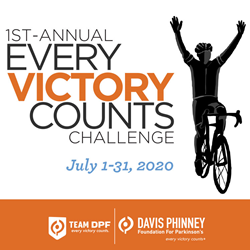
Several days remain for this very unique challenge. World-famous cyclist Taylor Phinney, the son of famed Olympians Davis and Connie Phinney, has partnered with Allied Cycleworks and other industry supporters for a one-of-a-kind bike giveaway this year.

The foundation recognizes that this is a challenging year for cycling, running and other sporting events. That’s why it’s been so dedicated and focused on bringing opportunities to athletes of all abilities to challenge themselves with miles, minutes or any other type of activity. Much of the Foundations research has shown that exercise is highly beneficial to people with Parkinson’s.

Several days remain for this very unique challenge. World-famous cyclist Taylor Phinney, the son of famed Olympians Davis and Connie Phinney, has partnered with Allied Cycleworks and other industry supporters for a one-of-a-kind bike giveaway this year.

Taylor has collaborated with Left of Creek Media to produce a video short: The Next Stage, sharing his story while custom painting an Allied Cycleworks Able, a world class gravel bike, inspired by his father’s journey and everyone’s journey to find themselves and live their best lives. All are invited to join the Foundation’s efforts with a donation and everyone who signs up has the chance to win the custom-painted bike. (Size medium, Must enter before July 31, 2020.) 100 percent of funds raised support Parkinson’s education programs and quality of life research led by the Davis Phinney Foundation.

While donations fuel the Foundation’s mission, no contribution is required to win. To enter the drawing without a donation, send a postcard with your first and last name, phone number, email address, and mailing address to Davis Phinney Foundation, 357 S. McCaslin Blvd., Suite 105, Louisville, CO 80027. Attention DPF/Allied Cycleworks Promotion. One entry per postcard. See the official rules here.

Our gracious sponsors:

Adin Baird–@leftofcreekmedia

Allied Cycle Works – @alliedcycleworks

ENVE – @envecomposites

SRAM – @sramroad

Teravail – @teravail

Chris King – @chriskingbuzz

Brooks England – @brooksengland

Crust Bikes – @crustbikes

Skratch Labs – @skratchlabs

CONTACT: Jenna Deidel

Director of Programs & Outreach

303-489-2000 | jdeidel@dpf.org

The Davis Phinney Foundation was founded by Olympic cyclist Davis Phinney in 2004 to help people with Parkinson’s live well today. The organization’s focus is to provide programs, early stage research, and resources that offer inspiration, information and tools that enable people living with Parkinson’s to take action that can immediately improve their quality of life. Parkinson’s is the No. 2 neurodegenerative disease – second to Alzheimer’s – and affects more than 1 million people in the United States. The Foundation’s work impacts hundreds of thousands of individuals and families each year. Learn more at http://www.dpf.org

Share article on social media or email:

Kansas City Investors Scott Asner and Michael Gortenburg Applaud Frontline Workers


Eighteen Capital Group

Yet throughout it all, essential workers have stood strong with exceptional courage and have placed their wellbeing on the line so that we all may continue to get by. We are incredibly grateful for their service and want to honor them.

Amid the ongoing COVID-19 pandemic, Scott Asner and Michael Gortenburg of Kansas City’s Eighteen Capital Group (18CG), are publicly applauding the invaluable service provided by essential and frontline workers everywhere.

Over the course of several months, Kansas City – and the nation at large – has weathered the storm of a novel coronavirus pandemic. Throughout this challenging time, every U.S. citizen has relied upon the essential services and unyielding courage of countless men and women working to make life possible and keep the most vulnerable protected.

These heroes are found in nearly every industry and sector, including:

  • Healthcare providers (including doctors, nurses, technicians, and EMS)
  • Hospital, medical facility and pharmacy workers (including administrative staff)
  • Law Enforcement and first responders (including volunteers)
  • Food and agriculture workers (including farmers, food transport and restaurant workers)
  • Public and community workers and volunteers
  • Construction and infrastructure workers
  • Energy sector workers
  • And more

“These are unprecedented times and we face extraordinary challenges in every aspect of our lives,” said Scott Asner, Founding Principal of Eighteen Capital Group (18CG). “Yet throughout it all, essential workers have stood strong with exceptional courage and have placed their wellbeing on the line so that we all may continue to get by. We are incredibly grateful for their service and want to honor them.”

“Our society depends on the efforts of this remarkable group of people,” added Michael Gortenburg, Founding Principal of Eighteen Capital Group. “We wish to publicly extend our sincere thanks and appreciation for all that they do.”

Scott Asner and Michael Gortenburg also wish to specifically commend North Kansas City Hospital, Saint Luke’s Hospital of Kansas City, the University of Kansas Hospital, and all Kansas City area workers for their dedicated efforts to keep their home city safe and operational.

About Scott Asner

Scott Asner is a longstanding Kansas City, MO investment manager and Founding Principal of Eighteen Capital Group (18CG). Earning his bachelor’s degree in economics at the University of Pennsylvania and his law degree at Stanford University, Scott practiced law for two decades before turning to the investment management sphere. As a Principal of 18CG, Scott specializes in diverse real estate investments and leads a core team of 25 employees from 18CG’s corporate headquarters in Leawood, Kansas. Scott oversees the private equity-financed acquisition of properties nationwide –more than 7,000 apartment units at 33 properties in 15 states. He is a long-term holder of most of these properties. For more information about Scott Asner, please visit http://www.scottasner.com.

About Michael Gortenburg

Michael Gortenburg is a Founding Principal of Eighteen Capital Group (18CG) and owner of more than 100 investment entities–a diverse portfolio focusing primarily on multifamily housing units. In addition to overseeing all corporate and individual property functions for 18CG, Michael is involved in a number of other operational businesses, such as digital media and software companies. For more information about Michael Gortenburg, please visit http://www.michaelgortenburg.com.

Share article on social media or email:

How to Get Affordable Car Insurance Just by Following Several Smart Tips


News Image

“Drivers can obtain cheaper car insurance rates easily. All they have to do, is to follow several money-saving methods”, said Russell Rabichev, Marketing Director of Internet Marketing Company.

Compare-autoinsurance.org has launched a new blog post that presents how drivers can obtain cheaper car insurance rates.

For more info and free car insurance quotes, please visit https://compare-autoinsurance.org/how-to-make-car-insurance-rates-cheaper/.

Everyone wants to pay lower car insurance premiums. However, in recent years, the insurance costs have been on the rise and the tendency is expected to continue throughout the entire 2020

To lower the costs of car insurance, drivers should follow the next tips:


  • Drivers should consider increasing deductibles. To obtain cheaper car insurance, drivers can agree to pay more money from their budget If they have to make a claim. Policyholders should put away the money necessary for filing a claim.
  • Consider driving fewer miles. If a policyholder doesn’t drive his car too often, he might be eligible for a low mileage discount that typically ranges from 15% to 20%.
  • Bundle multiple policies. Policyholders can easily bundle their car insurance with their homeowner’s insurance. In some cases, a policyholder can save as much as 20% simply by bundling multiple policies into one.
  • Install safety devices. Many insurance companies offer generous discounts for drivers that make their cars safer. Safety devices like a rearview camera, GPS tracking system, immobilizers, airbags, blind spot detectors, various anti-theft devices will make the car safer. The value of the discounts varies depending on the type of device installed.
  • Be a good driver. A driver with no traffic tickets and no accidents for a number of years is eligible for a safe driver discount. Most insurance companies will lower premium rates after three years of clean driving, while other insurers will wait even five years to provide this discount. Usually, this discount will lower insurance rates by 10%-20%.
  • Consider usage-based programs. Many insurance companies offer this type of programs. Usually, a small telematics device is installed inside the driver’s vehicle. This device will send driving habits data back to the insurer. Drivers with good driving habits are rewarded with large discounts

For additional info, money-saving tips and free car insurance quotes, visit https://compare-autoinsurance.org/.

Compare-autoinsurance.org is an online provider of life, home, health, and auto insurance quotes. This website is unique because it does not simply stick to one kind of insurance provider, but brings the clients the best deals from many different online insurance carriers. In this way, clients have access to offers from multiple carriers all in one place: this website. On this site, customers have access to quotes for insurance plans from various agencies, such as local or nationwide agencies, brand names insurance companies, etc.

Share article on social media or email:

Northern Lights Direct Adds Performance Agency Veteran, Cass Baker, to its Leadership


logo

Performance agency, Northern Lights Direct (NLD) appoints industry veteran Cass Baker to its executive team. As EVP, Head of Strategy and Digital, Cass will be responsible for the agency’s go to market strategy, development efforts and its digital practice.

The hiring is another significant investment by Northern Lights to advance the agency’s integrated performance marketing offerings. “As media channels converge, strategy and orchestration become paramount. In Cass Baker, we found a leader who has both the strategic chops and the ability to adjust and adapt in rapidly changing environments,” said Bryan Walkey, Northern Lights’ CEO. “2020 has been an unprecedented time to say the least. We are seeing the marketplace use this time to evaluate their marketing resources and agencies. Our DRTV and performance marketing roots combined with our service offerings are a strong match for many brands as they look to address their changing needs. Adding Cass to our team accelerates our ability to scale with existing and new clients.”

Cass brings over 25 years of agency leadership, performance, digital and data-driven marketing. Before joining Northern Lights, Cass held senior management roles at Dentsu, Leapfrog, Leo Burnett and others. His leadership most recently completed the integration of Leapfrog into Dentsu’s performance agency iProspect, following the sale of Leapfrog. Cass will be based in Chicago while spending significant time in Toronto working with teams and clients.

“I am thrilled to be joining Bryan and the Northern Lights Team. Northern Lights’ decades of DRTV success and performance analytics combined with 15 years of digital offerings delivers what brands need today, and moving forward,” said Baker. “Marketers need partners who are focused on delivering outcomes and able to work at the speed of the ever-changing consumer and media landscapes. As the traditional media and digital lines further blur into an audience- first approach, Northern Lights’ unique experience has the solutions and talent to be a leader in performance marketing for many years to come.”    

The hiring follows another year of growth for Northern Lights Direct. Over the past several years, Northern Lights has experienced exponential growth in all areas of its business.

Northern Lights Direct is a leading direct response and performance agency with over 30 years of client success. With offices in Chicago and Toronto, their clients span North America and Europe delivering results and revenue for brands across languages, cultures and marketing channels. The agency’s offerings across digital and video include: strategic planning, media buying and management, advanced analytics, and both creative and production services.

Share article on social media or email:

UMD’s SESYNC International Vulture Collaboration Addresses Vulture Poisoning in Southern Africa with Global Implications for Disease Control and Biodiversity Conservation


African vultures, credit: Edwin Remsberg

African vultures, credit: Edwin Remsberg

“Why should people care? Because it all relates to environmental health. And environmental health relates to environmental security. And global security is national security as the [COVID-19] pandemic has shown us. What starts someplace else impacts us here in the U.S. and in Maryland,” says Gore.

University of Maryland (UMD) researchers across multiple colleges collaborated with other international leaders in wildlife conservation to produce an expert assessment and recommendations for vulture poisoning control efforts in Southern Africa. Vultures act as nature’s most critical scavengers, working as ecosystem garbage disposals and disinfectors to maintain animal, environmental, and human health alike. With global vulture populations declining, diseases that have previously been under control can potentially reemerge as threats and contribute to the spread of global disease (a top-of-mind issue during the COVID-19 pandemic), while also negatively impacting overall biodiversity. To address rapidly declining African vulture populations, the National Socio-Environmental Synthesis Center (SESYNC, funded by the National Science Foundation through UMD) has gathered an interdisciplinary and international group of scientists with the goal of saving Africa’s vultures. Findings from their latest publication highlight the issue of illegal vulture poisonings in Southern Africa from a conservation and criminology perspective, recommending a more coordinated and holistic approach to regulation, education, and enforcement to engage local communities and maximize conservation efforts.

“This work is vital,” says William Bowerman, chair of Environmental Science and Technology in the College of Agriculture & Natural Resources (AGNR) at UMD and a lead organizer for the SESYNC effort. “We could lose African vultures completely in just a few years. But we have faculty from across UMD and Cornell University, Birdlife International, the Peregrine Fund, Endangered Wildlife Trust, and many others working to solve this international problem collaboratively. We have issues of chemical poisoning, but also lead and other contaminants, habitat loss, poaching and vulture trade for belief and medicinal use, and other factors that contribute to why populations are declining so quickly and why we need so many different experts.”

Focusing on vulture poisoning with this new paper published in Global Ecology and Conservation, the team at UMD includes faculty members in Environmental Science and Technology, Agricultural and Resource Economics, Anthropology, and a new faculty member in Geographical Sciences (College of Behavioral & Social Sciences, BSOS). Meredith Gore, currently with Michigan State University, is the lead author on this paper and will officially join UMD in August. “I call myself a conservation social scientist – humans are my species, and my habit is to collaborate,” says Gore. “When I was invited to work on this SESYNC project, I had no previous exposure to vultures, but I do a lot of work in Africa, and the human factors in vulture conservation are very complex and dynamic. As a group of experts, we could really leverage our diversity to think about this problem in a different way.”

While expert elicitation and “desk assessment” exercises like this paper are common practices in both criminology and conservation, these thought processes had never before been combined and applied in the context of African vulture poisoning to try to make recommendations and ultimately improve control and conservation efforts.

“The use of a criminology framework is relatively new for conservation,” says Jen Shaffer, assistant professor in Anthropology, BSOS. “Conservation policies have long focused on identifying direct causes for species loss, culminating in the creation of protected areas for species, as well as policies with incentives and punishments. More recently, there have been efforts to assess and address indirect or underlying causes of species loss, such as poverty, food insecurity, and lack of access to necessary resources. In our research, we captured both direct and indirect causes of African vulture loss, but extended this work to identify a wider range of cultural and physical factors in the environment that promote poisoning. This allowed our group to identify specific tactics that would discourage people from participating in the crime of vulture poisoning.”

“We formulated a range of strategies and tactics to prevent poisoning from occurring in the first place, along with limiting the impacts if a poisoning event occurred,” adds Jennifer Mullinax, assistant professor in Environmental Science and Technology, AGNR. “For example, we suggested an education campaign on the human health risks from the common poisons used, and a Wildlife Poisoning Response Planning and Training intervention. This effort is a great example of having a large stakeholder group, including local constituents, come up with simple to complex ideas that could be implemented by local agencies or non-profits to directly impact vulture poisoning.”

The need for more coordinated education and training efforts was a key finding from the study, since according to Gore, many people, particularly locals, don’t always see poisoning as a crime. Often, this is done to protect livestock from larger animals and predators, with the poison not even intended for vultures. However, intentional poisoning by poachers can also be a factor.

“Bringing vulture population declines from intentional poisoning to light in the scientific community raises a heightened awareness of poaching, not only from the targeted animals (such as elephants) that are killed, but the secondary impact on other species such as vultures, and how all that impacts the socio-ecological-economic health of many peoples and nations,” says Reggie Harrell, professor in Environmental Science and Technology, AGNR.

In addition to bringing awareness and recommendations to the scientific community, the information from this paper is already on the ground and in the hands of those who can use it, says Gore, being disseminated by Andre Botha, co-author and Vultures for Africa program manager at the Endangered Wildlife Trust, also a major organizer of the SESYNC initiative. “A key finding from this work is that there are a lot of existing solutions on the ground, they just aren’t being combined, coordinated, or used holistically to maximize the benefit. In addition to thinking about ways we can incentivize and enable compliance, for example by restricting access to chemicals being used illegally while still providing access to those who need them for legal reasons, we were able to help identify the places where resources could be implemented first and make recommendations on how to prioritize existing efforts.”

Given the complicated nature of vulture poisonings in Africa, combining criminology with community engagement was paramount to this work, Gore adds. “Criminology uses situational crime prevention to prevent terrorist attacks on airplanes and riots in sports stadiums. We used those same situational crime techniques and applied them to vulture conservation. However, we added an additional dimension – engaging communities – based on participatory action research and conservation, which we know and do really well at land grant universities.”

Gore and the team emphasize the importance of this information being adapted to local communities and used on the ground for real change. “At the end of the day, we’re just experts,” says Gore. “That’s important, but we look at problems differently than local people do, so the work that we did needs to be interpreted on the ground in a local context.”

Shaffer adds, “From an anthropological perspective, I think that our findings underscore how sustainable strategies to reduce and eliminate wildlife crime require local cultural context and community involvement. Our work also serves as a model of how the problem of African vulture poisoning can be addressed elsewhere on the African continent.”

“This is a really serious problem,” stresses Gore. “Vultures are ecosystem engineers, and as their population decreases, the second order impacts can harm ecosystems and people. It’s urgent, dynamic, and also really complex. Why should people in Maryland care about what’s happening in Southern Africa? Because it all relates to environmental health. And socio-environmental health relates to socio-environmental security. And global security is national security as the [COVID-19] pandemic has shown us. What starts someplace else impacts us here in the U.S. and in Maryland.”

However, Gore and the team are inspired by the collaborative nature of the work, with all team members emphasizing the power of and role of collaborative team science in addressing these major global concerns. “I do think there is a role for scientists to play,” says Gore. “We do have something to offer here, and we should be engaging on global issues the way we are through SESYNC.”

Lars Olson, professor in Agricultural & Resource Economics, AGNR, adds, “This project is an excellent example of how interdisciplinary team science can produce collaborations that are greater than the sum of the parts and help address the conservation of endangered species subject to multiple threats.”

The paper, entitled “A conservation criminology-based desk assessment of vulture poisoning in the Great Limpopo Transfrontier Conservation Area,” is published in Global Ecology and Conservation.

ASHA Commemorates 30th Anniversary of Americans With Disabilities Act


The ADA challenged the routine, and generally accepted, practices of discrimination against people with disabilities—in the workplace, in the classroom, and in just about every setting in America.

The American Speech-Language-Hearing Association (ASHA) today commemorates and reflects on 3 decades of progress under the Americans with Disabilities Act (ADA). The landmark civil rights legislation, which prohibits discrimination against individuals with disabilities, was signed into law on July 26, 1990, by then-President George H. W. Bush.

“The ADA challenged the routine, and generally accepted, practices of discrimination against people with disabilities—in the workplace, in the classroom, and in just about every setting in America,” said Theresa H. Rodgers, MA, CCC-SLP, ASHA 2020 President. “Since it became law, the ADA has positively impacted the lives of millions of Americans with disabilities, including those with communication and related disorders. This important anniversary strengthens our resolve to continue the work that remains to make our society just, fair, and truly inclusive for those with disabilities. While recognizing this has not yet been fully achieved, we also celebrate the tremendous strides that have occurred because of the ADA.”

An early supporter of the ADA, ASHA has been active on several fronts over the last 30 years because of the landmark law.

ASHA received a grant from the U.S. Department of Justice to develop free technical support and informational materials—such as training information on effective communication and accessibility for people with communication disorders—in various types of public facilities and services. That effort included contributing to the development of the McDonald’s restaurant picture menus, an advancement that made ordering more accessible for people with disabilities at the then-largest fast food chain in the nation.

ASHA has also actively contributed comments, testimony, and support for a host of other ADA rules and guidelines that have helped make society more accessible for those with communication disorders. These rules and guidelines have included the provision of Next Generation 9-1-1 emergency services, movie theater captioning, web accessibility, and data collection regarding disability status.

Examples of current areas of focus include further supporting individuals with disabilities who are interested in entering the communication sciences and disorders professions and developing additional consumer and ASHA member information as it relates to the unique challenges of people with communication disorders in the COVID-19 environment.

About the American Speech-Language-Hearing Association (ASHA)

ASHA is the national professional, scientific, and credentialing association for 211,000 members and affiliates who are audiologists; speech-language pathologists; speech, language, and hearing scientists; audiology and speech-language pathology support personnel; and students. Audiologists specialize in preventing and assessing hearing and balance disorders as well as providing audiologic treatment, including hearing aids. Speech-language pathologists identify, assess, and treat speech and language problems, including swallowing disorders. http://www.asha.org

###

Share article on social media or email:

BSR/PDA Standard 02-201x Cryopreservation Standard Available for Public Comment


This standard will assist both commercial and clinical groups with their cryopreservation efforts.

The Parenteral Drug Association (PDA) today announced the availability of BSR/PDA Standard 02-201x, Cryopreservation of Cells for Use in Cell Therapies and Regenerative Medicine Manufacturing for public comment. To receive a copy of this draft standard, email PDA at standards@pda.org. The public comments period concludes September 7, 2020 EDT. There is no charge for the draft standard.

To better harmonize cryopreservation of advanced therapies, including cell and gene therapies, PDA convened a working group comprising experts from academia, industry, and governmental regulatory bodies to compile and draft current best practices into a single reference document. This standard will assist both commercial and clinical groups with their cryopreservation efforts.

On August 7, 2020 BSR/PDA Standard 04-201x, Phage Retention Nomenclature Rating for Small and Large Virus Retentive Filters will also be released for public comment.

For more information about PDA’s role in standards development, visit: https://www.pda.org/scientific-and-regulatory-affairs/pda-ansi.

Find answers to standard development questions: https://www.pda.org/scientific-and-regulatory-affairs/pda-standards-frequently-asked-questions or reach out to standards@pda.org.

About PDA – Connecting People, Science and Regulation®

The Parenteral Drug Association (PDA) is the leading global provider of science, technology and regulatory information and education for the pharmaceutical and biopharmaceutical community. Founded in 1946 as a nonprofit organization, PDA is committed to developing scientifically sound, practical technical information and resources to advance science and regulation through the expertise of over 10,500 members worldwide. PDA is an ANSI accredited Standards Developing Organization. Go to http://www.pda.org/footer/about-pda to learn more.

Share article on social media or email:

Shady Grove Fertility (SGF) Offers Free Second Opinion Video Consults for New Patients Seeking Fertility Care in Pennsylvania


Shady Grove Fertility - Free Second Opinion for Pennsylvania Patients

Seeking a second opinion before embarking on your fertility journey can make a significant difference and may provide a different perspective or treatment strategy that better resonates with your needs.

For a limited time, Shady Grove Fertility (SGF), one of the largest fertility centers in the nation, is offering free second opinion consults to new patients seeking care in one of its five Pennsylvania locations.

A free second opinion includes a virtual medical consultation with a PA-based physician. Drs. Caleb Kallen, Brianna Schumacher, Isaac Sasson, Ryan Martin, Melissa Esposito, Kara Nguyen, Matthew Connell, and Melanie Ochalski provide fertility patients with a full range of state-of–the-art diagnostic and treatment options for female and male infertility.

SGF also provides patients with a range of financial options to make treatment more affordable, including the Multi-Cycle Discount Program, where patients can save 40% on the cost of IVF as well as its exclusive 100% Refund Program for IVF or donor egg treatment—patients take home a baby or receive a full refund (82 percent of participants take home a baby).

“Seeking a second opinion before embarking on your fertility journey can make a significant difference and may provide a different perspective or treatment strategy that better resonates with your needs,” says Ryan Martin, M.D., who sees patients in SGF’s Warrington, PA, location.

In a 2017 study, Mayo Clinic researchers found that, for 88 percent of patients, getting a second opinion yielded a new or more detailed diagnosis. “When it comes to fertility treatment, however, many patients forego this step, which can lead to unnecessary delay, stress, cost, and sometimes heartache,” adds Martin.

For Dave and Dana, it was their second opinion consult with Dr. Ryan Martin that changed everything.

“When we met with Dr. Martin, we instantly connected with him. It didn’t feel like a typical doctor-patient conversation. He truly cared about us and our journey. Dr. Martin looked at all our files and felt confident that he would get us our baby. We felt like we belonged at SGF.”

Dave and Dana offer advice to future patients. “If you’re trying to conceive, don’t keep waiting or putting it off to make that call. Go see a fertility specialist and get the help and answers you deserve. If you are seeing a specialist and you don’t feel that connection, don’t be afraid to get a second opinion. Getting a second opinion here at SGF changed everything for us. Lastly, stay positive. We know it’s a hard journey, but you cannot lose faith. Never give up on your dream.”

Now with the launch of SGF’s telemedicine program, it’s easier for patients facing infertility to schedule a second opinion consultation. Face-to-face time with a fertility specialist during a video consultation will help patients better navigate their fertility journey and progress toward building their family. Virtual consults also reduce time away from work and other commitments, reduce travel time and expense, and increase convenience as both partners, if applicable, can attend virtually from any location.

To learn more about second opinions at SGF, visit SGF’s website or schedule a virtual physician consultation.

About Shady Grove Fertility (SGF)

SGF is a leading fertility and IVF center of excellence with more than 85,000 babies born and counting. With 38 locations throughout FL, GA, MD, NY, PA, VA, D.C., and Santiago, Chile, we offer patients virtual physician consults, individualized care, accept most insurance plans, and make treatment affordable through innovative financial options, including treatment guarantees. More physicians refer their patients to SGF than any other center. Call 1-888-761-1967 or visit ShadyGroveFertility.com.

Share article on social media or email: