All posts by imreal

MedShift Appoints Patrick Adams as Vice President of Finance


“The MedShift team is made up of highly successful and innovative leadership, and I am very excited they are offering me the opportunity to be a true financial partner with the Executive team.” -Patrick Adams, Vice President of Finance, MedShift

MedShift has appointed Patrick Adams as its new Vice President of Finance. Adams is the first to hold this new position at MedShift, previously it was handled by an outside firm, but as the company continues to expand, MedShift saw an opportunity to bring this position in-house, and Adams was an excellent choice. As the Vice President of Finance, Adams will be responsible for leading the MedShift financial team, as well as structuring new programs to further grow MedShift’s innovative, international business model.

With over 12 years of professional accounting and financial experience, Adams honed his experience in corporate income tax and later made the change to finance operations to achieve his desire to work closely with business operations and finance advising.

“We expect Patrick’s experience and leadership to lead the team to new growth, as well as aid in MedShift’s continued year of growth,” said Brian Phillips, MedShift CEO. Adams brings with him a plethora of experience. After exploring many venues during his career, he is excited about the new possibilities MedShift offers. Adams is excited for the partnership with this up-and-coming company, stating that, “The MedShift team is made up of highly successful and innovative leadership, and I am very excited they are offering me the opportunity to be a true financial partner with the Executive team. I am also excited to be working with a company that straddles two of the fastest-growing industries, medical and technology, and assisting in its success.”

Adams doubled majored at Elon, receiving his B.S. in Accounting and a second major in Economics. He began his professional career with Cherry Bekaert LLP, as a Tax Associate. He has spent the last four years as a corporate controller overseeing all finance functions, as well as HR, focusing on industrial supplies and automotive industries within the retail/wholesale sector. Adams and his wife reside in Indian Land, South Carolina and have recently welcomed their first son into the world.

About MedShift

MedShift, founded in 2015 in Charlotte, NC delivers a platform as a service to both medical device manufacturers as well as individual medical practices. Foundationally MedShift enables access to the latest devices and technology to remain competitive and attract new business. MedShift has partnered with over 250 providers in North America, Australia, and New Zealand to give practices the latest in cutting-edge treatment modalities, services, and systems.

MedShift is disrupting the traditional aesthetic device market by offering permanent placement, holistic subscription services for surgeons, physicians and their business. MedShift’s broad portfolio of services for practices includes a portfolio of 24 leading aesthetic medical devices from nine manufacturers, an aesthetic eCommerce and subscription platform, in-house communications and marketing services, and inbound lead generation. For manufacturers Medshift delivers a highly secure IoT platform consisting of both hardware and software assets allowing for real time visibility, remote management, and big data modeling of entire medical device lineups. MedShift adds value across the manufacturer and provider spectrum and continues to empower robust integration with the leading brands and doctors in the industry.

Share article on social media or email:

Virtual Vocations Features Top Employer Partners in Q2 Report on Businesses Still Hiring Amid COVID-19


Virtual Vocations’ top Q2 Employer Partners are located around the globe in countries like the United States, Sweden, South Africa, and Australia.

Virtual Vocations’ top Q2 Employer Partners are located around the globe in countries like the United States, Sweden, South Africa, and Australia.

“While 2020 has been a year of employment fluctuations due to COVID-19, the world of remote work has continued to thrive.” —Virtual Vocations CEO and co-founder Laura Spawn

A new report from one of the web’s leading remote job boards showcases companies that are still looking to grow their remote teams months into a global health crisis.

Founded in 2007 by CEO Laura Spawn and CTO Adam Stevenson, Virtual Vocations connects jobseekers with legitimate remote job openings from tens of thousands of expert-vetted employers, including many that work directly with the Virtual Vocations team to get their latest listings into the hands of qualified jobseekers. In 2019, these Employer Partners shared nearly 6,000 remote jobs with Virtual Vocations members—and even amid the COVID-19 pandemic, they’re showing no signs of slowing down.

In its latest report, Virtual Vocations names the top 15 Employer Partners that posted the most openings to its remote jobs database in April, May, and June of 2020 and highlights the newest additions to its growing Employer Partners program.

Virtual Vocations’ Q2 Employer Partners Report on Businesses Still Hiring Amid COVID-19 also breaks down broader trends in the remote hiring landscape, including which industries came out on top among Employer Partners and which states had the most open positions available for jobseekers who want to work from home.

According to the report, more than 1 in 3 jobs shared by Virtual Vocations Employer Partners in the second quarter of 2020 were available nationwide. Over 40% of the jobs listed were full-time telecommuting positions.

These numbers give Virtual Vocations CEO Laura Spawn an optimistic outlook on the future of remote work. “While 2020 has been a year of employment fluctuations due to COVID-19, the world of remote work has continued to thrive,” she said of the report.

“During the second quarter of 2020, Virtual Vocations saw 22.43% growth in the number of remote job postings shared to our job board,” Spawn added. “Working remotely has been, and continues to be, a work model lifeline for jobseekers and businesses alike seeking health, safety, and lifestyle conscious work arrangements that can continue despite customer-facing business closures.”

Spawn also said the company hopes to “continue to provide remote work expertise, resources, and help for jobseekers, managers, and business owners who are turning to telecommuting for the first time or those who want to improve their existing virtual work practices” amid COVID-19.

The top 10 Virtual Vocations Employer Partners for Q2 of 2020 are as follows:

1. Achieve Test Prep

2. VirBELA

3. Uscreen

4. Honey Bar Media, Inc.

5. eXp Realty

6. Relevante Inc.

7. Boldly

8. Scopic

9. Natural Health Sherpa (Metabolic Living)

10. Pedago

To learn more about Virtual Vocations or view the full list of top 15 Virtual Vocations Employer Partners for Q2 of 2020, as well as top states and industries for remote work, visit: https://www.virtualvocations.com/blog/employer-partners/businesses-still-hiring-amid-covid-19-q2-employer-partners-report/

ABOUT VIRTUAL VOCATIONS

Founded in 2007 by CEO Laura Spawn and her brother, CTO Adam Stevenson, Virtual Vocations is a small company with a big mission: to connect jobseekers with legitimate remote job openings. To date, Virtual Vocations has helped more than two million jobseekers in their quests for flexible, remote work.

In addition to providing a database that houses more than 20,000 current, hand-screened remote job openings at any given time, Virtual Vocations offers jobseekers a number of tools to aid in their job searches, including exclusive e-courses and downloadable content, and resumé writing services. Virtual Vocations also releases several data-driven reports each year on current trends in remote work.

Virtual Vocations, Inc. is a private, family-owned, and 100% virtual company incorporated in Tucson, Arizona.

PRESS INQUIRIES

Michelle Rawlings

michelle(at)virtualvocations(dot)com

1 (800) 379-5092 ext. 703

VirtualVocations.com

Share article on social media or email:

10ZiG® and Zoom Come Together for Best Video and Best Audio Performance in Virtual Desktop Communication Solutions


10ZiG Technology’s cutting-edge endpoint hardware & software joins forces with Zoom’s unique architecture for optimized video and audio meeting solutions in virtual desktop infrastructure (VDI).

With Zoom and 10ZiG together, video meetings, phone calls, chats, and webinar solutions are optimized to deliver the best possible experiences.

With over 15 years of experience in providing leading hardware and software for virtual desktop infrastructure and server-based computing environments, it is no wonder 10ZiG Technology is the perfect collaborator with Zoom Video Communications for best video and audio performance. Zoom, a leader in modern enterprise video communications, is an easy, reliable cloud platform for video and audio conferencing, collaboration, chat, and webinars across mobile devices, desktops, telephones, and room systems.

The “Dual-Advantage” combination of Zoom and 10ZiG is nothing short of some of the best there is to offer when it comes to enabling optimized methods of delivering communication during these ever-changing and challenging times.

The Advantage of Video-First Engineering is what drives Zoom’s unique architecture. Zoom can support increased video participation capacity without degradation in quality because they are the only service built from the ground-up for video. From the very beginning, Zoom was engineered to be cloud-native and optimized for video. Other approaches to date have attempted to add video to an aging, pre-existing conference call, screen sharing, or chat tools.

The Advantage of Sole-Focus Thin & Zero Client Technology is what drives 10ZiG’s Power, Speed, and Performance. Unlike others, 10ZiG’s only area of concentration is endpoint hardware and software for VDI. From their very beginning, 10ZiG was dedicated to endpoints for VDI, providing a wide range of devices with dual to quad screen support, 3D, CAD, 4K, Fiber, PoE, and more, along with The 10ZiG Manager™, their endpoint management software with Cloud capabilities.

Kevin Greenway, CTO of 10ZiG Technology, “We have seen a sharp increase in demand for Zoom for communications and thanks to the support for Zoom VDI with Citrix and VMware, we have been able to integrate Zoom endpoint plugins to our NOS 64 bit and Windows 10 IoT based endpoint platforms. This provides an optimized user experience, as well as dramatically improves scalability and reduces latency, all due to the fact that the 10ZiG endpoint is responsible for offloading all video and audio streams directly to Zoom’s cloud-based services. Workers, including home-based users, can collaborate using Zoom VDI via their secure, centrally managed 10ZiG endpoints. With Zoom and 10ZiG together, video meetings, phone calls, chats, and webinar solutions are optimized to deliver the best possible experiences.”

About 10ZiG

10ZiG Technology is a world-market leader in Thin & Zero Client endpoint devices for Virtual Desktop Infrastructure. They provide leading Intel and AMD based Dual and Quad Core Thin & Zero Clients for VMware, Citrix, and Microsoft, etc., environments, in addition to the widest range of Teradici PCoIP Zero Clients on the market. Free, no-obligation demo devices, US & EMEA based Tech Support, and the free 10ZiG Manager™ software solution with Cloud capabilities and unlimited user licenses, gives them their cutting edge.

Contact Us

To learn more about cutting-edge VDI technology from 10ZiG, or to arrange for a free Thin or Zero Client demonstration device, please contact 10ZiG below.

Corporate Headquarters, US

10ZiG Technology Inc.

23309 N. 17th Drive #100

Phoenix, AZ 85027, USA

P. +1 (866) 865-5250 | Email: info@10ZiG.com | Web: http://www.10ZiG.com

EMEA Headquarters

10ZiG Technology Ltd.

7 Highcliffe Road

Leicester LE5 1TY, UK

P. +44 (0) 116 2148650 | Email: info@10ZiG.eu | Web: http://www.10ZiG.com

Share article on social media or email:

Industrial Internet Consortium Publishes Distributed Ledgers in IIoT White Paper


The Industrial Internet Consortium® (IIC™) today announced the publication of the Distributed Ledgers in IIoT White Paper. The white paper is an overview of the use of distributed ledger technologies (DLTs) in IoT and was written to help IIoT decision makers incorporate them in their environments. The white paper includes use cases, architectures and building blocks necessary for scalable industrial deployment.

A distributed ledger is a consensus of replicated, shared and synchronized data spread across multiple sites, countries or institutions. “DLTs are relevant to industrial IoT because they provide a safe, immutable distributed ledger that stores sensor data and allows information to be verified without relying on a third-party authority,” said Michael McBride, Sr. Director of Innovation & Technology Strategy, Futurewei and Co-chair of the IIC Distributed Ledger Task Group. “This reduces mistakes and fraud, particularly along the IIoT supply chain. Industrial companies are using DLTs successfully for everything from shipping-container tracking to vehicle identity and history to energy trading to farm-to-store tracking.”

Types of distributed ledger technologies include:

  • Blockchain – a historical record of transactions, much like a database, that can contain financial and non-financial transactions distributed across several systems in near-real-time over a peer-to-peer network
  • Directed acyclic graphs – directed acyclic graphs nodes that send transaction events to nodes that are participating in a transaction
  • Smart contract – a computer program that directly controls the transfer information between parties under certain conditions. The contract is stored on the distributed ledger and triggers a specific smart contract when a transaction occurs

While DLTs have great potential for disrupting and improving industry, ensuring scalability for industrial applications can be challenging. Several technologies are available to address scalability challenges, including:

  • Hardware-layer solutions – high-end machines used to accelerate blockchain operations
  • Data-layer solutions that boost transaction performance by increasing block size and reducing the intervals at which blocks are created
  • Network-layer solutions that optimize network bandwidth usage and increase connectivity among blockchain nodes to improve the transaction throughput
  • Consensus-layer solutions that enable greater scalability
  • Off-chain solutions that off-load transactions from the main blockchain to reduce network traffic

“Distributed ledgers are a nascent technology but they are already being used in IoT environments,” said Xinxin Fan, Founding Member and Head of Cryptography, IoTeX, and Co-chair of the IIC Distributed Ledger Task Group. “If companies use due diligence in testing, DLTs can be used for a competitive advantage.”

Use cases in select vertical industries described in the white paper include:

  • Mediledger Network – pharmaceuticals
  • Alibaba Food Traceability – transportation
  • Amazon Managed Blockchain and Quantum Ledger Database – infrastructure
  • Walmart Farm-to-Store – transportation
  • Dun & Bradstreet Business Identity – finance & banking    
  • Everledger Diamonds – mining & minerals
  • Wien Energie – energy & utilities
  • SkyCell Smart Containers – transportation & logistics
  • Maersk’s & IBM’s Global Trade Platform – transportation
  • Bosch & TÜV Odometer – transportation
  • Deloitte Supply Chain with Integrated IoT and ERP – automotive

The authors of the Distributed Ledgers in IIoT White Paper include: Michael McBride, Futurewei; Pieter van Schalkwyk, XMPro; Bassam Zarkout, IGnPower; Lei Zhang, iExec; Xinxin Fan, IoTeX, Alex Ferraro, PwC, and Anoop Nannra, Trusted IoT Alliance and Co-chair of the IIC Distributed Ledger Task Group. The white paper can be found on the IIC website here.

About Industrial Internet Consortium

The Industrial Internet Consortium is the world’s leading organization transforming business and society by accelerating the Industrial Internet of Things (IIoT). The IIC delivers a trustworthy IIoT in which the world’s systems and devices are securely connected and controlled to deliver transformational outcomes. The Industrial Internet Consortium is a program of the Object Management Group (OMG). For more information visit http://www.iiconsortium.org.

Note to editors: Industrial Internet Consortium is a registered trademark of OMG. For a listing of all OMG trademarks, visit https://www.omg.org/legal/tm_list.htm. All other trademarks are the property of their respective owners.

Share article on social media or email:

Gallaudet University Research Study Finds Language Deprivation, Communication Neglect Increase Deaf Children’s Risks for Heart Conditions, Depression, and Other Diseases


News Image

Our research very clearly shows the significant health risks associated with language deprivation and communications neglect, and we hope will help accelerate critically needed prevention and remediation.

In the first nationwide National Institutes of Health-funded study of its kind, led by the Center for Deaf Health Equity at Gallaudet University, scientists and researchers found that adverse childhood communication experiences are associated with increased risks for multiple chronic diseases in deaf and hard of hearing adults.

The Gallaudet study, in collaboration with researchers at Boston Children’s Hospital and the University of Texas at Austin, on early life communication experiences is the first to gather and utilize patient-reported outcome data from a large U.S. deaf and hard of hearing adult sample exploring the association of childhood communications experiences with adulthood health outcomes. The study was recently published in the American Journal of Preventive Medicine.

The Center for Deaf Health Equity at Gallaudet University is a deaf-led research center that conducts rigorous research that lays the foundation for better health-related quality of life among deaf and hard of hearing people who use American Sign Language (ASL). Gallaudet University is the premiere institution in the world for deaf and hard of hearing students.

The study’s authors are Poorna Kushalnagar, Ph.D., Gallaudet University Professor and Center for Deaf Health Equity Director; Sanjay Gulati, M.D., Child and Adolescent Psychiatrist, Boston Children’s Hospital; Raylene Paludneviciene, Ph.D., Professor, Gallaudet University; Claire Ryan, M.A., Ph.D. student, Educational Psychology Program, University of Texas at Austin; and Arielle Spellun, M.D., Developmental and Behavioral Pediatrics Fellow, Boston Children’s Hospital.

“Even with the best intentions among parents and other family members, communication neglect and language deprivation do happen and can have serious health consequences,” said Poorna Kushalnagar, Ph.D., director of the Center for Deaf Health Equity at Gallaudet University and professor of psychology at Gallaudet University. “This is especially true for deaf children, the vast majority of whom are born to hearing parents. Our research very clearly shows the significant health risks associated with language deprivation and communications neglect, and we hope will help accelerate critically needed prevention and remediation.”

Among the study’s key findings:


  • Direct Child-caregiver Communication/Language Deprivation. Poor direct communications between a child and primary caregiver is significantly associated with an increased risk for several chronic conditions. Specifically, if one-on-one communication between a child and their caregiver is nearly nonexistent, this increases the child’s risks for heart conditions by 61 percent, diabetes by 12 percent, and hypertension by 10 percent.
  • Indirect Family Communication/Inclusion/Communications Neglect. Poor indirect family communications and ongoing exclusion from incidental family communication and conversation are associated with increased risks for specific medical conditions. Specifically, if a child reports always feeling left out or not included in family communication, this increases the child’s risks for depression/anxiety disorders by 34 percent and lung disease by 19 percent.

Toxic Stress of Early Childhood Language Deprivation and Communication Neglect

The study notes that two forms of early life toxic stress that can potentially impact the health of individuals who are deaf and hard of hearing are language deprivation (insufficient access to direct child–caregiver communication during the critical period of language development) and communication neglect (ongoing or recurrent exclusion from indirect family communication and incidental learning).

According to the study, even when caregivers are successful in isolated one-on-one conversations with their children, they may lack the communication abilities to fully include the child in all family and group interactions. This can be referred to as communication isolation, exclusion, or neglect, and forms another potential source of early life toxic stress for children who are deaf and hard of hearing. A deaf child may attempt to remind family members to include him/her in conversations but may be told to wait or simply be ignored. Many people who are deaf and hard of hearing recall family members saying, “It wasn’t important” or “I’ll tell you later,” where “later” is often forgotten. These concerns for children who are deaf and hard of hearing remain regardless of parents’ intention, awareness, or conscious efforts to ensure that their child who is deaf or hard of hearing has full communication access in their immediate environment.

Need for Prevention and Remediation

Kushalnagar and colleagues note that a better understanding of these adverse communications experiences as contributors to chronic disease is needed so that interventions and policy can better support accessible, language-rich, and inclusive environments for all children, including deaf and hard of hearing children and their families. The medical and education community, they said, needs to consider developing and utilizing screening measures to spot possible language deprivation and communication neglect and work to remediate.

Methodology

The study’s researchers surveyed 1,524 deaf and hard of hearing adults who were born deaf, or who became deaf in both ears prior to age 13. The one-hour online survey, conducted from May 2016 to May 2019, collected data about early life communications experiences with caregivers and family members.

Research reported in this press release was supported by the National Institute on Deafness and Other Communication Disorders of the National Institutes of Health under award number R01DC014463. The content is solely the responsibility of the authors and does not necessarily represent the official views of the National Institutes of Health.

For more information please visit the Center for Deaf Health Equity at Gallaudet University and Gallaudet University.

For additional information and to arrange interviews, please contact:

The Durkin Agency

Alana Cowan

alanacowan5@gmail.com

Share article on social media or email:

NorthEast BioLab Launches Strategic Investment Program for Preclinical-Stage Biotech Aimed at Accelerating Innovation


Bioanalysis, Bioanalytical Lab

NorthEast BioAnalytical Laboratories LLC

We provide compelling drug discovery and development solutions to the biotech community in Connecticut, Cambridge, MA, and rest of the US to expedite their drug development.

NorthEast BioLab LLC, a bioanalysis service provider for small and large molecule drug discovery, preclinical, and clinical studies, is pleased to announce the launch of a unique investment program that expands access to in-house bioanalytical expertise as well as a vast array of laboratory services across all major therapeutic areas. The program’s objective is to build a strong working relationship and complete understanding of the underlying science with partnering early-stage biotech to ensure their molecules rapidly advance through the drug development continuum.

As part of the program, NorthEast BioLab will help fund Proof of Concept (POC) PK studies and immediate biomarker testing requirements for participants. All bioanalytical support would be priced competitively at the market rate before a 50% discount in exchange for equity. Program participants will gain a strategic partner with an extended team of bioanalysis experts who have delivered more than 500 studies and completed more than 300 bioanalytical methods. Moreover, some companies may qualify for cash investment and matching grants based on specific criteria such as POC data, FDA feedback, affiliate approval, and growth potential.

Vipin Agarwal, Ph.D., President and CEO, NorthEast BioLab said, “During a global pandemic, we feel that it is more important than ever to extend a hand to our peers to ensure that essential innovation reaches those who remain vulnerable with unmet medical needs. We are thrilled to announce this unique program to the life sciences community, where we have built our business and operations over the last seventeen years. With more than 50 active projects, ten approved drugs, and experience across all major therapeutic areas, including oncology, this unique partnering model leverages our successful track record. The program is aimed at supporting biotech startups with the necessary resources and financial confidence to focus on innovation,” He added, “We provide compelling drug discovery and development solutions to the biotech community in Connecticut, Cambridge, MA, and rest of the US to expedite their drug development.”

About NorthEast BioLab

NorthEast BioLab LLC, based in New Haven, CT, is an independent bioanalytical service provider with over 15 years of experience performing small and large molecule bioanalytical services for clinical, preclinical, and drug discovery studies. The company has an excellent track record of advancing PK, BA/BE, TK, immunogenicity, biomarker, and custom assays. Services include method development and validation using LC-MS/MS, ELISA, MSD, Luminex, Western Blot, and qPCR, among other technologies. NorthEast BioLab is GLP/GCLP compliant, FDA audited, and DEA and CT State Schedule II-IV approved. Clients span the top ten Pharmaceutical companies and emerging Connecticut and Cambridge, MA biotech. The NorthEast BioLab team has successfully supported numerous preclinical and clinical studies and continues to partner with several leading research and academic institutions across the nation.

For more information about the investment program, please contact:

Abhay Pandey, MBA

VP, Business Development

NorthEast BioLab

925 Sherman Avenue

Hamden, CT 06514

T: (203) 361 3780

E: abhay.pandey@nebiolab.com

Share article on social media or email:

Decontamination System Added to EPA’s List N of Approved Disinfectants for COVID-19


The CURIS Decontamination System for SARS-CoV-2 (COVID-19) whole area mobile virus decontamination

The CURIS Decontamination System for SARS-CoV-2 (COVID-19) and more is the first portable, hydrogen peroxide-based fogging system capable of disinfecting a room or enclosed area.

In a world turned upside down by pandemic uncertainty, CURIS foggers bring fact-based, science-driven results so companies can know (and not guess) that germs have been eliminated from every surface – decontaminating every nook, cranny and crevice, with no germ left behind

CURIS System is proud to announce today that its proprietary CURoxide™ Hydrogen Peroxide blend and fogging system has been approved for inclusion on the Environmental Protection Agency’s List-N to meet the criteria for use against SARS-CoV-2 (COVID-19). CURoxide has been in use for more than 7 years to stop the spread of infectious disease in commercial settings across the world, including most recently the National Guard, which was deployed to fight against COVID-19. CURoxide shows 99.9999% efficacy in killing the most resistant pathogens.

The CURIS Decontamination System is the first portable, hydrogen peroxide-based fogging system capable of disinfecting a room or enclosed area via patented pulse technology. It has revolutionized disinfection practices and cleaning protocols, changing expectations of germ safety from “attempts to just clean better” to an achievable, measurable kill of 99.9999% of dangerous germs. While most systems rely on dispensing chemicals and turning off once the desired time is achieved or depend on manual spraying, CURIS goes a step further by focusing on a ‘maintained pathogen-kill zone.’ Its system is designed to reduce human error with a hands-free system for remote operation that allows the operator to monitor, manage, measure, track, and report, including the ability to quickly prove, and continuously improve, decontamination efforts.

Traditional cleaning methods, even others approved for COVID-19, often miss surface areas, and many disinfectants that kill 99.9% of germs can leave up to 1,000 harmful organisms behind on surfaces. This was once considered acceptable but not any longer with the onset of COVID-19. Other commercial solutions on the market today have been proven to leave behind dangerous, toxic residues that collect grime and cause corrosion to surfaces, materials, electronics and more. Many of these chemical residues have been linked to neurotoxicity, allergies and anti-microbial resistance in humans.

“We are very proud that our solution has been added to the EPA’s List N to use against SARS-CoV-2,” said Frances Grinstead, CEO of CURIS System. “As organizations scramble and struggle to find solutions to keep their employees and customers safe and their businesses operational, we are confident that our products are effective, efficacious and the safest on the market today – so much so, that we have used these in my own daughter’s school for past infectious outbreaks and felt safe sending her back to a clean and safe environment. In a world turned upside down by pandemic uncertainty, CURIS foggers bring fact-based, science-driven results so companies can know (and not guess) that germs have been eliminated from every surface – decontaminating every nook, cranny and crevice, with no germ left behind,” added Grinstead.

The CURIS Decontamination System is currently in use at and is made to effectively work in such environments as:


  • Transportation systems, including buses, airplanes, subways, taxis
  • Emergency Response Operations, including fire stations, police stations
  • Schools
  • Medical facilities, including hospitals, assisted living/long-term care facilities
  • Laboratory spaces
  • Sports facilities and gyms
  • Military facilities

“The ability to not only disinfect a space thoroughly and effectively AND prove and continually improve those efforts through our proprietary cloud-based reporting system, brings companies and the public the reassurance and peace of mind they deserve in these uncertain times,” said Grinstead.

The EPA’s Statement of Efficacy for the CURIS Decontamination System can be found here: https://www.curissystem.com/curis-system-statement-of-efficacy-against-sars-cov-2/

About CURIS® System

Headquartered in Oviedo, Florida, CURIS System provides the most efficacious germ-killing disinfectant solution with no harmful residues available on the market today. Established in 2014, CURIS’ innovative and patented hydrogen peroxide fogging system has revolutionized portable, high-level disinfection, making hospital-grade decontamination accessible across multiple markets. Its EPA-registered “No Touch” disinfection system uses pulse hydrogen peroxide fog to kill germs and odors. The system is easy to use, portable (roll-behind or hand carry), eco-friendly, non-corrosive and leaves behind NO harmful residues. The CURIS app can be used for remote activation and cloud-based data storage for optimal tracking, management and reporting. For more information, please visit http://www.curissystem.com

Share article on social media or email:

Philadelphia Based Black-led Private Equity Fund TPP Capital Seeks One Billion for Black Health


News Image

“Our all-in-one solution will reduce the social determinants of health and disparate burdens of chronic medical conditions, implement critical infrastructure and regional development strategies, and advance bottom-up economics and regional prosperity,” said Miles.

The COVID-19 pandemic and the resurgence of the Black Lives Matter movement has shone a bright light on the disparities in America. If Black lives matter, then Black health must matter.

Philadelphia-based TPP Capital Management Group (TPP) is seeking high-net worth individuals, family offices, foundations, retirement systems, pension funds, endowments, corporations, insurance companies, philanthropists, fund of funds, banks (for CRA credits) and social impact investors to partner and invest in a black-focused initiative to build black health into the architecture of black neighborhoods.

TPP, a black-led social impact private equity fund manager and healthcare real estate development firm, seeks one billion dollars to accomplish this. TPP is on a mission to change the face of black health by investing in and transforming as many as five urban blighted and underserved black neighborhoods into integrated and scalable, compact, dense and community, health, and wellness-centric focused districts over the next 10 years.

TPP’s first neighborhood transformation will happen in Philadelphia, Pennsylvania’s Tioga section. Tioga is transit-oriented and a Federal Qualified Opportunity Zone in upper North Philadelphia adjacent to Temple University Hospital and Temple University Health Sciences Campus – and a food desert.

To overcome any barriers to attract investment in black neighborhoods by individual and institutional investors, TPP got their model investable at scale. TPP’s principals Anthony B. Miles and Clinton Bush architected a proprietary, integrated, and scalable development model for healthcare, food, and smart neighborhood technology. TPP’s investment model uses residential and commercial real estate as a platform to build innovative community-based approaches to reduce health disparities.

“Our all-in-one solution will reduce the social determinants of health and disparate burdens of chronic medical conditions, implement critical infrastructure and regional development strategies, and advance bottom-up economics and regional prosperity,” said Miles. “This model will have tremendous social impact in the age of COVID-19 by providing facilities that build businesses, create in-demand jobs and increase access to basic services such as healthcare, healthy food, housing, broadband and education. These are among the many opportunities where impact investors can put their money to work, in both the immediate response and longer-term recovery,” added Bush.

TPP’s first $300MM raised through its Regulation D 506 (c) offering will be direct investments in Tioga, where 85.5 percent are African American, 33.3 percent seniors, 43 percent live in poverty, $17,052 is the median household income, 45 percent have high blood pressure, 77 percent high cholesterol, 43.3 percent obesity, 19.3 percent diabetes and 18 percent were unemployed pre-COVID-19.

“The health of this community and its residents has been forgotten. Tioga’s residents, and the greater community, deserve more than a better life. They deserve an excellent one. There is unrest in the community; residents do not want to wait, and many cannot afford to—they need resources now,” said Miles.

TPP has invested over five years laying the foundation for Tioga’s success. “We took the time to build relationships with the community, area stakeholders and political leaders. We’ve master planned the neighborhood by assembling the necessary sites for development at scale, entitled them for best and highest use and designed innovative

health interventions,” said Alexis Miles, TPP’s VP and Director of Social Impact.

“What we have discovered is that black people must have a significant leadership role in creating actionable change in black neighborhoods. It would be challenging for outsiders to overcome social barriers and they could be met with extreme resistance by residents, thereby halting market entry which perpetuates the vicious cycle of nonaction. There has been disinvestment here for over six decades, and our solution will create systemic change.”

TPP will bring in-demand job opportunities and critical resources all with a healthcare, healthy food and smart technology focus to the Tioga and surrounding community. TPP anticipates its immediate investment at scale will add to the neighborhood, all within a five-city square block area, 92,392 square feet of pedestrian and streetscape improvements including new sidewalks, landscaping, lighting, way finding signage, street furniture and public art,1,407 residential units for rent or sale and 172,870 square foot of commercial/retail/office space, as follows:


  • 500 affordable housing units
  • 234 mixed income senior independent living residences 55+
  • 94 workforce condominiums for sale for healthcare workers and law enforcement
  • 286 market rate condominiums for sale
  • 259 market rate rental units
  • 34 graduate student/medical resident rental units
  • 19,000-square-foot retail space for a community farmers market
  • 32,000-square-foot healthy food hub
  • 16,000-square-foot indoor vertical farm
  • 1,900-square-foot health care/food innovation accelerator
  • 45,720-square-foot office space for primary care, lab services and specialties
  • 31,450-square-foot commercial space for a state-of-the-art multi-venue preventative health tower used for culinary medicine
  • 20,000-square-foot office space for early childhood education, career development, entrepreneurship, and community-based learning
  • 6,800-square-foot multi-venue smart neighborhood technology innovation showcase and job training center

TPP is empowering Tioga and Greater Philadelphia to come together as a single generation “Generation Health”. An investment in TPP’s Fund is an investment in the future of social equality. “Together, let’s create community resiliency and protect our low-income communities against the threat posed by future crises. An empowered community will sustain itself for decades to come,” said Bush.

“The challenge America will face in the coming months is how to accelerate, streamline direct investments and get capital working at scale in black neighborhoods that will address the large-scale social and economic consequences of COVID-19,” said Miles. “TPP offers a direct way. Investors who partner with TPP don’t have to go through channels. TPP’s projects are shovel ready and after each raise is closed, capital will be immediately deployed simultaneously into multiple real estate asset classes and health interventions to accelerate the transformation of each neighborhood.”

TPP’s link to register for an investor portal account is: https://www.tppfunds.com/signup.

About TPP Capital:

TPP Capital Management Group (TPP) is a black-led social impact private equity fund manager and healthcare real estate development firm on a mission to change the face of black health by investing in and transforming as much as five urban blighted and underserved black neighborhoods into integrated and scalable, compact, dense and community, health, and wellness-centric focused districts over the next 10 years. TPP makes investments of $200MM to $300MM in each neighborhood.

World Renowned Celebrity Nutritionist, Cynthia Garcia, Launches New Stuck Story Self-Coaching Method


Cynthia Garcia

I used my imagination to rewrite my own stories, my history, so I could deal with the darkest moments of my life and create a new one.

Cynthia Garcia, founder of the Institute of Transformational Nutrition, renowned celebrity nutritionist, and leading expert in the field of transformational mindset work, recently launched the Stuck Story Self-Coaching Method.

Through two decades of experience, Cynthia discovered that people have big dreams for their lives but often find themselves stuck because of the stories they tell themselves. They want to take action but these false or incomplete narratives hold them back.

“I grew up in extreme poverty in an Appalachian mountain home with no running water and no indoor bathroom. We had one wood stove that heated the house and very little money for food. I was surrounded by drugs, alcohol, and domestic abuse and endured physical, emotional, and sexual abuse that started at the age of five,” explains Cynthia.

But it’s what came from that upbringing that inspired Cynthia to create this method. “I learned how to thrive in spite of it all by escaping into books and using the stories I found inside as my survival mechanism. I began to see how other people lived. Then I used my imagination to rewrite my own stories, my history, so I could deal with the darkest moments of my life and create a new one,” says Garcia.

Now, Cynthia’s Stuck Story Self-Coaching Method helps people identify the stories that are keeping them stuck so they can create lives, careers, and relationships that are so good, they’re only jealous of themselves.

For those interested in discovering the story that’s holding them back, they can visit Cynthia’s website to take the free Stuck Story assessment.

About Cynthia Garcia

Cynthia Garcia is a female founder, life coach, best-selling author, media personality, celebrity nutritionist, and mental health advocate. She overcame an insanely dysfunctional childhood filled with abuse, crime, addiction, and poverty. Today, she inspires others to rewrite their stories by showing what was possible when she rewrote her own.

Cynthia is a leading expert in the field of transformational mindset work. She is the founder and CEO of the Institute of Transformational Nutrition (ITN), the modern-day coaching school for forward-thinking coaches and those who want to become one. She’s also the official nutritionist for Revenge Body with Khloe Kardashian. Cynthia was trained as a Certified Clinical Nutritionist (CCN) but quickly realized that people are fed by so much more than what’s on their plate. This started her deeper dive into creating the coaching method, Transformational Nutrition® – the scientific study of what feeds you – physically, mentally, and spiritually.

Discover more at http://www.cynthiagarcia.com.

Share article on social media or email:
Charles Barkley Foundation and SynsorMed Announce Partnership to Aid Black Americans Affected by Coronavirus


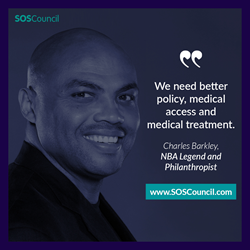
Charles Barkley in support of SOS Council

Charles Barkley Quote1

‘I believe in this effort and believe it can make a difference,” says Charles Barkley.

The Charles Barkley Foundation is teaming up with a healthcare technology company to combat health disparities in the Black community due to Coronavirus. Last week was the launch of the Save Our Selves (S.O.S) Council, comprised of Black influencers, technologists, healthcare professionals, and policy makers concerned about the health of Black Americans.

The SOS Council has launched two initiatives. One is a healthcare provider matching service for black consumers who may want to visit with a doctor remotely. This initiative will help get resources to those needing healthcare service, given the current climate those with medical concerns may feel more comfortable reaching out to doctors through remote patient monitoring. The other is a nationwide online mobile survey at http://sos.synsormed.com/ to research information on the health and economic status of the Black community. The goal is for people to complete the survey as well as share it. A phase 2 effort in August will use this information to provide much-needed resources to black communities.

SynsorMed CEO Theodore Harvey says, “The survey is quick, and it asks general questions to find out if a person is categorized as an essential worker, was able to see a doctor during the COVID-19 pandemic, and if they’d like access to a doctor.”

“This has never been done before,” Harvey says, “This is the first nationwide survey that will collect true, accurate information regarding Black Americans’ health status, so that health care resources can be directed where they’re needed most.”

“The number of COVID-19 cases is still rising,” Harvey says, “And Blacks are being adversely affected, but we can do something if we act now.” The Racial Data Dashboard of the COVID Tracking Project indicates the death rate for Black Americans from COVID-19 is twice that of other racial groups. Additionally, in states including Georgia and South Carolina, 50% of all deaths from COVID-19 are of Black Americans.

‘I believe in this effort and believe it can make a difference,” says Charles Barkley.

The work is important because of the history of Black Americans being disproportionately impacted by diabetes, heart disease, and other chronic illness. Harvey says those are not just health care matters. They are also economic matters, because the Black population has less access to adequate food sources and health care.

The pandemic, economic anxieties, and police brutality have devastated the black community in recent months. Additionally, recent data projections forecast a rise in COVID-19 cases in the next several weeks.

“With this data from the online survey, we hope to influence policy makers in expediting COVID-19 testing, mental health services, and clinical support to areas that need it the most,” says Harvey. “This effort will help the Black community receive resources they didn’t receive previously.”

“Instead of giving in to despair, we believe we can make a difference. We believe we have what we need in our own community to save ourselves.”

SYNSORMED BACKGROUND

Founded in 2014 by Theo Havey and Amin Holmes, SynsorMed is a digital health platform that encourages patient engagement and compliance. The SynsorMed platform is a device-agnostic RPM platform. Each paired monitoring device has a Bluetooth sensor that transmits readings directly to the cloud through the SynsorMed app on a patient’s smartphone.

SynsorMed enables patients to measure key medical data from the privacy of their home and securely upload that data to their physician through the company’s proprietary, cloud-based app, thereby avoiding the need to schedule appointments for routine check-ups. Physicians using the SynsorMed platform have access to more robust patient data and can review patient records in real-time through an online portal and dashboard, which provides those physicians with an additional available appointment time to serve other patients – leading to increased practice revenues.

To participate in the S.O.S. survey, visit http://soscouncil.com/.

Share article on social media or email: