Category Archives: Health

What is new in the field of Health. Trending topics, and cutting edge research in the are of Health. Press Releases that give us updates on Health.

Targeting One Type of Immune Cell With Another Slows Cancer Growth in Preclinical Studies


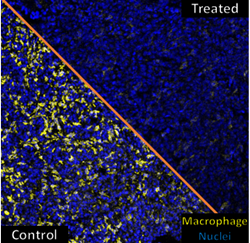
Mice with lung cancer were treated with macrophage-targeting CAR T cells resulting in reduced numbers of tumor macrophages (right side), shrunken tumors, and extended survival.

“Our initial goal was just to use the CAR T cells to kill the immunosuppressive macrophages, but we discovered they were also boosting tumor immunity by releasing this powerful immune-boosting molecule,” – Brian Brown, PhD

A new approach to cancer immunotherapy that uses one type of immune cell to kill another—rather than directly attacking the cancer—provokes a robust anti-tumor immune response that shrinks ovarian, lung, and pancreatic tumors in preclinical disease models, according to researchers at the Icahn School of Medicine at Mount Sinai in New York. The findings were published October 11, 2022 in the journal Cancer Immunology Research [https://doi.org/10.1158/2326-6066.CIR-21-1075 .

The study involved a twist on a type of therapy that uses immune cells known as CAR T cells. CAR T cells in current clinical use are engineered to recognize cancer cells directly and have successfully treated several blood cancers. But there have been challenges that prevent their effective use in many solid tumors.

Most solid tumors are heavily infiltrated by a different type of immune cell called macrophages. Macrophages help tumors grow by blocking the entry of T cells into tumor tissue, which prevents CAR T cells and the patient’s own T cells from destroying the cancer cells.

To tackle this immune suppression at the source, the researchers engineered T cells to make a “chimeric antigen receptor” (CAR) that recognizes a molecule on the surface of macrophages. When these CAR T cells encountered a tumor macrophage, the CAR T cell became activated and killed the tumor macrophage.

Treatment of mice bearing ovarian, lung, and pancreatic tumors with these macrophage-targeting CAR T cells reduced the number of tumor macrophages, shrunk the tumors, and extended their survival.

The killing of tumor macrophages allowed the mouse’s own T cells to access and kill the cancer cells. The investigators further demonstrated that this anti-tumor immunity was driven by release of the cytokine interferon-gamma—a molecule involved in the regulation of inflammatory responses—from the CAR T cells.

“Our initial goal was just to use the CAR T cells to kill the immunosuppressive macrophages, but we discovered they were also boosting tumor immunity by releasing this powerful immune-boosting molecule,” said senior author Brian Brown, PhD, Director of the Icahn Genomics Institute and Associate Director of the Marc and Jennifer Lipschultz Precision Immunology Institute (PrIISM) at Icahn Mount Sinai. “It was a one-two punch from this single treatment.”

Shifting the sights of CARs from cancer cells to tumor macrophages potentially addresses another key barrier to the successful elimination of solid tumors with CAR T cells. There are very few proteins found exclusively on cancer cells and not on healthy tissues that can be used to target cancer cells in solid tumors directly without damaging the healthy tissue.

The macrophages found in tumors that suppress immunity are very similar across different types of cancer and very different from macrophages in healthy tissues.

This has led to an interest in macrophage-depleting agents for cancer therapy, but approaches developed to date have had limited success in clinical trials.

“Our molecular studies of human tumors have revealed macrophage subsets present in human tumors and not in normal tissues and are similar across tumors and across patients. So macrophage-targeting CAR T cells could be a broad way to target different types of solid tumors and improve immunotherapy,” said Miriam Merad, MD, PhD, co-senior author of the study, and Director of PrIISM.

Next, the researchers are working on tumor macrophage-specific CAR and generating humanized versions of the genetic instructions, so that they can be introduced into cancer patients’ own T cells.

The paper is titled, “Targeting macrophages with CAR T cells delays solid tumor progression and enhances anti-tumor immunity.”

Additional co-authors are Alfonso R. Sánchez-Paulete, PhD, Jaime Mateus-Tique, Gurkan Mollaoglu, PhD, , Sebastian R. Nielsen, PhD, Adam Marks, Ashwitha Lakshmi, Jalal A. Khan, MD, PhD, C. Matthias Wilk, MD, Luisanna Pia, Alessia Baccarini, PhD, all from Icahn Mount Sinai.

B.D.B. was supported by NIH (R01CA257195) and a grant from the Alliance for Cancer Gene Therapy. M.M. was supported by NIH (R01CA254104). A grant from the Applebaum Foundation also supported the project. A.R.S.P. was supported by a grant from Fundación Alfonso Martín Escudero (Spain).

About the Icahn School of Medicine at Mount Sinai

The Icahn School of Medicine at Mount Sinai is internationally renowned for its outstanding research, educational, and clinical care programs. It is the sole academic partner for the eight- member hospitals* of the Mount Sinai Health System, one of the largest academic health systems in the United States, providing care to a large and diverse patient population.

Ranked 14th nationwide in National Institutes of Health (NIH) funding and among the 99th percentile in research dollars per investigator according to the Association of American Medical Colleges, Icahn Mount Sinai has a talented, productive, and successful faculty. More than 3,000 full-time scientists, educators, and clinicians work within and across 34 academic departments and 35 multidisciplinary institutes, a structure that facilitates tremendous collaboration and synergy. Our emphasis on translational research and therapeutics is evident in such diverse areas as genomics/big data, virology, neuroscience, cardiology, geriatrics, as well as gastrointestinal and liver diseases.

Icahn Mount Sinai offers highly competitive MD, PhD, and Master’s degree programs, with current enrollment of approximately 1,300 students. It has the largest graduate medical education program in the country, with more than 2,000 clinical residents and fellows training throughout the Health System. In addition, more than 550 postdoctoral research fellows are in training within the Health System.

A culture of innovation and discovery permeates every Icahn Mount Sinai program. Mount Sinai’s technology transfer office, one of the largest in the country, partners with faculty and trainees to pursue optimal commercialization of intellectual property to ensure that Mount Sinai discoveries and innovations translate into healthcare products and services that benefit the public.

Icahn Mount Sinai’s commitment to breakthrough science and clinical care is enhanced by academic affiliations that supplement and complement the School’s programs.

Through the Mount Sinai Innovation Partners (MSIP), the Health System facilitates the real-world application and commercialization of medical breakthroughs made at Mount Sinai. Additionally, MSIP develops research partnerships with industry leaders such as Merck & Co., AstraZeneca, Novo Nordisk, and others.

The Icahn School of Medicine at Mount Sinai is located in New York City on the border between the Upper East Side and East Harlem, and classroom teaching takes place on a campus facing Central Park. Icahn Mount Sinai’s location offers many opportunities to interact with and care for diverse communities. Learning extends well beyond the borders of our physical campus, to the eight hospitals of the Mount Sinai Health System, our academic affiliates, and globally.

Mount Sinai Health System member hospitals: The Mount Sinai Hospital; Mount Sinai Beth Israel; Mount Sinai Brooklyn; Mount Sinai Morningside; Mount Sinai Queens; Mount Sinai South Nassau; Mount Sinai West; and New York Eye and Ear Infirmary of Mount Sinai.

New fertility study can offer evidence-based guidance for patients contemplating an embryo transfer following a cesarean delivery


New fertility study can offer evidence-based guidance for patients contemplating an embryo transfer following a cesarean delivery.

“We wanted to have more robust data about what those risks look like so we could counsel patients with evidence-based guidelines for their family-planning goals.”

New research conducted by the US Fertility research team can provide evidence-based guidance for patients moving forward with an embryo transfer following a cesarean delivery.

Presented this week at the 78th ASRM Scientific Congress & Expo in Anaheim, California, US Fertility’s founding practices, IVF FLORIDA, Fertility Centers of Illinois, Reproductive Science Center of the San Francisco Bay Area, and Shady Grove Fertility, joined forces to conduct this study assessing the risks of shorter intervals between cesarean delivery (CD) and frozen embryo transfer (FET).

“We often see patients weighing the risks of doing an embryo transfer to become pregnant too soon after a c-section against the risks of getting older prior to their next pregnancy,” shares Janet Bruno-Gaston, M.D., MSCI, SGF Houston physician. “We wanted to have more robust data about what those risks look like so we could counsel patients with evidence-based guidelines for their family-planning goals.”

The study looked at 6,545 FETs grouped by three-month duration of time between c-section and subsequent embryo transfer. There were no statistically significant differences in implantation rate, ongoing pregnancy rate, or live birth rate. Birthweight and gestational age at time of delivery were slightly lower with shorter duration between CD and FET. However, it is unclear whether such small differences in these parameters were clinically significant in terms of the health of the newborn.

Comparing those who underwent FET less than 6 months versus more than 24 months following CD, there was less than a 200 gram difference in birthweight and less than one week difference in gestational age at delivery. While the findings were reassuring overall, it must be noted that the study was not large enough to assess rare outcomes thought to be associated with a short interval from CD to next pregnancy, such as uterine rupture. This analysis can guide patients and physicians who are balancing short interval risks with the disadvantages of delaying fertility treatment due to increasing maternal age. The study was conducted by Laura Zalles, M.D.; Samad Jahandideh, Ph.D.; Jiarui Wang, M.S.; Michael Vance Homer, M.D.; Meike L. Uhler, M.D.; Luis R Hoyos, M.D.; Kate Devine, M.D.; and Janet Bruno-Gaston, M.D.

US Fertility’s newly formed Research Division will conduct and publish high-quality research studies to advance the field of reproductive medicine to provide better, more effective care to patients in the future. Dr. Devine serves as the Executive Medical Director and Chief Research Officer at US Fertility, the largest network of physician-owned and physician-led fertility practices in the United States.

Visit the US Fertility Research Division landing page to learn more about the program and discover the latest research in the field of reproductive medicine. Contact usfresearchdivision@usfertility.com to become involved or connect with the research team.

About US Fertility

US Fertility is the nation’s largest partnership of physician-owned and physician-led top-tier fertility practices, offering comprehensive fertility-market-focused non-clinical, administrative, and technical platforms that help domestic and international practices improve patient outcomes and increase patient access. To learn more about partnership- or affiliate-status benefits, call 301-545-1308 or visit USFertility.com.

Share article on social media or email:

Neuroenhancement Lab, Inc. Announces Rebrand as NeuroLight


NeuroLight’s new logo.

“Further research led us to identify light and sound as ideal stimuli for brain entrainment,” said NeuroLight Founder and President Alexander Poltorak. “This emphasis on light is taking us in new directions and prompted our rebranding and new name.”

Neuroenhancement Lab, Inc., a Suffern, New York-based neuromodulation company, today announced that it had completed a major rebranding. The new name, NeuroLight, reflects the shift from using transcranial electric stimulation of the brain toward using light as the primary modality for neurostimulation, brain entrainment, and photobiomodulation.

NeuroLight is the first company to develop technology for transplanting mental states™ from one person to another. A pilot study done in collaboration with the Neuromodulation Lab at the City College of New York (CCNY/CUNY), used proprietary transcranial electric stimulation (TES) to induce sleep in volunteer subjects with promising results. Subsequent research identified light and sound as ideal stimuli for brain entrainment. This emphasis on light prompted the rebranding.

“Further research led us to identify light and sound as ideal stimuli for brain entrainment,” said NeuroLight Founder and President Alexander Poltorak. “This emphasis on light is taking us in new directions and prompted our rebranding and new name.”

The human brain is naturally entrained by sunlight light, which stimulates photosensitive cells in the retina, signaling the brain to synchronize the endogenous circadian rhythms to local time and day/night cycles. Rhythmic music causes us to instinctively clap hands, tap our feet, or move our bodies in sync with the beat.

NeuroLight aims to harness the science of transplanting brain states to help users achieve their desired brain states. For example, the technology may help improve the quality of sleep by recording brain states associated with various stages of sleep in healthy sleepers and then reproducing those states in the brains of people who struggle to achieve quality sleep through neuromodulation using light (photobiomodulation) and sound.

“The company’s proprietary technology could help people achieve not only better sleep but also higher concentration and performance,” Poltorak said.

Besides the new name, NeuroLight, this rebranding effort includes a new logo and website—http://www.NeuroLight.co.

About NeuroLight, Inc.

NeuroLight, Inc. is a neuromodulation R&D company developing pioneering technology for transplanting mental states™ from one person to another (or the same person at a different time). Mental states are represented in the brain by their neural correlates—brainwaves. Transplanting a mental state from a donor to a recipient entails recording brainwaves of the donor while in a desired mental state and then stimulating the brain of the recipient with a waveform extracted from the donor’s brainwaves to induce the desired mental state. Besides photobiomodulation using light, NeuroLight also uses auditory stimulation in the form of binaural beats or isochronic tones. The first application the company is working on is the potential treatment of insomnia by entraining a patient’s brain with visual and auditory stimuli modulated with a naturalistic waveform derived from endogenous brainwaves of the sleeping donor. This technology is the subject of numerous patent applications. For more information, visit the company’s website at http://www.NeuroLight.co.

Share article on social media or email:

Breast Surgeon Dr. Neil B. Friedman and Radiation Oncologist Dr. Maria Jacobs Appear on Mercy Medical Center’s “Medoscopy” Series


Mercy Medical Center, Baltimore, MD

Mercy Medical Center, Baltimore, MD

Neil B. Friedman, M.D., FACS, Director of The Hoffberger Breast Center and Medical Director of The Weinberg Center for Women’s Health and Medicine at Mercy, and Maria C.E. Jacobs, M.D., head of Radiation Oncology at Mercy, are guests of the hospital’s ongoing talk show series, “Medoscopy,” airing on Facebook Watch, Wed.-Thurs., Oct. 26-27th at 5:30 p.m. EST (http://www.facebook.com/MercyMedicalCenter).

A 30-minute pre-taped program that explores the background and lives of Mercy clinicians, patients and others, Medoscopy was launched in spring 2021 and airs in two 15-minute segments. To view past episodes, visit the Medoscopy playlist on the Mercy Medical Center YOUTUBE channel.

In this latest installment, timed for October – National Breast Cancer Awareness Month — Drs. Friedman and Jacobs discuss their work in the diagnosis and treatment of breast cancer conditions.

On more personal notes, Dr. Friedman reveals he enjoys reading, particularly fictional political thrillers, and his interest in building construction. Dr. Jacobs discusses the challenges of leaving her native Venezuela to come to the U.S., unable at the time to speak English, but thanks to her mentors, and some serendipity, found success in her field of radiation oncology.

During Medoscopy’s regular “show and tell” segment, Dr. Jacobs presents a ceremonial pin that was presented to her father in honor of his efforts in helping found Sears Roebuck in Venezuela in the late 1940s/early 1950s, as well as a medal that Dr. Jacobs had given to her mother as a gift that she had earned for her achievement at Universidad Central de Venezuela in Caracas.

Dr. Friedman began his medical career as Chief Resident at the nationally renowned Memorial Sloan-Kettering Cancer Center in New York. Today he is a board certified breast cancer doctor, named Humanitarian of the Year by the Mildred Mindell Cancer Foundation and served as Chairman of the American Cancer Society’s Research Administrative Committee, a member of its Executive and Professional Education Committees, and on its Board of Directors.

Dr. Maria Jacobs has been recognized as a “Top Doctor” by Baltimore magazine and as a Health Care Hero by The Daily Record. She also has been invited to participate in various programs for the Brooklyn Leadership School for Young Women in Brooklyn, NY.

Dr. Jacobs and Dr. Friedman were the first team of doctors in the state of Maryland to use Intraoperative Radiotherapy (IORT) which is discussed at length during the segment.

Medoscopy is filmed on the campus of Mercy Medical Center in downtown Baltimore with video, sound, and lighting by Zinnia Film.

Founded in 1874 by the Sisters of Mercy, Mercy Medical Center is located in downtown Baltimore City, about six blocks from Baltimore’s famed Inner Harbor. A university-affiliated teaching facility, Mercy is a Catholic hospital with a national reputation for women’s health care, orthopedics, and other specialties. Mercy is home to the renowned Weinberg Center for Women’s Health & Medicine, and the $400+ million Mary Catherine Bunting Center. For more information, visit http://www.mdmercy.com, and MDMercyMedia on Facebook and Twitter, or call 1-800-M.D.-Mercy.

-30-

Share article on social media or email:

Crozer Health Names American Treatment Network as its Preferred Provider for Outpatient Drug & Alcohol Services in Delaware County, Pennsylvania.


“We welcome this opportunity to help serve the people of Delaware County and work closely with Crozer Health, as they continue to support the behavioral health needs of the county.”

American Treatment Network (ATN), an in-network, multi-state SUD treatment platform company, has been selected by Crozer Health as its Preferred Provider for Outpatient Drug and Alcohol treatment. ATN will be opening its state-of-the-art integrated SUD treatment model on the campus of Crozer-Chester Medical Center, at Suite 204 of Medical Office Building 1.

“Crozer Health is proud to work with American Treatment Network to provide these much-needed services to county residents suffering from substance abuse disorders,” said Tony Esposito, Crozer Health’s Chief Executive Officer.

Commenting on the agreement, Matthew Sullivan, ATN’s co-founder and CEO, stated, “We welcome this opportunity to help serve the people of Delaware County and work closely with Crozer Health, as they continue to support the behavioral health needs of the county.” He continued, “As the largest health system in the county, Crozer Health can continue to lead in the fight to help undo the damage caused by the opioid epidemic in the county.

ATN is also announcing that the Delaware County Office of Behavioral Health has expanded ATN’s contact with the county to include assessments as an anchor provider for the citizens of Delaware County. This selection by the county will allow American Treatment Network to provide assessment services to Delaware County residents presenting with both chronic and acute substance use issues.

The new center will be part of the new MOB 1 location and will be staffed 12 hours a day, five days a week. The assessments will include a review of several different therapeutic domains, a suicide assessment, a trauma assessment, a collection of demographic information, and the completion of several releases allowing for post-assessment referrals to be completed. The center will also provide telephonic follow-ups with each referred individual at day 30 to ensure successful service linkage.

About American Treatment Network

American Treatment Network is an in-network, multi-state SUD treatment platform company that treats patients in a holistic, integrated, treatment eco-system. We combine medical & behavioral health services, medication assisted treatment, insourced ancillary services, and care coordination for adults 18+. American Treatment Network offers Partial Hospitalization, Intensive Outpatient Treatment, Medication Assisted Treatment, and Psychiatric Services while accepting commercial insurance, medicare, medicaid, and the uninsured. Visit http://www.americantreatmentnetwork.com or call 1-877-286-5115

About Crozer Health

Crozer Health was established in 1990 by the merger of Crozer-Chester Medical Center in Upland, Pa. and Delaware County Memorial Hospital in Drexel Hill, Pa. Today, the health system is home to two additional hospitals: Taylor Hospital in Ridley Park, Pa. and Springfield Hospital in Springfield, Pa. In July 2016, Crozer Health was acquired by Prospect Medical Holdings, Inc. For further information visit http://www.crozerhealth.org or call 1-800-254-3258.

Share article on social media or email:

Preclinical biotherapeutics company Abalone Bio and bioinformatics cloud platform provider PipeBio announce collaborative efforts in antibody drug discovery


Biotherapeutics company Abalone Bio and Bioinformatics Cloud Platform provider PipeBio's announcement of collaboration

Abalone Bio’s and PipeBio’s announcement of ongoing collaboration

PipeBio’s advanced bioinformatics platform and its integrated workflows support preclinical biotherapeutics company Abalone Bio’s proprietary antibody discovery platform for therapeutics discovery efforts

Abalone Bio, a preclinical biotherapeutics company and PipeBio, a bioinformatics cloud platform provider, announce their continued collaboration around antibody bioinformatics analysis supporting Abalone Bio’s antibody discovery research and development efforts. PipeBio’s advanced bioinformatic platform complements Abalone Bio’s Functional Antibody Selection Technology (FAST) antibody discovery platform, which aims to find treatments for difficult-to-drug G-protein coupled receptor (GPCR) and other difficult membrane protein targets with disease indications ranging from inflammatory diseases, metabolic diseases, and cancer.

Since implementation, the bioinformatics platform from PipeBio has helped Abalone Bio transition into large scale NGS data analysis of antibodies, with single-click analysis pipelines helping Abalone Bio speed up analysis and quickly identify candidate antibody sequences for further development.

“PipeBio’s workflow is easy to use for members of our team across the full range of computational experience, making NGS-based antibody library and enrichment analyses accessible while still remaining powerful and flexible. ” – Richard Yu, CEO and co-founder, Abalone Bio

Abalone Bio’s pursuit of GPCR-modulating antibody therapeutics includes several discovery programs where PipeBio’s bioinformatics cloud is utilized for data storage, computation and advanced data analysis. As part of the collaboration, PipeBio has provided bespoke graphics solutions for estimation of antibody library diversity, which have been widely adopted and employed by Abalone Bio.

“We are thrilled to support Abalone Bio’s research efforts with both our tools and expertise. For us, the most exciting part is to be able to contribute to novel therapeutics for the wide array of diseases that Abalone Bio’s GPCR-targeting research approach intends to address.” – Jannick Bendtsen, CEO, PipeBio

About Abalone Bio

Abalone Bio combines synthetic biology and data-driven computation to identify antibody drugs that activate and modulate difficult membrane protein targets, which enables access to previously inaccessible therapeutic biological activities such as novel anti-cancer or anti-inflammatory activities.

Contact information

Richard Yu, CEO

Email: ryu@abalonebio.com

Visit: https://www.abalonebio.com

About PipeBio

PipeBio is a rapidly growing cloud-based bioinformatics platform with presence in Europe and the Americas. Teams in pharma, biotechs and academia use PipeBio to quickly characterize and develop better lead candidates. The strength of PipeBio is its unique ability to make structured sequence and assay data easily accessible to scientists, bioinformaticians and managers, combined with an ever-growing suite of powerful analysis tools.

Contact information

Jannick Bendtsen

Email: jannick@pipebio.com

Tel. +45 5120 9694

Visit: https://pipebio.com

Press / media kit

Access PipeBio’s Press kit

Share article on social media or email:

Customized Titanium Mesh Lowers the Exposure Rate on GBR


Journal of Oral Implantology

The quality and quantity of the alveolar ridge is the key to the successful implantation and long-term stability of implants

Journal of Oral Implantology – Dental implants are essential to preserve jaw structure and increase oral and physical health. Bone regeneration is vital to improving the success rate of dental implants. Guided-bone regeneration (GBR) is the standard implantologists use for creating the bone necessary for eventual implant placement. Titanium mesh is widely used in the GBR process for alveolar ridges. The titanium mesh creates and holds the space between the membrane and bone, thus allowing for the de novo bone to form. However, limitations of conventional titanium mesh are: (i) a need to be cut, (ii) the need to bend into the desire shape, (iii) increased surgical time, and (iv) possible postoperative infection.

“The quality and quantity of the alveolar ridge is a key to successful implantation and long-term stability of implants,” writes Libo Zhou, MS, MD, and colleagues from Jiamusi University, Peking Union Medical College Hospital, Beijing Citident Stomatology Hospital, and the Forth Military Medical University in Jiamusi, Beijing, and Xi’an, China. Zhou and colleagues recently published a retrospective review in the Journal of Oral Implantology to compare the use of conventional versus patient specific customized 3D-printed titanium mesh in GBR. Researchers reviewed data from nine studies focusing on: (i) study design, (ii) participant number, (iii) bone graft materials, (iv) mesh type selection, (v) operation protocol, (vi) initial bone width and height, (vii) incidence of mesh exposure, (viii) time to complications, (ix) transplantation success rate, and (x) post-GBR follow-up time. The data review included 218 patients aged 17 to 88 years and 247 titanium mesh placements. Of these, 99 were customized and 148 were conventional titanium meshes.

Researchers noted that the most common post-implantation complications were titanium mesh exposure, infection, and bone resorption. Exposure time significantly affected healing and eventual bone formation. Early exposure (2-3 weeks post-placement) negatively affected bone regeneration, while late exposure had only a small impact on bone regeneration. Results show that early exposure occurred more often with conventional titanium mesh which resulted in decreased success for bone formation, while customized titanium mesh created less exposure, resulting in greater success.

Although future research is recommended with longer follow-up times, Zhou et al determined that “the exposure rate of customized titanium mesh is lower than that of conventional titanium mesh, which is more advantageous in the treatment of complex bone defects. Advantages of 3D printed customized titanium mesh are: (i) avoids nerves and blood vessels, (ii) improves the reconstruction accuracy of GBR, (iii) provides enough bone volume for eventual dental implant placement, (iv) reduced exposure rate, and (v) improved surgical success rates. An additional factor for GBR success is the prevention of soft tissue dehiscence through proper understanding of technique sensitive soft tissue closure procedures.

Full text of the article, “Effect of Exposure Rates with Customized Versus Conventional Titanium Mesh on Guided Bone Regeneration: Systematic Review and Meta-Analysis” Journal of Oral Implantology, Vol. 48, No. 3, 2022, is available at https://doi.org/10.1563/aaid-joi-D-20-00200

###

About the Journal of Oral Implantology

The Journal of Oral Implantology is the official publication of the American Academy of Implant Dentistry and of the American Academy of Implant Prosthodontics. It is dedicated to providing valuable information to general dentists, oral surgeons, prosthodontists, periodontists, scientists, clinicians, laboratory owners and technicians, manufacturers, and educators. The JOI distinguishes itself as the first and oldest journal in the world devoted exclusively to implant dentistry. For more information about the journal or society, please visit http://www.joionline.org.

Media Contact:

Samantha Weinkauf

Allen Press, Inc.

785/865-9123

sweinkauf@allenpress.com

Share article on social media or email:

XP Health and ReviveHealth(™) Join Forces to Transform How Americans Access Simple and Affordable Health Care


News Image

ReviveHealth helps open the door to customers who have already experienced how tech can improve healthcare, and are primed to love XP Health.

XP Health, the company developing a digital-first vision benefits platform, today announces a partnership with ReviveHealth, an online health care-based subscription membership solution that facilitates rapid and easy access to affordable, quality care and prescription medications.

ReviveHealth’s 500,000 members across all 50 states can now access XP Health’s services ensuring they have the best vision care experience on the market – whether they have 20/20 eyesight or need a prescription. That experience includes online prescription renewal, glasses and/or contacts, and the option to elect ReviveHealth’s “Care Offering” (combining medical and vision benefits) for just $34.95 per month.

“We have a clear goal to democratize access to high-quality, delightful experiences in vision care for hundreds of millions of people, and this partnership is a fantastic step in that direction,” said Antonio Moraes, CEO and co-founder of XP Health. “Once people experience our services and see how much more they get, for significantly less money, they’re hooked. ReviveHealth helps open the door to customers who have already experienced how tech can improve healthcare, and are primed to love XP Health.”

Eyewear and contacts are essential health needs for employees, yet the average American still spends approximately $200 above the allowance from their vision care provider. In addition, the average cost of health insurance that includes vision care for an adult in the United States costs over $550. XP Health reduces out-of-pocket costs, doubles coverage, and uses augmented reality and artificial intelligence to provide a personalized, consumer-centric experience; it’s a perfect implementation of ReviveHealth’s mission of providing trusted, simple, affordable solutions that improve consumers’ access to convenient healthcare and enhance a person’s overall well-being.

“Most group eyewear offerings on the market today check a box but don’t provide much value,” said Jeff Bernhard, CEO of ReviveHealth. “It’s a massive feat to be able to provide access to high-quality vision care at this price point. We’re thrilled to find a partner that could help us make this happen for our members, and we look forward to expanding alongside and strengthening our relationship with XP Health in order to offer an amazing vision care experience that is affordable and enjoyable.”

About XP Health

XP Health democratizes access to high-quality, delightful experiences in vision care that double coverage and reduce costs by half. It is the first modern vision platform focused on eye care and eyewear that can be used to enhance or replace existing vision plans, and uses artificial intelligence, augmented reality, and customer-centric design to create a stellar member experience. XP Health was named to the 2021 Fast Company list of the World’s Most Innovative Companies and over the past year has expanded from 30 to 1500+ customers, including Docusign, Navistar, Chegg, Sequoia Consulting, and strategic partner Guardian Life Insurance. To learn more visit xphealth.co.

About Revive Health

ReviveHealth™ is an affordable health care subscription solution providing employees and consumers fully integrated everyday care including primary and urgent care, mental health therapy, physical therapy, pharmacy benefits, and care solutions across all 50 states. Serving over 500,000 members, ReviveHealth™ offers customizable offerings for employers, plans sponsors, individuals, associations and affinity groups with plans starting at less than $1/day.

Share article on social media or email:

ProSport Physical Therapy & Performance Expands with 3 New Clinics


ProSport, a member of the Therapy Partners Group family of brands and Orange County’s favorite physical therapy and performance facility has opened three new locations in Culver City, Torrance, & Carson, California. ProSport Physical Therapy & Performance has been serving the greater Orange County community with exceptional care for over 30 years and these three new clinics will serve a larger population in the Los Angeles area.

“We are excited for Joe and the entire ProSport team as this expansion is a testament to the reputation of a culture of excellence and dedication to the highest clinical standards”, shares Kim Kollwelter, COO of Therapy Partners Group.

ProSport, a member of the Therapy Partners Group family of brands and Orange County’s favorite physical therapy and performance facility has opened three new locations in Culver City, Torrance, & Carson, California. ProSport Physical Therapy & Performance has been serving the greater Orange County community with exceptional care for over 30 years and these three new clinics will serve a larger population in the Los Angeles area.

ProSport Physical Therapy & Performance has taken over the locations once held by Independent Physical Therapy which chose to cease operations earlier in the year. ProSport has added experienced and senior-level physical therapy staff to the new locations to continue the continuity of care and an exceptional patient experience that has been developed and perfected in Orange County since 1992.

“ProSport Physical Therapy & Performance was founded on an unwavering commitment to provide individualized, compassionate care that exceeds patients’ expectations and to serve the community. We are thrilled to be able to serve an even larger population in Southern California with the same great physical therapy that our patients have come to know and love” said ProSport’s founder, Joe Donohue.

The ProSport difference is built around providing each patient with an exceptional experience from the moment they walk in the door. The focus is on providing individualized care so that patients can reach their goals and get back to their lives as quickly as possible. Adding these three new locations provides patients with a level of care that is unmatched by any other facility in the area.

“We are excited for Joe and the entire ProSport team as this expansion is a testament to the reputation of a culture of excellence and dedication to the highest clinical standards. We are confident that patients in the greater Los Angeles area will appreciate the convenience of having a ProSport location nearby and be impressed by their level of care and compassion,” shares Kim Kollwelter, COO of Therapy Partners Group.

These three clinics will be open from 7 a.m. – 7 p.m. Monday through Thursday & 7 a.m. through 6 p.m on Friday and are located:


559 E. Carson Street Suite B, Carson, CA 90745

Phone: (424) 201-5242

Fax: (424) 323-3373


2355 Crenshaw Blvd. Suite #130 Torrence, CA 90501

Phone: (310) 870-3332

Fax: (310) 879-5352


5601 West Slauson Ave, Suite #125 Culver City, CA 90230

Phone: (310) 912-7442

Fax: (310) 933-5856

About Therapy Partners Group

Formed in 2019, Therapy Partners Group, formerly Golden Bear Therapy Partners, is a Physical Therapist led, a portfolio company of Shore Capital Partners. Therapy Partners Group has offices in Chicago, Illinois & Modesto, California, and operates over 140 clinics across 7 states. The company has an extensive network of partners that have been established leaders within their respective communities.  The company strives to be the partner of choice for clinic owners looking for best-in-class support for growth, operational and back-office functions.  To learn more, please visit http://www.therapypartnersgroup.com.

Share article on social media or email:

Nearly 400 Pregnant Women Agree that The Fresh Test™ is the Best Tasting Glucose Beverage for Gestational Diabetes Screenings


News Image

Pregnant women who have participated in gestational diabetes glucose load tests are well aware of the issues that exist in the current process. Ahead of these screenings, the newly pregnant mom must drink a product called Glucola, which is not only full of dyes, GMO’s and preservatives, but it can also cause a range of side effects including nausea. The team at The Fresh Test has worked hard to develop the first fully validated, clean, and natural version of glucola. In the past, the glucose beverages available were largely unchanged since the 1970s. There were no other validated options so women were forced to consume the additive-filled glucola to complete their screening. Yet, it was a product many women could not keep down.

If women have not personally tried the beverage, they may be surprised to find out just how difficult getting down a full serving of it actually is. To put it in perspective, The Fresh Test founder Jacqueline Berg had no issue eating bugs during her time as a contestant on CBS’s Survivor, but could not drink Glucola when she became pregnant. Upon being offered her first bottle of Glucola, Jacqueline, along with physicians and food scientists, set out to launch an all-natural alternative that was not only additive, dye, and GMO-free, but also tasted delicious.

During a retrospective analysis of The Fresh Test™, 356 participants were questioned about the taste of the all-natural glucose beverage. Out of the 356 women surveyed, 355 replied with “yes, they liked the taste of The Fresh Test™”. Since taste is subjective, this type of unanimous product enjoyment is rare. The overwhelmingly positive response has helped increase the acceptance of gestational diabetes screenings among pregnant women in addition to significantly improving the patient experience.

A 2014 Gallup Poll shows that healthcare vendors and providers recognize the need to improve the patient experience. As a result, many offices have made large investments in patient-focused programs. It has been no secret to anyone who practices prenatal care that improving the glucose load test would be highly impactful when providing a better patient experience for pregnant women. With The Fresh Test™ now being FDA registered, pregnant women no longer have to dread their diabetes screening.

###

About The Fresh Test: The Fresh Test™ is an Organic & Non-GMO 50-gram, 75-gram, and 100-gram glucose beverage for the glucose load test. It is indicated for the detection of Diabetes Mellitus and Gestational Diabetes Mellitus. Providers and patients are to follow your existing GTT protocol. Instructions For Use are printed on all packaging. Certificates of Analysis are available with every lot. The Fresh Test™ is free from GMOs, artificial dyes, artificial flavoring, BVO, BPA, sodium benzoates, and other unnecessary preservatives. Most importantly, women love the taste* – greatly improving the patient experience and increasing adherence to gestational diabetes screening.

Share article on social media or email: