Category Archives: Health

What is new in the field of Health. Trending topics, and cutting edge research in the are of Health. Press Releases that give us updates on Health.

ND Governor Signs GTMRx-Supported Comprehensive Medication Management Bill into Law


News Image

“Comprehensive medication management is a proven tool that gives patients in our state more options to ensure healthy outcomes while ultimately bringing down costs.” Jon Godfread, North Dakota Insurance Commissioner

Last week, North Dakota Governor Doug Burgum signed new legislation into law that requires health insurance companies to include comprehensive medication management (CMM) services in commercial health benefit plans. The law ensures that citizens in North Dakota will have access to coordinated, consistent, comprehensive services that optimize medication use. Its passage was supported by the Get the Medications Right Institute, a coalition of more than 1,700 stakeholders representing over 1000 companies across the employer and health care spectrum who support greater adoption of CMM.

“This legislation underscores our commitment to advocate for better health for North Dakota consumers and help drive down health care costs for everyone,” said North Dakota Insurance Commissioner Jon Godfread, who testified in favor of the legislation. “This bill represents the intent of our state government to improve citizen access to needed health care services while keeping care affordable. Comprehensive medication management is a proven tool that gives patients in our state more options to ensure healthy outcomes while ultimately bringing down costs.”

In 2021, the North Dakota General Assembly passed a bill authorizing a study on medication optimization, setting the stage for the current law’s development and adoption. CMM has been implemented in large health systems and health plans to both improve health care outcomes and lower costs. It is a proven care process that involves a clinical pharmacist who works in collaborative practice with the physician, the patient, and others on the care team. The medication specialist maps out an individualized medication plan to optimize all medications the patient uses to ensure they are safe, effective, and appropriate. The medication specialist evaluates the plan with the patient based on the conditions the medicine is intended to treat. CMM includes ongoing follow-up care to ensure medication effectiveness while counseling the patient to ensure they are willing and able to take the medication as intended and prescribed.

“The state of North Dakota has shown keen insight and compassion in the passage of this law,” said Katherine H. Capps, cofounder and board member of the Get the Medications Right Institute. “State leaders examined the peer-reviewed evidence for CMM, consulted with health plans and national leaders who have confirmed its effectiveness, and boldly enabled the criteria to ensure consistent, high-quality practice of this patient-centered service.”

Evidence shows that CMM improves quality of care and has an average return‐on‐investment of 3:1 to 12:1 for patients with chronic conditions, primarily by reducing medication misuse, overuse, and underuse and their consequences.(1,2) A 2018 study found that more than 275,000 people die and $528 billion is wasted every year because of treatment failures, new medical problems, or both, caused by medication that is not optimized.(3)

North Dakota’s law requires that insurers serving its citizens through commercial plans provide CMM services. It defines essential criteria for the process and requires that providers are credentialed and able to advise patients on the best medication regimen to achieve positive health outcomes. Insurance providers must notify patients about availability of CMM services and cover patients that meet certain criteria, such as taking more than five medications for chronic conditions. It also allows CMM services to be delivered via telehealth.

The GTMRx Institute provides free publicly available resources that employers, health insurers, health care providers, and consumers can use to better understand CMM and raise awareness of its effectiveness to improve patient outcomes and lower health care costs. The information is intended to catalyze action for broader adoption of CMM practice nationwide.

“The human and financial toll of getting the medications right is enormous,” Paul Grundy, MD, president of the GTMRx Institute said. “North Dakota has paved the way for other states to adopt standard CMM criteria and give patients everywhere the comprehensive, coordinated care to get the medications right that they deserve.”

About the Get the Medications Right™ Institute

The GTMRx Institute is a catalyst for change that brings critical stakeholders together, bound by the urgent need to get the medications right. We are physicians, pharmacists, health IT innovators, drug and diagnostics companies, consumer groups, employers, payers and health systems—aligned to save lives and save money through comprehensive medication management. By showcasing evidence and innovation, we motivate practice transformation and push payment and policy reform. Together, we ACT to champion appropriate, effective, safe and precise use of medication and gene therapies. Learn more at gtmr.org.

(1) Cobb CD. Optimizing medication use with a pharmacist‐provided comprehensive medication management service for patients with psychiatric disorders. Pharmacotherapy. 2014 Dec;34(12):1336‐40.

(2) Cipolle RJ, Strand L, and Morley P. Pharmaceutical Care Practice: The Patient Centered Approach to Medication Management. Third Edition. New York, NY: McGraw‐Hill Medical; 2012.

(3) Watanabe JH, McInnis T, Hirsch JD. Cost of Prescription Drug‐Related Morbidity and Mortality. Ann Pharmacother. 2018 Sep;52(9):829‐837.

###

Media Contact:

Keri Boyce

571-276-3116

Email: admin@gtmr.org

Share article on social media or email:
Biden Administration Extends “PREP Act” Pharmacy Access that Delivered During COVID-19 Pandemic and Beyond


“As NACDS has urged consistently and repeatedly, the clarifications and extensions announced today are vital for patient health and access, and essential for pharmacies’ planning.”

NACDS is applauding the Biden Administration’s announcement today that it plans to preserve much of the pharmacy access that now is relied on and expected by Americans, through moves advocated by NACDS for more than a year.

In a fact sheet issued today, the U.S. Department of Health and Human Services announced that, among other actions, it plans to issue a new amendment under the current declaration of the PREP Act (Public Readiness and Emergency Preparedness Act) that will extend through December 2024 selected current amendments that facilitate pharmacy access.

NACDS President and CEO Steven C. Anderson said:

“We appreciate the Biden Administration announcing its plans to take action to help sustain patients’ access to pharmacies, pharmacists, and pharmacy teams for vaccinations and testing. As NACDS has urged consistently and repeatedly, the clarifications and extensions announced today are vital for patient health and access, and essential for pharmacies’ planning. Of particular importance is the extension until December 2024 of the ability of pharmacists, pharmacy technicians, and pharmacy interns to provide COVID-19 vaccinations and tests, and to provide flu shots down to age three. As NACDS has emphasized, this is important for pharmacy capacity and for patient experience. We cannot emphasize enough how important this is for flu vaccination access in particular.

“NACDS continues to urge states to use this time to safeguard patient access by codifying swiftly at the state level all of the current PREP Act pharmacy-access amendments. Also, NACDS continues to urge the U.S. Congress to address another missing link: establishing the reliable Medicare payment mechanisms that are part of the necessary infrastructure for pharmacy services. It is critical that Congress pass and enact the Equitable Community Access to Pharmacist Services Act (H.R. 1770) — bipartisan legislation backed by nearly 200 groups representing patients, seniors, rural Americans, hospitals, health systems, pharmacists, and pharmacies. Seniors deserve access to the services available in pharmacies.

“America’s pharmacies and pharmacy teams continue to serve valiantly as the face of neighborhood healthcare. Notably, according to the Centers for Disease Control and Prevention, they have administered more than 301 million COVID-19 vaccinations — with 50 percent of those shots administered in underserved areas. According to a study published in the Journal of the American Pharmacists Association, during the pandemic pharmacists saved 1 million lives, kept 8 million people out of the hospital, and prevented $450 billion in healthcare costs.”

NACDS also noted polling that shows Americans prioritize pharmacy access for the future.

A poll by Morning Consult, commissioned by NACDS and conducted December 7-12, 2022, found that 64 percent of American adults – including majorities of Republicans, Democrats, and Independents – believe “Learning the lessons of the pandemic means keeping in place policies that make it easier for patients to access services from pharmacists and other pharmacy team members – including vaccinations.” Among those 65 years and older, the level of support jumps to 77 percent.

Also, 86 percent of adults – and an amazing 96 percent of those 65 years and older – say it is “very easy” or “somewhat easy” to access pharmacies – making them the most accessible healthcare destination tested.

On its Public Opinion Dashboard, NACDS makes available national, state, and Congressional District polling data providing insights on American adults’ attitudes toward related topics.

Share article on social media or email:
Paws of War Celebrates First Anniversary of Autism Pilot Program Success


This is the first time we have placed a dog with someone who has autism, so we are excited that we can help in this situation. This is a dedicated military family to whom we are thrilled to give back, explains Robert Misseri, co-founder of Paws of War.

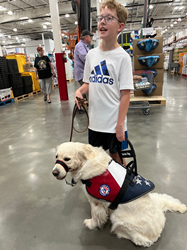
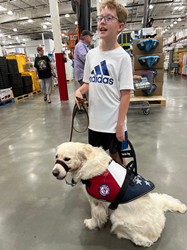
April is Autism Awareness Month and the first anniversary of the autism pilot program by Paws of War. A year ago this month, they paired a child with a service dog, and they are pleased to say that it’s been a successful program so far. When 11-year-old Cale’s dad was deployed with the U.S. Marines, it created a lot of anxiety and stress in his son, who has autism. Paws of War stepped in and provided the child with a service dog named Lexi, and it’s made a world of difference.

“This is the first time we have placed a dog with someone who has autism, so we are excited that we can help in this situation. This is a dedicated military family to whom we are thrilled to give back,” explains Robert Misseri, co-founder of Paws of War. “Unfortunately, not every child with autism will benefit from a service animal, but in Cale’s case, it’s ideal. It’ll help him navigate anxiety and sleep issues, and Lexi will play many roles in his life as a service animal and therapy animal. It’ll give Cale the ability to give back. We know the dog is perfect for Cale, and he will work with Lexi regularly with a trainer to accomplish everything he wants.”

Cale lives in Alexandria, Virginia, with his parents, Brandi and Chris Nolting. Chris serves in the U.S. Marines and often works demanding hours. During this, Cale becomes deeply unsettled, struggling with insomnia, anxiety, and being overwhelmed. Nothing worked to help him, so he had to resort to medication. During a doctor’s visit, Cale met a therapy dog, and his parents noticed how he gravitated to the dog and was comfortable in his presence.

That chance encounter led to reaching out for assistance from Paws of War, which typically provides service dogs for Veterans with traumatic brain injuries and post-traumatic stress disorder (PTSD). However, the organization has the means and wants to help a hero’s son – knowing the difference service dogs make.

Misseri delivered Lexi, a rescued 3-year-old English cream, to the family to ensure she would be the perfect match when Cale and Lexi instantly connected. She has been by his side since. Cale is doing well, and he and Lexi have formed a strong bond. His level of distress has greatly reduced, and the hope is that he will be able to gradually reduce his medication as he becomes even more confident and can regulate his routine.

Cale also feels much more confident now that he has Lexi by his side during stressful situations like school assemblies or fire drills. In fact, she even helps him get through difficult conversations with other kids who don’t understand his disability. The bond between these two has grown stronger every day since they met last spring. Cale has also been able to learn responsibility through his training with Lexi. He knows that he must care for her as she cares for him, and this has helped him develop an understanding of the structure and outcomes of his actions.

“They can rely on each other. With her being a rescue, she can learn from Cale, I hope. They can grow together and have a better foundation among each other,” adds Chris Nolting. “If we could do anything to further Paws of War’s cause, it would be a win for everybody if other kids like Cale were able to receive similar support.”

The presence of a service dog in the home brings peace of mind to military members who have to leave for deployment – knowing the dog is a comfort to their child and the family. Service dogs provide friendship, confidence, and calming ability to children who find social interaction and many daily situations over-stimulating, and the dogs offer calm reassurance. They can reach children on a level that other people often can’t. Paws of War provides ongoing training for Lexi and assistance for the family. To help support the pilot program, visit its site at: http://pawsofwar.org. To see Cale’s story, visit YouTube.

According to the U.S. Department of Health & Human Services, 1 in every 68 children has autism spectrum disorder. It’s a condition that affects children from all racial, ethnic, and socioeconomic backgrounds. They report that there is no “cure” for autism spectrum disorder, but several interventions can help children learn essential skills that improve everyday life.

Paws of War currently has three other service dogs in training. Due to the success they have seen with Cale, they will be placing the other dogs as well. Currently, they are providing service dogs to children of veterans, active military, and first responders.

Paws of War has been operating worldwide since 2014, helping the military save the animals they rescue while deployed overseas. They have helped veterans with numerous issues, including suicide prevention, service and support dogs, companion cats and dogs, food insecurity, veterinary care, etc. Paws of War has a large loyal following of supporters and looks forward to working with new corporate sponsors to support these life-saving programs. To donate, visit its site at: http://pawsofwar.org.

About Paws of War

Paws of War is a nonprofit 501(c)(3) charitable organization that assists military members and their pets, rescues and trains dogs to be service dogs and provides companion animals to veterans. To learn more about Paws of War and the programs provided or donate, visit its site at: http://pawsofwar.org.

###

Source:

U.S. Department of Health & Human Services. 10 Facts about Autism Spectrum Disorder. https://www.acf.hhs.gov/ecd/10-facts-about-asd

Share article on social media or email:

How to Reply to a HIPAA Audit


Healthcare compliance software

Compliancy Group

Compliancy Group to host “From Panicked to Prepared: How to Reply to a HIPAA Audit” webinar discussing what to an organization should do if they receive a HIPAA audit letter from the Office for Civil Rights (OCR).

An organization is going about their business, and they receive an audit notice from OCR, now what? They might be panicking, but Compliancy Group is here to help.

In their upcoming webinar, organizations learn the ins and outs of how to respond to an OCR audit. They’ll take attendees through the steps they need to take to ensure they have everything documented to prove their good faith effort to OCR.

Attendees are given real-life examples of HIPAA audits and actionable tips to help respond to a HIPAA audit.

Join the webinar on April 27, 2023, @ 2 PM EST to get exclusive tips on responding to an OCR audit.

Register now to learn how to protect your business!

HIPAA Resources

HIPAA Compliance Checklist

HIPAA Fines

Common HIPAA Violations

About Compliancy Group

Compliancy Group gives healthcare professionals confidence in their compliance plan, increasing client loyalty and profitability of their business while reducing risk. Using simplified software and Compliance Coach guidance, Compliancy Group removes the complexities and stress of HIPAA. Find out more about Compliancy Group and HIPAA compliance. Get compliant today!

CONTACT: Monica McCormack, mmccormack@compliancygroup.com

Share article on social media or email:

GOLO, the Health and Wellness Solutions Company, Brings Back its Popular Virtual 5K Race


Sign up for healthy lifestyle event from GOLO

Sign up to run, walk, or jog in healthy lifestyle event from GOLO

“The GOLO Virtual 5K continues to be an important event for the entire GOLO family, and we look forward to welcoming even more participants this year from all around the country,” says Jennifer Brooks, President and Co-founder of GOLO.

GOLO, the health and wellness solutions company, is bringing back its successful GOLO Virtual 5K event this spring. Scheduled for April 22 – 23, 2023, the event is free and open to the public.

GOLO Virtual 5K event participants can compete at their own pace by either running, walking, or jogging. After completing the virtual 5K, competitors are encouraged to submit their results, route, and pictures to enter a special drawing to win GOLO prizes. Click here to learn more and to sign up.

This spring, the GOLO Virtual 5K will also help raise awareness and funds for Girls on the Run of Delaware, a non-profit that offers programs designed to inspire girls of all abilities to recognize and embrace their inner strength and make meaningful connections with others. Girls on the Run uses running and other physical activities as a platform for teaching life skills and promoting positive social, emotional, and holistic health outcomes for girls.

“The GOLO Virtual 5K continues to be an important event for the entire GOLO family, and we look forward to welcoming even more participants this year from all around the country,” says Jennifer Brooks, President and Co-founder of GOLO. “I’m especially thrilled that this event will again benefit the Delaware chapter of Girls on the Run and their impactful work to strengthen young girls’ social, emotional, physical, and behavioral health.”

“We are grateful for the support of local corporations like GOLO, which allows us to continue our strategic goals of reaching many of the underserved girls in our community who may not have otherwise been able to participate in our program,” says Kim Chitty, Executive Director, Girls on the Run Delaware.

Headquartered in Newark, Delaware, GOLO empowers individuals and communities by helping them take control of their wellness goals. The semi-annual GOLO Virtual 5K reinforces the company’s ongoing commitment to supporting community-based health and wellness initiatives. Click here to learn more about our charitable giving initiatives.

About GOLO

GOLO® products provide safe solutions to weight-loss and wellness while helping individuals transition to a healthier and sustainable lifestyle. GOLO has reached over two million people worldwide who now have a chance at healthy, sustainable, and affordable weight loss. For more information about the GOLO for Life® plan, visit golo.com or call 800-730-4656.

# # #

Share article on social media or email:

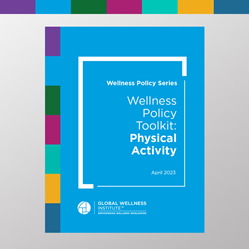
Global Wellness Institute Releases First Wellness Policy Toolkit on Physical Activity


News Image

What makes the GWI toolkit unique is that it is accessible and relevant to anyone.

The nonprofit Global Wellness Institute™ (GWI), the leading research and educational resource for the global wellness industry, today released the Wellness Policy Toolkit: Physical Activity. The toolkit takes a deep dive into what is driving rising levels of physical inactivity worldwide and the many tangible ways that new policies, government resources and public-private partnerships can tackle the crisis. It outlines six distinct areas of policy action: from encouraging physical activity via the built environment, to addressing racial and ethnic disparities, to integrating physical activity into the medical system. It was released today at FIBO in Cologne, Germany, the world’s leading international trade show for fitness, wellness and health.

Download the free report here.

The GWI’s new Wellness Policy Series will ultimately include nine reports. The first, “Defining Wellness Policy,” argues why “wellness policy” is now needed and explains that while it supports healthcare, public health and happiness/wellbeing policies, it is not the same thing. The second, “Health, Happiness and the Wellness Economy,” is the first empirical analysis to uncover a positive relationship between wellness spending and diverse happiness and health outcomes. Now the research organization turns to seven wellness policy toolkits that give governments and other stakeholders concrete action plans to address gaps in each wellness domain—whether it’s physical activity, wellness at work, or wellness in the built environment. The wellness policy series was born out of a profound reality: The commercial wellness market cannot bring wellness to all or solve our skyrocketing health crises. Public policy is crucial to fill the gaps. For instance, GWI research finds that the booming fitness industry serves just 3-4% of the world’s population.

The Cost of our Sedentary World: The toolkit lays out the global research on why policy action around physical activity is so direly needed. An estimated 27.5% of the world’s adult population is now physically inactive (based on World Health Organization standards). Physical inactivity is now the fourth leading cause of death and the pandemic only increased our sedentary behavior. The WHO estimates that physical inactivity will cause 500 million new cases of preventable diseases, and $300 billion in treatment costs, from 2020-2030, if things do not change.

“Many governments all over the world have formulated strategies and action plans to tackle the inactivity crisis, but far more widespread efforts are needed,” said Katherine Johnston, GWI senior research fellow. “What makes the GWI toolkit unique is that it is accessible and relevant to anyone. It presents an extremely broad range of possible actions and policy steps that can be pursued by people working in all levels of government, as well as nonprofits, community organizations and businesses. We hope it will spark a movement across all these sectors to identify ways—both large and small—to get more people moving.”

Six Areas of Policy Action for Physical Activity:

The toolkit identifies six areas of action that would drive far more physical activity participation and access. For each item, GWI researchers lay out the problem that needs solving and the many specific policy actions that can be deployed, all interspersed with examples of creative, successful policy moves already underway.

1)    Encourage Physical Activity Via the Built Environment

The issue: Our modern built environment encourages sedentary behavior, from our automobile-centric culture that makes it difficult for people to walk or ride bikes to indoor spaces that actively discourage movement (i.e., prominent elevators and hidden stairs).

Actions: Design cities, neighborhoods and buildings that make movement a default in daily life and boost active transit—including complete streets, multi-use trails/greenways, car-free zones, public transit, bike-sharing, etc. Use urban/regional planning to encourage walking and cycling as transport, and incorporate active design into real estate developments.

Example: During the pandemic, cities worldwide took action to help people move around more easily, from closing streets to cars to make room for pedestrians/cyclists to providing free bike-sharing. Now cities like Paris, New York, Milan, Bogota, Lima, Brussels, Rome, and more are making these changes permanent.

2)    Make Recreational Physical Activity Accessible, Convenient and Affordable

Issue: GWI research finds that only about one-third of the world’s population participates in recreational/leisure physical activities or exercise on a regular basis—the issue is mainly lack of time, but also convenient access and money.

Actions: Invest in recreational physical activity infrastructure, facilities and programs; treat recreational physical activity as an essential public service, not a nice-to-have amenity; establish a “sports for all” policy framework or action plan; create more free and accessible public spaces for outdoor recreation; sponsor free exercise classes, programs and educational campaigns; invest in subsidized and public-private fitness facilities.

Example: The UK, Ireland and Australia embrace a public-private model: Gyms and leisure centers are subsidized by governments but often run by private contractors. Australia’s “Live Life Get Active” program offers free daily outdoor fitness classes in over 100 communities through this model.

3)    Improve Access to Physical Activity for Underserved Populations

Issue: Women, minorities, disadvantaged communities, and people living with disability and chronic disease are more likely to be inactive across all countries. The private fitness industry often leaves out marginalized populations who are at highest risk for physical inactivity and chronic disease.

Actions: Target physical activity infrastructure investments to increase access and reduce cost barriers for high-risk populations and underserved communities. Develop safe and comfortable spaces for women and girls to exercise; support fitness options for older adults; make physical activity accessible to people living with disabilities; address racial and ethnic disparities in physical activity.

Example: The Race Equality First (REF) program in Wales creates equal opportunities in sport and physical activity for Black and minority ethnic communities (especially Muslim women and girls) with free events across the country, such as women-only yoga, fitness, walking groups and swimming sessions.

4)    Integrate Physical Activity into the Health System

Issue: The healthcare system is woefully disconnected from the physical activity sector. Promoting exercise as a part of routine patient care is critical for the least active people and those with chronic diseases and disabilities that may make them uncomfortable in a traditional gym/studio.

Actions: Incorporate physical activity into prevention and treatment protocols, working in cooperation with the health system; implement exercise as medicine and exercise prescription initiatives; develop medical fitness centers (in the US, there are over 1,400) and co-locate physical activity and healthcare facilities.

Example: The UK is the leader in prescribing exercise: Doctors refer patients to free fitness/leisure centers, and in 2022, the NHS began a program that prescribes walking and cycling.

5)    Encourage Youth to Build Lifelong Habits for Physical Activity

Issue: A recent global study from WHO found that more than 85% of girls and 78% of boys ages 11–17 years have insufficient physical activity—an alarming trend.

Actions: Increase opportunities for youth to learn and participate in a variety of physical activities through schools and sports; ensure that all children receive physical education (PE) classes regularly in school; encourage movement throughout the school day (PE does not provide enough); put the “play” back into youth sports and get beyond the high-skill, high-pressure, highly-competitive trend that has seized youth sports in many places.

Example: The “walking school bus” concept, developed in Japan, organizes groups of children to walk to school along a set route, with designated “bus stops” and “pick up times.” The concept has spread to hundreds of schools across Australia, New Zealand, Europe and North America.

6)    Encourage Adults to Be Physically Active During the Workday

Issue: In higher-income countries like the US, 80% of jobs now largely require sitting and sedentary behavior, seriously increasing the risk of heart disease, diabetes, cancer and premature death, regardless of whether we exercise regularly.

Actions: Realign company benefits and culture to reduce sedentary behavior and increase opportunities for physical activity during the workday; provide many opportunities for movement during the workday (beyond off-the-shelf programs or “carrots and sticks”); reduce sitting by allowing walking meetings and exercise during paid work hours, or installing treadmill and stationary bike desks.

Example: Most companies in Sweden and Finland subsidize employees’ gym memberships, sports and active recreation with a tax-free allowance of hundreds of dollars a year. They also actively encourage employees to exercise during the workday, even providing paid work time for exercise.

About the Global Wellness Institute:

The Global Wellness Institute (GWI), a nonprofit 501(c)(3), is considered the leading global research and educational resource for the global wellness industry and is known for introducing major industry initiatives and regional events that bring together leaders to chart the future. GWI positively impacts global health and wellness by educating public institutions, businesses and individuals on how they can work to prevent disease, reduce stress, and enhance the overall quality of life. Its mission is to empower wellness worldwide.

Medical Office Building M&A Activity Increases 14% in Q1:23, According to Data from Irving Levin Associates, LLC


News Image

“Industry experts we’ve spoken with fear there might be a slowdown due to rising interest rates and other headwinds. But the healthcare real estate market is resilient, and there are few better investments in the industry.”

Merger and acquisition activity in the Medical Office Building (MOB) sector increased by 13.7% in Q1:23, according to data captured in LevinPro HC. Additionally, the first quarter of 2023 had a 5% increase in activity compared with Q1:22 when 55 MOB acquisitions were announced.

“Demand in the healthcare real estate market is higher than ever,” said Dylan Sammut, Editor of Healthcare at Irving Levin Associates. “Industry tailwinds, such as aging demographics, are calling for specialized medical facilities and properties. This has kept activity flowing while other sectors have slowed.”

Announced spending increased in the first quarter by 21.3% from $817 million in Q4:22 to $991 million in Q1:23. The largest MOB deal by disclosed price was Big Sky Medical Real Estate’s acquisition of a 10-property medical office portfolio for $190 million.

In Q1:23, a few select states saw a significant concentration of M&A activity in the MOB sector, as per data collected by LevinPro HC. Among these states, Tennessee recorded the highest number of transactions with 11 deals, accounting for 19% of the total. Following close behind was California with seven deals, Illinois with six, Florida with five and Texas with four.

The busiest acquirer in the MOB market during Q1:23 was Montecito Medical, with 11 deals, encompassing 261,307 square feet across the United States. Montecito Medical’s largest transaction of the quarter was the acquisition of a 120,000-square-foot cancer treatment center in Columbia, South Carolina for $48 million. The second busiest acquirer in the MOB sector was Four Corners Property Trust, with five deals, and the third busiest acquirer was Big Sky Medical Real Estate with three deals.

“Industry experts we’ve spoken with fear there might be a slowdown due to rising interest rates and other headwinds,” continued Sammut. “But the healthcare real estate market is resilient, and there are few better investments in the industry.”

All quarterly results are published in The Health Care M&A Report for all 13 sectors of health care, which is part of LevinPro HC. For information, or to order the reports, call 800-248-1668. Irving Levin Associates is celebrating more than 70 years of delivering exclusive M&A intelligence to its sophisticated audience of seniors housing and healthcare investors. The company was established in 1948 and has offices in New Canaan, Connecticut, and North Bethesda, Maryland. The company publishes research reports and newsletters and maintains databases on the healthcare and senior housing M&A markets.

Share article on social media or email:

Renowned Tick Expert, Dr. Thomas Mather, and Insect Shield Repellent Technology Expand the Equip-4-Ticks Resource Center


As the spring season arrives and people begin to head back outside, health officials are issuing warnings about the risk of tick bites and the associated illnesses they can carry. Lyme disease and other tick-borne illnesses including Powassan, Babesiosis, Anaplasmosis, Rocky Mountain spotted fever, as well as other harmful allergens such as Alpha-gal, are preventable with education and awareness. The Equip-4-Ticks Resource Center, a collaboration between tick expert, Dr. Thomas Mather, PhD, and Insect Shield Repellent Technology, is expanding their line-up of tips, informational content, and their comprehensive video library to help the public stay informed, vigilant, and protected.

Through the launch and expansion of Equip-4-Ticks, Insect Shield, a manufacturer of EPA-registered, permethrin-treated apparel and gear, and Dr. Thomas Mather, professor of Public Health Entomology at the University of Rhode Island, are spreading awareness about the dangers of ticks and the importance of taking preventative measures to avoid bites.

In 2022, the Equip-4-Ticks Resource Center launched a range of educational information including an overview on Lyme disease, tick habitats and species, top protection tips, best repellents, how to conduct a tick check, and what to do if you are bitten. For 2023, the resources are expanding further to include:

“There are more ticks in more places than ever before and this is increasing the public health impact of tick transmitted disease,” shares Dr. Thomas Mather, Director of the University of Rhode Island Center for Vector-Borne Disease, and the TickEncounter Resource Center. “I am pleased to continue working in tandem with Insect Shield on the launch of Equip-4-Ticks to maximize the reach and impact of some of the most effective tick bite protection and disease-prevention strategies.”

For comprehensive information about how stay protected from ticks and the dangerous diseases they may carry, visit Equip-4-Ticks.

###

About Dr. Thomas Mather, PhD Dr. Mather (a.k.a. “The TickGuy”) joined the University of Rhode Island in 1992 from the Harvard School of Public Health, and now serves as director of URI’s Center for Vector-Borne Disease and its TickEncounter Resource Center. His research focus is on tick ecology, area-wide tick control strategies, tick-bite protection, and tickborne disease prevention. His research and outreach programs are diverse, including anti-tick vaccine discovery projects, evaluations of targeted tick control strategies, tickborne disease risk prediction, as well as development of tick-bite protection decision support tools and social networking strategies for tickborne disease prevention. His work has attracted funding from a wide variety of sources, including the National Institutes of Health, Centers for Disease Control and Prevention (CDC), the US Department of Agriculture, the National Science Foundation, the Environmental Protection Agency, and the US Agency for International Development.

About Equip-4-Ticks Resource Center

Equip-4-Ticks Resource Center, a collaboration between tick expert, Dr. Thomas Mather, PhD and Insect Shield Repellent Technology, was launched to offer tips, informational content, and a comprehensive video library to help the public stay protected from ticks and the dangerous diseases they may carry.

About Insect Shield®

Insect Shield Repellent Apparel and Gear are revolutionary products designed to provide long-lasting, effective, and convenient personal insect protection. The durable protection provided by Insect Shield is the result of years of research and testing. In July 2003, Insect Shield Repellent Apparel was registered by the United States Environmental Protection Agency. Insect Shield Technology is utilized by 75+ leading lifestyle brands, work wear distributors and international relief organizations across the globe to provide effective protection against insects and the diseases they can carry. Insect Shield is an approved vendor of the US Army and approved for distribution in 46 countries.

Media contact:

Janine Worthington

Insect Shield® Repellent Technology

Email: robertson.janine@gmail.com

http://www.insectshield.com

Ph: 206-354-9093

Share article on social media or email:
Habits that are bad for your teeth, a new report from the Nipomo family dentist


free Pixabay

The best way to prevent bad habits is to develop good habits.

Dr. Douglas Ng, from Nipomo Family Dentistry says there are more bad habits that affect our oral health than many know about.

Some common bad habits include:


  • Chewing ice, especially ice cubes can break and crack teeth. Ice left over in the glass can be a treat on a hot day, but don’t chew it. Let it dissolve in your mouth. “We all sneak in a little crunch on ice now and then,” said Ng, “but craving ice to chew it can be a serious condition called pagophagia that is associated with iron deficiency or anemia. Consult your doctor if you are concerned about an ice-chewing habit.”
  • Brushing too hard might seem like the best way to scrub away plaque, but doing so can damage gums leading to problems with teeth. Brushing for two minutes with a soft toothbrush at least twice a day is sufficient under normal circumstances.
  • Between meal snacking, especially sweet or soft snacks, is an added risk for cavities from food particles. If it’s not possible to brush after snacking, drink water to help wash away food particles.
  • Stress can cause people to clench their jaws, grind their teeth, or both. Not only do these habits cause joint pain, but they can also chip and crack teeth. Wearing a tooth guard at night helps cushion the teeth and practicing relaxation exercises when awake can help break the habit.
  • Using teeth as tools or as a third hand to hold something or to tear something open. Teeth are not suited for this kind of use and there’s a risk of cracking or breaking a tooth or injuring the jaw.

“Make sure you have the tools you need before starting a project,” said the Nipomo family dentist. “If you feel tempted to grab onto something with your teeth, stop, get the tool you need, or ask for help.”

  • Nail biting is more than just an unpleasant habit. It can chip teeth and cause problems with the jaw. It’s a nervous habit known scientifically as It’s also destructive to fingernails, cuticles and fingertips and can lead to infections. Some do-it-yourself techniques to break the habit include wearing gloves, putting a bitter substance on nails and fingertips and avoiding stressful situations. Discuss the habit with a mental health professional and learn how to overcome underlying issues that may be contributing factors.

The best way to prevent bad habits is to develop good habits. “Take care of your health with a good diet, good oral hygiene habits, regular visits to the dentist, exercise, enjoy hobbies, friends and family,” said Ng.

Dr. Douglas Ng has been providing family dentistry to Nipomo and Central Coast families since 2008. Dental services include general dentistry, family dentistry, oral examinations, teeth cleaning, teeth whitening, fillings, implants and crowns.

The helpful staff at the Nipomo Family Dentistry office is committed to every patient having a beautiful, bright and healthy smile.

Nipomo Family Dentistry

195 N Thompson Ave Suite #3

Nipomo, CA 93444

(805) 929-1888

Share article on social media or email:

Uniform Advantage Launches Three Sustainable Scrubs Collections


Healing Hands® 360

Healing Hands® 360

Better for the planet, better for the people on it.

Uniform Advantage (UA), a multi-channel retailer of uniforms for healthcare and hospitality, is adding three new eco-friendly scrubs collections with sustainability at their core.

Healing Hands® 360, Grey’s Anatomy™ Evolve Sustainable Stretch and Dickies® Riveting are all made of fabrics that utilize yarns created from recycled plastic bottles – a feature UA® CEO Susan Masimore said is increasingly important.

“We’re always looking for new and innovative scrubs options,” said Masimore. “Not only is sustainability something our customers have asked for, it’s the right thing to do. Better for the planet, better for the people on it. That’s an idea that really resonates with healthcare professionals.”

Healing Hands® 360 is a premium collection featuring 4-way stretch and moisture wicking, made of a blend containing polyester recycled from eight plastic bottles per garment. UA will offer seven styles for women and five for men from the collection.

“This premium, athleisure-inspired line is crafted from one of the most innovative recycled fabrics around. Each piece in the new 360 Collection contains plastic water bottles, which might otherwise go into a landfill,” said Milo Slattery – Chief Product Officer, Careismatic Brands.

Grey’s Anatomy™ by Barco Evolve Sustainable Stretch is a mid-tier price 4-way stretch collection made from recycled PET bottles and eco-conscious CiCLO® fiber – helping to heal the planet one scrub at a time. UA will carry five women’s and three men’s Evolve styles.

“Barco’s legacy of innovation has centered around caring for and honoring the healthcare community. Grey’s Anatomy by Barco Evolve is a continuation of our mission, inspired by the new generation of healthcare professionals. We believe this new collection is worthy of the service and care they give in healing people around the world, while caring for the planet,” said the Barco Family.

Dickies® Riveting is a mid-tier collection featuring a durable 4-way stretch fabric that blends a soft polyester blend and recycled material from plastic water bottles. The scrubs have a utilitarian flare with rivets and contrast topstitching. UA will carry five Riveting styles for women.

“The Dickies Riveting double-stitched detail and strategically placed, non-conductive rivets don’t just add style points, they also make these pieces more durable,” said Milo Slattery. “It brings a retro-cool vibe and a mindful design approach perfect for the modern healthcare pro.”

About Uniform Advantage                                     

Uniform Advantage has represented style, quality and, above all, customer satisfaction for more than 30 years. As the first division of UA Brands, the chain was launched with a single South Florida store in 1985. Today, the company operates 28 retail locations in key markets across the U.S.; e-commerce and print catalog divisions; plus, designs and manufactures its own proprietary healthcare apparel lines. The company’s corporate office is based in Fort Lauderdale, Florida with a distribution center near Atlanta, Georgia. Learn more at http://www.UniformAdvantage.com or by calling 800-283-8708.

Share article on social media or email: