Category Archives: Health

What is new in the field of Health. Trending topics, and cutting edge research in the are of Health. Press Releases that give us updates on Health.

Zerion Software Offers Free iFormBuilder Accounts and Forms for COVID-19 Response


Zerion provides free health and CDC forms.

“Our goal is to provide support and tools to keep essential businesses and teams running…” Sze Wong, CEO of Zerion Software

Global mobile data platform provider Zerion Software announced the launch of free iFormBuilder data collection accounts, and forms for teams adjusting to new needs based on COVID-19.

As cases continue to rise across the world, filling out paper forms has become a hurdle for groups of all types.

Zerion will extend support by offering free basic iFormBuilder accounts and forms – including HIPAA-compliant environments when necessary – to those modifying operations due to the COVID-19 outbreak including businesses, healthcare professionals, non-profit organizations and government responders through September 2020 (adjusting if necessary based on conditions).

“The world has changed, and organizations of all types have new data collection needs. Our goal is to provide support and tools to keep essential businesses and teams running, no matter what,” explained Sze Wong, CEO of Zerion Software.

For existing customers, Zerion will make the following resources available in current accounts.

The ready-to-use forms include:

  • Temperature/fever tracking forms.
  • Health questionnaires.
  • CDC Case Report form.
  • Check-in/Check-out form.


If teams have other specific needs, they can let Zerion know; they’ll work together to find a solution. Each form is designed to keep groups running, minimize time spent completing and compiling forms, and more.

Together is Better

Zerion believes that when everyone comes together, the world is better. This is more true today than ever before. To learn more about the free offer, visit: http://www.zerionsoftware.com/free-ifb-for-covid-19-response-2.

About Zerion

For over a decade, Zerion Software has believed that there has to be a better way. Zerion builds products that enable customers to consistently improve how they use and interact with their data. Zerion knows that good data drives better decision-making, which allows our clients to focus on what matters most, and in the process save time, money, resources, and lives. Zerion is committed to building the world’s most flexible, and scalable enterprise software platform that offers end-to-end inspection, survey, and audit solutions to help drive safety, compliance, and better decision-making throughout organizations.

*Offer valid through September 2020, with possible extension if conditions persist. Zerion Software does not consist of healthcare professionals and is not providing health-related advice and/or guidance. Any data provided is based on recommendations from the CDC, http://www.cdc.gov.

Share article on social media or email:

Novel Coronavirus Prompts Changes Across Care Station Medical Campuses


“We are the frontline of the pandemic”

Care Station Medical Group — In light of the rise of novel coronavirus cases, Care Station Medical Group has implemented a number of changes to better care for our community. As New Jersey’s leading urgent care and primary care providers, our four campuses have updated our office hours and crafted new ways to offer medical care to patients coping with COVID-19.

“Our infectious disease clinic is up and running in the Springfield office. We are seeing in excess of 40 patients per day,” said Dr. Richard Bezozo, CEO of Care Station Medical.

Thanks to innovative drive-thru COVID-19 testing at our Springfield location, health practitioners have managed to test upwards of 20 people per day. These tests are performed by appointment only. This drive-thru testing offering will also be expanded to our Linden location starting on Monday, March 30.

Our Linden location has also been recognized as a leader in telemedicine for the safety and convenience of our patients. Thanks to the hardworking team at our Linden branch, we communicate daily with more than 100 confirmed COVID-positive patients. Our team will also be contacting patients with missed appointments in order to update prescriptions and reschedule future visits.

“All administrators have taken a 10% reduction in salary for the duration of this crisis. They did this to ensure the health of our practice and ensure that we can continue to service our communities,” explains Dr. Bezozo in an email to his staff.

Thanks to the hard work of Care Station Medical Staff, three new programs have been successfully initiated in the last two weeks. We are dedicated to helping our community overcome this battle as the frontline of defense.

About Care Station Medical Group: Care Station is a medical facility with four locations in New Jersey. Our mission is to serve the healthcare needs of all our patients, assist our client companies with cost containment and lost time prevention, and to promote a healthy lifestyle for everyone.

Share article on social media or email:

Industrial Magnetics Develops Germ-Free Door Opener, Donates 100% of Profits to Local Food Pantries


Foot Pull Door Opener for latch-less doors

Foot Pull Door Opener for latch-less doors

In direct response to the Coronavirus pandemic, Industrial Magnetics, Inc.(IMI) has developed a new, hands-free door opener that allows people to open latch-less doors without using their fingers, arms, or clothing. The company has also announced that 100% of profits from the sales of the new device will be donated to local food pantries in their surrounding communities.

The Foot-Pull Door Opener is attached to the bottom of a door and allows users to gently pull open doors using the sole of their shoe – eliminating the need to touch potentially contaminated door surfaces and helping to stop the further spread of germs and bacteria.

The company has also devised a way for the Foot-Pull to work on latching, metal doors with lever-style handles by incorporating their “J-Hook” magnetic assembly. The J-hook product attaches magnetically to the door and holds the handle in the open position, converting the door into a “latch-less” style that can now be used in conjunction with the foot-pull.

Perfect for public restrooms, office buildings, and shop floors, the product can be used on metal or wood doors using the magnetic or through-hole mounting options. The product is constructed from heavy duty, stainless-steel as a one piece, laser-cut and precision formed unit for durability and performance.

Profits earned from the sale of the Foot-Pull will be donated to the following organizations: Good Neighbors Food Pantry (Boyne City, MI), Care & Share Food Pantry (East Jordan, MI), and Community Food Pantry (Charlevoix, MI).

For a video, images, and additional information on the product, please visit the Foot-Pull Door Opener webpage, or contact an IMI product specialist at 800.662.4638.

Share article on social media or email:

We Should All Be Wearing Masks


Professor Sui Huang, MD, PhD

Professor Sui Huang, MD, PhD, is a molecular biologist and faculty member at Institute for Systems Biology (ISB) in Seattle.

“Masks are very important and effective. Even if you act out of fear and out of a sense to protect yourself, you actually also protect others. It’s a bidirectional protection.”

A growing number of experts say it is time to rethink official recommendations in the U.S. and other western countries to avoid wearing masks amid the coronavirus pandemic. 

Sui Huang, MD, PhD, is a molecular biologist and professor at Institute for Systems Biology (ISB) in Seattle. Dr. Huang has been a powerful voice in a growing chorus contending that masks are an effective tool to stop the spread of COVID-19. Huang calls guidelines from the CDC and other public health agencies “unfortunate,” as they sweep aside a potentially powerful measure that could help “flatten the curve.”

Dr. Huang wrote a March 26 article (COVID-19: Why We Should All Wear Masks — There Is New Scientific Rationale) that has been viewed more than 1.5 million times on Medium, and he has since discussed that rationale in a video Q&A.

“Masks are very important and effective,” Huang said. “Even if you act out of fear and out of a sense to protect yourself, you actually also protect others. It’s a bidirectional protection. We have a public incentive constellation that the CDC has missed.” 

Huang also cites data published this week in the journal Nature that shows the nose and throat is where the virus lands, where the body’s receptors for virus docking are, and where the virus replicates. This important discovery by a German group suggests that transmission occurs mostly via large droplets and less via those fine aerosols that can end up deep in the lung. Thus, even a surgery mask or do-it-yourself (DIY) cloth mask will act as an effective barrier, and higher-grade N95 masks aren’t needed to block the large spray droplets that come from the nasopharynx. (N95 masks filter out 95 percent of small airborne particles. They are necessary to block these tiny aerosolized droplets that reach the lower lungs, but are overkill for the larger droplets that originate from and land in the upper respiratory system.) 

If the “respiratory etiquette” of sneezing into your elbow is protective, then masks should be protective, Huang said. “Any physical barrier should be helpful,” he said. “When empirical evidence is lacking, we should trust measures based on common sense, plausible mechanisms — especially when costs are minimal.”

Huang’s current research seeks to integrate big data with complex systems theory to better understand diseases. Systems biology integrates many disciplines — from the molecular to the clinical level — and offers perspectives often missed in most media interviews with epidemiologists and clinicians.

About ISB

Institute for Systems Biology (ISB) is a collaborative and cross-disciplinary non-profit biomedical research organization based in Seattle. We focus on some of the most pressing issues in human health, including brain health, cancer, sepsis and aging, as well as many chronic and infectious diseases. Our science is translational, and we champion sound scientific research that results in real-world clinical impacts. ISB is an affiliate of Providence St. Joseph Health, one of the largest not-for-profit health care systems in the United States.

Share article on social media or email:

Domestic Gag Rule Reduces Birth Control Access For Nearly 50,000 Women Living In New Hampshire


“Even before the domestic gag rule went into effect, more than 60,000 low-income women in New Hampshire lived in contraceptive deserts, counties in which there is not reasonable access to the full range of contraceptive methods,” said Ginny Ehrlich, CEO, Power to Decide.

Data released by Power to Decide estimate that 49,780 New Hampshire women of reproductive age (13-44) in need of publicly funded contraception live in counties impacted by the Title X Family Planning Program “domestic gag rule.” According to the same data, seven out of New Hampshire’s ten counties have lost Title X resources.

The domestic gag rule requires health providers receiving Title X funds to withhold information from patients about abortion services and care. In addition, health centers are required to cease providing abortion care with non-Title X funds at sites that offer Title X supported services, such as contraceptive care, breast and cervical cancer screening and STI testing. The rule requires that abortion services, no matter how they are funded, be performed at a separate physical site, which is impossible for many health centers.

“The implementation of the domestic gag rule could impact close to 50,000 women in need in almost all counties in New Hampshire,” said Ginny Ehrlich, CEO, Power to Decide. “This federal rule exacerbates an already challenging contraceptive access landscape for women struggling to make ends meet. Even before the domestic gag rule went into effect, more than 60,000 low-income women in New Hampshire lived in contraceptive deserts, counties in which there is not reasonable access to the full range of contraceptive methods. As a result, these women face untenable financial barriers related to transportation, child care and taking unpaid time from work costs incurred just to get the contraception they need.”

Data from Power to Decide show that 60,220 women living at or below 250% of the poverty level in New Hampshire live in contraceptive deserts, counties in which there is not reasonable access to a health center offering the full range of contraceptive methods. Nationally, more than 19 million U.S. women of low income live in contraceptive deserts.

In this challenging landscape, New Hampshire is taking proactive steps to partially alleviate the impact of damaging federal policies and to expand access to contraception in various ways. New Hampshire has already expanded Medicaid to low-income adults, which helps decrease the percentage of uninsured women, and by extension, give them contraceptive coverage they need to live healthy lives. Further, New Hampshire has enacted state policies that allow pharmacists to prescribe contraception. In addition, New Hampshire require insurance to cover an extended supply of prescription contraceptives, and protect insurance coverage of the full range of contraceptive methods. More information about these policies can be found here.

Power to Decide is a private, non-partisan, non-profit organization that works to ensure all people—no matter who they are, where they live or what their economic status might be—have the power to decide if, when and under what circumstances to get pregnant and have a child. Please visit us at http://www.PowerToDecide.org or follow us on Facebook and Twitter.

Share article on social media or email:

Mental Health America and ‘Happy’ Partner to Offer Emotional Support from Home for Anyone Feeling Anxious or Alone from COVID-19


News Image

“It’s now more important than ever to stay connected digitally and check in on your mental health — MHA is proud to partner with services like Happy that can help connect people to others who can listen and offer emotional support.”

For over two years, Mental Health America (“MHA”) and Happy the App, Inc. (“Happy”) have partnered to address the epidemic of loneliness and social isolation affecting the United States. This epidemic deficit of genuine and supportive human connection affects half the U.S. population and, according to the former Surgeon General, is deadlier than chain smoking.

To help address loneliness and accompanying anxiety at the roots, MHA refers users who take its mental health screens (https://screening.mhanational.org/screening-tools) – and who want to receive emotional support, over the phone, from an exceptionally compassionate peer – to Happy. In turn, Happy offers MHA’s users – and now the general public – person-to-person emotional support, 24/7, from some of the most caring people in the country via Happy’s mobile application. After a quick download, with the touch of a button on a smartphone or device, anyone can connect in seconds to one of Happy’s Support Givers.

Happy’s Support Givers, who include social workers, nurses, peer supporters and caregivers, are screened through a highly competitive vetting process that selects people who are exceptionally at providing emotional support. Happy’s Support Givers must pass background checks and have to maintain high in-app ratings in order to remain active.

The COVID-19 pandemic has heightened the country’s awareness of the dangerous consequences of loneliness. “An epidemic of emotional unrest has reached every corner of American society,” said Jeremy Fischbach, CEO & Founder of Happy. “If we want to contain the effects of this pandemic, we must also contain the resultant outbreak of loneliness and emotional distress. Now more than ever, social distancing is making many people feel alone and detached from their friends and family.”

According to Theresa Nguyen, LCSW, MHA’s Chief Program Officer, “Isolation can lead to loneliness and depression, and for individuals who are beginning to experience forced isolation because of COVID-19, it can be overwhelming, said Theresa. “It’s now more important than ever to stay connected digitally and check in on your mental health — MHA is proud to partner with services like Happy that can help connect people to others who can listen and offer emotional support.”

About Mental Health America: MHA is the nation’s leading community-based nonprofit dedicated to addressing the needs of those living with mental illness and promoting the overall mental health of all Americans. MHA’s work is driven by its commitment to promote mental health as a critical part of overall wellness, including prevention services for all; early identification and intervention for those at risk; integrated care, services, and supports for those who need it; with recovery as the goal.

About Happy the App, Inc.: Happy is a supportive culture company dedicated to helping all individuals receive the emotional support they need to live a more joyful, healthy and productive life. Happy is an official partner of Mental Health America, the National Multiple Sclerosis Society and a national supporter of the American Heart Association’s Support Network. Download Happy on the App Store or Google Play store or visit happythemovement.com. If you know someone else who may benefit from Happy, please share this information with them.

For more information contact:

Happy the App, Inc.

Jeremy Fischbach, CEO

Phone: (858) 367-3001‬

Email: info@happythemovement.com

Mental Health America

Theresa Nguyen, LCSW, MHA’s Chief Program Officer

Email: tnguyen@mhanational.org

Share article on social media or email:

Domestic Gag Rule Reduces Contraceptive Access For More Than 630,000 Women Living In Illinois


“The implementation of the domestic gag rule could impact more than 630,000 women in need in Illinois. This federal rule exacerbates an already challenging contraceptive access landscape for women struggling to make ends meet,” said Ginny Ehrlich, CEO, Power to Decide.

According to data released by Power to Decide, an estimated 631,470 Illinois women of reproductive age (13-44) in need of publicly funded contraception live in counties impacted by the implementation of the Title X Family Planning Program “domestic gag rule.”

The domestic gag rule requires health providers receiving Title X funds to withhold information from patients about abortion services and care. In addition, health centers are required to cease providing abortion care with non-Title X funds at sites that offer Title X supported services, such as contraceptive care, breast and cervical cancer screening and STI testing. The rule requires that abortion services, no matter how they are funded, be performed at a separate physical site, which is impossible for many health centers.

“The implementation of the domestic gag rule could impact more than 630,000 women in need in Illinois,” said Ginny Ehrlich, CEO, Power to Decide. “This federal rule exacerbates an already challenging contraceptive access landscape for women struggling to make ends meet. Even before the domestic gag rule went into effect, nearly 781,000 low-income women in Illinois lived in contraceptive deserts, which are counties without reasonable access to the full range of contraceptive methods. As a result, these women incur untenable financial barriers such as transportation, child care and taking unpaid time from work to just to get the contraception they need.”

Data from Power to Decide show that 780,650 women living at or below 250% of the poverty level in Illinois live in contraceptive deserts, counties in which there is not reasonable access to a health center offering the full range of contraceptive methods. Nationally, more than 19 million U.S. women of low income live in contraceptive deserts.

In this challenging landscape, states like Illinois can take proactive steps to partially alleviate the impact of damaging federal policies and to proactively expand access to contraception in various ways. Illinois has already expanded Medicaid to low-income adults, which helps decrease the percentage of uninsured women, and by extension, give them contraceptive coverage they need to live healthy lives. In addition, Illinois requires insurance to cover an extended supply of prescription contraceptives and has enacted policy that protects insurance coverage of the full range of contraceptive methods. To further expand access, Illinois is currently considering legislation that would allow pharmacists to prescribe contraception. More information about these policies can be found here.

Power to Decide is a private, non-partisan, non-profit organization that works to ensure all people—no matter who they are, where they live or what their economic status might be—have the power to decide if, when and under what circumstances to get pregnant and have a child. Please visit us at http://www.PowerToDecide.org or follow us on Facebook and Twitter.

Share article on social media or email:

Turning Standing Ovations Into A #StandingDonation


We launched #StandingDonation because protective gear can literally mean the difference between life or death for the very people who are trying to save our lives,” said Einav Jacubovich, one of #StandingDonation’s founders.

Inspired by the heroic efforts of healthcare workers around the world, and taking a cue from the spontaneous applause breaking out in cities everywhere, #StandingDonation is on a mission to get Personal Protective Equipment (PPE) and other essential medical supplies to those who need it most: the doctors, nurses and hospital personnel who are putting themselves at risk to save lives.

Organized by a group of individuals drawn from the creative, humanitarian and corporate sectors, #StandingDonation is a pro-bono effort to raise funds for healthcare workers and the protective gear they need to stay safe. To accomplish this, #StandingDonation has launched a campaign with a powerful message and a simple call to action: turn your standing ovation into a standing donation.

Each week, the campaign focuses attention on three cities impacted by COVID-19, culminating in #StandUpFriday – a day of donating to a healthcare institution in each of the respective cities. This coming Friday, April 3rd, the campaign will direct donations to organizations in Bergamo (Italy), New York City (US) and Madrid (Spain).

“We’re all watching the counts. The numbers of people infected are growing by the hour, and the heroic healthcare workers who are treating them need new personal protective equipment (PPE) for each patient they see. Yet, we’re sending them into hospital rooms unprotected. We launched #StandingDonation because protective gear can literally mean the difference between life or death for the very people who are trying to save our lives,” said Einav Jacubovich, one of the initiative’s founders.

The campaign includes a microsite “StandingDonation.com” that allows users to make donations directly to the healthcare institutions featured that week, or to a local healthcare facility in their area or region. The site also includes a list of additional hospitals and COVID-19 response organizations that direct funds to support medical workers and their efforts to treat a growing number of patients.

The campaign also includes social media outreach with the hashtag #StandingDonation and worldwide digital events to drive people to the site. Donations can be made by visiting standingdonations.com and clicking on “Donate” to choose a city or a healthcare facility to support.

“As the Coronavirus continues to make headlines, and work continues to prevent and fight the disease, people everywhere are looking for ways to help with this global crisis. Turning your standing ovation into a #StandingDonation is a way to do just that. Even with a dollar, a euro, or a dinar, you can make a meaningful difference,” said Billy Linker, another member of the initiative.

For more information go to http://www.standingdonation.com.

###

About #StandingDonation

#StandingDonation was created by a group of creative, humanitarian and marketing professionals to provide immediate support to healthcare workers fighting on the frontlines of the COVID-19 crisis. Our goal is to drive immediate action by way of direct donation to hospitals and medical workers in need. Seeing the dire shortages of equipment and supplies available to the healthcare community, #StandingDonation believes it is our responsibility to help citizens turn messages of support into action. Together we can get our medical heroes the equipment they need to safely and effectively fight this pandemic.

Share article on social media or email:

WPI Researchers Developing Open-Source Designs to Speed Creation of Low-Cost Ventilators


WPI’s Greg Fischer spearheading an effort to develop and share designs for creating ventilators.

WPI’s Greg Fischer spearheading an effort to develop and share designs for creating ventilators.

“A lot of people are trying to contribute, and this is an area where we can make an impact.”- Gregory Fischer

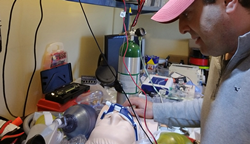
A team of researchers at Worcester Polytechnic Institute (WPI) is creating designs to turn inexpensive and readily available manual, hand-held, bag valve mask (BVM) resuscitators into automated ventilators that could be used to fill the deep gap between the number of life-saving ventilators available and the much larger number that will be needed when COVID-19 is expected to peak.

The WPI researchers are going to make designs of multiple devices and their components publicly available so anyone with a 3D printer and a background in electronics and mechanical engineering could use them to produce ventilators for their local hospitals. A manufacturing company also could use the designs to produce ventilators quickly and at scale.

“I just wanted to do something to help,” said Gregory Fischer, professor of robotics engineering and mechanical engineering, and director of the PracticePoint Medical Cyber-Physcial Systems R&D Center, who spearheaded the idea. “A lot of people are trying to contribute, and this is an area where we can make an impact. We’re taking things that are used every day in emergency medicine and finding a way to turn them into safe, reliable, and readily replicable ventilators that can save patients’ lives. And we’re sharing those designs with the world.”

After getting advice about what hospitals need from clinicians, Fischer, who had worked as an EMT in his hometown, began putting the plan together to coordinate different groups of WPI researchers to begin creating their own designs. The expectation is to post multiple designs—some for individual components of the system (including valve and sensor modules), one for a simple and readily replicable actuated ventilator, and one for a more automated and complex system. That way people or companies looking to create a system can either use a full design or use a design for a component that they’ve been missing or having trouble creating.

The ventilators built from these designs are not meant to replicate the full-feature functionality of a commercial system; they are meant to be used for more stable patients so the commercial ventilators with more advanced sensing and control can be saved for critical patients.

As the COVID-19 pandemic quickly spreads around the world, the United States has become a hotspot. The virus, which is more lethal than the seasonal flu, attacks people’s lungs, in some cases compromising their ability to breathe and leading to pneumonia. COVID-19 patients are dying because they can’t get enough oxygen to their bloodstream, causing organ failure.

According to the American Hospital Association, 96 million Americans are expected to test positive for COVID-19, with 4.8 million requiring hospitalization and 960,000 needing a ventilator, which pumps air into the patients’ lungs through a tube that has been inserted into their windpipes. While those needing ventilators won’t all be ill at the same time, the U.S. only has about 200,000 ventilators, reports the Society of Critical Care Medicine. And the ventilators available aren’t always where they are most needed.

Fischer and the WPI research team want to help close that gap between the number who will need ventilators and the number of machines actually available.

The team, which worked remotely to develop their designs, includes Marko Popovic, assistant research professor in physics and robotics engineering; Cagdas Onal, associate professor of mechanical engineering; Dirk Albrecht, associate professor of biomedical engineering; Chris Nycz, a research scientist working with WPI’s PracticePoint;Paulo Carvalho, a robotics engineering doctoral candidate, and Hamilton White, a PhD student in biomedical engineering.

A commercial ventilator costs anywhere from $25,000 to $50,000. A complete ventilator converted from a manual resuscitator with the WPI designs is expected to cost less than $500 and be made with readily available components.

“I like the idea of taking these cheap, readily available manual devices and converting them into something that can be run autonomously,” said Fischer, who is leading a research project funded by the National Science Foundation to accelerate international collaboration and open-source hardware, software, and testing for surgical robots. “Normally an EMT would be squeezing the bag to keep the flow of air going. We can automate that squeezing, and we’re adding pressure and CO2 sensors so it can maintain minimum and maximum pressures, and ensure appropriate air exchange. It will provide a consistent respiratory cycle.”

Popovic is working on a design for an oxygen concentrator, which is a device that removes nitrogen to supply an oxygen-enriched gas stream to a patient. The concentrator can be used on its own or can be part of the overall ventilator design. COVID-19 patients need a higher level of oxygen because of their diminished lung capacity.

Popovic also is laying out a design to 3D print valves for the concentrator. Normally, each valve would cost about $100 but by 3D printing them, the cost drops to between $10 to $15 a piece. The valve, which was recently invented in his lab, is lighter, more compact, more controllable, and less expensive than traditional valves.

“This is what we do at WPI,” said Popovic. “Given the current situation with COVID-19, the need for oxygen concentrators and ventilators is growing exponentially. This is a very unusual situation for our health care system. We can help, so we’re helping.”

About Worcester Polytechnic Institute

WPI, the global leader in project-based learning, is a distinctive, top-tier technological university founded in 1865 on the principle that students learn most effectively by applying the theory learned in the classroom to the practice of solving real-world problems. Recognized by the National Academy of Engineering with the 2016 Bernard M. Gordon Prize for Innovation in Engineering and Technology Education, WPI’s pioneering project-based curriculum engages undergraduates in solving important scientific, technological, and societal problems throughout their education and at more than 50 project centers around the world. WPI offers more than 50 bachelor’s, master’s, and doctoral degree programs across 14 academic departments in science, engineering, technology, business, the social sciences, and the humanities and arts. Its faculty and students pursue groundbreaking research to meet ongoing challenges in health and biotechnology; robotics and the internet of things; advanced materials and manufacturing; cyber, data, and security systems; learning science; and more. http://www.wpi.edu

About PracticePoint

Housed at WPI’s Gateway Park campus, PracticePoint is an applied research and education center designed to accelerate development and translation of cyberphysical system (CPS)-enhanced technology and to develop the talent pool and accompanying ecosystem that can help Massachusetts companies attain market dominance in the state’s medical device industry cluster. PracticePoint was launched in 2017 with a $5 million matching grant from the Massachusetts Baker-Polito Administration and the Massachusetts Technology Collaborative (MTC).

Contact:

Colleen B. Wamback

Associate Director, Public Relations

Worcester Polytechnic Institute

Worcester, Massachusetts

508-688-4858 (Cell)

cbwamback@wpi.edu

Health Scholars COVID-19 Surge Provider Training Grant


Health Scholars ACLS Desktop

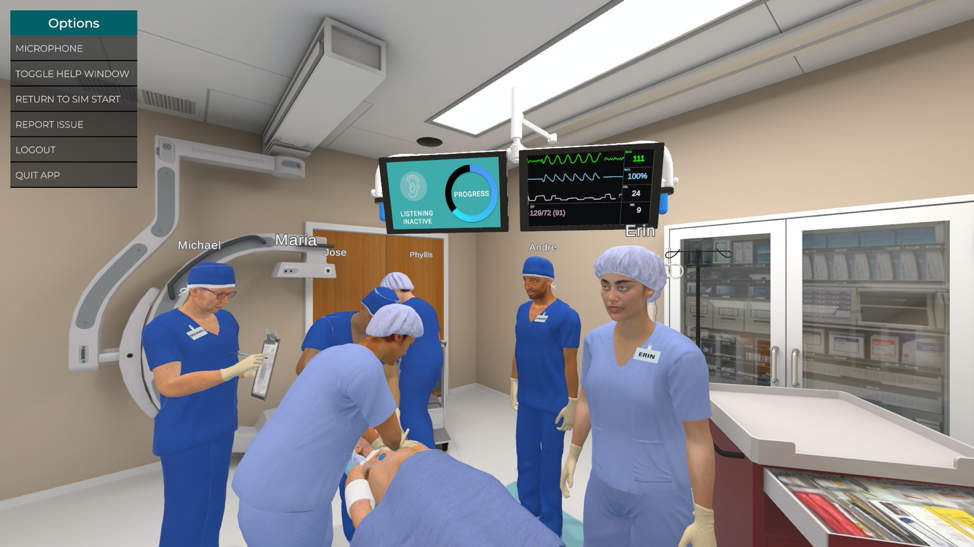
ACLS Desktop Simulation

Our ACLS simulation provides a deliberate practice environment for surge providers to prepare themselves for acute care—providing the real-to-life reference experience needed to handle inpatient emergencies while on the frontlines of this pandemic,” says Dr. Brian Gillett, President and Chief Medica

Health Scholars, the creator of the first ever virtual reality (VR) Advanced Cardiac Life Support (ACLS) training announces a $1M in grant funding for surge provider training to help combat COVID-19.

The grant will provide approximately14,000 providers ACLS Desktop Simulation Training to assist health systems with preparedness training. It will enable hospitals to quickly deploy training to surge providers needing to acquire or re-acquire clinical skills related to emergency situations—such as dysrhythmia or a code event.

“Our ACLS simulation provides a deliberate practice environment for surge providers to prepare themselves for acute care—providing the real-to-life reference experience needed to handle inpatient emergencies while on the frontlines of this pandemic,” says Dr. Brian Gillett, President and Chief Medical Officer of Health Scholars.

As hospitals continue to ramp up with the assistance of additional providers to handle the patient surge due to COVID-19, this will entail preparing outpatient providers to perform acute care for inpatients or cross-training providers from other areas of the hospital.

“Surge providers may need to assist with the care of critical patients in the Emergency Department, Intensive Care Unit or General Med-Surge floors, bringing along a challenge of needing to have large numbers of providers quickly acquiring or re-acquiring key clinical skills related to acute care, like ACLS.” Gillett continued.

Health Scholars is currently offering two programs as part of the grant; a matching program for state hospital associations who purchase training at a state level, or individual hospitals or hospital systems that have financial and clinical need can apply to receive ACLS Desktop Simulation Training

The desktop application is available for purchase now for those looking for a faster way to address emergency preparedness training.

The ACLS Desktop Simulation Training provides a deliberate practice environment for providers to prepare themselves for acute care—which is best achieved through a real-to-life reference experience. The application is an entirely voice-driven, screen-based simulation that trains providers to respond to all 13 core American Heart Association (AHA) rhythms in stable, unstable and cardiac arrest scenarios. The simulation also trains providers on a traditional ACLS Mega Code and refreshes post-arrest care after return of spontaneous circulation (ROSC) is achieved.

Unique to ACLS Simulation is the use of 100% natural language processing. The provider uses voice direction to communicate all of the actions needed to run a resuscitation team, which provides the most immersive, effective and scalable approach to ACLS skills practice available today. The training takes approximately 20 to 30 minutes to complete, provides a detailed debrief and readiness assessment, and is repeatable on an unlimited basis. And it is immediately available for use.

For more information please visit https://bit.ly/3anI0bP.

About Health Scholars

Our mission is to advance healthcare education through virtualization, making experience-based training scalable, accessible and affordable to both Healthcare and Public Safety providers. Health Scholars is a cloud-based, VR-ready clinical training platform with VR Simulations, Simulation Management, and Clinical Readiness Reporting solutions for the management, delivery and analysis of clinical training. Our VR simulations extend physical simulation beyond the simulation center, enabling repeatable practice of proper workflows as well as critical soft skills like communications, situational awareness and critical thinking.

For more information, see http://www.HealthScholars.com. You may also contact Chris Ingwalson at (303) 915.0087, or by email at Chris.Ingwalson@HealthScholars.com

Share article on social media or email: