Category Archives: Health

What is new in the field of Health. Trending topics, and cutting edge research in the are of Health. Press Releases that give us updates on Health.

Advanced Foot and Ankle Specialists of Howell and Brighton Michigan work with vascular surgery & internal medicine to save diabetic feet & ulcers in Livingston County


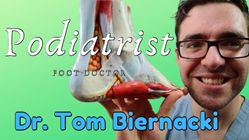
Dr. Tomasz Biernacki discusses diabetic foot care and limb salvage and Howell Michigan and Brighton Michigan

Dr. Tomasz Biernacki discusses diabetic foot care and limb salvage and Howell Michigan and Brighton Michigan

“We as podiatrists and foot doctors are so thankful to be able to serve the patients of Livingston County. We are dedicated to helping serve Brighton Michigan and Howell Michigan 24 hours a day for all your foot and ankle needs!

Brighton Michigan & Howell Michigan Podiatrist Dr. Tomasz Biernacki DPM discusses the great strides podiatrists have made in Livingston County to prevent diabetic limb amputations and hospitalizations for foot infections.

Dr. Tom Biernacki states. “Over the past few years we have really improved our relationship with the vascular surgery department, the infectious disease department, the endocrinology department and internal medicine department in saving diabetic feet. This is an extremely high-risk patient base and we have seen excellent improvements throughout Livingston county.”

“We are working extremely hard to provide access to all official and necessary specialties at St. Joseph Mercy Hospital Livingston, St. Joseph Mercy Brighton and St. Joseph Mercy Ann Arbor to provide important limb salvage and important care for diabetics and other at risk populations,” states Dr. Tomasz Biernacki.

A diabetic foot ulcer is an extremely complicated disease process that usually develops after diabetes has been in place for many years. This leads to a condition called diabetic peripheral neuropathy which is the decreased sensation in the lower extremity. This is usually associated with a decrease in blood flow and overall health. With too much pressure to the lower extremity, a non-healing foot wound can develop. For this reason, it is important to work with some of the top specialists in the vascular surgery department, the endocrinology department, the infectious disease department, and the internal medicine department. Working as a team we have seen an amazing increase in patient access for wound care and diabetic foot care.

“We have been able to grow our podiatric surgery residency program and provide a very critical service to the at risk diabetic footcare population in our County,” states Dr. Biernacki.

Advanced foot and ankle specialists have four different doctors within their practice: Dr. Tom Biernacki, Dr. John Stevelinck, Dr. Marc Bonanni and Dr. Danielle Meyka-Blanchard. All podiatrists foot doctors are on staff at St. Joseph Mercy hospitals in Ann Arbor, Howell, and Brighton Michigan. They pride themselves on serving Livingston County and Washtenaw County.

Share article on social media or email:

innovaTel Recognizes Dr. Robert Caudill for his National Leadership in Telepsychiatry


News Image

Professor Robert Caudill M.D., Director of Telemedicine and Information Technology Programs at the University of Louisville, has published a new paper with the American Psychiatric Association (We’re All Telepsychiatrists Now) addressing the positive impact of coronavirus-related regulatory relief on telehealth adoption.

Jonathan Evans, CEO & Co-Founder of innovaTel stated, “I am very pleased to recognize Dr. Caudill’s sustained leadership in the field of telepsychiatry and his strong support for the role for virtual care in addressing the systemic patient access challenges experienced nationally. Likewise, we are grateful for his important contribution to innovaTel’s Strategic Advisory Board.”

Commenting on the article, Dr. Caudill added, “It is naive to say that things are forever changed, but it is hard to see how [psychiatric] practices will ever return to their pre-COVID-19 routines. In-person care, of course, is not going away, but virtual care until now has been clearly underutilized.” He continued, “Nevertheless, the ‘genie is out of the bottle,’ and patients and clinicians who have learned it is not only possible but sometimes even preferable to receive and deliver care from their homes are unlikely to want to go back to the old ways. We’re pulling for the genie on this one.”

Jon Evans concluded, “Working in partnership with community-based provider organizations, over the past 6 years across 14 states, innovaTel has delivered mental healthcare services to patients exclusively via video-based technology. We hope policymakers will support regulatory updates that permanently accommodate the sharply increasing demand for telehealth services.”

innovaTel Telepsychiatry is a nationwide telepsychiatry company that is owned and operated by clinicians. We believe that everyone deserves timely access to mental healthcare and telepsychiatry is an effective solution to increasing access. We employ psychiatrists, psychiatric nurse practitioners and licensed clinical social workers that are residents of and licensed in the United States.

For more information on innovaTel Telepsychiatry’s services, please visit http://www.innovatel.com.

Share article on social media or email:

Regen Suppliers Now Offering Two for One Exosome Sale with Shipping Included


exosome sale

Two for One Exosome Sale (888) 568-6909

We know medical providers are ramping back up and we want to be part of a helpful solution for that. That’s why we’re offering the special on all 1 and 2cc vials with no limits on the order!

Regen Suppliers is now offering a 2 for 1 sale on exosome products through August 31, 2020. The sale includes MSC (mesenchymal stem cell) derived exosomes in both a 1cc and 2cc size with no limit on volume.

Regen Suppliers is offering the special to help providers in need of products as practices open back up from the pandemic. Exosomes, known as extracellular micro vesicles, are derived from Wharton’s Jelly MSCs and are sourced from a proprietary blend of cells developed for growth and repair.

According to CEO David Greene, MD, MBA, “We know medical providers are ramping back up and we want to be part of a helpful solution for that. That’s why we’re offering the special on all 1 and 2cc vials with no limits on the order!”

The exosome products offered come from an FDA regulated lab, and full serology testing is performed prior to product delivery. Exosomes enable the transmission of proteins, lipids, and genetic information that can modulate cellular expression of key proteins.

Along with being an exosome supplier, Regen Suppliers is a one stop shop for regenerative products. Not only are the products first rate and cost effective, Regen also offers a new Rewards Program where customers receive rewards point with each purchase. These rewards points add up to either free products or free regenerative training. Visit https://regensuppliers.com to learn more about the program.

To take advantage of the exosome sale, call (888) 568=6909 or email sales@regensuppliers.com.

Share article on social media or email:

How do students complete clinical training during COVID-19 closures? New England College of Optometry creates a case based solution


“We made sure we had a very robust program — one that was based on the existing clinical curriculum and one that could be standardized, quantified, and tracked over the course of the term.”

Olivia Bass, a fourth-year student at New England College of Optometry, was just three weeks into her final rotation when the coronavirus pandemic forced training sites to suspend clinical training programs. Bass, who was at a remote Indian Health Service hospital in Alaska, was suddenly faced with a disruption to her final training, a few months shy of completing her degree.

Yet within two weeks of clinic closures, NECO launched its own program to temporarily replace in-person clinical training for students in 2nd, 3rd, and 4th years. The program uses virtual case review and analysis, allowing students like Bass to log clinic hours remotely while still gaining valuable clinical experience.

The fast response was due to Diane Russo, OD, MPH, and Jonathon Jimmerson, OD, who anticipated the need and swiftly designed the program they dubbed ELASTC: E-Learning Alternatives and Supplements for Time away from Clinic. As the Instructors of Record for the clinical education for second through fourth year students, Drs. Russo and Jimmerson engaged faculty members who jumped in to create the case studies that are the basis of the program.

“ELASTC is based on the type of patients that students would typically encounter in the clinic and the kind of evidence-based analysis they would discuss with their attending doctors,” explains Kristen Brown, OD, Associate Dean of Clinical Affairs.

By mid-May, more than 156 hours of program content was developed by 38 faculty members and 5 residents. Dr. Brown explains, “We made sure we had a very robust program — one that was based on the existing clinical curriculum and one that could be standardized, quantified, and tracked over the course of the term. At the time, nobody knew what was going to be an acceptable alternative to clinic hours, so we wanted to exceed expectations. We set a very high bar.”

”There truly is no replacement for in-person patient care and learning in the field,” Dr. Brown notes, “but this is an excellent alternative.” And while ELASTC was designed with the current crisis in mind, its future potential for supplemental case analysis and tutoring was quickly realized.

In the ELASTC program, students independently and asynchronously access the faculty-recorded case studies, which they view after reading supplemental materials, such as case-related journal articles. To progress through each case, students must successfully answer a set of questions regarding differential diagnoses, treatment plans, and the like. The questions are structured in a way that closely mirrors the discussion points that students would normally encounter in the clinical setting.

Newly official Dr. Bass reflects on the ELASTC program that gave her a means to hone clinical skills, while staying on schedule for degree completion in May. “I appreciate the variety of cases and the faculty working hard, under these circumstances, to help us continue to build critical thinking skills that would be gained from being in clinic,” Dr. Bass says. “It was a proud moment to see how the faculty came together and responded as a team.”

Dr. Bass also appreciates hearing from the clinical faculty about their experiences providing patient care via telehealth, since she knows that telemedicine is likely to become a formal component of health care, at least to some extent.

Since NECO’s clinical faculty launched telehealth services quickly in response to the risk of COVID-19, they were able to incorporate this new mode of access to care and case analysis into the ELASTC program.

Share article on social media or email:

The Ties That Bind Us marks two years of spotlighting musicians in recovery from addiction, alcoholism


The Ties That Bind Us, a weekly interview blog with musicians in recovery from addiction and alcoholism, marks two years of sharing experience, strength and hope this week.

The blog, sponsored by the Knoxville, Tennessee-based drug and alcohol treatment center Cornerstone of Recovery, features weekly interviews with artists from a broad cross section of genres. Regardless of their musical disparities, however, they share a single commonality: Drugs and alcohol once crippled their lives and nearly destroyed their careers, but through recovery — often taking many different forms — they’ve found renewal.

The blog launched in June 2018 as the brainchild of Cornerstone content developer Steve Wildsmith, who served as a music journalist for publications in South Carolina and East Tennessee before leaving print journalism after 25 years. At Cornerstone, he produces website and blog content, manages the social media of the facility — which celebrated 30 years of providing drug and alcohol treatment last year — and works as an auxiliary member of the clinical team.

“As someone in recovery from addiction myself, it’s been an honor to contribute to a legacy like that of Cornerstone’s,” Wildsmith says. “Our growth is a sign that we’ve done something right for the past three decades: We’ve grown from 18 beds and 22 staff members in 1989 to 172 beds and more than 250 staff members, all of whom feel like working here is a calling as much as it is a job.”

As a journalist, Wildsmith began documenting his own journey from addiction to recovery in 2003, a year after finally getting sober. His personal columns were as well-received as his music journalism, which over the years included interviews with everyone from regional artists around East Tennessee to superstars like Taylor Swift, Merle Haggard, Sturgill Simpson, Jason Isbell and more. Throughout those conversations, however, a shared connection was forged with certain artists.

“When you’re in recovery, you tend to recognize your own ‘kind,’ so to speak, in the language that they use,” Wildsmith says. “There were numerous times when I would pick up on little phrases or clichés that I know by heart, because I’ve seen them on the walls and in the readings of 12 Step meetings since I got clean and sober in 2002.”

With that in mind, once he went to work full-time at Cornerstone, Wildsmith conceived of a blog that spotlighted musicians who have found a way out of their own addiction, but more importantly helped to dispel the myth that drugs and alcohol are prerequisites for stardom or the creative process.

“It’s not an anti-drug or anti-alcohol blog, because a lot of people use and drink responsibly, and there’s nothing wrong with that,” Wildsmith says. “But for some of us, it becomes a problem that costs us relationships and opportunities. And for some artists — Amy Winehouse, Scott Weiland and Mac Miller, just to use some examples from the last few years — it costs them their lives. The goal of The Ties That Bind Us is to show those who might struggle with a drug or alcohol problem that there’s a way out, and a way to get better.”

For the artists who have agreed to tell their stories, it’s a unique opportunity to share something extremely personal with a writer who has an intimate understanding of addiction and alcoholism.

“I thoroughly enjoyed speaking with Steve,” says singer-songwriter Kyle LaLone, whose story was published April 27. “I instantly felt comfortable and that special kind of connection folks in recovery have. It was a wonderful, cathartic experience to talk about my journey with music and sobriety. I feel very honored to have my story included among the immensely talented artists who have also been interviewed for The Ties That Bind Us.”

LaLone is one of numerous musicians who shared their respective redemption arcs with The Ties That Bind Us over the past year. There’s no prerequisite for those interested in sharing their story: From the beginning, Wildsmith understood that “recovery” isn’t a one-size-fits-all path. The linchpin is that each featured artist once struggled with drugs and alcohol but found a way out of darkness and pain that could have cost them their lives.

“Being a part of Steve’s vision for The Ties That Bind Us made me grateful for community that supports each other and stands alongside each other through the hard times,” says pop star and Tony Award winner Levi Kreis, whose interview was published in March. “I love how he presented my story, and reading the stories of others reminds me that I am not alone in my sobriety.”

After launching in early June 2018, The Ties That Bind Us continued to grow in its second year, both in scope and diversity. Hip-hop artists B-RAiN, REM ONE and Philo Reitzel were part of the past year’s slate of interviewees, as were representatives of many other genres: rock (Letters to Cleo’s Kay Hanley, singer-songwriter Dave Hause, The JAB), country (Rachel Stacy, Terry McBride), blues (Mike Zito, Janiva Magness), Americana (The Lumineers, Kevin Bowe), alternative (Art Alexakis, Christopher Tait of Electric Six) and more.

“It was great talking with Steve because he walks that same tightrope as I do, straddling the worlds of music and sobriety,” Bowe says. “It’s rare that I get to meet someone who gets it like he does.”

“This was one of the most wonderful experiences in my interview career,” adds Stacy. “Being in the music business, I can sometimes get caught up in keeping everything surface but in this situation, the honesty and the laughs I shared with Steve will be forever imprinted in my brain.”

Wildsmith, however, is reluctant to take credit. It is, after all, a blog meant to share experience, strength and hope by those whose music has already touched lives and changed hearts. That their personal stories of addiction recovery can, too, is what makes a difference, Wildsmith says.

“I’m just a messenger, but I’m honored to carry that message,” he says. “Part of 12 Step recovery, which is my personal path, is all about carrying the message of hope to those who still suffer. In a sense, every single musician I’ve interviewed does that when they honor me with the opportunity to tell their stories.

“And, I admit, it’s a little selfish on my part — because as much as they help a reader of The Ties That Bind Us, they certainly help me as well. One of the mantras of the recovery program I attend is that we can only keep what we have by giving it away — and all of these amazing musicians who took the time to share their journeys with Ties That Bind Us readers have certainly done so.

“I look forward to telling more stories in year three,” he adds. “Recovery is more common than people think, but because addiction and alcoholism continue to claim so many lives, the voices of those who have found it are needed more than ever.”

The difference between laser hair removal, at-home IPL and Electrolysis


– In terms of hair removal, how do laser treatments work and who are they best suited to? What is the standard cost (range dependent on area) of a full course?

Laser hair removal works by targeting laser light pulses to selectively destroy hair follicles by targeting the melanin (colour) in them. The pigment in the hair follicle absorbs the laser’s light pulse, which damages the follicle enough to significantly retard hair regrowth. The laser delivers an intense beam of light, which is absorbed by the hair follicle whilst the surrounding tissue remains unaffected.

Laser hair removal using the Gentle Max Pro by Syneron Candela is suitable for all skin types. The Alexandrite laser is suitable for fair skin types (1-3) and the ND:Yag laser is suitable for skin types (4-6). The best candidates are those with dark, coarse hair and those with hormonal hair may require more treatments.

Costs: £200-2000 for a course 8 treatments with a 6-8 week interval.


  • In terms of hair removal, how do IPL treatments work and who are they best suited to? What is the standard cost (range dependent on area) of a full course? Fundamentally, how is it different to laser?


IPL hair removal works pulses of light are applied on the treated area and are selectively absorbed by the hair follicles beneath the

skin surface. The absorbed light heats the hair follicles, which damages the re-growth potential of the follicle – all without damaging the surrounding tissue. If you were opting for IPL it would only be suitable for those with dark hair and fair skin, it isn’t suitable for anyone else which is why it is restrictive.

IPL hair removal is old technology that uses and a broad spectrum of light with multiple wavelengths in comparison to laser which uses single spectrum to heat up the hair follicle to destroy the root, most places do not use this anymore as it not as strong as laser technology therefore it is filtering out and not as many places have it anymore for hair removal purposes. We have never used the IPL device for laser hair removal but the IPL Lumenis M22 device we use is a great treatment for facial rejuvenation or Rosacea and if a client does have an area of hair on the face we will zap it for them during their facial treatment.

Costs: For facial rejuvenation it is £1000 for a course of 6 treatments. This laser treatment will be considerably less due to the older technology it uses for laser hair removal.

  • How do at-home IPL machines work? How do the results differ to in-clinic IPL treatments? How long to results last?


At-home IPL machines work by applying the administered gel to the area and then pulse the device over the area, many clients have reported this option is more painful because IPL engages all the skin and hair whereas laser focuses on the hair follicle itself. You will not see a reduction in hair after 1 treatment and would require multiple treatments bi-weekly to see a satisfying result, which many clients have reported time consuming. At-home IPL kits do not come with goggles which is an indicator as to how low the light technology is compared to in-clinic IPL and laser hair removal.

  • In terms of hair removal, how do electrolysis treatments work and who are they best suited to? What is the standard cost (range dependent on area) of a full course? Fundamentally, how is it different to the above two?


Electrolysis works by targeting an electric current to each individual hair using a metal probe which reaches down to the follicle and destroys the root. The metal probe is applied to every individual hair in the treatment area.

Electrolysis is best suited for those with sparse sporadic hairs on small areas, it is suitable for all hair colours even white, ginger and grey (which laser hair removal cannot target) however, we can only treat fairer skin types (1-3). The main areas we treat with Electrolysis are chin, nipple and abdomen, other areas can be discussed at your consultation.

Costs: £225 for 6 treatments (15 mins each) which are required at a 2 week interval.

  • What do you believe are the benefits and drawbacks of each? Is there one particular treatment you favour over the other/wouldn’t recommend and, if so, why?


Laser Hair Removal

+ Safe and effective for all skin types. Better results in less time. – Not suitable for red, blonde, grey hairs. Quicker results than other hair removal methods.

IPL

+ Great for skin rejuvenation – More treatments, less effective hair reduction.

No integrated cooling system to help with discomfort. Not suitable for all skin types IPL (at-home)

+ Cheaper and from the comfort of your own home.

-Time consuming and more painful. Not suitable for all skin types.

Electrolysis

+ Effective on all skin types and hair colours – even grey and blonde. Hair is removed instantly instead of waiting for it to shed.

-Large areas should be treated with laser hair removal first. Not suitable for bikini area or peach fuzz

If you have coarse and mass amounts of hair and you are looking for long term hair reduction on a large area I would definitely recommend laser hair removal over IPL, at-home devices or Electrolysis.

  • Are any of the treatments not suitable (or better suited) for certain areas of hair or skin types?


At Pulse Light Clinic we use Gentle Max Pro by Syneron Candela which allows us to target all skin types but does not currently allow us to target peach fuzz, grey, blonde or red hairs. Although older technology such as Electrolysis can help those with all hair colours on lighter skin types. Many at-home IPL devices do not work if you skin is dark or hair is light due to the lower intensity thank those used professionally. Finer hairs are generally harder to treat with any method, and Electrolysis would be best for this for small areas. For some women with finer hairs they may not suitable for treatment on the back, chest, abdomen, upper arm and areas on the face. We do not advice laser treatments on women who are pregnant or suffer some skin conditions (assessed at consultation).

  • Do any of the three treatments offer permanent hair removal/ can hair grow back? 


With Laser hair removal and Electrolysis you will only see up to 80% permanent hair reduction with Electrolysis it is a slow technique and hairs may reappear and require top up sessions after a few years. IPL and Soprano Ice laser is only permanent for one hair growth cycle similar to waxing and will require more than 8 sessions.

If you have Polycystic Ovary Syndrome or any hormonal changes you should expect 20-30% hair growth to come back the following year. This hair would of been in the dormant growing phase therefore the hair follicle was not actually present at the time of the treatment for electrolysis or laser so we always expect 4 maintenance treatments the following year.

  • What is the aftercare advice for the treatments and how do they differ between them? Is there anything you particularly recommend?


Aftercare advice for all in-clinic laser treatments are the same.

No hot showers/baths, exercise for 48 hours post treatment.

The area cannot be treated if it has been exposed to sun within 4 weeks prior to treatment, factor 30/50 must be worn during treatment period to prevent UV exposure.

Only shave the areas prior to treatment where possible.

Use aloe vera gel for 48 hours post treatment.

Share article on social media or email:

Sani Dental Group, the first COVID-19 Trust Shield accredited Dental Clinic in Mexico


Most Trusted Dental Office in Mexico

One of the largest and most prestigious dental clinics in Mexico, Sani Dental Group, is the first and only dental group in the region with the COVID-19 Trust Shield Certificate from Dental Departures.

The COVID-19 Trust Shield Certificate truly demonstrates a remarkable accomplishment for Sani Dental Group, as a result of adapting their operations to ensure the highest standards possible for patients, which include several implemented guidelines that will become the new standard of care.

Mexico is the world’s favorite dental tourism destination among hundreds of thousands of patients looking for top quality procedures at the best prices.

Now, Sani Dental Group, with this accreditation from such a reputable organization like Dental Departures, reaffirms their pledge for continuing to address many patient’s dental needs putting their health and safety first.

About Sani Dental Group

With more than 30 years of experience, Sani Dental Group, has three clinics in two different locations. Two clinics in Los Algodones, a quiet little town completely devoted to dental tourists, and their newest clinic in the exclusive area of Playacar at the Riviera Maya.

Throughout the years, Sani Dental Group has become well known in the industry for helping patients achieve a better quality of life while having the best dental experience.

With more than 40 qualified dentists and different specialties including oral and maxillofacial surgery, implantology, periodontics, and endodontics, they’re ready to provide optimal dental care.

Share article on social media or email:

RidgeCrest Herbals’ Thyroid Thrive Wins Industry Women’s Health Award


Thyroid Thrive, which also received the Taste For Life Better Nutrition Award in 2017, joins RidgeCrests’ other award-winning products, bringing RidgeCrest to a total of 19 industry awards in the past 6 years.

RidgeCrest Herbals is honored to be the recipient of their 19th industry award since 2016. This time it is their Thyroid Thrive™ that has won the Taste for Life Magazine’s 2020 Women’s Essential Award.

RidgeCrest Herbals’ Thyroid Thrive™ has been designed to naturally support thyroid function. Proper thyroid balance is key to good overall health and quality of life because the thyroid helps regulate your metabolism and balance your hormones, so supporting good thyroid health can go far in getting you to where you want to be. Our formula addresses the crucial relationships between organs within the endocrine system, providing nutritional support as well as herbal supplementation to help balance the thyroid, hypothalamus, and pituitary glands. Thyroid Thrive™ is a rich source of iodine, a necessary building block for certain thyroid hormones. Combine that with other important vitamins and building blocks and herbs, Thyroid Thrive™ provides your body the nutritional tools it needs to help you function effectively.

Myrrh Gum (Myrrh)

Today studies have revealed stimulative properties and potential to support the body’s natural state free from excess inflammation, along with many, many other benefits.

Guggul Extract

From the Ayurvedic tradition, the resin from this flowering plant is rich in antioxidants and a ketonic steroid called guggulsterone. This substance has been extensively studied and evidence exists that it may help support thyroid function and possibly support the body’s natural ability to lower serum triglycerides.

Bladderwrack

The source of the first identified iodine in the world, which plays a crucial role in the body’s ability to manufacture and manage thyroid hormones and overall thyroid wellness or function. Because of this, studies have shown it may help support good thyroid function and help promote healthy weight. It also contains dozens of essential vitamins and minerals in naturally occurring forms.

Coleus Forskohlii Root Extract

With over 17,000 studies on this plant, modern science has shown the root to be rich in a diterpenoid called forskolin, the only plant-derived compound science has shown to stimulate adenylate cyclase, an enzyme that helps to boost metabolism. This enzyme works directly on thyroid hormones and can help break down adipose tissue.

Kelp

A rich source of iodine, studies have shown it may help strengthen good thyroid function and help promote healthy weight. It also contains dozens of essential vitamins and minerals in naturally occurring forms.

Thyroid Thrive, which also received the Taste For Life Better Nutrition Award in 2017, joins RidgeCrests’ other award-winning products, bringing RidgeCrest to a total of 19 industry awards in the past 6 years.

For more information, visit http://www.rcherbals.com.

Share article on social media or email: