
Category Archives: Health

What is new in the field of Health. Trending topics, and cutting edge research in the are of Health. Press Releases that give us updates on Health.

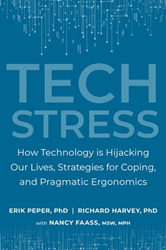
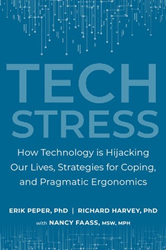
In an Upcoming Webinar Dr. Erik Peper Discusses Ways to Combat Tech Stress


biofeedback, ergonomics, stress, Erik Peper, Richard Harvey, Nancy Faass

Available August 25, 2020

Over exposure to the technology we depend on can cause fatigue eyestrain, back pain, neck and shoulder discomfort, exhaustion, distraction, stress, negative mood, depression, and insomnia.

In an ongoing webinar series presented by Thought Technology Ltd., experts from various fields discuss the benefits of using biofeedback with their clients. In the next installment, Dr. Erik Peper will introduce the concept of “tech stress”, the effect it has on the body, and how to lessen its negative impact. The content of his presentation is based on his new book: TechStress: How Technology is Hijacking Our Lives, Strategies for Coping, and Pragmatic Ergonomics, co-authored with Richard Harvey, Ph.D. and Nancy Faass, MSW, MPH on sale August 25, 2020.

The recent shift in work has people sitting more at the computer, trapped in seemingly endless online meetings/Zoom calls, or just looking at a screen without breaks. Leisure time often includes screen time even if we are unwinding with a movie (on our tablet) or scrolling social media feeds on our ever-present smartphone.

Over exposure to the technology we depend on can cause fatigue eyestrain, back pain, neck and shoulder discomfort, exhaustion, distraction, stress, negative mood, depression, and insomnia. In his presentation, Dr. Peper will explore the factors that contribute to these irritations and explain why so many people still experience discomfort even after their office or home equipment (chair, desk, monitor) have been ergonomically optimized. Finally, he will provide biofeedback-based strategies that clinicians/educators can use on themselves and clients to prevent illness and optimize health at work and at home, especially while working in a digital environment.

Reduce Tech Stress by Enhancing Healthy Working at the Computer with Biofeedback

Presenter: Erik Peper, Ph.D.

Date: August 12, 2020

Time: 1:00-2:00pm EDT

Click here to register.

About Dr. Erik Peper

Erik Peper, Ph.D., is an international authority on biofeedback and self-regulation. He is Professor of Holistic Health Studies at San Francisco State University, President of the Biofeedback Federation of Europe, and past President of the Association for Applied Psychophysiology and Biofeedback. He is an author of numerous scientific articles and books such as Make Health Happen, Fighting Cancer-A Nontoxic Approach to Treatment, Healthy Computing with Muscle Biofeedback, and Biofeedback Mastery. His new co-authored book, TechStress: How Technology is Hijacking Our Lives, Strategies for Coping, and Pragmatic Ergonomics, will be published August 2020.

You can learn more about him on his blog, the Peper Perspective-ideas on illness, health and well-being, or his private practice at Biofeedback Health.

About Thought Technology Ltd.

Founded in 1975, Thought Technology is the world’s leading biofeedback and physiological instrument manufacturer. Its products are used as an essential part of many therapeutic treatments and clinical assessment protocols in over 85 countries and are used by tens of thousands of clinicians in thousands of medical institutions.

Always supportive of new research and development ideas, Thought Technology Ltd. has encouraged a number of special interest groups and clinicians to create cutting edge applications for its instrumentation. Thought Technology Ltd. equipment is now being used in telemedicine, web-based monitoring and biofeedback, sports training, research in human-machine interface, physiology-driven multimedia environments and virtual reality. Constantly striving to improve the quality of the products and services, TTL has obtained, and maintains, ISO 13485, and CE certification for the organization and products.

Share article on social media or email:

RSNA, ACR and AAPM to Develop Massive Open-Source COVID-19 Medical Image Database through NIBIB contract with the University of Chicago


This dedicated team of research scientists, engineers and imaging professionals will produce new tools for the detection, diagnosis and prognosis of COVID-19 by aggregating massive amounts of imaging and other clinical data from COVID-19 patients.

New Medical Imaging and Data Resource Center will aid AI development and medical advancement to battle COVID-19

The nation’s largest medical imaging associations are working together to develop the new Medical Imaging and Data Resource Center (MIDRC), an open-source database with medical images from tens of thousands of coronavirus (COVID-19) patients. The MIDRC will help doctors better understand, diagnose, monitor and treat COVID-19.

The National Institute of Biomedical Imaging and Bioengineering (NIBIB) at the National Institutes of Health (NIH) is funding the effort through a contract to Maryellen Giger, PhD, of the University of Chicago, which will host the MIDRC.

The MIDRC effort is co-led by the three medical imaging associations with Etta Pisano, MD, and Michael Tilkin, MS, from the American College of Radiology® (ACR®), Curtis Langlotz, MD, PhD, and Adam Flanders, MD, representing the Radiological Society of North America (RSNA), and Maryellen Giger, PhD, and Paul Kinahan, PhD, representing the American Association of Physicists in Medicine (AAPM).

“The MIDRC database will provide a critical tool to help the medical imaging community, doctors and scientists better understand COVID-19 and its biological effects on humans. This knowledge, and the technological advancements the registry can enable, will ultimately help providers save lives,” said Etta Pisano, MD, ACR chief research officer.

Medical imaging helps radiologists detect, diagnose and monitor disease. However, many unanswered questions remain about how imaging could be deployed against COVID-19. For example, artificial intelligence (AI) algorithms could help radiologists better prioritize and analyze scans. But thousands of images must be collected and annotated to train these algorithms. The MIDRC will bring together engineers, physicians and scientists to collect and organize the data to answer these crucial questions.

“The RSNA is pleased to collaborate on this vital resource for COVID-19 research. This dedicated team of research scientists, engineers and imaging professionals will produce new tools for the detection, diagnosis and prognosis of COVID-19 by aggregating massive amounts of imaging and other clinical data from COVID-19 patients. We look forward to linkages with other national data repositories to enable a comprehensive analysis of COVID-19 disease and its imaging manifestations,” said RSNA Board Liaison for Information Technology and Annual Meeting Curtis Langlotz, MD, PhD, of Stanford University.

Funded under the National Institutes of Health’s special emergency COVID-19 process, the MIDRC will create an open access platform to collect, annotate, store and share COVID-related medical images.

The MIDRC will soon leverage existing data collection efforts to upload more than 10,000 COVID-19 thoracic radiographs and CT images, including many from the ACR COVID-19 Imaging Research Registry and the RSNA International COVID-19 Open Radiology Database (RICORD). This will allow researchers worldwide to access a wealth of images and clinical data to answer COVID-19 clinical and logistical questions.

“Access to this unprecedented resource will soon fuel expedited AI research to provide better diagnosis, new treatments and more-effective monitoring to guard against COVID-19 resurgence. This is a significant step in the effort against COVID-19,” said Maryellen Giger, PhD, of the University of Chicago; principal investigator of the NIBIB MIDRC contract and chair of the AAPM Data Science Committee.

The MIDRC will include five infrastructure development projects and oversee twelve research projects, including approximately 20 university labs, in support of solutions to the COVID-19 pandemic. The MIDRC will initially focus on COVID-19 but will work to expand services to provide imaging data and AI pipelines to aid the fight against other diseases.

“COVID-19 is our immediate target, but the MIDRC will ultimately enable the medical and scientific communities to mobilize images and data for work against other existing diseases and future healthcare threats,” said Paul Kinahan, PhD, of the University of Washington and chair of the AAPM Research Committee.

About the Radiological Society of North America

RSNA is an association of radiologists, radiation oncologists, medical physicists and related scientists promoting excellence in patient care and health care delivery through education, research and technologic innovation. The Society is based in Oak Brook, Ill. RSNA.org

Media Contact: Linda Brooks RSNA Media 630-590-7762

About the American College of Radiology

The American College of Radiology (ACR), founded in 1924, is a professional medical society dedicated to serving patients and society by empowering radiology professionals to advance the practice, science and professions of radiological care. acr.org

Media Contact: Meghan Swope pr@acr.org 703-390-9822

About the American Association of Physicists in Medicine

The AAPM is the premier organization in medical physics, a scientific and professional discipline that uses physics principles to address a wide range of biological and medical needs. The mission of the AAPM is to advance medicine through excellence in the science, education and professional practice of medical physics. Currently, the AAPM represents over 9,000 medical physicists in over 96 countries. aapm.org

Media Contact: Justin Stewart justin@aapm.org 571-298-1254

ASHA Offers Tips to Help Students With Hearing Loss in Virtual and In-Person Learning Environments for the Coming School Year


As the nation prepares for a school year like never before, the American Speech-Language-Hearing Association (ASHA) is encouraging teachers and administrators to take steps to meet the unique challenges that new virtual and modified in-person learning environments will pose for children who are deaf or hard of hearing.

“This school year will present staff and students with a tremendous learning curve,” said Theresa H. Rodgers, MA, CCC-SLP, ASHA 2020 President. “Many of the changes required to keep everyone safe—such as wearing masks, keeping a distance of 6 feet, and using online platforms—could impede learning for children who are deaf or hard of hearing. We want educators to be aware that there are many options and techniques for helping these children succeed while also adhering to public health measures.”

In-Person Learning

Solid masks and other face coverings can dampen sound, making it more difficult to understand speech and some higher-pitched voices. They can also take away visual cues that help people with hearing loss communicate, such as the ability to read lips and facial expressions. Physical distancing can also make it harder to hear. Consequently, ASHA recommends the following to teachers and school staff members for in-person instruction:


  • Wear a clear mask, if possible. Masks with a clear panel over the mouth can help students who are deaf or hard of hearing better understand what is being said as well as the speaker’s emotions and intent by providing visual cues. A variety of online retailers offer these products.
  • Follow communication best practices. Simple steps can foster communication. They include making sure you have students’ attention before speaking; facing students directly while talking; speaking slowly and slightly louder (but not shouting); using your hands and body language; and providing supplemental written and visual resources to reinforce verbal instruction.
  • Consider a sound field FM system. A sound field FM system involves a teacher wearing a microphone, amplifying their voice through a speaker. This will benefit not only children with hearing loss but all students in the classroom. Also, it will help the teacher conserve their voice.
  • Consult with an educational audiologist. Educational audiologists are experts in classroom acoustics. As teachers look to safely arrange their classrooms to protect against the virus, an educational audiologist can advise teachers on how to preserve an environment that enables effective communication.

Virtual Learning

When the teacher uses an online video platform, their voice may not always be clearly received—and inadequate lighting in the teacher’s room may make visual cues difficult to read. To avoid such barriers, ASHA recommends the following strategies to teachers providing virtual instruction:

  • Use available technology and services. Real-time captioning, interpreter services, and hearing assistive technologies can help students with hearing loss have better access to the curriculum. Each student has unique needs, so it is important to determine which approach works best for each individual. An educational audiologist can assist with determining and implementing appropriate technology and services.
  • Encourage video use. Ask all children to turn on their webcams. Most teachers will already be using video, but if children are taking turns answering questions or are placed in small breakout groups, seeing their peers’ faces will help communication.
  • Consider lighting. When setting up a webcam, it is best to have lighting in front of you rather than behind you. If the lighting in a room (electronic or natural) comes from behind, a teacher’s facial features will be more difficult to see. Some teachers are using ring lights to reduce shadows and provide more uniform lighting on their face. Before classes even start, find ways that will optimize facial lighting.
  • Use meeting platform tools to eliminate excess noise. Ask children to mute themselves (or mute them from your end) when they aren’t speaking, and use the “raise hand” function or other similar functions to reduce cross-talk. Background noise from each student’s house, along with multiple children speaking at once, can make listening very difficult.
  • Allow students time for brief introductory chatter. Begin each class with a few minutes of general conversation. This will give children with hearing loss time to make sure that they can hear everyone appropriately and make any necessary adjustments to their equipment.

Hybrid Learning Model

Some children may be part of a hybrid school model involving both in-person and virtual learning, or they may be starting the year exclusively in one format and then changing part-way through the school year. ASHA recommends that teachers and schools do the following:

  • Be consistent. If you are toggling between in-person and online classes, make sure that a student has the equipment or service they need to access the curriculum in both settings. If the student has an interpreter in person, then the interpreter should also be accessible to help with online instruction for that student.
  • Check in regularly. If the school is switching from in-person to virtual instruction (or vice versa), be sure to check in with the student to determine whether the new way of learning is working for them.
  • Revisit 504 plans and IEPs as needed. Consider whether the changes to instructional format require modifications to a student’s 504 plan or Individualized Education Program (IEP).

For more information, visit http://www.asha.org/public.

About the American Speech-Language-Hearing Association (ASHA)

ASHA is the national professional, scientific, and credentialing association for 211,000 members and affiliates who are audiologists; speech-language pathologists; speech, language, and hearing scientists; audiology and speech-language pathology support personnel; and students. Audiologists specialize in preventing and assessing hearing and balance disorders as well as providing audiologic treatment, including hearing aids. Speech-language pathologists identify, assess, and treat speech and language problems, including swallowing disorders. http://www.asha.org

###

Share article on social media or email:

Disability Rights Ohio and the Ohio Brain Injury Program Collaborate on Three-Year Study of Traumatic Brain Injury Patients Residing in Nursing Homes


News Image

Somewhere, there appears to be a disconnect between the number of residents staff recognize as having a TBI and the number being reported to Center for Medicaid and Medicare Services.

Disability Rights Ohio (DRO) and the Ohio Brain Injury Program recently announced the results of a three-year study designed to identify the service gaps that prohibit those with traumatic brain injury (TBI) from living in the community. TBI, as defined by the Centers for Disease Control and Prevention (CDC), disrupts the normal function of the brain. For this project, 38 individuals, currently living in Ohio nursing facilities and ranging in age from 23 to 78 years, were interviewed from October 2017 to January 2020. The data collected offers insights into the changes that can be made in state support systems to give persons with TBI a meaningful opportunity to move into their communities with supports.

A standard interview protocol was used to gather information from patients with TBI and their family members and caregivers living in 16 facilities in 11 different counties across the state. The majority of interviewees were male, and 17 of the 38 interviewed were younger than 50 years of age. The most common cause of the TBI was a motor vehicle crash, with the second most common reason falls/jumps.

Common themes emerged from the interviews. “Family members reported that the decision to place their loved ones in a nursing home was made out of necessity, as they could not get help handling behaviors like heightened aggression and self-inflicted injuries at home,” said Kristin Hildebrant, Senior Attorney with DRO and the Report’s lead author. “What was striking, however, was that almost every person interviewed knew nothing about Medicaid’s Home and Community Based Services (HCBS), which provide supports for people to live in the community instead of a nursing facility; they had not been given the option to participate in the program.”

Frequently, mental health issues were cited as the reason for nursing facility placement and one barrier identified by caregivers to staying in their communities. Many of the persons with TBI also had multiple mental health diagnoses. Nearly 75 percent were prescribed psychotropic medication. Compounding the problem, there appeared to be a lack of awareness among nursing facility employees about TBI. Most direct-care staff did not know the definition of TBI or how to differentiate it from dementia or stroke.

In addition, many Ohio nursing facilities contacted by DRO reported that they did not have any residents with TBI, even though data reported to the Center for Medicaid and Medicare Services (CMS) suggests that there are many people with TBI living in Ohio nursing facilities. “According to results of the 2019 Long-term Care Minimum Data Set (MDS) 3.0 Frequency Report, Ohio has approximately 960 nursing facilities reporting 1,323 patients with an active diagnosis of TBI,” said John Corrigan, Director of the Ohio Brain Injury Program. “Somewhere, there appears to be a disconnect between the number of residents staff recognize as having a TBI and the number being reported to CMS.”

Conclusions and Recommendations

Based on the interviews, several conclusions can be drawn and recommendations made to give individuals with TBI in nursing facilities a meaningful opportunity to move into their communities with supports.


  • Individuals with TBI, their families, caregivers, and nursing facility staff need to be better educated about options to support living in their communities, including Medicaid’s HCBS program. It would also appear that the existing HCBS system needs to provide additional services (especially behavioral supports) to support people with TBI.
  • The overreliance on medication instead of other services – counseling and therapy – should be evaluated.
  • Additional professional development to identify individuals with TBI and ways to improve their care should be provided to all nursing facility staff.

“For those individuals with TBI who are still at home, and struggling to find supports, coordinated prevention efforts should be initiated in order to prevent a nursing facility placement,” noted Kerstin Sjoberg, DRO Executive Director. “Increased services are needed – particularly behavioral health services – in order to provide support to people with TBI.”

To access the full report, click here.

About Disability Rights Ohio

Disability Rights Ohio is a non-profit corporation with a mission to advocate for the human, civil and legal rights of people with disabilities in Ohio. Since October 2012, Disability Rights Ohio has served as Ohio’s Protection and Advocacy (P&A) system and Client Assistance Program (CAP). It is governed by a Board of Directors, primarily consisting of people with disabilities and family members of people with disabilities. http://www.disabilityrightsohio.org

About the Ohio Brain Injury Program

The Ohio Brain Injury Program was created by the Ohio General Assembly in 1990 to improve the lives of Ohioans living with brain injury. The Brain Injury Program recognizes brain injury as a major public health problem that contributes to preventable loss of life and disability. The Program seeks to assure that individuals with brain injury and their families have access to relevant information, quality healthcare and an effective system of services and supports.

Share article on social media or email:

HME Reimbursement Leader Expands into Infusion Pharmacy Market


Prochant has built an unmatched reputation for delivering best-in-class results to HME clients for over two decades. Now is the time to expand that value to the pharmacy market.

Prochant, a leader in home medical equipment (HME) reimbursement, announces its expansion into the infusion pharmacy market. The company now offers its billing and process outsourcing solutions to infusion pharmacies and current HME provider clients that administer infusion therapies. This entry reflects Prochant’s growth and continued commitment to the healthcare community.

Pharmacy providers face daily challenges with reimbursement, hindering their ability to care for their patients. With its focus on strategic partnerships, advanced technology, and best-in-class results, Prochant saves clients time and gives them the resources necessary to meet their financial goals and grow their business.

“We are excited to start our work with pharmacy providers,” says Joey Graham, General Manager and Executive Vice President at Prochant. He adds, “With the COVID-19 crisis, infusion pharmacies play a more important role in healthcare than ever before. Prochant is ready to help these overwhelmed providers manage their business better.”

As part of this entry, Prochant welcomes two new hires: Jon Love, Vice President of Business Development, and Tina Ratliff, Pharmacy Reimbursement Manager. Love leads Prochant’s new pharmacy division and works to grow enterprise accounts. Previously, he worked as Director of Sales for WellSky’s home care division and served as Chief Operating Officer at Rock Pond Solutions, a software provider for home infusion, HME, and specialty pharmacies.

“I was attracted to Prochant’s mission of simplifying reimbursement for HME and pharmacy providers. Everyday reimbursement is difficult, and without question, affects the time and care providers can give their patients,” Love says. He continues, “Prochant has built an unmatched reputation for delivering best-in-class results to HME clients for over two decades. Now is the time to expand that value to the pharmacy market.”

“Jon’s deep knowledge of pharmacy reimbursement and strong experience in sales and business development is exactly what we need at this stage of our expansion,” reveals Graham. “I am also excited to welcome Tina Ratliff as our new Pharmacy Reimbursement Manager. Tina comes to us with over 25 years of pharmacy reimbursement experience.”

Love and Ratliff will work with pharmacy providers to find the right solution for their needs. Prochant’s solutions include:

  • Full-service Billing: This solution pairs providers with a dedicated team, including an expert account manager. By choosing this service, providers completely outsource their billing operations, so that they can provide better patient care. They have end-to-end visibility on all billing operations and get frequent performance reports with comparisons to industry benchmarks.
  • Staff Augmentation: This solution is a convenient option for providers that are not ready for complete outsourcing. They can strategically offload processes that are not core competencies for their reimbursement operations. As their business grows, providers can also use this option to efficiently scale operations.

To learn more about Prochant’s infusion pharmacy solutions, please visit https://bit.ly/infusion-info or contact Sarah Tollie at marketing(at)prochant(dot)com.

About Prochant

Prochant is the leading reimbursement firm with a dedicated focus on HME and pharmacy. When you partner with Prochant, you have the resources necessary to grow your business. As healthcare evolves, so should the way you manage your business. Prochant has a proven track record of helping HME and pharmacy providers meet their financial goals. Our scalable solutions, years of experience, and advanced technology provide best-in-class results to the healthcare community. Headquartered in Charlotte, North Carolina, our client base includes national HME and pharmacy providers and health systems. For more information, please visit http://www.prochant.com or follow us on LinkedIn and Twitter @prochant.

Share article on social media or email:

Amare Global Partners with Feed the Children to Support Families Impacted by COVID-19 Pandemic


Amare Global Partners with Feed the Children

Amare’s contribution provided 81,216 meals for children in the United States

“Feed the Children is proud to partner with Amare Global to address the important issue of childhood hunger in the U.S. The problem cannot be tackled alone. We know that when we combine our efforts, we will have a greater impact,” said Travis Arnold, Feed the Children president and CEO.

The COVID-19 pandemic has impacted families in unprecedented ways. One major area of disruption has been meals for children. The rhythm for many was to have lunches for children provided by the schools they attended. That has been disrupted by school closures across the country, creating an increased need to provide meals for children. Learning of this, Amare Global – The Mental Wellness Company, reached out to Feed the Children, a leading hunger-relief organization specializing in meeting this need.

“As we learned of the urgent need for children to have adequate meals during this pandemic, we knew in our hearts that we could not stand by without taking action. Not knowing where your next meal will come from increases stress, pressure, and uncertainty for families,” said Hiep Tran, Amare’s Founder & CEO. “As The Mental Wellness Company, we are grateful to partner with Feed the Children and do our part to ease some stress for families.”

In June, Amare’s contribution provided 81,216 meals for children in the United States. With the next school year beginning soon and many districts continuing to practice distance learning, Amare has decided to commit to a second contribution. The goal is to exceed the prior contribution the second time around.

“Feed the Children is proud to partner with Amare Global to address the important issue of childhood hunger in the U.S. The problem cannot be tackled alone. We know that when we combine our efforts, we will have a greater impact on the lives of families who need us most,” said Travis Arnold, Feed the Children president and CEO. “We know this is a scary time for families, but we will continue our mission and support those most vulnerable. That’s why we are calling on everyone to practice kindness and be good to one another.”

About Amare Global

Amare Global® (amare.com) was founded in 2016 as “The Mental Wellness Company” and spent the better part of 2017 formulating nutraceutical products focused on modulation of the microbiome and optimization of the gut-brain axis (GBX) to improve many aspects of mental wellness. With a vision to lead the global mental wellness revolution, Amare’s mission is to create a holistic mental wellness platform of products, programs and people. Amare’s product formulations combine ancient natural wisdom with modern scientific innovation to develop natural health products and programs based on the emerging science of the microbiome.

For more information, visit http://www.amare.com

About Feed the Children

At Feed the Children, we feed hungry kids. We envision a world where no child goes to bed hungry. In the U.S. and internationally, we are dedicated to helping families and communities achieve stable lives and to reducing the need for help tomorrow, while providing food and resources to help them today. We distribute product donations from corporate donors to local community partners, we provide support for teachers and students, and we mobilize resources quickly to aid recovery efforts when natural disasters strike. Internationally, we manage child-focused community development programs in 10 countries. We welcome partnerships because we know our work would not be possible without collaborative relationships. Every dollar given goes seven times as far to provide food, hope, dignity and comfort.

For more information, visit http://www.feedthechildren.org

Share article on social media or email:

Magical I Am™ Inc. Files Patent Application To Teach The Dyslexic To Read Successfully


Magical I Am™ Inc., developers of a game-based app to help dyslexic children with their learning to read challenges, today announced it has filed applications to secure United States and international patent rights for its innovative technology.

The patent application describes two of Magical I Am Inc.’s proprietary technologies, “Bindu M.E. Tech™” and “Adaptive Content Casting™”, that will be in its initial app release. The Bindu M.E. Tech enables the user to focus their “Mind’s Eye” (their inner viewing) on their “Bindu Point” (a point of perceptual focus) in order to stabilize consistent perception of two-dimensional words and symbols in their correct orientation and order – so, for example, the word “was” does not become the word “saw,” or the letter “p” does not become a “b” , “d”, or “q”. Adaptive Content Casting adjusts the pace and difficulty of the game to match the learning needs of the player. Both technologies provide first-of-its-kind tools for the dyslexic learner, teacher and parent.

Magical I Am utilizes an “edutainment” concept in conjunction with the Bindu M.E. Tech to master learning to read the abstract words and symbols which often cause reading disability symptoms. “As the player’s mastery of abstract words and symbols progresses, the occurrence of reading disability symptoms starts to fade,“ said Magical I Am CEO, Bill Allen, who was diagnosed with dyslexia in 1963 and spent seven years in the mid-1990s as a facilitator for the Davis Dyslexia Correction program in Burlingame, CA.

“Using augmented reality technology, Bindu M.E. Tech puts the player in the shoes of their avatar in a way that has never before been done in any game,” said Allen. “As they make their way through the game, children are able to master words and meanings, progressing as they conquer each level of the game. Meanwhile, the Adaptive Content Casting technology monitors their efforts and adjusts the game according to each individual player’s capabilities and provides progress analytics that will be available to parents or teachers.”

Allen, a Georgia State University graduate, was a successful real estate agent in the Atlanta area. Prior to founding Magical I Am, Allen created and developed “The Learning to Read Program” with Marcia Hart, who now serves as educational content director of the company.

“As someone for whom dyslexia has gone from a reading and writing negative to a treasured gift, I know the devastating effects it can have, especially on children”, said Allen. “I am keenly aware that traditional programs are very expensive and often out of reach for most families. In the United States, less than one percent of the dyslexic population can afford the dyslexia correction methodologies available today. Magical I Am will be absolutely affordable for 99 percent of the families who can’t afford the expensive dyslexia programs being offered today.”

The game-based app was developed by the team led by the company’s Principal Game Director Sunil Thankamushy, a longtime game industry veteran and UCLA film school graduate who has also worked for Dreamworks Interactive and Electronic Arts. As he puts the final touches on the app before its launch in the fall, Thankamushy said, “Demonstration sessions last year validated the core concepts of the game – a point verified by the parents of participants”.    

“My daughter enjoyed the game; it was a positive experience for her,” said Sarah McAfee. “I think she was really engaged and into it.” Joe Pellizzari’s daughter had a similar experience, “She stayed engaged throughout the game; I think she found it interesting and it held her attention.”

“The content of the program was very good,” said Rachel Galotti. “My daughter liked the fact that it was a digital platform, which kids today respond to. She liked the rewards aspect and said it helped keep her interested in going from level to level. She had a lot of fun with the game.”

Alpha testing of Magical I Am is set to begin later this summer after more than 1,000 parents, reading-challenged children and special educations professionals from all 50 states registered to participate through a company-sponsored social media campaign.

In addition to Allen, Hart and Thankamushy, other key leaders of the company are veteran Atlanta entrepreneur, Eric Scharff, who serves as the chief operating officer. Prominent Atlanta marketing industry professional, Scott Marticke, serves as the chief marketing officer. Respected mortgage executive from a multigenerational family of professional educators, Tyler Johnson, serves as senior vice president, business development.

For more information on Magical I Am, please visit https://www.magicaliam.com/

###

Magical I Am Inc., based in Marietta, Ga., is an educational software development company focusing on programs and tools to help dyslexic children with the reading challenges associated with their dyslexia. The company is developing Magical I Am™, a mobile app game that provides the fun of adventure while negotiating learning challenges that teach children to read abstract words and symbols.

Share article on social media or email:

HFA Explains How A Zoned Approach Mitigates the Risk of Spreading COVID-19 in Shared Spaces


Whether COVID-19 is eradicated soon with the help of a vaccine or if it remains an endemic disease for decades, heading back to communal workspaces will at some point become a norm for many around the world, but how can we ensure that we don’t put employees at increased risk of catching or spreading

Whether COVID-19 is eradicated soon with the help of a vaccine or if it remains an endemic disease for decades, heading back to communal workspaces will at some point become a norm for many around the world, but how can we ensure that we don’t put employees at increased risk of catching or spreading infectious diseases? The HFA Design Thinking team discusses what they have learned throughout quarantine and how we can equip our offices and other communal workspaces to adapt to the future.

“We know that a physical office has significant benefits that can be used both independently and in conjunction with remote work when thoughtfully designed. Offices provide valuable resources, mentorship, training opportunities, cultural exchange and socialization, and of course, host client interactions. While some pre-vaccine safety practices may soon become familiar, even comfortable, we believe that in the post-vaccine era of COVID-19, short-term tactics like increased isolation and reduced capacity will fade away.”

Defining daylighting, circulation, tactical, hover, and collaboration zones while simultaneously learning how to layer these areas and create zone adjacencies are key to minimizing risk and maximizing function within any office setting.

“Our zoned space planning strategy recognizes that various office spaces have distinct frequencies of use, rates of turnover, time durations, and degrees of necessary proximity to others. These characteristics determine the general risk level and determine the mitigation strategies to prioritize in each area. Properly mapping and layering these zones throughout the space and prioritizing safety strategies, helps retain an open, creative, and collaborative office environment.”

“As designers and engineers, we look for every opportunity, even unimaginable tragic events like a worldwide pandemic, to envision a better-built environment. Making a series of adjustments using the strategies outlined in this article can better support employee’s mental, emotional, and physical health.”

With 30 years of experience from the retail, restaurant, commercial, and real estate industries, we’re uniquely positioned to use our knowledge and expertise to further the architecture industry in this post-pandemic era.

To read more from HFA’s Design Thinking series check out the HFA blog: https://blog.hfa-ae.com/

—

About HFA

Founded in 1990, HFA is a full-service Architecture and Engineering firm with locations in Bentonville, AR; Franklin, MA; Fort Worth, TX; and Mexico City, MX. Focused on designing for the customer experience, HFA works coast to coast with retail, real estate development, office, industrial, fueling, restaurant/food service, lifestyle, and education clients.

Contact: Daryl Whitmer, Director of Marketing and Business Development, (479) 273−7780 ext. 274 or daryl.whitmer@hfa−ae.com.

Share article on social media or email:

AdventHealth Assists Bayshore Christian School Safely Reopen for Students


News Image

AdventHealth Carrollwood has partnered with Bayshore Christian School in Tampa to provide an extensive safety strategy for safely reopening for class on Monday, August 12, 2020. AdventHealth provided the school with key strategies and implementation plans to assist the K-12 school in limiting the spread of COVID-19 in the classroom setting.

“We are taking extra steps in our hospital and in our communities to ensure everyone is safe as we navigate COVID-19,” said Erika Skula, President and CEO, AdventHealth Carrollwood. “By partnering with Bayshore Christian School we can provide these students, teachers and staff with best practices to create the safest environment possible as they return to class.”

AdventHealth Carrollwood clinicians assisted the school with a plan that would allow for all 220 students to return to the classroom. Some of the key strategies implemented include:

  • Enhanced student drop-off and pick up
  • Required temperature screenings
  • Enhanced prepackaged lunches

“As the Head of School at Bayshore Christian School, I am grateful to have the opportunity to work hand in hand with AdventHealth as a community partner,” Melanie Humenansky, Head of School, Bayshore Christian School. “This relationship validates the decision making of the school’s administration in confirming we are taking the right steps in keeping our students safe. The recommendations were openly received, and we have purchased the suggested additional items and look forward to implementing the processes for the opening of the school year.”

AdventHealth is committed to the health and wellness of the community. AdventHealth Carrollwood has achieved 10 consecutive Leapfrog Grade A rankings and several Top General Hospital honors. The Leapfrog Group focuses on safety and lowering and eliminating infections in the hospital setting.

About AdventHealth West Florida Division

The West Florida Division of AdventHealth has some of the nation’s brightest medical minds making lifesaving breakthroughs with surgical pioneers, scientists and researchers using leading edge technology and innovation to deliver our brand of whole-person care. Our network of care includes AdventHealth Carrollwood, AdventHealth Connerton, AdventHealth Dade City, AdventHealth Lake Placid, AdventHealth North Pinellas, AdventHealth Ocala, AdventHealth Sebring, AdventHealth Tampa, AdventHealth Wauchula, AdventHealth Wesley Chapel and AdventHealth Zephyrhills, as well as five freestanding offsite Emergency Rooms including AdventHealth Brandon ER, AdventHealth Central Pasco ER, AdventHealth Palm Harbor ER, AdventHealth TimberRidge ER, and AdventHealth Westchase ER. We are more than hospitals, as we have a robust system of care including specialty acute care, over 200 primary care and specialty employed physicians, Express Care at Walgreens clinics, urgent care centers, wound care, physical therapy, home care, mobile mammography and more. AdventHealth is a faith-based not-for-profit health care system with a mission of Extending the Healing Ministry of Christ. AdventHealth has hundreds of care sites and nearly 50 hospitals across the United States. For more information about AdventHealth, visit AdventHealth.com, or Facebook.com/AdventHealth.

About AdventHealth Carrollwood

AdventHealth Carrollwood is a 103-bed hospital located in West Hillsborough County. The hospital is a member of the faith-based AdventHealth System, providing a connected system of care in nearly a dozen states with close to 50 hospitals and hundreds of care sites. The hospital offers nationally recognized and award-winning care, evidenced by being named One of America’s Best Hospitals for Patient Safety and Bariatric Surgery by the Women’s Choice Award three years in a row and by earning its 10th consecutive Grade A from the Leapfrog Group for Patient Safety. The hospital provides a wide variety of services including heart care, spine and orthopedics, bariatrics, wound care, robotic technology, two 24/7 emergency rooms with online scheduling, in Carrollwood and Westchase, and much more. With a focus on whole-person care, skilled and compassionate caregivers provide individualized care for body, mind, and spirit. To learn more about the hospital’s services, visit AdventHealthCarrollwood.com.

About Bayshore Christian School

Bayshore, the premier private Christian school in the greater Tampa Bay area, offers a comprehensive college preparatory program and provides exceptional leadership development, academics, athletics, and the arts. Bayshore Christian School is committed to challenging, developing, and empowering students for future leadership with a Biblical worldview within a diverse and nurturing environment, so that each student will follow the example of Jesus to “grow in wisdom and stature and in favor with God and man.” Luke 2:52

Share article on social media or email:
CentrAlert to Release Free COVID-19 Mobile Notification App


News Image

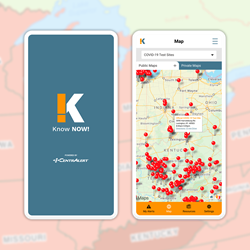
CentrAlert, Inc. today announced the launch of their free Know NOW! App to help everyone gain access to essential COVID-19 information. Know NOW!, which is available for Apple and Android, seeks to streamline the various sources of COVID-19 updates and unify them in one easy-to-use mobile application.

“When COVID-19 first hit, there was so much that we didn’t know,” says CentrAlert CEO, Jeff Whattam. “But after going through four months of lockdowns, testing and social distancing, there almost seems to be too much information out there. With the country starting to re-open, conditions are prime for a second wave of infections and our Know NOW! App offers one simple interface to keep users safe and informed.”

Amid the chaos of COVID-19, it’s this very simplicity that is the strongest asset of Know NOW! Upon downloading the App, users just select their Current or Home Location to gain access to every core feature.

The first of these features is Governor alerts. With each state largely in control of their own response, there has been no single way to keep up with the most recent COVID-19 updates. However, Know NOW! shares real-time alerts from state Governors so that the user is always informed of the latest executive orders, restrictions, re-openings and more. These alerts, which are delivered in-App and as push notifications, are archived for five days with new updates taking precedence.

In addition to providing users with the most up-to-date state information, Know NOW! also offers access to a variety of interactive maps. Central to this functionality is the COVID-19 Test Site Map. With the virus hitting so swiftly, the average person had no idea how to find their nearest COVID-19 test site. The team behind Know NOW! has sought to remedy this issue by researching an ever-growing list of over 7,000 test sites across the country, with directions from your current location available for each. On top of this, Know NOW! offers two other map views with official state and national CDC statistics as well as hospital and urgent care locations.

As the year wears on, Know NOW! will unveil new features with uses far beyond COVID-19. “We don’t want people to think of Know NOW! exclusively as a tool for fighting COVID-19 – we want users to be able to get other information too,” says Whattam. “Later in 2020, we plan to release additional features for Know NOW!, such as weather and other emergency alerts. We will also offer public and private entities alike the opportunity to create their own alert groups for more specialized communication.”

The Know NOW! App is available absolutely free for the duration of the COVID-19 pandemic on the App Store and Google Play. For more information, visit https://centralert.com/covid-19.

About CentrAlert

Founded in 1997 and based in Lexington, Kentucky, CentrAlert produces Crisis-Driven Alert & Control (C-DAC), an intelligent emergency alert and control system. C-DAC directs personal communication to targeted recipients, coordinates mass notification using any device, and provides adaptive intelligent controls to secure environments and mitigate the effects of a crisis. For more information, visit centralert.com.

Share article on social media or email: