Category Archives: Science: Biology

Cutting edge research is happening on a daily basis in our modern world, Keep up to date with our Press Release services.

A 26-year-old Titanic Mystery Solved. The Discovery Leads to New Questions


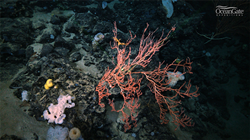
Titanic Mystery Deep Ocean Reef 2900 meters

Titanic Mystery Deep Ocean Reef 2900 meters

“We didn’t know what we would discover. On the sonar, this could have been another shipwreck. I’ve been seeking the chance to explore this large object for decades. It was amazing to explore this area and find this fascinating volcanic formation teeming with so much life,” says PH Nargeolet.

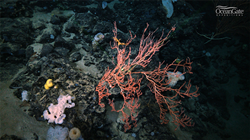
During the 2022 Titanic Expedition an extremely productive and dense ecosystem was discovered 2900 meters deep near the wreck of the Titanic. The provisionally dubbed Nargeolet-Fanning Ridge was originally recorded as a blip on sonar 26 years ago by PH Nargeolet, a veteran Nautile submersible pilot and Titanic diver. After more than two decades of wondering if the blip was a shipwreck or geologic feature, PH got his chance to dive on the target and explore the ridge that now provisionally carries his name. The mystery was finally solved with the financial support of OceanGate Expeditions Mission Specialist Oisín Fanning and the analysis provided by OceanGate Foundation’s scientific team. Video footage released by OceanGate Expeditions shows the awe-inspiring environment that was discovered.

“We didn’t know what we would discover. On the sonar, this could have been any number of things including the potential of it being another shipwreck. I’ve been seeking the chance to explore this large object that appeared on sonar so long ago. It was amazing to explore this area and find this fascinating volcanic formation teeming with so much life,” says PH Nargeolet.

“This discovery will improve the way we think about biodiversity of the abyss. The apparently basalt volcanic formations are remarkable, and we are astonished at the diversity and density of the sponges, bamboo corals, other cold-water corals, squat lobsters, and fishes that are thriving at 2900 meters deep in the North Atlantic Ocean,” says Research Professor at the University of North Carolina Wilmington’s Center for Marine Science and OceanGate Expeditions chief scientist, Dr. Steve W. Ross. “Uncovering this previously unknown ecosystem also provides an opportunity to make a comparison to the marine biology on and around Titanic. The variety of lifeforms, concentration of life, and the overall ecosystems may differ between the deep artificial reef of the Titanic and this newly revealed natural deep ocean reef. The similarities and differences will help us better understand our deep-sea environments,” continues Dr. Ross.

“As a marine biologist, getting to dive to the depths of our oceans to see something no other human has seen before is an awe-inspiring experience. Looking through Titan’s viewport and observing this beautiful undersea basalt volcanic formation which is so full of life is why we do the work we do,” says Professor of Applied Marine Biology & Ecology in the School of Geosciences at the University of Edinburgh, Dr. Murray Roberts.

“We look forward to reviewing the video footage, the numerous photographs that were captured during the dive, and the environmental DNA analysis of the water samples we collected. Scientists have always been surprised about how far sponges and corals spread across the ocean. We’re running computer simulations to understand this better and I expect these unexplored rocky areas are critical in explaining how these animals can disperse across the vast distances of the deep muddy seafloor. We need to share this information with the scientific community and policy makers to be sure these vulnerable ecosystems get the proper attention and protection they deserve,” explains Dr. Roberts.

“When I learned about the possibility of a dive to uncover the mystery of what was seen on sonar in 1998, I knew I wanted to be a part of the effort,” shares Oisín Fanning, OceanGate Expeditions Mission Specialist. “It is a privilege to get to work with OceanGate Expeditions, OceanGate Foundation, and the scientific team to better understand what lies deep below the surface of our oceans,” explains Fanning.

These studies are supported by OceanGate Foundation, a non-profit 501(c)(3) organization, which provides financial support for marine research and applied technology. OceanGate Foundation brought together a team of marine biologists, maritime archaeologists, and GIS mapping experts from the U.S., Scotland, and England to support the studies undertaken during expeditions. In 2022, this team included:

· OceanGate Expeditions Chief Scientist, Dr. Steve W. Ross, Adjunct Professor, University of North Carolina at Wilmington

· Professor Murray Roberts, Professor of Applied Marine Biology & Ecology, University of Edinburgh

· Dr. Lea-Anne Henry, Reader in Marine Ecology, School of Geosciences, University of Edinburgh

· Dr. Anna Gebruk, Scientific project manager, benthic ecologist, University of Edinburgh

· Dr. Bridget Buxton, Associate Professor of Ancient History and Mediterranean Archaeology, University of Rhode Island

· Dr. Rod Mather, Professor and Chair; Director of Archaeology and Anthropology M.A. Program, University of Rhode Island

· Chris McCabe, Marine Archaeologist, Gray and Pape and GIS Specialist, University of Rhode Island

· Morgan Breene, Ph.D. candidate in Global and Imperial History, University of Oxford

The computer simulations and scientific outputs of this study will link to wider ecosystem research in the Atlantic through the European Horizon 2020 funded iAtlantic research programme.

OceanGate Expeditions’ longitudinal research work of the Titanic and surrounding areas will continue in 2023 with the support of OceanGate Expeditions crewmembers, the scientific team, and citizen explorers who serve as Mission Specialists. Aspiring Mission Specialists interested in supporting the 2023 Titanic Expedition should contact OceanGate Expeditions for qualifications, availability, and additional details.

OceanGate Expeditions

Media Inquiries | Lisa Dreher | lisa.dreher@oceangateexpeditions.com | +1 425-442-1301

Expedition Inquiries | Kyle Bingham | kyle.bingham@oceangateexpeditions.com | +1 425-595-6343

Investor Inquiries | Bob Shuman | robert.shuman@oceangatexpeditions.com | +1 425-595-5017

Business Inquiries | Bob Shuman | robert.shuman@oceangatexpeditions.com | +1 425-595-5017

Watch: A 26-Year-Old Titanic Mystery Solved – Meet Titanic’s Awe-Inspiring Neighbor in the Deep Sea.

ABOUT OCEANGATE EXPEDITIONS

OceanGate Expeditions Ltd., is dedicated to direct human exploration of the undersea world. Not satisfied with scratching the surface of the ocean near the shoreline, OceanGate Expeditions charters manned submersibles to create expeditions at depths far deeper than can be reached with SCUBA. The organization conducts undersea expeditions to explore and document the 95% of the seafloor that man has never visited including iconic shipwrecks, hydrothermal vents, deep-sea canyons, and uncommon biological events around the world. These expeditions, to depths approaching 4,000 meters (13,123 feet), provide rare opportunities for citizen scientists to observe the mysteries of the deep sea and expand our understanding of our home, Earth, the blue planet. Visit http://www.oceangateexpeditions.com.

Follow OceanGate Expeditions on: YouTube | Instagram | Facebook | Twitter | LinkedIn

ABOUT OCEANGATE FOUNDATION

OceanGate Foundation is a non-profit 501(c)(3) organization dedicated to fueling underwater discoveries in nautical archaeology, marine sciences, and subsea technology through public outreach and supplemental financial support. The organization was founded by entrepreneurs with a passion for ocean exploration who want to expand the world’s appreciation and understanding of the deep ocean. Since 2010, OceanGate Foundation has been providing supplemental financial support to augment primary research grants that enable to efficiently conduct extended and enhanced research studies during expeditions occurring in locations across the globe. Visit http://www.oceangatefoundation.org.

Share article on social media or email:



Biotia to Present Clinical Validation Data at IDWeek 2022 Annual Meeting


News Image

We are delighted that we were selected to present our clinical validation data and clinical-grade metagenomics tool that enables more accurate detection of pathogens in urine samples compared to culture.

Biotia, Inc., a health-tech company fighting infectious disease through the power of genomics and artificial intelligence, announced today that it will be presenting at IDWeek 2022. The presentation, titled “Clinical-Grade Metagenomics in Urinary Tract Infections: Improving Performance of Next-Generation Sequencing Assays Using Internal Controls and Machine Learning,” will be delivered on October 20, from 12:15 to 1:30 p.m.

Urinary tract infections are among the most common outpatient infections in the United States, leading to 7 million doctor visits annually. However, gold-standard technologies, like existing culture technology, do not yield definitive diagnostic results in one-third of patients. This percentage is even higher in immunocompromised patients — such as cancer or transplant patients — for whom infectious disease is the second leading cause of death.

Recognizing this need, Biotia leverages next-generation sequencing (NGS) to generate genomic data. The company utilizes an advanced computational AI platform and an integrated software, data and lab toolkit to provide accurate characterization of microbial species, antimicrobial resistance and virulence factors, improving diagnostics for infectious diseases.

“Our NGS urine assay by leveraging machine learning software and internal positive control provides greater sensitivity and taxonomic specificity,” said Dr. Dorottya Nagy-Szakal, chief medical officer at Biotia. “With it, we open the door to better guide patient care and improve mortality rates in immunocompromised patients, those for whom conventional diagnostics frequently fail and who have a higher risk of developing sepsis.”

IDWeek is an industry-leading conference that brings together over 10,000 healthcare professionals working in the field of infectious disease, including researchers, clinicians, public health officials and quality and patient safety practitioners.

“We are delighted that we were selected to present our clinical validation data and clinical-grade metagenomics tool that enables more accurate detection of pathogens in urine samples compared to culture,” said Mara Couto-Rodriguez, director of research and development at Biotia. “We have focused on bringing stringent standards to the field of metagenomics to decrease the number of false positives calls and provide meaningful insights.”

For more information, contact info@biotia.io.

About Biotia

Biotia is a health-tech company located in New York, NY, that leverages sequencing-based technology and proprietary AI-powered software to rapidly and accurately identify microorganisms and antimicrobial resistance. Their mission is to fight infectious diseases by deploying the leading reference library of microbes worldwide. As a spinout company of Jacobs Technion-Cornell Institute at Cornell Tech, Biotia has a New York State CLIA lab for infectious disease diagnostics testing affiliated with SUNY Downstate Health Sciences University.

Connect on Twitter, Facebook and LinkedIn.

Share article on social media or email:

BioFactura’s BFI-751, a Biosimilar Ustekinumab, Demonstrates Pharmacokinetic (PK) Bioequivalence to Stelara® in Phase 1 Study


News Image

“Meeting the primary endpoint of clinical bioequivalence in this trial, along with our bioanalytical comparative data, puts BFI-751 on the way to regulatory approval and commercial launch”, Jeffrey N. Hausfeld MD, MBA

BioFactura Inc. has announced today the completion of the pivotal pharmacokinetic comparability clinical trial for its Ustekinumab Biosimilar (BFI-751). The clinical trial was conducted in two sites in Australia and one site in New Zealand. BioFactura developed BFI-751 using its proprietary NS0 host cell line-based StableFastTM Biomanufacturing Platform.

Ustekinumab is a targeted monoclonal antibody directed against the common p40 subunit of the naturally occurring proteins interleukin (IL)-12 and IL-23, which regulate the immune system. The reference product, Stelara ®, has been approved for the treatment of plaque psoriasis, active psoriatic arthritis, Crohn’s disease, and ulcerative colitis and is projected to have global market sales at $10B in 2023 prior to patent expiry.

A total of 226 subjects were enrolled and randomly assigned 1:1:1 to receive BFI-751, EU-STELARA® and US-STELARA®. Pairwise comparisons between the three treatments all met the standard bioequivalence criteria that the 90% CI (Confidence Interval) of the geometric mean ratios of AUCinf, AUC0-tlast and Cmax of Ustekinumab lay completely within the acceptance interval of 80% – 125%. Clearance and elimination rates were shown to be comparable across the three treatment arms.

Secondary endpoints met included no marked differences in the safety and tolerability profile for subjects receiving BFI-751 as compared to EU- or US-STELARA®. Similar immunogenicity profiles were seen with EU- and US-STELARA®. BFI-751 showed a lower immunogenicity rate at all time points in the assay compared with EU- and US-STELARA®.

BioFactura intends to conduct a confirmatory safety and efficacy study in patients to pave the way for global registration.

“Unlike novel drugs, a phase 1 trial for a biosimilar asset is called a pivotal pharmacokinetic study because it quantifies and compares how a biosimilar drug is absorbed and metabolized in relation to the innovator products. The establishment of meeting the primary endpoint of clinical bioequivalence in this trial, along with our fingerprint bioanalytical comparative data, puts BioFactura well on the way to regulatory approval and commercial launch of BFI-751. My gratitude goes out to all those who participated in the trial and supported the completion of this study, said Jeffrey N. Hausfeld MD, MBA, Chairman of the Board and Chief Medical Officer of BioFactura.”

Dr. Darryl Sampey, President and CEO, stated, “The successful completion of BioFactura’s first clinical study marks a capstone for the company. This product was conceived, created and manufactured entirely in-house by the most capable and hardworking team of people I have ever known. A sincere thanks to all who worked tirelessly over many years to bring us this remarkable outcome!”

About BioFactura, Inc.

BioFactura, Inc. (Frederick MD) develops and commercializes high-value biosimilars (i.e., follow-on biologics or generic biopharmaceuticals) using its patented StableFast Biomanufacturing Platform, the optimal system for bringing these drugs to market with faster, lower cost, superior-quality manufacture. For over 18 years, BioFactura has been advancing life-saving medicines from the research bench to the patient using its innovative drug development and manufacturing technologies. Current and past programs include biodefense drugs against smallpox and Ebola, novel medicines for cancer, and low-cost/high-quality biosimilars for autoimmune and infectious diseases. http://www.biofactura.com

Share article on social media or email:

Successful Stories of Difficult Syntheses, Upcoming Webinar Hosted by Xtalks


Not only is the stapling moiety fundamental to mimicking biological activity but also the bridge size and its location and orientation within the bridge.

An increasing number of peptides are used in active pharmaceutical ingredients, cosmetics, diagnostics, and vaccines. Several are based on long sequences, cyclic structures, and multi-branched systems that require complex synthetic strategies to incorporate homodetic and heterodetic bridges, post-translational modifications, or constrained unnatural amino acids.

Therefore, peptide organic synthetic chemists have to overcome a variety of difficulties not only on a small scale but also during the scale-up. For example, side chain-to-side chain cyclizations represent a strategy for the enrichment of bioactive conformational ensembles. Structural rigidification reduces entropy and may lock molecules into receptor-binding conformations. Structural manipulations, therefore, contribute to the enhancement of target specificity, induce higher binding affinity and biological potency and often lead to lower metabolic susceptibility and more favorable pharmacokinetics.

In this webinar, the featured speaker will discuss the syntheses of biologically relevant cyclopeptides containing not only 1,4-disubstituted-[1,2,3]-triazolyl bridges but also interlocked dicarba bridges and 1,3-butadiyne constraints. This offers a powerful approach for generating stable helix mimetic structures or β-turn conformations. Not only is the stapling moiety fundamental to mimicking biological activity but also the bridge size and its location and orientation within the bridge.

Join this webinar to hear the speaker explore multiple parameters in technologies that improve the efficacy of solid-phase syntheses in complex peptides. The role of temperature, solvent volumes, coupling systems, and mixing modes (N2 bubbling and/or oscillation mixing) will be discussed, in addition, and how they can optimize protocols to develop the best conditions for the small-scale and mainly further upscaling of solid-phase synthesis.

Join Prof. Anna Maria Papini, University of Florence, Department of Chemistry “Ugo Schiff”, Interdepartmental Research Unit of Peptide and Protein Chemistry and Biology, for the live webinar on Friday, October 28, 2022, at 10 am EDT (3 pm BST/UK).

For more information, or to register for this event, visit Obtaining Complex Peptides Thanks to Efficient Technologies is No Longer a Dream: Successful Stories of Difficult Syntheses.

ABOUT XTALKS

Xtalks, powered by Honeycomb Worldwide Inc., is a leading provider of educational webinars to the global life science, food, and medical device community. Every year, thousands of industry practitioners (from life science, food, and medical device companies, private & academic research institutions, healthcare centers, etc.) turn to Xtalks for access to quality content. Xtalks helps Life Science professionals stay current with industry developments, trends, and regulations. Xtalks webinars also provide perspectives on key issues from top industry thought leaders and service providers.

To learn more about Xtalks visit http://xtalks.com

For information about hosting a webinar visit http://xtalks.com/why-host-a-webinar/

Contact:

Vera Kovacevic

Tel: +1 (416) 977-6555 x371

Email: vkovacevic@xtalks.com

Share article on social media or email:

Ag Industry Expert Joins Nutrient TECH as Director of Sales and Marketing


I am excited to become part of the Nutrient TECH team, a time honored and trusted industry partner that growers have counted on to maximize both yield and quality.

Nutrient TECH, Dinuba, CA proudly welcomes Paul Wulf as the new Director of Sales and Marketing. Paul brings an extensive ag industry background including agricultural retail and basic manufacturing experience, including fertility and ag chemicals covering a wide range of markets. Most recently he held the position of Commercial Director at Rotam USA, a global manufacturer of crop protection products. Additionally, Paul has held management positions with several national retail distributors. He also ran his own ag consulting firm for two decades. Paul will now bring this experience to Nutrient TECH and report directly to the company’s President, Greg Johnson.

Greg says, “Mr. Wulf brings significant experience and a proven history of success, which will be invaluable in meeting our goals at Nutrient TECH, and those of our parent company De Sangosse. I am confident that Paul will be an excellent match for this position and a strong asset to the team. We welcome Paul and look forward to collaborating with him.”

Wulf says, “I am excited to become part of the Nutrient TECH team, a time honored and trusted industry partner that growers have counted on to maximize both yield and quality. I look forward to being a part of this group and the very bright future for Nutrient TECH.”

Paul has a Bachelor of Science in Ag Business from Fresno State and will be responsible for expanding the company’s presence in North America and into BioSolutions, including biofertilizers and biostimulants. He will coordinate with both Nutrient TECH and De Sangosse to drive continued in-house product development and to streamline the introduction of new products. His guidance will be what leads Nutrient TECH’s constant innovation and efforts to support the sustainable growth of food and fiber for growers.

###

About Nutrient TECH

Nutrient TECH focuses on the development and marketing of advanced plant nutrition products and BioSolutions for agriculture in North America. Nutrient TECH continually strives to improve its production and QC/lab support for its advanced foliar nutrition and BioSolutions platform to consistently meet and exceed the exacting demands of today’s quality-conscious growers. Based in Dinuba, California, Nutrient TECH was founded in 1986 and was purchased by the De Sangosse Group in December 2015.

About De Sangosse

The De Sangosse Group, based in Agen, France, is a major international player in BioSolutions for crop protection and crop nutrition as well as for pest control. De Sangosse has been awarded the “Committed to CSR” label by Afnor. Overall, the company has 975 employees, 26 operating companies and distribution activities in over 60 countries. The group’s mission is to bring about a major transformation in the agricultural industry through BioSolutions, thanks to dedicated investments and fruit of its R&D efforts, technical development, registrations and several strategic partnerships and make them available for all types of agriculture and all means of cultivation. The cross synergy of these technologies can Nourish, Boost and Protect crops for a three-way economic, social and ecological performance. The group’s aim is to develop, manufacture and market biofertilizers, biostimulants, biocontrol solutions, adjuvants and services to meet food needs, climate risks and environmental challenges, and to comply with regulatory changes in Europe and the rest of the world. De Sangosse contributes to creating value for its customers and the industry through innovation and by offering an elevated level of expertise. De Sangosse’s share capital comes mostly from its employees thus guaranteeing its independence and ensuring a long-term vision of its business plan.

Share article on social media or email:

VGXI Celebrates the Grand Opening for its New Headquarters and Manufacturing Facility


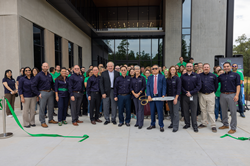
VGXI Conroe Grand Opening Ribbon Cutting

This new VGXI headquarters is purpose-built to leverage the company’s existing expertise in DNA and RNA manufacturing and greatly expand our capacity to support growing industry demands.

VGXI, Inc., a specialized contract developer and manufacturer (CDMO) of nucleic acid biopharmaceuticals including gene therapies, DNA vaccines, and RNA medicines, celebrated the official grand opening of its new headquarters and manufacturing facility located at Deison Technology Park in Conroe, TX. U.S. Congressman Kevin Brady and the Consul General of the Republic of Korea in Houston Ahn Myung Soo attended the ribbon cutting on October 7, 2022 to recognize this important milestone and VGXI’s contributions to the global pharmaceutical community.

The ribbon cutting was attended by VGXI clients, contractors, and business partners, as well as city of Conroe officials and representatives of the local and Texas biotechnology communities, including Ms. Ann Tanabe, CEO of BioHouston.

“VGXI’s clients and collaborators are developing the next generation of gene therapies and vaccines,” said CEO Young Park. “This new VGXI headquarters is purpose-built to leverage the company’s existing expertise in DNA and RNA manufacturing and greatly expand our capacity to support growing industry demands.”

VGXI has operated as a CDMO since 2003 supporting the development of new cancer therapies, gene and cell therapies, and DNA vaccines for critical emerging diseases including Ebola, MERS, Zika, and COVID-19. With expanded capabilities offered by the 120,000 square-foot Conroe facility, the company is now booking 2023 GMP manufacturing slots at fermentation scales from 10L to 1500L across multiple independent manufacturing trains. Dedicated areas are also available for personalized immunotherapy indications and GMP mRNA production.

ABOUT VGXI, INC.

With over 20 years of experience VGXI, Inc. is a leading provider of plasmid DNA manufacturing and development services. The company has a reputation of success in manufacturing DNA products under cGMP conditions for clinical trials in the US, EU, Asia, Canada, and Australia, and its cGMP and non-GMP products have passed rigorous reviews by several international regulatory agencies. VGXI’s ability to work with unique requirements and create custom manufacturing solutions is based on its patented manufacturing process, flexible cGMP production facility, and highly experienced development team. VGXI, Inc. is a GeneOne company. To learn more, visit https://www.vgxii.com.

ABOUT GENEONE LIFE SCIENCE

GeneOne Life Science Inc. (“GeneOne” KOSPI: 011000) headquartered in Seoul, South Korea is an international biotechnology company and a leading contract manufacturer of DNA plasmids for use in vaccines, gene therapies, and cell therapies. GeneOne has recently expanded into the manufacture and development of mRNA. GeneOne has maintained a focus on vaccines against emerging infectious diseases to address global needs, including in resource challenged regions. Its small molecule portfolio of immunomodulators address diseases such as prevention of upper respiratory bacterial and viral diseases, and treatment of autoimmune and inflammatory diseases. GeneOne has three products against COVID-19 in clinical development: GLS-5310 DNA vaccine (Phase I/IIa), GLS-1200 nasal spray to prevent COVID-19 infection (Phase II), and GLS-1027 to prevent the inflammation and clinical worsening for those infected with COVID-19 (Phase II).

For more information, visit https://www.genels.com.

CAUTIONARY FACTORS THAT MAY AFFECT FUTURE RESULTS

Materials in this press release contain information that includes or is based upon forward-looking statements within the meaning of the Securities Litigation Reform Act of 1995. Forward-looking statements relate to expectations or forecasts of future events. These statements can be identified by the fact that they do not relate strictly to historical or current facts. They include words such as “anticipate,” “estimate,” “expect,” “project,” “intend,” “plan,” “believe,” and other words and terms of similar meaning in connection with a discussion of potential future events, circumstances or future operating or financial performance. In particular, these include statements relating to future actions, prospective products or product approvals, future performance or results of current and anticipated products, sales efforts, expenses, the outcome of contingencies such as legal proceedings, and financial results. Any or all of our forward-looking statements here or in other publications may turn out to be incorrect. They can be affected by inaccurate assumptions or by known or unknown risks and uncertainties. Many such factors will be important in determining our actual future results. Consequently, no forward-looking statement can be guaranteed, and forward-looking statements may be adversely affected by factors, including general market conditions, competitive product development, product availability, current and future branded and generic competition, federal and state regulations and legislation, manufacturing issues, timing of the elimination of trade buying, patent positions, litigations and investigations. Our actual results may vary materially, and there are no guarantees about the performance or valuation of GeneOne stock. It is also important to read the disclosure notice contained in many of the individual GeneOne documents available on the website, as many contain important information on such cautionary factors as of the date of the individual document. We undertake no obligation to correct or update any forward-looking statements, whether as a result of new information, future events or otherwise. You are advised, however, to consult any further disclosures we make on related subjects in our reports.

Share article on social media or email:

Asymmetrex® Discusses Impact of New Technologies for Stem Cell Dosage Determination on Outsourcing for Stem Cell Clinical Trials, Gene Therapy Clinical Trials, and Pharma


Asymmetrex® Presents at OCTNE 2022 in Boston on October 12

Stem cell dosage determination will transform the stem cell clinical trials industry, including its outsourcing.

The OCTNE 2022 conference, taking place in Boston on October 12-13, is one of Arena International’s premiere industry meetings for bringing together sponsors of clinical trials with their outsourcing partners. Most of the content and focus of the meeting will be on how to improve the flow of essential products and services to clinical trial sponsors for the best experiences and medical outcomes for clinical trials subjects and patients.

Like previous OCTNE conferences, the primary focus of the October 2022 event will be outsourcing for pharmaceutical clinical trials. However, each year, as the regenerative medicine field continues to grow, so has the amount of attention given to outsourcing for cell therapy clinical trials, including stem cell therapy trials and gene therapy trials.

In recent years, stem cell biotechnology company Asymmetrex® has been a major proponent and participant for increasing attention in OCTNE conferences to developments in the supply and outsourcing of stem cell clinical trials and gene therapy clinical trials. Gene therapy trials fall under the Asymmetrex® focus for outsourcing, because many gene therapies required the successful genetic-engineering of tissue stem cells, like blood hematopoietic stem cells.

In past OCTNE presentations, Asymmetrex® President & CEO, James L. Sherley, M.D., Ph.D., anticipated the introduction of Asymmetrex’s lead innovation, kinetic stem cell (KSC) counting, into the stem cell marketplace. Now, after Asymmetrex’s introduction of online calculators for determining the specific dosage of therapeutic tissue stem cells in September of this year, Sherley plans to tell OCTNE 2022 attendees that “Stem cell dosage determination will transform the stem cell clinical trials industry, including its outsourcing.”

Asymmetrex is now partnering with automated cell counter producer OMNI Life Science to introduce the first instrument, called the CASY-PLUS, for automated rapid counting of therapeutic tissue stem cells. This capability will enable stem cell clinical trials sponsors to know the exact dosages of the stem cells in the treatments they administer to their patients for the first time in the more than half century history of stem cell medicine. Outsourced suppliers of stem cell products and stem cell culture reagents will soon need to provide dosage data, too.

The pharmaceutical and biopharmaceutical industries are not left out of the benefits of stem cell dosage determination. The KSC counting technology can be deployed for earlier detection of drug candidates that are toxic to stem cells. Stem cell-toxic drugs cause chronic organ failure, which results in an estimated $4 billion loss for pharmaceutical companies each year. With increasing validation of the utility of KSC counting for stem cell clinical trials, Sherley expects that Pharma will eventually join for the benefits of knowing the dosage of stem cells as well.

About Asymmetrex®

Asymmetrex®, LLC is a Massachusetts life sciences company with a focus on developing technologies to advance stem cell medicine. The company’s U.S. and U.K. patent portfolio contains biotechnologies that solve the two main technical problems – stem cell-specific quantification and stem cell expansion – that have stood in the way of more-effective use of human adult tissue stem cells for regenerative medicine and drug development. Asymmetrex markets kinetic stem cell (KSC) counting, the first technology for determination of the dose and quality of tissue stem cell preparations for use in stem cell transplantation medicine and pre-clinical drug evaluations. Asymmetrex® is a member company of the Advanced Regenerative Manufacturing Institute|BioFabUSA (ARMI) and the Massachusetts Biotechnology Council (MassBio). The company’s development of online calculators for rapid stem cell counting has been funded by R&D grants from ARMI|BioFabUSA and the National Heart, Lung, and Blood Institute.

Share article on social media or email:
Scispot Launches LabSQL Allowing Biostartups to Build and Customize their LIMS


Scispot creates a configurable tech stack for modern biostartups.

“Our team at Talus Bio has started relying on Scispot for complete sample management of our proteomics workflow. Using it to design experiment templates and store all of our result data has been a game-changer,” said Lindsay Pino, co-founder, Talus Bio.

Scispot, a leading lab informatics company for biostartups, has added LabSQL to its Data Science Toolkit. LabSQL is a user-friendly programming tool that allows biostartups to create and update personalized workflows within a fully configurable lab informatics management system (LIMS). With LabSQL, using a command line interface (CLI), biostartups can connect data from hundreds of sources, including lab equipment, collaborators, and 3rd-party apps, and convert them into customizable relational databases.

Most LIMS are hard-coded with a set of rigid templates that scientists cannot change. In contrast, LabSQL offers a suite of apps, including Open API and Jupyter Notebook connector, as well as a graphical user interface (GUI) and command line interface (CLI) so that data engineers and scientists can continually build and adapt their own personalized LIMS. With LabSQL, biostartups can design workflows that suit their needs rather than retrofitting a hard-coded LIMS or electronic lab notebook (ELN).

“After working with hundreds of biostartups, we realized that hard-coded rigid LIMS do not work for growing biostartups with evolving workflows. So we built a new-generation LIMS with ELN extensions for configurable workflows. With LabSQL, biostartups can define their own data dictionaries, workflows, sample tracking, inventory management, and data management systems,” said Satya Singh, co-founder and President, Scispot.

Scientists and data engineers can use LabSQL to make different connections between various samples, such as DNA, RNA, and peptide samples, experimental protocols, data, and metadata. This allows biotech startups to automate workflows and data handling and maximize the value of their data.

“Our team at Talus Bio has started relying on Scispot for complete sample management of our proteomics workflow. Using it to design experiment templates and store all of our result data has been a game-changer,” said Lindsay Pino, co-founder, Talus Bio.

To try out LabSQL, book a demo and join Scispot in their mission to make customizable LIMS and workflow automation possible for every biostartup.

ABOUT SCISPOT

Scispot is a Y Combinator-backed life science informatics company based in the Kitchener-Waterloo area. Scispot has created a tech stack for modern biostartups and scaleups including Labsheets, a no-code and modern LIMS alternative, widely adopted by biomanufacturers, diagnostic labs, drug discovery companies, and contract research organizations (CROs). Scispot customers use Labsheets to automate workflows and stitch together lab data generated by distributed R&D. To learn more, please visit http://www.scispot.com or book a product demo.

Share article on social media or email:

The Society for Immunotherapy of Cancer (SITC) Publishes a Checklist to Maximize the Benefit to Patients for Clinical Trials in Immuno-oncology


News Image

“This checklist provides investigators, and other key stakeholders, a roadmap to identify and prioritize phase III clinical trials that are likely to offer the greatest benefit to patients.” said SITC President Patrick Hwu, MD

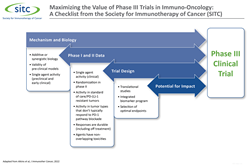
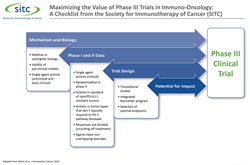
No uniform method has been established to predict the probability of success for individual clinical trials. To help identify clinical trials with a high likelihood of offering benefit to patients, the Society for Immunotherapy of Cancer (SITC) brought together a team of experts in immuno-oncology to create a conceptual framework for potential value in phase III studies evaluating immunotherapy combinations. The framework, put forth as a checklist for the oncology community, is published in a new manuscript, “Maximizing the value of phase III trials in immuno-oncology: A checklist from the Society for Immunotherapy of Cancer (SITC),” now available in the Journal for ImmunoTherapy of Cancer, the society’s open-access, peer-reviewed online journal.

“Immuno-oncology clinical trials are of the utmost importance to provide new effective drugs for cancer patients,” said SITC President Patrick Hwu, MD. “This checklist provides investigators, and other key stakeholders, a roadmap to identify and prioritize phase III clinical trials that are likely to offer the greatest benefit to patients.”

Phase III trials are how new treatments for cancer demonstrate benefit and establish their place in the treatment paradigm to offer improved outcomes for patients. These trials are time- and resource-intensive, involving hundreds of patients and spanning multiple years. As many as half of phase III trials in oncology are unsuccessful, representing substantial losses in terms of monetary investment and opportunity for patients to receive a more effective treatment for their disease.

Clinical trials evaluating immunotherapy combinations have proliferated in recent years as immunotherapy has become the standard of care for the treatment of many cancers, offering some patients long-term remissions and even cures. Despite many successes, several recent trials of immunotherapy combinations have failed to show improvement over current treatments.

“Immunotherapy is radically different from conventional cancer treatments such as chemotherapy, which are based on directly attacking the tumor itself” says Michael B. Atkins of Georgetown Lombardi Cancer Center, the checklist manuscript’s first author. “Because immunotherapy treats a patient’s immune system to enable it to eliminate the tumor, phase III trials for immunotherapy combinations should consider, among many factors, the impact of the combinations on antitumor immunity and be designed with immune endpoints in mind.”

SITC’s checklist provides a simple framework to evaluate the mechanism and biology, early clinical evidence, trial design, and potential for impact of planned phase III trials evaluating immunotherapy combinations. The checklist places the highest priority on clinical data, and in cases where this is lacking, evidence of anti-tumor activity in multiple pre-clinical models, a well-defined immune mechanism of action, and a predictive biomarker to allow for selection of patients are strongly encouraged.

The release of this checklist comes on the heels of additional action SITC has brought about to address an ongoing crisis in clinical research encompassing a multitude of factors, including clinical trial administrative staffing shortages, administrative burdens, and inadequacy of current business models. The checklist may be useful to investigators in prioritizing phase III trials in response to potential overall reductions in accrual and/or increases in the number of phase III trials relative to the institution’s capacity for accrual. SITC has been leading many efforts to address the crisis, along with the checklist, to create solutions to help resolve the challenges facing the issues around clinical trials. For more information on these efforts, visit the SITC Crisis in Clinical Research web page.

About SITC

Established in 1984, the Society for Immunotherapy of Cancer (SITC) is a nonprofit organization of medical professionals dedicated to improving cancer patient outcomes by advancing the development, science and application of cancer immunotherapy and tumor immunology. SITC is comprised of influential basic and translational scientists, practitioners, health care professionals, government leaders and industry professionals around the globe. Through educational initiatives that foster scientific exchange and collaboration among leaders in the field, SITC aims to one day make the word “cure” a reality for cancer patients everywhere. Learn more about SITC, our educational offerings and other resources at sitcancer.org and follow us on Twitter, LinkedIn and YouTube.

Share article on social media or email:


International Society for Biological and Environmental Repositories (ISBER) Launches New Biobank Assessment Tool


“ISBER Best Practices are a key tool to increase the quality of modern biobanking. By using [the Biobank Assessment Tool], biobankers can identify gaps that need to be addressed while implementing ISBER Best Practices.”

The International Society for Biological and Environmental Repositories (ISBER) announces the release of the updated ISBER Biobank Assessment Tool (BAT), available at https://www.isber.org/page/BAT.

Previously known as the ISBER Self-Assessment Tool, the new BAT provides biobanks the ability to improve their practice by assessing their procedures compared to the ISBER Best Practices. Upon completion, the biobank will receive an individual report to learn where they align with Best Practices and where they have opportunities for improvement. This tool is ideal for biobanks who want to analyse how successfully they have implemented the ISBER Best Practices.

“ISBER’s goal to bring standards of practice to biobanks around the world has been advanced through the Biobank Assessment Tool. Our recent rebuild of the tool brings in the current ISBER Best Practices, reinforcing our commitment to enabling biobanks to undergo continual improvement, growth, and effective facilitation of research. I am delighted to say that the BAT tool is available to all ISBER members and encourage its use in biobanking facilities” said Ms. Clare Allocca, President of the Board, ISBER.

“More biobanks are now working towards implementing a quality management system, for example the ISO 20387—BAT is helpful as a tool to follow up on key indicators since it can be used repeatedly,” said Ms. Karolin Bergenstråhle, who led the development of the tool.

The BAT will meet the needs of biobankers. “ISBER Best Practices are a key tool to increase the quality of modern biobanking,” said Ms. Mieke De Wilde, Chair of ISBER’s Standards Advisory Committee. “By using BAT, biobankers can identify gaps that need to be addressed while implementing ISBER Best Practices”.

The assessment is confidential and aimed at helping biobanks and biobankers strengthen their practices through the identification of areas in need of improvement. The updated tool will be live and available October 3, 2022.

About the International Society for Biological and Environmental Repositories

ISBER’s (http://www.isber.org) vision is to be the leading network in the global biobanking and biorepository community ISBER advances the expertise and quality of biorepositories and biobanking science worldwide.

Share article on social media or email: