All posts by imreal

A Manufacturing-to-Sale E-Commerce Solution for Biotech Suppliers


Scispot – the best tech stack for modern biotech

“We used Scispot to set up our online shop, connect our R&D, operational, and commercial data, and automate repetitive workflows,” said Ponni Anand, IgnyteBio CEO

Scispot, the creator of the best tech stack for modern biotech companies, has launched Biotech Store™, an e-commerce add-on for Scispot’s Labsheets, allowing biostartups, CROs, and biotech suppliers to turn their inventory or catalog into a secure online store. Revenue is an essential part of growing a company. However, many biotech companies lack the resources and expertise needed to set up a secure e-commerce platform. Biotech Store is a secure, customizable e-commerce platform that connects Scispot’s Labsheets with a suite of 3rd party apps, including Shopify and WooCommerce. This e-commerce add-on allows companies to seamlessly link their lab and inventory management with an online store on their company website – all from their Scispot account.

“Many of our customers needed a platform to sell their lab products or research services. With Biotech Store, companies can now use Scispot to manage their lab data, production data, inventory, and online store, all in the same platform,” said Guru Singh, Founder and CEO, Scispot.

Scispot updates inventory levels in real-time based on production and sales. When a company produces a product at the bench using a protocol template, Scispot automatically updates inventory levels. The inventory is similarly updated when a customer places an order and when that order is shipped. This real-time, automated inventory management means companies always have up-to-date information on inventory levels so they can track progress and milestones, and forecast production needs.

Scispot’s Biotech Store has been adopted by several reagent manufacturers, human biological sample providers, and microbiome kit suppliers, including IgnyteBio, a prominent provider of human immune samples. “We used Scispot to set up our online shop, connect our R&D, operational, and commercial data, and automate repetitive workflows,” said Ponni Anand, CEO, IgnyteBio. “Having all our data in one platform has made every aspect of our company more efficient.”

Book a demo to see how you can use Scispot to manage all aspects of your biotech company and turn your inventory into an online store.

ABOUT SCISPOT

Scispot is a Y Combinator-backed life science informatics company based in the Kitchener-Waterloo area. Scispot has created the best tech stack to help modern biostartups become efficient, scalable TechBio companies. Scispot’s toolkit makes biotech R&D templatizable and programmable, so companies can automate lab management, centralize data, make workflows repeatable, and comply with regulatory guidelines. To learn more, please visit http://www.scispot.com.

Share article on social media or email:

Toxic Agent Detection System Patents Available on the Ocean Tomo Bid-Ask™ Market


OceanTomoBidAsk.com

This modular “e-nose” technology overcomes limitations of traditional point sensors and allows detection of toxic agents in a wide area.

Ocean Tomo announces the auction of Toxic Agent Detection System patents, available as lot 169, on the Ocean Tomo Bid-Ask™ Market.

The lot 169 patent auction consists of 17 issued patents and open applications that cover a system to detect toxic agents in the air. The patents cover a broad geographic region including the United States and countries in Asia Pacific, Latin America, Europe, and the Middle East. The patents include:


  • System for surveillance of an area within which people move
  • System for surveillance of an area where there is circulation of people
  • System for monitoring an area within which people move

The subject technology is called “e-nose”, which provides the surveillance of any area with the need to promptly detect the presence of toxic agents in the air to raise a subsequent alarm. This invention overcomes limitations of traditional point sensors (usually chemical or optical) and allows detection of toxic agents in a wide area by continuous monitoring, with high sensitivity and selectivity of the toxic substance, and with low cost and complexity. According to J.S. Held Environmental Health and Safety Vice President William (Bill) Zoeller, whose expertise includes indoor air quality, observes, “the application for this technology, including surveillance of airport terminals, railway stations, port terminals, malls, plants, and other public sites, addresses significant health, safety, and homeland security risks.” Mr. Zoeller continues, “the ability to promptly detect and alert the presence of toxic agents in the air is crucial to avoid immediate harm to human health and allows protective measures such as evacuation.”

Compared to technologies in other products on the market, the subject patented technology provides system modularity, greater accuracy and lower production costs. The present invention relates to a system for surveillance of an area in which people or goods move (for example, airport or sea-port terminals, railway stations, large department stores, shopping centers, industrial plants, etc.) or at specific locations sensitive for security of an internal area that are difficult to access; for example, air intake and conditioning ducts, in order to detect the presence of toxic agents or explosive precursors in the air. Specific use cases for the patents include homeland security, for monitoring airport terminals, port terminals, railway stations, malls, and industrial facilities; safety, aiding with air monitoring in critical plants, research sites, public spaces; and health, gas analysis modules for medical applications.

Lot 169 provides an attractive opportunity for the acquirer to build upon a ready-to-use patent portfolio for strategic purposes in the digital scent market. This market is expected to grow from $1B in 2021 to $1.5B in 2026 at a CAGR of 9.2%.

To request bidder credentials or to receive further information on this portfolio available on the Ocean Tomo Bid-Ask™ Market, contact Chris Bruce at Christopher.Bruce@JSHeld.com or +1 312 327 8022.

About Ocean Tomo, a part of J.S. Held

The Ocean Tomo Bid-Ask™ Market (OTBA) was built to further enhance Intellectual Property (IP) liquidity and transaction transparency. OTBA serves a broad community of active buyers and sellers, providing a platform to purchase or sell patents and patent applications globally. This market is supported by Ocean Tomo Transactions and affiliate international voice brokers.

Established in 2003, Ocean Tomo provides Financial Expert, Management Consulting, and Advisory services related to intellectual property (IP) and other intangible assets; corporate accounting investigations; regulatory and reporting obligations; solvency and restructuring; and contractual or competition disputes. Practice offerings address economic damage calculations and testimony; accounting investigations and financial forensics; technology and intangible asset valuation; strategy and risk management consulting; mergers and acquisitions; debt and equity private placement; and IP brokerage. Subsidiaries of Ocean Tomo include Ocean Tomo Investments Group, LLC, a registered broker-dealer.

As a part of J.S. Held, Ocean Tomo works alongside more than 1500 professionals globally and assists clients – corporations, insurers, law firms, governments, and institutional investors – on complex technical, scientific, and financial matters across all assets and value at risk.

J.S. Held is a global consulting firm providing technical, scientific, and financial expertise across all assets and value at risk. Our professionals serve as trusted advisors to organizations facing high-stakes events demanding urgent attention, staunch integrity, clear-cut analysis, and an understanding of both tangible and intangible assets. The firm provides a comprehensive suite of services, products, and data that enable clients to navigate complex, contentious, and often catastrophic situations.

Share article on social media or email:

No Surprises Act Independent Dispute Resolution Process


The No Surprises Act (NSA) was designed to keep patients out of the middle of payment disputes and to ensure fair and balanced resolutions of payment disputes between healthcare providers and payors. A study released by the Emergency Department Practice Management Association (EDPMA) reveals that the Independent Dispute Resolution (IDR) process as outlined in the No Surprises Act is broken, causes harm to U.S. emergency departments and risks patients’ access to quality emergency care.

With the NSA being in place for one year, EDPMA commissioned a study of its members to understand the real-world impact of the federal law. While it appears the NSA achieved its goal to protect patients, the flawed implementation of the legislation threatens how emergency departments are staffed and could jeopardize the emergency department safety net.

The commissioned study analyzed almost 220,000+ outstanding claims and revealed:

  • 91% of filed claims remain open and unadjudicated. Payers ignoring claims in the open negotiation period contribute to the significant volume of IDR claims.
  • 95.6% of outstanding claims are 5+ months old from 127 health plans.
  • Payers are not participating in the 30-day open negotiation period and the IDR process as expected by statute. 68% of filed IDR claims did not receive replies from health plans during the 30-day open negotiation period. Respondents further reported that 52% of payers did not acknowledge an IDR claim had been filed, and that 75% of payers who actually responded in the IDR process made NO actionable offers.
  • Rapid and effective enforcement is not happening. Emergency medicine physician groups are filing complaints with the Centers for Medicare and Medicaid Services (CMS) and the Center for Consumer Information and Insurance Oversight (CCIIO), as well as issuing demand letters to health plans. Respondents reported that CMS responded to 14% of their complaints.
  • 87% of payers did not pay in accordance with the IDR Entity decision. Of respondents,1/3 reported 100% noncompliance by health plans, 1/3 reported noncompliance from 89% to 98% of the time, and 1/3 reported noncompliance 37% of the time.

EPDMA is committed to a viable and sustainable No Surprises Act implementation. We continue to offer solutions, input, and data to the Department of Health and Human Services, the Department of Labor, and the Department of Treasury to:

Implement the law as designed

  • Encourage continued Congressional involvement
  • Ensure all parties fully participate in the IDR process
  • Sustain patient protections under EMTALA

See the study summary here.

“We strongly believe that emergency physicians should be fairly reimbursed for the delivery of emergency care, and payers should do their part to not undermine the emergency medical health care delivery system and the overall health of our healthcare system. EDPMA will continue to advocate for its members and patients,” says Don Powell, DO, FACEP, EDPMA Chair of the Board.

###

About EDPMA

The Emergency Department Practice Management Association (EDPMA) is the nation’s only professional physician trade association focused on the delivery of high-quality, cost-effective care in the emergency department. EDPMA’s membership includes emergency medicine physician groups of all sizes, as well as billing, coding, and other professional support organizations that assist healthcare providers in our nation’s emergency departments. Together, EDPMA’s members deliver (or directly support) health care for about half of the 146 million patients that visit U.S. emergency departments each year. Visit http://www.edpma.org.

Share article on social media or email:

U.S. Health Care Price Index Shows Cash Pay Medical Care Prices Continuing to Decrease


The USHPI features pricing data for routine medical services in all 50 states – from primary care and mental health to women’s health and more.

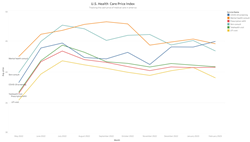
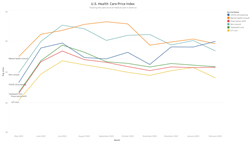
According to the latest USHPI, mental health consult prices in February 2023 were 7.5% lower than their September 2022 high, with a national average price of $44.59.

Released today, the latest U.S. Health Care Price Index, the first national resource to publicly document the price of cash-pay medical care in America and is powered by Sesame, shows that prices in February 2023 for cash pay health services were lower or flat to prices in January 2023, with the exception of COVID-19 screenings, which saw a 2% increase in price.

Over the past six months (September 2022-February 2023), USHPI pricing data demonstrates a similar trend – with health services including primary care telehealth, mental health, dermatology, women’s health and more becoming increasingly affordable, despite some minor fluctuations on a monthly basis. During the same period, COVID-screening prices saw more variation, likely mapping to the virus’ ebbs and flows.

Looking closer at the past six months, mental health consult prices in February 2023 were 7.5% lower than their September 2022 high, with a national average price of $44.59. These price fluctuations could be a function of increased demand for behavioral health services, given the country’s current mental health crisis. Primary care telehealth visits and prescription refill visits have held steady over the past six months, with prices hovering around $40-41. Conversely, COVID-19 screening prices in February 2023 were 9.1% higher than their low in November 2022, landing at a national average of $44.97 in February.

The USHPI features pricing data for routine medical services in all 50 states – from primary care and mental health to women’s health and more – with additional prices and specialties to be added over time. In addition to regional and state comparisons, the USHPI tracks price variance and market trends on a monthly basis.

The entire USHPI database of monthly cash prices from May 2022-February 2023 can be found here: http://www.sesamecare.com/compare/ushpi.

WHAT IS THE CASH PRICE OF MEDICAL CARE?

Simply put, the cash price is what a doctor or health care provider charges a consumer when a third-party payer – like insurance or a government entity – is not involved in the transaction. This could be because a patient does not have insurance, has a high-deductible health plan or chooses to pay their provider directly, without involving a middleman.

WHAT ARE EXAMPLES OF RECENT CASH PRICES?

In February, the average cash price of a primary care telehealth appointment in the United States, with a doctor or nurse practitioner, was $40.85. Alaska was the most affordable state in which to book a visit ($34.00), and Mississippi was the most expensive at $70.52. Regionally, Western, Mid-Atlantic and Southern states paid below average for primary care appointments, whereas patients in the Northeast and Midwest saw higher than average prices.

Mental health visits in February averaged $44.59 across the country. Most affordable mental health consults that month were found in Nebraska and Arizona at $37.00 and $37.31, respectively; states paying the highest were Minnesota ($69.00) and Massachusetts ($99.00).

Americans who paid cash for a prescription refill appointment paid an average of $40.78 in February. Patients in Florida and Texas paid the least for an appointment, just $36.23 and $36.35, respectively. Highest prices were found in Mississippi ($64.70) and Arkansas ($60.75).

WHAT IS THE METHODOLOGY USED TO COLLECT THE DATA?

The data comes from Sesame, one of the largest cash-pay health services marketplaces in the United States. It covers the thousands of health care providers resident in the marketplace that charge cash prices for their services. Sesame analyzed thousands of primary care and specialty care appointments made on its platform, leveraging pricing data for patient appointments that occurred during February 2023.

# # #

ABOUT SESAME

Sesame is building a radically new healthcare system for uninsured Americans and those with high-deductible plans. The company’s marketplace replaces historically inefficient, expensive healthcare with a direct connection – either virtually or in-person – between patients and physicians. This direct connection enables Sesame to offer doctor visits, labs, imaging and prescription drugs at half the price. Founders include a Harvard PhD in health policy and economics; a former Goldman Sachs analyst; and entertainment executive and healthcare reformer David Goldhill, author of the legendary cover story in The Atlantic, “How American Health Care Killed My Father.” Sesame has raised $75 million so far from investors that include GV, Virgin Group and General Catalyst. The company was ranked #1 by Healthline for overall care in 2021 and 2022. For more information, please visit http://www.sesamecare.com.

Share article on social media or email:

Health Connect America Celebrates Services Expansion and New Jobs


Health Connect America (HCA), a provider of mental and behavioral health services, plans to hire additional staff in recognition of its growth and increased service offerings in Statesboro, GA. HCA is planning an expansion of programs to include new supervised visitation for therapeutic foster care. The addition of these services allows treatment to be individually tailored to client needs, legal requirements for individuals, and overall community enhancement.

On March 13, 2023, 11:30 am Eastern Standard Time, HCA’s Statesboro office is partnering with the Chamber of Commerce to celebrate its growth and variety of new services with a ribbon cutting and hiring event at their new location of 114 Savannah Avenue Statesboro, GA 30458.

“Southeast Georgia is an important market area for HCA,” says Kristi Shain, president and chief executive officer, Health Connect America. “Services designed for the needs of each community we serve are the key to delivering on our commitment to support underserved populations with a higher level of care. This will be a great opportunity for those seeking employment or our wide range of services celebrating this new chapter for the Statesboro Community!”

The wide range of HCA programs help adults, children, adolescents, and families find hope and healing from traumatic events. These programs are designed to address issues like grief, anger management, family issues, and substance use. Individuals are offered the support they need to help improve the lives of children, adults, and their families.

HCA’s projected growth not only benefits the community by serving more clients, but also creates jobs in the area. HCA is hiring therapists, community support specialists, assessors, and family support specialists with high school diploma/equivalent and a health care coordinator with a bachelor’s in the human services field. All applicants must be licensed eligible to be a therapist and/or assessor.

“I am deeply grateful to everyone who believed in the vision for the Statesboro office and the passion for mental health services. This opportunity to combine two things I love: my community and mental health has been a blessing.” Says Misty Andrews, regional director of operations, “I am overly humbled and excited that HCA will now provide services in Statesboro and surrounding communities in Southeast Georgia. “

More about Health Connect America services programs are listed here. For more information on the HCA foster program visit here to learn more.

About Health Connect America

Health Connect America (HCA) provides mental and behavioral health services to children, families, and adults across 56 locations across five states impacting the lives of nearly 10,000 people daily. The organization is honored to be a part of the communities served walking with clients as they embark on a journey to self-improvement and more fulfilling lives. Health Connect America provides services where clients need them – within the community, the home, or in one of the organization’s many locations. Through a vast network of direct care professionals, HCA is readily available to meet the needs of both clients and their families. The services delivered include one-on-one or family counseling, case management, autism services, or medication management for children, adults, and families. These services promote positive personal growth, develop healthy coping skills, preserve and repair relationships and natural support systems. For more information see https://healthconnectamerica.com

Share article on social media or email:

Health-E Commerce issues smart money reminders for flexible spending account (FSA) and health savings account (HSA) users


A little-known, smart money fact is that shopping for health products with pre-tax FSA and HSA funds can save 30% or more on eligible healthcare expenses.

The 2022 tax filing deadline is almost here, but there’s another deadline looming that could affect millions of American consumers: The March 15 grace period deadline for flexible spending accounts (FSAs). With these two critical deadlines right around the corner, Health-E Commerce, parent brand to FSA Store and HSA Store, and the leading online marketplaces that sell exclusively FSA and health savings account (HSA) eligible products, is reminding consumers of the following smart money moves that will help them reduce their taxable income and use, not lose, their tax-free healthcare dollars.

“As inflation and cutbacks continue to affect consumers of all ages, the potential to save money on taxes and to make the most out of every dollar is a top priority,” said Zack Peckham, CFO, Health-E Commerce. “At Health-E Commerce, we’re working to educate the millions of Americans who are enrolled in FSAs and HSAs about how to use these tax-advantaged accounts to support their everyday health and their financial goals.”

5 smart-money tips for FSAs and HSAs

  • Don’t lose funds to a missed deadline. If you have a 2022 plan year FSA with funds left over, check if your employer offers a balance rollover or spending extension that gives you extra time to spend down dollars. For FSA plans with a December 31 spending deadline, employers may offer a 2.5 month grace period that gives account holders until March 15 to use 2022 FSA funds. Because deadline extensions are optional and not all FSAs are based on the calendar year, account holders should contact their human resources team or FSA administrator to check their deadline, any available extensions, and their balance so they avoid losing money to a missed deadline and forfeiting funds back to their employer.
  • Make a last-minute HSA contribution. While the FSA is pre-funded at the time of enrollment, account holders can make contributions to the HSA throughout the year. Account holders who have not yet contributed the maximum amount to their HSA for 2022 ($3,650 for individual and $7,300 for family coverage) have until April 18 to make contributions and reduce their taxable income for 2022.
  • Save money by using tax-free dollars for everyday health needs. A little-known, smart money fact is that shopping for health products with pre-tax FSA and HSA funds can save 30% or more on eligible healthcare expenses. From everyday health needs like cold and allergy products, menstrual care, and over-the-counter medications, to high-tech devices for managing high-blood pressure, diabetes, or chronic pain – FSA and HSA eligibility is extensive and surprising. Account holders should use an online eligibility list to identify healthcare expenses that they could be paying for with tax-free funds.
  • Save HSA receipts in case of an audit. While FSA expenses are verified and approved by the account administrator as they are incurred and submitted, HSA activity is not. This means that account holders are responsible for proving eligibility in case of an audit by the Internal Revenue Service. For this reason, it’s vital that HSA users save and organize receipts for each year they are enrolled in the account. Online receipt trackers can be a valuable tool in this effort.
  • Reduce taxable income with spending account contributions. Want to pay less in taxes? Enroll in an FSA during your annual open enrollment period, or open an HSA at any time during your plan year (as long as you are enrolled in a qualified, high-deductible health plan) and make contributions to the account. Any amount contributed is considered pre tax, which means it reduces the account holder’s taxable income. Even if you aren’t able to contribute the maximum amount, you can still benefit from funding the account. Not sure how much to contribute? Interactive tools and calculators can help account holders estimate healthcare expenses and determine how much to contribute and how much you might save in taxes.


To learn more about FSA and HSA rules and smart-money moves, visit the Learning Center at FSA Store or HSA Store.

About Health-E Commerce

Health-E Commerce is the parent brand to FSA Store, HSA Store and WellDeservedHealth, a family of online marketplaces that serve the 70+ million consumers enrolled in pre-tax health and wellness accounts. The company also created Caring Mill, a popular private-label line of health products that benefits Children’s Health Fund and enables customers to make a donation with each purchase. Since 2010, the Health-E Commerce brands have led7 the direct-to-consumer e-commerce market for exclusively pre-tax health and wellness benefits. Health-E Commerce plays an essential role in expanding product eligibility for important new categories within the list of eligible medical expenses.

Share article on social media or email:

MemberPress Parent Company Caseproof Acquires MemberMouse


MemberPress and MemberMouse WordPress plugins owned by Caseproof LLC

I couldn’t be more excited to be part of the new, combined team set and ready to help MemberMouse make history.

Today, software company Caseproof announced its Jan. 23 acquisition of WordPress enterprise-level membership plugin MemberMouse. MemberMouse and Caseproof’s flagship product MemberPress will remain separate products serving distinct markets. Expansion plans are in place for both plugins.Like all Caseproof products, MemberMouse is now part of the Awesome Motive Growth Accelerator led by digital entrepreneur Syed Balkhi.Developer Eric Turnnessen founded MemberMouse in Aug. 2009 to serve online businesses ranging in size from small to enterprise. In the acquisition announcement Caseproof CEO and MemberPress founder Blair Williams said he plans to leverage what he considers the plugin’s greatest strength: large-scale membership functionality. “MemberMouse has an extensive and powerful tool set for building membership sites that would rival any enterprise-level service […]. I’m really just beginning to scratch the surface here.”

Caseproof’s MemberPress plugin is the world’s top-selling WordPress membership and monetization tool. It is designed primarily for online creators and entrepreneurs. Williams said the decision to acquire MemberMouse was based, in part, on a desire to serve a larger market: “Caseproof’s goal […] is to offer the best revenue-generating tools for WordPress. Broadening our scope and exploring the space is one of the ways we’re forging ahead to meet that goal.”

Several reporting and marketing features he believes differentiate MemberMouse from other membership tools in the large-scale space were also factored in Williams’ decision. He said, “We’ve got a tagging system that literally lets you automate a ‘choose your own adventure’-style buyer’s journey, and an automated upsell system that’s like having an AI consumer psychologist on auto-dial […]. I can hardly contain myself when I start thinking about the possibilities.” Williams said MemberPress and MemberMouse will “take cues from one another” in the interest of expansion and development but will remain separate. “They serve distinct groups and are certainly distinct products. The great thing is that the individual teams and products are amazing and can learn so much from one another. I can already tell they’re going to make each other stronger and better.”

“I couldn’t be more excited to be part of the new, combined team set and ready to help MemberMouse make history,” Williams said.

About Caseproof: In 2004 developer Blair Williams formed Caseproof LLC in the state of Utah. The company has built numerous software products, including Pretty Links, Easy Affiliate, and ThirstyAffiliates, for clients and the public. Its flagship product MemberPress is the world’s most widely used monetization and membership plugin for WordPress. MemberMouse, the product family’s newest addition, is an enterprise-level membership plugin.

Share article on social media or email:

Award-winning Author Sandra L Rostirolla Takes on Teens and Mental Health with Making Friends With Monsters


Making Friends with Monsters

“I knew I had to break this stranglehold of silence around mental illness,” Rostirolla says. “That’s when the idea of the book was born.”

Award-winning author Sandra L Rostirolla will celebrate the release of Making Friends With Monsters on April 4, 2023. Readers can pre-order the book at any bookstore and available upon request at local libraries.

According to the US Centers for Disease Control and Prevention, suicide has become the second leading cause of death among children 10 to 14. Sandra L Rostirolla decided to change this terrifying statistic, fueled by stigma and silence.

Based on the author’s experiences with suicide in her family, Making Friends With Monsters offers a language for young adults to talk about the dark emotions they often face but bury, before it’s too late. Publishers Weekly Booklife called the book an “urgent, unflinching YA novel about the ‘monsters’ of depression and family dysfunction” (Editor’s Pick).

Rostirolla’s father died by suicide when she was thirteen. Since then, two of her brothers also died by suicide. The family dealt with their loss in silence. When she met a friend who told her that the hardest thing about her ex-partner’s suicide was how to explain it to her three young daughters (ages 11, 14 and 20), the recurring theme of silence around suicide hit hard.

“I knew I had to break this stranglehold of silence around mental illness,” Rostirolla says. “That’s when the idea of the book was born.”

Her novel, Making Friends With Monsters, uses “monsters” as a metaphor for the dark forces inside of us, bringing to life what drives them and how we can talk about them and confront them.

Set on a struggling farm in Australia, Making Friends With Monsters follows 12-year-old Sam on a quest to find out about the monsters plaguing his older brother Ben and his parents. Through Sam’s eyes, readers discover just how sneaky one’s monster can be and how hard it is to get rid of––especially because most people don’t know they even have a monster!

Rostirolla navigates Sam’s journey with compassion and grit, not shying away from stark realities and raw emotion while also exploring the deep well of resilience that will arise in coming to know our monsters and finding a way back to the light.

Born in Sydney, Australia, Sandra Rostirolla graduated from the University of Sydney with a BAppSc (Physiotherapy). She now lives in Los Angeles, where she presently works as a development executive in the film industry.

Share article on social media or email:

New Ingredient Transparency Requirements Expose that Salon Professionals Continue to Be Put at Risk by Industry


Report on ingredient disclosure and safety of salon products and impacts on worker health

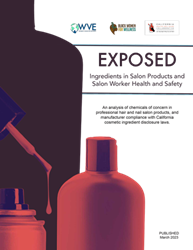
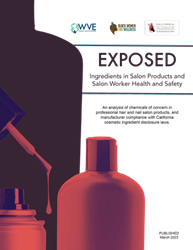
New Report, EXPOSED: Ingredients in Salon Products & Salon Worker Health and Safety,

“Finally, we’re getting a clearer look into exactly what and where exposures are occurring, and more importantly, we can hold the industry accountable for the pervasive use of hazardous ingredients known to put the health of salon professionals and their clients at risk,” said Alex Scranton of WVE.

A new report released by health and justice organizations, Women’s Voices for the Earth (WVE), Black Women for Wellness, and the California Healthy Nail Salon Collaborative (CHNSC), spotlights how new ingredient disclosure requirements for professional salon products are providing improved and vital information about chemical exposure from the use of these products. The report, Exposed: Ingredients in Salon Products & Salon Worker Health and Safety, calls attention to significant changes the industry has made in increasing ingredient transparency as a result of new laws. It also points to chemicals of concern that, despite years of documented links to adverse health impacts, continue to be widely used in professional nail and hair products. Specifically, the report reveals over 30 hazardous ingredients in professional salon products only recently disclosed on product labels.

“For decades hair and nail salon workers have been denied essential ingredient information about the products they are exposed to at their jobs,” said Alexandra Scranton, lead author on the report and WVE’s Director of Science and Research. “While studies of salon workers have long established the health dangers associated with chemicals used in professional salon products, the industry has been legally allowed to keep these harmful ingredients a secret. Finally, we’re getting a clearer look into exactly what and where exposures are occurring, and more importantly, we can hold the industry accountable for the pervasive use of hazardous ingredients known to put the health of workers and their clients at risk.”

“Hair and nail salon professionals bear a high burden from toxic chemicals in beauty care. There is inadequate regulation and policy to protect workers. Unfortunately, hair and nail care professionals are overexposed and under-protected to a greater extent and a disproportionate number of workers are Black individuals, and women of color,” said Dr. Astrid Williams, Environmental Justice Program Manager with Black Women for Wellness. “The industry’s apparent disregard of ingredient safety means these workers are forced to bear a higher toxic load for working day in and day out with some of the most toxic chemicals.”

Several significant cosmetics laws newly enacted in California are providing more information about professional salon products than ever before. Of particular importance to ingredient transparency is AB 2775 that passed in 2018 (introduced by Assembly Member Ash Kalra (D-San Jose)) and was enacted in July 2020 – making California the first state in the nation to require manufacturers of professional salon products to disclose ingredients. Unlike retail cosmetics, products used by salon professionals were previously not required to list any ingredient information on the label, making it nearly impossible for salon workers to know what chemicals they are being exposed to and preventing workers from selecting products that may pose less of a health risk.

Also of significance to ingredient information of salon products and cosmetics is California’s Fragrance and Flavors Right to Know Act of 2020 (SB 312) which requires manufacturers to report toxic fragrance and flavor ingredients listed on the California Safe Cosmetic Program (CSCP) Reportable Ingredient list to the CSCP. This information is publicly available on the California Safe Cosmetics Program Product Database.From August 2022 – October 2022, the report’s co-releasers led a field study examining ingredient disclosures on salon product labels in California. This new report examines the findings of that field study.

“Companies have little incentive to develop safer and better alternatives to toxic ingredients when they are allowed to sell products without having to admit what’s in them,” said Lisa Fu, Executive Director of the CA Healthy Nail Salon Collaborative (CHNSC). “Ingredient transparency is a step in the right direction towards centering the health of those most impacted – the beauty care workforce.”

“I think that it’s our right as stylists to know what chemicals we’re exposed to so that we can make informed decisions on whether or not we want to use certain products for our own protection as well as for the safety of our clients,” said Freda Cullins, who has been a hair professional for over two decades. “I hope for honest, effective, clean products with ingredients that I can identify and trace back to a source that has a place in maintaining the health of hair.”

Results of the field study found that most professional salon products reviewed did include a listing of ingredients on the package, yet compliance was still imperfect in many cases. The three types of compliance problems included products having no listing of ingredients at all; ingredient information was either inaccessible or impossible due to missing outer packaging; or product labels listed ingredients in a manner that was vague or non-specific.

The report also reveals a damaging lack of innovation toward safer chemistry in the professional salon product industry. Despite decades of warning from public health officials about many chemicals used in these products – and known harm to salon workers – the report outlines numerous hazardous chemicals remain widespread in professional salon products that harm lungs, cause allergic skin reactions and are linked to reproductive harm and cancer. And in cases where manufacturers did make changes to formulas in an attempt to reduce toxicity, many times toxic ingredients were replaced with regrettable substitutions; a known practice where essentially one toxic chemical is swapped out for chemically-similar, toxic alternative.

“Swapping one toxic chemical for another is not a solution to safer products or improved ingredients,” said Jamie McConnell, Deputy Director at WVE. “The industry needs to do the due diligence necessary to develop truly safer alternatives before putting it on the market. The choice of regrettable substitutions perpetuates occupational exposure to harmful chemicals among salon workers and their customers. The industry can and must do better to protect health.”

Studies routinely show that women working in nail salons report acute health concerns such as rashes, headaches, dizziness, and breathing difficulties, as well as miscarriages, birth defects and cancers. [1] [2] Hairdressers are at increased risk of miscarriage and babies born with cleft palates. In addition, studies found that hairdressers have greater risks of dying from neurological conditions including, Alzheimer’s disease and pre-senile dementia, compared to workers in other jobs. [3]

“I was very healthy before starting work in the nail industry. Three or four years after working in the nail salon industry, my hands started shaking. My entire left arm went numb, so I couldn’t feel it a lot. At work, while massaging customers, I would pretend to use my left hand to push, but really I was just doing the motion. My right hand was doing most of the massage. I also had bad body aches,” said Trish Pham, a former nail salon worker whose story is featured in the report. “Then I got cervical cancer. I don’t know if any of my body aches or left hand numbing or the cancer is related to the nail salon industry. I just know that after the cancer treatment I had to quit the nail salon work because it is too dangerous for me now.”

In addition, instead of any significant innovation to make salon products safer, the report uplifts how the industry is relying on warning labels and complex user instructions to reduce exposure to the toxic chemicals they contain – many of which are virtually impossible to follow given the nature of these products. For example, hair relaxers include warnings to “Keep relaxer off scalp and other skin areas.” While caution can certainly be taken to minimize skin exposure, this is clearly an unrealistic instruction for a product that is intended to be applied to hair that is growing out of one’s scalp. What’s more, this tactic unfairly puts the responsibility for safety on the shoulders of salon workers, rather than on the manufacturers.

“Cosmetic companies often put egregious and unrealistic use instructions on products that can be completely contrary to the product’s purpose,” said Tianna Shaw Wakeman, Environmental Justice Program Lead at Black Women for Wellness. “This unfairly puts the onus on salon workers to make changes instead of on companies to make safe products. Therefore, not only have many salon workers been forced to use products with ingredients that harm their health and the health of their clients, but in many cases, they’ve also been blamed for this harm. It’s simply cruel.”

FUTURE OF COSMETICS AND SALON PRODUCT SAFETY UNDER MODERNIZATION OF COSMETICS REGULATION ACT (MOCRA)

In 2022, the Modernization of Cosmetics Regulation Act of 2022 (MOCRA) was signed by President Biden. Under this new law, professional salon products are required to meet the same requirements as the labeling of retail cosmetics by the end of 2024, bringing the rest of the nation up to par with requirements in California. MOCRA represents the first significant updates to the Food, Drug, and Cosmetic Act in over 80 years. In addition to requiring the labeling of salon products, the law also requires manufacturers to report serious adverse events to the FDA within 15 days; gives the FDA the authority to issue a mandatory recall of products that are adulterated and/or misbranded if the manufacturer doesn’t voluntarily recall the product; and requires labeling of fragrance allergens, as directed by the FDA via new regulations. These new laws mark a significant change in the public’s right to know (and particularly salon worker’s right to know) about ingredients in cosmetic products.

“This level of transparency and increased regulations for cosmetics salon products has been decades in the making and is something to celebrate. We have long fought for ingredient transparency as an invaluable tool to empower the public and as an important step toward ingredient safety and corporate accountability. And we’re getting there. Ultimately, all manufacturers can and should improve on their disclosure and the ingredient safety of these products, and support policies to ensure transparency, safety and accessibility is practiced throughout the industry,” said Scranton of WVE.

“I have always made a point of knowing as much as possible in my field, especially about products and chemicals I am exposed to, but the information in this report made me realize how much I did not know. It makes me angry and sad for the lack of protection we have been experiencing for years,” said Fabienne Grisel-Todorov, a hair professional who participated in the report’s field study and research. “But I am thrilled to see things changing for the better and that laws are being updated. The impact of knowing what is in the products is huge, not just for salon workers, but also for the public who trust us as their stylists in making informative decisions, and let them know if they are exposed to allergen or dangerous chemicals. Having ingredients stated on the labels helps everyone.”

View Full Report.

View Report Fact Sheet.

(1) Quach, Thu, et al, Adverse birth outcomes and maternal complications in licensed cosmetologists and manicurists in California, Int Arch Occup Environ Health (December 2014)

(2) Beauty and it’s Beast, https://womensvoices.org/wp-content/uploads/2014/11/Beauty-and-Its-Beast.pdf/

(3) Park RM, Schulte PA, Bowman JD, Walker JT, Bondy SC, Yost MG, Touchstone JA, Dosemeci M. Potential occupational risks for neurodegenerative diseases. Am J Ind Med. 2005 Jul;48(1):63-77.

ABOUT

Women’s Voices for the Earth (WVE)

Founded in 1995, Women’s Voices for the Earth (WVE) drives action towards a future free from the impacts of toxic chemicals alongside those historically and presently ignored by the environmental health movement by leveraging an intersectional solidarity approach based on our expertise in research, advocacy and organizing. http://womensvoices.org

Black Women for Wellness

Black Women for Wellness is a nonprofit 501c3 committed to the health and well-being of Black women and girls through health education, empowerment and advocacy. bwwla.org

California Healthy Nail Salon Collaborative (CHNSC)

The California Healthy Nail Salon Collaborative’s mission is to mobilize the nail salon workforce to transform the health, safety, and working conditions of the nail salon industry to build a healthy, sustainable, and equitable community. Through outreach and education, nail salon workers and owners build their knowledge and skills on health, safety, and workplace rights. We also provide leadership development and believe in organizing to transform communities, organizations and individuals. For more information, see cahealthynailsalons.org.


APEX Biologix Enters Into Know-How License Agreement with Mayo Clinic for Development of Regenerative Medicine Products


News Image

APEX Biologix, a leading regenerative medicine device company that specializes in the development of advanced patient therapies, announced today it has entered into a know-how license agreement with Mayo Clinic to jointly develop new regenerative medicine products. Under the agreement, Mayo Clinic will license its know-how to APEX Biologix, enabling the two organizations to collaborate on the development of new therapies that can potentially transform the treatment of musculoskeletal disease including acute injuries and chronic disease in joints and spine.

This collaboration will leverage Mayo Clinic’s extensive expertise in clinical research and patient care, as well as APEX Biologix’s cutting-edge technology and innovative therapies. This partnership will allow accelerated development of new regenerative medicine products to the patient market more efficiently.

“Our team is dedicated to developing safe and effective therapies that can improve patient outcomes and quality of life. We believe that this collaboration will enable us to enhance our product development process through an even more rigorous data driven approach.” said Jim Rogers, CEO of APEX Biologix.

The collaboration represents an exciting new chapter in the development of regenerative medicine products and has the potential to revolutionize the field of interventional regenerative orthobiologics.

Mayo Clinic has a financial interest in the technology referenced in this press release. Mayo Clinic will use any revenue it receives to support its not-for-profit missions in patient care, education, and research.

About Apex Biologix

APEX Biologix is an industry leader in orthobiologics. The company is dedicated to the science and research of innovative biologic medicine and its potential, while supplying physicians with the best products and education available to treat their patients and improve quality of life. Find out more at http://www.apexbiologix.com.

Share article on social media or email: