All posts by imreal

Polyverse Launches Polymorphing for SUSE Linux Enterprise


Secure retail and cloud technologies with Polymorphing

Polyverse Corporation today announced the availability of Polyverse Polymorphing for SUSE Linux Enterprise Server at SUSECON Digital 2020.

Polyverse Polymorphing for Linux now extends its groundbreaking protection against the most common and deadly cyberattacks to critical workloads and applications that run on SUSE Linux Enterprise Server.

Among common vulnerabilities and exploits (CVEs), memory-exploiting zero-day attacks are the most difficult to defend against and make up 80% of all CVEs. Memory-based attacks take aim at specific function locations, CPU registers and other targets. Polymorphing randomly changes all of these targeting details at the binary level, providing immediate protection against all memory-based vulnerabilities—whether systems are patched or unpatched—without any negative impact on application performance or disruptive changes to working practices or processes.

With this announcement, Polyverse supports all major versions of Linux, including Alpine, CentOS, Debian, Fedora, Red Hat, SUSE and Ubuntu.

“The addition of SUSE Linux Enterprise Server extends the power of Polymorphing to all major Linux distributions,” said Alex Gounares, Polyverse CEO. “With the pervasiveness of Linux and open source technologies, Polymorphing is the only comprehensive Linux security solution that protects physical, virtual and containerized workloads from edge to core to cloud.”

Polyverse is a Terabyte sponsor at SUSECON Digital 2020, an online event being held on Wednesday, May 20, 2020.

Polyverse is delivering two sessions during SUSECON Digital with its partners Novacoast and Sysdig:

“How to secure your containerized and Kubernetes-based workloads”

In this session Polyverse and Sysdig will show you how to secure your containerized and Kubernetes based workloads.

Rui Maximo, Director of Solutions Engineering, Polyverse

Alex Lawrence, Principal Solutions Engineer, Sysdig

Wednesday, May 20 | 03:00 PM – 03:30 PM BST |

“Securing SUSE Linux Enterprise against zero-day cyberattacks”

In this session, learn how easy it is to polymorph SUSE Linux and how to best integrate with other SUSE tools such as SUSE Manager create an environment that is more secure and easier to manage.

Rui Maximo, Director of Solutions Engineering, Polyverse

Dan Elder, Linux Services Manager, Novacoast

Wednesday, May 20 | 03:30 PM – 04:00 PM BST

About Polyverse:

Polyverse Corporation is a cybersecurity company that uses its revolutionary Polymorphing technology to defend global enterprises and governments against the most devastating zero-day cyberattacks. Its technology has been validated by the U.S. Department of Defense to mitigate against zero-day memory exploits. Founded in 2015, Polyverse is led by founder and CEO Alex Gounares. In November 2019, CNBC named Polyverse as one of the Top 100 Startups in the World. Visit our website, read our blog, and follow us on Twitter @PolyverseCorp. For any questions please contact Joanne Harris at +1 855 765 9837 or jharris@polyverse.com.

Media Contacts:

Joanne Harris

Polyverse Corporation

jharris@polyverse.com

+1(855) 765-9837

Share article on social media or email:


Sphero® Announces Spin-Out of Company Six, a Startup Focused on Robotic Systems to Advance Safety, Security and Situational Awareness for those with Dangerous Jobs


News Image

“Our team is excited to build critically-needed robotic hardware and advanced software solutions that help first responders and people with dangerous jobs,” says Booth. “Our mission is to build powerful and affordable technology that we can put in the hands of as many people as possible.”

Former Sphero COO Jim Booth Joins Company Six as CEO, Paul Copioli Named New CEO of Sphero, and former CEO Paul Berberian to Become Chairman of both Companies.

Sphero, the industry leader in edtech programmable robots and STEAM-based educational tools, announced today that it has successfully completed the spin-off of Company Six into an independent company to commercialize intelligent robots and AI-based software applications for first responders, government, defense, and those who work in dangerous situations.

Company Six started as Sphero’s Public Safety Division, brought to life from Paul Berberian’s and Jim Booth’s backgrounds in military service and their passion for providing innovative tools for first responders and those who put themselves in harm’s way. By applying the experience used to bring more than 4 million robots to market at Sphero, the Company Six team believes it can create products that are not only robust and feature-rich enough for professional applications, but also affordable enough to be adopted by the majority, rather than the minority, of civilian and military personnel.

Former Sphero COO Jim Booth will lead the Company Six team as CEO, and is joined by several members of the original Sphero team.

“Our team is excited to build critically-needed robotic hardware and advanced software solutions that help first responders and people with dangerous jobs,” says Booth. “Our mission is to build powerful and affordable technology that we can put in the hands of as many people as possible.”

Booth was one of the early mentors to Ian Bernstein and Adam Wilson, Sphero’s two co-founders, as part of the Techstars Boulder Accelerator 2010 class. He joined Sphero after the Techstars program and helped launch and scale the company and managed numerous key areas, including operations, HR, legal, sales, finance, marketing, and business development.

In connection with the spinout and formation of Company Six, they also closed a $3M seed investment round led by Spider Capital, with participation from existing Sphero investors including Foundry Group, Techstars, as well as new investor GAN Ventures to fund commercialization and market entry of their initial products. At Company Six, the founding team is continuing to develop groundbreaking and affordable robotic technology as they have done over the past 10 years with Sphero. The products and services they will deliver to this new market are essential to maintaining safety, situational awareness,and improving decision making in the field for critical incidents and everyday operating environments.

In conjunction with Company Six spinning off, the board of directors has named Paul Copioli the Chief Executive Officer of Sphero, effective immediately.

Copioli joined Sphero in August 2019 after Sphero joined forces with New York-based littleBits, the company that invented the snap-together electronic building blocks that teach the foundations of circuitry and STEAM, where he served as President and COO. Before littleBits, Paul was the president of VEX Robotics for more than nine years. During his tenure with VEX, Paul led the company to become the largest and most successful of Innovation First International’s (IFI) three wholly-owned subsidiaries, growing the business nine times over in under a decade.

“It’s an honor to lead the Sphero team as we continue to pave the way for accessible robots, STEAM and computer science education for kids around the world,” says Copioli. “With our focus on education and our mission to inspire the creators of tomorrow, Sphero has a long-standing place in our school systems and beyond. Paul Berberian’s immense contribution to the company leaves me with a strong leadership model to carry forward, and I look forward to Sphero’s continued success.”

Berberian, Sphero’s former CEO, will move into the newly designated role of Chairman after more than a decade leading the Boulder-based company. Berberian will also preside over Company Six as the team brings to market both advanced robotic products and a cloud-based analytics and monitoring platform designed to advance the awareness of those who put themselves into harm’s way.

“In my time as Sphero’s CEO I was amazed by the number of kids’ lives we positively affected by bringing our robots into classrooms and living rooms worldwide,” says Berberian. As Chairman of both Sphero and Company Six, this is an opportunity to continue to bring revolutionary robotics technology to new markets to improve the lives of more people, our future leaders, and people with essential and sometimes dangerous job functions. With Paul Copioli and Jim Booth’s experience, I’m confident both companies will flourish under their leadership.”

For more information on Company Six, please visit http://www.companysix.com/.

ABOUT SPHERO:

Sphero inspires the creators of tomorrow through remarkably cool, programmable robots, electronic building blocks, and educational tools that transform the way kids learn and create through coding, science, music, and the arts. Sphero goes #BeyondCode and drives kids to turn their imagination into reality. The skills students unlock through play-based learning prepare them to thrive, no matter what subject or career they pursue. Based in Boulder, CO, Sphero has become the #1 STEAM-based learning solutions company, loved by millions of parents, kids and educators worldwide. Learn more at http://sphero.com.

ABOUT COMPANY SIX:

Company Six (CO6) is a venture-backed robotic and cloud technology company headquartered in Boulder, CO that is dedicated to advancing the awareness and protection of those who put themselves into harm’s way. By combining advanced robotic platforms with a highly secure cloud-based technology suite, their products will fundamentally transform the way first responders operate in dangerous environments. CO6’s products are based on nearly a decade of technology development, and are designed to deliver a lightweight, yet highly advanced robotic solution that provides critical awareness for those we depend on the most, including police, fire, EMT, military, and others with dangerous jobs.

We’ve got your back.

http://www.companysix.com/

Convergent Dental Announces the Solea All-Tissue Laser Reduces Dental Aerosols & Splatter by up to 99.9%


This study confirmed what has been obvious to me since I first started using Solea in my practice. There is virtually no splatter with Solea.

Convergent Dental, Inc., developer of the industry-leading 9.3µm CO2 all-tissue Solea laser, announced today that Solea reduces dental splatter and aerosols by up to 99.9% compared to traditional handpieces. This finding supports recent guidance provided by the American Dental Association (ADA), recommending dentists use clinical techniques that “reduce aerosol production as much as possible, as the transmission of COVID-19 seems to occur via droplets and aerosols.”

Two different measurement methods produced similar results, confirming that Solea produces between 97% and 99.9% less splatter and aerosols compared to the traditional dental handpiece. Dr. Mark Mizner of Commonwealth Dental Group operated the laser and the drill for a series of tests in which extracted human molars were placed in a model of a human head and cut with each of the instruments. “This study confirmed what has been obvious to me since I first started using Solea in my practice,” said Dr. Mizner. “There is virtually no splatter with Solea.”

Solea utilizes ~67-83% less water flow, ~74% less air pressure, and cuts without contact, as opposed to drills, which cut by transferring mechanical energy at up to 400,000 RPM.

“Solea has always provided a better experience with drill-free, needle-free fillings and blood-free, suture-free surgeries. We are proud to add significantly safer dentistry for both doctors and patients to the list of Solea benefits,” said Michael Cataldo, CEO of Convergent Dental.

For more information about Solea, please visit ConvergentDental.com or call 844.GOSOLEA.

About Convergent Dental, Inc.

Convergent Dental, Inc. is a privately-owned dental equipment and technology company. Solea® is the only computer-aided, CO2 laser system to be cleared by the FDA for all-tissue indications. With Solea’s unique wavelength and computer controls, dentists can reliably perform procedures anesthesia-free, blood-free, suture-free, and pain-free. Reliably anesthesia-free and blood-free procedures pay huge dividends for patients in the form of a vastly improved dental experience and dentists in terms of significant practice growth. For more information, please visit ConvergentDental.com. Follow the company on Facebook, LinkedIn, and Instagram.

Share article on social media or email:


American College of Lifestyle Medicine Announces Global Lifestyle Medicine Week Campaign May 24-May 31 to Highlight Urgent Need for Healthier Lifestyle


News Image

“What the world really needs now is health restoration.”

The American College of Lifestyle Medicine (ACLM) today announced the second annual Global Lifestyle Medicine Week, with the observance this year slated to run from May 24th to May 31st. The week will showcase the health pillars of the field, serving as a public awareness campaign to highlight the benefits of evidence-based Lifestyle Medicine therapeutic approaches, including a whole food, plant-predominant dietary lifestyle, regular physical activity, adequate sleep, stress management, avoiding use of risky substances, and social connectedness, to treat, reverse and prevent chronic disease, thereby restoring and optimizing health.

Chronic disease, rooted in unhealthy lifestyle behaviors, is the leading cause of death and disability in the U.S., having reached epidemic proportions. Sixty percent (60%) of American adults now live with at least one chronic condition, while forty-two percent (42%) have more than one. Chronic disease now accounts for hundreds of billions of dollars in health care spending every year, representing as much as eighty-six percent (86%) of all health care expenditures.

Non-communicable, chronic disease is a looming pandemic worldwide, not just in the U.S. Case in point, the Institute of Health Metrics and Evaluation’s 2019 Global Burden of Disease Report, reviewing data from nearly 200 counties, found that it is what people are and are not eating that’s the leading cause of disease and death in the U.S. and around the world. According to the World Health Organization (WHO), 80% of heart disease, stroke and type 2 diabetes and 40% of cancer could be prevented, primarily with improvements to diet and lifestyle.

“We’ve all heard the lyrics to the song, ‘What the world needs now is love,’ which is true,” said ACLM Executive Director Susan Benigas. “What the world really needs now is health restoration. We need a loud wake-up call regarding the state of our health, individually and collectively. We need a nation and world filled with Lifestyle Medicine trained and certified medical professionals who will educate, equip and empower patients to treat and, oftentimes, even reverse their chronic conditions through evidence-based lifestyle behavior modification.”

For many years, ACLM has been sounding the alarm regarding the continued upward trajectory of chronic disease and its unsustainable associated costs, although the intersection of chronic disease and our current COVID-19 pandemic is amplifying the urgency of the message. Data show that a majority of patients hospitalized with COVID-19 had one or more underlying health conditions. Studies from the CDC and others suggest that, once infected with the coronavirus, people with such conditions are at particular risk for severe illness, including hospitalization and death.

“We’ve been hearing reports day after day that those who are most vulnerable are those with compromised immunity resulting from underlying conditions, most of which are lifestyle-related chronic diseases, such as hypertension, type 2 diabetes, heart disease, obesity and others,” Benigas said. “This emphasizes that the time is now—more than ever before—for Lifestyle Medicine to become the foundation of health and all health care.”

Celebrating its 16th year as the only medical professional society in the U.S. dedicated to the field of Lifestyle Medicine, ACLM is experiencing exponential growth, with a membership of more than 4,000 physicians and other health professionals dedicated to clinical and worksite practice of Lifestyle Medicine, which is synonymous with value-based care: reining in costs, while delivering far superior patient outcomes. Interest in Lifestyle Medicine is growing rapidly among physicians and other health professionals desiring to treat root-causes of disease—an approach most did not learn in medical school or in other health care-related training. Medical professionals, patients and those on Capitol Hill are awakening to the unsustainable prevalence of chronic disease and the associated costs that stand to jeopardize the solvency and security of our nation.

Internationally, Lifestyle Medicine medical professional associations are emerging on every continent, as the world is awakening to the urgent need to treat the root causes of non-communicable disease, including the looming global pandemic of type 2 diabetes. Some 20, and growing, Lifestyle Medicine organizations are now represented by the Lifestyle Medicine Global Alliance.

The Lifestyle Medicine physician has been recognized by the Association of American Medical Colleges as one of the top five emerging medical careers. Board certification is also available. ACLM partners with the American Board of Lifestyle Medicine to provide physician and professional board certification. Since 2017 in the U.S., 761 MD/DO physicians have received board certification and 296 PhD/master’s level clinicians and bachelor-level nurses have received professional certification. Certification in the field outside the U.S. is offered through the International Board of Lifestyle Medicine.

ABOUT THE AMERICAN COLLEGE OF LIFESTYLE MEDICINE: ACLM is the medical professional society for those dedicated to the advancement and clinical practice of Lifestyle Medicine as the foundation of a transformed and sustainable health care system. Lifestyle Medicine is the use of a whole food, plant-predominant dietary lifestyle, regular physical activity, restorative sleep, stress management, avoidance of risky substances and positive social connection as a primary therapeutic modality for treatment and reversal of chronic disease.

More than a professional association, ACLM is a galvanized force for change. ACLM addresses the need for quality education and certification, supporting its members in their individual practices and in their collective mission to domestically and globally promote Lifestyle Medicine as the first treatment option, as opposed to a first option of treating symptoms and consequences with expensive, ever increasing quantities of pills and procedures. ACLM members are united in their desire to identify and eradicate the root cause of disease, with health restoration as the desired outcome. Learn more at [http://www.LifestyleMedicine.org.

Share article on social media or email:

Healthcare’s Post-COVID-19 Margin Recovery Plan: Permanent Digitally-Enabled Cost Take-outs that Win with Patients


As part of their COVID-19 financial recovery, digital patient financial engagement can save hospitals millions

By delivering personalized financial experiences that align with patients’ medical experiences, providers upgrade overall patient care and save themselves millions – Kevin Fleming, CEO, Loyale Healthcare

One agonizing irony of the COVID-19 crisis has been its impact on the American healthcare industry. Health systems and hospitals have stepped up to build and staff temporary treatment facilities. They have ingeniously overcome shortages of personal protective equipment and ventilators. Doctors, nurses and other caregivers have given their all – at great personal risk – to care for the sick and dying. In these and so many other ways, this episode in our history has been one of healthcare’s finest hours.

At the same time that Americans are celebrating the heroism of our healthcare industry, the COVID-19 crisis has driven the industry into a financial crisis. According to analysis just published by the American Hospital Association (AHA), the effects of COVID-19 hospitalization costs, cancelled and forgone services, added costs for the purchase of PPE and costs for support to workers is estimated to amount to $202.6 Billion for the four months March through June. For many, these financial losses are in addition to already precarious financial circumstances.

These effects have begun to moderate as COVID-19 case counts pass their peak and states allow providers to resume elective and other nonessential procedures. And although losses for many have been reduced by funding through the CARES Act and accelerated payments and incentives from Medicare/Medicaid, the financial damage wreaked by the crisis will take a long time to overcome.

Patients are struggling financially too. Long before the crisis began, patients’ financial access to care had become a growing problem. Because of high deductible health plans and copays, according to one report, as many as one in four Americans were either avoiding or delaying care because of concerns about personal, out-of-pocket costs.

Americans’ concerns about cost have certainly only gotten worse. According to a report published by the Kaiser Family Foundation, “Between March 1 and May 2, 2020, more than 31 million people had filed for unemployment insurance”, going on to estimate that, “nearly 27 million people could potentially lose employer-sponsored insurance and become uninsured following job loss.”

The report goes on to explain that the majority of these individuals should be eligible for Medicare/Medicaid or Affordable Care Act subsidies, but points out that “Even before the coronavirus crisis, there were millions of people eligible for Medicaid or marketplace subsidies who were uninsured.” In our opinion, that phenomenon will be even more prevalent following this crisis.

“Never Let a Crisis Go to Waste”: COVID-19 Lessons to Remove Inefficiencies, Restore Financial Performance Starting Now

Just as patients’ reluctance to seek care because of cost existed before the current crisis, healthcare revenue cycle has long suffered from a wide variety of systemic inefficiencies. This is particularly true in the discipline of patient revenue cycle, where our company, Loyale, operates. For healthcare providers, the industry’s rapid development of telehealth solutions in response to the crisis holds the key to tackling these chronic revenue cycle inefficiencies.

Prompted by stay-at-home rules and consumer demand; and supported by temporarily expanded reimbursement policies from Medicare/Medicaid, the rapid implementation of telehealth digital care delivery has met with widespread approval by providers and patients alike.

In a story from Healthcare Finance News, pointing to growing demand for congressional action to make Medicare’s telehealth reimbursement changes permanent, Emory Healthcare is called out for the “velocity with which they made this change. …They went from zero telemedicine appointments to over 4,000 a day.” The story goes on to quote Sarah Kier, Emory’s vice president of patient access for physician group practices saying, “some things won’t work for telemedicine, but for the things that do work our patients and providers would love to see it continue post-COVID.”

It’s simple, really. By delivering appropriate healthcare on a safe, compliant platform to anyone with Internet access, everyone wins. Providers maintain patient volumes and their associated revenues while delivering intimate, one-on-one care experiences and patients stay safe and comfortable in their own homes.

The same principle also applies to the financial dimension of the provider – patient experience. By scaling and standardizing patient revenue cycle systems using a digital patient engagement platform, health systems and hospitals can reduce or eliminate unnecessary expenses, cutting costs by millions. These often-overlooked expenses may include:

1. Merchant fees for credit card collections,

2. Processing, shipping and handling of paper statements,

3. Audits and management to ensure PCI and other regulatory compliance,

4. Aged patient receivables due to billing errors and patient confusion

5. Early-out and other revenue cycle vendors that purchase patient debt,

6. Multiple billing statement cycles,

7. FTE-intensive client and staff support functions, and

8. Outsized costs associated with synching separate operations such as acute and ambulatory care.

In total, healthcare spends a lot – we think too much – to collect balances from their patients.

Like telehealth, digital patient engagement allows healthcare providers to interact intimately with patients, but at scale. By delivering personalized financial experiences that align with patients’ medical experiences, providers upgrade overall patient care and save themselves millions. Perhaps best of all, savings can be achieved almost immediately. By shifting embedded patient revenue cycle costs to a patient financial engagement partner, providers can begin to experience positive operational and financial outcomes in as little as 90-days.

Following the COVID crisis, there is little doubt that healthcare providers will face a new kind of normal. This crisis is teaching us useful lessons for what that “normal” might look like. Regardless of when or whether congress acts to extend Medicare’s telehealth reimbursement policies, we’re convinced that digital patient engagement is here to stay. Trends in patient behavior and preferences will support it, and the imperative for healthcare to operate more efficiently than ever will demand it.

Kevin Fleming is the CEO of Loyale Healthcare

About Loyale

Loyale Patient Financial Manager™ is a comprehensive patient financial engagement technology platform leveraging a suite of configurable solution components including predictive analytics, intelligent workflows, multiple patient financing vehicles, communications, payments, digital front doors and other key capabilities.

Loyale Healthcare is committed to a mission of turning patient responsibility into lasting loyalty for its healthcare provider customers. Based in Lafayette, California, Loyale and its leadership team bring 27 years of expertise delivering leading financial engagement solutions for complex business environments. Loyale currently serves approximately 12,000 healthcare providers across 48 states. Loyale is proud to have an enterprise-level strategic partnership with Parallon which includes the deployment of Loyale’s industry leading technology at all HCA hospitals and Physician Groups.

New Telehealth Solution Helps UPMC Patients Capture Details of Doctor Visits


News Image

Abridge helps us enhance the patient experience while also increasing health literacy and patient outcomes

A growing number of UPMC patients are able to revisit their physician’s instructions after a telehealth visit through a new collaboration with Abridge, a Pittsburgh-based startup that uses artificial intelligence to generate a “smart” after-visit summary for patients. The goal is to give patients a clearer and more complete understanding of their health — from diagnosis to next steps —while empowering them to take a more active role in their own care.

Quickly responding to the COVID-19 pandemic, UPMC shifted much of its care delivery from in-person to virtual, ensuring the safety of both patients and clinicians. Telemedicine visits have increased 3,700% in a matter of weeks, going from about 250 encounters per day in March to as many as 9,500 per day by the end of April.

With care rapidly shifting to smartphones, tablets and telephones, patients face new challenges in recalling doctors’ orders — particularly if they are distracted by the technology or activities in their homes. “Living through this crisis, we understood we needed a new way to communicate with our patients,” says Suresh Mulukutla, M.D., a cardiologist at UPMC who also analyzes clinical data across the system to identify opportunities to improve care. “Abridge allows us a unique mechanism to stay connected with patients even beyond the actual visit.”

UPMC’s partnership with Abridge addresses this potential communication gap. Abridge’s technology records each doctor’s visit and uses groundbreaking clinical natural-language processing to highlight key medical terms and next steps, enabling users to review important details.

“We’ve always prided ourselves on adopting innovative ways to provide patient-centered care — even in times of crisis,” said Tami Minnier, UPMC chief quality officer. “Abridge helps us enhance the patient experience while also increasing health literacy and patient outcomes.”

When used for some telephone visits at UPMC, Abridge allows doctors to simply call their patients through an Abridge-enabled phone number, without any special downloads by clinicians or complex technology integrations. With consent from both patient and physician, the calls are recorded, and medically relevant sections are automatically transcribed by Abridge for easy review and with helpful links to additional information. After the call is over, Abridge users receive a text message with information on how to access their summary via the Abridge app. For in-person or video appointments, patients can access the Abridge app on their smartphones or tablets to record the physician visit.

Based on UPMC’s experience with Abridge during COVID-19, UPMC and Abridge plan to soon move the summaries from phone visits into the electronic health record to better facilitate care coordination.

Abridge, in which UPMC is an early investor, emerged from the Pittsburgh Health Data Alliance, a collaboration between UPMC, Carnegie Mellon University and the University of Pittsburgh that seeks to apply machine learning to health care challenges. Co-founded by Shiv Rao, M.D., a UPMC cardiologist, as well as Sandeep Konam and Florian Metze of Carnegie Mellon, the company aims to bring context and understanding to every medical conversation.

Rao notes that the company was partially inspired by his own family experience with a rare disease, as well as his experiences as a physician. “When you’re stressed and anxious — as many of us are during the coronavirus pandemic — it’s easy to forget the many small details that are crucial to maintaining our health and well-being. We hope that Abridge will help people stay on top of their health, from home to hospital.”

Clinicians interested in learning more about Abridge can visit http://www.abridge.com/clinicians. Patients can download Abridge for free on the App Store or Play Store.

To read this release online or share it, visit http://www.upmc.com/media

About UPMC

A $21 billion health care provider and insurer, Pittsburgh-based UPMC is inventing new models of patient-centered, cost-effective, accountable care. The largest nongovernmental employer in Pennsylvania, UPMC integrates 89,000 employees, 40 hospitals, 700 doctors’ offices and outpatient sites, and a more than 3.7 million-member Insurance Services Division, the largest medical insurer in western Pennsylvania. In the most recent fiscal year, UPMC contributed $1.2 billion in benefits to its communities, including more care to the region’s most vulnerable citizens than any other health care institution, and paid $587 million in federal, state and local taxes. Working in close collaboration with the University of Pittsburgh Schools of the Health Sciences, UPMC shares its clinical, managerial and technological skills worldwide through its innovation and commercialization arm, UPMC Enterprises, and through UPMC International. U.S. News & World Report consistently ranks UPMC Presbyterian Shadyside on its annual Honor Roll of America’s Best Hospitals and ranks UPMC Children’s Hospital of Pittsburgh on its Honor Roll of America’s Best Children’s Hospitals. For more information, go to UPMC.com.

About Abridge

Abridge empowers patients to stay on top of their health. Whether an appointment takes place in-person or at home via telemedicine, the Abridge application and service records the conversation and creates an interactive transcript highlighting the key medical points. By keeping patients, their families, and clinicians on the same page, Abridge improves health outcomes for all. Visit http://www.abridge.com and @AbridgeHQ to get the latest information.

Share article on social media or email:


Experienced Retail & eCommerce Executive Joins Vorys eControl, Will Further Drive Development & Implementation of Commercially Successful eControl Strategies for Clients


Vorys eControl announced today that Robin Gabel has joined the team as its business strategy officer. Prior to joining Vorys eControl, Gabel spent nearly 15 years as a CPG brand executive working at the intersection of traditional retail and eCommerce.

In furtherance of eControl’s mission to help companies increase revenue and margin growth through online sales control, Gabel will leverage her deep knowledge and experience in brand management, sales and omnichannel strategy to enhance clients’ commercial success through the implementation of eControl programs.

“Robin is widely known as a thought leader in implementing eControl solutions that allowed her organization to help optimize distribution, reduce channel conflict and drive financial returns,” said Whitney Gibson, partner and chair of Vorys eControl. “She was responsible for guiding her organization through this evolution and meeting the many rapid industry changes that have followed. Robin will be a valuable asset for both our eControl team and our clients.”

“The Vorys eControl team was one of the first service providers to truly understand the strategies necessary to control online marketplace sales, which provides a foundation for profitable business growth,” Gabel said. “The opportunity to join this multidisciplinary team and use my experience to help brands develop and implement eControl strategies that drive improved commercial returns was incredibly attractive to me and led to my joining the team.”

Gabel received her bachelor’s degree from Southern Oregon University and her MBA from Willamette University. Gabel lives with her family in suburban Portland, Oregon.

Gabel is not licensed to practice law in any state and does not provide legal services.

About Vorys eControl: Vorys eControl – a division of Vorys, Sater, Seymour and Pease LLP – provides integrated solutions to help brand control the sales of their products in the age of eCommerce. We have represented more than 400 brands, including many of the world’s largest companies. We regularly speak across the country educating companies and service providers regarding innovative solutions to the challenges brands face in today’s market. Vorys eControl’s full scope of services allows us to provide a truly comprehensive approach that delivers unique business value. Learn more at https://www.vorysecontrol.com.

Share article on social media or email:

Relieve Anxiety Before and Reduce Discomfort After


Dr. Constance Chen

In particular, acupuncture has shown promise when used in ‘perioperative care,’ in findings that its use before and after surgery can improve the clinical outcome and speed recovery.

Acupuncture is part of an ancient system of Chinese medicine that has been used for more than 2,500 years to treat disease and relieve pain by restoring balance to the flow of energy (“qi”) through the body. Acupuncture theory believes that this qi moves throughout the body along twelve main channels (“meridians”) that represent the major organs and functions of the body and that applying thin needles to specific points achieves pain relief and other beneficial effects.

“Acupuncture is one of the better known types of alternative medicine,” says plastic surgeon and breast specialist Dr. Constance M. Chen. “Its acceptance has grown as physicians have come to see that it can be effective, and it is sometimes incorporated into conventional healthcare. In particular, acupuncture has shown promise when used in ‘perioperative care,’ in findings that its use before and after surgery can improve the clinical outcome and speed recovery.”

Surgery affects the body in many different ways, depending on the type and location of the surgery, the aftereffects of anesthesia, and the patient’s overall health. Beyond these variations, however, all surgery is trauma to the body – the entire body – and generates a stress response beyond the immediate surgical site. This stress response causes hormonal and metabolic changes that can weaken the immune system, disrupt the gastrointestinal tract and leave the body more vulnerable to infection. In some studies, perioperative acupuncture has been found to reduce stress and anxiety before surgery, reduce the need for opioids during surgery, and decrease both pain and post-operative nausea and vomiting after surgery.

“Acupuncture can effectively reprogram the body to switch from the ‘fight-or-flight’ stress response to rest and relaxation,” says Dr. Chen. “The precise mechanism that causes this effect isn’t known but it may be due to acupuncture increasing the body’s production of endorphins, the natural hormones that counteract inflammation, pain and stress.”

The primary goal of preoperative acupuncture is to reduce the anxiety and stress that can make surgery riskier and anesthesia management more difficult. Anxiety before surgery can also lead to sustained postoperative anxiety as well as increased sensitivity to postoperative pain and longer recovery time. In multiple studies, acupuncture applied thirty minutes before administering anesthesia induced a relaxation response. There are indications that it can also act therapeutically to stabilize blood pressure and blood sugar.

During surgery, acupuncture in combination with conventional anesthesia can reduce the dose of opioids needed and provide a more comfortable post-operative experience than anesthesia alone. After surgery, acute pain can delay wound healing, prolong recovery, and increase the risk of postoperative infection. Acupuncture can help alleviate pain and reduce the amount of medication needed to control it. Post-operative acupuncture may also promote the recovery of the immune system, bladder function, and the gastrointestinal tract.

The most common and most thoroughly studied use of acupuncture in surgical practice is to control postoperative nausea and vomiting. About one-third of patients undergoing surgery with general anesthesia suffer postoperative nausea and vomiting in the 24-48 hours following surgery. Nausea and vomiting are triggered in the brain, which receives signals via neurotransmitters – chemical messengers that transmit stimuli from various parts of the body to the brain. After surgery those stimuli might include pain, fear, and anxiety, or reactions to anesthetics and drugs such as opioids that are used to control pain.

“Some patients find postoperative nausea and vomiting more unpleasant and distressing than post-operative pain and it can impede recovery from anesthesia and surgery as well,” says Dr. Chen. “Medications to control nausea and vomiting are of limited efficacy and may have adverse side effects, making acupuncture an appealing and effective alternative.”

The use of acupuncture has become increasingly common pre- and post-surgery. The World Health Organization includes the prevention and treatment of postoperative nausea and vomiting and the treatment of pain as conditions that may benefit from treatment with acupuncture.

Dr. Chen concludes, “Our goal is to make every patient’s surgery and recovery as comfortable as possible. Some patients find that acupuncture plays a part in achieving that goal.”

Constance M. Chen, MD, is a board-certified plastic surgeon with special expertise in the use of innovative natural techniques to optimize medical and cosmetic outcomes for women undergoing breast reconstruction. She is Clinical Assistant Professor of Surgery (Plastic Surgery) at Weill Cornell Medical College and Clinical Assistant Professor of Surgery (Plastic Surgery) at Tulane University School of Medicine. http://www.constancechenmd.com

Share article on social media or email:

Wake Forest Clinical Pilot Study Shows CERESET® Technology Supports Stress Reduction for Law Enforcement


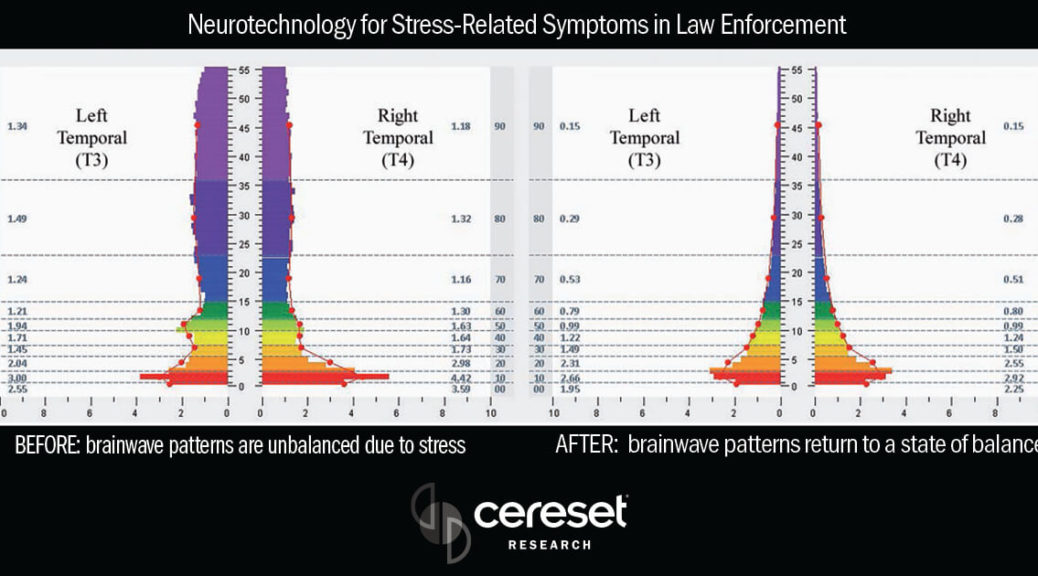
Graphs showing brain pattern changes before & after Cereset’s legacy neuromodulation technology is used for stress-related symptoms in law enforcement.

Graphs showing brain pattern changes before & after Cereset’s legacy neuromodulation technology is used for stress-related symptoms in law enforcement.

Law enforcement stress regulation is a huge issue for law enforcement officers as well as for all of us who those officers have sworn to protect and serve.

Law Enforcement has always been a highly stressful career – serving to protect, facilitate justice, and remove danger for all of us. The positions of these men and women put them constantly in harm’s way both from the criminal element as well as from the defense for not following rules precisely. Officers have always had to face very high daily stress. Now, COVID-19 introduces another even greater degree of stress as the officer may be exposing themself in the line of duty to Coronavirus and subsequently infect their loved ones. The dangers of the Coronavirus cause those who protect us to be under stress for themselves and now, also for the safety of their families and friends.

In the clinical pilot trial, Wake Forest used Cereset’s legacy neuromodulation technology to provide non-invasive brain balance sessions to law enforcement officers. Participants showed statistically significant improvements in all symptoms as well as stress related bio-measures used, and these improvements persisted for two months following the study. The full-study publication can be read in “Global Awareness in Health and Medicine” Volume 9:1-10, 2020 – https://journals.sagepub.com/doi/full/10.1177/2164956120923288

Cereset patented BrainEcho® technology echoes the brain back to itself using sound to reflect real time brain frequencies. This echo causes the brain to listen to itself much like a child may listen to their own echo yelled in a tunnel. The echoing process has been used in over 9 clinical trials with a total of over 600+ patients to support the brain to modulate between hemispheres, as dance partners may move across a dance floor, without being stuck, using only one foot to take steps.

The study was led by Dr. Charles H. Tegeler, Professor and Interim Chair, Department of Neurology, and McKinney-Avant Chair in Neurology, Wake Forest School of Medicine, Winston-Salem, NC. Cereset is a Brain State Company located in Scottsdale, Arizona.

“Law enforcement stress regulation is a huge issue for law enforcement officers as well as for all of us who those officers have sworn to protect and serve,.” said Dr. Charles Tegeler, senior author of this paper. “Based on the need in this country and around the world, and based on these pilot data for symptom reduction and autonomic cardiovascular regulation, a major clinical trial to best define practical use of Cereset neuromodulation technology is warranted for law enforcement and for all first responders facing severe stress.”

ABOUT CERESET

Cereset is a wellness company that helps clients relax their brains to manage stress, restore hope and achieve restful sleep through its patented BrainEcho® technology. Cereset empowers the brain to reset itself as it hears and “sees” its own reflection. The global technology leader in non-invasive brain self-restoration and optimization, Cereset enables the brain to fully relax and naturally rebalance itself from the inside out. There is no outside intervention, stimulus or medication of any kind – the brain does its own work while the client naps or relaxes quietly in a comfortable chair. To schedule an appointment at a Cereset client center, or to learn more, visit https://cereset.com and for more research, visit https://cereset.com/research

Share article on social media or email:

SmartMouth Honors Veterans This Memorial Day With Donation to H.E.R.O.E.S. Care


SmartMouth Honors Veterans This Memorial Day

SmartMouth Honors Veterans This Memorial Day

“We take great pride in our corporate partners. SmartMouth again stepped up to help our struggling active military, veterans, and their families,” says Jon Jerome, CEO of H.E.R.O.E.S. Care.

Most of us will never experience what it feels like to be stationed overseas, apart from our loved ones for extended periods of time. For these 170,000 deployed servicemen and women, receiving a care package from home can help dispel the loneliness and boost morale. In order to fill this need, Jon Jerome and his family began sending care packages to troops overseas and the H.E.R.O.E.S. Care Organization was born. What started in 2003 with thirteen care packages from Jon’s family, has now grown into a respected non-profit organization sending thousands of care packages each year. In addition to care packages, H.E.R.O.E.S. Care helps over 50,000 military families each year gain access to emergency financial aid, employment opportunities, and mental health care services through a network of specially trained caregivers.

In honor of veterans and their families, this Memorial Day SmartMouth partnered with H.E.R.O.E.S. Care to donate nearly 6,000 tubes of SmartMouth Premium Zinc Ion Toothpaste to be sent out in care packages to troops serving overseas and to be distributed to military families in the U.S. The organization and all of the recipients were excited to receive this donation because they know the importance of oral care, and the additional benefits of Zinc is music to their ears, or shall we say mouths.

“We take great pride in our corporate partners. SmartMouth again stepped up to help our struggling active military, veterans, and their families,” says Jon Jerome, CEO of H.E.R.O.E.S. Care.

He explained that every item H.E.R.O.E.S. Care can provide through care packages and food pantries removes another layer of stress during these trying times. “Great partners make great things happen and SmartMouth is one of those great partners. Thanks will never be enough.”

SmartMouth’s participation in this charity also allows them to honor the members of their own team who have served. Founder Dr. Marvin Cohen, SP4, served in the U.S. Army before starting the company; Brent Dellay, EVP, 1SG, U.S. Army (Ret); Carol Walsh, Supply Chain Coordinator, SMSgt, MO Air National Guard (Ret); Legrand Strickland, Graphic Designer, SGT, U.S. Army (Ret).

Brent Dellay, EVP of SmartMouth and Army First Sergeant (Ret), who organized the donation affirms, “The resources that H.E.R.O.E.S. Care provides to our troops and their families before, during and after deployment is essential, and SmartMouth is proud to support them with this donation.”

About H.E.R.O.E.S. Care

H.E.R.O.E.S. Care is a nonprofit organization located in Fenton, Missouri whose mission is to provide a nationwide and efficient support network available before, during and after deployment to post 9/11 servicemen and -women, veterans and their families that is known to military members, their families and commanders, and the communities in which they live.

To learn more about H.E.R.O.E.S. Care please visit https://heroescare.org/.

About SmartMouth Oral Health Laboratories

SmartMouth Oral Health Laboratories manufactures and markets SmartMouth branded mouthwash, toothpaste, and mints through national retailers and online. Founded by a veteran and headquartered in St. Louis, Missouri, SmartMouth has been working to end bad breath forever since 1993.

To learn more about SmartMouth Premium Zinc Ion Toothpaste and the entire line of SmartMouth Premium Oral Care Products, please visit https://smartmouth.com/.

Share article on social media or email: