All posts by imreal

AdventHealth Assists Bayshore Christian School Safely Reopen for Students


News Image

AdventHealth Carrollwood has partnered with Bayshore Christian School in Tampa to provide an extensive safety strategy for safely reopening for class on Monday, August 12, 2020. AdventHealth provided the school with key strategies and implementation plans to assist the K-12 school in limiting the spread of COVID-19 in the classroom setting.

“We are taking extra steps in our hospital and in our communities to ensure everyone is safe as we navigate COVID-19,” said Erika Skula, President and CEO, AdventHealth Carrollwood. “By partnering with Bayshore Christian School we can provide these students, teachers and staff with best practices to create the safest environment possible as they return to class.”

AdventHealth Carrollwood clinicians assisted the school with a plan that would allow for all 220 students to return to the classroom. Some of the key strategies implemented include:

  • Enhanced student drop-off and pick up
  • Required temperature screenings
  • Enhanced prepackaged lunches

“As the Head of School at Bayshore Christian School, I am grateful to have the opportunity to work hand in hand with AdventHealth as a community partner,” Melanie Humenansky, Head of School, Bayshore Christian School. “This relationship validates the decision making of the school’s administration in confirming we are taking the right steps in keeping our students safe. The recommendations were openly received, and we have purchased the suggested additional items and look forward to implementing the processes for the opening of the school year.”

AdventHealth is committed to the health and wellness of the community. AdventHealth Carrollwood has achieved 10 consecutive Leapfrog Grade A rankings and several Top General Hospital honors. The Leapfrog Group focuses on safety and lowering and eliminating infections in the hospital setting.

About AdventHealth West Florida Division

The West Florida Division of AdventHealth has some of the nation’s brightest medical minds making lifesaving breakthroughs with surgical pioneers, scientists and researchers using leading edge technology and innovation to deliver our brand of whole-person care. Our network of care includes AdventHealth Carrollwood, AdventHealth Connerton, AdventHealth Dade City, AdventHealth Lake Placid, AdventHealth North Pinellas, AdventHealth Ocala, AdventHealth Sebring, AdventHealth Tampa, AdventHealth Wauchula, AdventHealth Wesley Chapel and AdventHealth Zephyrhills, as well as five freestanding offsite Emergency Rooms including AdventHealth Brandon ER, AdventHealth Central Pasco ER, AdventHealth Palm Harbor ER, AdventHealth TimberRidge ER, and AdventHealth Westchase ER. We are more than hospitals, as we have a robust system of care including specialty acute care, over 200 primary care and specialty employed physicians, Express Care at Walgreens clinics, urgent care centers, wound care, physical therapy, home care, mobile mammography and more. AdventHealth is a faith-based not-for-profit health care system with a mission of Extending the Healing Ministry of Christ. AdventHealth has hundreds of care sites and nearly 50 hospitals across the United States. For more information about AdventHealth, visit AdventHealth.com, or Facebook.com/AdventHealth.

About AdventHealth Carrollwood

AdventHealth Carrollwood is a 103-bed hospital located in West Hillsborough County. The hospital is a member of the faith-based AdventHealth System, providing a connected system of care in nearly a dozen states with close to 50 hospitals and hundreds of care sites. The hospital offers nationally recognized and award-winning care, evidenced by being named One of America’s Best Hospitals for Patient Safety and Bariatric Surgery by the Women’s Choice Award three years in a row and by earning its 10th consecutive Grade A from the Leapfrog Group for Patient Safety. The hospital provides a wide variety of services including heart care, spine and orthopedics, bariatrics, wound care, robotic technology, two 24/7 emergency rooms with online scheduling, in Carrollwood and Westchase, and much more. With a focus on whole-person care, skilled and compassionate caregivers provide individualized care for body, mind, and spirit. To learn more about the hospital’s services, visit AdventHealthCarrollwood.com.

About Bayshore Christian School

Bayshore, the premier private Christian school in the greater Tampa Bay area, offers a comprehensive college preparatory program and provides exceptional leadership development, academics, athletics, and the arts. Bayshore Christian School is committed to challenging, developing, and empowering students for future leadership with a Biblical worldview within a diverse and nurturing environment, so that each student will follow the example of Jesus to “grow in wisdom and stature and in favor with God and man.” Luke 2:52

Share article on social media or email:

CentrAlert to Release Free COVID-19 Mobile Notification App


News Image

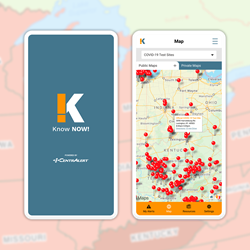
CentrAlert, Inc. today announced the launch of their free Know NOW! App to help everyone gain access to essential COVID-19 information. Know NOW!, which is available for Apple and Android, seeks to streamline the various sources of COVID-19 updates and unify them in one easy-to-use mobile application.

“When COVID-19 first hit, there was so much that we didn’t know,” says CentrAlert CEO, Jeff Whattam. “But after going through four months of lockdowns, testing and social distancing, there almost seems to be too much information out there. With the country starting to re-open, conditions are prime for a second wave of infections and our Know NOW! App offers one simple interface to keep users safe and informed.”

Amid the chaos of COVID-19, it’s this very simplicity that is the strongest asset of Know NOW! Upon downloading the App, users just select their Current or Home Location to gain access to every core feature.

The first of these features is Governor alerts. With each state largely in control of their own response, there has been no single way to keep up with the most recent COVID-19 updates. However, Know NOW! shares real-time alerts from state Governors so that the user is always informed of the latest executive orders, restrictions, re-openings and more. These alerts, which are delivered in-App and as push notifications, are archived for five days with new updates taking precedence.

In addition to providing users with the most up-to-date state information, Know NOW! also offers access to a variety of interactive maps. Central to this functionality is the COVID-19 Test Site Map. With the virus hitting so swiftly, the average person had no idea how to find their nearest COVID-19 test site. The team behind Know NOW! has sought to remedy this issue by researching an ever-growing list of over 7,000 test sites across the country, with directions from your current location available for each. On top of this, Know NOW! offers two other map views with official state and national CDC statistics as well as hospital and urgent care locations.

As the year wears on, Know NOW! will unveil new features with uses far beyond COVID-19. “We don’t want people to think of Know NOW! exclusively as a tool for fighting COVID-19 – we want users to be able to get other information too,” says Whattam. “Later in 2020, we plan to release additional features for Know NOW!, such as weather and other emergency alerts. We will also offer public and private entities alike the opportunity to create their own alert groups for more specialized communication.”

The Know NOW! App is available absolutely free for the duration of the COVID-19 pandemic on the App Store and Google Play. For more information, visit https://centralert.com/covid-19.

About CentrAlert

Founded in 1997 and based in Lexington, Kentucky, CentrAlert produces Crisis-Driven Alert & Control (C-DAC), an intelligent emergency alert and control system. C-DAC directs personal communication to targeted recipients, coordinates mass notification using any device, and provides adaptive intelligent controls to secure environments and mitigate the effects of a crisis. For more information, visit centralert.com.

Share article on social media or email:

ChronWell Adds Kathleen Cruger and Myron Falchuk to Leadership Team


News Image

“Kathleen and Myron complement our team with the deep knowledge and experience necessary to scale our technology and services to meet the challenge.” – Joe Rubinsztain, M.D., CEO of ChronWell.

ChronWell, a technology-enabled remote care management company, today announced the appointments of Kathleen Cruger as Director of Clinical Services and Myron Falchuk, M.D. as an Advisor, to further expand its leadership team and accelerate the company’s growth.

“ChronWell has achieved incredible growth as demand for remote care management services soared amidst the COVID-19 pandemic,” said Joe Rubinsztain, M.D., CEO of ChronWell. “Kathleen and Myron complement our team with the deep knowledge and experience necessary to scale our technology and services to meet the challenge.”

Kathleen Cruger comes to ChronWell with over 20 years’ experience in healthcare operations for both public and private entities. She has held director positions at Parrish Medical Center, Sunshine Healthcare, Humana and Physicians United Plan. Cruger is a Registered Nurse and holds a bachelor’s degree in Health Science from the Medical University of South Carolina, and a master’s degree in Health Services Management from Webster University. In her new role, Cruger will be responsible for ChronWell’s clinical operations and remote nursing teams.

Dr. Myron Falchuk is the emeritus Chief of Clinical Gastroenterology for the Beth Israel Deaconess Medical Center (BIDMC), a world-class teaching hospital of Harvard Medical School. His experience spans the public, private, research and academic fields since 1967. Dr. Falchuk is currently an active corporate advisor, and mentor for Harvard GI fellows and faculty. He received his B.M.S. from Dartmouth Medical School, and his M.D. from Harvard Medical School. His role will be to help guide ChronWell in its current clinical programs and advance its future capabilities and services.

ChronWell launched its Care Management program for Medicare beneficiaries in April, offering remote, technology-enabled products and services, including Chronic Care Management (CCM), Principal Care Management (PCM) and Remote Patient Monitoring (RPM). The program brings new lines of revenue to physicians and improves outcomes for Medicare and selected private beneficiaries with chronic conditions.

To learn more about ChronWell, visit https://www.chronwell.com.

About ChronWell

ChronWell improves outcomes and reduces the cost of healthcare by partnering with leading specialty practices to deliver remote care management services. ChronWell is redefining how value-based care is delivered to patients suffering from chronic conditions by pairing highly skilled care teams with advanced technologies to improve patients’ lives beyond the walls of medical practice. For more information, follow us on LinkedIn or visit http://www.chronwell.com.

Share article on social media or email:

VA Researcher Explores Continuous Glucose Monitoring Use to Prevent Hypoglycemia in the Hospital


“Dr. Spanakis’ study demonstrates that glucose levels can be monitored more frequently and efficiently,” said Dr. Thomas J. Hornyak, associate chief of staff for Research and Development at the VA Maryland Heath Care System.

Hypoglycemia (low blood glucose levels) in hospitalized patients can lead to loss of consciousness, seizures, prolonged length of hospital stay, or even death. A researcher at the VA Maryland Health Care System, conducted the first investigational study of insulin-treated patients with Type 2 diabetes to see if the use of continuous glucose monitoring devices can prevent hypoglycemia in inpatients on medical units. Dr Ilias (Elias) Spanakis, a physician and researcher at the VA Maryland Heath Care System and associate professor at the University of Maryland School of Medicine and the study’s principle investigator, used continuous glucose monitoring devices in the first randomized two-year clinical trial that included 72 patients and found that this intervention reduced the number of hypoglycemic events inpatients suffered. The Food and Drug Administration has not approved the use of continuous glucose monitoring devices in the hospital setting and this trial offers the first evidence of their efficacy. Study findings will be published in the forthcoming issue of peer-reviewed journal Diabetes Care in an article titled, “Reducing inpatient hypoglycemia in the general wards using real-time DEXCOM CGM – the Glucose Telemetry system: A randomized clinical trial.” The article is available at this link: https://care.diabetesjournals.org/lookup/doi/10.2337/dc20-0840

“Typically, glucose monitoring relies on point-of-care finger sticks which must happen frequently to prevent adverse events in patients with diabetes,” said Dr. Thomas J. Hornyak, associate chief of staff for Research and Development at the VA Maryland Heath Care System. “Dr. Spanakis’ study demonstrates that glucose levels can be monitored more frequently and efficiently. Also, in the face of the COVID-19 pandemic, use of the continuous glucose monitoring systems proved to be prescient, showing a decrease in hypoglycemia while also safeguarding health care providers caring for virus-positive patients with diabetes.”

In addition to Spanakis, an eight-member interdisciplinary team, which included Dr. Lakshmi G. Singh, Dr. Medha Satyarengga, Dr. Isabel Marcano, Dr. William H. Scott, Lillian F. Pinault, Zhaoyong Feng, Dr. John D. Sorkin, and Dr. Guillermo E. Umpierrez, sought to explore ways to reduce hypoglycemia and increase patient safety. The purpose of the trial was to explore if continuous glucose monitoring devices combined with a simplified hypoglycemia prevention protocol could reduce hypoglycemic events in patients predisposed to such. For the study, the patients were divided into two groups, 36 monitored remotely with continuous glucose monitoring devices and 36 monitored via traditional point-of-care finger stick testing; patients in the continuous glucose monitoring group experienced fewer episodes of hypoglycemia, a condition leading to seizures, comas, arrhythmias, increased lengths of hospital stays, and death.

“Studies have indicated that insulin use in hospitalized patients with diabetes predisposes them to hypoglycemia, a condition that is associated with increased morbidity and mortality. Preventing hypoglycemia requires intensive glucose monitoring. Frequent point-of-care finger sticks with a goal to monitor closely glucose levels is not easy as this approach may be painful and surveillance of these patients in a busy hospital environment may increase nursing workload,” Spanakis said.

The continuous glucose monitoring devices check glucose levels every five minutes and transmit the results to a centralized monitoring device (i.e. tablet) at the nurses’ station, where alerts would sound when a patient’s glucose levels started to decrease and approach dangerous levels. Nurses responding to alerts, could then take corrective actions, preventing a hypoglycemic event. Although not tested in COVID-19 subjects, as the COVID-19 pandemic unfolded, an unexpected benefit of using these devices included the monitoring of glucose levels of COVID-19 positive patients remotely while safeguarding health care providers by eliminating entry to patients’ rooms for obtaining point-of-care finger stick glucose testing.

Diabetes Care is the official journal of the American Diabetes Association (ADA) ranking fourth in its impact in the areas of endocrinology and metabolism for the health care practitioner intended to increase knowledge, stimulate research, and promote better management of people with diabetes. Diabetes Care publishes original research on human studies in the following categories: Clinical Care/Education/Nutrition, Psychosocial Research,

Epidemiology/Health Services Research, Emerging Treatments and Technologies, Pathophysiology/Complications, and Cardiovascular and Metabolic Risk. The journal also publishes ADA statements, consensus reports, clinically relevant review articles, letters to the editor, and health/medical news or points of view. Topics covered are of interest to clinically oriented physicians, researchers, epidemiologists, psychologists, diabetes educators, and other health professionals.

# # #

MEDIA NOTE: To interview Dr. Ilias (Elias) Spanakis contact Rosalia Scalia at Rosalia.scalia@va.gov, or by calling 410-736-8444.

The VA Maryland Health Care System (VAMHCS) provides a broad spectrum of medical, surgical, rehabilitative, mental health and outpatient care to veterans at three medical centers and five outpatient clinics located throughout the state. More than 52,000 veterans from various generations receive care from VAMHCS annually. Nationally recognized for its state-of-the-art technology and quality patient care, VAMHCS is proud of its reputation as a leader in veterans’ health care, research and education. It costs nothing for veterans to enroll for health care with the VA Maryland Health Care System and it could be one of the more important things a veteran can do. To enroll for VA health care, interested veterans can call 877-222-8387 Monday through Friday from 8 a.m. to 8 p.m., or they can visit http://www.va.gov and clinic on “Apply now for VA health care.”

Share article on social media or email:

EMOTIONAL ABCS Recognized by American Association of School Librarians (AASL) as a Best Digital Tool for Teaching & Learning


EmotionalABCs.com

Emotional Skills start with Emotional ABCs

“We know teachers are diligently trying to motivate students during distance learning, and we are thrilled Emotional ABCs can easily support their SEL lessons online if needed.” ~ Cynthia Sikes, CCO

Emotional ABCs, America’s most awarded and most used Social Emotional Learning (SEL) program, has been named to the inaugural list of Best Digital Tools for Teaching & Learning by the American Association of School Librarians (AASL).

This recognition honors electronic resources that provide enhanced learning and curriculum development for school librarians and their educator collaborators. These user-friendly tools are recognized for fostering the qualities of innovation/creativity, active participation, collaboration, exploration, and information/reference. The technology resources are also evaluated for their application of AASL’s “National School Library Standards for Learners, School Librarians, and School Libraries” Shared Foundations of Inquire, Include, Collaborate, Curate, Explore, and Engage.

“With the likelihood of many of us continuing online instruction for the foreseeable future, it is exciting to have such a rich collection of digital resources consolidated into one place,” said AASL President Kathy Carroll.

The Common Sense Education’s “Top Pick for Learning” and the 2020 CODiE Award Winner for “Best PreK/Early Childhood Learning Solutions” receives high marks for its ease-of-use and its positive impact on students. It is currently used by educators at more than 55,000 schools across the USA and focuses on five areas of SEL competencies including Self-Awareness, Social Awareness, Self-Management, Responsible Decision-Making and Relationship Building. The research-based emotional skills program is designed for children ages 4-11 and gives kids practical tools for dealing with impulse control, frustration, and acting out.

“We are honored to be recommended by the AASL as a resource for captivating personal and academic enrichment,” says Cynthia Sikes, CCO, Emotional ABCs.“We know teachers are diligently trying to motivate students during distance learning, and we are thrilled Emotional ABCs can easily support their SEL lessons online if needed.”

Emotional ABCs Classroom is designed around a set of 20 Classroom Workshops that use short modules for flexible teacher use. There is no teacher training needed for the easy-to-use, self-explanatory materials. Teachers worldwide have successfully adapted the Workshops to remote-learning necessities during the last year. Workshops include interactive online activities, videos, printables, teacher-student, and student-student interactions and are set up so instructors can manage pacing and performance. More details about Emotional ABCs Classroom can be found at http://www.EmotionalABCs.com

About Emotional ABCs:

Emotional ABCs is America’s #1 Awarded Social Emotional Learning (SEL) program. Our content aligns with CASEL’s areas of social competencies (Self-Awareness, Social Awareness, Self-Management, Responsible Decision-Making, Relationship Building) and is constantly being updated with our team of educators, psychologists and therapists. Several formats of Emotional ABCs have been developed to meet different needs, including Parent Subscriptions, a Free-to-Teachers Emotional ABCs Classroom Subscription, and a Premium Schools platform coming soon for school-wide accounts.

Emotional ABCs Awards:

Emotional ABCs is a Common Sense Education “Top Pick for Learning” and the program’s many awards include the prestigious American Business “Stevie” Gold Award, the 2020 CODiE Award for “Best PreK/Early Childhood Learning Solution, the National Association of American Publishers “Revere” Judges’ Award, Creative Child Magazine’s “Product of the Year,” and a “Great Find” Award from AblePlay.org, an organization that evaluates products for their effectiveness in teaching children who have learning differences. Most recently, Emotional ABCs received the Stevie Peoples’ Choice Award.

Press Contact:

Mitch Wenter at Support[at]EmotionalABCs.com or 310-399-8762

Share article on social media or email:

Leading Veterinarian-Owned Cooperative Names New President


Ginni Hamele - The Veterinary Cooperative New President

Ginni Hamele – The Veterinary Cooperative Announces New President

The Veterinary Cooperative named Ginni Hamele, an accomplished leader in the animal health industry, as president of the largest veterinarian-owned purchasing Cooperative in the United States.

Hamele has spent the last nine years at CEVA SANTE ANIMALE in various roles where she gained extensive knowledge and experience in the animal health industry. In her most recent position for CEVA as Manager – Corporate Business Unit, she was responsible for managing all aspects of the Corporate Business Unit, with a focus on developing strategy and managing the private brand product suite. Prior to CEVA, Hamele held positions with Boehringer Ingelheim and GSK. She has a Bachelor’s of Science Degree in Marketing from Winona State University.

As President of TVC, Hamele will be leading veterinary medicine’s fastest-growing Cooperative, with services and support designed for independent veterinarians. TVC’s goal is to have the same purchasing power and marketing prowess as the big box stores by growing to 5,000 independent animal hospitals that would have sales and purchasing power equal to or greater than corporate competitors.

Hamele said she is excited to work with TVC and its members after previous collaboration as a vendor partner. “TVC presents a collective energy and a unique view of what’s happening in the veterinary market. In the spirit of solidarity, our goal is to support the independent veterinarian as we see a shift in the industry footprint and market strategy. The industry is changing rapidly. The environment, with the added challenge of COVID-19, is changing the way independent veterinarians and everyone in veterinary medicine evaluate and execute their business. This transitional time presents unique challenges for independent hospitals. TVC is committed to providing support and helping member-owners navigate this evolving landscape.”

Hamele’s goals as president include building upon TVC’s successful culture, increasing engagement from members, identifying new resources and support for members, and enhancing relationships with vendor partners to strengthen the individual member-owned veterinary hospitals and Cooperative as a whole, while contributing to the success of our vendor partners.

“By focusing on member engagement and enhancing vendor relationships, it will create more value and success for everyone involved with TVC,” she said.

The Veterinary Cooperative is the largest veterinarian-owned purchasing cooperative in the United States. TVC’s community of veterinarians and suppliers share a vision to provide the best animal care through independent veterinary practices, mutually benefiting all who do business with the Cooperative. TVC is owned and guided by its independently owned veterinary members and managed by professional cooperative personnel. All profits will be returned to TVC member veterinarians in the form of rebate distributions. For more information about The Veterinary Cooperative, please visit: http://www.tvc.coop

Share article on social media or email:

Healthcare’s COVID-19 Response has Opened a Window to the Industry’s Consumer-Centered Future


COVID-19 has brought the future of the U.S. Health System’s into sharper focus.

In a very real sense, these adaptations will be essential to ensuring the survival of traditional healthcare providers in the face of powerful new industry entrants leveraging disruptive new ideas and technologies – Kevin Fleming, CEO, Loyale Healthcare

In its often-heroic ongoing response to the global pandemic, America’s healthcare system has repeatedly risen to unprecedented challenges. Regardless of the obstacle – shortages of tests, ventilators and ICU beds; strained lab capacity; scarce supples such as personal protective equipment (PPE) and the cancellation or postponement of all nonessential services – providers across the country have found new and better ways to treat patients affected by COVID-19 while maintaining care delivery to non-COVID patients. Importantly, however, existing systems for patient payment have not kept pace.

Across the healthcare industry, COVID-19 has led to the accelerated adoption of new operating models that promise better, more accessible and more sustainable healthcare. These adaptations are really just the beginning of a longer-term industry transformation that had begun, and was slowly progressing, before the pandemic ever reached our shores. The more-rapid-than-usual adoption of these models has several industry experts looking ahead to a very different kind of healthcare system in the years ahead. One that promises better outcomes for every stakeholder that’s prepared to change along with the industry.

In a McKinsey & Company Article titled, Virtual, equitable, and precise: The dean of Stanford’s medical school talks about what healthcare could be, Stanford’s Lloyd Minor shares a vision for the future of healthcare that bears many similarities to those of other experts – in and outside healthcare. It’s an optimistic vision that foresees a focus on wellness across all segments of the population, a more intelligent and affordable choice of care delivery channels, and actions to address the social determinants that have such a profound effect on health across the country. It’s an approach that relies far more on the virtual, digital delivery of care and an emphasis on data-driven research and development that focuses on prediction and prevention.

It’s important to note that the future envisioned by Mr. Minor and others is not unrealistically optimistic or merely aspirational. The changes anticipated address longstanding deficiencies in American healthcare and the measures that must be taken to cure them. In a very real sense, these adaptations will be essential to ensuring the survival of traditional healthcare providers in the face of powerful new industry entrants leveraging disruptive new ideas and technologies in a market environment where the balance of power has shifted to the consumer.

Healthcare’s transformational adaptations fall into several broad categories, each addressing inefficiencies created or sustained by the fragmentation of information, treatment and payment that affects so much of healthcare today – both for healthcare providers and consumers. They include:

  • Consumer-centered: According to one expert cited below, “Acute healthcare hospitals will no longer be the center of gravity, consumers will.” In this healthcare system, providers must win the trust and business of patients (consumers) who have been empowered with open access to their personal health data and a growing array of options for where to seek care.
  • Accessible and Affordable: As empowered healthcare consumers assert their authority, the traditional payer-provider dynamic will also shift toward patients. Patients, who have until now been at the mercy of their health plan and its negotiated rates with preferred providers, will decide who gets their money – both out-of-pocket (now more than a third of healthcare revenue) and insurer-paid. A technology platform like Loyale Patient Financial Manager™, allows some of America’s largest providers to present prospective patients with virtual financial engagement including price and payment options that bring care within reach, reduce billing and collection friction and improve the probability of payment. All at a fraction of the traditional cost of patient collections.
  • Virtual: Healthcare providers dabbled in the digital delivery of care and other patient experiences prior to COVID-19, but telehealth usage exploded immediately following the announcement of the national emergency. Providers moved quickly to expand existing technologies for much higher volumes, supported by temporarily adjusted Medicare/Medicaid policies for full care reimbursement. For providers, virtual care delivery benefits extend well beyond their contact-free attributes. They’re also scalable, highly efficient (allowing for much higher physician and staff productivity) and flexible. Most experts agree that “virtual” will continue to be a much larger part of the healthcare delivery system from now on.
  • Data-driven and interoperable: In healthcare, “interoperable” refers to the ability for disparate systems to share information. True, full interoperability has been a goal for years, leading to the creation of a federal agency, the Office of the National Coordinator for Health Information Technology (ONC) under the U.S. Department of Health and Human Services. In reality, industry-wide adoption of true, full-scale interoperability is yet to be achieved though incremental improvement has been occurring. All of the adaptations predicted here are predicated on the fulfillment of broad-scale interoperability.
  • Well care, not just sick care: Open access to data (above) and powerful technology tools like artificial intelligence (AI) will enable more predictive models for populations – both geographic and demographic – who are more at risk for poor health. Healthcare will evolve from a focus on treating disease to predicting and preventing it. Initiatives that fall under this category will focus on the social determinants affecting health and wellness of all patients and care delivery models that bring care closer to where it’s needed.
  • Susceptible to market share loss to disruptive competitors: As noted above, these adaptations are not wishful thinking. According to the experts – and affirmed by market research – healthcare’s transformation is not expected to be optional. Traditional providers may be tempted to dig in and protect their existing share, but powerful new industry entrants and the partnerships they forge will certainly not allow that strategy to prevail.


Echoing some of the adaptations envisioned by Mr. Minor, Harvard Business Review’s “What Will U.S. Health Care Look Like After the Pandemic?”, author Robert S. Huckman reminds industry observers that, “Amidst the immediacy of this crisis, it is important to begin to consider the less-urgent-but-still-critical question of what the American health care system might look like once the current rush has passed. In particular, what can the system learn from the existential challenges it faces due to the spread of COVID-19?”, noting that, “A few broad lessons are emerging.”

Mr. Huckman’s analysis also envisions virtual care delivery, pointing out federal and state regulatory changes expanding the ability to deliver telemedicine services and easing “the requirement that physicians have a separate license in each state in which they practice.” And, in light of the fact that for now the government’s support is temporary, “whether (telemedicine) becomes lasting may largely depend on how existing providers embrace this new model during this period of increased use due to necessity.” At Loyale, we contend that this genie is out of the bottle. Consumer demand and competitive pressure will ensure its survival.

As mentioned above, many of these adaptations were already underway well before the COVID-19 crisis began. In analysis published by Deloitte in the spring of 2019 titled, “Forces of change – The future of health“, the authors summed up their findings by concluding that, “The future of healthcare will likely be driven by digital transformation enabled by radically interoperable data and open, secure platforms. Health is likely to revolve around sustaining well-being rather than responding to illness.”

In their 20-year outlook, the Deloitte analysts predict that, “care will be organized around the consumer, rather than around the institutions that drive our existing healthcare system.” And that, “exponential changes (in technology) will accelerate the pace of disruption.” They go on to warn industry stakeholders that, “Technology-focused companies such as Google, Amazon and Apple are beginning to disrupt the existing market and reshape the model. Legacy stakeholders should consider whether to disrupt themselves or isolate and protect their offerings to retain some of their existing market share. Incumbent players that are able to reinvent themselves could help usher in the future of health, while some could succumb to competition coming from outside the traditional industry boundaries.”

We’ve cited only a few of the many expert and industry voices whose vision for the future fall into alignment. Although COVID-19 has acted as a catalyst to accelerate the industry’s transformation, it’s comforting to remember that many of the transformational achievements that have emerged from the crisis were already on the industry’s drawing board. COVID has confirmed that we’re on the right track.

Kevin Fleming is the CEO of Loyale Healthcare

About Loyale

Loyale Patient Financial Manager™ is a comprehensive patient financial engagement technology platform leveraging a suite of configurable solution components including predictive analytics, intelligent workflows, multiple patient financing vehicles, communications, payments, digital front doors and other key capabilities.

Loyale Healthcare is committed to a mission of turning patient responsibility into lasting loyalty for its healthcare provider customers. Based in Lafayette, California, Loyale and its leadership team bring 27 years of expertise delivering leading financial engagement solutions for complex business environments. Loyale currently serves approximately 12,000 healthcare providers across 48 states. Loyale is proud to have an enterprise-level strategic partnership with Parallon which includes the deployment of Loyale’s industry leading technology at all HCA hospitals and Physician Groups.

Share article on social media or email:

CloudShare Appoints Nadav Peleg as Chief Revenue Officer


CloudShare virtual IT labs - business acceleration cloud

CloudShare Appoints Nadav Peleg as Chief Revenue Officer

Companies need the power of the cloud to accelerate sales and training cycles to stay competitive.

CloudShare, the business acceleration cloud company, today announced the appointment of Nadav Peleg as chief revenue officer (CRO). In this new role, Peleg is responsible for maximizing CloudShare’s revenue potential as the global market continues to adapt during the COVID-19 pandemic.

Now that many employees need remote options to accelerate business, enterprises are turning to CloudShare’s cloud-based, virtual IT labs platform to provide powerful training courses, sales demonstrations and proofs of concept (PoCs). CloudShare lets people train in realistic, hands-on environments, identical to how they work. Sales teams can offer powerful PoCs that allow prospects to take any software for a test drive in their production environment, all with the sales engineer sitting, virtually, in the passenger seat for guidance.

“When it comes to featuring complex software, Zoom is no longer enough,” said Nadav Peleg, chief revenue officer of CloudShare. “Companies need the power of the cloud to accelerate sales and training cycles to stay competitive. CloudShare lets organizations easily showcase solutions with full functionality and provide a real, educational experience for people in a contactless way. I am excited to join CloudShare at such a pivotal time in its history and help take the company to the next level.”

Peleg has more than 15 years of experience in business development, sales and marketing. Before CloudShare, he was vice president of sales at WhiteSource and has held similar positions at Check Point Software Technologies, ClickSoftware and NICE Systems. Peleg has a Master of Business Administration degree from Duke University’s Fuqua School of Business and bachelor’s degrees in natural sciences and mechanical engineering.

“Market conditions have increased the pressure on a sales team to close more deals, faster. This puts CloudShare’s Business Acceleration Cloud solutions into a great position to help enterprises achieve these goals in the new, no-touch world,” said Zvi Guterman, Ph.D., chief executive officer of CloudShare. “With his extensive background in business development and sales, we are confident that Nadav is the right person to help guide CloudShare through this critical stage of growth.”

To see how CloudShare can accelerate your business, contact a CloudShare sales representative at sales@cloudshare.com.

About CloudShare

CloudShare, the business acceleration cloud company, is the easiest solution for sales and customer success. It’s specifically designed to help software companies deliver complex demos, PoCs and training, replicating real-world environments without compromising time to market. It automates processes, eliminates friction and reduces cycles for better results, faster. Virtual labs enable powerful hands-on experiences at scale, anywhere. CloudShare fits any infrastructure – on-premise or on top of a public cloud – easily integrating core sales and LMS tools.

More than 500 customers in over 100 countries trust CloudShare, including Palo Alto Networks, Atlassian, ForgeRock, Dell and HP. The company is headquartered in San Francisco with R&D in Tel Aviv and offices worldwide. For more information, visit http://www.cloudshare.com.

Share article on social media or email:

Xtalks Announces Its Life Science Webinar Calendar for August 2020


Xtalks Life Science Webinars

Stay on top of current hot topics through free webinars presented by leading experts in pharma, biotech, medical device and food industries. Access to all webinars is free, so be sure to register today to save your place! Participate in the discussion and stay relevant in your field!

Visit http://www.xtalks.com to see our upcoming webinars:

CLINICAL TRIALS

August 04- The Journey from Final Medical Device Design to the EU Market: Expert Insight on Collecting and Evaluating Clinical Evidence

August 06- Rapid CTMS Implementation: Leveraging a Modular Approach

August 13- Best Practices for eTMF Standards and Interoperability

August 18- eSource: A Piece of the Virtual Trial Puzzle

August 19- Human Resources Data Management: How Leading Companies Integrate to Innovate

August 20- The Transformation of Clinical Trial Design & Operations: A Panel Discussion on COVID-19 as a Catalyst for Decentralized Trials

August 20- Virtual and Hybrid Study Considerations for Dermatology Clinical Trials

August 24- Novel Trial Approaches for Rare Cancer Patients

August 26- Approaches for Extending Sample Stability for Flow Cytometry Analysis in Clinical Trials

August 26- Extend the Shelf-Life of Oral Solid Doses with Activ-Blister Solutions

DRUG DISCOVERY AND DEVELOPMENT

August 05- Ensuring Long-Term Rodent Catheter Patency with Proper Selection and Care

August 13- Hit-to-Lead Optimization Strategy in Drug Discovery

August 25- Are You Protecting Employees During HPAPI Manufacturing?

August 25- How Patient Assistant Programs (PAPs) are Being Modernized with Innovative Technologies

August 27- Supporting Citizen Data Science Initiatives Within Science- and Process-Driven Industries

August 31- General Scale-Up Strategies: Commonalities Between Mammalian And Microbial Processes

FOOD

August 19- Nutrigenomics and the Future of Nutrition: Innovative, Clinically-validated Ingredients to Modulate Gene Expressions in the Body

August 28- Stay Food-Safety Compliant and Be Inspection Ready – Virtually

MEDICAL DEVICES

August 13- What You Need to Know: Med Device UDI Submission to China

August 28- Your EU MDR Journey Continues: An Insight Into Strategic Approaches For Collecting Clinical Evidence In The Post-Market Era

PHARMACEUTICAL

August 06- Pharmaceutical Commercial Launch Readiness, Secrets to De-Risk and Accelerate Success

August 11- Collaboration Beats Compromise in Combination Product Development

August 11- Assessment of Potential Drug-Drug Interactions from In Vitro Experiments to PBPK Modeling

August 19- Practical Application of Just in Time Manufacturing in Clinical Trial Supply

ABOUT XTALKS

Xtalks, powered by Honeycomb Worldwide Inc., is a leading provider of educational webinars to the global life science, food and medical device community. Every year thousands of industry practitioners (from life science, food and medical device companies, private & academic research institutions, healthcare centers, etc.) turn to Xtalks for access to quality content. Xtalks helps Life Science professionals stay current with industry developments, trends and regulations. Xtalks webinars also provide perspectives on key issues from top industry thought leaders and service providers.

To learn more about Xtalks visit http://www.xtalks.com.

Share article on social media or email:

Market America | SHOP.COM’s Three Tips For Transitioning Back to School During “The New Normal”


Market America | SHOP.COM’s Three Tips For Transitioning Back to School During “The New Normal”

During this “new normal,” it’s hard to know how to prepare for back to school. This confusion can add stress for your family, but there are ways to cope. The first step is to know your options and decide what’s best for your family. No matter your decision, Market America | SHOP.COM is here to help with ideas, resources and savings.

1.    Create Consistency and Plan: This fall will look a lot different than the typical school year and with change will come some adjustments and transitions. Creating a routine will be one of the best ways to maintain consistency and make the transition easier. One routine many parents struggle with is meal planning. With so many parents working out the details of whether or not their kids will be going back to school or college or learning from home, making dinner plans for the family can seem far less important – until someone asks what’s for dinner. Ease some of that stress by checking out the variety packs offered by Rastelli’s — you can order all the seafood, beef, chicken, pork and more that you need for a week’s worth of meals, all from the comfort of your couch! Also make sure to check out these grocery options to simplify shopping for daily snacks and other food needs.

2.    Manage Stress: This school year has already caused stress for not only parents, but kids as well. For example, if your kids are going back to school, separation anxiety may be common for some, if not all members of the family. A survey of 1,200 parents showed that 66% were anxious about sending their kids back to school. On the other hand, working and learning from home may also be a difficult adjustment. Make sure to take time throughout your day to practice some techniques that will help you and your kids feel a little more relaxed.

For the Kids:


For Parents and College-Age Students:


3.    Find the Best Back to School Deals: Whether your kids are at home or at school this fall, they’re going to need to stock up on school supplies. From July 30 to Aug. 13, 2020 global online retailer SHOP.COM has some massive back to school deals where you can earn extra Cashback while shopping! This means that a percentage of what you spend will be turned into Cashback that you can redeem on future purchases. To date, SHOP.COM has already paid customers over $44 million in Cashback. Check out these supplies to get the everyone ready for the fall and save while you do!


College Students and Parents:


Market America | SHOP.COM is a global product brokerage and internet marketing company that specializes in one-to-one marketing and is the creator of The Shopping Annuity®.

Share article on social media or email: