

All posts by imreal

Health Systems, COVID-19 and the Redefined Healthcare Landscape in 2021 and Beyond – Industry Analysis by Loyale Healthcare


patient financial engagement, patient payments

The healthcare industry’s best practices from the COVID-19 crisis will positively impact care in America for decades.

We are convinced – and our clients’ outcomes confirm – that by integrating patients’ financial and clinical experiences throughout the care journey – financial and competitive benefits will follow. – Kevin Fleming, CEO, Loyale Healthcare

Over the last several months, the financial hardships faced by health systems in the United States as a result of the COVID-19 crisis have been well documented by us and many others. For many systems, the forced reduction in patient volumes and the addition of unexpected costs have had a devastating impact on balance sheets. And although patient volumes have begun to recover from their April lows, many system executives don’t expect business to look anything like usual until 2022.

But along with all this bad news, a thread of consistently good news is clearly visible throughout the healthcare industry’s response to the crisis. Since the beginning of the COVID-19 national health emergency, healthcare providers have demonstrated nimbleness, unity and innovative ingenuity in ways that would never have been explored were it not for the novel coronavirus. For us as patients, and for every other stakeholder in the American healthcare system, these newfound qualities will have a positive, lasting impact.

This uplifting interpretation is affirmed by the results of a recent survey of healthcare industry execs and finance leaders by healthcare consulting firm KaufmanHall. Their findings, titled “2020 State of Healthcare Performance Improvement Report: The Impact of COVID-19”, paint a picture of an industry that continues to reel from financial damage, but whose “ability to leverage the positive impacts of the pandemic as they work to mitigate its negative impacts will have a significant effect on their long-term health and the health of the communities they serve.”

Some of the survey respondents were interviewed. When sharing their thoughts on how the pandemic will change their organizations and, potentially, the healthcare industry, their responses fell into five qualities or categories:

1. An enhanced sense of “systemness” – “the pandemic generated new levels of collaboration among the component parts of health systems”

2. A newfound nimbleness in adapting to rapid change – “One health system stood up a digital health strategy in six days. Another system set up a temporary hospital at a conference center in eight days.”

3. A realized return on investment in analytics – “the ability…to quickly pull together views of data that had not been created before, providing valuable information to inform decision-making when regular assumptions went out the window.”

4. Strengthened relationships – “how health systems within their market coordinated their response to the pandemic.” “how their relationships with schools, local and state governments, and community organizations grew even stronger, and think a long-term impact will be a better understanding of the essential role of the health system in the community.”

5. A fresh look at different payment models – “the pandemic has exposed weaknesses in a volume-driven fee-for-service model.”

The report calls out a number of health system best practice take-aways labeled “No Regrets” in the areas of Revenue and Operating Margin, Expenses and Care Delivery, many derived from – or supporting – the qualities listed above. We have followed the report’s findings with our own observations about how these practices are being applied in the areas of patient payment and patient engagement.

Take-aways in the area of “Revenue and Operating Margin” each have direct relevance to patient payments and the patient’s financial experience. They include:


  • Implementing proactive revenue cycle policies – “Pre-registration, pre-authorization, advance financial counseling, and point-of-service collection policies have had heightened value during the pandemic.” These capabilities clearly reside in the patient financial engagement category where their value to health systems had been thoroughly demonstrated long before the pandemic. We have written frequently about the shift of healthcare costs to patients over the last several years. As a result, many systems were already struggling to collect patient payments. The crisis, with its job losses and growing numbers of uninsured, is aggravating the problem and underscoring the importance of applying technologies, like our own Loyale Patient Financial Manager™, to deal with it.
  • Building analytical capabilities – “With volumes uncertain, robust analytics are helping to monitor fluctuations in volume and predict recovery trajectories.” Analytics to uncover business intelligence in patient billing and payment behavior is proving to be vitally important to health systems. Until now, systems rarely had visibility into the complex matrix of what the industry calls patient revenue cycle. Systems now are able to leverage patient-pay analytics to reduce the cost of billing and drive continual improvement in patient payment performance.

The “No Regrets” take-aways listed in the KaufmanHall report in the area of Expenses call out health system investments that have paid off as providers responded to the unique challenges presented by the crisis. These include investments in safety for staff and patients. They also include developing relationships with domestic suppliers to overcome supply chain disruptions. One other category has relevance in the area of patient revenue cycle, redeploying staff.

  • Redeploying staff – “Moving staff into new roles, although it did require some training, helped interviewees’ organizations fill critical vacancies and avoid furloughs or reductions in force.” In the area of patient financial engagement, health systems are finding that by automating labor intensive processes, expanding patient self-service and improving the productivity of personnel, staff members can be freed for higher-value, patient-facing duties that improve patient satisfaction and contribute to better financial performance.

The “No Regrets” take-aways in the area of Care Delivery Models include “breaking down clinical barriers” to leverage the increased versatility revealed by the crisis, and “educating the public,” which addresses health systems’ efforts to educate the public about the pandemic and “effective preventive measures.” This kind of community-minded outreach has “eased concerns and built trust in the health system.” As healthcare providers plan for their post-COVID-19 recoveries, this trust will be vital to their efforts to reinvigorate their brands. The area with the most direct relevance to patient revenue cycle, however, is labeled “Taking a giant leap.”

  • Taking a giant leap – “The pandemic forced (health systems) to take a leap into the deep end (of telehealth). Interviewees expressed pride in the ability of their organizations to adapt quickly to a new care model and confidence in the implications for rapid changes in care delivery in the future.” We have written extensively about the astounding success of telehealth during the crisis, and the opportunity this exciting new channel represents for health systems and patients alike – most recently in an article titled, “The Future for Virtual Health Care in a Consumer-Driven Marketplace.” In it, we looked to our own clients to point out that “The next phase in the development of this exciting new channel calls for holistic patient experiences that build on the remarkable accomplishments that have already been achieved.” We are convinced – and our clients’ outcomes confirm – that by integrating patients’ financial and clinical experiences throughout the care journey, all of the benefits listed above will follow.

The participants in the KaufmanHall health system survey we’ve referenced have experienced varying levels of financial disruption, with “seventy four percent extremely or moderately concerned about the financial viability of their organization in the absence of an effective vaccine or treatment.” And one third of respondents saying they “saw year-over-year operating margin declines in excess of 100% from Q2 2019 to Q2 2020.”

Speaking to the unique challenges this crisis has presented in the areas of patient volumes, expenses, workforce, telehealth and competition, each described their system’s response, noting that “one third of survey respondents believe the pandemic has affected competitive dynamics in their market by making consumers more likely to seek care at retail-based clinics.”

In our view, nearly every provider should be concerned about the growing competitive threat of retail and other alternative providers. But this is a threat that can be overcome. By upgrading patients’ experiences to include every dimension of care from beginning to end, we’re confident that health systems will complete the transformation that COVID-19 accelerated. As that vision becomes a reality across the industry, we believe the patient-provider relationship will become more satisfying and more mutually rewarding than ever. As a company, that’s what we’re aiming for.

Kevin Fleming is the CEO of Loyale Healthcare

About Loyale

Loyale Patient Financial Manager™ is a comprehensive patient financial engagement technology platform leveraging a suite of configurable solution components including predictive analytics, intelligent workflows, multiple patient financing vehicles, communications, payments, digital front doors and other key capabilities.

Loyale Healthcare is committed to a mission of turning patient responsibility into lasting loyalty for its healthcare provider customers. Based in Lafayette, California, Loyale and its leadership team bring 27 years of expertise delivering leading financial engagement solutions for complex business environments. Loyale currently serves approximately 12,000 healthcare providers across 48 states. Loyale is proud to have an enterprise-level strategic partnership with Parallon which includes the deployment of Loyale’s industry leading technology at all HCA hospitals and Physician Groups.

Share article on social media or email:

DUST Identity Awarded Contract by Nimbis to Help Address Electronics Supply Chain Security Risks


“There are increasing risks and vulnerabilities associated with microelectronic supply chains. DUST was designed to address these changes in the threat environment and to allow organizations to meet upcoming supply chain compliance regulations.” – Eric Sharret, DUST Identity

DUST Identity, creators of the Diamond Unclonable Security Tag (DUST), today announced it was awarded a contract from Nimbis Services Inc. under the Vulnerability-Risk Assessment and Mitigation (V-RAM) program. The contract is part of a larger effort by the Air Force Research Laboratory (AFRL) to enhance the U.S. Government’s microelectronics supply chain through the Trusted Silicon Stratus (TSS).

The TSS cloud service supports the Office of the Secretary of Defense’s (OSD) microelectronics initiatives and is currently the only approved microelectronics cloud service for DoD work. Nimbis created the TSS to provide a trusted, multi-organizational, collaborative environment to advance the design, manufacture, and sustainment of microelectronics. DUST Identity will join other leading solution providers in the Trusted Silicon Stratus platform.

While initially focused on electronic design tools, the integration of the DUST solution into TSS points to a greater focus within the U.S. Government on supply chain security and product lifecycle traceability. DUST provides an unclonable identity layer to bind digital data to physical objects during the design, manufacturing and sustainment phases thereby securing the digital thread. Implementing the DUST solution enables stakeholders to greatly reduce cybersecurity risks by tracking microelectronic provenance from the earliest stages of product design.

“As Nimbis looked across the Microelectronics lifecycle at the tools and techniques emerging in the TSS marketplace, Nimbis recognized the need for secure post fabrication tracking and provenance technologies. DUST Identity offers an emerging capability for cloud-based supply chain security through a novel tagging methodology to enable real time authentication, location tracking, and provenance of microelectronics,” said Robert Graybill, President and CEO of Nimbis Services, Inc. “To ensure its use anywhere in the supply chain (e.g., point of manufacture, point of validation, etc.) this tagging solution is globally distributable, flexible, low cost and simple to apply.”

“We’re very excited to be selected by Nimbis and AFRL as one of the first supply chain solutions to be offered within TSS,” said Eric Sharret, Aerospace & Defense Lead, DUST Identity. “There are increasing risks and vulnerabilities associated with microelectronic supply chains. DUST was designed to address these changes in the threat environment and to allow organizations to meet upcoming supply chain compliance regulations. This new collaboration with Nimbis will add the critical ingredients of transparency and visibility throughout the electronics supply chain.”

More on DUST’s Technology

DUST Identity developed a solution that utilizes microscopic engineered diamond material that prevents non-genuine parts from entering the supply chain and provides full lifecycle visibility for genuine components. DUST leverages the inherent randomness in microscopic diamond crystals to provide a unique and unclonable physical-digital binding. An optical scanner and cloud-based infrastructure provide an interface to the object’s identity and provenance. DUST ensures that trusted data and verifiable products are used and traced across their full lifecycle.

About DUST Identity

DUST Identity is the creator of the Diamond Unclonable Security Tag (DUST), a technology utilizing engineered diamonds to create an unclonable identity layer on any object. DUST Identity is the supply chain solution that ensures that trusted data and verifiable products are used and traced across their full lifecycle. DUST Identity, established in 2018 and headquartered in Framingham, was created by a team of quantum physics, nanotechnology, and cyber experts. The company is an MIT spinoff, participated in several DARPA programs and is backed by Kleiner Perkins with participation from Airbus Ventures, Lockheed Martin Ventures, New Science Ventures, Angular Ventures, and Castle Island Ventures. Learn more via dustidentity.com and follow us on LinkedIn and Twitter.

About Nimbis Services, Inc.

Nimbis Services (Nimbis), US-based, provides an e-commerce cloud product marketplace connecting communities for design, modeling, simulation, and analytics in the cloud. Nimbis develops and operates a secure Trusted Silicon Stratus (TSS), collaborative cloud platform and marketplace specifically supporting the trusted and assured microelectronics life-cycle for the DoD and Aerospace defense contractor community and is currently an approved microelectronics cloud platform. The TSS cloud software platform product addresses the cyber-security concerns of the DoD aerospace community by providing a secure environment for the development of electronic weapon systems tightly integrated with vulnerability, risk assessment and data provenance tracking tools such as block chain. TSS aerospace platform is targeting multiple security levels commercial, ITAR, ATO IL-2, FedRAMP IL-4, air gapped classified. . As a neutral cloud services broker, Nimbis’ capabilities provide secure cloud based communities of interest for libraries, APP workflows, IP and diverse data, uninhibited by existing IT silos or insufficient IT cloud expertise. Learn more about Nimbis Services via NimbisServices.com and follow us on LinkedIn and Twitter.

DUST Identity Media Contact:

Nicole Canulla

Head of Marketing & Communications

617.982.3772

ncanulla@dustidentity.com

Share article on social media or email:

Dr. Michael Blackman Joins Greenway Health as Chief Medical Officer


News Image

“Dr. Blackman makes a significant addition to the Greenway executive team as we work ever more closely with our customers to provide the services and technologies they need to deliver quality patient care and maintain efficient and profitable practices.”

Greenway Health, a leading health information technology services provider, has announced that Dr. Michael Blackman will join the organization as chief medical officer, playing a key role in leading the provider-first experience.

Dr. Blackman has extensive experience in health IT product management, as well as outpatient and inpatient care. An early leader in the effort to develop electronic prescribing for controlled substances, he also brings experience in population health management and managing health across the care continuum.

As chief medical officer at Greenway, Dr. Blackman will further support the company’s ambulatory care customers, ensuring providers are equipped with the solutions and services they need to improve patient outcomes and succeed in value-based care.

“Healthcare as we know it has forever changed, and as a result, the opportunity for improvement in our industry is ripe,” Dr. Blackman said. “Having practiced medicine, I understand the challenges our healthcare providers face day in and day out, and am committed to working directly alongside our customers to simplify complex problems and transform practice operations by delivering innovative technology that maximizes efficiency, improves clinical outcomes, and reduces provider burden.”

Prior to joining Greenway, Dr. Blackman served as the medical director for population health at Allscripts, where he translated clinical and healthcare business needs for product and development teams and assisted customers with the design and management of population health and value-based care programs. Before that, he served as chief medical officer for McKesson’s Enterprise Information Systems division.

“Healthcare providers continue to navigate new challenges in providing efficient, convenient, and quality patient care in a post-COVID environment,” said David Cohen, chief product and technology officer at Greenway Health. “Dr. Blackman makes a significant addition to the Greenway executive team as we work ever more closely with our customers to provide the services and technologies they need to deliver quality patient care and maintain efficient and profitable practices.”

Dr. Blackman earned his Doctor of Medicine degree at Brown University, where he also earned his bachelor’s in political science. In addition, he holds an MBA from the University of Michigan. He completed his residency in internal medicine and pediatrics at University of Miami/Jackson Memorial Hospital.

A thought leader and frequent speaker on industry topics such as population health, value-based care and healthcare policy, Dr. Blackman has served as a member of the HIMSS Davies Organizational Award Committee and eHealth Initiative’s practicing clinicians’ workgroup on health information exchange.

With his knowledge and experience, Dr. Blackman will support Greenway in its mission to improve lives through innovative solutions. For more on Greenway’s products, visit http://www.greenwayhealth.com/solutions.

About Greenway Health

Improving healthcare through innovation is at the heart of Greenway Health’s work. We provide electronic health record (EHR), practice management, and revenue cycle management solutions that help practices in multiple specialties grow profitably, remain compliant, work more efficiently, and improve patient outcomes. Our team of clinical, financial, and technology experts serve as trusted advisers, committed to our customers’ success. Greenway works with over 55,000 providers across multiple specialties, which translates into millions of lives touched daily by our solutions. For details on how we can work together to build a more efficient healthcare system, visit http://www.greenwayhealth.com, call 877-537-0063, or follow Greenway on Facebook, Twitter, and LinkedIn.

Share article on social media or email:


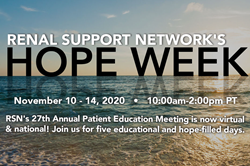
Renal Support Network’s 27th Annual Patient Education Meeting Goes Virtual


kidney disease online meeting

RSN President and Founder Lori Hartwell says, “The demand for education and hope when diagnosed with chronic kidney disease remains great. It is for this reason that we have gone virtual to let people know they are not alone, and an entire community is here to support them.”

For almost three decades, Renal Support Network (RSN) has hosted its annual Patient Education Meeting, where healthcare professionals share their expertise with people living with kidney disease. The event has remained a source of inspiration and education for all who attend. This year, the event will be online and extended to five days. Each day will focus on a specific stage of the disease such as chronic kidney disease, dialysis and kidney transplant.

RSN President and Founder Lori Hartwell says, “The demand for education and hope when diagnosed with chronic kidney disease remains great. It is for this reason that we have gone virtual to let people know they are not alone, and an entire community is here to support them.”

The new virtual Patient Education week-long event will be held November 10 – 14, from 10:00 am to 2:00 pm Pacific Time each day.

Throughout the week our panel of healthcare professionals will speak on topics such as: innovations in dialysis care, delaying the progression of kidney disease, the latest advancements in kidney transplantation, public policy and kidney disease, medical issues for youth with kidney disease, following the CKD diet, the prevention of kidney stones, and understanding Medicare and Medicare Advantage Plans and how they relate to those with kidney disease. Additional speakers will include people telling their stories of learning to live and thrive despite kidney disease.

Rafael Villicana, MD will speak about advancements in kidney transplant to help people honor their gift of life. Gary C. Curhan, MD will speak on the latest science and treatment of kidney stones. Dinesh Chatoth, MD will speak about the ins and outs of home dialysis. Kam Kalantar, MD will share the newest research on the CKD diet. Geoffrey Block, MD will discuss how patients can stop persistent itching and the root causes.

A Parent Expert Panel moderated by Charlene Lafontant will discuss “How to Maintain a Balanced Family Environment,” and there will be a group discussion on “Answers to Questions You Were Afraid to Ask.” If time allows, patients who attend the virtual webinar will be given the opportunity to ask questions.

Raffle prizes are given away every day. Receive a complimentary designer mask for attending and completing our event evaluation to help us learn and improve our online events.

The event is offered at no charge for participants who register to attend. To see the full agenda and register go to http://www.RSNhope.org.

Here is a full list of RSN’s Hope Week presenters:

Lubna Abkany, RD, Tim Atkins, Geoffrey Block, MD, Mary Beth Callahan, LCSW, Dinesh Chatoth, MD, Gary C. Curhan, MD, Helen Currier, CNN, Maria Ferris, MD, Jennifer Finch, MD, Lori Hartwell, Doug Johnson, MD, Jonathon Himmelfarb, MD, Benjamin Hippen, MD, Kam Kalantar, MD, Elaine Kamil, MD, Charlene Lafontant, Kathy Lester, Esq., Susie Lew, MD, Dugan Maddux, MD, Mandy Trolinger MS, RD, PA-C, Carla Ulbrich, Rafael Villicana, MD and Rondi Wightman, LCSW

RSN would like to thank our patient engagement mission sponsors: Akebia Therapeutics, Amgen, AstraZeneca, Dialysis Clinics, Inc., Fresenius Kidney Care and U.S. Renal Care.

RSN is a nonprofit, patient-run organization that provides non-medical services to those affected by chronic kidney disease. RSN strives to help kidney transplant recipients, and those who are newly diagnosed or on dialysis, develop their personal coping skills, special talents, and employability by educating and empowering them to take control of the course and management of their disease. http://www.RSNhope.org.

Share article on social media or email:
How Many Stores Does it Take to Make Healthy Purchases Easier?


News Image

In recent years, food sales at dollar stores and online grocery retailing had been expanding. In the midst of the current pandemic, these forms of food retailing have emerged as some of the winners of this almost Darwinian example of adaptation. At the same time, existing hardships perceived by individuals who have experienced job losses, personal tragedies, and overall disruption due to the virus itself, and to the policies meant to blockade expansion of non-traditional retailers, may in fact worsen. There will be urgent policy needs to assess the incidence of barriers to acquire healthy foods among disadvantaged populations and to design policies on how to mitigate them. It is possible that the same policy tools considered in the past may not be effective to mitigate hardships. Once the U.S. recovers from the current downturn due to the COVID-19 pandemic, the food retail environment may look very different than a year ago.

In the new article “If You Build Them… Will it Matter? Food Stores’ Presence and Perceived Barriers to Purchasing Healthy Foods in the Northeastern U.S.” published in the Applied Economics Perspectives & Policy, Lauren Chenarides from Arizona State University, Alessandro Bonanno from Colorado State University and Anne Palmer from Johns Hopkins examine how objective measures of food access (number of stores) affect consumers’ perceived constraints in acquiring healthy foods.

Chenarides says, “Careful attention should be given to how results are obtained and how the problem is framed before making definitive statements about the relationship between stated hardships to purchase healthy foods and store presence. We find that different measures of perceived hardships may be more or less prevalent in the presence of different types of stores. Also, our study (which shows a variety of relationships, from strong and significant to null) serves as a cautionary tale. Because the strong public support for store intervention policies is faced by mixed evidence regarding some aspects of their effectiveness per existing studies, researchers should be open to the possibility that such a study may generate a false-positive result (i.e., a result supporting a policy which may have no effect) or a false negative one (i.e., a null result for a policy which may instead be effective). Research in this area should examine whether, and under what circumstances, modifications to the food environment would serve to benefit residents.”

If you are interested in setting up an interview, please contact Allison Ware in the AAEA Business Office.

ABOUT AAEA: Established in 1910, the Agricultural & Applied Economics Association (AAEA) is the leading professional association for agricultural and applied economists, with 2,500 members in more than 60 countries. Members of the AAEA work in academic or government institutions as well as in industry and not-for-profit organizations, and engage in a variety of research, teaching, and outreach activities in the areas of agriculture, the environment, food, health, and international development. The AAEA publishes two journals, the American Journal of Agricultural Economics and Applied Economic Perspectives & Policy, as well as the online magazine Choices and the online open access publication series Applied Economics Teaching Resources. To learn more, visit http://www.aaea.org.

Share article on social media or email:

Addison Group Announces Expansion to the Charlotte Market


Addison Group logo

“Charlotte is a diversified, high-growth market in need of additional talent to enhance competitiveness and better scale their businesses, and we are well-positioned to help them.”

Addison Group, a leader in professional services focused on specialized professional staffing, executive search and consulting, is pleased to announce it has expanded its services to the Charlotte market in North Carolina. The new office reflects the continued growth and momentum Addison Group has experienced in the last several years, now numbering 25 offices in major markets across the U.S.

“We are proud to announce our continued expansion in the Southeast Region,” said Thomas Moran, CEO of Addison Group. “Charlotte is a diversified, high-growth market in need of additional talent to enhance competitiveness and better scale their businesses, and we are well-positioned to help them.”

Addison Group’s expansion to the Charlotte market includes specialized recruiting and related consulting services supporting finance and accounting, human resources, administrative management and support, and healthcare. The market leaders for these respective practices include:


  • HR and Administrative: Jennifer Wright, Senior Vice President of HR and Administrative
  • Healthcare: Lindsey Doyle, Branch Manager
  • Finance & Accounting Contract: Caroline Frank, Branch Manager
  • Finance & Accounting Direct Hire: AJ Lewis, Branch Manager


The move to Charlotte strengthens Addison Group’s national presence while providing more localized touchpoints. The national firm’s clients will have access to a large pool of identified, talented professionals for contract, contract-to-hire, direct hire and consulting services.

To learn more about Addison Group and its services, please visit addisongroup.com.

About Addison Group

A recognized leader in professional services focused on specialized staffing, executive search and consulting, Addison Group delivers the talent and capabilities organizations need to achieve and sustain a competitive advantage and business growth. The company offers a full suite of recruiting and consulting services across multiple functions and industry sectors, including information technology, finance and accounting, healthcare, human resources, administrative, engineering, and digital marketing. Known for its people-first culture, Addison Group combines deep expertise, client and candidate relationships, and a growing network of offices across the U.S. to provide national reach with a localized touch.

Share article on social media or email:

Advancing Novel Therapy and Patient Centered Management


“It is one of our top priorities to continue to create reliable & engaging rare disease video education for all types of clinicians, led by top experts, all while being shaped by the patient voice. That is why we are proud to be able to collaborate with NORD to host the first Rare Cancer Congress.”

PlatformQ Health and the National Organization for Rare Disorders (NORD®) are excited to be holding the first annual, multi-disease Rare Cancer Congress. The NORD Rare Cancer Coalition, composed of 27 rare cancer-specific member organizations, aims to unify people living with rare cancers and strengthen its members through capacity building, networking, and peer-to-peer mentoring.

There are 7,000 known rare diseases; of those, hundreds are classified as rare cancers. Significant challenges exist for these populations including delays in diagnosis, a paucity of treatment options and guidelines, suboptimal clinical outcomes, less than timely access to specialists, limited clinical trials, and inadequate access to information and support for patients.

Clinicians are tasked to diagnose these patients, facilitate the right care, and provide treatment options, including clinical trials. The American Society of Clinical Oncology (ASCO) has even identified in a recent ASCO in Action podcast, that “increasing precision medicine research and treatment approaches in pediatric and other rare cancers” is one of their top eight priorities for 2020.

The Rare Cancer Congress, is two-day event being held on October 28th and November 12th, brings together and educates community-based clinicians who don’t often see patients with rare disorders, along with specialists who are more familiar with treating the rare community. The Congress will consist of interactive, expert-led discussions that aim to increase knowledge, competency and collaboration when diagnosing patients, as well as reduce the time to diagnosis, personalize therapy selection and administration, and integrate new therapies with the goal of balancing efficacy and side effects of available options.

“Through our partnership with PlatformQ Health, we are filling gaps in rare disease education and developing additional CME resources to reach a broader audience through web-based education. We are thrilled to be able to address universal issues related to rare diseases as well as topics related to specific diseases and categories such as rare cancers,” said Rebecca Aune, Director of Educational Initiatives for NORD.

During the event, the PQH production team will facilitate interactive sessions, including case based problem-solving strategies to incorporate both patient-centered and team-based approaches. Additionally, they will provide learners with resources to facilitate shared decision-making with their patients and to assist in navigating their disease.

“Having NORD as a partner has enabled us to continually help clinicians better identify, diagnose, and treat rare conditions. It is one of our top priorities to continue to create reliable and engaging rare disease video education for all types of clinicians, led by top experts, all while being shaped by the patient voice. That is why we are so proud to be able to collaborate with NORD to host the very first Rare Cancer Congress,” shares Robert Rosenbloom, CEO of PlatformQ Health.

Critical topics covered in the Rare Cancers Congress program will include resolving diagnostic delays, recently-approved and emerging agents (including targeted therapy and immunotherapy), late-stage clinical trials, refining guideline-adherent care, adverse event management strategies, and patient-centered care. Attendees can earn CME credits and ABIM MOC points through these educational sessions.

Day 1 of NORD Rare Cancers Congress on 10/28

4 CME and ABIM MOC Credits in Rare Blood Disorders, Leukemias, and Lymphomas

  • Session 1 at 11:30am ET on OMedLive – Cold Agglutinin Disease (CAD): The Role of the Complement Pathway in Treating a Rare Autoimmune Hemolytic Anemia
  • Session 2 at 12:30pm ET on OMedLive – Addressing the Challenges of Peripheral T-Cell Lymphoma Management
  • Session 3 at 1:30pm ET on OMedLive – Risk-Based Approach for Treatment of Intermediate Myelofibrosis
  • Session 4 at 2:30pm ET on OMedLive – Managing Relapsed/Refractory Hairy Cell Leukemia in the Community Setting

Register for the event now on OMedLive!

Day 2 of NORD Rare Cancers Congress on 11/12

5 CME and ABIM MOC Credits in Rare Solid Tumors

  • Session 1 at 9:00am ET on OMedLive – A Critical Update for the Multidisciplinary Team in Differentiating and Tailoring Management of Sarcomas
  • Session 2 at 11:00am ET on OMedLive – Where are we Headed in Thyroid Cancer? New and Emerging Treatment Approaches
  • Session 3 at 11:30am ET on OMedLive – All About NETs: Disease Pathway, Treatment, and Clinical Trials for GEP-NETs, Pheochromocytoma, and Paragangliomas
  • Session 4 at 12:30pm ET on OMedLive – Reducing Diagnostic Challenges and Expanding Treatment Options for Advanced GIST
  • Session 5 at 1:30pm ET on OMedLive – Molecular Profiling and Targeted Therapies Shifting the Paradigm for Cholangiocarcinoma (Bile Duct Cancer)

About the National Organization for Rare Disorders (NORD®)

The National Organization for Rare Disorders (NORD) is the leading independent advocacy organization representing all patients and families affected by rare diseases. NORD is committed to the identification, treatment, and cure of more than 7,000 rare diseases, of which approximately 90% are still without an FDA-approved treatment or therapy. Rare diseases affect over 25 million Americans. More than half of those affected are children.

NORD began as a small group of patient advocates that formed a coalition to unify and mobilize support to pass the Orphan Drug Act of 1983. For 37 years, NORD has led the way in voicing the needs of the rare disease community, driving supportive policies and education, advancing medical research, and providing patient and family services for those who need them most. NORD is made strong together with over 330 disease-specific member organizations and their communities and collaborates with many other organizations on specific causes of importance to the rare disease patient community. Visit rarediseases.org.

About PlatformQ Health

PlatformQ Health Education is the leading provider of interactive digital medical education for clinicians, patients, and caregivers. To improve patient care, PlatformQ Health Education creates video-first educational modules with premier partners, so learners can better understand conditions, available treatment options, and the latest research. The company’s proprietary platform allows participants to engage in real-time discussion with scientific, research and patient care experts – and the integrated learning solution enables advocates, administrators, health systems and plans, foundations, societies, member organizations and associations to measure the impact of their education.

Share article on social media or email:

MyKey Global Accommodations Introduces Revolutionary ALEase™ Insurance Housing Management Technology


Get more done, pay less and have happier policyholders

“ALEase™ was designed first and foremost to make the ALE housing claims process easier for the insurer and faster for the policyholder” — Gordon Doell, President and CEO, MyKey Global Accommodations

MyKey Global Housing, a leading provider of vetted insurance housing solutions in North America, introduces ALEase™, a “request-for-quote” (RFQ) temporary housing fulfillment technology designed exclusively for the homeowners insurance industry to simplify requesting, sourcing, approving and invoicing for temporary housing. Using ALEase™, insurers can increase housing options by 280 percent and fulfill their policyholders’ needs in nearly a third of the time as traditional temporary housing searches, all while saving up to 15 percent on average in loss costs.

Insurers access ALEase™ using a web application that is fully responsive to accommodate any screen size, and whether the adjustor is at home, in the office or on their mobile device. Using a streamlined but robust data-gathering interface, ALEase™ collects all important details regarding the claimant’s housing need, including location, special needs and ALE (Additional Living Expense) budget. In moments, MyKey’s fulfillment team can pair those unique needs against a database of more than 100,000 carefully cultivated hotels, furnished housing providers and vacation rental owners to provide options that meet the claim criteria.

From there, the ALEase™ automated process provides a sharing environment where the insurer, supplier, policyholder and MyKey can quickly approve accommodations, finalize occupancy agreements and communicate pertinent details such as arrival instructions. Throughout the policyholder’s stay, ALEase™ monitors their ALE budget usage, alerts the insurer to request an extension as their client’s departure date approaches, and facilitates conversations between all parties. In addition, ALEase™ provides insurers with extensive reporting capabilities to monitor in-house guests, review invoices, and more.

“ALEase™ was designed first and foremost to make the ALE housing claims process easier for the insurer and faster for the policyholder,” says CEO Gordon Doell. “Insurers have myriad responsibilities during a total loss event or catastrophe. The policyholder’s number one anxiety is getting themselves, their family and their pets to someplace safe and warm and dry. ALEase™ addresses both of those needs to decrease insurer workload and increase policyholder satisfaction.”

“ALEase™ introduces efficiencies that extend to all segments of the housing claims process,” says Vice President of Fulfillment Elle Crane.

“Our goal was to ensure ALEase™ provided 360° support throughout the claims fulfillment and management process. The technology enables MyKey to instantly target vetted supplier partners that best meet all the needs of the guest, and directly issue them the RFQ. For our accommodations partners, the ALEase™ technology maintains a complete database of their properties, including pictures, pricing and policies, so with just a few clicks of the mouse, they can bid on an opportunity,” says Crane.

Adds Doell, with ALEase™, insurers can select the housing options they want to share with their client, the client can choose their preferred option, and MyKey can secure the booking with the supplier – all in moments.

The ALEase™ technology was created based on feedback from insurers, suppliers and MyKey’s own team. It allows for the technology to evolve as well to accommodate new feedback curated using MyKey’s continually active feedback loop. As a result, MyKey currently boasts a Net Promoter Score of 68.

About MyKey Global Accommodations

MyKey is a leading provider of insurance housing solutions in North America, and the creator of the proprietary ALEase™ Insurance Housing Management Technology for insurance housing claims. The company also works with hotels, furnished housing providers and private vacation homeowners to make immediate and long-term housing available to individuals and families displaced from their homes. Suppliers are vetted to ensure they meet MyKey’s rigorous standards for service, quality and response time, and those that agree to MyKey’s Service Level Agreement become endorsed members of the MyKey Global Alliance. Founded in Saskatoon, Saskatchewan, MyKey is a subsidiary of OBASA Hospitality. Visit MyKey at http://www.mykey.com.

For additional information, please contact Mike Dunklee, Chief Marketing Officer at: mdunklee@mykey.com.

Share article on social media or email:

Current Challenges and Emerging Opportunities for Biologics Quantification by LC-MS, Upcoming Webinar Hosted by Xtalks


The gold standard has been ligand binding assays (LBA), but liquid chromatography coupled with tandem mass spectrometry (LC-MS/MS) is emerging as a promising alternative for biologics quantification.

Over the past 20 years, protein and peptide drug development has evolved considerably and made a significant impact on the biotherapeutic market. This expansion into biologics has pushed pharmaceutical companies and contract research organizations (CROs) to explore new approaches for efficiently quantifying these large molecules to support high throughput, early stage pharmacokinetic (PK) studies. The gold standard has been ligand binding assays (LBA), but liquid chromatography coupled with tandem mass spectrometry (LC-MS/MS) is emerging as a promising alternative for biologics quantification.

Especially for compounds in early stages of drug development, LC-MS/MS offers multiple advantages over LBA such as multiplexing capability, higher selectivity, and faster method development. In addition, LC-MS/MS is an attractive alternative at early stages since the availability of specific reagents needed for LBA assays can be limited.

This webinar will highlight current challenges and emerging opportunities for the discovery environment.

Join Salinda Wijeratne, PhD, Staff Scientist I, Discovery Bioanalytical, Covance and Lisa Geisler, PhD, Global Discovery Manager, Bioanalytical Chemistry, Covance in a live webinar on Thursday, November 12, 2020 at 11am EST (4pm GMT/UK).

For more information or to register for this event, visit Discovery Bioanalysis: Current Challenges and Emerging Opportunities for Biologics Quantification by LC-MS.

ABOUT XTALKS

Xtalks, powered by Honeycomb Worldwide Inc., is a leading provider of educational webinars to the global life science, food and medical device community. Every year thousands of industry practitioners (from life science, food and medical device companies, private & academic research institutions, healthcare centers, etc.) turn to Xtalks for access to quality content. Xtalks helps Life Science professionals stay current with industry developments, trends and regulations. Xtalks webinars also provide perspectives on key issues from top industry thought leaders and service providers.

To learn more about Xtalks visit http://xtalks.com

For information about hosting a webinar visit http://xtalks.com/why-host-a-webinar/

Share article on social media or email:

New USA-Made COVID-19 Tests Replace Invasive Nasal Swab Test


To jumpstart the economy and get Americans back to work, quick and accurate testing to determine who stays and who goes home is of the utmost importance.

The test uses just a drop of blood, similar to checking blood sugar, to determine whether a person is likely immune to or has been exposed to COVID-19 or not.

The improper use and application of COVID-19 nasal swab PCR tests are endangering people’s health, while rapid antibody tests are giving too many false negatives and delaying the reopening of American businesses. The United States economy is still operating about 20% below where it was in early March(1) and experts don’t anticipate any major economic traction until 2021.(2) Getting Americans back to work safely is key to the country’s economic recovery. To do so, says USA Rapid Test, a fast, safe, and definitive COVID-19 on-site protocol for testing needs to be available for every business owner.

“The current method of testing, nasopharyngeal tests, or nasal swab tests are often administered by people with little to no formal medical training. In addition to the harm they could cause the individual, this inappropriate handling of the nasal swab has resulted in discomfort and injury,” said David Lee Jensen, Chief Executive Officer at USA Rapid Test. Improper testing may cause a host of issues like stabbing pain, watery eyes, persistent inflammation, damaged septum and even harm to the delicate tissues that help with the sense of smell.(3)

Stalled Economy

While it seemed as though the economy was making progress, much of that initial recovery has stalled as COVID-19 cases start climbing again.(2) COVID-19 cases are now at the same levels as they were in July(4), and many of the temporary job losses and business closures are now becoming permanent.(4) New jobless claims are up to the highest level since late August, with almost 900,000 people filing for unemployment benefits.(5) And federal assistance for individuals and business owners is waning—already, 88% of U.S. small business owners have exhausted Paycheck Protection Program loans designed to help keep their workers employed.(6)

To jumpstart the economy and get Americans back to work, quick and accurate testing to determine who stays and who goes home is of the utmost importance. It’s the best way to assure patrons and the general public that a business is safe. What is needed is a COVID-19 test that delivers on-site testing with extremely accurate results without the use of a potentially harmful nasal swab. “Our Rapid Antibody Test is completed within 15 minutes with a near-perfect accuracy.(7) The test uses just a drop of blood, similar to checking blood sugar, to determine whether a person is likely immune to or has been exposed to COVID-19 or not,” Jensen said.

The company suggests implementing a protocol where the Rapid Antibody Test is used to screen all employees and they also offer an FDA Emergency Use Authorized (EUA) Oral Rinse PCR test which provides the same confirmatory information as a nasal swab while being far less invasive and uncomfortable for those tests appearing to confirm a virus. The oral rinse test is simple—just swish less than an ounce of liquid in your mouth, deposit back into the tube and seal—once submitted to the laboratory, results are made available within 24 to 48 hours.

Made in The USA

“There’s a lot of misinformation out there about coronavirus testing, however the bottom line is that we have to have some way to get our economy growing again. Tests need to be safe and provide an efficient way to know which employees may be infected and which aren’t. Business owners need the right tests and information to reopen safely and confidently,” Jensen says”

While other companies are developing so-called “rapid COVID-19 tests”, many have been plagued by accuracy concerns.(8) In other cases, tests are marketed as “made in the USA”, but they’re manufactured from parent companies located in other countries, such as China, and then reassembled—in many cases incorrectly—in the U.S. Unlike these products, all USA Rapid Test products are fully manufactured in Ohio. Plus, over 700 test results submitted to the U.S. Food and Drug Administration confirm their accuracy.(7)

American-made COVID-19 testing products, provided to our businesses nationally, are essential for getting employees back to work and stimulating the country’s economic recovery but using the wrong test can hurt employees and provide non-accurate results, which could endanger an entire workforce. Having a protocol can ensure a safe, confident approach to re-opening.

About USA Rapid Test:

USA Rapid Test is the Clearwater, FL. based distributor of the Rapid Antibody Tests and the Oral Rinse PCR Test to enable the safest and fastest way to test any individual for the COVID-19 virus. The Rapid Antibody Testing yields results in 15 minutes or less and the oral rinse reporting results in 24 to 48 hours—from their laboratory. The antibody tests have a Supreme Test accuracy of 100% Sensitivity and 99.2% Specificity. Both products are entirely made in the USA under a CLIA-H (High Complexity) Laboratory. USA Rapid Test’s mission is to give American business owners the ability to test their employees quickly, safely and confidently in order to get America back to work once again. For more information, visit http://www.usarapidtest.com.

1.    “Tracking America’s Recovery.” CNN, Cable News Network, 2020, cnn.com/business/us-economic-recovery-coronavirus.

2.    Zandi , Mark. “Opinion: Why the US Economy Won’t Gain Any Traction until 2021.” CNN, Cable News Network, 21 Oct. 2020, cnn.com/2020/10/21/perspectives/us-economy-pandemic-recovery/index.html.

3.    Cummins, Eleanor. “Why Some People’s Covid-19 Tests Hurt More Than Others.” Medium, Elemental, 4 Aug. 2020, elemental.medium.com/why-some-peoples-covid-19-tests-hurt-more-than-others-64bcf7aea3bf.

4.     Stewart, Emily. “How America Gave up on Fighting the Pandemic and Saving the Economy.” Vox, Vox, 19 Oct. 2020, vox.com/21523204/coronavirus-unemployment-stimulus-economy.

5.    Chaney, Sarah, and Gwynn Guilford. “U.S. Jobless Claims Rose to 898,000 Last Week.” The Wall Street Journal, Dow Jones & Company, 15 Oct. 2020, wsj.com/articles/weekly-jobless-claims-coronavirus-10-15-2020-11602714104.

6.    Radicioni, Brianna. “Research: The Real Impacts of COVID-19 on Small Business.” Babson Thought & Action, 29 Sept. 2020, entrepreneurship.babson.edu/small-business-covid-research/.

7.    fda.gov/media/136113/download | Accessed 27 October 2020

8.    Commissioner, Office of the. “Coronavirus (COVID-19) Update: FDA Informs Public About Possible Accuracy Concerns with Abbott ID NOW Point-of-Care Test.” U.S. Food and Drug Administration, FDA, 2020, fda.gov/news-events/press-announcements/coronavirus-covid-19-update-fda-informs-public-about-possible-accuracy-concerns-abbott-id-now-point.

Share article on social media or email: