All posts by imreal

Dr. Priyanka Seekand of Envision Dental Achieves Fellowship in the Academy of General Dentistry


News Image

“I am proud of attaining this goal, which demonstrates my commitment to continual professional development,” says Dr. Priyanka Seekand.

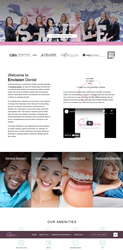
Envision Dental is a state-of-the-art boutique dental practice located in Marietta, Georgia, specializing in cosmetic and general dentistry. Dr. Priyanka Seekand, Dr. James Merriman and Envision Dental’s professional support staff are passionate about creating dream smiles in a responsible and conservative way. The AGD Fellowship Award is presented to dentists who seek to provide the highest quality dental care by remaining current in their profession. To earn this prestigious honor, Dr. Seekand completed over 500 hours of dental continuing education, passed a comprehensive written exam, and fulfilled three years of continuous membership in the AGD.

As a fellowship award recipient, Dr. Priyanka Seekand joins more than 6,600 active AGD Fellows who have gone above and beyond the basic requirements to care for their patients’ oral health. The Academy of General Dentistry (AGD) is a professional association of 39,000 general dentists dedicated to providing quality dental care and oral health education to the public. AGD members stay up-to-date in their profession through a commitment to continuing education. Founded in 1952, the AGD is the second-largest dental association in the United States, and it is the only association that exclusively serves the needs and represents interests of general dentists.

“I am proud of attaining this goal, which demonstrates my commitment to continual professional development,” says Dr. Priyanka Seekand.

More about Envision Dental:

Family members of all ages can achieve both a stunning smile and optimal oral health when visiting Envision Dental. They have comprehensive dental services under one roof and specialize in aesthetic and cosmetic dentistry. Envision Dental is honored to serve patients of all ages from Marietta, Kennesaw, East Cobb and the surrounding area. In addition to general dentistry, Dr. Seekand and Envision Dental offer tooth restorations and cosmetic dentistry that can help smiles stay both beautiful and healthy. Some of the other specialty dental services they offer include clear aligner orthodontics such as Invisalign® and ClearCorrect, smile makeovers, porcelain veneers, Zoom! teeth whitening, dental implants, dental bridges and restorative dentistry, tooth-colored fillings and bonding. Envision Dental also offers patients treatment for TMJ, bruxism and sleep apnea. The clinic is conveniently located at 130 Vann Street NE, Ste #210 in Marietta, GA. For more information or to schedule a checkup or consultation, please call (770) 425-0448 or visit http://www.envisiondentalmarietta.com.

Share article on social media or email:

Medical Device Safety — How to Improve Histopathological Evaluations, Upcoming Webinar Hosted by Xtalks


This webinar will benefit pathologists, trainees, scientists and study directors working in the medical device field.

In this upcoming webinar, learn the fundamentals behind medical device evaluation — and how to better ensure the accurate histopathological evaluation of medical device safety, efficacy, heating and bio compatibility in nonclinical assessments. This webinar will benefit pathologists, trainees, scientists and study directors working in the medical device field.

This webinar will also review the histology challenges of absorbable implants and discuss solutions to these challenges, including how to prevent histology reagents from interfering with the implant material.

Attendees are invited to send in any questions they have in advance and StageBio will be sure to address them in the webinar.

Register to learn more about determining safety endpoints and screening methods to adopt for the evaluation of medical device safety.

Join Serge Rousselle, DVM, DACVP, Distinguished Pathologist, StageBio, for the live webinar on Friday, December 2, 2022 at 1pm EST (10am PST).

For more information, or to register for this event, visit Medical Device Safety — How to Improve Histopathological Evaluations.

ABOUT XTALKS

Xtalks, powered by Honeycomb Worldwide Inc., is a leading provider of educational webinars to the global life science, food and medical device community. Every year, thousands of industry practitioners (from life science, food and medical device companies, private & academic research institutions, healthcare centers, etc.) turn to Xtalks for access to quality content. Xtalks helps Life Science professionals stay current with industry developments, trends and regulations. Xtalks webinars also provide perspectives on key issues from top industry thought leaders and service providers.

To learn more about Xtalks visit http://xtalks.com

For information about hosting a webinar visit http://xtalks.com/why-host-a-webinar/

Contact:

Vera Kovacevic

Tel: +1 (416) 977-6555 x371

Email: vkovacevic@xtalks.com

Share article on social media or email:

Longitudinal Patient Data — Addressing Common Questions & Unlocking the Value of Real-World Data, Upcoming Webinar Hosted by Xtalks


The team will provide tips for asking the right analytics questions to unlock the true power of real-world data.

Pharmaceutical companies work with many different types of data ranging from commercial sales through to longitudinal patient data.

In this webinar, the featured speakers explore the distinct differences and the importance of applying the right methods to ensure data accuracy and maintain business confidence. The panel of industry and data science experts draw from their collective experiences working with clients and real-world datasets across the world. They address some of the most common questions clients ask when working with longitudinal patient data.

This webinar will be a discussion on navigating the complexity of real-world data (RWD) to help pharma companies maintain a competitive edge driven through real world insights. The team will provide tips for asking the right analytics questions to unlock the true power of real-world data.

Key themes: Building confidence and addressing the challenges of working with real-world data; Asking the right questions to deliver the most accurate answer — how to approach the longitudinal aspect; The different needs of cross functional capabilities, answering questions across the product lifecycle for aligned decision-making; Latest analytics methods and techniques, translating complex data science into commercial relevance; Data scaling, how to be confident in representativeness? How are pharma companies applying real-world data in their business processes — some common use cases; And why work with a third party supplier in a world where global pharma companies are establishing in-house capabilities? What are the benefits?

Register to get answers to common questions when working with longitudinal patient data by unlocking the value of real-world data.

Join experts from Prospection, James Fedorow, Head of Prospection ANZ; Mahsa H. Kouhkamari, Analytics Manager RWE; Vincent Caillet, Analytics Manager; and Ronald Chan, Analytics Manager, for the live webinar on Tuesday, December 6, 2022, at 12pm JST/Japan (11am CST/China).

For more information, or to register for this event, visit Longitudinal Patient Data — Addressing Common Questions & Unlocking the Value of Real-World Data.

ABOUT XTALKS

Xtalks, powered by Honeycomb Worldwide Inc., is a leading provider of educational webinars to the global life science, food and medical device community. Every year, thousands of industry practitioners (from life science, food and medical device companies, private & academic research institutions, healthcare centers, etc.) turn to Xtalks for access to quality content. Xtalks helps Life Science professionals stay current with industry developments, trends and regulations. Xtalks webinars also provide perspectives on key issues from top industry thought leaders and service providers.

To learn more about Xtalks visit http://xtalks.com

For information about hosting a webinar visit http://xtalks.com/why-host-a-webinar/

Contact:

Vera Kovacevic

Tel: +1 (416) 977-6555 x371

Email: vkovacevic@xtalks.com

Share article on social media or email:

uMotif Announces First New Validated Innovation in eCOA/ePRO Since Paper Instruments Were Deployed on Smartphones


News Image

“uMotif is the only eCOA/ePRO company that started by working with patients to capture their health and well-being to share with their physicians. Today’s announcement underscores our unique ability to make it easier and more convenient for patients to participate in research.” -CEO Steve Rosenberg

uMotif, one of the clinical trial technology market’s fastest growing companies, continues its transformation of the eCOA/DCT market with the announcement that its proprietary Motif data capture interface offers a validated alternative to text-based instruments for clinical, post-marketing and real-world research.

The industry-leading findings are the results of an independent quantitative equivalence study led by Willie Muehlhausen (SAFIRA Clinical Research), with testing undertaken at Dublin City University. Fifty-five participants completed testing in two randomized groups using the Motif interface and a traditional 5-point Verbal Response Scale (VRS-5). The study results showed equivalence between the Motif interface and a standard VRS (high ICC), demonstrating the Motif is an equivalent way of capturing VRS data. Equivalence testing was based on the most commonly used PROM – the EQ-5D-5L – which was provided for the study with support from Euroqol. Study results are expected to be published in 2023.

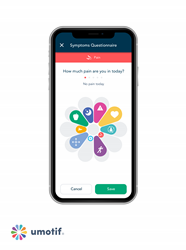
The Motif is a patented, flower-like graphical user interface. Each petal represents a different question, such as an Outcome Measure, symptom, or eDiary entry. Patients simply swipe on each petal to capture their data. The highly visual and easy-to-use interface is faster and more engaging for patients, which leads to higher rates of data capture compliance.

“Over the last 20 years the clinical research industry has standardized electronic presentation of traditional data capture widgets like the VRS, demonstrating equivalence to paper,” explained Willie Muehlhausen (LinkedIn) of SAFIRA Clinical Research. “The results from this study are exciting, as the Motif is the first new data capture interface since paper instruments were put onto a smartphone. This provides researchers with alternative ways of engaging patients to capture data through more visually appealing interfaces.”

Putting patients first is in uMotif’s DNA. The company’s experience over the past 10 years has proven that a patient centered approach is vital to delivering effective studies at pace and scale, with unrivaled patient engagement and volumes of quality data. uMotif studies including the Motif have engaged thousands of participants who have captured millions of data points which formed the basis for published research.

uMotif’s highly scalable eCOA/ePRO platform combines deep clinical knowledge and consumer design expertise to deliver unprecedented levels of patient compliance, regularly achieving >90% compliance in Real World studies. uMotif meets clinical and RWE market needs in any country, language, therapeutic area, and participant population, supporting site-based, hybrid, and fully virtual decentralized trials. Available on iOS, Android and the Web, the uMotif platform supports the most widely used eCOA/ePRO and eDiary input and evaluation types.

uMotif CEO Steve Rosenberg (LinkedIn) commented, “uMotif is the only eCOA/ePRO company that started by working with patients to capture their health and well-being to share with their physicians – unlike other companies that start with the protocol and push the questionnaires onto the patient. We help patients navigate and complete the study by capturing the necessary data at every point. Today’s announcement underscores our unique ability to make it easier and more convenient for patients to participate in research.”

About uMotif

The uMotif eCOA/ePRO platform delivers faster, quality clinical trials by putting participants at the core of research. uMotif’s configurable, modular and customizable eClinical cloud native platform powers site-based to fully decentralized clinical, real world, and post marketing research. For more information visit http://www.umotif.com

Share article on social media or email:

UMD Researcher Shows How A Common Fungus Eliminates Toxic Mercury from Soil and Water


“Metarhizium stops plants from taking up mercury. Despite being planted in polluted soil, the plant grows normally and is edible. . . You can imagine simply dipping seeds in Metarhizium, and planting crops that are now protected from mercury-rich soils.” Raymond St. Leger, University of Maryland.

A University of Maryland researcher and colleagues found that the fungus Metarhizium robertsii removes mercury from the soil around plant roots, and from fresh and saltwater. The researchers also genetically engineered the fungus to amplify its mercury detoxifying effects.

Mercury pollution of soil and water is a worldwide threat to public health. This new work suggests Metarhizium could provide an inexpensive and efficient way to protect crops grown in polluted areas and remediate mercury-laden waterways.

The study, which was conducted by UMD professor of entomology Raymond St. Leger and researchers in the laboratory of his former post-doctoral fellow, Weiguo Fang (now at Zhejiang University in Hangzhou, China),was published in Proceedings of the National Academy of Sciences (PNAS) on November 14, 2022.

“This project, led by Dr. Fang, found that Metarhizium stops plants from taking up mercury,” said St. Leger. “Despite being planted in polluted soil, the plant grows normally and is edible. What’s more, the fungus alone can quickly clear mercury from both fresh and saltwater.

Metarhizium is a nearly ubiquitous fungi, and previous work by the St. Leger laboratory had shown that it colonizes plant roots and protects them from herbivorous insects. Scientists have known that Metarhizium is often one of the only living things found in soils from toxic sites like mercury mines. But no one had previously determined how the fungus survived in mercury polluted soils, or if that had implications for the plants the fungus normally lives with.

St. Leger and other colleagues had previously sequenced the genome of Metarhizium, and Fang noticed that it contains two genes that are very similar to genes present in a bacterium known to detoxify, or bioremediate, mercury.

For the current study, the researchers ran a variety of laboratory experiments and found that corn infected with Metarhizium grew just as well whether it was planted in clean soil or mercury-laden soil. What’s more, no mercury was found in the plant tissues of corn grown in polluted soil.

The researchers then genetically modified the fungi, removing the two genes that were similar to those in mercury remediating bacteria. When they replicated their experiments, modified Metarhizium no longer protected corn plants from mercury-laden soil, and the corn died.

To verify that the genes were providing the detoxifying qualities, the researchers inserted them into another fungus that does not normally protect corn from mercury. The newly modified fungus performed like the Metarhizium, protecting the plants from mercury-laden soil.

Microbiological analyses revealed that the genes in question expressed enzymes that break down highly toxic organic forms of mercury into less toxic, inorganic mercury molecules. Lastly, the researchers genetically engineered Metarhizium to express more of the detoxifying genes and increase its production of the detoxifying enzymes.

In their final experiment, the researchers found they could clear mercury from both fresh and salt water in 48 hours by mixing in Metarhizium.

The next step will be to conduct experiments in the field in China to see if Metarhizium can turn toxic environments into productive fields for growing corn and other crops. Current methods of remediating polluted soils require toxins to be removed or neutralized from entire fields before anything can be planted. That can be very expensive and take a long time. But Metarhizium simply detoxifies the soil immediately surrounding the plant roots and prevents the plants from taking up the toxin.

“Allowing plants to grow in mercury-rich environments is one of the ways this fungus protects its plant home,” St. Leger explained. “It’s the only microbe we know of with the potential to be used like this, because the bacteria with the same genetic capabilities to detoxify mercury don’t grow on plants. But you can imagine simply dipping seeds in Metarhizium, and planting crops that are now protected from mercury-rich soils.”

In addition to its potential as a cost-effective tool for reclaiming polluted lands for agriculture, Metarhizium may help clear mercury from wetlands and polluted waterways that are increasingly threatened by mercury pollution as climate change and melting permafrost accelerates the release of the toxic metal into soils and oceans.

This research was supported by a National Natural Science Foundation of China Grant (Award No. 32172470) This story does not necessarily reflect the views of the funding organization.

Share article on social media or email:

Lung Cancer Awareness is featured on Viewpoint with Dennis Quaid


News Image

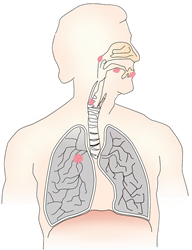
Treatments for lung cancer are getting better every year, and lung cancer screening should be conducted for those at high risk. Individuals between 50-80 years old with a 20-year or more smoking history are exceptionally at high risk.

Viewpoint with Dennis Quaid’s program features lung cancer awareness in an upcoming episode. The educational series will share intel from industry-leading experts working in lung cancer research. Content for the episode was secured by Viewpoint’s development team, who worked alongside related organizations in lung cancer treatments.

November is Lung Cancer Awareness Month. Viewpoint is excited to highlight this topic to spread awareness and shed light on the powerful stories of those who have experienced the disease firsthand.

Lung cancer affects numerous lives in the United States, with hundreds of thousands of people dying from it every year. It kills more adults than any other type of cancer.

While the disease can be deadly, it can be largely prevented in many cases by not smoking. Smoking cigarettes cause around nine out of ten lung cancer cases. Secondhand smoke should be avoided, too, as it can increase lung cancer risk by 20-30% in adults who have never even smoked. Radon gas is also thought to be a large leading cause of lung cancer in the U.S. Individuals should have their homes tested as it can’t be seen, smelled, or tasted.

Treatments for lung cancer are getting better every year, and lung cancer screening should be conducted for those at high risk. Individuals between 50-80 years old with a 20-year or more smoking history are exceptionally at high risk.

Dennis Quaid will introduce the segment on Lung Cancer Awareness.

The Viewpoint program is created for educational purposes. The show has garnered multiple Telly awards through its tenure and a diverse team works together to develop the content.

Share article on social media or email:

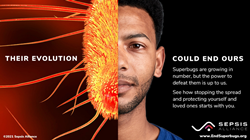
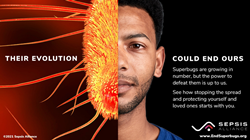
Sepsis Alliance Survey Reveals Antimicrobial Resistance and Antibiotic Resistance Considered “Major Problem” to Healthcare Professionals


90% of ID Physicians and Pharmacists consider antimicrobial resistance to be a “major problem.”

Antimicrobial Resistance (AMR) is a World Health Organization (WHO) top-10 global public health threat facing humanity, yet only 52% of adults worldwide are aware of the term and fewer understand the potential effects of AMR. In September 2022, Sepsis Alliance heralded a survey conducted by Radius Global Market Research of more than 150 Infectious Disease (ID) Physicians and Pharmacists who have practiced medicine for at least one year to determine their knowledge of AMR, their institution’s AMR education, and their views on what might help lessen the global burden of AMR. Keep reading to learn more about the findings of this first-of-its-kind survey.

What is AMR?

Specific strains of bacteria, viruses, fungi, or parasites that make people sick have adapted in order to avoid the antimicrobials (medicines such as antibiotics, antivirals, antifungals, and antiparasitics) designed to treat them. This is called antimicrobial resistance (AMR). Sepsis, the body’s overwhelming and life-threatening response to an infection, is one of the most significant health complications that can result from antimicrobial resistance. Antimicrobial resistance challenges the treatment of sepsis. As more germs become resistant to antimicrobial medicines used to treat infection, more people are at risk for developing sepsis.

AMR: A Major Problem

The survey found that 90% of ID Physicians and Pharmacists consider antimicrobial resistance to be a “major problem,” when asked to assign a list of items as a major problem, minor problem, or not a problem at all. The list also included overuse of antibiotics (88% viewed as a major problem), the ability to develop new drugs to treat infections (81%), people not getting vaccinated (74%), and people not finishing their complete course of antibiotics (49%).

“Antimicrobial resistance is primarily driven by inappropriate antibiotic use, the lack of new antimicrobials, the lack of complete uptake of vaccinations, and partial completion of antibiotics by patients,” said Cindy Hou, DO, an Infection Control Officer and Sepsis Alliance’s Chief Medical Officer. “These factors are important contributors to AMR and need to be considered when discussing AMR and necessary interventions.”

AMR Responsibility

ID Physicians and Pharmacists assume responsibility for solving AMR: 96% agreed they are very- or somewhat- responsible for solving AMR. Importantly, over 90% have received AMR training yet only 54% are involved in efforts to improve hospital-acquired sepsis.

“One in every 31 hospitalized patients has at least one hospital-acquired infection each day, and any of these can lead to life-threatening sepsis,” said Dr. Hou. “While nearly 96% of ID Physicians and Pharmacists are engaged in AMR, there also needs to be engagement with tackling hospital-acquired sepsis as a means to reduce the chances of patients acquiring multi-drug resistant pathogens.”

Of the facilities represented in this survey, 95% have an antimicrobial stewardship program (ASP) in place but just 68% of the facilities accept ASP recommendations most of the time and only 51% accept ASP education most of the time, including those in compliance with the CDC Core Elements.

According to the CDC, “More than half of antibiotic prescribing for selected events in hospitals was not consistent with recommended prescribing practices….antibiotic stewardship programs (ASPs) can help clinicians improve clinical outcomes and minimize harms by improving antibiotic prescribing.”

At the national level, 53% of respondents believe that increased patient education also offers an opportunity to improve AMR, yet only 10% of facilities currently provide patient education. When asked about barriers to resolving AMR, 32% of respondents said limited patient education is a barrier.

“Sepsis Alliance knows the value of patient education for improved recognition and outcomes,” said Thomas Heymann, Sepsis Alliance President and CEO. “We believe equipping patients to be their own advocates through informed decision-making of antibiotic guidelines, in concert with their healthcare team, will reduce the burden of AMR and improve outcomes.”

The Future of AMR

ASPs provide a variety of methods to combat the overuse of antibiotics in facilities. When selecting what they consider to be a great opportunity for improving AMR, 90% of ID Physicians and Pharmacists believe a decrease in inappropriate utilization of broad-spectrum antibiotics would improve AMR nationwide, and 94% believe it is a great opportunity in their facility. They also believed the availability of rapid diagnostics would improve AMR nationwide (65%) and in their facilities (70%). Finally, improved rapid diagnostics is also a challenge to be addressed with 60% believing it to be an opportunity for improvement at the national level and 66% at the facility level.

Increased availability of rapid diagnostics as well as improved diagnostics could contribute to a decrease in the inappropriate utilization of broad-spectrum antibiotics.

“We clearly see that ID Physicians and Pharmacists are not just looking for education, but for stronger tools to combat AMR in their facility,” Dr. Hou stated. “We see innovators trying to solve this problem and the PASTEUR Act would also increase the availability of new antimicrobials.”

The PASTEUR Act is a proposed piece of federal legislation that seeks to address the growing problem of antimicrobial resistance. It would do so by encouraging the development of new drugs and protecting the ones we already have. There is a lack of knowledge about the PASTEUR Act and the robust antibiotic pipeline it would create with only 36% of respondents familiar with this proposed legislation.

What’s Next?

The world is beginning to recognize the threat of AMR, and healthcare facilities are working to reduce the burden with the resources available to them. Click below to review the entire findings report from the survey, and keep an eye out for additional reviews of the findings on Sepsis.org.

Antimicrobial Resistance Awareness and Strategies Among ID Physicians & Pharmacists Report

Want to learn more about antimicrobial resistance and what you can do to raise awareness? Visit EndSuperbugs.org to learn more.

Funding for this survey was provided through a grant from PhRMA.

***

About Sepsis Alliance

Sepsis Alliance, the first and leading sepsis organization in the U.S., seeks to save lives and reduce suffering by improving sepsis awareness and care. More than 1.7 million people are diagnosed with sepsis each year in the U.S. with more than 350,000 adults dying and over 50% of survivors experiencing post-sepsis syndrome and other lingering effects, including amputations. At Sepsis Alliance’s founding in 2003, only 19% of U.S. adults were aware of the term “sepsis.” After over ten years of educational efforts for the general public and healthcare professionals through Sepsis.org, Sepsis Alliance Clinical Community, Sepsis Alliance Institute, and Sepsis Alliance Voices, awareness is at 66%. Over 30,000 healthcare professionals across the country have attended sepsis webinars and courses to elevate their practice. Sepsis Alliance is the convener of Sepsis Innovation Collaborative, a multi-stakeholder public/private collaborative dedicated to innovations in sepsis diagnosis and management. Sepsis Alliance is a 501(c)3 nonprofit and a GuideStar Platinum Rated charity. For more information, please visit http://www.sepsis.org and connect with Sepsis Alliance on Facebook, Twitter, Instagram, and LinkedIn at @SepsisAlliance.



GA Top Docs Has Reviewed and Approved Board Certified Dermatologist, Dr. Michelle Juneau For 2022


Dr. Michelle Juneau

Dr. Michelle Juneau

Dr. Michelle Juneau of Dermatology Consultants has been reviewed and approved by GA Top Docs for 2022. Dr. Juneau is a Board Certified Dermatologist with a wide range of experience in the field of dermatology.

Dr. Juneau earned her medical degree from the Louisiana State University (LSU) School of Medicine and her bachelor’s degree from the University of Georgia. Prior to joining Dermatology Consultants, she was a resident in the Department of Dermatology at LSU Health Sciences Center in New Orleans, where her areas of study included mycology (skin fungus).

She is active in many professional associations, including the American Academy of Dermatology and Women’s Dermatology Society as well as performs the dermatologic exams for Piedmont Hospital Executive Health Program.

To learn more about board certified dermatologist Dr. Michelle Juneau, please visit: https://gatopdocs.com/doctors/drmichellejuneau/

—

About Us

GA Top Docs is a comprehensive, trusted and exclusive healthcare resource featuring reviewed and approved Top Doctors and Dentists in Georgia online in an easy to use format. GA Top Docs only reviews and approves providers based on merit after they have been extensively vetted.

GA Top Docs is a division of USA Top Docs which allows patients to meet providers online before making their appointment.

For more information, e-mail us at info@GATopDocs.com and/or visit http://www.GATopDocs.com.

You can also follow us on Facebook, Twitter, & Instagram.

Share article on social media or email:


Real estate technology company launches Wefunder campaign to welcome investors


“The most exciting part of this movement is providing your customers and raving fans access to become equity stakeholders.” – Sean Safholm, myhomeIQ co-founder and crowdfunding investor.

SOA Labs, a Greenville-based real estate startup company, is excited to announce that it is accepting individual investors through a Wefunder campaign for its real estate technology platform myhomeIQ.

People who invest in myhomeIQ can become an equity stakeholder of the innovative platform that is helping real estate agents and loan officers build clients for life by educating homeowners on ways they can build wealth through homeownership. The lead generation and nurturing tool has already seen tremendous success since its launch in January 2020, amassing thousands of registered users. Additionally, it has been endorsed by the National Association of Mortgage Brokers and has been nominated as one of the most innovative and impactful technology companies serving the real estate industry in 2021 and 2022. On top of this, myhomeIQ has more than 850 5-star reviews between Google and Facebook from verified users.

Now, thanks to the unique crowdfunding method offered through Wefunder, one of the top equity crowdfunding platforms, nearly anyone can be part of the company by becoming an investor.

“Since the changes made from the Jobs Act, company founders now have access to a platform and investor reach that would have never been possible before. The most exciting part of this movement is providing your customers and raving fans access to become equity stakeholders,” said Sean Safholm, myhomeIQ co-founder and crowdfunding investor.

Wefunder helped enact a new law in 2016 known as Regulation Crowdfunding, which made it legal for anyone to be able to invest minimal amounts of cash into startups. Through 2021, Wefunder had helped companies raise a total of $553 million and through that, helped create over 32,000 jobs.

SOA Labs is beginning with a “testing the waters” campaign* on WeFunder.com. This type of campaign allows the company to gauge the interest of potential investors in myhomeIQ and give them the opportunity to reserve an offering spot. That offering spot extends the chance for investors to own a piece of this cutting-edge technology that is gaining popularity.

myHomeIQ provides homeowners and homebuyers personalized financial insights while facilitating engagement with their real estate agent and loan officer. The platform positions the real estate agent and lender as trusted advisors – staying top of mind with their clients through branded, personalized myhomeIQ reports. These reports protect clients from going elsewhere by delivering them valuable data about their home every month to win their future and referral business. Additionally, myhomeIQ strengthens relationships between real estate agents and loan officers and grows their network by partnering with lead generation and client nurturing tools so they get more business.

Tawd Frensley, myhomeIQ VP of sales & marketing, said allowing myhomeIQ’s customers to become equity stakeholders using crowdfunding and Wefunder is a game changer for the industry and the company. The idea to use crowdfunding stemmed from the myhomeIQ team sending out an email to its users asking if they would be interested in investing in the product if the opportunity were available. In a very short time, hundreds of users had responded, emphatically with, “Yes!”

Alex Tkachuk, co-founder and CEO of SOA Labs, Inc., said they knew they had to launch the Wefunder campaign after that, and he promises even bigger things ahead with the development of myhomeIQ.

“Anticipating a successful equity crowdfunding campaign, we are doubling down on our product roadmap development to enhance myhomeIQ even further. With more insights from our users, we have some amazing enhancements that will be coming in 2023. We hope you will be a part of it!” Tkachuk said.

You can access the Wefunder campaign here.

*SOA Labs, Inc. is testing the waters to evaluate investor interest. No money or other consideration is being solicited; if sent, it will not be accepted. No offer to buy securities will be accepted. No part of the purchase price will be received until a Form C is filed and, then, only through Wefunder. Any indication of interest has no obligation or commitment of any kind.

About SOA Labs

Based in Greenville, SC., with offices in Sacramento, Calif., SOA Labs is a real estate technology company with a focus on generating leads for real estate agents and loan officers. Its product, myhomeIQ is helping real estate agents and loan officers build clients for life by educating homeowners on ways they can build wealth through homeownership and connecting homeowners with home service professionals. myhomeIQ allows real estate agents and loan officers to stay connected with their clients and generate new leads. It does this by empowering homeowners and homebuyers to build real estate wealth by sending customized, regular reports that provide valuable home insights. This keeps the real estate agent and loan officer top of mind should the homeowner or homebuyer decide to transact in the future. For more information, visit https://myhomeiq.com/

About Wefunder

Wefunder is a platform that helps founders raise a community round from their most passionate customers and fans. It is headquartered in San Francisco with a distributed team across the country. Wefunder has fundamentally changed the regulation crowdfunding space from the regulations to making it accessible to all at scale. Wefunder is a Public Benefit Corp., not only for its mission to fix capitalism, but because it’s the way companies should be run. To learn more visit wefunder.com.

Share article on social media or email:

Team of Survivors Cycles 4,500 Miles Across the Country on a Journey to Improve the Stroke System of Care


Stroke Across America in Missoula, Montana and Revere, Massachusetts

“Seeing the incredible resilience of people impacted by stroke, and the commitment of those who support them, was truly inspiring. Our events were a highlight of the trip–they reinforced how important it is not to let yourself get isolated after a stroke or when living with aphasia.” -Debra Meyerson

On May 19, a team of cyclists representing Stroke Onward set out on an epic journey across the United States. Known as Stroke Across America, the goal was to ride across the country and, during the 100-day journey, raise awareness about stroke, aphasia, and the emotional wellness journey that is critical, and often overlooked, in recovery. On August 26th, 4,548 miles later, they arrived in Boston and dipped their front tires in the Atlantic Ocean. Stroke Onward has just released a three-minute video highlighting the journey and is building on the awareness raised by this journey to continue its work to catalyze change in the stroke system of care to better meet the needs of survivors and their families. Lack of support for the emotional journey in recovery echoed time and time again at community events organized by Stroke Across America all across the country.

Debra Meyerson and Steven Zuckerman, wife and husband, stroke survivor and carepartner, and tandem riders – organized and led this journey. They are the co-founders of Stroke Onward, a nonprofit committed to ensuring stroke survivors and their supporters have the resources needed to rebuild identities and rewarding lives. Steve and Debra were inspired to create this trip as cycling has been instrumental in rebuilding their lives after a severe stroke in 2010 left Debra with aphasia and other disabilities. They were joined by Michael Obel-Omia, also a stroke survivor living with aphasia, and Whitney Hardy, who survived a near-fatal car accident and lives with disabilities from a traumatic brain injury.

Debra is a Stanford University professor (tenured before her stroke). Steve is a non-profit executive. They have ridden a tandem bicycle since shortly after Debra experienced a severe stroke in 2010, leaving her unable to ride on her own. This is just one way Debra’s stroke changed their lives forever, and a prime example of how they have worked hard to make sure the stroke doesn’t hold them back.

Connecting with Communities Across the Country

This team of inspiring individuals has shown that even with disabilities, one can live a full and fulfilling life. In order to advance the mission of Stroke Onward, the journey was specifically designed to create connections within and beyond the stroke community. The team hosted 16 community events in cities across the US that brought together more than 1,200 people: survivors, their loved ones, healthcare providers, cyclists, and the general public. They were organized in collaboration with more than 100 local organizations, mostly groups involved in stroke care and support. These events allowed the team and local participants to connect, share, and learn together.

“Seeing the incredible resilience of people impacted by stroke, and the commitment of those who support them, was truly inspiring,” shared Debra. “Our events were a highlight of the trip – they reinforced how important it is not to let yourself get isolated after a stroke or when living with aphasia, and that we must come together as a community to drive the healthcare system to better support the emotional journey in recovery after traumas like stroke.”

Building a Better System of Care

“Stroke is just not limited to a disease or the medications or therapies. It changes your life and you have to accept the changes in your life” – Dipika Aggerwal, MD, Neurologist and Stroke Survivor, speaking at the Kansas City Stroke Across America Event

Resounding feedback during Stroke Across America confirmed the critical importance of the emotional wellness journey in stroke recovery and the lack of resources to support it. After a traumatic, life changing event like stroke, one’s identity can be left shattered with few available resources to help rebuild it. Stroke Onward’s continuing goal after Stroke Across America is to be a catalyst for change in the stroke system of care – to improve how survivors and their families are supported in rebuilding identities and rewarding lives after stroke. Stroke Onward is organizing its efforts through a four-pronged strategy – raising awareness, creating and sharing resources, building communities, and driving institutional change. Current projects include partnering with academic institutions to integrate their content into healthcare provider degree program curriculum, and evaluating barriers and opportunities to bring more mental health professionals into the stroke system of care.

Stroke Onward invites everyone to continue to stay connected with us through our social media @strokeonward on Instagram, Facebook, Twitter, LinkedIn, and TikTok and our website http://www.strokeonward.org ; only together can we improve the stroke system of care.

CONTACT

Interview Requests: Flannery O’Neil, Executive Director, Cell: 602-317-8095, email: flannery@strokeonward.org

IMAGES

High Res Images and Video

SOCIALS

Instagram: @strokeonward | Twitter: @strokeonward | Facebook: @strokeonward | TikTok: @strokeonward

SHARE THIS STORY

Online version: https://strokeonward.org/press-room-saam/

STROKE ACROSS AMERICA IN THE PRESS – highlights

For links to more press coverage of Stroke Across America, click here.

Share article on social media or email: