
All posts by imreal

Life Molecular Imaging Announces Start of Phase 3 Study with [18F]Florbetaben in Cardiac Amyloid Light Chain (AL) Amyloidosis


News Image

[18F]florbetaben PET imaging of patients with suspected cardiac amyloidosis has the potential to become an important tool to simplify and shorten the time to diagnosis, providing earlier and appropriate access to therapy and improved monitoring of such interventions

Life Molecular Imaging (LMI) announces today that the first patient has been imaged with [18F]florbetaben in the CArdiag Phase 3 clinical study. This is an open-label, multi-center, non-randomized pivotal Phase 3 study to evaluate the diagnostic efficacy of [18F]florbetaben Positron Emission Tomography (PET) imaging to diagnose cardiac AL amyloidosis in patients with suspected cardiac amyloidosis.

The CArdiag Phase 3 clinical program will be performed in Germany, Spain, UK and US – and will enroll approximately 200 patients globally. The primary objective is to determine the sensitivity and specificity of the visual assessment of [18F]florbetaben PET images for the diagnosis of cardiac AL amyloidosis compared to standard of care clinical diagnosis.

[18F]florbetaben PET is validated and approved to detect neuritic beta amyloid plaques in the brain and available via a global supply network marketed as Neuraceq®. Initial clinical data showed that amyloid deposits of other origin in the heart, such as AL amyloid and transthyretin (TTR) amyloid, can also be detected. Based on these data, the European Commission and the U.S. Food and Drug Administration granted orphan drug designation to [18F]florbetaben in 2020 as a diagnostic tool for AL amyloidosis. The detection of amyloid deposits in the heart will be further investigated and validated in the current Phase 3 trial. Exploratory analyses will evaluate the possibility for a differential diagnosis between the two main types (AL and ATTR) of cardiac amyloidosis by [18F]florbetaben PET.

“Expanding the indication for our amyloid PET tracer from detecting ß-amyloid deposits in the brain to detecting amyloid deposits in the heart in patients with cardiac amyloidosis will allow us to support an earlier diagnosis of this rare and life-threatening disease”, said Dr. Ludger Dinkelborg, CEO of Life Molecular Imaging. “We are proud to announce the start of this Phase 3 study, which marks another milestone on our vision to reduce the burden of disease by improving early diagnosis and characterization of chronic and life-threatening diseases.”

“Cardiac AL amyloidosis is a progressive and life-threatening disease, and its diagnosis and treatment are challenging”, said Dr. Andrew Stephens, MD, PhD, CMO of Life Molecular Imaging. “[18F]florbetaben PET imaging of patients with suspected cardiac amyloidosis has the potential to become an important tool to simplify and shorten the time to diagnosis, providing earlier and appropriate access to therapy and improved monitoring of such interventions.”

Further details of the CArdiag Phase 3 study design are available on clinicaltrials.gov (NCT05184088).

About [18F]florbetaben

[18F]florbetaben is a radioactive diagnostic agent indicated for Positron Emission Tomography (PET) imaging of the brain. [18F]florbetaben has been approved by the FDA and EMA for routine clinical use, and has local regulatory approval in other countries such as Japan and Korea. It binds to beta sheet structure of amyloid proteins. [18F]florbetaben is marketed as Neuraceq® to estimate the neuritic beta amyloid plaque density in adult patients with cognitive impairment who are being evaluated for Alzheimer’s disease (AD) and other causes of cognitive decline. [18F]florbetaben is currently under investigation as a targeted radiopharmaceutical for the detection of amyloid deposits in the heart and other organs of patients with cardiac and systemic amyloidosis of AL and ATTR type.

Most Common Adverse Reactions

In clinical trials including demented and non-demented subjects, the most frequently observed adverse drug reactions in 872 subjects with 1090 Florbetaben (18F) administrations were injection/application site erythema (1.7%), injection site irritation (1.1%), and injection site pain (3.4%).

About Life Molecular Imaging (LMI)

Life Molecular Imaging (LMI, formerly Piramal Imaging) was formed in 2012 with the acquisition of the molecular imaging research and development portfolio of Bayer Pharma AG. It is now part of the Alliance Medical Group (a member of the Life Healthcare Group) offering an integrated business including research and development laboratories, a network of cyclotrons, radiopharmacies and imaging facilities. By developing novel PET tracers for molecular imaging, LMI is focusing on a key field of modern medicine. The organization strives to be a leader in the Molecular Imaging field by developing innovative products that improve early detection and characterization of chronic and life-threatening diseases, leading to better therapeutic outcomes and improved quality of life. Please visit https://life-mi.com.

About Life Healthcare Group

Life Healthcare is a global people-centered, diversified healthcare organization listed on the Johannesburg Stock Exchange. Life Healthcare has over 38 years’ experience in the South African private healthcare sector, and currently operates 66 healthcare facilities in southern Africa. Services include acute hospital care, acute physical rehabilitation, acute mental healthcare, renal dialysis, and wellness, occupational health, primary health and emergency medical services. The Group owns Alliance Medical Group, the leading independent provider of medical imaging services (MRI, CT and PET scans) within Europe, operating internationally across 10 countries. Life Molecular Imaging, a division of Alliance is an integrated pharmaceutical business that includes research and development laboratories, access to a network of cyclotrons and radio-pharmacies and imaging facilities, with Life Radiopharma being Alliance’s distributor of radiopharmaceuticals to diagnose many types of diseases. Visit https://www.lifehealthcare.co.za/

Media Contact:

Dr Iris Hardewig

i.hardewig[at]life-mi.com

Share article on social media or email:

CytoVeris Publishes Preclinical Study Showing Potential of its TumorMAP System for Cancer Detection


News Image

CytoVeris Inc., a medical device company developing AI-powered cancer imaging technologies to enable more precise surgical decision-making and improve patient outcomes, today announced the publication of preclinical data showing the potential of its TumorMAPTM system to detect cancer. The system is based on a proprietary Multi-Spectral Tissue Auto-Fluorescence Imaging (MS-TAFI) technology that analyzes the “optical fingerprint” of tissue and deciphers its intrinsic biomolecular and morphological characteristics without the use of dyes or imaging agents. The study is published in the peer-reviewed journal Archives of Pathology and Laboratory Medicine. This technology has the potential to evaluate resection margins intraoperatively during surgical procedures.

“It is remarkable to witness the CytoVeris TumorMAP system accurately detecting cancer in near-real time in a label-free manner,” said Malini Harigopal, MD, Director of Immunohistochemistry Laboratory and Breast Pathology Fellowship Director at Yale School of Medicine and corresponding author of the paper. “We are excited to be part of this study and its promising preliminary results. Presently, pathologists spend considerable time determining the distance of the invasive or in situ carcinoma from the true margin to better assist surgeons in re-excising close or positive margins in breast cancers. This technology has the capability to check margin status in vivo right in the operation suite and may impact margin re-excision rates in the future more accurately. This study, though preliminary, is highly innovative with far-reaching applications for other organ sites where margin evaluation is critical.”

Minghao Zhong, MD, PhD, Associate Professor of Pathology at Yale School of Medicine and co-author of the paper said, “We are thrilled to contribute to the preclinical validation of the CytoVeris device. In addition to its intended application in surgery, this device shows its utility for use in processing and prioritizing specimens during frozen section and in the pathology grossing room.”

Approximately 300,000 women in the United States are diagnosed with breast cancer each year, and a significant number of these patients undergo breast-conserving surgery (BCS) as part of the standard of care for the treatment of the disease. Repeated surgery is necessary for 20 to 35 percent of breast conservation surgeries due to the absence of any adjunctive, accurate, and objective tool in the surgeon’s hand that can be used for real-time margin assessment and to achieve the desired balance of oncologic and cosmetic outcomes. This innovative application of AI-powered imaging assists surgeons in accurately identifying margin status intraoperatively.

“Our innovative platform technology marries AI with advanced imaging and has the unique flexibility to be applied for tissue identification,” said Rishikesh Pandey, Ph.D., Chief Scientist of CytoVeris. “We are very passionate about our platform technology, committed to improving outcomes of oncologic patients, and excited to have our first preclinical study published in this prestigious journal.”

CytoVeris was founded on the vision that, by leveraging advanced optical imaging and artificial intelligence, surgeons will have the ability to discern a specific tissue type where it matters most – in the operating room,” said Dr. Alan D. Kersey, President and CEO of CytoVeris. “This study demonstrates the potential for our technology to improve the precision of breast cancer resection, but we won’t stop there. We are committed to addressing the needs of other large and growing oncologic markets as well, including bladder and prostate cancers.”

Read more at:

https://meridian.allenpress.com/aplm/article/doi/10.5858/arpa.2022-0228-OA/490548/AI-Powered-Biomolecular-Specific-and-Label-Free

About CytoVeris:

With a passion for science and compassion for cancer patients, CytoVeris is leveraging the convergence of powerful multispectral imaging technology, knowledge of intrinsic biochemical attributes of tissue, and explainable artificial intelligence to bring new capabilities into the hands of surgeons to improve resection quality. CytoVeris proprietary Multi2-Spectral Auto-Fluorescence Imaging (MS-AFI) system, will assist cancer surgeons to discern target tissue in real-time during surgery and as a result will increase the probability of successful cancer surgery and outcomes in open, minimally invasive surgery and robotically assisted procedures. To learn more, visit http://www.cytoveris.com.

Share article on social media or email:

Adaptive Clinical Systems Joins Veeva’s Technology Partner Community As A Certified Data Interoperability Partner for Veeva Vault


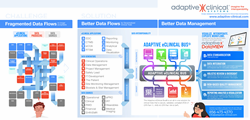
Adaptive Clinical Bus Solves Clinical Research Interoperability Challenges

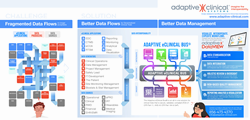
Adaptive Clinical Bus Solves Clinical Research Interoperability Challenges

“As the clinical research industry trends towards more complex studies, even small to mid-size sponsors find themselves in a multi-CRO environment with disparate systems in need of interoperability,” said Sina Adibi, CEO and President, Adaptive Clinical Systems.

Adaptive Clinical Systems is pleased to announce that it has been selected to join the Veeva Vault partner community as a Certified Technology Partner for clinical research data interoperability.

“As the clinical research industry trends towards more complex studies, even small to mid-size sponsors find themselves in a multi-CRO environment with disparate systems in need of interoperability,” said Sina Adibi, CEO and President, Adaptive Clinical Systems.

This technology partnership will enable existing and future Veeva Vault customers to easily collect and aggregate critical operational data from disparate sources into and out of the Veeva Vault platform including such areas as CTMS, Safety and CDB. As a result of this partnership, Adaptive Clinical will streamline Veeva Vault implementations that require interoperability to improve performance at a fraction of the cost of a custom solution. Furthermore, sponsors will be able to integrate and leverage this investment towards real-time patient monitoring and clinical study monitoring using the Adaptive eClinical Bus and Adaptive DataVIEW reporting and visualization solution. Veeva product capabilities are further augmented through universal compatibility and interoperability with the Adaptive Clinical ecosystem. With a full library of third-party interconnects, Veeva clients can exchange data with any tool to enable holistic data management.

Adaptive Clinical Systems, a global life sciences technology company, provides the leading data integration platform for clinical research. With the Adaptive eClinical Bus® and Adaptive DataVIEW®, see how your clinical trial data is transformed with data in motion. Adaptive Clinical’s solutions enable data streams across all study partners and eClinical eSources. Whether your challenge is data visualization, API integrations or data integration, our solutions help remove data islands and silos. We make your data actionable faster. For more information, please see Adaptive Clinical Systems website: http://www.adaptive-clinical.com.

Share article on social media or email:
Retired Pastor Helps Readers Understand God’s Existence, Abundant Love in The Blood of My Blood; New book shares daily Biblical meditations, explanations


In his new book “The Blood of My Blood, A Journal of Bible Meditations,” Oscar Destruge shares with readers daily Bible meditations, his explanations, and applications of those texts.

“By feeding daily on God’s affirming and loving statements found throughout the Bible and this journal, we can come out of our depressions and take our place in society with gratitude and humility.”

Even in precarious and turbulent times when politics, war, and the uncertainty of the future are on people’s minds, God is always here for us if we open our hearts and minds to His word.

Oscar Destruge, a retired senior pastor at El Camino United Methodist Church in Norwalk, Connecticut, shares that positive message through his book “The Blood of My Blood, A Journal of Bible Meditations.”

To help people rediscover the joy and purpose of living and sharing God’s abundant love, Destruge shares with readers daily Bible meditations that include daily assigned Bible readings, his explanations and applications of those texts, and insights into his personal and family life.

“I wrote this book to be a positive reminder to friends, readers, family, and future generations that we all go through periods of depression, questioning life itself,” he said. “But, no matter our past or what we feel about ourselves, or our doubts and fears, we must realize that we are of great value to God and our family. By feeding daily on God’s affirming and loving statements found throughout the Bible and this journal, we can come out of our depressions and take our place in society with gratitude and humility.”

With his book, Destruge also addresses what he described as “the great lie” imposed on many people—the misguided distrust of God, the Bible, and “organized religion.”

“They’ve believed the great lie that God doesn’t exist, God doesn’t care about them, and God is distant,” he said. “In addition, many know about God, but fewer know or have personally experienced God’s “agape” love. According to Britannica, agape refers to ‘the fatherly love of God for humans, as well as the reciprocal human love for God.’ Without God’s love, protection and guidance, we’re easy prey to the enemy’s lies, leading to isolation, low self-esteem, depression, and suicidal thoughts.”

Speaking of his experience as a pastor, Destruge wants readers to take away four Bible-based main points:


  • You are loved. Nothing in your past or present can prevent God from forgiving and receiving you back into His family.
  • God is with you. God is and has been with you at all times, and you will be able to look back at your most difficult moments, and realize that God carried you through.
  • The best is yet to come. Nothing in this world compares to the joy and peace that awaits us in heaven. Knowing the best awaits will give you the strength and courage to endure today’s trials.
  • The Bible is God’s trustworthy guide to lead you home. The Bible says: “All Scripture is inspired by God and useful to teach, to reprove, to correct, to instruct in righteousness, so that the servant of God may be perfect, equipped for every good work” (2 Timothy 3:16-17).

“I could be wrong in placing my trust in God’s Word, but if I’m going to be wrong, I’d rather be on the side of the One who inspires followers to be at peace with everyone, to love the unlovable, to help the needy and weak, to seek first God’s Kingdom and His righteousness,” he said. “My life is completely different than it was 33 years ago before I placed my faith in God and the Bible. Then, I was on the verge of suicide, with months of sleepless nights, afraid of what might happen. I’ve found nothing but peace, guidance, forgiveness, and reconciliation with God and my loved ones. There’s no other trusted guide for me besides God’s Holy Word.

“The Blood of My Blood, A Journal of Bible Meditations” is available on Amazon.

About the Book:

“The Blood of My Blood, A Journal of Bible Meditations” by Oscar Destruge is a collection of Daily Bible Meditations derived from the common lectionary, which includes the assigned Bible reading for that day and Pastor Oscar’s explanation and application of that text. Destruge is a retired senior pastor at El Camino United Methodist Church in Norwalk, Connecticut.

The book invites the reader to learn about Pastor Oscar’s life and family and contains beautiful travel pictures. Each daily meditation takes about four minutes to read and ends with a prayer. There are indexes by Scripture and keywords.

Pastor Oscar’s goal for readers is for them to strengthen their faith and walk with God and to encourage them into a routine of spending four minutes daily with God’s Word to help them discover God, who they are, and what is their God-given purpose in life. Lastly, he wants them to develop the courage to face challenges knowing that God is with them and that no matter the obstacles, they will have victory. For more information, visit https://www.pastoroscardestruge.com/. ###

Share article on social media or email:
The West Coast Dominates When it Comes to Workplace Flexibility but a Few Southern Cities Are Making Their Mark


“Where work takes place impacts so much, including where people choose to live. If it’s easier for someone who works in tech to live in Charleston instead of San Francisco, we want them to be able to make that decision based on key data,” said Rob Sadow, CEO and Co-Founder of Scoop.

Today, Scoop, the company enabling employees to effortlessly plan great in-office days, officially launches the Flex Index and the accompanying inaugural Flex Report. The Flex Index finds that three Southern cities are listed among the top 10 most flexible metros: Austin, Texas, Charleston, S.C., and Durham, N.C.

While the West Coast has long been regarded as the place to be for tech with big players and startups setting up shop in a number of cities regarded as “tech hubs,” in more recent years that energy has expanded into key cities in the South. And as the tech industry fully commits to flexible work with 80 percent of companies identifying as Fully Flexible, it aligns that Austin, Charleston, and Durham are also cities where tech is a dominant industry.

“Work’s future and success depend largely on flexibility – the single most important ingredient in today’s workplace culture and tomorrow’s best teams,” said Rob Sadow, CEO and Co-Founder of Scoop. “Where work takes place impacts so much, including where people choose to live. If it’s easier for someone who works in tech to live in Charleston instead of San Francisco, we want them to be able to make that decision based on key data. The Flex Index aims to become the single source of truth for workplace models, policies, and patterns. As company approaches to flexibility evolve, insights from the Flex Index will be instrumental in informing where and how people choose to work.”

The Flex Index provides never-before-collected insights from over 4,000 companies and 25,000 office locations that collectively employ more than 100 million people. With insight into company-by-company trends across numerous axes — including location, size, industry, and more — employees, prospective hires, recruiters, researchers, and journalists will now — for the first time — be able to discover companies’ workplace flexibility policies in a single, comprehensive place.     

Flex Index Key Findings by Region

  • Oregon & Portland for the win: Oregon is the winner at 66 percent of companies offering full flexibility and Portland takes the top spot in flexibility (68 percent). At the same time, California saw two cities make the top ten: San Jose (58 percent) and San Francisco (57 percent).
  • Some metros in the same state don’t see eye to eye: Some metros within the same state show up on both lists. Charleston, SC, and Durham, NC are two of the top 10 most flexible, while Greenville, SC, and Greensboro, NC are both on the least flexible list.     

Top 10 Most Flexible Metros

  • Portland, OR: 68 percent fully flexible
  • Boulder, CO: 67 percent
  • Austin, TX: 62 percent
  • Seattle, WA: 60 percent
  • Denver, CO: 59 percent
  • San Jose, CA: 58 percent
  • San Francisco, CA: 57 percent
  • Charleston, SC: 56 percent
  • Boston, MA: 54 percent
  • Durham, NC: 53 percent

10 Least Flexible Metros

  • Memphis, TN: 71 percent fully on site
  • New Orleans, LA: 60 percent
  • Riverside, CA: 58 percent
  • San Antonio, TX: 56 percent
  • Oklahoma City, OK: 54 percent
  • Jacksonville, FL: 53 percent
  • Greenville, SC: 53 percent
  • Virginia Beach, VA: 52 percent
  • Greensboro, NC: 52 percent
  • Ogden, UT: 52 percent

“The shift to hybrid and remote work is part of a broader rethinking of the value of commercial office space by basing success on output instead of an in-office presence,” said Arpit Gupta, Associate Professor of Finance at the NYU Stern School of Business. “Having deep insight on trends based on accessible, reliable, and timely data will help us navigate the possible economic impact of sustained rising rates on real estate value.”

The dynamic database allows for updates and additions to existing company listings to reflect the rapid changes and particularities of how a company or office implements its policies. You can contribute to the breadth and quality of the Flex Index by adding your company information here.

For more, please contact Scoop_key@thekeypr.com.

Methodology:

The Flex Index collects firmographic and office requirements information on nearly 4,000 companies. These companies collectively have more than 25,000 office locations and employ more than 100 million people.            

Company office requirements are generated through a combination of online survey and manual entry of publicly available information. All surveys must be submitted by an employee of the company with an accompanying work email address to verify their employment. All surveys contributing to this Flex Report were conducted between October 2022 and January 2023. Once a company is incorporated into the Flex Index, company representatives are contacted to inform them of their inclusion. Companies can add or update their information on the Flex Index at any time.

Company office requirements reflect the most common office requirements for corporate employees. Companies can add detail to their company page to reflect job functions, roles, or geographies where there are different office requirements from the corporate policy. This includes opportunities for fully remote work, roles that are required to be fully on-site, or other hybrid work arrangements.        

Our partner People Data Labs provides the data on top employment locations for each company on the Flex Index. This data is used to inform state and metro flexibility analysis.

###

About Scoop

Scoop is the fastest way to plan your next great office day. With Scoop, employees get more out of going in, with easily scheduled in-office days and invites. For HR and workplace leaders, Scoop provides insights on work location trends, office usage, and additional workplace solutions to get the most out of hybrid work. Headquartered in San Francisco, Calif., Scoop is a privately-held company with the backing of prominent investors including Haystack Ventures, Audacious Ventures, G2 Venture Partners, Activate Capital, BNP Paribas, and select angel investors.

Share article on social media or email:

Meller Optics Introduces Sapphire Medical Optics that are Impervious to Harsh Chemicals, Blood, and Medications


News Image

Meller Sapphire Medical Optics are optically clear and manufactured to OEM specifications in sizes from 0.25” to 10” dia. in round or square, concave or convex, and flat or stepped configurations.

Ideally suited for instruments that are in contact with the skin and cleaned frequently, sapphire is impervious to chlorine and fluorine gas, and can transmit from the UV to 4.7 microns.

Meller Optics, Inc. introduces custom sapphire lenses, windows, and prisms designed for use in medical lasers, endoscopes, oximeters, and other instruments.

Meller Sapphire Medical Optics are impervious to harsh chemicals, blood, and medications and are extremely durable and available as lenses, windows, and prisms. Ideally suited for instruments that are in frequent contact with the skin and cleaned frequently, sapphire is impervious to chlorine and fluorine gas, and can transmit from the UV to 4.7 microns.

Featuring Mohs 9 hardness which is second only to diamond, Meller Sapphire Medical Optics are optically clear and manufactured to OEM specifications in sizes from 0.25” to 10” dia. in round or square, concave or convex, and flat or stepped configurations. Sapphire windows transmit up to 85% uncoated and can be coated to transmit > 99%, depending upon thickness.

Meller Sapphire Medical Optics are priced according to material, configuration, and quantity. Quotations are provided upon request.

For more information contact:

Meller Optics, Inc.

Steve Lydon, Marketing

120 Corliss St. / P.O. Box 6001

Providence, RI 02940

(800) 821-0180 FAX (401) 331-0519    

e-mail: steve@melleroptics.com

http://www.melleroptics.com

Share article on social media or email:

Flagship Biosciences and Genomenon Partner to Advance Precision Medicine Development


Flagship Biosciences’ biomarker data services are critical to informing precision medicine decisions, and together with Genomenon’s disease-specific genomic datasets powered by the Mastermind knowledgebase, the two companies provide unique insight to improve the clinical trial process.

Flagship Biosciences, a leader in spatial biology and biomarker analytics services, today announced a strategic partnership with Genomenon® that aims to transform the drug development paradigm with accelerated biomarker discovery and companion diagnostics development solutions.

Flagship Biosciences has long been recognized for its innovative spatial biology services, fueled by AI image analysis technology that improves the accuracy of tissue-based pathology. With its recent acquisition of Interpace Pharma Solutions, Flagship has expanded its portfolio to include proven cytogenetic, molecular pathology and genomic profiling solutions. By partnering with Genomenon, the company will further enrich its genomic profiling capabilities with the unparalleled breadth of published clinical genomic evidence only available in the Genomenon Mastermind™ knowledgebase.

Through its AI-driven genomics platform, Genomenon delivers disease-specific genomic datasets that identify the most comprehensive set of causative variants for a specific disease. These troves of rich genomic information—known as variant landscapes—will complement Flagship Biosciences’ work by accelerating its assay development, validation, and deployment services that support precision medicine drug trials, biomarker discovery, and companion diagnostic development. As a result, this partnership will further enhance new genomic profiling services for biomarker characterization and improved patient stratification for clinical trials and treatment selection.

“This partnership marks an important milestone for our company,” said Flagship Biosciences CEO Trevor Johnson. “By leveraging Genomenon’s cutting-edge technology and expertise, we will be able to deliver genomic profiling services that are even more precise, providing unparalleled insights into biomarker characterization and optimal patient stratification for clinical trials and treatment selection.”

“Flagship Biosciences’ biomarker data services are critical to informing precision medicine decisions, and together with Genomenon’s disease-specific genomic datasets powered by the Mastermind knowledgebase, the two companies provide unique insight to improve the clinical trial process,” said Mike Klein, Genomenon CEO. “Through this partnership, Genomenon will enable the Flagship scientific team to provide their customers with extensive, previously unidentified variant information—giving patients quicker access to life-saving treatments.”

About Flagship Biosciences

Founded in 2009, Flagship Biosciences, Inc., is a technology-driven spatial biology and biomarker services company delivering the most accurate and informative data available. We are revolutionizing biomarker analysis to improve drug development and diagnostics using the power of AI with a consultative approach. Our services and technology dramatically improve on the data and interpretation from traditional methods, eliminating variability associated with typical biomarker assessments, and bringing new insights to analysis results. We provide expert scientific consultation for every client. Our team interprets results, contextualizes biology, and identifies the best course for success. For more information, please visit flagshipbio.com and follow us on Twitter and LinkedIn.

About Genomenon

Genomenon is an AI-driven genomics company focused on making genomic information actionable for patients with rare genetic diseases and cancer. Keeping pace with the ever-evolving body of knowledge within genomics, Genomenon connects current research with patient DNA to accelerate clinical decision-making and pharmaceutical drug discovery.

Learn more about Genomenon at genomenon.com and follow them on LinkedIn and Twitter.

Share article on social media or email:



Alba Tull Makes $500,000 Gift to the Rett Syndrome Research Trust


RSRT continues to set and drive Rett syndrome research, and this donation is a reflection of my confidence in their singular mission to cure Rett. As an ardent supporter of women in science, I am thrilled to be able to direct this donation to support Dr. Katabi’s innovative work.

Alba Tull has made a generous donation of $500,000 to the Rett Syndrome Research Trust (RSRT) for a clinical study to determine the ability of the Emerald biosensor to accurately measure Rett syndrome symptoms, a key factor necessary for assessing the efficacy of drugs and genetic medicines.

The Emerald — a device developed by Dina Katabi, PhD, co-founder of Emerald Innovations and distinguished professor at MIT — is a freestanding, touchless biosensor that uses the faint wireless signals bouncing around a room to measure physiological information, including breathing, sleep, and movement, all of which are negatively affected in Rett syndrome. The goal of the study is to show that Emerald can accurately measure Rett symptoms, moving it one step closer to becoming a new objective method to assess the efficacy of potential therapeutics in clinical trials and to manage patient symptoms in a clinical care setting. The Emerald sensor has been used in drug development in Alzheimer’s and Parkinson’s; this generous gift allows for testing its efficacy in Rett syndrome.

“RSRT continues to set and drive Rett syndrome research, and this donation is a reflection of my confidence in their singular mission to cure Rett,” said Tull. “As an ardent supporter of women in science, I am thrilled to be able to direct this donation to support Dr. Katabi’s innovative work while advancing the ability to effectively test medicines for Rett syndrome.”

Biopharmaceutical companies engaged with RSRT are highly motivated to develop objective symptom assessment tools, and are collaborating with RSRT and optimistically awaiting results. RSRT funded a pilot study with Emerald in Rett syndrome that generated encouraging results, suggesting that Emerald technology is feasible for Rett syndrome, and that the key symptoms of breathing and sleep disruptions can be reliably assessed and quantified. This next study is anticipated to provide critical data to show that Emerald’s measurements of key Rett symptoms match the current gold standards, though the sensor operates remotely without body contact.

“With two approved gene replacement clinical trials for Rett, Alba’s generous gift comes at a transformational moment,” said RSRT CEO Monica Coenraads. “Her support of the Emerald validation study accelerates our agenda to revolutionize the way clinical trials are designed for Rett. She is a passionate supporter of our cause and has my deep gratitude and admiration.”

Inspired by a friend’s young daughter who was diagnosed with Rett syndrome, Tull joined RSRT’s Board of Trustees in 2016, where her leadership, vision, and support have been invaluable.

“My friend Stephanie Bohn’s daughter, Sadie, was born in 2014. When Stephanie told me Sadie had been diagnosed with Rett syndrome, I was inspired to learn more about the disorder,” Tull shared. “The more I learned, the more I realized how devastating Rett is and how many families are impacted by this life-changing disease. Through Sadie, I’ve learned about the promising research potential for Rett. RSRT has made amazing progress so far and I am confident that RSRT has the ability to truly change lives.”

As chair of the Tull Family Foundation, Ms. Tull is a deeply committed and thoughtful philanthropist with interests in life sciences, education, the safety of children, and other areas. She is also the founder of First Light Capital Group, an investment firm focused on developing and supporting female entrepreneurs predominately in the technology and pharmaceutical industries. In addition to serving on the RSRT board, she is a trustee of the Children’s Hospital of Pittsburgh Foundation, the Pittsburgh’s Carnegie Science Center, the Board of Visitors for the University of Pittsburgh School of Medicine, and The Jackie Robinson Foundation. She is also an acclaimed photographer whose subjects have included numerous celebrities. Her images have been featured in Vanity Fair, Rolling Stone, and other national publications.

Rett syndrome, which afflicts 350,000 people worldwide, is caused by random mutations on the MECP2 gene located on the X chromosome. The disease primarily affects girls and takes effect in toddler-hood following a normal infancy. As Rett progresses children regress and lose acquired skills such as walking, talking, and control of their hands. Scoliosis, extreme anxiety, tremors, seizures, hyperventilation, and digestive problems are common. Most individuals with Rett live into adulthood, requiring round-the-clock care.

ABOUT THE RETT SYNDROME RESEARCH TRUST

RSRT is a nonprofit organization with a highly personal and urgent mission: achieving a cure for Rett syndrome and related disorders caused by defects in the MECP2 gene. Since its founding in 2008, RSRT has awarded $66 million, more than any other Rett organization in the world, to leading scientists pursuing targeted research on Rett. RSRT funds and spearheads global scientific and clinical activities advancing the most promising curative approaches. To date, every biopharmaceutical company pursuing a cure for Rett syndrome is doing so because they leveraged discoveries and resources incubated with RSRT funding. To learn more, please visit http://www.reverserett.org.

Share article on social media or email:

Lou and Greg Poumakis debut book


News Image

In “Ecclesia Communities: Key to a Godly Social Order,” by Lou and Greg Poumakis, readers are provided with a doctrine of the Biblical Christian faith.

This book explores the Word of God and the true meaning behind Jesus’ and the Apostle’s use of the term “ecclesia,” and how it shaped the early ecclesia communities.

The authors provide that, shortly after the Bible was first translated to English, the institutional church and governments defined ecclesia to be the institutions of the then current day by using the word “church” for ecclesia. This changed the meaning from ‘the people’ to ‘the institutions’ – authoritarian institutions rather than a community.

“Since then, many have declared that “ecclesia” does not mean “church,” Poumakis said, “but they have failed to explore the deeper ramifications or articulate that it was a specific intended misuse to manipulate and control the body of Christ.”

This book differentiates between the true teachings and false traditions of the term “ecclesia.” According to the authors, these traditions concern three main topics: who individual believers really are in Christ, what defines the structure of a local ecclesia community, and the full mission of the ecclesia communities.

There is currently a large movement in the country, the ‘house’ or ‘home’ churches, where Christians are rejecting the institutional church and embracing the early church communities by gathering outside of institutional churches.

“I believe that this book will help those readers come to the realization that they have taken the correct step in their faith,” Poumakis said.

“Ecclesia Communities: Key to a Godly Social Order”

By Lou and Greg Poumakis

ISBN: 9781665557672 (softcover); 9781665557658 (hardcover); 9781665557665 (electronic)

Available at AuthorHouse, Amazon and Barnes & Noble

About the author

Lou Poumakis is a retired electrical engineer. He has been a student of the Bible since his conversion in 1974, he then became ordained as an elder in the Christian Reformed Church and later as a minister in the Federation of Reformed Churches. Greg Poumakis, Lou’s son, attended Pensacola Christian College and later graduated from Dordt College. He came to the faith in 1970. Lou published a book prior called, “Faith On Earth.” This new book is a collaboration of Lou and Greg. Lou currently resides in Boynton Beach, Fla. and Greg in Manchester, N.H.

To learn more, please visit http://www.ecclesiacommunities.life.

###

General Inquiries:            

LAVIDGE – Phoenix                        

Ashley Baccaro

480-648-7557

abaccaro@lavidge.com

Share article on social media or email:

HighWire launches online platform for The British Psychological Society


HighWire Press, a global provider of publishing solutions to the scholarly community, has launched a new website for The British Psychological Society, BPS Explore. The website is hosted on HighWire’s Scolaris platform, backed by access and identity management using Sigma.

The platform also features Single Sign-On (SSO) integration with the BPS website giving its members a seamless journey between scholarly content and its website. Scolaris’s eCommerce functionality has also been configured to give BPS members exclusive discounts, based on which type of membership they have.

BPS is taking advantage of Scolaris’s native capacity to manage multiple content types on the same site. For BPS this consists of its member network periodicals, monographs, reports, guidelines, and test reviews, all on the same search interface. HighWire worked closely with BPS to define the requirements of how the site should look and function through a detailed and collaborative discovery process.

For more than 120 years, The British Psychological Society has championed psychology, psychologists, and the wider psychological professions, supporting their 65,000 members with tools and resources through every stage of their careers.

HighWire’s Scolaris is a next-generation multi-content hosting platform that supports multi-format content, including books, journals, blogs, news, videos, data visualization, and granular content elements. Scolaris includes a full range of tools to support the publishing lifecycle: content ingestion, browsing and embargo support, publication, alerts, taxonomic support, discovery, access control, eCommerce, and analytics.

HighWire’s Sigma provides seamless access for readers and centralized control for administrators. For administrators, it helps keep control of their content without compromising accessibility, enabling fast and easy access to content for users and maximizing value for publishers with a centralized, flexible, and open service for authentication, licensing, and reporting. Readers and researchers benefit from frictionless, single-sign-on access across sites.

“We are delighted to partner with the British Psychological Society,” said Tony Alves, SVP of Product Management at HighWire Press. “With HighWire’s Hosting and Identity solutions, we will support BPS in providing content to their members in a complex and secure way – as well as helping them monetize that content with the public via eCommerce. We look forward to having a long and productive partnership with the BPS.”

“We are excited to partner with HighWire in this key moment of our digitization strategy. Our research resources are at the heart of what we do, and with this move to a fresh, modern platform we will be able to extend our reach and user engagement significantly.” said Debra Malpass, Director of Knowledge & Insight at The British Psychological Society.

###

About HighWire Press

HighWire Press is a leading provider of digital publishing tools and platform solutions, across all aspects of the publishing lifecycle, including content management and hosting, e-commerce, access and identity management, manuscript submission and tracking, and analytics.

Since our inception at Stanford University in the early days of the web, HighWire has remained an innovative leader, focused on the creation, production, and sharing of knowledge. We are now powered by MPS Limited, a global partner to the world’s leading publishers of scholarly and eLearning content and corporates. This combination of deep domain expertise makes HighWire the technology partner of choice for global commercial, society, and academic publishers.

For more information, please visit  highwirepress.com.

About BPS

The British Psychological Society is the leading learned society and professional body in the UK for psychologists. Founded in 1901, the Society received its Royal Charter in 1965 and has a membership of more than 65,000. As the second-largest psychological society worldwide, we have an international reputation for advancing the science and practice of psychology.

To find more information about the Society and how our members can help you and your organization, please visit our website at http://www.bps.org.uk.

Share article on social media or email: