Category Archives: Health

What is new in the field of Health. Trending topics, and cutting edge research in the are of Health. Press Releases that give us updates on Health.

Catalent Completes Expansion of Singapore Clinical Supply Facility for Increased Temperature-Controlled Capabilities


The Singapore site was the first Catalent clinical supply facility in the Asia-Pacific region, and now serves as a strategic supply hub, shipping clinical materials with high reliability and speed to over 20 countries.

Catalent, the leader in enabling the development and supply of better treatments for patients worldwide, today announced the completion of a $2.2 million expansion to its clinical supply facility in Singapore, which has seen the site’s footprint increase to 31,000 square feet creating the space to install an additional 35 new freezers for ultra-low temperature (ULT) storage.

The investment has also increased the facility’s capabilities to support larger packaging campaigns through the addition of specialized secondary packaging capabilities for ULT products, as well as increasing its ability to handle biopharmaceuticals and advanced modalities, including mRNA-based vaccines, and cell and gene therapies.

“The Singapore site was the first Catalent clinical supply facility in the Asia-Pacific region, and now serves as a strategic supply hub, shipping clinical materials with high reliability and speed to over 20 countries,” said Tracey Clare, General Manager of APAC Operations for Catalent. “This year marks the site’s 25-year anniversary, and through the investments and expansions we have made over that time, it is well positioned to support the needs of modern Asia-Pacific and global clinical trials.”

Alongside sites in China and Japan, Catalent’s site in Singapore serves the Asia-Pacific region with a wide range of clinical supply services including clinical supply management, comparator sourcing, Catalent’s FastChain® demand-led supply solution, secondary packaging, storage, and global distribution, as well as clinical returns and destruction.

About Catalent

Catalent is the global leader in enabling pharma, biotech, and consumer health partners to optimize product development, launch, and full life-cycle supply for patients around the world. With broad and deep scale and expertise in development sciences, delivery technologies, and multi-modality manufacturing, Catalent is a preferred industry partner for personalized medicines, consumer health brand extensions, and blockbuster drugs.

Catalent helps accelerate over 1,000 partner programs and launch over 150 new products every year. Its flexible manufacturing platforms at over 50 global sites supply around 80 billion doses of nearly 8,000 products annually. Catalent’s expert workforce of approximately 18,000 includes more than 3,000 scientists and technicians.

Headquartered in Somerset, New Jersey, the company generated nearly $5 billion in revenue in its 2022 fiscal year. For more information, visit http://www.catalent.com.

More products. Better treatments. Reliably supplied.™

Share article on social media or email:

NYC Groin Treatment Surgeon, Mark Zoland MD, FACS of Core Surgical Speaks at 7th Annual Winter Technology and Innovation in Orthopedics Symposium


News Image

“The 7th Annual Winter Technology and Innovation in Orthopedics Symposiumwas a fantastic event, and I was honored to share my experience in the area of treating core injury and athletic pubalgia/sports hernia,” says Dr. Mark Zoland.

On January 27-28, 2023, Dr. Mark Zoland shared his extensive expertise at the 7th Annual Winter Technology and Innovation in Orthopedics Symposium in Fort Lauderdale, FL. At this meeting, Dr. Zoland and other world-renowned faculty were brought together for presentations focused on innovation and the latest advances and evidence-based treatment plans in adult knee and hip arthroplasty, shoulder arthroplasty, joint preservation, advanced recovery and pain protocols, sports medicine and spine surgery. Dr. Zoland was part of a panel of experts that provided guidance to other medical professionals in the area of hip and groin pain. He specifically spoke on the topic of core injury and athletic pubalgia/sports hernia, discussing the most current thinking and management of high-performance athletes. Dr. Zoland then joined another panel that focused on the diagnostic elements and current innovations in the care of these types of injuries.

Dr. Mark Zoland is a general surgeon who offers an unparalleled understanding of topics such as hernia repair, groin pain, pelvic pain and sports-related groin/pelvic injuries. By focusing on this area of the body, he straddles many surgical and medical disciplines and is able to offer a unique perspective on this challenging topic. Dr. Zoland leads an elite medical team at Core Surgical in New York City and has presented at institutions such as Harvard, Hospital for Special Surgery, Columbia and Cornell. He has also authored the book, “Deciphering Groin and Pelvic Pain” where his medical proficiency is displayed. With multiple specialties, including minimally invasive and laparoscopic surgery, conventional hernia surgery, sports hernia surgery and abdominal surgery, Dr. Zoland offers decades of practice to help patients and educate other surgeons.

“The 7th Annual Winter Technology and Innovation in Orthopedics Symposium was a fantastic event, and I was honored to share my experience in the area of treating core injury and athletic pubalgia/sports hernia,” says Dr. Mark Zoland.

More about Dr. Mark Zoland:

Dr. Mark Zoland graduated from Columbia University and earned his medical degree from Cornell University Medical College. He is board certified and a fellow of the American College of Surgeons. Dr. Zoland and the trusted medical team at Core Surgical in NYC utilize innovative techniques and advanced technology to achieve the best results for all types of patients, including treating high-level professional athletes in the NBA, NFL, MLS, MLB and NHL. Core Surgical is located at 133 E 58th Street, Suite 703 in New York City. To schedule a consultation with Dr. Mark Zoland or for more information about Core Surgical, please visit http://www.coresurgicalmd.com or call (212) 628-8771.

Share article on social media or email:

The Dental Industry Continues To Contend With Supply Chain Disruptions


News Image

It’s a vicious cycle of supply, demand, and the lack of resources to keep up. Over 50% of supply chain experts do not foresee a return to business-as-usual until the first half of 2024 or even beyond that.

It’s not over yet. COVID-19 and the supply chain crisis are tenacious, maintaining their vice-like grip on the economy, and everyone is still paying the price — literally. Fingers point to COVID lockdowns, skilled labor and trucker shortages, and even a scarcity of shipping containers. It’s a vicious cycle of supply, demand, and the lack of resources to keep up. Adrian LaTrace, CEO of Boyd Industries, the market leader in the design and manufacture of innovative dental and medical operatory equipment, admits, “Even our company was affected in 2021, which caught many of our loyal clients by surprise. Although some delays were incurred, we were able to complete shipments when others in our industry could not. We know the frustration practices face when dental procedures need to be postponed. We appreciate the loyalty of our clients, and we take pride in doing everything in our power to mitigate these global challenges.”

KN95 and N95 disposable masks and other standard PPE in the medical industry became a hot commodity among the general population. Naturally, prices for medical supplies increased rapidly. In an article published by the New York State Dental Association (NYSDA), Burke Spielmann, general manager at Henry Schein subsidiary TDSC.com, has seen that even with the demand for PPE stabilizing, prices have not. Before the pandemic, dental practices spent an average of 5.5% to 6.0% of their revenue on dental supplies. As of 2022, spending has increased to an average of 8% to 9%. (1) Medical providers started to hedge their bets by aggressively ordering supplies fearing they might run out of stock. This contributed to shipping delays caused by a supply-chain gridlock, which continues to inflate prices.

It’s the little things that can cause a significant jolt to global manufacturing, like a shortage of foam. The pandemic brought about a wave of people refurnishing and creating at-home offices, increasing demand during a time of slowed production. Then in 2021, Winter Storm Uri hit the southern states of Texas and Louisiana, greatly damaging facilities that produce the chemical ingredients for foam. (2) Furniture suppliers and other industries that depend on foam in the manufacturing of their products experienced problems along every step in the supply chain.

LaTrace explains, “Despite the volatility of today’s global supply chain, Boyd Industries has been able to better manage its lead times because of the company’s U.S.-based factory and North American supply base. Boyd’s factory fabricates steel, plastic, upholstery, wood, and many other components used in its products. The capability to directly manage much of the product content internally allows the company to maintain lead times to under eight weeks.”

When will the shipping crisis end? While West Coast ports have seen some improvement, the global supply chain disruption may continue to endure for years due to economic upheaval, persistent inflation, and international tensions. (3) A recent survey of supply chain executives by Carl Marks Advisors, in partnership with SupplyChainBrain, found that over 50% of supply chain experts do not foresee a return to business-as-usual until the first half of 2024 or even beyond that. Twenty-two percent of respondents were slightly more optimistic, predicting disruptions to continue until the second half of 2023. Much of the uncertainty is predicated on the consequences of the ongoing war in Ukraine and continuing labor shortages. (4)

LaTrace maintains that “As a ten-time winner of the Townie Choice Awards, which celebrates the best in the orthodontic dental industry, we emphasize providing service to our clients whose passion is exceptional patient care. We achieve this through our commitment to quality and promise to deliver the most reliable dental equipment on the market today.”

He adds, “Boyd Industries is not about being the fastest or the cheapest. Our commitment is leveraging 65 years of design and manufacturing expertise, experience, and integrity to consistently provide the highest quality and state-of-the-art dental equipment. Our team works directly with doctors and their staff to customize our products and create unique environments that meet our clients’ tastes and functional requirements.”

Built to last. Built for you. Built by Boyd.

About Boyd Industries

For 65 years, Boyd Industries has been the innovative market leader in the design and manufacture of dental and medical operatory equipment. Their high-quality and reliable equipment has been the choice of dental specialty practices and dental surgery offices. The rapidly expanding Ear, Nose, and Throat market now seeks its reputation for quality and innovation. Boyd equipment is specifically designed to provide maximum practice productivity while incorporating ergonomic characteristics for the doctor, staff, and patient. As an original equipment manufacturer, they use a vertically integrated approach to ensure their process meets high-quality standards. This approach allows Boyd to control each step of component fabrication and product assembly. Boyd’s products include a full line of dental exam, treatment and surgical chairs, dental delivery systems, LED exam and surgical lighting, custom sterilization and storage cabinetry, doctor or assistant seating, and other accessories. Boyd was named the Senate Small Business of the Week in November 2020 and is a ten-time winner of the Townie Choice Award for excellence in orthodontic operatory equipment. Built to last. Built for you. Built by Boyd. https://boydindustries.com

References:

1) Jeremy Booth, Dental Tribune International. “Supply Chain Crisis Increases Dental Costs.” Dental Tribune International, 6 Jan. 2022, dental-tribune.com/news/the-bullwhip-effect-supply-chain-crisis-increases-costs-for-dental-practices/

2) Aarons, Jared. “In-Depth: US Furniture Stores Face Foam Shortage.” ABC 10 News San Diego KGTV, ABC 10 News San Diego KGTV, 27 July 2021, 10news.com/news/in-depth/in-depth-us-furniture-stores-face-foam-shortage

3) “When Will Supply Chains Return to Normal?” RetailWire, 25 July 2022, retailwire.com/discussion/when-will-supply-chains-return-to-normal/.

4) “Supply Chains Unlikely to Stabilize until First Half of 2024 or beyond, According to New Survey by Carl Marks Advisors and Supplychainbrain.” Business Wire, 11 July 2022, businesswire.com/news/home/20220711005117/en/Supply-Chains-Unlikely-to-Stabilize-Until-First-Half-of-2024-or-Beyond-According-to-New-Survey-by-Carl-Marks-Advisors-and-SupplyChainBrain.

Media Inquiries:

Karla Jo Helms

JOTO PR™

727-777-4619

jotopr.com

Share article on social media or email:

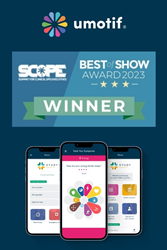
uMotif Wins SCOPE Summit Best of Show Award for First New Validated Data Capture Innovation Since Paper Instruments Deployed on Smartphones, for Next-Generation eCOA/ePRO


News Image

‘Our guiding principle is that clinical research patients are heroes. We give them technology to keep them motivated, active and compliant. When patients stay engaged, sponsors and CROs capture more and better-quality data, so they can speed the delivery of new medicines’ -uMotif CEO Steve Rosenberg

uMotif, one of the clinical trial technology market’s fastest growing companies, was awarded Best of Show for its groundbreaking Motif data capture interface by attendees of the SCOPE Summit for Clinical Ops Executives in Orlando last week.

The Motif is a patented, flower-like graphical user interface. Each petal represents a different question, such as an Outcome Measure, symptom, or eDiary entry. Patients swipe on each petal to capture their data. The highly visual and easy-to-use interface is fast and engaging, which leads to higher rates of data capture compliance. The Motif was independently validated by SAFIRA Clinical Research as the first new alternative to text-based instruments for clinical, post-marketing and real-world research since paper instruments were deployed on smartphones. (Read more about the study here)

uMotif’s highly scalable eCOA/ePRO platform combines deep clinical knowledge and consumer design expertise to deliver unprecedented levels of patient compliance, regularly achieving greater than 90% data capture in real-world studies. uMotif meets clinical and RWE market needs in any country, language, therapeutic area, and participant population, supporting site-based, hybrid, and fully virtual decentralized trials. Available on iOS, Android and the Web, the uMotif platform supports the most widely-used eCOA/ePRO and eDiary input and evaluation types.

uMotif CEO Steve Rosenberg (LinkedIn) said, “it’s a huge honor to be recognized by your peers, and we’re grateful. The Motif was born from our guiding principle that clinical research patients are heroes, and we give them technology that keeps them motivated, active and compliant. When patients stay engaged, sponsors and CROs capture more and better-quality data, so they can speed the delivery of new medicines to people who are waiting.”

About uMotif

Putting patients first is in uMotif’s DNA. The uMotif eCOA/ePRO platform delivers faster, quality clinical trials and real-world studies by putting patients at the core of research. Through cloud-hosting in the US, Europe and China, the GCP, 21 CFR Part 11 and GDPR-compliant platform supports any study or trial, from Clinical Phase I, II and III studies through to decentralized or virtual real-world studies. Find out how uMotif can improve your clinical research programs and real-world studies at http://www.umotif.com

Share article on social media or email:

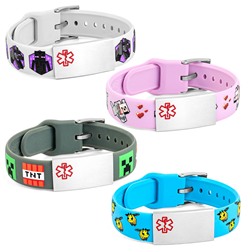
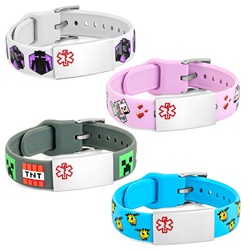
StickyJ® Medical ID Introduces Minecraft® Medical ID Bracelets


Minecraft Medical ID Bracelets for Kids and Adults

Minecraft Medical ID Bracelets for Kids and Adults

“Since Minecraft is one of the most popular online games, wearing a Minecraft Medical ID will not only remove the stigma of having a chronic medical condition, it will incent young people to want to wear their life-saving Medical IDs.” said Barry Torman, VP of Sales for StickyJ Medical ID.

StickyJ Medical ID, a leading producer of medical alert bracelets for children and adults, has introduced a new line of Medical ID bracelets decorated with Minecraft characters under a license agreement with Microsoft. The bracelets feature scenes depicting Steve and Alex, Endermen, skeletons, zombies, farm animals, frogs, pandas, and other fun Minecraft characters. The Medical ID bracelets are the first to be licensed by Microsoft. The first four designs of the new collection, featuring the Minecraft Enderman, bees, wolves, and creepers, will be available in the first quarter of 2023 at StickyJ.com and Amazon.

“Many children and teens with chronic medical conditions like diabetes or epilepsy and those with severe allergies are advised by their doctors to wear a Medical ID bracelet to alert EMS personnel in the event of an emergency,” said Barry Torman, VP of Sales for StickyJ Medical ID, “but many young people refuse to wear them because they don’t want to be negatively singled out by their friends. Since Minecraft is one of the most popular online games played by school children and young adults everywhere, wearing a Medical ID decorated with Minecraft characters will not only remove the stigma of having a chronic medical condition, it will incent young people to want to wear their life-saving Medical IDs.

”The Minecraft Medical ID bracelets feature an adjustable, watch-style silicone band that accepts a slide-on surgical stainless-steel ID tag, custom engraved with the individual’s medical condition. The silicone bands will be offered in 11 different Minecraft designs. Since the silicone bands are interchangeable, a parent can purchase one custom-engraved Medical ID tag with multiple straps to provide a wide selection of Minecraft Medical IDs for their child to choose from each day.

“Medical ID bracelets play an important role in helping people get the right treatment quickly in the event of an emergency,” added Torman. “When every minute counts and a patient is unable to communicate with EMS, having their medical condition and allergies engraved on their Medical ID can mean the difference between life and death.”

About StickyJ® Medical ID

StickyJ Medical ID, a division of Sticky Jewelry, Inc, has been a producer of medical alert jewelry for over 22 years. It was the first to produce a sports strap line of Medical IDs with fun designs for kids. StickyJ® is a registered trademark of Sticky Jewelry, Inc. Minecraft is a registered trademark of Microsoft Corp. High resolution product photos available upon request

Share article on social media or email:

Salesian Missions launches appeal to support those impacted by devastating Turkey/Syria earthquake


News Image

“The earthquake was very strongly felt and for a long time,” explained Father Alejandro León, superior of the Salesian Province of the Middle East, from Kafroun, near Homs and the Lebanese border.

Salesian Missions, the U.S. development arm of the Salesians of Don Bosco, has launched an emergency appeal to provide disaster relief for those impacted by the devastating 7.8 magnitude earthquake that struck in Kahramanmaraş province in southern Turkey, very close to Syria’s* northwestern border, on Feb. 6. The earthquake was felt in 14 countries, including Lebanon, Israel, Cyprus and Jordan.

The Turkey/Syria Earthquake Disaster Relief Fund will bring critical medical supplies, food, water and support to survivors, helping them to heal and rebuild their lives. Salesian missionaries living and working in Turkey and Syria were among those first at the scene of the impact.

The Salesian center in Aleppo sustained some minor damage and people rushed to the center for support.

“The earthquake was very strongly felt and for a long time,” explained Father Alejandro León, superior of the Salesian Province of the Middle East, from Kafroun, near Homs and the Lebanese border. “Initial information received from Aleppo is that our center there suffered some minor damage due to cracks and some broken glass, but Salesians and the people we assist nearby are fine despite the earthquake.”

Fr. León added, “Some families took refuge in our house in Aleppo. They arrived with only the clothes they had on. Their homes are not in good condition because of the war and they feel safer with us. We know that there are many dead and that many buildings have collapsed, so we will offer shelter, food and emergency aid with all the basic necessities we can offer in these first moments.”

More than 37,000 people have been reported dead and tens of thousands have been injured. Many more are still missing. Thousands of homes and buildings have collapsed, burying people who were asleep at the time the earthquake happened. Aid relief to impacted rebel-held areas of northwest Syria has been complicated amid a long-running civil war. While the Syrian government approved sending aid to those territories, they provided no timeline or plan for delivering the aid.

In Aleppo and other areas where Salesians serve, people have nowhere to go and nowhere to sleep. Salesian missionaries who have been serving those in Syria since the beginning of the war are doing their best to help those victims reaching out to them and providing shelter, food, warm clothes, blankets and more.

Father Pier Jabloyan, provincial delegate for social communication, said, “More than 300 people have been welcomed and helped by the Salesians, collaborators, and the entire Salesian family in Aleppo. We are trying to do what we can, despite the challenges and difficulties. It is snowing in Syria and there is a lack of power and a lack of fuel. The population is really having a difficult time.”

Salesian missionaries operate three centers in Kafroun and the particularly high-conflict areas of Aleppo and Damascus. Throughout the ongoing war and struggles in the country, Salesian centers continue to meet the needs of their communities through the distribution of food, economic aid and scholarships to help young people continue with their schooling.

Salesians around the globe are working to provide the financial and material resources needed to help those who have been impacted by the earthquake. To provide support, donate to the Salesian Missions Turkey/Syria Earthquake Disaster Relief Fund.

*Any goods, services or funds provided by Salesian Missions to programs located in this country were administered in compliance with applicable laws and regulations, including sanctions administered by the U.S. Department of Treasury’s Office of Foreign Asset Control.

###

About Salesian Missions USA

Salesian Missions is headquartered in New Rochelle, NY, and is part of the Don Bosco Network—a worldwide federation of Salesian NGOs. The mission of the U.S.-based nonprofit Catholic organization is to raise funds for international programs that serve youth and families in poor communities around the globe. The Salesian missionaries are made up of priests, brothers and sisters, as well as laypeople—all dedicated to caring for poor children throughout the world in more than 130 countries and helping young people become self-sufficient by learning a trade that will help them gain employment. To date, more than 3 million youth have received services funded by Salesian Missions. These services and programs are provided to children regardless of race or religion. For more information, go to SalesianMissions.org.

Contact:

Laura Perillo

media@salesianmissions.org

908-406-3413 (text messages OK)

Twitter: @MissionNewswire

Newswire: MissionNewswire.org

Press room: SalesianMissions.org/press

Share article on social media or email:


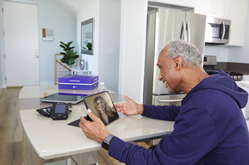
Senior Nonprofit Expert Says Kinless Elders Must Plan Ahead for Their Future; Illinois-based Elderwerks connects seniors with agencies, organizations to fulfill needs


Elderwerks President Jennifer Prell explains that kinless seniors need to have their personal health and legal directives in place as they live their lives. Professional services can help in planning.

“They think that since they have no family, they don’t care what happens to their estate. What they don’t realize is that it’s not just about the house, the money, and other items; it’s about what to do should you not be able to make health decisions for yourself.”

Aging alone without family or spouses/partners is a growing trend in this country.

These mature adults are known by the term “kinless seniors.” According to a recent New York Times article, “there are nearly a million Americans over the age of 55 living without a spouse or a partner, any children or siblings.” The article gives other statistics such as that the rate of this group of seniors is “projected to grow as generations younger than boomers are even likelier to be aging alone.”

The troubling concern is when there is no family to help with a kinless senior’s health, legal, and end-of-life decisions, who will make these choices? Planning for the future is key, and resources such as the Palatine, Illinois-based nonprofit Elderwerks can help kinless seniors in a proactive and positive way to connect with agencies and organizations who have the right experts to assist them. Elderwerks President Jennifer Prell hears from these older adults, and one of their worries is installing a healthcare and financial power of attorney to honor their wishes.

“Yes, some people do plan for their futures. However, when people are kinless, they don’t think about the consequences of the lack of planning,” she explained. “They think that since they have no family, they don’t care what happens to their estate. What they don’t realize is that it’s not just about the house, the money and other items; it’s about what to do should you not be able to make health decisions for yourself. What kind of care do you want? Where do you want to live? You do not want the state to direct a public guardian to make healthcare decisions for you as the choices they make may not be what you want. We also recommend discussing your current health and future possibilities with your primary care physician.”

With these questions in mind, Prell encourages kinless seniors to consider these kinds of professional services in their planning:


  • Home service agencies assist with bathing, dressing, medication reminders, meals, errands, transportation, and companionship.
  • Private trustees manage a person’s assets, health directives, and act as their Power of Attorney to ensure all wishes and needs are met.
  • Trust officers in banks oversee high-net worth people with their finances and daily support.
  • Elder law attorneys can act as guardians for the person and set up all legal paperwork to ensure that the health and financial aspects of aging are done legally.
  • Geriatric care managers assist with all aspects of a person’s life regarding activities of daily living, transportation to appointments, documenting doctor’s orders, and full management of the person.
  • Money managers will help manage the money, pay bills, taxes, and account for spending.

Other supports such as close friends and religious communities can be helpful when dealing with social issues such as loneliness and developing a strong faith. The more important concerns should be left to the professionals.

“Relying on friends and professionals will help you with your psyche and your happiness,” Prell said. “You might want to put professional services in place for the other things your friends can’t do such as home care services, a legacy list, handymen, maid services, and nutritional and transportation services. Having friends in charge of such duties is a lot of responsibility and stress on them. You want to make sure that they are able to help you with your needs, but not overburden or stress them out.”

“Remember, you are only alone if you want to be. It is important to plan now for future needs, accessible housing, and your safety net. Once those plans are in place, you can enjoy your life.”

About Elderwerks:

Based in Palatine, Elderwerks, a not-for-profit 501(c)3 organization, has helped thousands of older adults and seniors age well. Elderwerks offers complimentary, information, referrals, and guidance for all types of senior living, home care, support services, and benefits based on your or your loved one’s needs. Acting as “senior guidance advisors,” we help find the right solutions for you or your loved one. Whether it’s assisted living, memory care, a referral for an elder law attorney, veterans benefit specialist, or transition to any other type of senior care, Elderwerks simplifies the process of navigating senior living options and supportive services. We can offer you support in a very short period of time. Don’t let the future overwhelm you, call Elderwerks first: 855-462-0100. For more information, visit Elderwerks’ website. ###

Share article on social media or email:

Moving Analytics Receives System and Organization Controls (SOC) 2 Type 2 Report, Confirming Strong Data-Security Practices


Moving Analytics Virtual Cardiac Rehabilitation

Our partners trust us to keep their data save. A SOC 2 Type 2 report confirms that we take this responsibility seriously.

Moving Analytics, leading provider of virtual cardiac rehabilitation and prevention, announced that it has successfully passed the American Institute of Certified Public Accountants (AICPA) Service Organization Control (SOC) 2 Examination and has received the SOC 2 Type 2 report. This affirms the company’s strong data-security protocols.

The report follows a rigorous audit, conducted by a third party, that examined five areas:


  • Security: The company protects information from physical and logical unauthorized access.
  • Availability: Customers can readily access the system for information.
  • Processing Integrity: The company can process information in a timely manner.
  • Confidentiality: The company secures sensitive information with appropriate controls.
  • Privacy: The company works in accordance with its privacy notice.

Only companies that meet high global standards in every area receive the report.

“Our partners trust us to keep their data safe,” said Shuo Qiao, Chief Technology Officer for Moving Analytics. “A SOC 2 Type 2 report confirms that we take this responsibility seriously. We manage multiple layers of protection to safeguard information, and we are proud that our systems and protocols have been recognized at this level.”

While data security is critical in every industry, it is especially important for healthcare companies because personal health information (PHI) is a high-value target for cybercriminals. Receiving a SOC 2 Type 2 certification provides third-party validation that a company is prioritizing data security and putting the safety and security of customers first.

The certification builds on Moving Analytics’ earlier certification for HITRUST, making it the only virtual cardiac rehabilitation solution to achieve both milestones.

About Moving Analytics

Moving Analytics is the leading national telehealth provider of remote cardiac rehab and cardiovascular prevention programs. The company combines evidence-based guidelines, behavioral science, remote monitoring, and telehealth coaching to engage patients to adopt heart-healthy lifestyles and improve their wellbeing. Moving Analytics developed its programs in partnership with Stanford University, based on more than 30 years of published research. Patients in Moving Analytics’ programs exercise more, have better medication adherence, lower blood pressure, lower rates of depression/anxiety, and lower rates of hospital readmission.

Share article on social media or email:

Infection with COVID-19 Omicron and Delta Variants Is Associated with Higher Prescription Rates of Both Antibiotics and Corticosteroids for Asthmatic Patients


AAAAI Logo

Corticosteroid and antibiotic prescriptions are a surrogate for rates of upper and lower respiratory exacerbations in asthmatic patients. By comparing rates of use across the three time periods, we were able to evaluate the changing behavior of COVID-19 in asthmatics.

Researchers have found prescription pattern changes during the Delta and Omicron waves of COVID-19, specifically when it comes to corticosteroids and antibiotics for patients with asthma. These findings will be presented at the 2023 Annual Meeting of the American Academy of Allergy, Asthma & Immunology (AAAAI).

The impact of different COVID-19 variants on patients with asthma is not well known, though the Alpha variant did not appear to increase the disease burden of asthmatic patients. To see if that has remained the case, researchers compared the healthcare burden in asthma patients across three time periods, corresponding to the Alpha, Delta, and Omicron variants. “To do this, we compared systemic corticosteroid and antibiotic prescriptions,” Elizabeth A. Kudlaty, MD, primary author of the study explained. “Corticosteroid and antibiotic prescriptions are a surrogate for rates of upper and lower respiratory exacerbations in asthmatic patients. By comparing rates of use across the three time periods, we were able to evaluate the changing behavior of COVID-19 in asthmatics.”

A computer algorithm was used to evaluate the medical records of asthmatic patients with PCR-confirmed COVID-19 across three time periods associated with Alpha, Delta, and Omicron. Researchers compared prescription rates of systemic corticosteroids and antibiotics in asthmatics during COVID-19 infection to look for trends or changes.

In total, they found 1,168 Alpha, 862 Delta, and 3,166 Omicron COVID-19 cases among asthmatic patients. Among them, 38.4% received systemic corticosteroid prescriptions during the Alpha wave, compared to 79.3% during the Delta wave and 73.8% during the Omicron wave. Antibiotic prescription rates were higher for asthmatics during Omicron, albeit with a smaller increase at 56.2% of cases compared to Alpha (50.9%) and Delta (52.7%). The proportion of patients treated with systemic corticosteroids was higher in Delta and Omicron waves as compared to Alpha. The study did not capture all asthmatics, rather those sick enough to seek care and receive PCR testing to confirm diagnosis of COVID-19. The rate of systemic corticosteroid use during Alpha may reflect a combination of decrease rate of asthma exacerbations, as well as lower prescriptions due to the unknown impact of corticosteroids during the early days of the pandemic. A limitation of this study is that a smaller number of asthmatics during Delta sought care for COVID-19, likely reflecting use of at home rapid testing and thus limiting the conclusion.

“COVID-19 initially was not associated with asthma exacerbations, but we’re seeing an increase with the Omicron and Delta variants,” said Dr. Kudlaty. “It is essential that healthcare providers keep this in mind when they’re seeing patients and providing treatment.”

Visit aaaai.org to learn more about COVID-19. Research presented at the AAAAI Annual Meeting, February 24-27 in San Antonio, Texas, is published in an online supplement to The Journal of Allergy and Clinical Immunology.

The American Academy of Allergy, Asthma & Immunology (AAAAI) is the leading membership organization of more than 7,100 allergists, asthma specialists, clinical immunologists, allied health professionals and others with a special interest in the research and treatment of allergic and immunologic diseases. The AAAAI is the go-to resource for patients living with allergies, asthma and immune deficiency disorders. Established in 1943, the AAAAI has more than 7,100 members in the United States, Canada and 72 other countries. The AAAAI’s Find an Allergist/Immunologist service is a trusted resource to help you find a specialist close to home.

Share article on social media or email:

Mount Sinai’s Arnhold Institute for Global Health Awarded $8 Million to Expand Global Partnerships in Education and Research


“We look forward to expanding our partnership models and continuing to build programs that are lasting, impactful, and driven by community input,” said Rachel C. Vreeman, MD, MS, Chair of Global Health and Health System Design at Icahn Mount Sinai and Director of the Arnhold Institute.

The Arnhold Institute for Global Health at Mount Sinai has received $8 million from the Arnhold Foundation, enabling doctors, researchers, and students to advance its already-strong base of clinical education programs, training, research, and care services to address the world’s leading health issues and improve global health systems.

“I am thrilled that the Arnhold family has generously reinvested in our vision and mission to serve the world’s most vulnerable people through the development of equitable, long-lasting global health partnerships,” said Rachel C. Vreeman, MD, MS, Chair of Global Health and Health System Design at Icahn Mount Sinai and Director of the Arnhold Institute. “We look forward to expanding our partnership models and continuing to build programs that are lasting, impactful, and driven by community input.”

John Arnhold, a Trustee for the Arnhold Foundation, said, “The Arnhold Institute for Global Health was established to develop and scale important health solutions for the people who need them most. Those solutions are best designed and built amidst those who are to benefit from them. Dr. Vreeman and her team have developed collaborative partnerships with exemplary organizations on the ground to make that happen. This work has great promise. We’re delighted and grateful to be able to support it.”

The Institute will continue offering education and research in global health issues and further collaboration among physicians, scientists, and trainees from Mount Sinai with organizations from around the world including other academic medical institutions, health systems, government partners, and community-based organizations in developing nations.

“The Arnhold Institute for Global Health is improving health and health outcomes for diverse communities in the United States and abroad through innovations in health care practice, delivery, and systems, and collaborations with community and governmental partners to improve global health. Our mission is to advance science, medicine, and health care delivery for the benefit of humanity, and the work of the Institute furthers this mission,” said Dennis S. Charney, MD, Anne and Joel Ehrenkranz Dean of Icahn Mount Sinai, and President for Academic Affairs of the Mount Sinai Health System. “The global pandemic has revealed vast health inequities across nations and communities and we have unprecedented opportunity to bring scalable solutions that improve global health and make all lives better. We thank the Arnhold family for their commitment to this important effort.”

The Institute’s current work includes programs to assist more than 40 community health workers in supporting newborns and their parents in Nepal; lifelong, holistic HIV treatments for more than 15,000 children and adolescents in Kenya; and scaling a care model and approaches—including nurse training—to treat high blood pressure and depression in rural Ghana. Experts from the Arnhold Institute are also a part of a Mount Sinai team working with the Government of Guyana to advise it on public health strategy.

Stateside and locally, the Arnhold Institute is a part of the New York City Partnership, a collaboration with NYC Health + Hospitals/Elmhurst and Queens to engage in health care improvements, education, training, and research to address and meet the needs of local communities. During the height of the pandemic in 2020, the two health systems formed COVID-19 Unit for Research at Elmhurst (CURE-19) to support and conduct collaborative, interdisciplinary COVID-19 research to address root causes of health disparities throughout New York City. Last year, Mount Sinai and NYC Health + Hospitals also launched the HoPE Program, or Helping Promote Birth Equity Through Community-Based Doula Care, which provides free, community-based doula support to any pregnant person seeking care at either Elmhurst or Queens hospitals.

The Arnhold Institute for Global Health was founded in 2014 with support from The Mulago Foundation and the Arnhold Foundation, which advocates for health care, the environment, education, and international affairs. Through partnerships, the Institute has supported more than 52,000 local health care providers. Collectively, these partnerships have supported health care for 12.5 million people across three continents.

About the Mount Sinai Health System

Mount Sinai Health System is one of the largest academic medical systems in the New York metro area, with more than 43,000 employees working across eight hospitals, more than 400 outpatient practices, more than 300 labs, a school of nursing, and a leading school of medicine and graduate education. Mount Sinai advances health for all people, everywhere, by taking on the most complex health care challenges of our time — discovering and applying new scientific learning and knowledge; developing safer, more effective treatments; educating the next generation of medical leaders and innovators; and supporting local communities by delivering high-quality care to all who need it.

Through the integration of its hospitals, labs, and schools, Mount Sinai offers comprehensive health care solutions from birth through geriatrics, leveraging innovative approaches such as artificial intelligence and informatics while keeping patients’ medical and emotional needs at the center of all treatment. The Health System includes approximately 7,400 primary and specialty care physicians; 13 joint-venture outpatient surgery centers throughout the five boroughs of New York City, Westchester, Long Island, and Florida; and more than 30 affiliated community health centers. We are consistently ranked by U.S. News & World Report’s Best Hospitals, receiving high “Honor Roll” status, and are highly ranked: No. 1 in Geriatrics and top 20 in Cardiology/Heart Surgery, Diabetes/Endocrinology, Gastroenterology/GI Surgery, Neurology/Neurosurgery, Orthopedics, Pulmonology/Lung Surgery, Rehabilitation, and Urology. New York Eye and Ear Infirmary of Mount Sinai is ranked No. 12 in Ophthalmology. U.S. News & World Report’s “Best Children’s Hospitals” ranks Mount Sinai Kravis Children’s Hospital among the country’s best in several pediatric specialties. The Icahn School of Medicine at Mount Sinai is ranked No. 14 nationwide in National Institutes of Health funding and in the 99th percentile in research dollars per investigator according to the Association of American Medical Colleges. Newsweek’s “The World’s Best Smart Hospitals” ranks The Mount Sinai Hospital as No. 1 in New York and in the top five globally, and Mount Sinai Morningside in the top 20 globally.

For more information, visit https://www.mountsinai.org or find Mount Sinai on Facebook, Twitter and YouTube.