Category Archives: Health

What is new in the field of Health. Trending topics, and cutting edge research in the are of Health. Press Releases that give us updates on Health.

AltaPointe Health Excited to Welcome New Class of Residents to the Field of Psychiatry


AltaPointe Health is an extensive mental health and family medical healthcare system in Alabama.

“We are thrilled to help train and mold the next generation of psychiatrists,” Luke Engeriser, MD, AltaPointe Deputy Chief Medical Officer, and DOP Residency Training Director, said. “The real-world experience these residents receive throughout our system is invaluable.”

AltaPointe Health, whose psychiatrists also serve as faculty and administration for the University of South Alabama’s College of Medicine-Department of Psychiatry (DOP), is excited to welcome a new class of psychiatry residents announced on Match Day 2023. Celebrated on March 17 this year, Match Day is the moment graduating medical students learn if they have successfully secured a residency position, where they will continue their next medical training phase.

The five PGY1 students who matched with USA’s COM-DOP will now gain extensive experience in psychiatry throughout AltaPointe Health’s comprehensive continuum of care that includes outpatient, residential, crisis, and inpatient programs for adults and children.

“We are thrilled to help train and mold the next generation of psychiatrists,” Luke Engeriser, MD, AltaPointe Deputy Chief Medical Officer, and DOP Residency Training Director, said. “The real-world experience these residents receive throughout our system is invaluable. From typical clinic-based settings to our children’s psychiatric hospital (BayPointe), as well as our adult psychiatric hospital (EastPointe), working with individuals living in our group homes, as well as our recent expansion of crisis services with the Behavioral Health Crisis Center – the residents matched with AltaPointe get to see first-hand the full range of opportunities our field has to offer.”

“AltaPointe psychiatrists enjoy and even have fun while treating their patients. Our residents get to see how intellectually challenging, fulfilling, and fun working with psychiatric patients can be,” Sandra Parker, MD, Chief Medical Officer and chair of USA COM-Department of Psychiatry, said. “This generation of young physicians is more concerned about helping others and having a good work-life balance than previous generations. That makes psychiatry a perfect choice for medical students when they match with us.”

The PGY1 class of 2023/2024 who matched with AltaPointe Health include Kevin Gallagher, Cody Miller, and Alina Teslenko from the Alabama School of Osteopathic Medicine, as well as Marcus Lackey from Florida State University College of Medicine, and Stephen Richardson from Edward Via College of Osteopathic Medicine.

ABOUT ALTAPOINTE

AltaPointe Health is an extensive mental health and family medical healthcare system in Alabama. Our clinicians provide more than 1.3 million hospital, outpatient, residential, and crisis services annually. AltaPointe’s access to care line answers 76,175 calls for help each year from the community.

Share article on social media or email:

New Study from The Fenway Institute Undercuts the Rapid Onset Gender Dysphoria Hypothesis


Rectangular blue and white Fenway Health logo

It is vital that clinicians, health policy analysts, and journalists familiarize themselves with the facts about gender identity development.

A study published in the Journal of Adolescent Health found that a substantial proportion of transgender and gender diverse (TGD) adults realized that their gender identity is different from their sex assigned at birth during adolescence or later. It also found that TGD people typically waited many years before sharing this realization with another person. The study adds important new knowledge to clinical and popular understanding of the timing of TGD people’s awareness, understanding, and sharing of their gender identity. It also undercuts a core component of the “rapid onset gender dysphoria” (ROGD) hypothesis, which posits that TGD identities realized in adolescence are transient and will not continue into adulthood.

“The ROGD hypothesis suggests that transgender and gender diverse identities that become clear after puberty don’t last beyond one’s adolescent years,” said lead study author Dr. Jack Turban, Director, Gender Psychiatry Program and Assistant Professor, Division of Child & Adolescent Psychiatry at the University of California, San Francisco and faculty member at The Fenway Institute. “With over 40 percent of transgender and gender diverse adults reporting that they first realized that their gender identity differed from their sex assigned at birth during adolescence, that theory clearly does not hold.”

The study, titled “Age of Realization and Disclosure of Gender Identity Among Transgender Adults” divided 27,715 TGD adults in the United States into two groups based on how old they were when they realized that their gender identity was different from their sex assigned at birth. The first group (16,279 participants, or 59.2%, known as the “childhood realization” group) came to understand that they were TGD at age 10 or younger; the second group (11,218 or 40.8%, known as the “later realization” group) reported realization of their TGD identity at age 11 or above. Participants were also asked how old they were when they first shared their gender identity with another person. Overall, several years typically elapsed between realization of one’s gender identity and sharing this with another person.

Other important findings from the study include the following:

  • A larger proportion of participants in the later realization group were assigned female sex at birth (63.2% vs. 53.1%)
  • A larger percentage of participants in the later realization group identified as nonbinary or genderqueer (49.1%) compared to those in the childhood realization group (25.2%)
  • A smaller proportion of participants in the later realization group experienced K-12 harassment based on gender identity (13.1% vs. 26.9%), had a history of exposure to gender identity change efforts (13.1% vs. 26.9%), and received pubertal suppression (0.2% vs. 0.4%) or gender-affirming hormones (34.8% vs. 56.6%).
  • Among the childhood realization group, the median time between realization of one’s gender identity and sharing it with another person was 14 years.


“It is notable that study participants in the later realization group were also more likely to have been assigned a female sex at birth. This further undercuts the ROGD hypothesis, which asserts that people assigned female sex at birth who come to understand their trans identities after puberty will not continue to hold these identities in adulthood,” Turban added. “Additionally, the fact that participants in the childhood realization group took approximately 14 years to disclose their gender identity to another person refutes the notion inherent in the ROGD hypothesis that disclosure of a trans identity to parents coincides with when trans youth first come to understand their gender identities.”

The ROGD hypothesis, first published in 2018, immediately gained influence in public policy debates with coverage by publications ranging from The Economist to Science. A correction was issued shortly after publication of the initial ROGD manuscript stating that “ROGD is not a formal mental health diagnosis at this time. This report did not collect data from the adolescents and young adults or clinicians and therefore does not validate the phenomenon.” Despite this, elements of the ROGD hypothesis continue to be prominently featured in influential mainstream media discourse, including The New York Times. The hypothesis is also used by numerous governmental agencies, lawmakers, and policy analysts to justify legislative and regulatory measures prohibiting adolescents from accessing gender-affirming medical care, despite opposition from all major medical organizations.

“The damage that has been done to transgender and gender diverse youth and their families by new laws prohibiting them from accessing gender-affirming medical care as well as the toxic rhetoric promulgated by these legislative campaigns is incalculable,” said study senior author Dr. Alex S. Keuroghlian, who directs the National LGBTQIA+ Health Education Center at The Fenway Institute and the Massachusetts General Hospital Psychiatry Gender Identity Program. “It is vital that clinicians, health policy analysts, and journalists familiarize themselves with the facts about gender identity development.”

“Age of Realization and Disclosure of Gender Identity Among Transgender Adults,” is based on data from the 2015 U.S. Transgender Survey conducted by the National Center for Transgender Equality, which surveyed over 27,000 transgender people in all 50 states, Washington D.C., Puerto Rico, U.S. territories abroad, and U.S. military bases on a multitude of questions about their lives. The paper is the latest in a series of secondary analyses of the groundbreaking 2015 survey. Prior papers include “Factors Leading to ‘Detransition’ Among Transgender and Gender Diverse People in the United States: A Mixed-Methods Analysis,” published in 2021 in LGBT Health, “Association Between Gender-Affirming Surgeries and Mental Health Outcomes,” published in 2021 in JAMA Surgery, “Pubertal Suppression for Transgender Youth and Risk of Suicidal Ideation,” published in 2020 in Pediatrics, and “Association Between Recalled Exposure to Gender Identity Conversion Efforts and Suicide Attempts,” published in 2020 in JAMA Psychiatry.

“Age of Realization and Disclosure of Gender Identity Among Transgender Adults” Hypothesis,” was authored by the same researchers who wrote the 2022 study, “Sex Assigned At Birth Ratio Among Transgender and Gender Diverse Adolescents in the United States.” Published in Pediatrics, that study provided evidence undercutting the “social contagion” component of the ROGD hypothesis.

“Age of Realization and Disclosure of Gender Identity Among Transgender Adults,” is available here.

Share article on social media or email:

Dr. Louise Aronson Announced as 2023 Distinguished Ambassador in Aging by Aging Life Care Association®


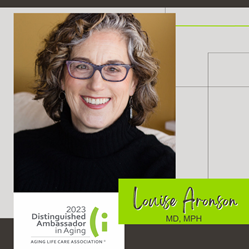
A woman wearing glasses smiles at the camera with the name Louise Aronson, MD, MPH overlaid. To the lower left, an icon reads "2023 Distinguished Ambassador in Aging" Aging Life Care Association

Dr. Louise Aronson Announced as 2023 Distinguished Ambassador in Aging by Aging Life Care Association®

“Aging is not a disease but a decades-long life stage that comes with rewards and challenges”

The Aging Life Care Association® (ALCA), will honor Louise Aronson, MD, MFA, as the 2023 Distinguished Ambassador in Aging Award recipient. Aronson is a leading geriatrician, writer, educator, and professor in the Division of Geriatrics at the University of California, San Francisco. Her book Elderhood was a 2020 Pulitzer Prize finalist.

The Distinguished Ambassador in Aging (DAA) Award is given to an individual or organization that, through their actions, research, or invention, has raised national awareness of a critical issue or need in aging and supports the mission and vision of the Aging Life Care Association. This is the fifth year the association is honoring an individual at its Annual Conference and Business Meeting.

A graduate of Harvard Medical School, Aronson has received the Gold Professorship in Humanism in Medicine, the California Homecare Physician of the Year award, and the American Geriatrics Society Clinician-Teacher of the Year award. Her current work is focused on expanding geriatric care and public perceptions of old age to more accurately attend to the decades and diversity of elderhood, developing innovative programs and practices to empower older adults to retain agency, and maximize wellness as they age.

“I’m delighted to accept this award, which I view as validation that aging is not a disease but a decades-long life stage that comes with rewards and challenges,” said Aronson.

“Dr. Aronson is an inspirational voice and powerful advocate for integrative aging,” said Anne Sansevero, President of the Aging Life Care Association Board. “ALCA is honored to bestow the 2023 DAA Award on her as a leader at the forefront of a new era in how society views and supports aging. Her philosophy and practice in caring for patients supports excellence, collaboration, and has a positive impact on individuals and their families.”

Aronson’s focus on getting patients to embrace the myriad positive aspects of aging to delay, avoid, and plan for the disappointments of physical decline aligns with ALCA’s mission. Aging Life Care™ is a holistic, client-centered approach to caring for older adults or others facing ongoing health challenges. Aging Life Care Professionals focus on guiding individuals and families to actions and decisions that ensure quality care and an optimal life.

Currently, Aronson divides her time among patient care, community-based aging innovations, teaching, health advocacy in the media, and writing.

The award ceremony will take place April 20 during the 39th Annual Aging Life Care Association Conference in San Diego, California. Dr. Aronson is scheduled to speak at the conference as well. The conference (April 19-21, 2023) is a gathering of approximately 400 Aging Life Care Managers focused on excellence in the aging field. For full conference information, visit aginglifecare.org.

About the Aging Life Care Association®(ALCA): Formed in 1985 to advance dignified, coordinated care for older adults in the United States, ALCA now has about 2,000 members nationwide. Members encompass a cross-section of fields related to long-term care including nursing, social work, and other allied professions focused on issues related to aging. Members work with older adults, people with disabilities, and families who need assistance with caregiving and aging issues. Members must meet stringent education, experience, and certification requirements in addition to adhering to a Code of Ethics and Standards of Practice. For more information or to access a nationwide directory of Aging Life Care Professionals, please visit aginglifecare.org.

Share article on social media or email:

Salesian Missions highlights programs that empower youth, giving them a sense of well-being and happiness


News Image

“For youth to be happy, they must have their basic needs met and feel a sense of well-being,” said Father Timothy Ploch, interim director of Salesian Missions.

Salesian Missions, the U.S. development arm of the Salesians of Don Bosco, joins humanitarian organizations and countries around the globe in celebrating International Day of Happiness, which falls each year on March 20. In 2011, the United Nations General Assembly adopted a resolution that recognized happiness as a “fundamental human goal” and called for “a more inclusive, equitable and balanced approach to economic growth that promotes the happiness and well-being of all people.”

The day is coordinated by Action for Happiness, a nonprofit movement of people from 160 countries, and is supported by a partnership of like-minded organizations. It was founded as a way to inspire, mobilize and advance the global happiness movement. In 2015, the U.N. launched the 17 Sustainable Development Goals that seek to end poverty, reduce inequality and protect the planet — three key aspects that lead to well-being and happiness.

Each year, International Day of Happiness focuses on a particular theme. This year the theme is “Mindful. Grateful. Kind” and reinforces simple steps that can be used anytime and anywhere to give yourself a boost and build compassion for others.

“For youth to be happy, they must have their basic needs met and feel a sense of well-being,” said Father Timothy Ploch, interim director of Salesian Missions.

“Salesian missionaries meet the basic needs of disadvantaged and at-risk youth who often have nowhere else to turn. They provide education and skills training in addition to social and workforce development services to ensure a positive transition into adulthood. They also teach soft skills so youth can better connect with their peers and be contributing members of their community.”

In celebration of International Day of Happiness 2023, Salesian Missions is proud to highlight Salesian programs that educate and empower youth.

BENIN

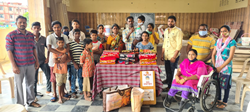
Children at Foyer Don Bosco (Don Bosco Kandi), a home for abused and abandoned children in Kandi, Benin, have their needs met thanks to donor funding from Salesian Missions. The funding covered food for three months, school fees for 10 children and clothing for 50 children.

Leon Kansomede, age 8, was appreciative of the clothing he received. He said, “I celebrated Christmas well at Don Bosco Kandi and received beautiful clothes and had a nice party. Thank you and may the Lord bless you.”

Kaifatou Tino is a sewing apprentice who had her school fees paid so she could continue her education. “I thank Don Bosco for the financial help. It has enabled me to remain in school and have hope for the future.”

Foyer Don Bosco serves boys and girls in very complex situations, including those who have been abandoned by their families, victims of abuse, and victims of forced marriages. The area of Kandi often has an influx of children who are on their own. Children are sometimes sold on the black market and exploited in the workforce. A transit home was started with the support of UNICEF to host these children, while guiding them to other homes or trying to find their families.

DR CONGO

More than 360 youth received nutritional support at Don Bosco Kansebula, located in Lubumbashi, Democratic Republic of the Congo*, thanks to donor funding from Salesian Missions. Youth benefiting from this food were ages 6-22. Many are are in secondary school and college as well as 82 young Salesians studying at Don Bosco Kansebula. Single mothers from the villages also received this donation.

The goal was to provide ongoing balanced nutrition for young Salesians and other vulnerable youth.

Don Bosco Kansebula also has a 44-hectare farm that supplies food for the Salesian formation house and to the village nearby. Since its beginning, Don Bosco Kansebula has provided young Salesians with philosophy education and has given them shelter and nutritional support while at the school. Villagers living near Don Bosco Kansebula have used the farm to cultivate food for themselves and the community.

One of the beneficiaries was Kyundundu Mbilizi Fabrice, who is 25 and in high school. Fabrice said, “I studied agriculture in the eastern part of the Democratic Republic of the Congo at Uvira. Now, I am at Kansebula as a Salesian of Don Bosco in post-novitiate. At Kansebula, we have a garden and we produce vegetables and keep some domesticated animals. Villages and confreres have benefited from what is produced in the garden and in the farm as well. I am really happy for what our benefactors are doing for us in order to fight hunger and I encourage them to continue in that direction.”

INDIA

Children living at the Ekalavya Children’s Home were supported by donor funding from Salesian Missions. The home was created by the Salesian-run People’s Action for Rural Awakening for disadvantaged children in Konaseema, located in the East Godavari District of Andhra Pradesh, India.

The home, which can accommodate up to 50 children, was started to support school dropouts, rescue child laborers, and provide a home for at-risk children, those living on the street, or those who have run away from dysfunctional families. Ekalavya Children’s Home is a child care institution licensed under the Juvenile Justice Act. Every home for children at risk needs to be licensed by the Women Development and Child Welfare Department of the state government.

Ekalavya Children’s Home is located behind a railway station in Rajahmundry. Children who have run away use the railway station for travel and to beg for money to survive. Salesian staff members have good relationships with the railway police department to rescue children from the station and bring them to the courts and then onto the Ekalavya Children’s Home.

While providing for basic needs and connecting children into educational programs, Ekalavya Children’s Home also helps children understand their emotions and connect better with their peers and adults. The home provides a weekly meeting where children can talk about issues that are bothering them, whether it’s with other children, school or adults. This helps children work through interpersonal issues and helps them resolve conflict in a productive way.

PAKISTAN

Salesian missionaries provide social development and educational services to poor youth and their families in centers in Lahore and Quetta, Pakistan. Salesian schools provide economic benefits, scholarships and accommodations for students from the poorest families so that education is not only accessible but also an incentive for parents to send their children to school.

Pakistan has one of the lowest literacy rates in South Asia at less than 50 percent. Although the country’s constitution acknowledges free and compulsory education for children and youth between the ages of 5-16, the rule is often not followed in rural areas for those over age 13.

Salesians have a particular focus on ensuring that young girls are able to start and continue their education. Unfortunately, many girls abandon their studies before the end of compulsory schooling to take care of their families or because of early marriage. This happens in both villages and large urban centers such as Lahore. Some families believe that early marriage will solve the family’s economic challenges.

To help combat this, Salesians provide training programs focused on educating girls and young women about their rights with the aim of creating and spreading awareness and self-determination. Salesians encourage girls and young women to continue their studies. They also organize courses to impart knowledge and skills aimed at learning a trade. One of the students said, “If we study, we can have a brighter future.”

*Any goods, services, or funds provided by Salesian Missions to programs located in this country were administered in compliance with applicable laws and regulations, including sanctions administered by the U.S. Department of Treasury’s Office of Foreign Asset Control.

###

About Salesian Missions USA

Salesian Missions is headquartered in New Rochelle, NY, and is part of the Don Bosco Network—a worldwide federation of Salesian NGOs. The mission of the U.S.-based nonprofit Catholic organization is to raise funds for international programs that serve youth and families in poor communities around the globe. The Salesian missionaries are made up of priests, brothers and sisters, as well as laypeople—all dedicated to caring for poor children throughout the world in more than 130 countries and helping young people become self-sufficient by learning a trade that will help them gain employment. To date, more than 3 million youth have received services funded by Salesian Missions. These services and programs are provided to children regardless of race or religion. For more information, go to SalesianMissions.org.

Contact:

Laura Perillo

media@salesianmissions.org

908-406-3413 (text messages OK)

Twitter: @MissionNewswire

Newswire: MissionNewswire.org

Press room: SalesianMissions.org/press



Students receive proper nutrition thanks to rice-meals


News Image

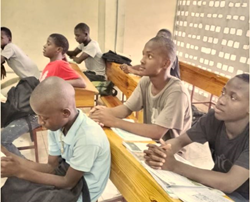
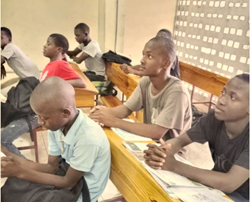
Students at Don Bosco Lakay/Lakou in Port-au-Prince, Haiti, had better nutrition thanks to a partnership between Salesian Missions, the U.S. development arm of the Salesians of Don Bosco, and Rise Against Hunger, an international relief organization that provides food and life-changing aid to the world’s most vulnerable.

In the second half of 2022, Rise Against Hunger rice-meals helped Salesians support the students as well as some community members. The beneficiaries were able to receive food and continue learning and teaching without disturbance. Youth were also able to stay in the program and learn a trade.

Don Bosco Lakay/Lakou is located in La Saline surrounded by the armed groups that have taken over. People living in this community often have little hope for the future because of their daily struggles to buy food and find work.

Lazarre Jean Daniel, age 17, was one of the recipients of the rice-meals. Daniel lives in Martissant, where gangs have completely taken over because the area is a popular transportation route in and out of the capital. Due to the violence and insecurity, Daniel’s mother placed him in a state-run home. However, he saw some boys left the home to live on the streets. It was after that he came to Don Bosco Lakay/Lakou.

Daniel said, “In the state-run home, we only ate twice a day, rice, corn, and cornflakes with milk. In my mother’s house, I had coffee with bread in the morning, and our second meal was either late afternoon or at night and there was not always enough to go around. Here at Don Bosco Lakay/Lakou, we eat three meals a day. We have the Rise Against Hunger rice, which is very tasty. I feel much stronger after eating the meals. The food is very important as it helps me to grow stronger.”

Daniel added, “After breakfast, I go to the welding workshop at Lakay. I like to learn, especially with my friends. We can laugh and tease each other while we are working on our projects. It is a good atmosphere and very encouraging. I want to learn my trade well and to get a good job once I finish my education.”

Salesian missionaries began working in Haiti in 1935 in response to the Haitian government’s request for a professional school. Since then, Salesian missionaries have expanded their work to include 11 main educational centers and more than 200 schools across the country.

Each of the main centers includes a number of primary and secondary schools, vocational training centers, and other programs for street children and youth in need. Salesian programs are located throughout Haiti, including in the cities of Port-au-Prince, Fort-Liberté, Cap-Haïtien, Les Cayes and Gressier. Today, Salesian missionaries in Haiti provide the largest source of education outside of the Haitian government with schools providing education to 25,500 primary and secondary school students.

###

About Salesian Missions USA

Salesian Missions is headquartered in New Rochelle, NY, and is part of the Don Bosco Network—a worldwide federation of Salesian NGOs. The mission of the U.S.-based nonprofit Catholic organization is to raise funds for international programs that serve youth and families in poor communities around the globe. The Salesian missionaries are made up of priests, brothers and sisters, as well as laypeople—all dedicated to caring for poor children throughout the world in more than 130 countries and helping young people become self-sufficient by learning a trade that will help them gain employment. To date, more than 3 million youth have received services funded by Salesian Missions. These services and programs are provided to children regardless of race or religion. For more information, go to SalesianMissions.org.

Contact:

Laura Perillo

media@salesianmissions.org

908-406-3413 (text messages OK)

Twitter: @MissionNewswire

Newswire: MissionNewswire.org

Press room: SalesianMissions.org/press
Share article on social media or email:


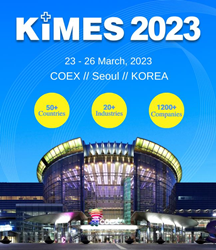
Top Plastic Surgeons, Dr. Erez Dayan and Dr. Kami Parsa are Attending the KIMES International Medical and Hospital Equipment Show in Seoul, Korea, March 23-26, 2023


News Image

“We are looking forward to attending this very informative international event and bringing innovative technology back to the United States,” says Dr. Erez Dayan,

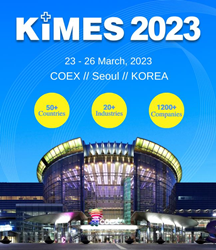
The KIMES 2023 conference provides the opportunity for the best manufacturers from all over the world to reveal their latest medical and aesthetic products and equipment. Dr. Dayan and Dr. Parsa, are traveling there as guests of leading aesthetic device companies (regenerative, fillers, skin tightening technologies and skin care) to identify, develop and then train others on new products and technology for the U.S. Medical professionals from all over the world come to Korea to attend the KIMES event. At the venue, over 1,200 domestic and overseas manufacturers’ innovative technology and products will be showcased. Attendees, such as Dr. Dayan and Dr. Parsa, will be using their vast knowledge in their field to discover emerging industry advances so various aesthetic device companies can keep up-to-date with the very latest in the fast-developing medical market.

“We are looking forward to attending this very informative international event and bringing innovative technology back to the United States,” says Dr. Erez Dayan,

More about Dr. Erez Dayan and Dr. Kami Parsa:

Dr. Erez Dayan completed his training at the elite Harvard Plastic Surgery program before earning a fellowship in aesthetic surgery at the world-class Dallas Plastic Surgery Institute. Dr. Dayan provides comprehensive aesthetic treatments for the face, breast and body, as well as reconstructive surgery. At his practice Avance Plastic Surgery Institute, located at 5588 Longley Lane, in Reno, Nevada, Dr. Dayan offers cutting-edge technology, surgical procedures and a full range of aesthetic facial and body treatments. To schedule a consultation or for more information, please call or text 775-800-4444 or visit http://www.avanceplasticsurgery.com.

Kami Parsa M.D. graduated with honors from USC’s School of Medicine, completed a residency in ophthalmology at the Doheny Eye Institute and then a two-year sub-specialty fellowship in oculoplastic and reconstructive surgery at the University of Miami’s Bascom Palmer Eye Institute. At his Beverly Hills practice and MedSpa, he specializes in surgical and non-surgical procedures for areas around the eyes and also performs a full menu of other cosmetic and reconstructive services. Dr. Parsa’s practice is located at 465 N. Roxbury Dr. Suite 1011 in Beverly Hills, CA. For more information on cosmetic and reconstructive options offered by Dr. Kami Parsa, please call his Beverly Hills clinic and MedSpa at (310) 777-8880, or visit his website at http://www.oculoplastic.info.

Share article on social media or email:

NeuroFlow Expands Clinical Referral Network, Partnering with Specialty Providers


NeuroFlow, the market leader in behavioral healthcare technology infrastructure, has added three new partners to its Clinical Referral Network in order to help more individuals get access to behavioral health. Joining the referral network will be:


  • Bicycle Health (Boston, MA) – The leading telehealth provider of integrated medical and behavioral health care for opioid use disorder (OUD) in the United States offers confidential physician visits, lab testing, individual and group therapy, and prescriptions for Suboxone™.
  • Brave Health (Miami, FL) – A virtual mental health provider dedicated to helping people thrive by engaging them in high-quality, affordable, and easily accessible mental health care, including individual therapy, medication management, and specialized therapy groups.
  • Monument (New York City, NY) – Monument is a digital health platform for anyone looking to change their relationship with alcohol. Monument connects members to virtual evidence-based care including behavioral therapy, medication-assisted treatment, and peer support.

Launched in August 2022, the initial cohort of partners included AbleTo, Array Behavioral Care, Brightside Health, LifeStance Health, and Marvin, each with a distinct purview into – and solution to address – the national mental health crisis, which affects nearly 50 million Americans.

This new round of partners significantly builds upon the coverage area of the initial group of companies, with a heightened focus on substance use and Medicaid members. Substance use costs inpatient and emergency services departments a disproportionate amount over time, totaling approximately $13 billion per year. Additionally, many outpatient providers of mental health care do not cover Medicaid patients and it is critical to support the needs of this growing population.

“Technology companies have the means and a mandate to help reach more people who are disconnected from the healthcare system and struggle to find the care they need for their own mental health, or the health of a loved one,” said Parker Reynolds, Head of Strategic Partnerships at NeuroFlow. “With this expanded roster of partners, we have significantly improved our ability to refer and support individuals on Medicaid as well as those with substance use disorders.”

Individuals seeking mental health treatment often have a wide range of clinical needs, some more urgent than others. By continuing to expand and cover a diversity of behavioral health need areas, the Clinical Referral Network can help to ensure that the right care is available to individuals at the time that they need it. NeuroFlow will continue to identify additional opportunities within their partner network moving forward. If you are a clinical service provider interested in joining the network, visit the partners webpage or reach out to parker@neuroflow.com.

About NeuroFlow

NeuroFlow provides the technology infrastructure that leading healthcare organizations need to deliver effective and scalable integrated programs that improve access to behavioral healthcare and lower costs. Powered by proof and clinical expertise, NeuroFlow’s next generation software enables programs to bridge the gap between physical and mental health with proven solutions for psychiatric collaborative care, suicide prevention, and more. To learn more, visit http://www.neuroflow.com

Share article on social media or email:

“Evolve School of Learning” Using Creative Fund Raising Efforts


All inclusive school opening in August 2023

Evolve School of Learning Filling a Need in Tampa Bay

“We are challenging ourselves to create a school community: one that embraces each individual, respects and builds on each person’s abilities, supports them in the classroom and the community, and is still a part of their lives as they transition into adulthood.”

Evolve School of Learning’s founders are April Hurley and Lindsey Meyer. Meyer and Hurley also co-founded “Bridging The Gap Therapy Solutions” (BTG), a clinic that serves the needs of individuals with various disabilities, challenging behaviors, and emotional disorders. “Bridging the Gap aims to transition kids into schools that support children and young adults at their level, said Hurley.

“It was evident from the onset there was a shortage of these private schools in the Tampa Bay Area. We could not ignore so many of our families who have come to us with their stories of disappointment, abandonment, and rejection from public and private schools alike,” added Meyer. “We are challenging ourselves to create a school community that embraces each individual, respects and builds on each person’s abilities, supports them in the classroom and the community, and is still a part of their lives as they transition into adulthood.” The School will open in August 2023.

Parents and therapists created Evolve Foundation Corp. to support the mission and build Evolve School of Learning. Michelle Crespi, a founding member of Evolve Foundation Corp., realized that Taylor Swift was coming to Tampa Bay during Autism Awareness month. “We have ambitious goals committed to supporting the growth and development of Evolve School of Learning,” said Crespi. Crespi, a speech therapist who has worked alongside BTG for years, had several students draw pictures of Swift with her famed guitar.

Evolve School of Learning will offer students the opportunity to be surrounded by an environment of acceptance and understanding while equipping them with the skills to become strong and empowered individuals as they transition into adulthood and the community. “We will also create tailored learning plans for each student to develop the skills and passions necessary for long-term success,” added Hurley. “Our ultimate goal is to be the catalyst of success for the students we serve by ensuring their social and emotional well-being.”

Evolve Foundation still has a lot to accomplish. They are hiring Florida Certified teachers for the Fall 2023 school year. In addition, they are raising funds to support the School construction, classroom furniture, materials and supplies, and outdoor playground with a safety fence. Those interested in donating can do so by going to evolvefoundationcorp.org/

Share article on social media or email:

New Doctor-Formulated Energy Supplement Electrolyte Boost, Powered by Cognizin®, Boost Without Water Debuts


Electrolyte Boost HYDRATION ELEVATION

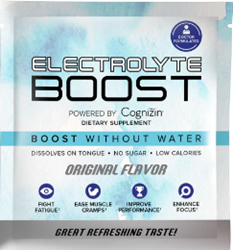
Skinz.gg today announced the launch of Electrolyte Boost, a doctor-formulated and water-free electrolyte support product . By eliminating water, the primary delivery mechanism for critical electrolytes, Electrolyte Boost provides a simple, fast, great-tasting way to replace minerals and deliver nutrients to your cells to support overall hydration and activity.

“We are continually looking at how active people’s lives are changing and how to fulfill their need for efficient, yet multi-functional health and performance support,” noted Gary Kleinman, Founder and CEO, Skinz.gg. “Our goal is to provide consumers nationwide with clinically proven health and wellness products that simply and effectively fit into their busy lifestyle.”

Electrolyte Boost is absorbed by the cheek and tongue, entering the bloodstream faster than passing through the stomach and intestines. Each single-serve sachet has 3x the electrolytes of water or sports drinks alone, and 75% more electrolytes than products currently on the market. It also provides vitamins and other essential nutrients, and the 250 mg per serving of Cognizin® Citicoline to boosts brain health, attention, and focus. Electrolyte Boost has zero grams of sugar, making it a low-calorie option for anyone in need of a boost. Electrolyte Boost also extends activity without a bathroom break!

“We are excited to have Cognizin® Citicoline featured as a key ingredient in Skinzz.gg Electrolyte Boost,” says Karen Todd, MBA, RD, Vice President of Global Brand Marketing, Kyowa Hakko USA, Inc. “This innovative formula and unique water-free delivery system supports our goal of advancement and innovation within the brain health arena.”

The revolutionary way that Electrolyte Boost maintains proper electrolyte balance is by reducing the dependency on fluids, which means less urination, thereby maintaining a more extended electrolyte balance in the body. When a person sweats, electrolytes are also excreted from the body. Electrolytes are essential because they are what your cells (especially nerve, heart, and muscle cells) use to maintain electrical communication with cell membranes and carry electrical impulses (nerve impulses, muscle contractions) to other cells. Your kidneys keep the electrolyte concentrations in your blood constant despite changes in your body.

To learn more about Cognizin® Citicoline, please visit: https://cognizin.com

To purchase Skinz.gg’s Electrolyte Boost, please visit: https://electrolyteboost.com

About Cognizin® Citicoline:

Cognizin® Citicoline, manufactured by Kyowa Hakko Bio Co., Ltd., is a clinically studied and branded form of Citicoline, a natural substance made endogenously in the body and especially vital to brain health. Citicoline is a potent brain-health nutrient. A proprietary form of citicoline, Cognizin® has been clinically studied to support mental energy, focus, attention, and recall. Cognizin® is manufactured through a fermentation process to yield high quality and high purity. Cognizin® is also highly stable, GRAS, ultra-pure, and allergen-free. For more information on Cognizin®, visit Cognizin.com.

About Kyowa Hakko USA:

Kyowa Hakko USA is the North & South American office of Kyowa Hakko Bio Co. Ltd., an international health ingredients manufacturer and world leader in the development, manufacturing, and marketing pharmaceuticals, nutraceuticals, and food & beverage products. Kyowa is the maker of branded ingredients, including IMMUSE™ LC-Plasma, Eyemuse™ Lacticaseibacillus paracasei KW3110, Cognizin® Citicoline, Pantesin® Pantethine, Setria® Glutathione, as well as L-Alanyl-L-Glutamine. For more information, visit http://www.kyowa-usa.com.

About Skinz.gg:

Skinz.gg is dedicated to “Powering Your Performance” as a global provider of clinically proven health and wellness products. Skinz.gg is on a mission to deliver ease and health to active individuals. The company’s goal is to study and understand how people live their lives and provide supplements to support them in all their activities in the most efficient, simple and satisfying manner.

Media Contacts:

Giselle Chollett

giselle@adinnyc.com

917.386.7116.

Sandra Correa

Impact Partners for Skinz.gg

sandra.correa@impactpartners.llc

917.319.8472

Share article on social media or email:

Global Registries Could Change the Lives of Hundreds of Millions of Rare Disease Patients Everywhere


News Image

While an astounding number of patients are available for clinical trials worldwide, U.S. sponsors of potential treatments often fail to meet their target patient enrollment as they are mostly focused on the U.S. and E.U. markets during the clinical development process.

Globally, between 263 and 446 million people are estimated to suffer from one of 11,000 named rare diseases — about half of those affected are children.(1) The term ‘rare disease’ refers to a chronic and severe disorder that affects fewer than 200,000 Americans, is poorly understood, and lacks effective treatment. Because the incidence of each disease is low within individual countries, data is extremely limited. In the U.K. and the U.S., a rare disease patient will see an average of seven physicians over the course of five to seven years before receiving a diagnosis.(2) A global rare disease patient registry is imperative to gather enough data to make an impact.(3) Dr. Harsha Rajasimha of the humanitarian non-profit IndoUSrare is forming international partnerships to develop global patient registries for each rare disease or a subset of similar rare diseases.

Dr. Rajasimha notes, “While an astounding number of patients are available for clinical trials worldwide, U.S. sponsors of potential treatments often fail to meet their target patient enrollment as they are mostly focused on the U.S. and E.U. markets during the clinical development process. This is a problem that a global patient registry could ameliorate. However, successfully creating such registries will require new strategies to motivate rare disease patients to participate.”

The problem is that most countries do not yet have patients’ health information in digital formats that are ready for consumption for the purposes of R&D. Patient registries are necessary prerequisites that are convenient and cost-effective tools for the R&D of orphan drugs.(4) They provide data on how a disease develops in different persons, the symptoms of the disease, and the effects of treatment.(5)

Dr. Rajasimha explains, “The creation & maintenance of global patient registries need to be led by qualified patient advocacy groups for rare diseases, and must overcome numerous challenges such as data protection regulations, language barriers, cultural barriers, and technical barriers. The National Institutes of Health and the FDA acknowledge that well-designed patient registries and natural history studies are critical for rare diseases as published scientific literature is limited. Patients are the scientists who have the experience living with these diseases, making them natural experts. Capturing these observations under the supervision of qualified clinical investigators can serve as a foundation for the success of future clinical trials, the evaluation of treatments, and understanding the heterogeneity in disease progression from patient to patient.”

Another challenge is the lack of a comprehensive natural history of rare diseases, which is vital to planning and guiding a study.(5) Without it, researchers and practitioners must start from scratch each time. The U.S. National Organization for Rare Disorders (NORD) advocates for registry data, stating it unites the patient and research community, helps develop treatments, and improves the quality of care.(7)

When well-documented patients from such patient registries and industry partners are ready to pursue a promising candidate orphan drug or gene therapy, much hope rests on clinical trials, the process by which regulators evaluate therapies for safety and efficacy. A stumbling block in executing clinical trials for orphan therapies is applying the same expectations from the conventional trial designs applied for common indications such as the use of placebos. Individuals with rare diseases, who have struggled for years with hard-to-diagnose and chronic symptoms, are reasonably unwilling to risk being part of a placebo group when what they desperately need is treatment. Instead, an open-label or crossover study can benefit both researchers and patients.

In an open-label study, participants know what treatment they are receiving. Sometimes a conventional double-blind clinical trial using a placebo control group can be followed by a long-term open-label study.(6) In this way, even those patients who initially receive the placebo can receive the investigational medicine.

In a crossover study, all participants receive the same two (or more) treatments. Groups are divided randomly and receive the available treatments in different sequences with a break in between. These clinical trial formats offer hope to individuals with rare diseases, increasing the number willing to participate. With such low incidences of these rare conditions, every patient is valuable.

Not all patients with rare diseases are willing to come in regularly over extended periods for observation. NORD advocates making it as easy as possible for patients so research can progress. They propose combining studies with clinical visits, synchronizing patient forms, and getting data through telehealth visits as often as possible.(7) Patient-friendly strategies and technology are essential to gathering enough information to further the research and treatment of rare diseases. In particular, decentralized trial designs and digital remote monitoring devices encourage maximum participation.

IndoUSrare currently provides free patient concierge services for rare disease patients globally on their technology platform. The IndoUSrare Corporate Alliance is committed to leveraging shared resources and developing long-term collaborations across borders for the cost-effective advancement of R&D for rare diseases. Dr. Rajasimha insists, “We cannot develop effective treatments for rare diseases without true international collaborations. The Rare Diseases communities and the Orphan Drugs Industry have been conducting research and development in small, biased populations located in the U.S. and E.U. IndoUSrare’s mission is to create bridges between geographic silos, people, cultures, and medical science to find breakthrough therapies and cures for rare diseases.” The organization invites all stakeholders of rare diseases to join their Indo-US RARE Summit on October 29-30, 2023, at the George Mason University Campus in Arlington, VA.

About IndoUSrare

IndoUSrare is a humanitarian non-profit 501(c)(3) tax-exempt public charity organization based in the U.S. Founder and Chairman Dr. Harsha Rajasimha, who lost a child to a rare disease in 2012, has been a rare disease advocate for more than 10 years. To address the unmet needs of diverse patients with rare diseases globally, the leadership team comprised of experienced professionals from research, advocacy, regulatory, and drug development seeks to build cross-border collaborations connecting stakeholders of rare diseases in low- and middle-income regions such as India, with their counterparts and clinical researchers in the U.S. to improve the diversity of clinical trial participants, accelerate research and development, and improve equitable access to life-saving therapies to diverse populations of rare disease patients. Visit https://indousrare.org.

References: 

1. Millán, José M.; García-García, Gema. “Genetic Testing for Rare Diseases.” April 12, 2022, Diagnostics (Basel), ncbi.nlm.nih.gov/pmc/articles/PMC9028486/.

2. Ornskov, Flemming. “350 million people suffer from rare diseases. Here’s how tech can help.” Jan 19, 2018, World Economic Forum, weforum.org/agenda/2018/01/350-million-people-suffer-from-rare-diseases-heres-how-tech-can-help/.

3. Agency for Healthcare Research and Quality. “Registries for Evaluating Patient Outcomes: A User’s Guide: 4th Edition.” Sep 21, 2020, Effective Health Care Program, effectivehealthcare.ahrq.gov/products/registries-guide-4th-edition/users-guide.

4. Gliklich RE; Dreyer NA; Leavy MB. “Registries for Evaluating Patient Outcomes: A User’s Guide [Internet]. 3rd edition.” April 2014, Agency for Healthcare Research and Quality (US), ncbi.nlm.nih.gov/books/NBK208643/.

5. Bollerman, Cody J. “Common Problems in Clinical Trials for Rare Diseases.” May 11, 2020, Clinical Researcher, acrpnet.org/2020/05/11/common-problems-in-clinical-trials-for-rare-diseases/

6. Concert Pharmaceuticals Inc. “Understanding Clinical Trial Terminology: What Is An Open Label Clinical Trial?.” June 24th, 2019, concertpharma.com/understanding-clinical-trial-terminology-what-is-an-open-label-clinical-trial/.

7. Vita Staff. “Explainer: What Are Natural History Studies?.” March 18, 2021, CSL Behring, cslbehring.com/vita/2021/what-are-natural-history-studies