Category Archives: Health

What is new in the field of Health. Trending topics, and cutting edge research in the are of Health. Press Releases that give us updates on Health.

An Integrated Development Plan in Rare & Orphan Medicinal Products – Accelerating Time to Approval and Strengthening Asset Value, Upcoming Webinar Hosted by Xtalks


Xtalks Life Science Webinars

The global pandemic has taken a heavy toll on the rare and orphan disease community and on drug development. Novel and integrated approaches linking Clinical, Regulatory, RWE and Commercialization, including early engagement of key stakeholders, are required to accelerate these products to market and de-risk the development of critical patient therapies.

To help innovative companies determine and execute the best path forward, our asset development experts from Syneos One® have developed ADAPT (Accelerate timelines, Drive evidence generation, Anticipate risks, Partner with stakeholders, be Transparent) an evidence-based diagnostic tool that optimizes clinical and regulatory strategy in order to accelerate products to market and build strong value propositions for market access and adoption.

Built from a robust evaluation of over 200 orphan assets launched since 2016 with 436 orphan drug designations granted in 40 therapeutic classes, ADAPT from Syneos One creates best-practice benchmarks specific to each customer’sbusiness needs, to maximize value for all stakeholders along the product development journey. The speakers will share how Syneos One asset strategists can use these findings, combined with the breadth of capabilities, depth of therapeutic expertise and integrated perspective at Syneos Health to build a comprehensive and informed strategy and roadmap to ensure asset success.

Join Maryna Kolochavina, PharmD, PMP, Executive Director, Syneos One, Rare Diseases and James Featherstone, Global Executive Vice President and Head of Syneos One in a live webinar on Friday, September 4, 2020 at 10am EDT (3pm BST/UK).

For more information or to register for this event, visit An Integrated Development Plan in Rare & Orphan Medicinal Products – Accelerating Time to Approval and Strengthening Asset Value.

ABOUT XTALKS

Xtalks, powered by Honeycomb Worldwide Inc., is a leading provider of educational webinars to the global life science, food and medical device community. Every year thousands of industry practitioners (from life science, food and medical device companies, private & academic research institutions, healthcare centers, etc.) turn to Xtalks for access to quality content. Xtalks helps Life Science professionals stay current with industry developments, trends and regulations. Xtalks webinars also provide perspectives on key issues from top industry thought leaders and service providers.

To learn more about Xtalks visit http://xtalks.com

For information about hosting a webinar visit http://xtalks.com/why-host-a-webinar/

Share article on social media or email:

How A Deeper Understanding of The Disease Is Impacting Clinical Development, Upcoming Webinar Hosted by Xtalks


Xtalks Life Science Webinars

While this deeper understanding of the disease has led to a number of opportune areas of study for clinical trials, there are numerous challenges ahead from the discovery of the underlying disease processes to the identification and recruitment of the target population.

Now known to be an independent risk factor for numerous adverse health outcomes – especially cardiovascular disease (CVD) – chronic kidney disease (CKD) is a global public health issue. Over time, the emergence of a classification system historically allowed for the improved identification and risk stratification of CKD, and with it came a better understanding of its related implications to comorbid disease and mortality.

While this deeper understanding of the disease has led to a number of opportune areas of study for clinical trials, there are numerous challenges ahead from the discovery of the underlying disease processes to the identification and recruitment of the target population.

Join Medpace’s medical and clinical operations experts, Ajay Srivastava, MD, FASN, Sr. Medical Director, Medical Department and Carrie Sheil, Sr. Director, Clinical Trial Management in a live webinar on Wednesday, September 16, 2020 at 11am EDT (4pm BST/UK) in which they will discuss important topics from different perspectives including:

Medical perspective:

  • An overview of CKD and its related comorbid conditions including CVD and the impact on clinical development
  • Important tests related to the evaluation of CKD
  • Potential areas of study in relation to these disease processes
  • Study design considerations
  • Future opportunities (e.g., biomarkers for prediction)

Operational perspective:

  • Feasibility approaches
  • Optimizing patient recruitment and retention [IntelliPACE®]
  • Lessons-learned from related clinical trials

For more information or to register for this event, visit Chronic Kidney Disease: How A Deeper Understanding of The Disease Is Impacting Clinical Development.

ABOUT XTALKS

Xtalks, powered by Honeycomb Worldwide Inc., is a leading provider of educational webinars to the global life science, food and medical device community. Every year thousands of industry practitioners (from life science, food and medical device companies, private & academic research institutions, healthcare centers, etc.) turn to Xtalks for access to quality content. Xtalks helps Life Science professionals stay current with industry developments, trends and regulations. Xtalks webinars also provide perspectives on key issues from top industry thought leaders and service providers.

To learn more about Xtalks visit http://xtalks.com

For information about hosting a webinar visit http://xtalks.com/why-host-a-webinar/

Share article on social media or email:

NACDS Urges Flu Vaccinations as Two-Front Public Health War Looms with COVID-19


Adding to the challenge of defeating COVID-19 is a flu season that is rapidly approaching and presenting the possibility of a two-front public health war. We need to call on Americans to do what they can right now … and getting their flu vaccinations is a vital part of that.

With trusted pharmacists and pharmacies among those waging a full-scale effort to help Americans get their influenza (flu) vaccinations at a crucial time, a new National Association of Chain Drug Stores (NACDS) campaign stresses that flu vaccinations are essential to protect public health and to prevent an overrun of the healthcare system due to the dual threat of flu and COVID-19.

NACDS – which represents national and regional pharmacies in the traditional drug store, supermarket and mass retail settings – has released English and Spanish video ads designed to spread that critical public health message. An online toolkit makes it easy for patient groups, allied healthcare associations, businesses, government, and others to sign up as partners and to use the ads, polling data, social media resources and more. NACDS also is spreading the word through national satellite media tours.

“Adding to the challenge of defeating COVID-19 is a flu season that is rapidly approaching and presenting the possibility of a two-front public health war,” said NACDS President & CEO Steven C. Anderson. “We need to call on Americans to do what they can right now to protect themselves and to protect their loved ones, and getting their flu vaccinations is a vital part of that. Flu vaccinations are safe, effective and easy to get, and they are available for free under many insurance plans. Let’s beat the flu together, and pharmacies also will be there to defeat COVID-19 when those vaccinations are available.”

“All healthcare professionals, including pharmacists, have an important role to play in encouraging everyone age 6 months and older to get vaccinated each year against flu,” said Marla Dalton, CAE, executive director and CEO of the National Foundation for Infectious Diseases. “Flu vaccination is especially important this year to help protect individuals and prevent additional strain on an already overburdened U.S. healthcare system.”

“Each year, influenza in the United States causes millions of illnesses, hundreds of thousands of hospitalizations and tens of thousands of deaths,” said Judy Monroe, MD, president and CEO of the CDC Foundation. “When you add those numbers into illnesses and hospitalizations from COVID-19, which will be co-circulating with the flu, it provides a potentially daunting situation for our health and public health systems. Everyone should get a flu vaccination to protect themselves and others from this dangerous threat.”

NACDS notes the importance of raising the public’s awareness of flu vaccinations’ importance, as demonstrated by a recent poll that it commissioned and that was conducted by Morning Consult. The poll found that while two-thirds of adults (67%) say getting a flu vaccination is important to protecting health right now, this is shy of the percentage of those who indicate the importance of wearing a mask (86%), washing hands (93%), physical distancing (89%), and staying home when sick (93%).

NACDS will announce additional aspects of its flu vaccination awareness campaign in the coming days.

More information is available at NACDS.org/COVID-19.

Share article on social media or email:

Healthcare Consumerism’s Tipping Point – Industry Analysis by Loyale Healthcare


COVID-19 has accelerated the widespread adoption of virtual care delivery among patients and their providers.

No one is happy with the way we got here, but the transformation in patient expectations caused by the novel coronavirus… and healthcare’s early response have been astounding. The onus for healthcare now is to keep up the momentum. – Kevin Fleming, CEO, Loyale Healthcare

In the early 2000s, healthcare providers and payers (insurers) acted to solve a large and growing problem. The price of health insurance premiums was becoming too high. High premiums were burdening the employers who sponsored them, and the employees who enrolled. The industry responded in part by developing High Deductible Health Plans (HDHPs). These plans shifted costs away from premiums to deductibles, paid by the patient at the point of service.

The thinking at the time was that patients, faced with higher out-of-pocket expenses when they sought care, would apply the same kind of scrutiny to a healthcare transaction that they apply to other transactions in their lives. Instead of following the recommendations of their insurance company or primary care physician without question, they would “shop” for the provider offering the best value. This market pressure, it was thought, would keep a lid on escalating prices and reward providers who delivered the best quality for the price.

That didn’t happen. Conditioned by decades of low premiums and low deductibles and with little or no access to pricing information, patients continued to behave just as they always had. Instead of shopping, however, as many as half chose to avoid care entirely. We wrote about this early this year (before the pandemic) in an article titled “Witnessing the Dawn of Healthcare’s Consumer Revolution.” Just two weeks after it was published, the COVID-19 national emergency was announced. The novel coronavirus has acted as a catalyst, transforming patient consumerism from trend into steamroller. The question now is, how will health systems, hospitals and other care providers respond?

How COVID-19 Changed American Healthcare Consumers’ Minds

PwC’s Health Research Institute (HRI) published the results of a survey they conducted of 2,533 Americans between April 2 and 8, early in the pandemic. Their report, titled “The COVID-19 pandemic is influencing consumer health behavior. Are the changes here to stay?” Comparing American consumer sentiment before and during the pandemic, they found that “people are accessing health information in new ways.” They also learned that “5% of American consumers reported that they or a family member used telehealth for the first time during the pandemic…That could mean about 16.5 million Americans had started using telehealth (in the first two months of the pandemic) alone.” And that, “Eighty-eight percent of these new users said they would use it again.”

Dr. Tara Bishop, MD MPH, recently submitted an opinion piece in MedCity News titled “COVID-19 triggers surge in healthcare consumerism: What’s the potential for quality and affordability.” In it, the Chief Clinical Officer at Bind and 20-year practicing physician notes that “the current pandemic has driven a level of health care engagement I have never seen in my career” and asks, “What would the future look like if we continue down the path of active healthcare consumerism?”

Dr. Bishop notes that, “The healthcare industry has been striving for people to be more active consumers of care for decades. We’ve tried transparency tools, high-deductible health plans – the list of unsuccessful engagement tactics goes on. Those tools weren’t successful…because treatment options were hard to navigate; there was no way to know how much their care decisions actually cost; and patients had little knowledge of the end-to-end care they might need to fully address their conditions.”

How Healthcare Must Respond

In the article, Dr. Bishop proposes a “list of what I believe needs to happen to support lasting change in healthcare consumerism.” To summarize, its elements include:


  • First and foremost, consumers need better tools. “People deserve reliable, real-time information to support them in their health care decision making, with plenty of opportunities to educate themselves.”
  • Choice in treatment path and price transparency need to be our new normal.
  • “Cost certainty needs to replace surprise medical bills.”
  • “Value needs to become the new cost-sharing mechanism.”
  • Consumer tools must be easy for consumers to access, understand and use or people won’t engage.
  • Providers, payers and patients must pursue more widespread adoption of telehealth and other innovative methods of care delivery. These need to be covered (by payers), easily accessible and priced so people are encouraged to use them when appropriate (*note, many industry leaders are calling for the Center for Medicare and Medicaid Services (CMS) to make permanent the temporary waivers that assured providers full reimbursement for virtual care delivered during the crisis.)
  • We spend more time managing our health as opposed to ad hoc treatment of illnesses

Dr. Bishop concludes by saying she is, “extremely hopeful that the cultural changes that are afoot are exactly what we need to lower the cost and increase the quality of healthcare for all of us in the future.” Calling on every stakeholder in the American healthcare system to “channel hope into action,” the doctor’s challenge acknowledges the industry’s astonishing capacity for change as demonstrated during the COVID-19 crisis, and encouraging healthcare providers, payers and patients to keep the innovation trend going.

In a Medical Economics article published this July, titled “5 Things COVID-19 is teaching us about the patient experience”, the author reports that “COVID-19, together with uptake in telehealth, is changing patients’ expectations and experience of care.” Documenting the explosive growth in telehealth demand and rapidly evolving patient sentiments, the article cites polls conducted recently by Sykes Enterprises and Forrester Research. Survey findings include the following details:

  • Telehealth is expected to represent 65% of care encounters this year (2020).
  • Two-thirds of patients said the pandemic has increased their willingness to try telehealth.
  • Forrester predicts that virtual care interactions will exceed one billion in 2020.
  • Digital medical tools including telehealth are also facilitating growth in virtual medical appointments for non-COVID related care. General medical care visits are predicted to hit 200 million, up from earlier projections of 36 million.

Given the suddenness of these changes in consumer demand and provider capacity, the article notes that providers are “questioning whether it’s possible – or even desirable – to put the genie back in the bottle.” Claiming that the “arduous adjustments” are behind us, it goes on to list five things COVID-19 is teaching us about the patient experience that will extend long past this pandemic. Summarized below, we have added insights pertinent to patients’ financial experiences, an often-overlooked dimension of the care experience.

1. Keep it Simple – Solutions must be easy to implement and use to engage patients. The article notes that according to the Government Accountability Office, nine out of ten patients have access to a patient portal, but less than one-third use them. The patient experience must measure up to consumers’ expectations for seamless communication. The same concept applies to the patient’s financial experience, which should more closely mimic the seamless experience users have in digital financial interactions with popular providers in retail, technology and hospitality.

2. Make it Familiar – “Virtual workflows should match the familiar steps of an in-office visit, but without the hassle of long waits and duplicated forms.” Similarly, patients – many of whom are financially stressed – should have easy access to reliable cost estimates prior to treatment, along with choices for how to pay their portion of the bill.

3. Be convenient – “Integrating digital check-in technology with the telehealth platform makes intake and registration faster and easier.” Financially, the patient’s financial obligation should be seamlessly integrated into the registration process, so they are exposed to their estimated obligation and options for payment. When appropriate, the opportunity to prepay may benefit patients and providers.

4. Keep it Short – “As restrictions lift, practices likely will offer both traditional and virtual appointments. Digital check-in tools, with their ability to capture upstream data, can eliminate the frustration of waiting rooms with their long wait times, tight appointment windows and petri-dish environments.” Financially, patient payment plans can be developed and linked to the care episode, providing one-click access to manage treatment, billing and make payment.

5. Put patients first – “Keep patients engaged and connected by bringing together services in a way that’s seamless, fast and accessible.” In the financial dimension of care, the presentation of one bill that combines every billable entity into a single presentation that’s easy to understand, manage and pay for relieves patient anxiety and improves the probability of payment.

No one is happy with the way we got here, but the transformation in patient expectations caused by the novel coronavirus has been astounding. Equally astounding is healthcare’s early response – ramping up previously incidental capabilities into a powerful, new care delivery channel that most patients have ended up loving. The onus for healthcare now is to keep up the momentum; to take up the lessons learned and deliver on all the promise of the consumer driven healthcare marketplace.

Kevin Fleming is the CEO of Loyale Healthcare

About Loyale

Loyale Patient Financial Manager™ is a comprehensive patient financial engagement technology platform leveraging a suite of configurable solution components including predictive analytics, intelligent workflows, multiple patient financing vehicles, communications, payments, digital front doors and other key capabilities.

Loyale Healthcare is committed to a mission of turning patient responsibility into lasting loyalty for its healthcare provider customers. Based in Lafayette, California, Loyale and its leadership team bring 27 years of expertise delivering leading financial engagement solutions for complex business environments. Loyale currently serves approximately 12,000 healthcare providers across 48 states. Loyale is proud to have an enterprise-level strategic partnership with Parallon which includes the deployment of Loyale’s industry leading technology at all HCA hospitals and Physician Groups.


Evidation Study Validates Key Outcomes for Omada Diabetes Program


Continuing the company’s commitment to rigorous measurement of its digital care programs, Omada Health today announced the results of a clinical study run in collaboration with Evidation Health. The study demonstrated the Omada for Diabetes Program participants achieved meaningful outcomes four months after beginning the program, including:


  • Reducing average Hemoglobin A1c by 0.8 percent for all study participants, including a 1.4 percent average reduction for individuals with starting values at or above 9 percent;
  • An average decrease of 39 points in total cholesterol for people with high cholesterol;
  • An additional 11 percent of study participants adhering to their medication regimen; and
  • Meaningful decreases in diabetes distress, a measure of feelings of stress and anxiety associated with the burden of diabetes.

“When choosing a digital diabetes solution for their population, decision-makers deserve real, verified clinical results,” said Omada Co-Founder and CEO Sean Duffy. “From its inception, Omada has prioritized rigorous evaluation of our programs. Today’s results show again that Omada’s programs deliver real-world outcomes that drive real differences in people’s lives, and real clinical results.”

The study took place from November 2019 through July 2020, meaning participants maintained engagement, and achieved results, throughout the COVID-19 public health emergency. The study was conducted using Evidation’s Achievement platform and population. Hemoglobin A1c was captured through a combination of laboratory measurements and at-home test kits supplied to study participants. The study population included 195 participants with a diagnosis of Type 2 Diabetes, and an average starting baseline A1c of 8.9%. Full study results will be published later this year.

“Our goal at Omada is to change the shape of healthcare — today, and for the future,” said Cynthia Castro Sweet, PhD, Omada’s Director of Clinical Research who supervised the study. “That requires clean, rigorous evidence — which is exactly why we partnered with Evidation to run this study and provide hard data of our program’s ability to improve participants’ control of their diabetes.”

“These results demonstrate the power of the Omada Diabetes Program to meaningfully improve quantitative and qualitative measures of health in individuals with Type 2 Diabetes, including in those at higher risk of diabetes-related complications,” said Jessie Juusola, Executive Director of Digital Health Outcomes at Evidation Health. “Evidation is proud to enable rapid, reliable, and decentralized evidence generation for this critical intervention, especially during COVID-19.”

About Omada Health

Omada Health is a digital care company that inspires and engages people to achieve their health goals, one step at a time. The company’s programs are personalized to meet each participant’s unique needs as they evolve, ranging from diabetes prevention, diabetes management, support for musculoskeletal issues, and behavioral health. Omada combines professional health coaching, connected health devices, real-time data and personalized feedback to deliver clinically meaningful results. The company is the largest CDC-recognized provider of the National Diabetes Prevention Program, and an ADCES-accredited provider of diabetes self-management training. To learn more, visit http://www.omadahealth.com.

About Evidation Health

Evidation measures health in everyday life and enables anyone to participate in groundbreaking research and health programs. Built upon a foundation of user privacy and control over permissioned health data, Evidation’s Achievement platform is trusted by millions of individuals – generating data with unprecedented speed, scale, and rigor. We partner with leading healthcare companies to understand health and disease outside the clinic walls. Guided by our mission to enable and empower everyone to participate in better health outcomes, Evidation is working to bring people individualized, proactive, and accessible healthcare – faster. Founded in 2012, Evidation Health is headquartered in California with additional offices around the globe. To learn more, visit http://www.evidation.com or follow us on Twitter @evidation.

Share article on social media or email:

Seal Shield Named Among Orlando’s Best Places to Work By The Orlando Business Journal


News Image

Seal Shield is again proud to share the company’s recent recognition as an honoree for 2020 Orlando’s Best Places to Work by the Orlando Business Journal, earning the #8 position within the category of ‘Micro Companies.’

Seal Shield has been awarded based upon third-party survey results among its 40 employees. Noteworthy is the company’s unique culture of employee ‘Ownership Thinking,’ as well as top-of-the-line employee benefits including full-coverage medical care, government maximum HSA contributions, and profit sharing.

Orlando Business Journal’s Best Places to Work event is designed to honor the region’s top employers. Companies awarded are recognized for going above and beyond to create a meaningful work environment for employees at every level. Seal Shield company Founder & CEO, Brad Whitchurch noted, “It’s extremely gratifying to achieve this recognition by our employees, alongside so many other notable employers in the Orlando area. To all of our employees, I want to say Thank You! It’s your efforts that make us great!”

Seal Shield, founded in 2006, was built upon providing industry-leading technology for infection prevention and an understanding of the challenges that healthcare workers and those on the front lines are faced with – especially during times like these with the COVID-19 pandemic. The company strives to not only provide exceptional product technologies and customer service, but also a first-class employee experience and company culture.

Seal Shield is a world leader in innovative infection-control and healthcare technology. Seal Shield designs, develops, and manufactures medical-grade solutions including waterproof keyboards and mice, screen protectors, antimicrobial polymers and UV-C technology.

For more information contact:

Don Mann: 210-240-2530 don.mann@sealshield.com

Share article on social media or email:

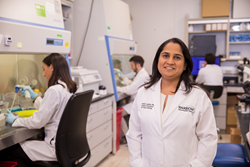
Ivy Brain Tumor Center Appoints Shwetal Mehta, Ph.D., as Chief Operating Officer


Dr. Shwetal Mehta is a nationally recognized molecular neuro-oncologist with expertise in glial progenitor cells.

“I am confident that through Dr. Mehta’s leadership we will change the way business is done in brain cancer drug development,” said Dr. Nader Sanai.

The Ivy Brain Tumor Center at Barrow Neurological Institute, a nonprofit translational research program that offers state-of-the-art clinical trials for patients with aggressive brain tumors, announced that it has named Shwetal Mehta, Ph.D., as the organization’s chief operating officer. Dr. Mehta, a nationally recognized molecular neuro-oncologist with expertise in glial progenitor cells, has distinguished herself as a rising star in brain tumor biology. 

“The Ivy Brain Tumor Center conducted a national search for a chief operating officer and found no shortage of competitive candidates from both industry and academia. We were fortunate to arrive at a talented group of finalists, so it gives me great pleasure to announce that the search committee’s unanimous decision is someone who has been with the Center since the very beginning. I am confident that through Dr. Mehta’s leadership we will change the way business is done in brain cancer drug development,” said Dr. Nader Sanai, director of the Ivy Brain Tumor Center.

Dr. Mehta was recruited to Barrow Neurological Institute from the Dana-Farber Cancer Institute in 2013 as a principal investigator. She was appointed as the Deputy Director of the Ivy Brain Tumor Center when it was established in 2018 through a historic $50 million grant from the Ivy Foundation in collaboration with the Barrow Neurological Foundation.

As a recognized leader in translational neuroscience for brain tumors, Dr. Mehta has helped develop an array of early-phase pharmacodynamic- and pharmacokinetic-driven clinical trials for patients with malignant brain tumors. Her skill in leading a multidisciplinary team has been instrumental in establishing the Ivy Center’s CLIA-certified laboratories and enabling the program’s unprecedented growth. In assuming the title of chief operating officer, Dr. Mehta’s new responsibilities will expand beyond the laboratory and intersect with all operational elements. 

“I am humbled by the opportunity to serve as the Ivy Brain Tumor Center’s chief operating officer and continue working alongside the brilliant and dedicated individuals that make up our program. I know that together we can achieve the Center’s mission to increase life expectancy and contribute to a cure for malignant brain tumors,” said Dr. Shwetal Mehta.

Dr. Mehta received her Master’s Degree in Molecular Biology from Tata Institute of Fundamental Research in India. She then earned her Ph.D. in Molecular Genetics and Microbiology from The University of Texas at Austin in 2003. She completed her postdoctoral work in the Stiles Laboratory at the Dana-Farber Cancer Institute and Harvard Medical School. 

Pushing beyond many cultural and societal norms to get to where she is today, Dr. Mehta has developed a passion for mentoring young women in science and has made it her mission to ensure women receive equal opportunities in the field. On International Day of Women and Girls in Science, she led a dynamic Facebook Live roundtable to educate the field of brain tumor research on the challenges women face in STEM careers.

###

Ivy Brain Tumor Center at the Barrow Neurological Institute in Phoenix, AZ is a non-profit translational research program that employs a bold, early-phase clinical trials strategy to identify new treatments for aggressive brain tumors, including glioblastoma. The Ivy Center’s Phase 0 clinical trials program is the largest of its kind in the world and enables personalized care in a fraction of the time and cost associated with traditional drug development. Unlike conventional clinical trials focusing on single drugs, its accelerated trials program tests therapeutic combinations matched to individual patients.

Share article on social media or email:

Relaymed wins Technical Innovation Award at 2020 Allscripts Developer Summit


We’re honored that Allscripts has recognized how we’re playing our part to help overcome the pandemic challenge.

Relaymed received the Technical Innovation award at the recent Allscripts Developer Summit for solving previously unaddressed problems with new innovations. Relaymed rapidly developed real-time interfaces for new COVID-19 point-of-care tests, to both the EHR and State Health Departments, to enable effective and fast track and trace programs.

With the integration into Allscripts Professional™ and Allscripts TouchWorks® electronic health record platforms providing the requisite patient demographics and provider details for contact tracing, Relaymed combines these with positive test results received from connected devices, to automatically transmit cases to track to the relevant Health Department in real-time. This speed of reporting is a game changer.

“COVID-19 is a test result that must be recorded correctly in the patient chart, with no human transcription error sneaking in. Not just for the sake of the individual patient, but also their family, healthcare workers and the wider community. Furthermore, this is a test result that must be made as widely available as fast as possible, with no delay, to enable effective population health management. We’re honored that Allscripts has recognized the work of our team, and how we’re playing our part to help, with this award,” said Neil Farish, CEO at Relaymed.

“Manual data entry typically means extra steps and an extra burden on the staff and providers of our clients. Throughout the COVID-19 pandemic, our goal has been to minimize the anxiety and difficulty of testing and reporting. Relaymed has significantly reduced concerns, which has enabled our clients to test in greater volumes, with speed and accuracy, which is going to help us overcome the pandemic challenge,” said Tina Joros, Vice President & General Manager, Open & Allscripts Practice Financial Platform.

Allscripts is a leader in EHR interoperability and healthcare information technology solutions that advance clinical, financial and operational results across an Open platform. Featuring the industry’s most innovative Healthcare IT developers, the award-winning Allscripts Developer Program (ADP) speeds time from innovation to implementation to help increase productivity, deliver higher-quality, more personalized care, seamlessly integrate devices, manage population health and much more. Allscripts clients can learn more about Relaymed on the Allscripts Application Store.

About Relaymed

Relaymed exists to put lab results automatically, instantly and securely into the EHR. Relaymed makes possible the secure, immediate transfer of data between these two worlds. We’ve built the fastest and most cost-effective middleware solution the ambulatory market was missing. We move and handle point-of-care testing data, enabling dramatic improvements to healthcare delivery through efficiency, speed and simplicity. Now millions of patient test results are transmitted securely and efficiently across a growing network of healthcare organizations leveraging a single connectivity platform, which is compatible with the leading vendors of point-of-care diagnostic testing devices and electronic health records.

https://relaymed.com

Share article on social media or email:

Lack of IT proficiency proves biggest hurdle to automating pharmacovigilance case intake, in new UK/US survey by Arriello


Pharmacovigilance Automation Adoption Survey

Pharmacovigilance Automation Adoption Survey

World Drug Safety Congress Americas – September 2nd, 2020 – Arriello, a provider of regulatory affairs & pharmacovigilance solutions and services for life sciences, has revealed a striking mismatch between pharmaceutical companies’ aspirations and their actual plans for automating adverse event (AE) reporting, in a substantial new survey conducted on both sides of the Atlantic.

The online Censuswide survey was carried out for Arriello in late June 2020 with 200 respondents at manager level and above in pharmacovigilance (PV), drug safety and product safety departments of life sciences companies in the UK and the US. It found that while the majority of organisations professed to have implemented some form of PV automation, or plan to do so over the next 12 months, most lack sufficient IT insight and capability to automate AE case intake.

While 48 per cent of all respondents (rising to 61 per cent working for large pharma organisations), claimed they already had some form of standalone PV automation solution in place, and a further 42 per cent of all companies expressed plans to implement something over the coming year, follow-up questioning suggested that these capabilities were likely to be fairly basic – and unconnected to AE data capture. The fact that a similar proportion of companies professed to have implemented PV automation as part of a wider solution offered a first clue to this.

Of those already on the path to automation, just a fifth (20 per cent) of companies said they had capabilities specifically for AE case intake, mostly at large pharmaceutical companies. This figure was substantially lower than the proportion of respondents claiming to have automated adjacent activities – such as medical information and clinical documentation management; standard form and report compilation; product quality compliance information and regulatory intelligence management; and literature screening (all of which were already in place at half of companies on average – on a sliding scale of 64 down to 44 per cent across this list of use cases).

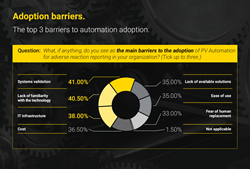
While most respondents said they are planning an automated solution for AE case intake within the next 12 months, the survey went on to reveal a number of practical barriers that were likely to inhibit progress – the top 3 being IT-related challenges. Respondents revealed that an inability to validate new systems (cited by 41 per cent), a lack of familiarity with AE case intake technology options (by 41 per cent), and inadequate IT infrastructure (cited by 38 per cent) stood in the way of automating these vast and largely manual workloads – more so than concerns about cost, or fear of human jobs being replaced.

More telling, though, was the finding that the vast majority of respondents did not feel that a lack of AE case intake automation put them at a disadvantage. This suggests that IT solution providers have failed to communicate the huge potential efficiency savings, as well as the scope for improved data quality and accelerated reporting, that come with the ability to capture case data in an automated way.

“Data like this inevitably warrants further investigation,” commented Dr John Price, a life sciences regulatory and safety consultant and advisor to Arriello. “On the face of it, it looks as though pharmaceutical companies don’t want to miss out on the promise of AE case intake automation. Yet many may not appreciate how quickly they could transform their PV operations and redeploy expensive professionals’ time – with a potentially huge ROI – if they automated manual AE case intake.

“This can be achieved by enabling frontline people – including healthcare professionals and company personnel – to capture information directly into reporting systems,” he noted. “Technical solutions are already available to do this.”

The full findings can be found in a report that is free to download from the Arriello web site. They will also be discussed in detail in our upcoming webinars.

About Arriello

Arriello has been a leading provider of risk management and compliance services to the Life Sciences sector since 2008. These include Market Consultancy, Global Regulatory Affairs strategy and implementation, Full and Local Pharmacovigilance solutions, Clinical Drug Safety, and Quality and Compliance auditing and systems.

Our brief is simple; to make the process from development to market faster, better and smarter. Headquartered in Ireland, with European operations in Central Europe, we provide expert Market Access guidance across the EU, US, LATAM, CIS, MENA, Asia and South Africa. With our extensive global vendor network, ISO 9001 certification, years of experience and satisfied clients, including Global Originators, Biotechs, Generics and CROs, you can be confident in our ability to deliver. However complex or simple your requirements, you can rely on us as a trusted partner. More at http://www.arriello.com and @Arriello

Media contact:

Carina Birt

Sarum PR for Arriello

carina@sarumpr.com

+44 7970 006624

Share article on social media or email:

Travel COVID Safe™ Accreditation Group Launches The Most Rigorous Three-Point Inspection Health Certification For The Travel And Tourism Industry


Travel COVID Safe

Travel COVID Safe™ (TCS) is a new three-point accreditation specifically created to rebuild consumer confidence in travel and reactivate the hospitality industry. By providing a uniform set of health and hygiene based protocols, TCS is part of an advocacy accreditation consortium that addresses the lack of standards for COVID-19 safeness in the hospitality and tourism industry. TCS helps the travel industry win back the confidence of the US traveler by introducing stringent and rigorous health and hygiene standards based on the Centers for Disease Control and Prevention (CDC) and World Health Organization(WHO) guidelines that set the minimum requirement for traveler safety.

TCS accreditation is the only certification process that has three points of inspection by three distinct individuals. It is the only accreditation that incorporates a coaching process to help the organization get accredited. It is the only certification process that offers ongoing continuous support by alerting the accredited organization of standard changes that could affect operations. TCS is the gold standard for COVID travel safeness. The three points/audits include:

  • WorkSuite™ Audit: Upon starting the accreditation process, TCS provides a virtual WorkSuite™ in which the organization works with an assigned coach. The coach will assist the organization by verifying the protocols submitted are compliant while also serving as a guide to the best practices from other accredited organizations. The coach serves as an ongoing auditor during the protocol documentation and procedure creation stage.
  • Master Examiner Audit: After the work is finalized in the WorkSuite™ and validated by the coach, the protocols and procedures get sent to a master examiner that will independently evaluate them for compliance. If there are gaps, they get sent back to the WorkSuite™ for the coach and the organization to address. Otherwise, it continues to the Site Inspection stage.
  • Site Inspection Audit: Following the completion of the WorkSuite™ and the Master Examiner audit, the organization should be ready for a live site inspection. Before the on-site inspection, their coach will make contact to prepare them for the final live inspection of the property/venue/location/operation.

To date, there have not been any rigorous standard certifications or accreditation’s developed for COVID-19’s safety, specifically for the tourism industry. Several countries and hotel chains have developed their propitiatory certifications, but the public perceives them as inherently biased as they made to entice tourists back. These propitiatory certifications also lack the uniformity that travelers seek (tourists do not want to learn about every country’s or hotel chain’s specific safety standards). From a global perspective, the World Travel & Tourism Council (WTTC) has introduced the global Travel Safe protocols and stamp, a great beginning in establishing essential yet basic global uniformity in the industry. But the WTTC’s, as most of the independent country’s protocols, have no validation in place and are based on an honor system of self-assessment. The need for audits, on-site inspections, and a means of consumer feedback is fundamental in regaining the consumer’s confidence.

What sets TCS apart is that it is the first accreditation for the Travel and Tourism industry that:

  • Designed for US traveler and for the markets looking to attract them
  • Based on CDC and WHO health standards
  • Provides ongoing guidance with changing regulations and guidelines that impact operations and thus allowing them to refocus on their services
  • Contains three separate independent pre-accreditation audits and ongoing consumer reporting
  • Rigorous yet facilitated accreditation that provides applicant organization an accreditation coach and access to the industry’s best practices

“We are excited to provide a solution that will win back the traveler’s confidence while minimizing COVID-related health risks. All of this is ultimately acting as a catalyst to help reactivate the tourism industry. The only way to start regaining the American traveler’s confidence in travel is by having a unified set of rigorous health standards that are uniform, relatable, and trusted, making travel safer yet still enjoyable. Travel COVID Safe does this precisely! It addresses these concerns with the highest accreditation level while still granting autonomy and evaluating organizations based on globally accepted CDC guidelines. TCS has been developed by Americans for the American traveler and organizations trying to cater to them,” says Terry Suero, Executive Director of Business Development.

Travel COVID Safe™ seeks to rebuild confidence by being the most stringent, reliable, and up-to-date seal of COVID safety for anyone looking to travel. The program also acknowledges the impact the pandemic has had on the travel and tourism workforce and thus aims to create local in-country employment by integrating them into the inspection process. The accreditation is for 3-years and the processing time can take anywhere from 3 – 4 weeks, depending on the line of business and how advanced the organization is with COVID safety standards. The cost of a 3-year accreditation is contingent on the nature of the organization and usually ranges between $1,500 to $7,500. For those organizations that do not want to get accredited but want access to the industry best practices, it is possible with the $19 per month Consortia Membership. The system in place is set across the board to assist all forms of the hospitality and tourism industry, which include but not limited to: hotels, small lodging, short term rentals, tour operators, car rentals, restaurants, and more.

To learn more about Travel COVID Safe™, visit TravelCOVIDSafe.org and make sure to follow us on Face Book: Twitter: , Instagram: and Pinterest

ABOUT TRAVEL COVID SAFE:

Travel COVID Safe™ was created by an alliance of both Health and Travel professionals, among them Tim Case, Eric Sheets and Terry Suero, in the summer of 2020 to address the need for a unified set of safety guidelines addressing the fear of travel safety in the hospitality and tourism industry. Travel COVID Safe™ is an audited three-point accreditation system that is healthcare-based and is designed exclusively to tackle the fears of the American traveler market. The system’s platform operates online to allow worldwide access and facilitate knowledge sharing within the different industry segments. This accreditation is the highest certification in the Travel and Tourism industry and includes multiple audits components during the development of the individualized procedures. Accredited organizations are seeking to have the highest levels of COVID safety accreditation and to attract American clientele.

Share article on social media or email: