Category Archives: Health

What is new in the field of Health. Trending topics, and cutting edge research in the are of Health. Press Releases that give us updates on Health.

Carmody Quality Solutions’s Just-Released eBook Provides Roadmap and Tools to Evaluate, Assess, and Build Pharma Quality Cultures


Carmody Quality Solutions, LLC

Quality is not overhead; quality is part of every product,” said Judy Carmody, Ph.D., founder and Principal Consultant of CQS. “Quality is not about policing people but partnering with people.

Carmody Quality Solutions, LLC (CQS), an innovative consulting agency that provides quality services to the pharmaceutical, biologics, and medical device industries, announced the availability of a first-of-its-kind eBook to help quality and compliance professionals develop a Voluntary Quality Assurance (VQA)® Culture.

Entitled “The Science And Art of Building a VQA Culture,” the eBook offers a comprehensive approach to developing a company culture that contributes to improving patient safety, personnel empowerment and performance, product quality, and the bottom line. It also provides access to a preview of interactive reporting capability for a new quality culture diagnostic tool developed by Compliance Architects LLC, a quality and compliance consulting firm, allowing organizations to assess and gain insights into the drivers of their quality culture.

“Quality is not overhead; quality is part of every product,” said Judy Carmody, Ph.D., founder and Principal Consultant of CQS. “Quality is not about policing people but partnering with people. The 4 Pillars of a VQA Culture work in concert and focus on treating people as they wish to be treated—with respect and dignity. It allows a company to operate comfortably and efficiently from a position of knowledge and strength, as well as being mindful of the people who are doing the work.”

To learn more about the eBook, the software diagnostic tool, and the 4 Pillars of a VQA Culture, visit http://www.carmodyqs.com.

About Carmody Quality Solutions, LLC

Carmody Quality Solutions, LLC (CQS) is a consulting agency that provides innovative quality services to the pharmaceutical, biologics and medical device industries. Scientific understanding underscores CQS’s approach to solving challenging quality or analytical issues.

Founder and Principal Consultant Judy Carmody, Ph.D. has 25+ years driving strategic vision in operations, QA, control, systems, validation, and analytical development. Applied technology, marketing, bench chemistry, validation, and quality management all inform her Voluntary Quality Assurance (VQA)® Culture approach, which underpins custom-crafted solutions that connect everyday processes and procedures with clients’ strategic needs. Her approach also stems from leadership roles held at (bio)pharma (start-up and Fortune 500) firms where she built quality management systems, which have undergone multiple FDA inspections with no FDA-483s issued. Learn more at http://www.carmodyqs.com and LinkedIn.

© 2020. All rights reserved. VQA Culture is a registered trademark of Carmody Quality Solutions, LLC. Compliance Architects is a registered trademark of Compliance Architects Holdings, LLC. All trademarks are property of their respective owners.

Share article on social media or email:

FSHD Society releases Voice of the Patient Report on FSH muscular dystrophy


FSH muscular dystrophy Voice of the Patient Report.

FSH muscular dystrophy Voice of the Patient Report.

This disease is wicked and cruel in many ways, but losing my independence is probably the most frightening and helpless feeling I have ever had.

The FSHD Society has released its Voice of the Patient Report, a landmark publication based on its June 29, 2020, externally led patient-focused drug development (EL-PFDD) meeting. During the meeting, individuals and families living with facioscapulohumeral muscular dystrophy (FSHD) testified before representatives of the U.S. Food and Drug Administration (FDA) and other stakeholders about how the muscle-wasting disease affects their health, and what they hope future treatments will do to improve their quality of life. According to the FDA, “This input can inform FDA’s decisions and oversight both during drug development and during our review of a marketing application.”

One of the most common types of muscular dystrophy, FSHD affects an estimated 1 in 8,300 people in the general population. Caused by a genetic aberration on chromosome 4, FSHD results in a life-long, progressive loss of muscle strength, with around 20 to 25 percent of affected individuals needing a wheelchair by age 50. Affected individuals have a 50-50 chance of passing the condition on to each offspring. There is currently no treatment to slow the loss of strength and muscle.

For its EL-PFDD meeting, called the “Voice of the Patient Forum,” the FSHD Society produced a live webcast to protect attendees from potential exposure to the COVID-19 virus. Some 400 individuals participated via Zoom, email, and phone. Their input is captured in the Voice of the Patient Report and will provide the FDA and the biopharmaceutical industry with deep insights into how FSHD affects individuals’ health, daily lives, and well-being. The report also documents the ineffectiveness of current interventions and the urgent need for better treatments.

The report puts to rest some misconceptions about FSHD. For example, FSHD is often described as a “mild” muscular dystrophy, but more than 80 percent of respondents reported being “moderately” to “severely” limited in daily activities involving the upper and lower extremities. Medical texts often describe FSHD as mainly affecting the upper body, and yet one-quarter of respondents said that their ability to walk was significantly impaired. Individuals with FSHD are at risk of falling and sustaining serious injuries as a result. One 27-year-old woman said, “I’ve fallen by myself many times, and I think one of the scariest things about falling, is I’m scared that I’m going to hit my head, and I’m scared that someone’s going to find me unconscious. And I’m scared that, one day I’ll fall and I’ll break something, and lose even more mobility.”

Many participants noted that while the disease affects skeletal muscles, it takes a heavy toll on mental health because symptoms worsen over time but in an unpredictable way. “The disease is relentless,” a father of two adult daughters with FSHD said. “It takes away my daughters’ independence, and to a large extent darkens their future.” A 50-year-old man testified, “This disease is wicked and cruel in many ways, but losing my independence is probably the most frightening and helpless feeling I have ever had.”

Short of a cure, the majority of participants indicated that treatments to slow or halt the disease progression was a highly desired outcome. They signaled their preference for slowing or stopping the loss of muscle function (62%), followed by regaining strength and/or muscle function (32%). A common theme in the comments shared during the meeting is that people with FSHD are willing to tolerate a higher degree of uncertainty about the effectiveness of a new drug, given the dire, unmet need they currently experience.

“Having a significant treatment for FSHD would really be life changing,” said a 26-year-old woman. “I would like to see something that would stop progression of the disease. If I were to stop progression right now, I would still be able to walk in 10 years. I would still be able to smile, to get off the couch, to raise my arms, to hold my future baby and countless other things….” The mother of a young girl with FSHD testified, “Our future and hers stay in limbo with so many unknowns – that if we had a therapy that at minimum slowed the progression… we would be able to guide and plan for what her future looks like.”

The FSHD Voice of the Patient report and webcast recording are available on the FSHD Society’s website. Advocacy partners and sponsors included Friends of FSH Research, Fulcrum Therapeutics, Muscular Dystrophy Association, and Optum. The Society dedicated the report “to the individuals who courageously shared their stories.”

About the FSHD Society

The FSHD Society is the world’s largest research-focused patient organization for facioscapulohumeral muscular dystrophy (FSHD), one of the most prevalent forms of muscular dystrophy. The Society has catalyzed major advancements and is accelerating the development of treatments and a cure to end the pain, disability, and suffering endured by one million people worldwide who live with FSHD. The FSHD Society has transformed the landscape for FSHD research and is committed to making sure that no one faces this disease alone. The Society offers a community of support, news, and information through its website at https://www.fshdsociety.org.

Share article on social media or email:

All Omada Health Chronic Care Programs Available on Evernorth Digital Health Formulary


With the company’s program for at-home physical therapy and personalized treatment for chronic pain joining programs for diabetes prevention, type 2 diabetes, and hypertension, Omada health now offers the widest range of digital health solutions on the Evernorth Digital Health Formulary. Evernorth, Cigna Corporation’s health services segment, launched the industry-first formulary in December 2019. Omada now offers the following programs on the platform:


  • Physera by Omada: offers telehealth physical therapy with licensed therapists, and personalized treatment for chronic pain;
  • Omada for Diabetes Prevention: the largest CDC-recognized diabetes prevention program in the country;
  • Omada for Diabetes: an accredited diabetes self-management and education (DSMES) program that matches certified diabetes care and education specialists to guide participants through personalized curriculum; and
  • Omada for Hypertension: addresses challenges for individuals dealing with hypertension, and assists them in developing behaviors that improve blood pressure control.


Omada’s programs for prevention, diabetes, and hypertension are currently available on the digital health formulary; the MSK program will be available beginning in 2021. All programs on the Digital Health Formulary have been evaluated and measured on clinical effectiveness; usability; scalability; interoperability; security and privacy compliance; and affordability and value. The wide range of Omada programs available on the platform is a testament to the company’s investment in both breadth and depth of care. In each of the programs, participants are matched with specialized coaches or credentialed healthcare professionals who build relationships with users that are foundational to sustained success.

The announcement comes as Omada continues to hold its programs to the highest clinical standards, and validate the effectiveness of those programs. In September, an Evidation study demonstrated the Omada for Diabetes Program participants achieved meaningful outcomes four months after beginning the program, including reducing average real Hemoglobin A1c by 0.8 percent for all study participants. Earlier this month, the company released results of the largest-ever randomized controlled trial of digital diabetes prevention, meeting both the primary and secondary study endpoints and showing clinically-meaningful reductions in HbA1c and weight over a one-year period.

“Tens of millions of individuals across the country now have access to Omada’s full suite of chronic disease programs,” said Omada co-founder and CEO Sean Duffy. “Our studies have demonstrated the effectiveness of our digital care programs; claims analyses have proven the real-world value. We’re excited to partner with Evernorth, and to offer the most comprehensive set of solutions as their innovative digital health formulary leads an evolution of care delivery for digital health.”

To date, health plans covering more than 20 million Americans offer solutions from Evernorth’s Digital Health Formulary to their members. Plan sponsors can choose to invest and deploy individual solutions, or a combination of programs on the platform. In addition to rigorous measurement from physicians, pharmacists, and health research scientists, programs on the formulary are also evaluated by user-experience experts. People using programs on the Digital Health Formulary may also receive support from specialist pharmacists to further optimize the potential health benefits of the chosen solutions.

About Omada Health

Omada Health is a digital care provider that empowers people to achieve their health goals through sustainable behavioral change. Working with health plans, employers, and health systems, the company delivers personalized interventions for individuals dealing with chronic conditions, musculoskeletal issues, anxiety, and depression. Combining data-powered human coaching, connected devices, and curriculum tailored to an individual’s specific conditions and circumstances, Omada has enrolled more than 400,000 participants across all 50 states. Omada partners include Cigna, Kaiser Permanente, Blue Cross Blue Shield Minnesota, and other leading health plans.

Share article on social media or email:

MadEmEl Medical Aesthetics Celebrates Their First Year In Business with an Anniversary Open House Event


News Image

We are incredibly excited for our Anniversary Celebration!

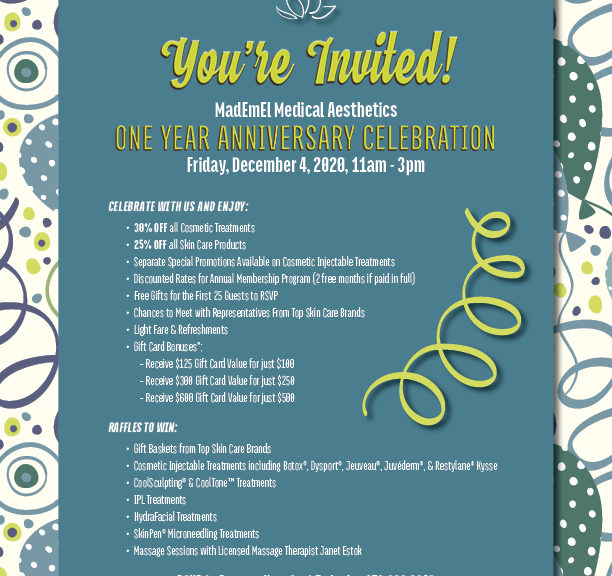
MadEmEl Medical Aesthetics is excited to announce their upcoming One Year Anniversary Celebration. The event will be held on Friday, December 4th, 2020 at their office in Lawrenceville. MadEmEl is a full-service medical spa offering award-winning cosmetic treatments and skin care products to boost the self-confidence and overall wellness of their patients.

Guests in attendance can enjoy special gift card bonuses, chances to meet with representatives from top skin care brands, and consultations with the cosmetic providers at MadEmEl! As a special treat, there will be several raffles to win a huge selection of cosmetic goodies including cosmetic injectables like Botox®, cosmetic laser treatments, CoolSculpting® cycles, a complimentary massage treatment with their licensed massage therapist, and more. All guests will receive a complimentary raffle ticket upon arrival and additional tickets will be available for sale during the event. Food, wine, and cocktails will be provided! COVID-19 safety measures including social distancing and mask wearing will be practiced to help promote the health and safety of everyone in attendance.

In honor of the special occasion, MadEmEl will be offering guests in attendance 30% off a huge selection of cosmetic treatments. This includes, CoolSculpting®, laser hair removal, SkinPen® Microneedling, cosmetic laser treatments from Lumenis®, and more. 30% off sale does not include cosmetic injectable treatments such as Botox® Cosmetic Injections and Restylane® facial fillers, which will have their own separate special promotions. Additionally, all skin care products from top brands including Revision Skincare® and ZO® Skin Health will be 25% off when purchased at the event (or pre-ordered by phone or email for one week leading up to the event).

“We are incredibly excited for our Anniversary Celebration,” says Dr. Kristine Gould, MadEmEl Medical Aesthetics founder. “It has been a crazy, unique year, but we are so grateful to all of our wonderful patients and this celebration event is a way to reward them for their loyalty and support. We can’t wait to celebrate and toast to many more successful years to come.”

About MadEmEl Medical Aesthetics

MadEmEl Medical Aesthetics is a full-service medical spa in Lawrenceville, GA specializing in advanced cosmetic treatments for the face and body. Owned and operated by Dr. Kristine Gould, MadEmEl is focused on using cosmetic treatments and services to accentuate the overall health and wellness of their patients. MadEmEl offers a wide selection of FDA-approved skin care treatments and non-surgical anti-aging services including cosmetic injectable treatments, cosmetic laser treatments, chemical peels and facials, microneedling, CoolSculpting®, and much more. All treatments and services at MadEmEl are performed by certified and experienced aestheticians, nurse practitioners, and medical assistants.

To learn more about the treatments at MadEmEl or to schedule a complimentary consultation appointment, visit https://mademelmedspa.com or visit them in-person.

Share article on social media or email:

CyberMaxx™ Named to MSSP Alert’s Top 250 MSSPs List for 2020


CyberMaxx

CyberMaxx is honored to be recognized as a Top 100 MSSP and very proud to increase our ranking by 52 spots. This ranking demonstrates our growth, innovation and commitment to the more than 132,000 healthcare heroes we protect.

MSSP Alert, published by After Nines Inc., has named CyberMaxx to the Top 250 MSSPs list for 2020 (http://www.msspalert.com/top250).

The list and research identify and honor the top MSSPs, managed detection and response (MDR) and Security Operations Center as a Service (SOCaaS) providers worldwide.

The rankings are based on MSSP Alert’s 2020 readership survey combined with the digital media site’s global editorial coverage of managed security services providers. The fourth-annual list has expanded from 2019 (200 honorees) and 2018-2017 (100 honorees) amid MSSP Alert’s continued, organic readership growth.

“CyberMaxx is honored to be recognized as a Top 100 MSSP and very proud to increase our ranking by 52 spots. This ranking demonstrates our growth, innovation and commitment to the more than 132,000 healthcare heroes we protect.” said Thomas Lewis, Founder and CEO, CyberMaxx.

“After Nines Inc. and MSSP Alert congratulate CyberMaxx on this year’s honor,” said Amy Katz, CEO of After Nines Inc. “Despite the coronavirus pandemic, this year’s honorees continue to accelerate their businesses, mitigate customer risk and safeguard digital assets worldwide.”

Highlights from the associated MSSP Alert research include:

  • MSSP Revenue Growth: MSSP honorees, on average, expect to generate $19.15 million in revenue for 2020, up 16% from $16.47 million in 2019.
  • Geography: Honorees are headquartered in 25 different countries — up from 19 countries in the 2019 report.
  • Profits: 84% of MSSPs surveyed expect to be profitable for fiscal year 2020.
  • Security Operations Centers: 67% have in-house SOCs, 24% are hybrid, 6% completely outsource their SOCs, and 3% are reevaluating their SOC strategies.
  • Cyberattack Trends: The most frequent attacks targeting MSSP customers in 2020 include phishing (95%), vulnerability (76%) and ransomware (69%) attacks.
  • Cybersecurity Solutions: In a continued sign of market fragmentation, MSSP survey participants mentioned 129 different hardware, software, cloud, and services vendors that assist their cybersecurity efforts — up from 95 in 2019.
  • M&A: Mergers, acquisitions and private equity investments continue to accelerate across the MSSP landscape. Twenty high-profile deals involving MSSP 250 honorees have surfaced since last year’s report.

The Top 250 MSSPs list and research were overseen by Content Czar Joe Panettieri (@JoePanettieri). Find the online list and associated report here: http://www.msspalert.com/top250.

About CyberMaxx

CyberMaxx prevents, detects, and responds to cyberattacks for healthcare organizations. CyberMaxx equips its customers with a 24/7/365 security operations center with services including endpoint threat detection and response, network-based threat detection and prevention, security information and event management (SIEM) with advanced data analytics, vulnerability risk management, and incident response services.

Contact CyberMaxx for more information about healthcare cybersecurity solutions by visiting https://www.cybermaxx.com

Media Contact

Erin C. Kennedy | CyberMaxx | 615.309.2514 | ekennedy@cybermaxx.io

About After Nines Inc.

After Nines Inc. provides timeless IT guidance for strategic partners and IT security professionals across ChannelE2E (http://www.ChannelE2E.com) and MSSP Alert (http://www.MSSPAlert.com). ChannelE2E tracks every stage of the IT service provider journey — from entrepreneur to exit. MSSP Alert is the global voice for Managed Security Services Providers (MSSPs).

  • For sponsorship information contact After Nines Inc. CEO Amy Katz, Amy@AfterNines.com
  • For content and editorial questions contact After Nines Inc. Content Czar Joe Panettieri, Joe@AfterNines.com

Share article on social media or email:

Patient Experience Journal Releases Fall 2020 Issue: Volume 7, Issue 3


News Image

The Beryl Institute announces the publication of Volume 7, Issue 3 of Patient Experience Journal (PXJ), an international, open access, peer-reviewed journal focused on research and proven practices around understanding and improving patient experience.

The Beryl Institute announces the publication of Volume 7, Issue 3 of Patient Experience Journal (PXJ), an international, open access, peer-reviewed journal focused on research and proven practices around understanding and improving patient experience. Read in over 200 countries and territories, PXJ has over 700,000 article downloads and is committed to disseminating rigorous knowledge and expanding the global conversation on evidence and innovation on patient experience.

Published in association with The Beryl Institute, Volume 7, Issue 3 includes 29 articles from 113 contributing authors representing commentaries, personal narratives, research studies and case studies and covers a selection of topics such as:

  • Moving forward to the future of healthcare
  • Patient-centric culture and implications for patient engagement during the COVID-19 pandemic
  • Solitude and fear during the great coronavirus war
  • A student’s lesson in healthcare disparities
  • A home for us and a womb for her: Living the Family Integrated Care model in a Danish NICU
  • Cancer patient perspectives during the COVID-19 pandemic: A thematic analysis of cancer blog posts
  • The impact of parental presence in the NICU on hospital alienation and other distress measures
  • Patient reported experience of inpatient rehabilitation in Australia
  • Collecting child-patient feedback: A systematic review on the patient-reported outcome measures for hospitalized children

Submissions represent a broad range of global organizations and institutions including University of Toronto, European Institute of Oncology, University of North Carolina at Chapel Hill School of Medicine, Copenhagen School of Design and Technology, McGill University, East Carolina University Brody School of Medicine, Australian Health Services Research Institute, University of Wollongong, Auburn University, Laval University, Quebec City, University of Melbourne, Africa Centre for Public Health and Toxicological Research, The University of Hong Kong, University of Alabama at Birmingham, Louisiana State University, Brown University, Dell Medical School – The University of Texas at Austin, University of Florida, Massachusetts General Hospital, Birmingham NHS Foundation Trust, and more.

“Volume 7, Issue 3 has the distinction of publishing at a critical time, one that could be deemed a moment in which scholarship suffers. Yet what we have found is our greatest level of contribution and what will be our largest issue to date with almost 260 pages engaging in patient experience and the human experience in healthcare,” said Jason Wolf, Founding Editor of PXJ and President & CEO of The Beryl Institute. “Over the seven years of publishing PXJ, never could we have dreamt of this moment, but in many ways, we were always preparing for it. For in bringing together the diverse voices of our world, in weaving together ideas, stories, and evidence we knew and now espouse, we are ready to support one another. What this issue represents is that we are truly stronger together.”

To access Volume 7, Issue 3 of PXJ, visit: http://pxjournal.org/journal/

PXJ publishes twice annually in April and November. Submissions are accepted on an ongoing basis and should follow the requested submission types and adhere to author guidelines. Papers should address the full range of topics critical to the evaluation and impact of patient experience practices, efforts and influences.

PXJ is also accepting submissions for the 2021 Special Issue to address the impact of inequity and health disparities on the human experience. The deadline for submissions for that issue is April 1, 2021. Learn more: https://pxjournal.org/cgi/viewcontent.cgi?article=1515&context=journal

About Patient Experience Journal:

Patient Experience Journal (PXJ) is a peer-reviewed, open-access journal published in association with The Beryl Institute. Read in over 200 countries and territories, PXJ is committed to disseminating rigorous knowledge and expanding the global conversation on evidence and innovation on patient experience.

About The Beryl Institute:

The Beryl Institute is a global community that builds the capacity of organizations to elevate the human experience in healthcare and develops individuals who impact experience excellence. We believe human experience is grounded in experiences of patients & families, those who work in healthcare and the communities they serve.

We define the patient experience as the sum of all interactions, shaped by an organization’s culture, that influence patient perceptions across the continuum of care.

Share article on social media or email:

Catalyst Creates High-Quality Protective Gear to Meet Continued Demand for PPE


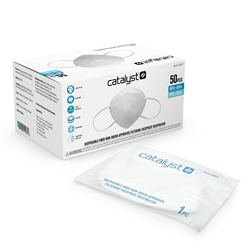
Catalyst Disposable Non NIOSH-Approved KN95 Filtering Facepiece Respirator

“We’re able to use what we do best to help fill a critical need and protect people during a global pandemic.” June Lai, CEO

As the United States balances reopening businesses amid surge in the infections of COVID-19 cases, Catalyst, an innovative design and development company, is diversifying its focus from consumer electronics to medical equipment sourcing, design and manufacturing to provide protective gear for healthcare and business communities.

Today, Catalyst is releasing a range of personal protective equipment (PPE), including the Catalyst Disposable Non-NIOSH Approved KN95 Filtering Facepiece Respirator and the Catalyst Face Shield for use by health care workers and health care officials. Catalyst is also releasing a range of PPE industrial solutions for businesses to protect customers and employees including face masks, comfort extenders, face mask holders, safety boxes, mask holder, floor decals and social distancing barriers. The new line of products enables businesses to reopen while meeting Centers for Disease Control (CDC) recommendations.

“We are committed to creating high quality, appropriate PPE medical supplies and products that governments, businesses, hospitals, healthcare workers, and front-line workers can rely on,” Catalyst CEO June Lai said. “Catalyst is historically known around the world for designing the highest quality protection for electronics. Today, we’re able to use what we do best to help fill a critical need and protect people during a global pandemic. I believe our team is uniquely positioned to step up to this challenge.”

Lai is a scientist and started her career in biotech. After getting her MBA, and a number of other advanced degrees, she analyzed publicly listed biotech, pharma and health care companies and positioned complex businesses for growth through acquisitions and partnerships. Co-Founder and Chief Creative Officer Josh Wright is a globally-recognized, award-winning industrial designer. At its core, Catalyst is a design and innovation company led by people with diverse backgrounds and experiences. Coupled with their collective experience in sourcing and logistics, they are uniquely positioned to create and supply the healthcare field with much-needed PPE.

To amplify their expertise, Catalyst worked closely with a team of specialists throughout the design and manufacturing process, including regulatory and legal consultants with more than 60 years’ collective experience working at the Food and Drug Administration (FDA), to ensure the Catalyst products and processes meet FDA guidelines and CDC recommendations.

“Catalyst is carefully and consciously meeting a critical need in the United States. The products sourced and developed by Catalyst were strategically selected, and the process by which they were sourced or manufactured meets all requirements set forth by U.S. regulatory bodies in order to ensure a clear, safe path to market,” said Dr. Aaliyah Eaves, Regulatory Advisor.

The product line will also help address the nationwide shortage of PPE in the United States, including lack of high-quality filtering facepiece respirators, and essential PPE that reduces risk to healthcare providers directly exposed to SARS-CoV-2 when performing high-risk medical procedures.

Catalyst’s new line of essential products directly fills this need with the Catalyst Disposable Non NIOSH-Approved KN95 Filtering Facepiece Respirator. The Catalyst Face Shield, when used in conjunction with additional and appropriate PPE, is designed to assist protecting and reducing exposure from airborne transmission of droplets in a medical setting.

For industrial use to support businesses, their employees, and customers Catalyst are releasing a number of personal protective equipment to help establish a safer and guideline-compliant working environment.

COVID exposure spreads via droplets that travel through the air and land on another person via talking, sneezing, coughing or raised voices. According to the CDC, approximately 40% of Coronavirus infections are asymptomatic, making isolation precautions for employees with symptoms not enough to prevent spread. The remaining 60% who are symptomatic may not exhibit symptoms for 2-3 days, depending on their viral load (pre-symptomatic). (Note 1) The CDC recommends social distancing, but it’s not always possible stay at least 6ft away for some business operations.

Catalyst industrial PPE includes:


  • Catalyst Face Mask – for source control to prevent infecting others, especially for asymptomatic / presymptomatic individuals, to help reduce the spread of coronavirus from an individual who may be infected without showing symptoms. If the individual has symptoms, they should self-isolate as a best practice, however if they do need to interact with anyone within 6ft, they should wear a mask.
  • Catalyst Face Mask Comfort Extender – helps employees wear masks for long periods of time without discomfort.
  • Catalyst Face Mask Holder – used to avoid contamination and when temporarily removing masks for food or coffee breaks.
  • Catalyst Social Distancing Barrier – transparent divider designed to serve as a layer of protection between the employee and the customer and other customers in the store too, preventing exposure to body fluids or droplets for area where interactions of less than 6ft occur.
  • Catalyst Floor Decals – indicating where to stand in 6ft intervals for use in line-ups or high traffic area where people cluster to encourage responsible social distancing.

In addition to the product line, Catalyst is providing a resource for business owners to evaluate risks through a COVID-19 Essential Business Risk Survey. Customers can answer some specific questions about their business to receive a recommended list of products and their quantities, plus free suggestions for prevention, detection and tracking.

The CDC has responded to the COVID-19 pandemic by providing advice for individuals and businesses on how to prevent infection. (Note 2) As part of that response, the CDC has recommended that people clean and disinfect their electronic devices, such as touch screens and tablets and the very first recommendation the CDC provides as a part of that guidance is to consider putting a wipeable cover on electronics. (Note 3)

Catalyst® Waterproof Cases provide the ideal solution for individuals and businesses who face possible exposure to follow the CDC’s guidance to routinely clean and disinfect frequently touched objects and surfaces including your electronic devices.

Catalyst’s traditional products provide solutions that address the need to maintain a clean and safe personal environment. These washable and protective Catalyst Waterproof Cases for iPhones, iPads, and Apple Watch can be found at http://www.catalystcase.com

Catalyst® is proud to support the CDC Foundation. For every purchase of select Catalyst® Waterproof Cases (including iPhone 11, 11 Pro, 11 Pro Max, Apple Watch Series 4/5 44mm, Apple Watch Series 6 40mm/44mm, iPad Mini 5, iPad 10.2”, AirPods Pro) in the USA from Oct 21, 2020 until Dec 31, 2021, Catalyst® will donate $1 to the CDC Foundation.

This donation is yet another way that Catalyst® is giving back and doing our part to assist during the COVID-19 pandemic. All donations made to the CDC Foundation’s Coronavirus Emergency Response Fund go to fighting the coronavirus pandemic, including: funding medical supplies, increasing lab capacity, deploying emergency staffing to U.S. public health communication needs, boosting clinical research to improve health outcomes, building capacity and infrastructure for global response efforts, and much more.

About Catalyst:

We design and manufacture iconic products for people, businesses and organizations that can help them protect their personal devices, company assets and health. We are a company of problem solvers with a history of invention. Our expertise in product design and engineering allows us to create solutions to global problems with profound potential. We provide total protection for you and your devices. For over 10 years, our unrivaled range of protective cases have allowed users to experience life on their own terms while always keeping their valuable devices safe and secure.

SOURCE

1 https://www.cdc.gov/coronavirus/2019-ncov/more/scientific-brief-sars-cov-2.html

2 https://www.cdc.gov/coronavirus/2019-ncov/cdcresponse/index.html

3 https://www.cdc.gov/coronavirus/2019-ncov/community/disinfecting-building-facility.html

What We Know – What We Don’t Know – Industry Analysis by Loyale Healthcare


With promising new developments in healthcare’s battle against COVID-19, Americans have cause for optimism.

It is critically important to note that economics are the driving force behind these developments. Though affected by policy, the healthcare industry’s competitive and financial fundamentals are being driven by an increased dependence on patient-paid revenue – Kevin Fleming, CEO, Loyale Healthcare

Unprecedented. Devastating. Deadly. Divisive. The words used to describe America’s 2020 have predictably focused on the negatives. But through all of the surprises; all the adversity and seemingly insurmountable challenges, the resourcefulness and resilience of people who refuse to succumb to the difficulties stand out. This resolve was evident in last week’s election, which saw the highest voter turnout in more than a century. And it can be seen in the historic achievements of scientists, researchers and caregivers in the healthcare industry.

As this article is being written, a hopeful nation is celebrating the news that a COVID-19 vaccine has been shown 90 percent effective in a global clinical trial with more than 40,000 participants. And although the process for final approval of the Pfizer/Biontech vaccine, along with production, distribution and public acceptance are likely months away, the event has given all of us cause for renewed optimism even as COVID-19 case counts in America are reaching new peaks since the public health crisis began. At last, it appears, there is some light at the end of this tunnel.

Just days before, the winner of the 2020 presidential race was projected with the election of the forty sixth President of the United States. The winner, former Vice President Joe Biden, has promised an aggressive healthcare agenda, but as of this writing it appears unlikely that he’ll have the congressional majority he’ll need for anything more than incremental change. Despite the diminished prospect for dramatic healthcare reform in the short-term future, there are several market-driven conditions that have and will likely continue to drive healthcare policy forward.

The noteworthy events listed above are apropos of an era defined by noteworthy events, especially in healthcare. As America has strived to regain some economic and operating equilibrium, healthcare providers have, again and again, been at the center of the effort. Think of it. Faced with a deadly new virus, grave public health concerns and a nervous patient population, healthcare providers suspended nonessential services, depriving themselves of hundreds of billions in planned revenue. At the same time, they invested millions to expand capacity and develop new channels and operating models to help ensure the delivery of care.

Examining the healthcare industry’s health and well-being at this stage of 2020, the results of these unplanned disruptions in revenue and expenses are mixed. Some systems have modified their businesses to adapt to the industry’s new reality. One, HCA Healthcare (a Loyale client) announced their intention to pay back $6 billion in federal stimulus funding because of improved operating performance in the third quarter; while other providers have been forced to lay off personnel or face closing their doors. On balance, however, the industry seems to be finding its footing.

According to research published by healthcare industry consulting firm Kaufman Hall titled, “National Hospital Flash Report October 2020”, “The nation’s hospitals continue to face an uncertain operating environment, with margins fluctuating from month to month.” Somewhat encouragingly though, the report found that operating margins against the firm’s industry index were up in September, rising 8.1% year over year. This growth, occurring despite “lower volumes for a seventh consecutive month… was attributable to longer lengths of stay (up 2.3% YTD and YOY),” and higher net patient service revenue (up 5.8% YTD and 10.7% YOY). Additionally, “Organizations also are benefiting from the 20% Medicare COVID-19 add-on, suspension of the -2% sequestration adjustment and lower bad debt, all of which are helping to drive revenue.”

In our view, the favorable trend in net patient service revenue (NPSR) is particularly telling. It underscores our observation that, as the industry works to reconfigure itself for the post-COVID-19 marketplace, the prominence of the patient-as-payer cannot be overlooked. This may be especially true now, with millions of Americans out of work and no longer covered by employer-sponsored healthcare plans.

We published an analysis earlier this year titled, “4 Changes Healthcare Providers Must Embrace After COVID.” In it, we shared the experiences of Loyale clients to illustrate the operating models and business practices that are proving themselves in the “trial by fire” forced on the industry by the COVID-19 crisis. Noting that “market-driven, government-supported changes have redefined healthcare delivery for patients from today on,” we urged healthcare providers to recognize and respond to these important developments if they intend to remain relevant in a redefined marketplace:

1. Virtual Care Delivery will be a permanent part of the healthcare delivery landscape.

2. Providers will be expected to provide their patients and communities with reliable information about price and quality to empower their ability to choose.

3. Total system interoperability, the seamless integration of all systems affecting the patient care experience will become an operating standard.

4. Technology will be relied upon for the delivery of better, more personalized patient experiences at scale.

It is critically important to note that market economics are the driving force behind these developments. Though they are affected by regulatory policy, the industry’s competitive and financial fundamentals are being driven by an increased dependence on patient-paid revenue, as confirmed in the year to date research from Kaufman Hall cited above. These dynamics are not partisan; they are not liberal or conservative. Policy makers have been and will be compelled by the interests of their constituents to promote rules, regulations and reimbursements to support continued advancement in the affordability of, and access to, care. The healthcare providers who plan for that reality will be the winners in the post-COVID-19 marketplace.

In Loyale analysis published this summer titled, “Healthcare’s COVID-19 Response Is a Window to the Industry’s Future,” we described how the pandemic “has led to the accelerated adoption of new operating models that promise better, more accessible and more sustainable healthcare.” Healthcare’s operating performance through Q3 affirms the conviction of several notable healthcare industry executives cited in the analysis. These industry leaders envision a future for healthcare that is, 1) consumer-centered, 2) accessible and affordable, 3) virtual, 4) data-driven and interoperable and 5) dedicated to delivering well care, not just sick care.

The demand for healthcare that meets these new operating standards is coming not just from consumers. Employers, regulators and legislators are all speaking out, and potent new competitors like CVS Health, Walgreens and Walmart are entering into the primary care marketplace to fill the demand. The future for healthcare can – and should be – bright, but for traditional providers, getting back to normal is going to have to look a lot different than it did not too long ago.

America has lived through tragic events of a massive scale before. The World Wars, Great Depression and Dust Bowl are prominent examples. But along with those tragedies, there have always been – and always will be – stories that illuminate how ordinary people crossed boundaries, tempted fate and worked together to help one another. These stories, we believe, form the basis for the astonishing advancements achieved in spite, and because, of our collective responses to the challenges we face.

In the face of COVID-19, healthcare providers have continually distinguished themselves. Their dedication to their patients and their communities has continually sustained and supported us. And now, with healthcare researchers and scientists announcing the prospect of a COVID-19 vaccine in the months ahead, healthcare will be the sector that ultimately walks us out of this latest challenge.

Remember early in the pandemic, when New York City was at the crisis’ epicenter? Each evening, the locked-down city residents would honk horns, clang pots and pans and shout praise and gratitude to the city’s healthcare workers from their balconies and fire escapes. At Loyale, we’re doing that by rededicating ourselves to helping ensure that American healthcare is strong and sustainable for the new generations and new challenges to come.

Kevin Fleming is the CEO of Loyale Healthcare

About Loyale

Loyale Patient Financial Manager™ is a comprehensive patient financial engagement technology platform leveraging a suite of configurable solution components including predictive analytics, intelligent workflows, multiple patient financing vehicles, communications, payments, digital front doors and other key capabilities.

Loyale Healthcare is committed to a mission of turning patient responsibility into lasting loyalty for its healthcare provider customers. Based in Lafayette, California, Loyale and its leadership team bring 27 years of expertise delivering leading financial engagement solutions for complex business environments. Loyale currently serves approximately 12,000 healthcare providers across 48 states. Loyale is proud to have an enterprise-level strategic partnership with Parallon which includes the deployment of Loyale’s industry leading technology at all HCA hospitals and Physician Groups.

Memorial Cardiac & Vascular Institute Earns Highest Rating from Society of Thoracic Surgeons


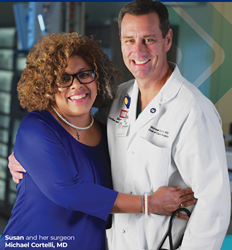
Susan, a patient at the Memorial Cardiac & Vascular Institute, came back to celebrate a return to health with her surgeon, Dr. Michael Cortelli.

“The high-quality outcomes necessary to achieve this rating are a testament to the collaborative efforts of the entire cardiac surgery team,” said Dr. Michael Cortelli, chief of the Memorial Cardiac and Vascular Institute.

The Memorial Cardiac & Vascular Institute (MCVI) has earned three-star ratings for patient care and outcomes from the Society of Thoracic Surgeons (STS) in both isolated aortic valve replacement (AVR) surgery and isolated coronary artery bypass grafting (CABG). The designation, which recognizes the highest category of quality, places Memorial among the elite heart surgery programs in the United States and Canada.

Historically, fewer than 10% of cardiothoracic surgical programs earn three stars from STS, a nonprofit organization that represents more than 7,300 surgeons, researchers, and allied healthcare professionals worldwide. Its highly-regarded rating system uses data from benchmarked outcomes and is calculated by combining numerous measurements of quality for specific procedures performed by cardiothoracic surgery programs in its database.

MCVI has received consistently high ratings in the annual survey for more than 10 years. The current three-star designation in isolated AVR includes outcomes from a three-year period (January 2017-December 2019). The isolated CABG rating is for quality results in 2019 only. “The high-quality outcomes necessary to achieve this rating are a testament to the collaborative efforts of the entire cardiac surgery team,” said Dr. Michael Cortelli, chief of the Memorial Cardiac and Vascular Institute.

MCVI was the first facility in Broward County to offer heart transplantation services for adults and features a multi-disciplinary approach to total heart care that has delivered South Floridians outcomes that compare to the best in the U.S.

“The Society of Thoracic Surgeons congratulates national database participants who have received three-star ratings,” said David M. Shahian, MD, chair of the Task Force on Quality Measurement. “Participation in the database and public reporting demonstrates a commitment to quality improvement in healthcare delivery and helps provide patients and their families with meaningful information to help them make informed decisions about healthcare.”

Memorial Healthcare System is one of the largest public healthcare systems in the U.S. and a national leader in quality care and patient satisfaction. It is highly regarded for a patient and family-centered approach at facilities that include Memorial Regional Hospital, Joe DiMaggio Children’s Hospital, Memorial Regional Hospital South, Memorial Hospital West, Memorial Hospital Miramar, Memorial Hospital Pembroke, Joe DiMaggio Children’s Health Specialty Center in Wellington, and Memorial Manor nursing home.

To learn more, visit mhs.net.

Share article on social media or email:

Healthy Cart Announces A Shopping Cart Cleaning And Disinfection System That Provides 30+ Days Of Germ Fighting Antimicrobial Protection


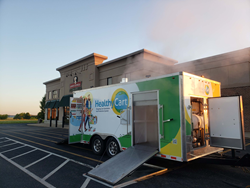
Healthy Cart Cleaning Equipment

“We just got to have it, it’s a plus plus everybody’s happy,”…”The customers are happy, I’m happy, it takes away a little of the labor for my people cause it’s supposed to last for 25-30 days. It’s a plus plus for everybody.” Joey Laureys, Groceries By Joe

Sanitizing cart handles miss larger problems associated with germ and bacteria growth on shopping carts and carry baskets surfaces. Invisible contaminants on shopping cart surfaces are a risk to users and continue to be a challenge for big box store sanitation operations. A University of Arizona study in 2012 demonstrated that of the 85 random carts tested for harmful germs and contaminants 51% detected E. coli; 72% coliform. Current in store solutions are labor intensive, and if not applied correctly, ineffective from providing the claimed sanitizing effects. The CDC recommends periodic washing and disinfecting of non porous, hard surfaces for a proper cleaning protocol. New shopping cart cleaning, disinfecting and protection equipment manufactured by Healthy Cart is providing a better way to wash and disinfect shopping carts while closing the disinfection gap between cleaning with antimicrobial protection.

As featured on ABC 57’s Made In Michiana: Grocery Cart Cleaning System That Keeps You Safe, Groceries by Joe owner Joe Laureys states when asked about the cart cleaning experience provided by the Healthy Cart service, “We just got to have it, it’s a plus plus everybody’s happy,”…”The customers are happy, I’m happy, it takes away a little of the labor for my people cause it’s supposed to last for 25-30 days. It’s a plus plus for everybody.”

Healthy Cart cleaning equipment, a product of Podell Environmental, is a mobile cart cleaning trailer that cleans, disinfects shopping carts and applies a 30+ day antimicrobial germ fighting inhibitor. The equipment is built into a mobile, fully enclosed wash trailer. It is designed for contractors to take from store to store to provide the cleaning and coating as a service. The mobile wash station can be described as a car wash for carts, a quick, efficient and consistent method to clean shopping carts processing over 140 carts an hour per machine. The cleaning and disinfecting wash solution is filtered and recycled creating an environmentally friendly, EPA compliant process for wastewater disposal. Healthy Cart has equipment operating across the country with plans for expansion.They have received interest from prospective equipment buyers from all over the US and Canada with potential buyers as far away as New Zealand and Kuwait.

George Podell, President of Podell Environmental explained the process this way, ”We think there is a huge opportunity to eliminate stress both on the consumer when they visit the grocery store or other retail locations while reducing the current hard and soft costs of dedicating people to the cart corral for sanitation operations on the retail management level. Our equipment not only cleans the whole cart but it effectively disinfects the cart as well. One of the main ingredients in our secret sauce is the cart protection between cleanings. This allows contractors to set up monthly cleaning contracts with store operators creating a new market opportunity for equipment owners.”

Share article on social media or email: