Category Archives: Health

What is new in the field of Health. Trending topics, and cutting edge research in the are of Health. Press Releases that give us updates on Health.

CureRate Releases A Guide To Surviving the Holidays with IBS


News Image

Eating, traveling, and celebrating are all important aspects of the holidays, but if you suffer from IBS (irritable bowel syndrome), you may find the holidays to be especially difficult.

CureRate has announced the release of their most recent guide: A Guide To Surviving the Holidays with IBS: Your Guide To IBS-Stress-Free Holidays. The guide breaks down how to modify your diet and lifestyle to avoid IBS flare ups this holiday season.

According to CureRate, “Eating, traveling, and celebrating are all important aspects of the holidays, but if you suffer from IBS (irritable bowel syndrome), you may find the holidays to be especially difficult. Being expected to consume mountains of food, often away from home, can sound like a recipe for disaster for anyone with IBS; fortunately, there are steps you can take to successfully navigate the holidays.”

The guide offers insight on how to balance food and fun when you have IBS.

To learn more about IBS lifestyle changes, view the article here.

About CureRate:

We know how scary it is to be told that you or a loved one must endure a lifelong illness. Information is scattered, community forums are overwhelming, and relief never truly comes. The unrelenting frustration of research, trial, and error can become even more more debilitating than the symptoms themselves. And that’s why we built CureRate. The first recommendation platform geared toward people who have chronic conditions. We sort through the noise, so you can focus on the specific, promising treatments that have given hope to others just like you. We cut through the chatter to highlight successes, sharing the wisdom and insight of others to prove that there is always hope. Because together, we have the knowledge, the experience, and the support we need to heal.

Share article on social media or email:

A Better Approach Than Real-World Shipping Tests


Gary Hutchinson and Daniel Littlefield webinar presenters

Globally recognized industry experts Gary Hutchinson and Daniel Littlefield presented the webinar on integrating transport simulation testing for environmental hazards into your filing strategy

We have used the transport simulation methodology and validation master plan strategy outlined in the webinar in more than 90 successful regulatory interactions since 2017,” said President Gary Hutchinson

Modality Solutions, a biopharmaceutical cold chain engineering firm, hosted a live webinar covering:

  • How accelerated sequential testing alone (e.g., ASTM, ISTA) is no longer acceptable by the FDA for drug product testing
  • Why real-world testing cannot test the worst-case edges of your operating space
  • How real-world testing in the post-COVID-19 world will be difficult, time-consuming, and expensive

The December 2, 2020 webinar was well received and attended by complex cold chain biopharmaceutical industry leaders. Due to the high volume of interest in the topic, Modality Solutions is providing free on-demand replays of the 45-minute presentation. Click here to access the transport simulation testing vs. real-world testing webinar.

Globally recognized industry experts Gary M. Hutchinson and Daniel J. Littlefield presented the webinar “Transport Simulation Testing for Your Therapy: A Better Approach Than Real-World Shipping Tests” in conjunction with Pharmaceutical Technology and Business Review Webinars.

Modality Solutions has access to the latest regulatory agency requirements for emerging new therapies and shares how to validate your biopharmaceutical cold chain with transport simulation successfully.

Four of the valuable webinar learning objectives include:

  • Integrating transport simulation testing for environmental hazards into your filing strategy
  • Understanding why ASTM and ISTA package testing is not acceptable for drug product testing
  • Learning the challenges of real-world testing and why it is less reliable than transport simulation
  • Discussing the challenges to real-world shipment testing in a post-COVID-19 transportation network

“Real-world testing cannot test the worst-case edges of your operating space,” said Modality Solutions President Gary Hutchinson. “No single (or multiple) real-world shipment can ever confirm testing for all the transportation hazards concurrently. We have used the transport simulation methodology and validation master plan strategy outlined in the webinar in more than 90 successful regulatory interactions since 2017.”

Modality Solutions’ unique Advantage Transport Simulation Laboratory™ can concurrently submit drug products to the following environmental conditions–temperature, relative humidity, light, shock, and vibration. This testing assures product physical integrity, purity, efficacy, quality, and safety. The lab integrates stability data on any drug product with its validation strategy and transport simulation methodology. The testing provides assurance, especially if the drug product is highly sensitive to the transportation network’s environmental hazards.

Business Review Webinars (BRW) is a thought leadership portal for business professionals in the pharmaceutical, healthcare, food & beverage, energy, packaging, supply chain, and technology industries. Its goal is to create a high-level discussion between industry thought leaders and business professionals who are actively facing the day-to-day challenges of their respective industries.

Click here to access the on-demand replay of Modality Solutions’ “Transport Simulation Testing for Your Therapy: A Better Approach Than Real-World Shipping Tests.”

About Modality Solutions, LLC

Founded in 2011, Modality Solutions, a leading biopharmaceutical cold chain validation engineering firm, specializes in integrating cold chain operations, developing transport validation strategies, supporting global regulatory applications, and global clinical trial operations. Modality Solutions’ team of engineers are experts at delivering cold chain thermal packaging design and qualification and conducting transport simulation testing with its unique Advantage Transport Simulation Laboratory™. As a 2019 and 2020 Inc. 5000 and Houston Business Journal Fast 100 company, its engineers combine the best practices of process validation, systems qualification, and risk assessment. Modality Solutions has earned the reputation of ensuring regulatory compliance, drug product quality, and patient safety. For more information, visit https://www.modality-solutions.com.

Share article on social media or email:

Village Health Partners Welcomes New Chief Operating Officer


With her leadership skills and expertise, I am confident that she will be an asset to our organization and to the patients we serve.

Suzanne Phan was named the Chief Operating Officer of Village Health Partners December 1.

Suzanne comes to Village Health Partners with extensive leadership and operations experience in the healthcare field. She has recently served as Vice President of Operations and Co-Ethics and Compliance Officer at Hospital Corporation of America – Reston Hospital Center and Vice President of Administration at Nutrition Management Services Company.

“Suzanne has a successful track record of helping organizations succeed,” said Jamison Albracht, President and physician at Village Health Partners. “With her leadership skills and expertise, I am confident that she will be an asset to our organization and to the patients we serve.”

Suzanne has diverse experience in business case development, project management, strategic planning, development of service lines and quality improvement.

About Village Health Partners:

Village Health Partners is an innovative and award-winning primary care practice serving North Texas residents. Established in 2007, it is one of the largest independently led practices in Texas and has multiple award-winning physicians. Village Health Partners was awarded “Practice of the Year” by America’s leading practice management journal, Physicians Practice, has been consecutively awarded “Best Doctors in Dallas” in the specialty of family medicine by D Magazine and has been recognized among the state’s “Best Family Doctors” by Texas Monthly. Village Health Partners is a member of Catalyst Health Network, a URAC accredited clinically integrated network of independent primary care physicians who are committed to high-quality patient care.

Share article on social media or email:

Eagle Telemedicine Announces New Two Appointments to Address Increased Demand for Inpatient Telemedicine


Great Plains Regional Director for Telemedicine Business Development

Steve Johnson, Regional Director, Business Development

Keeping patients closer to home is good for the hospital, patient, and community. Rural and community hospitals need patients to keep their doors open and provide their community with emergency and elective care. Access to telemedicine improves care in the emergency department and on patient floors.

Eagle Telemedicine announced today that Steve Johnson has joined the company as Regional Director of Business Development for the Great Plains Region and welcomes Scott Haynes as Program Manager to support nationwide telemedicine expansion.

These newly created new positions will help meet the growing need for telemedicine services due to the COVID-19 pandemic and broader acceptance of virtual care among hospitals and patients. The additional staff will support much-needed medical specialty services in rural communities in the Great Plains region, including Colorado, Kansas, Nebraska, and Utah as well as other states in the heart of the country.

“The rise in COVID cases has strained rural and Community Access Hospitals, which have long suffered from physician shortages,” said Dr. Talbot “Mac” McCormick, chief executive officer of Eagle Telemedicine. “Both Steve and Scott bring significant experience in healthcare, which will enable us to quickly set-up new telemedicine programs and deliver care to patients.”

While the company planned for growth in 2020 and added several new positions at the beginning of the year, the spread of COVID-19 intensified the need for and acceptance of telehealth solutions for both inpatient and outpatient care.

Virtual physicians offer two benefits to hospitals. First, doctors diagnosing and treating patients using a robot, videoconferencing, and an electronic stethoscope are not susceptible to catching or spreading coronavirus. Second, telemedicine programs offer underserved and rural hospitals, and their patients, access to specialists that are often not available in these communities.

“During the spring we received requests for Tele-ID [infectious disease], Tele-ICU, and TelePulmonology,” said Jason Povio, President and Chief Operating Officer at Eagle Telemedicine. “Now, we are responding to a continued need for COVID-related specialties as well as request for telecardiology, TeleNeurology, TeleNephrology, TeleStroke, and other specialties these hospitals desperately need.”

Steve Johnson brings a unique perspective to his position at Eagle. As a resident of a rural Kansas community, he has first-hand personal experience with having to travel for healthcare.

“I’ve had to pack up the family to get healthcare in a larger city,” said Johnson. “It’s a burden for the whole family and makes the situation much more stressful.”

When a patient is transferred to another hospital, the rural hospital will often lose that patient forever. The transferred patient often returns to that larger hospital for follow up care. Once the larger hospital has that connection, there will always be reasons why the patient needs to keep coming back.

“Keeping patients closer to home is good for the hospital, patient, and community. Rural and community hospitals need patients to keep their doors open and provide their community with emergency and elective care,” said Johnson. “Access to specialists, like TeleCardiologist, TeleNeurologists, and TelePulmonologist, improve care in the emergency department and on patient floors.”

With telemedicine, these patients can be promptly seen by a medical specialist, then receive the treatment they need right away, close to home. Virtual consults and on-call coverage also lower the cost of care by eliminating unnecessary and expensive patient transport to a larger hospital.

His decision to join Eagle was mission-driven: “I have to be passionate about my work,” said Johnson. “I want to spend my life making a difference, and Eagle is improving access to healthcare for patients and improving their outcomes. This is a company with high integrity and clear plans for expansion.”

Eagle Telemedicine works with hospitals to solve the most critical and costly problems associated with expanding patient access to specialists. The company uses data to help healthcare facilities decide which telemedicine specialists are most likely to improve patient outcomes and reduce costs.

“We act as problem-solvers in a hospital. If a facility is asking for a specific solution like weekend coverage for the ICU, we will ask about types of patients served by their ICU,” said Povio. “Which patients are they transferring? Do those patients have cardiac or neurological conditions? Using the hospital’s community needs assessment, we help the organization find the solution that will best meet the needs of their community now and in the future.”

While COVID sparked the interest in Tele-ICU coverage, most of the hospitals are interested in a long-term partner. Eagle provides its hospital partners with a small team of remote physicians, rather than using a large pool of doctors.

“We help them meet their immediate needs, but also the broader needs best suited for that facility,” said Johnson. “We can staff that facility with a small pod of specialists that meets all their needs, which is a big differentiator in keeping their patients close to home, instead of transferring them.”

Each Eagle physician receives training in ‘webside manner’—a style of communication that focuses on eye contact, inquiry, and explanation of the diagnosis and treatment prescribed. The telemedicine doctors use hand gestures, images, and nurse support to confirm that the patient understands.

“Our goal is to build trust and rapport between the on-site staff and TeleSpecialists,” said McCormick. “This improves communication and patient care coordination because the nursing staff and full-time physicians know our telemedicine providers on a personal level. If questions arise about a diagnosis or treatment, the hospital staff can pick up the phone and talk to a remote provide that they know and trust.”

Steve Johnson was an officer in the U.S. Army and has spent his entire post-military career working in the healthcare industry. He has worked in senior-level sales and business development for Fortune 500 companies and startups focused on medical devices, Electronic Medical Records (EMR), and health information technology solutions.

After the Army, he joined Johnson & Johnson, and over two decades, he rose in the ranks to Division Manager in Kansas City, KS, specializing in cardiology, electrophysiology, and medical device markets.

Johnson transitioned into EMR sales, joining Cerner’s Kansas City office in 2012. He also served as Regional Director for Futura Mobility, working as a trusted advisor on clinical and business information technology applications.

Eagle also welcomed Scott Haynes as Program Manager. Haynes has experience with the application of new healthcare technologies for the bulk of his career. Initially, he served as a Rehabilitation Engineer in developing workplace accommodations for people with disabilities.

Five years ago, he moved into telemedicine. “I saw opportunity for process improvement,” Haynes said. “We can achieve greater efficiency, improve patient care, and help relieve physician and nurse burnout. This is a wonderful time to work in telemedicine.”

Haynes earned his Master’s in Biomedical Engineering from the University of Virginia and his Bachelor’s in Mechanical Engineering from Purdue University. Scott brings specific operational and account management expertise, which Eagle Telemedicine needs to expedite the launch of telemedicine programs.

These two new positions will help bolster Eagle’s ability to serve rural and underserved urban communities, which have long had a difficult time attracting and retaining specialists.

“Often, specialists seek a high degree of colleague interaction,” said McCormick. “Healthcare is constantly evolving. Cardiology, infectious disease, and pulmonary medicine tend to experience a rapid change in practice, nuances in treatment and specialists want shared learning experiences.”

In a rural hospital, specialists are isolated. They are often the only local physician in their specialty. With an Eagle partnership, the on-site physician has that connection, so they tend to stay long-term in the community. Telemedicine coverage also protects these physicians from burnout, as they can work a regular shift without providing call coverage on nights and weekends.”

“An emergency Tele-ICU implementation was driven by concerns about COVID coverage,” said Povio. “The program supported the on-site ICU/Critical Care provider for several months. Until recently, none of the patients seen by our Tele-ICU providers were COVID patients.”

Eagle Telemedicine expects to expand its team further in 2021 to meet the needs of patients and hospitals across the nation, during and after the pandemic.

About Eagle Telemedicine

A leader in industry since 2008, Eagle Telemedicine now provides care at more than 185 hospitals in 24 states. Our providers perform approximately 20,000 annual inpatient encounters and 25,000 remote patient admissions each year. We offer access to 14 specialties, including cardiology, hospitalist medicine, infectious disease, neurology, psychiatry and pulmonology/critical care. We believe that telemedicine is the “great equalizer.” Eagle can help reduce transfers and solve nightshift challenges by covering everything from floor call to admissions. Eagle partners with hospitals of all sizes but focuses on facilities in rural areas with limited staffing resources and specialists are often not available. For more information, visit http://www.eagletelemedicine.com or follow us on LinkedIn at https://www.linkedin.com/company/eagle-telemedicine/

CBD Uses Throughout the Day


News Image

The article provides insight on incorporating CBD into one’s lifestyle. Daytime CBD routines are often used to reduce stress and anxiety, while nighttime CBD routines are often used to improve sleep.

Made By Hemp has announced the release of their most recent article: Morning to Night: CBD Uses Throughout The Day. The article breaks down CBD and how it is used differently in the morning and at night.

According to Made By Hemp, “CBD has been widely touted as an aid against inflammation and an aid in healing and pain relief. In fact, according to the medical experts, CBD also has shown great promise as a cardiovascular aid, an acne-deterring medicine, and even as a neuroprotective agent. In addition, those suffering from the severe ails of cancer have shown some benefit through the use of CBD as well as those fighting substance abuse problems.”

The article provides insight on incorporating CBD into one’s lifestyle. Daytime CBD routines are often used to reduce stress and anxiety, while nighttime CBD routines are often used to improve sleep.

To learn more about CBD use, view the article here.

About Made By Hemp:

Made By Hemp is a small, Michigan-based team and your trusted source of all things hemp. Founded by Jeff Gallagher in 2013, Made by Hemp is dedicated to providing you with quality products and the education you need to make informed choices.

These statements have not been evaluated by the food and drug adminstration (FDA). These products are not intended to diagnose, treat, cure or prevent any disease.

Share article on social media or email:

New Seniorly Sentiment Report Reveals Surprising Results About Seniors — And Inspires a Holiday Musical Show To Lift Spirits.


Today, Seniorly.com, the fastest growing online marketplace to find senior living and care services, announced the results of its first Seniorly Sentiment Report. This new monthly report surveys hundreds of older adults who are active Seniorly users, asking about their feelings toward housing, caregiving, physical health, mental health, and financial health.

Results from the December 2020 report revealed significant isolation and loneliness among older adults but also an undeniable resiliency—43% report feeling happy or content this holiday season and 80% of overall respondents are feeling mentally healthy. Other highlights from the survey include:

50% of seniors report feeling restless, worried, or lonely.

24% of seniors want more social interactions

54% have changed their plans to move into a senior living community due to the pandemic.

35% of seniors plan to spend the holidays alone.

The survey data reveal many insights into how living conditions and support from family and friends correlate to current happiness or feelings of discontent. This month’s report includes responses from hundreds of older adults who are actively searching for senior living options with nearly 70% of respondents over 70 years old. The full report, along with our top ten data takeaways, is available here.

“We started Seniorly to help more older adults find happiness and engagement in their communities,” said Arthur Bretschneider, Seniorly’s CEO and Co-founder. “This has been such a difficult year as this report highlights, so we wanted to do something special. We hope this virtual holiday event—that’s produced just for seniors and designed to reach them at home—will bring smiles and joy to many over the holiday season.”

The CurtainUp! Holiday Special is a variety show with holiday music, trivia, and games for viewers to follow along with from home. The lineup of heartwarming segments and upbeat and sentimental songs will bring holiday cheer to senior living communities nationwide. Hosted by Seniorly’s Emma Rodbro, Harrison Chad (Caroline, or Change) Sam Bolen (Midnight at the Never Get), Craig Cox (Blades of Glory), Chloe Joy Ivanson (Sunshine Songs), the Holiday special features performances by Tony Winner Laura Benanti, Ashley Loren (Moulin Rouge), Jason Tam (Be More Chill), Lauren Marcus (Be More Chill), Eric William Morris (King Kong), Darnell Abraham (Hamilton tour), and DeAundre Woods (Hamilton tour), and many more. The CurtainUp! Holiday Special is produced by Heredia Vision, a women-led digital production company founded during quarantine. The show is set to premiere on Seniorly’s Youtube Channel on December 18th at 4pm ET / 1pm PT.

About Seniorly

Seniorly helps families and older adults find the right senior living for their needs and budget. Combining the power of its advanced technology with the high-touch support of a national network of local advisors, Seniorly is modernizing senior living discovery. Through its online platform, Seniorly provides access to thousands of senior living communities, expert insights, and personalized recommendations based search preferences. Seniorly also has a growing marketplace of trusted companies, offering other services and products that are helpful to families at this stage of life. Founded in 2014, Seniorly currently supports over 3.5 million visitors every year on their senior living journey. Visit http://www.seniorly.com for more information.

About Heredia Vision

Heredia Vision is a women-led production company focused on empowering new voices and creating content for the digital space. Founded to create stories and opportunities with complex women, both on screen and off, the company makes space for women to lead and to be the driving force behind content creation, generates opportunities for growth and mentorship and fosters collective, community experiences for audiences.

Visit http://www.herediavision.com for more information.

Share article on social media or email:

Prevent Blindness Invites Public to Join “The Glaucoma Community” to Learn More, Become Empowered to Fight the “Sneak Thief of Sight”


As part of January’s National Glaucoma Awareness Month, Prevent Blindness invites the public to join “The Glaucoma Community.”

“The Glaucoma Community was designed to provide the public with multiple tools to help save sight from one of the most prevalent eye diseases in the world,” said Jeff Todd, president and CEO of Prevent Blindness.

Today, there are more than an estimated 3.7 million older adults in the United States with glaucoma, according to the report, “Future of Vision: Forecasting the Prevalence and Costs of Vision Problems.” In an effort to help save vision from glaucoma, Prevent Blindness, the nation’s oldest voluntary eye health organization, is joining with other leading vision and eye health groups in declaring January as National Glaucoma Awareness Month.

Glaucoma is an eye disease that causes loss of sight by damaging a part of the eye called the optic nerve. This nerve sends information from the eyes to the brain. When glaucoma damages the optic nerve, patches of vision may become lost, usually side vision (peripheral vision). Most sight loss from glaucoma is gradual, which is why it is often referred to as the “Sneak Thief of Sight.”

According to the National Eye Institute, women account for 61 percent of glaucoma cases. Additionally, black Americans age 40 and older are at the highest risk of developing glaucoma. By age 69, nearly six percent of black Americans have glaucoma, with the risk rising to nearly 12 percent after age 80. And, The Centers for Disease Control and Prevention states that because Hispanics and Latinos are the largest and fastest-growing minority group in the United States, by 2050, half of people living with glaucoma will be Hispanic or Latino.

To help educate the public on glaucoma, including risk factors, symptoms, treatment options and more, Prevent Blindness, in partnership with Responsum Health, has launched the new resource, “The Glaucoma Community.” This comprehensive resource, accessible online or through the mobile app, provides users with a variety of features including:


  • A personalized Newsfeed
  • A Community Chat function
  • Dedicated Facebook page at: https://www.facebook.com/glaucomacommunity
  • Glaucoma content in seven different languages
  • A Patient One-Sheet, which allows patients to easily collect, maintain, and print their key medical information in a secure format.
  • Access to extensive patient resources, including financial assistance programs and glaucoma support groups.

In addition to volunteers from Prevent Blindness, the Content Advisory Council for The Glaucoma Community includes representatives from the BrightFocus Foundation, National Medical Association (NMA) Ophthalmology, and The Glaucoma Foundation. The Glaucoma Community was made possible by a grant from The Allergan Foundation.

“The Glaucoma Community was designed to provide the public with multiple tools to help save sight from one of the most prevalent eye diseases in the world,” said Jeff Todd, president and CEO of Prevent Blindness. “As the New Year unfolds, we encourage everyone to make a strong commitment to their vision health by making an appointment with an eye doctor as soon as possible. By detecting and treating vision problems early, including glaucoma, we can help protect the precious gift of sight.”

For those in need of financial assistance, “The Glaucoma Program” from the American Academy of Ophthalmology’s EyeCare America, provides a glaucoma eye exam at no cost to those who are eligible and uninsured. For information on additional financial assistance programs in English or Spanish, including Medicare coverage, visit https://preventblindness.org/vision-care-financial-assistance-information/.

For more information on glaucoma, including factsheets (available in English or Spanish), and sharable infographics, visit preventblindness.org/glaucoma.

About Prevent Blindness

Founded in 1908, Prevent Blindness is the nation’s leading volunteer eye health and safety organization dedicated to fighting blindness and saving sight. Focused on promoting a continuum of vision care, Prevent Blindness touches the lives of millions of people each year through public and professional education, advocacy, certified vision screening and training, community and patient service programs and research. These services are made possible through the generous support of the American public. Together with a network of affiliates, Prevent Blindness is committed to eliminating preventable blindness in America. For more information, visit us at preventblindness.org, and follow us on Facebook, Twitter, Instagram and LinkedIn.

Share article on social media or email:

Is Amazon’s Expanding Push into Healthcare Anything for Health Systems to Worry About? – Industry Analysis by Loyale Healthcare


Consumer interest in exploring alternative healthcare delivery models has hit an all time high because of COVID-19. Patient choice is expanding to meet the opportunity.

Imagine an Amazon clinic opening a short distance from one or more of a health system’s hospitals or other care facilities. If you’re a healthcare industry leader, are you confident your consumers’ experiences would compare favorably with Amazon’s? – Kevin Fleming, CEO, Loyale Healthcare

Over the last few weeks, Amazon, the worldwide retail and web services giant, has made two big announcements about its expanding footprint in the healthcare industry. Most recently, Amazon Web Services (AWS) announced Amazon HealthLake, a HIPAA-eligible service for healthcare and life science organizations to “enable healthcare organizations to store, transform, and analyze all of their data in the cloud.” Not long before that, in mid-November, Amazon announced the introduction of Amazon Pharmacy, a “new store on Amazon (that) allows customers to complete an entire pharmacy transaction on their desktop or mobile device through the Amazon App.”

For healthcare providers, these two different healthcare initiatives; one business-to-business, the other business-to-consumer, appear to be benign industry developments, representing little or no competitive risk. The pharmacy business offers no direct competition (other than the provider’s own pharmacy business), and HealthLake could in fact be a boon for providers. HealthLake’s ability to “pull data from different locations, centralize it into one data ‘lake’ and structure it…to reduce the time it takes to transform data in the could from weeks to minutes,” could give health systems and hospitals with access to the insights they’ll need as they reconfigure their operating models for the hyper-competitive marketplace predicted by many industry pundits after the COVID-19 crisis is over.

But what might give providers pause is the fact that Amazon sees opportunity in healthcare and has begun the process of exploiting that opportunity. Amazon has built a $1.1 Trillion company by disrupting other sectors of the economy. Even the company’s traditional investments play into its digital-first approach to winning. Consider its 2017 acquisition of Whole Foods grocery stores for $13+ billion.

On the one-year anniversary of the acquisition, a Forbes article summed up the company’s motives, stating “Amazon bought Whole Foods not because it wanted to know how to operate grocery stores. Amazon bought Whole Foods so it could convert grocery consumers to online.” The article went on to explain that “In order to maintain its high stock price, Amazon has to grow its revenues. For that, it has to keep finding new products to sell. Because it’s so big, it’s not likely to sell so much more of what it already sells, it has to find new products to sell to consumers. When you think about what it might sell that it doesn’t already, a few market segments come to mind: health, banking and finance, cars, grocery and maybe some others.” And of course, every new industry Amazon chooses to pursue only advances the company’s never-ending quest to deepen relationships with consumers. They do this by tracking consumer behavior, then applying some of the planet’s most sophisticated analytics and artificial intelligence to ensure that their consumers’ experiences are second to none.

Amazon’s foray into healthcare isn’t new. In a CB Insights research report titled, Amazon in Healthcare: The E-Commerce Giant’s Strategy for a $3 Trillion Market, the authors point out that “Between 1999 and 2000, the company made an investment into Drugstore.com with plans to expand its e-commerce business into the pharmacy space. It eventually ran into the existing web of middlemen, regulators, and more, which brought its ambitions to a halt.” The report then goes on to describe the company’s nearly $1 billion purchase of online pharmacy PillPack and its joint healthcare venture with JP Morgan Chase and Berkshire Hathaway, Haven Healthcare.

The report observes that “(Amazon) is serious about entering healthcare, bringing with it a non-traditional business model, infrastructure in logistics & computing, and customer love.” Significantly, the report states that the company was exploring “creating clinics and primary care services specifically for Medicare beneficiaries,” and goes on to add that “A quick way for Amazon to distribute clinics would be to establish them in Whole Foods, where it already has a retail footprint.”

Amazon has already begun operating clinics for Amazon employees, announcing in September of 2019 the launch of Amazon Care, a virtual medical clinic for employees. And just last July, the company announced that it was launching neighborhood clinics for warehouse workers and their families, with plans to open 20 clinics in five cities as part of an initial pilot program and could establish more if 2021 if the program is successful.

We could devote hundreds of pages to exploring the breadth and depth of Amazon’s interest and potential in healthcare. But for our purposes today, we’re concentrating on two issues that should be of concern to any hospital or health system that could find itself in direct competition with Amazon or other consumer- centric technology company in the near future. These are 1) Amazon’s proven formula for success, leveraging incomparable capabilities in logistics and technology; and 2) the company’s customer-first mission.

Amazon’s founder, Jeff Bezos’ commitment to the customer experience is well documented. The world’s wealthiest man has been quoted stating that, “If we can arrange things in such a way that our interests are aligned with our customers, then in the long term that will work out really well for customers and it will work out really well for Amazon.” The accelerating success of Amazon provides compelling testimony to the man’s and the company’s sincere dedication to the mission of delivering exceptional consumer experiences.

If you’ve transacted business with Amazon, and it’s hard to imagine who hasn’t (particularly this year), you know that every single element of the customer’s experience is considered. If friction exists at any moment, at any touch point it’s identified, analyzed and steps are taken to remedy it. Now, imagine an Amazon clinic opening a short distance from one or more of a health system’s hospitals or other care facilities. If you’re a healthcare industry leader, are you confident your consumers’ experiences would compare favorably with Amazon’s?

As one might expect, most healthcare providers would feel confident about the quality of their clinical service. That’s because for decades hospitals’ missions were simply to deliver exceptional care and get paid for it by insurers (payers) and the government (Medicare, Medicaid). But as costs have soared and the payer mix has expanded to include patients themselves, most healthcare providers are finding they are ill-prepared for the transformation they must execute in order to remain relevant and competitive.

One area in traditional healthcare delivery stands out for its chronic systemic inefficiency. Patients’ financial experiences have frustrated and alienated customers for years. In fact, as many as half of American consumers have delayed or avoided getting needed medical care because of personal concerns about their ability to afford the expected out-of-pocket. When care is sought, consumers have reported widespread dissatisfaction with their billing and payment experiences.

We’ve written extensively about how the COVID-19 National Health Emergency has broken down the barriers that, before the pandemic, kept virtual care delivery (telehealth) bottled up – representing a tiny portion of a provider’s business and revenue. In COVID-19: Healthcare Consumerism’s Tipping Point, we pointed out that “Historically, patients have lacked the tools and information needed to fulfill their roles in the provider-payer-patient transaction, but big changes caused by the COVID-19 pandemic have finally set the stage for healthcare’s consumer era.”

In the article we cited research and expert opinion asserting consumers’ growing expectations and the expanding field of care delivery channels for them to choose from. We also shared five principles that health systems and hospitals should embrace now in order to deliver their patients the financial experiences they now expect – and will soon demand; 1) Keep it Simple, 2) Make it Familiar; 3) Be Convenient, 4) Keep it Short, and 5) Put Patients First. That’s what the Loyale patient financial engagement platform was conceived and engineered to do. And every day, we’re helping our clients take the critical transformative steps required to compete in the consumer-centered healthcare marketplace.

At Loyale, we’re counseling our clients to expect competition from Amazon, and possibly others. At the same time, we’re working with clients to ensure that the exceptional care they are known for is reflected in the financial dimension of the care experience. By committing to patient-first principles, our clients are finding that the good will they’ve built with their patients and communities gives them an enduring competitive advantage when they leverage the tools to place their patients (consumers) first. We’re proud to be an ally in this critically important endeavor.

Kevin Fleming is the CEO of Loyale Healthcare

About Loyale

Loyale Patient Financial Manager™ is a comprehensive patient financial engagement technology platform leveraging a suite of configurable solution components including predictive analytics, intelligent workflows, multiple patient financing vehicles, communications, payments, digital front doors and other key capabilities.

Loyale Healthcare is committed to a mission of turning patient responsibility into lasting loyalty for its healthcare provider customers. Based in Lafayette, California, Loyale and its leadership team bring 27 years of expertise delivering leading financial engagement solutions for complex business environments. Loyale currently serves approximately 12,000 healthcare providers across 48 states. Loyale is proud to have an enterprise-level strategic partnership with Parallon which includes the deployment of Loyale’s industry leading technology at all HCA hospitals and Physician Groups.

United Security Health and Casualty Insurance Company Expands the States Their Personal Accident Medical Insurance Is Offered to Include Oklahoma and Texas


United Security’s Personal Accident Medical Insurance is designed to cover medical and everyday living expenses incurred as a result of an accidental injury.

With a single, straightforward policy, United Security’s PAMI product offers extended protection to help with any unexpected costs while limiting the exposure of out-of-pocket expenses

United Security Health and Casualty Insurance Company (United Security) now offers their Personal Accident Medical Insurance (PAMI) in the states of Arkansas, Arizona, Illinois, Indiana, Missouri, Nebraska, Oklahoma and Texas. United Security’s PAMI is designed to cover medical and everyday living expenses incurred as a result of an accidental injury. Lisa Cordero, Chief Operating Officer, United Security, explained “With a single, straightforward policy, United Security’s PAMI product offers extended protection to help with any unexpected costs while limiting the exposure of out-of-pocket expenses.”

Following an accident, once the low $100 deductible is met, United Security provides the policyholder with the cash benefit. Cash benefits can be used to assist with emergency, future medical costs not covered under another medical plan, transportation to and from appointments, or anything else the insured may need during their recovery. United Security PAMI product can be a great stand-alone policy for individuals and families, or it can be a nice complement to any health insurance plan.

Personal Accident Medical Insurance Features:

  • Benefits available regardless of any other medical insurance
  • Guaranteed issue
  • Benefits paid directly to the insured
  • Helps offset out-of-pocket expenses from other insurance
  • Budget friendly premiums
  • Low $100 deductible
  • Up to 10,000 in benefits

Cordero concluded, “Accidents are an unfortunate, and uncontrollable part of life. Thankfully, with a United Security PAMI, we can help ensure that if an accident does arise, the financial impact is not as painful.”

Personal Accident Medical Insurance is issued on policy form series

AME-POL-TX-0420 and AME-POL-OK-0420, by United Security Health and Casualty Insurance Company. This product and its features may not be available in all states. Certain limitations and exclusions may apply, please refer to the policy for complete details. For more information regarding the United Security PAMI plan, consumers can visit the United Security website http://www.USHandC.com. Independent insurance agents that would like more information about United Security should contact the company’s marketing department at marketing@USHandC.com.

About United Security Health and Casualty Insurance Company (United Security): United Security is a regional insurer that has been in business since 1973, licensed to sell products in Arizona, Arkansas, Illinois, Indiana, Georgia, Missouri, Nebraska, Oklahoma and Texas. United Security specializes in providing individuals and families a variety of products and plan choices to meet their individual needs. United Security’s primary focus has been, and continues to be, providing quality products and excellent service to our policyholders. United Security’s product portfolio includes: Short Term Major Medical, Dental Plus Vision and Hearing, Cancer, Critical Illness, Accident Hospital Indemnity, Disability Income, Fixed Indemnity and Personal Auto products. United Security is headquartered in Bedford Park at 6640 S. Cicero Avenue, Bedford Park. 800-875-4422 or 708-475-6100, http://www.USHandC.com.

Share article on social media or email:

Abridge and Ribbon Health Partner to Simplify Medical Conversations and Follow-Up Care


News Image

Our vision is to bring context and understanding to every doctor’s visit so people can better follow through with their care plan. We’re proud to partner with Ribbon to better connect patients and clinicians and bridge the gap between medical advice and next steps of care.

Abridge, the new service helping more people understand the details of their medical care and follow through on clinicians’ advice, and Ribbon Health, a leading healthcare data platform delivering the most comprehensive information on doctors, insurance plans, and cost and quality of care, today announced a partnership to integrate powerful tools that help patients and clinicians stay on the same page regarding care plans. Together, the partnership aims to improve care coordination and ultimately improve patient outcomes.

The COVID-19 pandemic has added complexity and fragmentation to patient care. Many are choosing telehealth or virtual care options when available, and those who receive in-person care are often not able to bring along caregivers. In light of these shifting dynamics, patients and clinicians need supportive, adaptable solutions that knock down the barriers to act on recommended care.

“At a time when healthcare is more fragmented than ever, our vision is to bring context and understanding to every doctor’s visit so people can better follow through with their care plan,” said Dr. Shiv Rao, co-founder and CEO of Abridge. “We’re proud to partner with Ribbon to better connect patients and clinicians and bridge the gap between medical advice and next steps of care.”

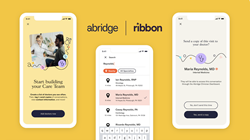
Abridge records, transcribes, and highlights key details of medical conversations so patients and caregivers can understand and follow through on the best next steps. With the addition of Ribbon’s integrated, comprehensive provider information, patients can easily add their clinicians in Abridge, see details about clinician specialties, locations, and contact information, and even find out which clinicians already use Abridge. This connection also enables patients to send a copy of their conversation summary to their clinician, ensuring everyone is on the same page.

“Coordinating care has become increasingly difficult for both patients and clinicians, and everyone is looking for simple tools that make navigating healthcare easier,” said Nate Maslak, co-founder and CEO of Ribbon. “Abridge improves patient-doctor communication and understanding, and we’re excited to power that connection with reliable data and infrastructure to make follow-up care and decisions more convenient and accessible to all.”

For more information about Abridge, please visit abridge.com. Abridge is available for iPhone and Android via the App Store and Google Play Store.

###

About Abridge

Abridge helps people stay on top of their health. Whether an appointment takes place in-person or at home via telemedicine, Abridge records the conversation and creates an interactive transcript highlighting the key medical points. By keeping patients, their families, and clinicians on the same page, Abridge brings more understanding and follow-through to every conversation. Visit http://www.abridge.com and @AbridgeHQ to get the latest information.

About Ribbon Health

Ribbon Health is a healthcare data platform making it easy for every health care decision to be high-quality, cost effective, and convenient by delivering the most comprehensive, real-time information on doctors, insurance plans, and cost and quality of care. Built to integrate seamlessly into existing workflows, Ribbon’s API layer provides payers, providers, and digital health solutions with the data and infrastructure needed to power accurate provider directories, simple referral management, and efficient care navigation – all in one platform. By bringing clarity and reliability to provider data, Ribbon Health is enabling a simpler, more connected healthcare experience. Headquartered in New York, Ribbon is backed by leading investors including Andreessen Horowitz, Y Combinator, BoxGroup, and several leading health care entrepreneurs. For more information, go to ribbonhealth.com or follow us on LinkedIn or Twitter @ribbonhealthAPI.

Share article on social media or email: