Category Archives: Science: Biology

Cutting edge research is happening on a daily basis in our modern world, Keep up to date with our Press Release services.

Macmillan Learning Acquires Full Rights to Three Biology Titles


The Life franchise is among the best-selling biology titles we published, reaching well over a million students, and we’re excited to continue investing in it.

Macmillan Learning, a privately-held, family-owned education publishing and technology company, announced the acquisition of three biology titles it previously had co-published with Oxford University Press (OUP): Life: The Science of Biology, Principles of Life, and A Student Handbook for Writing in Biology. The move affirms the company’s ongoing commitment to investing in educational content. Going forward, Macmillan Learning will handle all aspects of publication, including content development, marketing, sales, and customer service.

The three titles have previously been co-published by Macmillan Learning imprint W. H. Freeman along with Sinauer Associates, which became an OUP imprint in 2017. They round out the company’s portfolio of introductory biology titles, including the best-selling Biology: How Life Works. The acquisition offers customers a more unified experience as all of these franchises grow and change with new discoveries in the life sciences.

“Macmillan Learning has long been investing in scientific education titles that were written to pique students’ curiosity. The Life franchise is among the best-selling biology titles we published, reaching well over a million students, and we’re excited to continue investing in it,” said Daryl Fox, Senior Vice President, STEM.

David Clark, Managing Director of OUP’s Academic Division, said, “At OUP we have been honored to partner with the highly respected authors of Life: The Science of Biology, Principles of Life and A Student Handbook for Writing in Biology to create course materials that have left an indelible impression on thousands of biology students. I feel confident that, with this agreement, they are positioned for sustained impact and success in the future.”

The 12th edition of Life: The Science of Biology was published in 2020 and authored by a team of distinguished authors from prominent institutions including, among others, Stanford, University of Texas, and Oberlin. They include: David M. Hillis; Craig H. Heller; Sally D. Hacker; David W. Hall; Marta J. Laskowski; and David E. Sadava. The third edition of Principles of Life was published in 2019 and authored by David M. Hillis; Mary V. Price; Richard W. Hill; David W. Hall; Marta J. Laskowski.

A new edition of A Student Handbook for Writing in Biology written by Karen Knisely of Bucknell University will be published in 2021, reflecting the company’s ongoing investment in developing students’ communication skills across disciplines.

The titles are currently available on the Macmillan Learning student store.

About Macmillan Learning

Macmillan Learning is a privately-held, family-owned company that improves lives through learning. By linking research to learning practice, we develop pioneering products and learning materials for students that are highly effective and drive improved outcomes. Our engaging content is developed in partnership with the world’s best researchers, educators, administrators, and developers. To learn more, please visit macmillanlearning.com or join our Macmillan Community.

Share article on social media or email:

bio365 soil being tested on the International Space Station


OCTOBER 2, 2020 ACTUAL LAUNCH IMAGE, BIOALL ONBOARD; USED WITH PERMISSION ©STEVE RICE

OCTOBER 2, 2020 ACTUAL LAUNCH IMAGE, BIOALL ONBOARD

“This is the first time that both natural, unmodified Earth soils or engineered, biologically active, biochar-containing soils such as bio365’s have been brought to space.” — Morgan Irons, Cornell University, Soil and Crop Sciences

In an effort to test how productive different types of soil might be in space, a team of research partners, including bio365 LLC, a California-based company focusing on agricultural technology, is managing a first-of-its-kind experiment taking place on the International Space Station (ISS). The experiment has the potential to not only prove which types of growing media work best in unique environments, but also to provide vital scientific data on ways soil can improve crop health on Earth.

The project is led by Morgan Irons, a research fellow at Norfolk Institute in Virginia, Cornell University, where Ms. Irons is in the graduate program under the guidance of Johannes Lehman, PhD, a professor of soil and crop sciences; the Zwillenberg-Tietz Foundation in Germany; and bio365. The soil samples were launched via a Northrup-Grumman Antares rocket and Cygnus cargo module on October 2, 2020, and the samples will remain on the ISS until December 2020.

The samples consist of two topsoil samples taken from land in New York and Germany, plus a sample of bio365’s BIOALL, an engineered, biochar-based soil designed for Controlled Environment Agriculture. Each sample was specifically chosen based on its distinct properties. Irons explains that, “This is the first time that both natural, unmodified Earth soils and engineered, biologically active, biochar-containing soils, such as bio365’s, have been brought to space. The biochar that bio365 uses is especially interesting due to its long-term and efficient nutrient delivery, which has been an open research question for scientists performing space agriculture experiments. This experiment is a prime opportunity for space scientists to learn from Earth horticulturalists and soil scientists.”

Once the soil samples return to Earth, researchers in the U.S. and Germany will evaluate the samples, including comparing the soil to parallel samples that remained on Earth. The research team hopes that the contrast between the soils will provide valuable insight into how biological, physical, and chemical processes change over time and in different conditions. The results should offer new insight into how to further fine-tune soils for different growing conditions and differing crops, eventually leading to new techniques for growing higher-yielding, more nutritious foods on Earth and in space.

The team was brought together by Irons and Johannes Lehman, PhD and professor of soil and crop sciences at Cornell University. John Gaunt, PhD, the current chief science officer of bio365, is a former adjunct professor at Cornell and long-time scientific collaborator with Professor Lehman, who also sits on bio365’s scientific advisory board. The research project was approved by the Center for the Advancement of Science in Space (CASIS), which manages the International Space Station U.S. Lab, and by NASA, which is the overseeing agency responsible for all launches to the ISS.

Gaunt is particularly enthusiastic about the mission, saying, “This is a rare honor, and we are grateful for our small contribution to this important project. I especially want to congratulate the Norfolk Institute and Morgan Irons; it is difficult, time-consuming, and heavily scrutinized to get a project of this magnitude accepted by CASIS, the ISS, and approved by NASA. This project was chosen because of its ground-breaking nature as the first ever such soils studied in space, because of its dual implications for both future space living and practical implications here on Earth, and most of all because Morgan Irons and the Norfolk Institute are passionate and tireless advocates for advancing the science of human resilience. We are delighted they chose bio365 as the first and only commercially made, engineered soil to ever go into space.”

If humans are to live successfully on other planets in the future, even in enclosed bases, they’ll need the ability to grow their own food. That takes healthy soil which provides the right amount of nutrients and drainage for the crops in question. However, the effects of being in space, different gravity, and different radiation exposure, among other issues, could affect soil in unknown ways. It’s the goal of this project to start identifying which soil types might be better choices for interplanetary agriculture and to see how those results might change how we manage crops here on Earth.

Olivia Holzhaus, of the Program Science Office of the International Space Station, elaborates, “Soil health is inextricably linked to agricultural health and is crucial to producing nutritious food that promotes environmental and human health on Earth and in space. Recent shifts in soil management towards more sustainable practices promote the use of healthy living soils: those in which soil microbes and fauna actively participate to increase soil health. Such agricultural practices have been shown to reduce input costs, increase system productivity, and increase carbon sequestration in the soil. Obtaining knowledge that improves the efficiency and resiliency of soil is considered necessary for deploying such technologies to enable space exploration and enhance agricultural health on Earth.”

bio365 Chief Executive Officer Michael Klein is enthusiastic about the chance to participate in such an essential study. “Though bio365 already makes a line of proven, high-performing soils, we are grateful for this unique opportunity to collaborate with some of the best scientific minds, working together towards our goal of producing organic indoor crops sustainable for our world and worlds to come,” he says.

bio365 soils have received endorsements from the most prestigious commercial-scale controlled environment cultivators growing food and medicine across the United States, supplying soil to some of the largest and best-known independent and multi-state operators (MSOs).

Additional information about the experiment can be found on NASA’s Website here.

If you are interested in learning more about bio365, visit our website here.

Contact Information:

Company: bio365

Contact Person: Chris Moralle

Email: Chris.moralle@bio365.com

Location : Ithaca NY, USA

Website:https://www.bio365.com/

Share article on social media or email:

Applications Open for the National Foundation for Cancer Research’s Salisbury Award Competition for Entrepreneurial Translational Cancer Research


The National Foundation for Cancer Research (NFCR) is accepting applications through February 28, 2021, from academic laboratories and very early stage start-up companies for its third Salisbury Award Competition for Entrepreneurial Translational Cancer Research. The Salisbury Award Competition encourages, promotes and supports innovative scientists translating their discoveries into technologies that can improve the lives of cancer patients.

The program was established in 2019 and is named after the founding Salisbury family, whose shared vision and legacy has defined NFCR’s mission and continues to guide the organization’s commitment to funding “high-risk, high-impact and high-reward” cancer research. The Salisbury Award Competition is designed to identify and promote the development of highly promising therapeutic, diagnostic and preventive technologies made in the lab to be commercialized, with the ultimate goal of benefiting cancer patients.

Applications will be reviewed by a selection committee comprised of world-class cancer research, oncology and biomedical industry professionals. Finalists for the event will make pitch presentations in spring 2021 to a judging committee consisting of prominent cancer research scientists, clinicians, early-stage investors and business leaders. Top projects will be selected and announced based on their assessed feasibility, novelty and cancer patient impact.

Competitors will benefit from increased visibility and insightful feedback from the key opinion leaders comprising the judging committee. First, second and third place finishers will receive prize checks of $5,000, $3,000 and $2,000, respectively. They will also have access to NFCR’s extensive translational cancer research network in the U.S. and around the world.

Additionally, the top-ranked technologies will be introduced to the AIM-HI Accelerator Fund, which was spun out of NFCR in 2019 and is focused on catalyzing company formation with seed investment for early stage oncology companies.

“The Salisbury Award Competition is a unique platform, energizing and elevating translational-stage research projects that are still well under development—and, therefore, risky—yet that hold promise as potentially groundbreaking technologies for cancer patients and their families,” said National Foundation for Cancer Research President and CEO Sujuan Ba, Ph.D. “Supporting such initiatives has long differentiated NFCR within the cancer research field.”

Learn more about the spring 2021 Salisbury Award Competition and apply before February 28 at https://www.nfcr.org/salisbury-award.

About the National Foundation for Cancer Research:

The National Foundation for Cancer Research (NFCR) is a 501(c)(3) non-profit organization that provides scientists in the lab the funding they need to make and apply game-changing discoveries in cancer treatments, detection, prevention and, ultimately, a cure. NFCR has distinguished itself by emphasizing long-term, transformative research often overlooked by other major funding sources and/or deemed too risky. Since its establishment in 1973, NFCR has provided more than $385 million for cancer research and public education. For more information, visit https://www.nfcr.org.

###

Share article on social media or email:
JAIN Irrigation Automatic Scheduling Wins Irrigation Association’s 2020 People’s Choice Award


“We’re incredibly honored by this recognition of Jain Unity from our peers,” said Aric Olson, President of Jain Irrigation, Inc.

Jain Irrigation, Inc., the world leader in irrigation technology, today announced that Jain Unity, its patented automatic irrigation scheduling software and environmental services platform, has won the Irrigation Association’s 2020 People’s Choice Award in the Specialty Landscape Irrigation category of the New Product Contest. The contest, which is usually held during the annual Irrigation Show and Education Week was hosted online by the IA this year due to the pandemic. The People’s Choice award was selected by those viewing the entries online and recognizes the favorite products released in the past 12 months based on innovation, design quality, increased water/resource-use efficiency, ease of use and product life expectancy.

Unity tracks the real-time state of moisture in a plant’s root zone to calculate and then activate a smart controller when best and how-to water. It also leverages predictive modeling of environmental changes in the future, such as forecast rainfall, to reduce the running of irrigation systems for refilling root zones and balancing nutrient loss to maintain peak plant health.

“We’re incredibly honored by this recognition of Jain Unity from our peers,” said Aric Olson, President of Jain Irrigation, Inc., “It acknowledges the importance of utilizing forecast weather data that increases precision in water management, and ultimately, conservation of freshwater use for landscaping. Unity has set a new bar in irrigation technology by using predictive analytics to save more water than the prior generations of weather-based irrigation controllers.”        

Unity connects to smart irrigation controllers on site over 3G/4G/5G wireless networks while giving users remote access to those controllers from anywhere on their computer or smartphone. Unity automatically sends users a weekly notification that shows the amount of ET (evapotranspiration) moisture loss and replenishment by rain and/or running the irrigation system.

ABOUT JAIN IRRIGATION

Jain is a fully integrated global food/plant production company recognized by Harvard Business to be one of five global sustainability champions and the G-20 for lifting people out of poverty. Our irrigation manufacturing capabilities include everything from behind the pump to the flush valve at the end of the lateral and everything in between including drip irrigation. We lead the industry in manufacturing technology, owning both our extrusion and mold manufacturing equipment providers. Jain leads plant science research globally across a variety of food crops and is staffed with some of the world’s leading research scientists. With the Gandhi Library, Jain now houses the prominent collection of the world’s best plant science knowledge in a single facility. Our agronomic knowledge is integrated from our world-class tissue culture operations through our food processing businesses. We research, educate, advance, manufacture, finance, propagate plants, and purchase produce for processing all to fulfill the Jain mission, “leave this world better than you found it.”

Share article on social media or email:
Carterra® Announces the Appointment of Joseph D. Keegan, PhD as Executive Chairman of the Board of Directors


Carterra LSA Instrument

I look forward to working alongside my fellow board members and company leadership to bring the world’s highest throughput, lowest sample consumption and most multiplexed label-free biosensor platform to every corner of the globe.

Carterra® Inc., the world leader in high-throughput antibody screening and characterization, has announced that Joseph D. Keegan, PhD has been appointed as Executive Chairman of the Board of Directors.

Dr. Keegan has been a member of Carterra’s board for the last five years and has over 30 years of experience leading public and private life science platform companies. As CEO of ForteBio, Inc., he established product development and commercial strategies that resulted in its rapid growth and acquisition by Pall Corporation. During his nine-year tenure as CEO of Molecular Devices Corporation (MDC), he grew the company’s revenues through internal growth and acquisitions. In early 2007, he oversaw the acquisition of MDC by MDS Corporation for $615M.

“We are pleased to welcome Dr. Joe Keegan as Executive Chairman at this exciting time in the growth of the company,” said Josh Eckman, Carterra’s Chief Executive Officer. “Our flagship platform, the Carterra LSA, is disrupting the traditional antibody discovery workflow and playing a key role in speeding the development of biotherapeutics for a variety of diseases, including COVID-19. Dr. Keegan’s leadership experience in analytical instrumentation will be significant to our continued growth and success.”

Dr. Keegan holds a B.A. in Chemistry from Boston University and a Ph.D. in Physical Chemistry from Stanford University. He currently serves on a number of Boards of Directors, including those of Bio-Techne and Interpace Biosciences. Dr. Keegan’s proven experience with building innovative life science companies will help guide Carterra as it expands its unique protein and antibody characterization platform globally with additional products, assays, and analytical capabilities.

“I am excited about assuming the role of Executive Chairman at Carterra,” stated Dr. Keegan. “I look forward to working alongside my fellow board members and company leadership to bring the world’s highest throughput, lowest sample consumption and most multiplexed label-free biosensor platform to every corner of the globe.”

About Carterra, Inc.

Carterra® is the leading provider of high throughput technologies designed to accelerate and improve the discovery of novel therapeutic candidates. Carterra’s LSA™ instrument, software, and consumables for monoclonal antibody (mAb) characterization deliver up to 100 times the throughput of existing platforms in 10% of the time while using only 1% of the sample required by other systems. The LSA combines patented microfluidics technology with real-time high throughput Surface Plasmon Resonance (HT-SPR) and industry-leading data analysis and visualization software to revolutionize mAb screening. Carterra, Inc. is based in Salt Lake City, Utah, and has Customer Experience Centers in San Francisco, Salt Lake City, Boston, and Munich, Germany. For additional information, please visit http://www.carterra-bio.com.

Share article on social media or email:

Maximizing Biorepositories for Research & Drug Discovery, Upcoming Webinar Hosted by Xtalks


Maximizing utility and sustainability are critical for the long-term success of biorepositories and biobanks.

Genuity Science is bringing together a distinguished panel of experts from academia, research and industry to discuss opportunities and challenges facing biorepositories and biobanks around the world seeking to maximize their resources for research and drug discovery. Whether the repository contains a small collection of samples or is a large-scale national or international repository, biobanking will continue to play a key role in accelerating the discovery and development of new drugs, as these efforts require access to a larger array of biological samples. At the same time, biobanks face a variety of challenges in meeting the different interests and unique needs of their collaborators and partners in order to support a growing number of research studies. Maximizing utility and sustainability are critical for the long-term success of biorepositories and biobanks.

This webinar will explore the enormous innovative potential for biobanks and biorepositories to support translational research using a variety of bio-sample types (tissue samples, tumor cells, DNA, RNA, blood samples) collected from population-based and/or disease-specific groups of individuals.

Join Professor Stephen Sawcer, University of Cambridge, Dept. of Clinical Neurosciences; Samantha Hutten, Staff Scientist, Michael J Fox Foundation for Parkinson’s Disease Research (MJFF); Gordon R. Bernard, MD, Executive Vice President for Research and Chief Research Officer, Vanderbilt University Medical Center (VUMC), and David Kavanagh, PhD, Director of Clinical Partnerships, Genuity Science in a live webinar on Tuesday, December 15, 2020 at 10am EST (3pm GMT/UK).

For more information, or to register for this event, visit Maximizing Biorepositories for Research & Drug Discovery.

ABOUT XTALKS

Xtalks, powered by Honeycomb Worldwide Inc., is a leading provider of educational webinars to the global life science, food and medical device community. Every year, thousands of industry practitioners (from life science, food and medical device companies, private & academic research institutions, healthcare centers, etc.) turn to Xtalks for access to quality content. Xtalks helps Life Science professionals stay current with industry developments, trends and regulations. Xtalks webinars also provide perspectives on key issues from top industry thought leaders and service providers.

To learn more about Xtalks visit http://xtalks.com

For information about hosting a webinar visit http://xtalks.com/why-host-a-webinar/

Share article on social media or email:

VoluMetrix Wins Annual BioPitch Competition at BioFlorida Conference 2020


VoluMetrix, a Nashville-based company dedicated to creating a new wave of solutions for vital monitoring to enhance well-being, today announced that it has won BioFlorida’s 2020 BioPitch competition. BioPitch takes place at the BioFlorida Annual Conference and is an annual competition for seed and early stage life science companies.

VoluMetrix is developing a novel form of vital monitoring, Non-Invasive Venous Waveform Analysis (NIVA), for a wide range of healthcare applications, with potential near-term clinical applications that include vital monitoring for heart failure and pulmonary disease.

As part of the competition, 12 semi-finalists pitched to a closed-door panel of judges. Three finalists were then selected to present a live pitch at BioPitch, held on October 28. VoluMetrix was announced the winner, receiving $10,000 in prize capital.

“Our BioPitch competition provides the opportunity for some of the most innovative companies currently seeking seed and early-stage investment to pitch to life science investors,” said Nancy K. Bryan, President & CEO of BioFlorida. “We’re excited about the unique VoluMetrix technology with its potential to enhance our ability to monitor heart failure patients’ volume status.”

Non-Invasive Venous Waveform Analysis (NIVA) technology represents a major paradigm shift from existing vital monitoring technology. NIVA optimizes hemodynamic assessment in three key ways: signal capture (using a non-invasive wrist sensor), signal deconstruction (mapping individual amplitudes within a patient’s waveform), and signal decoding (via a proprietary NIVA Score that corresponds to industry-standard pulmonary capillary wedge pressure, PCWP).

“Given the caliber of our fellow nominees, we’re honored to be chosen as this year’s BioPitch winner,” said Kyle Hocking, Ph.D., President & CEO, VoluMetrix. “We believe that our technology has the potential to empower healthcare providers and their patients in many care areas, and we look forward to announcing additional milestones as we develop NIVA for targeted clinical applications.”

The first anticipated clinical application of NIVA will be NIVAʜғ for venous waveform monitoring in heart failure patients. NIVAʜғ is currently in Verification and Validation, with submission to the FDA for clearance via the de novo pathway expected in Q1 2021. NIVA is also being investigated for venous waveform monitoring pulmonary function in patients suffering from pulmonary disease (including COVID-19). Future potential applications include pediatric care, kidney failure, trauma, sepsis, and mental and consumer health.

To date, NIVA technology has been studied for multiple potential clinical applications, including for hemodynamic-guided heart failure management; noninvasive assessment of congestion in spontaneously breathing patients; detection of early blood loss that may be useful in early triage and perioperative management; volume directed dialysis to prevent intradialytic hypotension; and measuring intravascular volume changes for children undergoing surgery.

What is the Venous Waveform?

The venous waveform is an energy-based signal generated by heart and respiratory activity that reflects numerous physiologic conditions, including pulse and respiratory rate, as well as intravascular and extravascular dynamics.

About VoluMetrix

VoluMetrix is a Nashville-based company, closely aligned with Vanderbilt University in Nashville, TN and a member of the Mayo Clinic Innovation Exchange in Jacksonville, FL, that is dedicated to creating a new wave of solutions for vital monitoring to enhance well-being. As pioneers of non-invasive venous waveform technology, we are partnering closely with patients and practitioners to develop the pathway towards the optimal implementation and utilization of our technology, from hospital to home.

The NIVA technology is investigational and is not available for sale in the United States.

For more information, please visit our website at https://www.volumetrix.com/ or Linkedin at https://linkedin.com/company/volumetrix.

About BioFlorida

BioFlorida is the voice of Florida’s life science industry, representing 6,700 establishments and research organizations in the biopharmaceutical, medical technology, and bioagriculture sectors that collectively employ 94,000 Floridians. BioFlorida’s member driven initiatives provide a strong business climate for the advancement of innovative products and technology that improve lives and promote economic benefits to the state. Learn more by visiting http://www.bioflorida.com.

Share article on social media or email:

Sentien Biotechnologies Announces First Subject Dosed in Phase 1/2 Trial of Ex Vivo MSC Therapy for the Treatment of Severe COVID-19


News Image

Sentien Biotechnologies, Inc., a clinical-stage biotechnology company developing novel approaches to cell therapy, today announced that the first subject has been enrolled in its Phase 1/2 study of SBI-101 for the treatment of severe COVID-19 at the University of New Mexico (UNM) Hospital. SBI-101, Sentien’s innovative cell-based therapy, is being evaluated in COVID-19 patients suffering from both acute respiratory distress syndrome (ARDS) and acute kidney injury (AKI) requiring renal replacement therapy (RRT).

“We are excited to have enrolled the first subject in Sentien’s study of SBI-101 for the treatment of severe COVID-19,” said Christos Argyropoulos, MD, Chief of Nephrology at UNM Hospital. “Patients with severe COVID-19 still have few therapeutic options; we are pleased to partner with Sentien to evaluate SBI-101, an investigational therapy which has the potential to significantly lessen the severity of this challenging disease.”

J. Pedro Teixeira, MD, principal investigator for the study at UNM, added, “The scientific rationale for studying SBI-101’s effect on COVID-19 is compelling. We are learning more and more that AKI is a systemic disease. COVID-19, especially in its most severe cases, is also very much a systemic disease. SBI-101 offers a cutting-edge systemic therapeutic approach to patients with AKI and COVID-19.”

SBI-101 is a combination product that integrates allogeneic mesenchymal stromal cells (MSCs) within an extracorporeal, blood-contacting device. MSCs are a unique source of therapeutic secreted factors that modulate the immune-mediated inflammatory response to acute organ injury. By keeping the MSCs confined within a blood-contacting device, SBI-101 enables controlled, dynamic, and sustained delivery of MSC-secreted factors to the patient’s blood, without the need for direct injection of the MSCs themselves. SBI-101 integrates into a standard blood circuit such as used with renal replacement therapy, thereby providing patients with both standard-of-care and MSC-mediated blood conditioning in a single session.

“Enrolling the first subject in this COVID-19 study is an important milestone for Sentien,” said Sentien Chief Medical Officer, Allen R. Nissenson, MD. “SBI-101 is designed to restore balance to a dysregulated immune system. If SBI-101 can calm the hyperinflammatory cytokine storm associated with severe COVID-19, its therapeutic impact could be significant.”

The multi-center trial is a randomized, controlled, ascending dose Phase 1/2 study in patients with COVID-19 requiring RRT. The primary objective of the trial is to evaluate the safety and tolerability of SBI-101; endpoints for efficacy and pharmacodynamic responses to SBI-101 therapy will also be evaluated.

Please visit https://clinicaltrials.gov/ct2/show/NCT04445220 for more information about the study.

About Sentien Biotechnologies

Sentien Biotechnologies, Inc. is a privately-held, clinical-stage company developing novel ex-vivo cell therapy applications to treat conditions caused by systemic, immune-mediated inflammation. Sentien’s lead product, SBI-101, integrates allogeneic mesenchymal stromal cells (MSCs) within an extracorporeal, hollow-fiber device. By immobilizing MSCs within a blood-contacting device, SBI-101 enables controlled, dynamic, and sustained delivery of MSC-secreted factors to the patient’s blood, without the need for direct injection of the MSCs themselves.

SBI-101 has been evaluated in a Phase 1b/2a study in subjects with dialysis-requiring acute kidney injury (AKI-D). An initial readout from the study provides preliminary evidence of anti-inflammatory and wound healing effects consistent with the SBI-101 therapeutic hypothesis. Building on this data, SBI-101 is being evaluated in COVID-19 patients suffering from severe systemic inflammation.

Sentien’s technology can be applied to additional systemic inflammatory indications in both acute and chronic diseases, focusing on complex conditions where single-factor agents have not been effective.

For more information, please visit http://www.sentienbiotech.com.

Share article on social media or email:

Microbial Discovery Group Raises the Bar in Wastewater Treatment for Large Systems and Lagoons


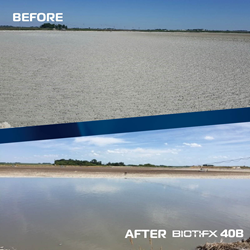
Before and after image of a lagoon being treated with Biotifx 40B.

After treatment with Biotifx 40B, this lagoon experienced a 60% FOG cap reduction.

It’s the strongest, ready-to-use bioaugmentation product that exists today.

Microbial Discovery Group (MDG), a leading Bacillus fermentation company, announced the newest addition to their Biotifx® wastewater treatment line – 40B Water Soluble Packets.

The Biotifx 40B Water Soluble Packet is a highly concentrated, microbial treatment for lagoons and other large wastewater systems. The powder is pre-measured and the packaging dissolves in water, making it easy for operators to apply.

Effective within a variety of wastewater applications, the Biotifx 40B Water Soluble Packet alleviates challenges associated with sludge, fats, oils, grease (FOG), odor and hydrogen sulfide (H2S).

“These packets are 10 times the strength of MDG’s standard treatments and are 10-40 times the strength of some of our competitors,” said Sona Son, Director of Research and Development.

The product is formulated with MDG’s Biotifx blend of bacterial strains that are scientifically selected for their ability to degrade a broad range of organic material. It is enhanced with the addition of a proprietary blend of micronutrients and wastewater biostimulants to heighten performance of the microorganisms. “There’s nothing like it on the market. It’s the strongest, ready-to-use bioaugmentation product that exists today,” says Mike King, President.

Relative to competing chemical and microbial products, Biotifx 40B Water Soluble Packets save costs by reducing labor of application, waste (pails), storage and inventory needs, dosing equipment and maintenance and shipping.

Ideal for treating systems in:

  • Large Municipalities
  • Food and Beverage Manufacturing
  • Pulp and Paper Manufacturing
  • Refineries and Chemical Manufacturing

In addition to the product, Biotifx distributors receive a new level of program support. This includes classroom training, ongoing access to technical service partners (including on-site), application guides and more to help their customers easily resolve wastewater issues.

For more information on the new Biotifx 40B Water Soluble Packets, please visit: https://www.mdgbio.com/40B/

About Microbial Discovery Group

Microbial Discovery Group is a Bacillus fermentation company focused on the commercialization of microbials for wastewater, bioremediation, aquaculture, consumer and institutional markets while additionally partnering with customers to fulfill their custom fermentation needs. MDG refines and delivers products and ideas by applying Real Science to a Trusted Process, yielding Proven Success. For more information on Microbial Discovery Group, visit http://www.mdgbio.com.

You can also follow us on social media to stay up to date on the latest industry news:

LinkedIn: https://www.linkedin.com/company/microbial-discovery-group

Facebook: https://www.facebook.com/MicrobialDiscoveryGroup/

Twitter: https://twitter.com/MDG_bio

Share article on social media or email:



Laboratory Analysis of the ePlex® Blood Culture Identification Panels for Timelier Diagnosis of Gram-Negative and Gram-Positive Bacteremia, Webinar Hosted by Xtalks


The microbiology laboratory can benefit from sample-to-answer multiplex systems to streamline workflows at the blood culture bench and provide more rapid information to the clinical team managing patients.

Conventional microbiology has been the backbone for diagnosing bacteremia, yet in the past decade, new technologies have emerged. Molecular techniques are now an important tool in the clinical microbiology laboratory to provide organism and resistance-mechanism identification quickly using rapid multiplex panels. These panels can be used directly on positive blood cultures to deliver information to clinicians for timelier management of patients with bloodstream infections due to bacterial and fungal pathogens.

The microbiology laboratory can benefit from sample-to-answer multiplex systems to streamline workflows at the blood culture bench and provide more rapid information to the clinical team managing patients. Members of the clinical team can utilize faster molecular identification results delivered by the laboratory to properly provide care and therapeutic management for each patient, instead of waiting for traditional culture and antimicrobial susceptibility results, which can take more than 24-48 hours.

In this webinar, the audience will hear a microbiology laboratory director and an infectious diseases physician from a tertiary care facility describe their experience testing positive blood cultures from the clinical microbiology laboratory on the ePlex Blood Culture Identification Gram-Negative and Gram-Positive Panels.

Join experts from The University of Alabama at Birmingham, Sixto M. Leal Jr., MD, PhD, Assistant Professor, Director, Clinical Microbiology, Fungal Reference Laboratory, Department of Pathology Division of Laboratory Medicine; and Todd McCarty, MD, Assistant Professor, Division of Infectious Diseases, Department of Medicine, for the live webinar on Wednesday, December 9, 2020 at 3pm EST (12pm PST).

For more information, or to register for this event, visit Laboratory Analysis of the ePlex Blood Culture Identification Panels for Timelier Diagnosis of Gram-Negative and Gram-Positive Bacteremia.

ABOUT XTALKS

Xtalks, powered by Honeycomb Worldwide Inc., is a leading provider of educational webinars to the global life science, food and medical device community. Every year thousands of industry practitioners (from life science, food and medical device companies, private & academic research institutions, healthcare centers, etc.) turn to Xtalks for access to quality content. Xtalks helps Life Science professionals stay current with industry developments, trends and regulations. Xtalks webinars also provide perspectives on key issues from top industry thought leaders and service providers.

To learn more about Xtalks visit http://xtalks.com

For information about hosting a webinar visit http://xtalks.com/why-host-a-webinar/

Share article on social media or email: