
Category Archives: Science: Biology

Cutting edge research is happening on a daily basis in our modern world, Keep up to date with our Press Release services.

A Life Sciences Conversion and Innovation Center Coming to Frederick, Maryland


News Image

Paul Grayson of BGV explained “… We are excited at the opportunity to support Frederick’s strong biotech community, which includes some of the most advanced biomedical research labs in the world

Beckham Gumbin Ventures (BGV), a commercial real estate investor and developer, is beginning construction on brand new R&D laboratory spec suites and amenities at Ballenger Bio (321 Ballenger Center Drive) in Frederick, Maryland. Ballenger Bio will offer several 3,000 to 7,000 SF R&D laboratory spec suites, with the ability to combine up to 37,000 SF of contiguous space on a single floor. Building such spec labs will allow for growing biotech companies to focus on their business as opposed to construction costs and timelines.

The life sciences industry in Suburban Maryland remains robust with a vacancy rate of less than 4%. Many smaller and early stage life sciences companies have nowhere to plant their flag considering the high demand and low supply of real estate to accommodate their specialized needs. This is especially true in Frederick County, where move-in ready BSL-2 lab space is extremely limited.

BGV, an experienced life sciences developer who recently converted a 285,000 SF complex in Rockville, Maryland, recognized the growing needs of life science companies in Frederick. Paul Grayson of BGV explained, “While there are other developers bringing a speed to market concept for larger biotechnology manufacturing needs, Ballenger Bio will be the solution for the smaller and mid-sized, R&D bio and chemistry labs that are needed in the market. We are excited at the opportunity to support Frederick’s strong biotech community, which includes some of the most advanced biomedical research labs in the world.”

The City of Frederick Mayor Michael O’Connor shared, “The Frederick region is now one of the largest clusters of life science companies in the nation. By providing speculative laboratory space in Frederick, Ballenger Bio will expand opportunities for companies to grow beside world renowned public research facilities like Fort Detrick and the Frederick National Laboratory for Cancer Research and join our 80 plus biotech companies in Frederick. The City appreciates BGV’s investment in Ballenger Bio and we look forward to working with these new ventures in Frederick!”

The City of Frederick’s Department of Economic Development works closely with companies considering new operations in Frederick and provides connectivity to resources and programs. Director of Economic Development, Richard Griffin stated, “The life science ecosystem here has garnered much attention due to Frederick’s quality of life and highly educated workforce. Amenities such as a hip and historic downtown, a thriving arts and entertainment scene, and 80+ state, county and municipal parks help to position Frederick as a great place to live and work. We look forward to welcoming future companies to join our nearly 3,700 businesses within the City.”

BGV has hired Cushman & Wakefield to spearhead its leasing efforts and plans to deliver these labs by early 2022.

About Beckham Gumbin Ventures:

Beckham Gumbin Ventures, LLC (BGV) is a commercial real estate investment and development company that pursues real estate investments primarily in the greater Washington, DC and Phoenix, AZ metropolitan areas. With more than 75 years in combined experience, the principals of BGV have been active investors, owners, and developers of properties throughout North America. The BGV team’s experience spans nearly all commercial real estate property types and all levels of the capital structure.

About Cushman & Wakefield:

Cushman & Wakefield (NYSE: CWK) is a leading global real estate services firm that delivers exceptional value for real estate occupiers and owners. Cushman & Wakefield is among the largest real estate services firms with approximately 51,000 employees in 400 offices and 70 countries. In 2018, the firm had revenue of $8.2 billion across core services of property, facilities and project management, leasing, capital markets, valuation and other services. To learn more, visit http://www.cushmanwakefield.com or follow @CushWake on Twitter.

Share article on social media or email:
Inventia Life Science Announces Partnership with PhenoVista Biosciences to Accelerate Preclinical Research with 3D Cell Models


News Image

The vision for RASTRUM is to revolutionise the way we approach the drug discovery process by accelerating the evolution of drugs from the lab bench to the hospital bed – Dr. Julio Ribeiro, CEO of Inventia Life Science

Inventia Life Science and PhenoVista Biosciences have secured a strategic partnership to super-charge 3D cell biology research services with the installation of Inventia’s 3D Cell Culture Platform – RASTRUM™ – at PhenoVista’s California site. This addition to PhenoVista’s instrument portfolio will help complement the company’s existing expertise in high content imaging and phenotypic assays by providing a means to produce complex 3D cell models in high-throughput. This new joint effort aims to provide next generation complex models using 3D cell cultures for PhenoVista Biosciences’ current oncology and neurobiology focused assay portfolio. Initially spawned through an on-going project with a major Pharma company on two undisclosed targets, the partnership combines PhenoVista’s extensive assay development and imaging experience with Inventia’s automated 3D cell culture platform to help alleviate the major challenges the industry faces to routinely adopt 3D cell models – throughput and reproducibility.

Based in San Diego, PhenoVista currently offers hundreds of different assays encompassing a range of cell types, which are tailored to specific therapeutic areas and biological applications. The incorporation of the RASTRUM™ platform will significantly build upon PhenoVista’s existing assay capabilities and enhance the company’s core strengths in imaging and assay services.

The RASTRUM™ 3D cell culture platform from Inventia Life Science is quickly gaining global recognition with numerous customers in Australia, Europe and the USA. Its growing international customer base of Pharma, CRO and academic clients are fast adopting the innovative 3D cell model solutions which encompass both healthy and diseased tissue.

“The vision for RASTRUM is to revolutionise the way we approach the drug discovery process by accelerating the

evolution of drugs from the lab bench to the hospital bed,” says Dr. Julio Ribeiro, CEO of Inventia Life Science.

Learn More:

Contact Dr Jeremy Dobrowolski (jeremy.dobrowolski@inventia.life)

or Dr Lyndon Raftery (lyndon.raftery@inventia.life)

Visit Inventia Life Science at inventia.life

Australia: 1800 849 128

USA: +1 833 462 5959

Ireland: +353 818 370 035

About Inventia Life Science:

Inventia Life Science is a fast-growing biotech start-up based in Sydney, Australia, that is revolutionising cancer research, drug discovery and regenerative medicine. The award-winning RASTRUM™ cell culture platform has already been adopted in leading medical research institutes, biotechnology and pharmaceutical companies which are creating printed 3D tissue mimics that model real biology. In addition, Inventia is already working with clinical partners to advance regenerative medicine in areas such as bioprinted skin for the repair of burns and wounds.

About PhenoVista Biosciences:

PhenoVista Biosciences is the leading provider of custom imaging-based phenotypic assay services. With a collaborative and scientifically driven project design and management approach, PhenoVista has a proven track record of delivering high-quality data from robust and scalable assays. PhenoVista’s key advantage lies in the ability of their industry-trained scientists to combine world-class understanding of diverse biological systems with cutting-edge quantitative imaging to deliver clear, actionable output data. For more information, please visit http://www.PhenoVista.com, LinkedIn, Twitter, Facebook.

Share article on social media or email:

Ocean Guardian’s Shark Shield Technology making waves in National Geographic’s Shark Beach with Chris Hemsworth


Tom Carroll 2x World Surf Champion

Ocean Guardian, makers of the world’s only scientifically proven and independently tested electronic shark deterrents, have featured prominently in National Geographic’s ninth annual SharkFest shown on Monday, July 5 in the marquee special Shark Beach with Chris Hemsworth, available for streaming on Disney National Geographic on July 9th.

Chris Hemsworth and Professor Charlie Huveneers showcase Ocean Guardian’s FREEDOM+ Surf electronic shark deterrent in exploring how humans and sharks can coexist harmoniously and share the ocean. The one-hour documentary special also features Australian shark icon and conservationist Valerie Taylor who along with her late husband Ron were one of the first to test Ocean Guardian’s Shark Shield Technology in the late 90’s in the documentary called “Shark POD”.

The National Geographic Shark Beach program views are supported by new research published in the Royal Society of Open Science journal confirming that Ocean Guardian’s personal electronic shark deterrent devices save lives. In the paper titled “Predicting potential future reduction in shark bites on people”, scientists say that the use of Ocean Guardian’s personal electronic shark deterrents is an effective way to prevent the future deaths and injuries of up to 1063 Australians over the next 50 years.

Sharks have short-range electrical receptors in their snouts used for finding food. Shark Shield Technology is used to create a powerful three-dimensional electrical field which causes spasms in these sensitive receptors turning sharks away. There are no known harmful effects on sharks or humans.

The FREEDOM+ Surf was designed in partnership with Tom Carroll and Ocean & Earth, as a seamless shark deterrent solution for surfers, with little to no impact on surfing performance.

About the FREEDOM+ Surf:


  • Creates a powerful electrical field that turns sharks away. Electrical field approx. 4m long x 3.5m deep.
  • Proven to deter Great Whites, Tiger Sharks and Bull Sharks.
  • Included in the WA Government $200 Shark Deterrent Rebate program.
  • Consists of a small Transferable Power Module that fits into the kicker of a custom Tail Pad and connected to a sticker-thin Antenna that adheres to the underside of your board.
  • Easy to install yourself on old or new boards. No need to involve a shaper.
  • No known permanent harm to sharks and does NOT attract sharks.

Lindsay Lyon, Ocean Guardian’s CEO says, “It’s fantastic to see our technology being showcased and supported by iconic Australian actor Chris Hemsworth and National Geographic, it is incredibly exciting for us to receive such recognition for our well documented

and proven shark deterrent technology. “I really do hope increasing the awareness of the effectiveness of our Shark Shield Technology will encourage governments worldwide, like the Western Australian government here, to get on board to make rebates on the devices readily available to make beaches safer for all ocean users,” said Lindsay.

Ocean Guardian has also just launched their new LR1000 Shark Barrier, a world-first large-scale virtual shark net for beaches, resorts, and aquaculture. The LR1000 is a replacement for physical exclusion nets, shark nets and drumlines which has been designed to allow humans and sharks to live more harmoniously. By combining the proven strength of Shark Shield Technology with known offshore marine heavy-duty cabling and anchoring systems, the LR1000 has been designed to withstand the harshest ocean conditions.

“In 2020, Australia suffered the most shark attack fatalities in 86 years, causing a significant economic and emotional impact on the communities in which they occurred. Our technology has been tested and proven time and time again, we now need the support of the community and governments across the country to get on board and make our beaches and marine life a safer place to enjoy together,” said Lindsay.

About Ocean Guardian:

Ocean Guardian is the world’s leading shark deterrent technology company. Since 2001 the company’s Shark Shield Technology has protected tens of thousands of ocean lovers and prevented the unnecessary killing of animals from environmentally fatal shark nets, drumlines and shark culling. Ocean Guardian’s Shark Shield Technology is the only scientifically proven electrical shark deterrent supported by peer reviewed published research, and successful in deterring Great Whites. The technology is so effective government has approved the devices for consumer rebates. Nothing is more effective.

Share article on social media or email:

JAIN Irrigation Celebrates Smart Irrigation Month


JAIN Irrigation, Inc., the world leader in irrigation technology for landscape, turf, and agricultural irrigation, celebrates Smart Irrigation Month by helping customers maximize water-use efficiency from global food production to sustaining the landscapes where they live. JAIN innovation in smart irrigation technologies with JAIN Logic in agriculture and JAIN Unity in commercial landscaping provides water conservation solutions for meeting the challenges presented by climate change and reduced access to water resources.

Smart Irrigation Month is an annual public awareness campaign to promote efficient water use. Jain Irrigation, Inc., a leader in smart water-saving practices, is delivering real results by,

  • in agriculture, helping farmers and growers precisely apply water and nutrients to minimize evaporation, runoff, and waste
  • in agriculture, reducing irrigation pump fuel consumption
  • in agriculture, monitoring soil moisture and irrigation systems to make sure water is being applied consistently
  • in landscaping, installing new smart irrigation systems that use real-time and forecast weather data that automatically adjust watering to meet plant needs    
  • in landscaping, retrofitting existing standard or conventional irrigation timers to connect to the internet and become smart irrigation controllers

In a recent agricultural project, JAIN helped a fourth-generation Stockton, California farmer managing thousands of acres of farmland to take advantage of soil moisture monitoring and satellite imaging for managing his water. According to Jeff Klein, the project “I have schedules now help me move water as deep as I need to during the season. I’ve learned shorter shots and higher frequencies allow me to push water to the exact depth I need at the proper time.”

In a recent landscaping project, JAIN helped the Long Beach Unified School District identify customer rebates from their water district in the face of ever-decreasing government funding in addition to saving them money on their irrigation water bills. According to Joe Facio, “our district has easily reduced our irrigation water bills by 50%,” using JAIN Unity for automatic weather-based irrigation scheduling across all grammar, middle and high school campuses.

For more information about how JAIN Irrigation can help farmers, growers, municipalities, homeowner associations, businesses, and property managers, visit http://www.jainsusa.com.

ABOUT JAIN IRRIGATION

Jain is a fully integrated global food/plant production company recognized by Harvard Business to be one of five global sustainability champions and the G-20 for lifting people out of poverty. Our irrigation manufacturing capabilities include everything from behind the pump to the flush valve at the end of the lateral and everything in between, including drip irrigation. We lead the industry in manufacturing technology, owning both our extrusion and mold manufacturing equipment providers. Jain leads plant science research globally across various food crops and is staffed with some of the world’s leading research scientists. With the Gandhi Library, Jain now houses the prominent collection of the world’s best plant science knowledge in a single facility. Our agronomic knowledge is integrated from our world-class tissue culture operations through our food processing businesses. We research, educate, advance, manufacture, finance, propagate plants, and purchase produce for processing, all to fulfill the Jain mission, “leave this world better than you found it.”

Share article on social media or email:

Shoreline Biome and AH diagnostics Sign Exclusive Distribution Deal in the Nordic Region


News Image

Shoreline Biome, a leading microbiome company that develops complete solutions for characterizing microbiome populations down to the strain level, has entered into a partnership with AH diagnostics A/S for product distribution. Shoreline Biome’s complete suite of products for use on the industry-leading, next-generation sequencing platforms, Illumina, PacBio, and Oxford Nanopore, will now be available for purchase in Denmark, Iceland, Sweden, Finland, and Norway.

AH diagnostics is a leading supplier of innovative products and full workflow solutions to customers within life science and diagnostics in the Nordics with over 30 years of experience in providing specialized knowledge and support. Founded in 1986 in Aarhus, Denmark, the company now has subsidiaries in Norway, Sweden, and Finland, as well as a sales office in Copenhagen, offering products that are at the forefront of scientific and technological development and knowledge.

“We truly appreciate that we have been selected as the sole Nordic distributor for Shoreline Biome, “ said Niels Stampe Rüdiger, Managing Director, CEO. “Shoreline Biome’s products comply with our strategy of bringing products to the market of the highest standard. The company’s easy, end-to-end workflow provides significant improvements to many of the standard protocols of which data misses the microbial strain-level resolution which is often required. The Shoreline Biome solution fits perfectly within the industry-leading long-read sequencing platforms from PacBio, as well as the Oxford Nanopore Technologies sequencing platforms, and the short-read Illumina sequencing platforms.”

“We are proud to partner with AH diagnostics, a leading life sciences distributor, to provide broad access to all of our solutions in the fast-growing microbiome market in the Nordics,” said Thomas Jarvie, Shoreline Biome’s Cofounder and CEO. “Shoreline Biome accelerates microbiome research through the characterization of complex microbiome populations and enabling the discovery of never before seen strains of microbes that play an important role in human health and the environment.

A detailed list of Shoreline Biome’s international distributors and ordering information by country can be accessed at shorelinebiome.com/international-distributors.

For more information about AH diagnostics, visit https://www.ahdiagnostics.dk/

About Shoreline Biome:

Characterizing the human microbiome and analyzing its role in human health and disease are priority goals for researchers around the world. Shoreline Biome accelerates breakthroughs in microbiome research by developing transformative discovery tools that characterize microbiome populations down to the strain level. With Shoreline Biome products, all it takes is three easy steps: lyse, purify, and amplify. Shoreline Biome’s easy-to-use companion analysis software and comprehensive reference database enables straightforward strain-level identification and quantitation of all bacteria in the sample. To learn more, visit http://www.shorelinebiome.com.

Share article on social media or email:

OceanX Launches Young Explorers Program to Inspire Next Generation of Ocean Explorers


OceanX’s research vessel, OceanXplorer, in the fjords of Norway. (Credit: Andy Mann)

Nonprofit ocean exploration organization OceanX today announced the launch of the Young Explorers Program (YEP), offering college students from across the nation the opportunity to learn about and explore the ocean aboard OceanX’s marine research and media vessel OceanXplorer. Launching this summer, the program, coordinated by OceanX with partners from the National Oceanic and Atmospheric Administration (NOAA), Gloucester Marine Genomics Institute (GMGI) and Coral Vita, will host 10 participants as they chart largely unexplored areas on the ship’s 12-day voyage from the Azores to Svalbard, Norway.

“At OceanX, we are on a mission to explore the ocean and bring it back to the world, and we believe this must include nurturing and educating the next generation of scientists,” said Mark Dalio, Founder and Creative Director of OceanX. “We are thrilled to announce the Young Explorers Program, which is an opportunity to share our learnings, technologies and passion for the ocean with ten exceptional young students. This program is a great step in ensuring our oceans are understood and protected for generations to come.”

The Young Explorers Program aims to expand access to ocean exploration, foster a new generation of ocean advocates and offer hands-on, immersive instruction to college students pursuing a degree in a related field. Participants will learn from world-class ocean scientists about the ocean genome, the tools and trades of ocean exploration, media and science communication and leadership in the field of exploration.

Experts from NOAA, GMGI and Coral Vita will work in concert with OceanX to shape the program curriculum. GMGI Research Scientist Matt Harke and Teaching Assistant & Lab Technician Che Gardiner will be leading on-board educational lectures and activities centered around discovering the ocean genome. In addition, they will be acting as a resource for the students as they explore careers in oceanography and the STEM fields.

Alannah Vellacott, a Bahamian coral restoration expert with Coral Vita, will be onboard to provide exposure to and discuss Coral Vita’s work creating commercial high-tech coral farms that incorporate breakthrough methods to restore reefs at-scale in the most effective way possible. Alannah will be teaching students about coral reefs critical ecological and socio-economic importance, the threats they face and how Coral Vita grows diverse and resilient coral to preserve ocean health and the welfare of the one billion people who depend on coral reefs.

The Young Explorers class of 2021 are current undergraduate students from colleges and universities across the country including Howard University; Leiden University; Middlebury College; Spelman College; Stanford University; University of California Santa Cruz; University of Maryland, Baltimore County; University of Miami; and Vanderbilt University.

“The Young Explorers Program is an amazing opportunity for young scholars to experience life at sea as both an oceanographer and in the marine trades, training the next generation in ocean stewardship to address the critical challenges facing our oceans and environment,” said GMGI Research Scientist Matt Harke. “We are so thrilled to be a part of this fantastic voyage, to further extend the mission of GMGI to lead in innovative science and education.”

“We are beyond excited for Coral Vita to collaborate with OceanX through Alannah’s participation in the Young Explorers Program,” said Sam Teicher, Co-founder and Chief Reef Officer at Coral Vita. “The ocean and its biodiversity are a source of wonder and inspiration – and maintaining its health is not only the right thing to do but is also essential for the future of humanity. Partnering with leaders like OceanX is a unique opportunity to promote cutting-edge science and empower young people to safeguard the ecosystems that sustain us all, and we’re proud of Alannah’s contribution.”

For media inquiries regarding OceanX, please contact Rida Bint Fozi at  rida@thetascgroup.com.

About OceanX

OceanX is a mission to support scientists to explore the ocean and to bring it back to the world through captivating media. Uniting leading media, science, and philanthropy partners, OceanX utilizes next-gen technology, fearless science, compelling storytelling, and immersive experiences to educate, inspire, and connect the world with the ocean and build a global community deeply engaged with understanding, enjoying, and protecting our oceans. OceanX is an initiative of Dalio Philanthropies, which furthers the diverse philanthropic interests of Dalio family members. For more information, visit http://www.oceanx.org and follow OceanX on Facebook, Instagram, Twitter and LinkedIn.

Share article on social media or email:



WSSA Members to Present Latest Research During Upcoming Annual Meeting of the Aquatic Plant Management Society


News Image

Members of the Weed Science Society of America (WSSA) are among those leading presentations during in the upcoming 61st annual meeting of the Aquatic Plant Management Society (APMS), an event that will include both face-to-face and online sessions.

The face-to-face portion will be held July 12-14 in New Orleans, Louisiana, followed by a one-day virtual session on July 29. All in-person talks will be recorded and will be made available on demand. In addition, those registering for the face-to-face session will have access to presentations delivered online during the virtual meeting.

Several WSSA members are among those scheduled to make presentations on the latest research and best practices in aquatic weed management. Examples of those presenting during the face-to-face general sessions include:


  • Mark A. Heilman, Ph.D., of SePRO Corporation will make a presentation on “Management strategies utilizing florpyrauxifen-benzyl for control of yellow floating heart in an Oklahoma drinking water reservoir.”
  • James Leary, Ph.D., of the University of Florida will make a presentation on “Evaluating subsurface field applications of florpyrauxifen-benzyl for suppressing hydrilla.”
  • Christopher Mudge, Ph.D., of the U.S. Army Corps of Engineers will make a presentation on “Herbicide Spray Loss and Retention: Influence of Floating Plant Density, Carrier Volume and Adjuvants.”
  • Benjamin P. Sperry, Ph.D., of the U.S. Army Corps of Engineers will make a presentation on “Herbicide activity dynamics of foliar applications to waterhyacinth.”
  • Ryan A. Thum, Ph.D., of Montana State University will make two presentations – one on “Genetic diversity and geographic origins of invasive yellow floating heart in the United States” and another on “Building a centralized database of watermilfoil strain geographic distribution and herbicide response for use in management decision making.”
  • Ryan M. Wersal, Ph.D., of Minnesota State University will make a presentation on “Lab to field: developing chemical control recommendations for starry stonewort.”

WSSA member Erika Haug, Ph.D., of North Carolina State University is among those presenting during the virtual session. She will speak on “Small-scale efficacy screenings of florpyrauxifen-benzyl in combination with either chelated copper or endothall for the control Monoecious Hydrilla.”

Further information on both the face-to-face and virtual meetings are available online.

About the Aquatic Plant Management Society

The Aquatic Plant Management Society is an international organization of scientists, educators, students, commercial pesticide applicators, administrators and concerned individuals interested in the management and study of aquatic plants. The objectives of the Society are to assist in promoting the management of nuisance aquatic plants, to provide for the scientific advancement of members of the society, to encourage scientific research, to promote university scholarship, and to extend and develop public interest in the aquatic plant science discipline. For more information, visit http://www.apms.org.

About the Weed Science Society of America

The Weed Science Society of America, a nonprofit scientific society, was founded in 1956 to encourage and promote the development of knowledge concerning weeds and their impact on the environment. The Society promotes research, education and extension outreach activities related to weeds, provides science-based information to the public and policy makers, fosters awareness of weeds and their impact on managed and natural ecosystems, and promotes cooperation among weed science organizations across the nation and around the world. For more information, visit http://www.wssa.net.

Share article on social media or email:

Gateway Genomics Launches the Breakthrough SneakPeek Snap Which Eliminates Need for Fingerstick Blood Collection from Fetal Sex Testing


Using the breakthrough SneakPeek Snap

For the first time, parents can learn their baby’s gender without fingersticks.

Gateway Genomics, leading provider of direct-to-consumer genetic tests focused on prenatal and pediatric information, announces the launch of the new SneakPeek Snap. SneakPeek Snap is a self-administered device that collects capillary blood through the upper arm rather than the sensitive fingertip, thereby reducing pain from 78% to 10% as noted in a recent clinical study. The automated, self-contained nature of SneakPeek Snap also made it easier to use, reducing difficulty from 60% to 10%.

“We’re thrilled to offer parents a way to learn the gender of their babies without fingersticks,” says Gateway Genomics CEO, Chris Jacob. “It removes one worry for moms during pregnancy, knowing they now have a pain-free, easy way to discover if they’re having a boy or girl, all from the comfort and convenience of home.”

The traditional lancet method often used in at-home blood collection kits requires puncturing the fingertip with a lancet blade, then manually squeezing blood from the finger into a tube. This physical manipulation can sometimes cause blood cell lysis, or DNA contamination if the finger and nails aren’t completely clean. SneakPeek Snap mitigates these issues with push-button functionality and a tube that’s already attached to the device to collect blood automatically.

“Using SneakPeek Snap is as easy as place, push, wait, and remove,” continues Mr. Jacob. “Rather than trying to squeeze blood from the finger into a tube, moms can relax while the device collects blood for them, then remove the tube and send it back for analysis. SneakPeek Snap blood collection takes less than 4 minutes for most of our customers.”

Developed in partnership with Seventh Sense Biosystems, SneakPeek Snap uses microneedles that are 1/5 the width of the lancet blade and only go into the top layer of skin where there are fewer nerve endings, enabling the device to be virtually painless. SneakPeek Snap is used by placing it on the upper arm and pushing a button, and the device collects the blood sample in 1 to 4 minutes. The user can let arms hang comfortably, as SneakPeek Snap stays on with an adhesive. When SneakPeek Snap is removed from the arm, the tube is easily separated from the device and can be capped and readied for mailing.

SneakPeek Early Gender DNA Test with Snap is now available through the SneakPeek website and will soon be launched in the company’s over 1,000 participating clinical locations.

In 2020, Gateway Genomics ranked #296 in the Inc. 5000 list of fastest-growing private companies in the U.S., #22 in the Health sector. In 2021’s Inc. 5000 California list, the company was ranked the 56th fastest-growing private company in the state, and #6 in the Health sector. Gateway Genomics’ principal product, SneakPeek Gender, is an easy-to-use DNA test that lets parents know the fetal sex of their babies as early as 8 weeks into pregnancy, with 99.9% accuracy.

About Gateway Genomics

Gateway Genomics is a personal genomics company with the mission to develop leading-edge genetic tests that give families a new level of understanding about their future children. Since inception, more than 450,000 SneakPeek Early Gender DNA tests have been provided to help new parents bond with their babies, make plans, and connect with friends and family around them. Gateway Genomics is located in La Jolla, CA.

Share article on social media or email:

Draper Delivers a First by Infecting Lung-on-Chip with Wildtype SARS-CoV-2 Virus


In a first for science, a team of researchers used wildtype SARS-CoV-2 to infect and replicate the disease on human tissue in an organ-on-a-chip device. Image: Shutterstock.

“The door is now open for using naturally circulating viruses to develop and screen therapies for COVID-19 using the best method available—organ-on-a-chip,” said Ashley Gard, Draper scientist and corresponding author for a research paper by Draper and Massachusetts General Hospital.

A new Draper-led study has demonstrated the first SARS-CoV-2 infection and viral replication using a wildtype virus in a human tissue lung-on-a-chip. The findings, posted as a preprint article on bioRxiv, represent a breakthrough in SARS-CoV-2 research and a promising path forward for therapy development.

“In SARS-CoV-2 research, organ-on-chip is emerging as a powerful method for scientists to assess the potential effects of drugs in humans. In this research, we advance the science with the first successful demonstration of SARS-CoV-2 infection in human primary airway epithelial cells derived from a living donor,” said Ashley Gard, the paper’s corresponding author and scientist at Draper. “The door is now open for using naturally circulating viruses to develop and screen therapies for COVID-19 using the best method available—organ-on-a-chip.”

This research collaborative, led by Gard, a senior member of the technical staff at Draper, includes experts in synthetic biology, molecular biology, cell and tissue engineering, molecular microbiology, biotechnology and biomedical engineering. The lung-on-a-chip at the heart of the study simulates the human lung’s own airway-liquid interface (ALI), an achievement that promises to give a boost to COVID-19 therapy development.

In the study, the researchers investigated viral infection kinetics of the SARS-CoV-2 virus in the PREDICT96-ALI platform in a BSL-3 laboratory environment. They measured RNA levels increasing 600-fold during the experiment, a validation of the model’s capacity to support SARS-CoV-2 viral infection and replication. They also detected the presence of large multi-cell clusters, further confirming SARS-CoV-2 replication and spread to neighboring cells.

The findings indicate a promising advance beyond the use of pseudoviruses in SARS-CoV-2 research studies. Compared to a naturally occurring virus, pseudoviruses contain only fragments of host-cell DNA without containing any of the nucleic acid components of the infectious virus to which they are related. The lack of DNA prevents the pseudoviruses from producing viral surface proteins on their own. Results with naturally occurring, or wildtype, virus are more relevant to the infection and replication process that causes disease in humans.

The paper advances the case for ALI tissue models by identifying additional applications, including chronic pulmonary conditions, acute respiratory infections and toxic exposures to the lung. But it also describes the limitations of traditional membrane insert-based systems, such as challenges with high resolution imaging, large media volumes and a lack of dynamic media circulation and real-time sensing, all of which highlight the advantages of this high throughput organ-on-chip approach.

Co-author Benjamin Medoff, MD, Chief of Pulmonary and Critical Care at Massachusetts General Hospital, said, “This study offers a detailed description of how the airway-on-a-chip model can be used to evaluate mechanisms of infection for the SARS-CoV-2 virus. The demonstration of PREDICT96-ALI for use in high-throughput assays is quite important and highlights its utility in drug discovery and therapeutic screening applications.”

Co-author Jeff Borenstein added, “PREDICT96-ALI has the demonstrated capacity for use in high-throughput assays, a critical capability for practical drug discovery and therapeutic screening applications. Leveraging all of its features, this model will facilitate high-throughput, preclinical evaluation of therapeutic candidates in a dynamic tissue microenvironment that supports real-time, non-invasive sensing and imaging.”

Gard added that one reason researchers have been unable to demonstrate SARS-CoV-2 infection and replication in human tissue models in organ-on-chip systems is that most systems are configured as laboratory research tools, and operation in the BSL-3 environment requires an instrumented well plate designed to fit pharmaceutical industry standard tools. “Preparing for a pandemic requires tools that rapidly integrate with pharma infrastructure and are instrumented for the remote monitoring and operation necessary to operate in a BSL-3 environment. Draper’s tool fits that description,” Gard said.

Co-authors from Draper include Christine Fisher, Felix Mba Medie, Rebeccah Luu, Robert Gaibler, Caitlin Miller, Thomas Mulhern, Vidhya Vijayakumar, Elizabeth Marr, Jeffrey Borenstein and Ashley Gard. Co-authors from MGH include Jehan Alladina and Benjamin Medoff.

Draper has contributed to organ-on-chip programs for a number of government agencies, academic institutions and commercial customers.

Draper

At Draper, we believe exciting things happen when new capabilities are imagined and created. Whether formulating a concept and developing each component to achieve a field-ready prototype or combining existing technologies in new ways, Draper engineers apply multidisciplinary approaches that deliver new capabilities to customers. As a nonprofit engineering innovation company, Draper focuses on the design, development and deployment of advanced technological solutions for the world’s most challenging and important problems. We provide engineering solutions directly to government, industry and academia; work on teams as prime contractor or subcontractor; and participate as a collaborator in consortia. We provide unbiased assessments of technology or systems designed or recommended by other organizations—custom designed, as well as commercial-off-the-shelf. http://www.draper.com

Share article on social media or email:

GenoFAB and LabTAG partner to increase the productivity of life science research


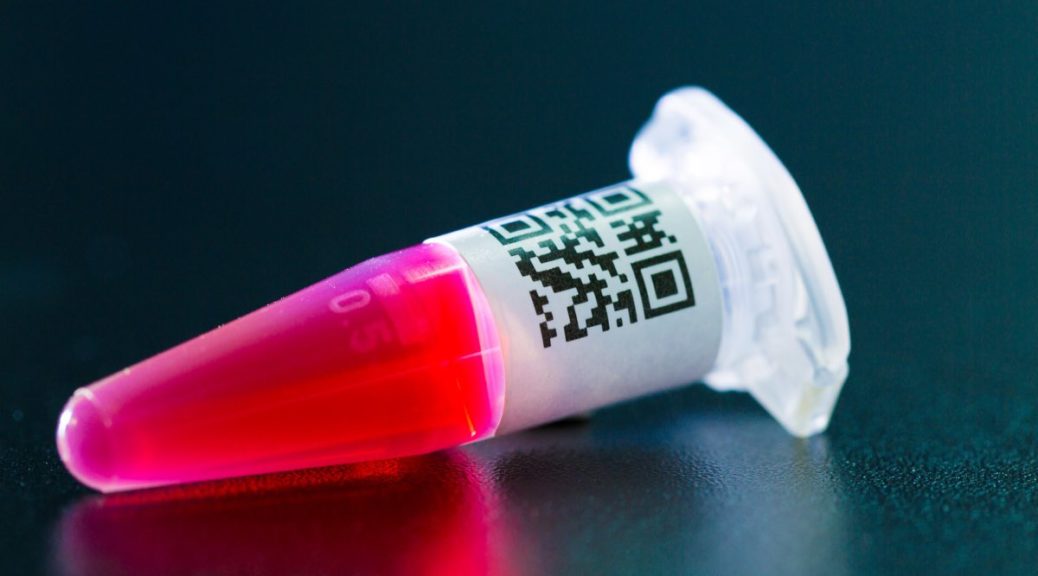
A barcode is the most important information on a specimen label

Adding a barcode to a laboratory sample label makes it possible to retrieve all the information about the sample that cannot be printed on the label.

Every sample deserves its own barcode

Properly labeling laboratory specimens is the most effective way to increase the productivity of research teams. GenoFAB and LabTAG have joined forces to make it easier for any laboratory to use barcode technologies to identify and track their valuable samples.

It is estimated that, in the US alone, $28bn per year are wasted in preclinical research that fails to deliver reproducible results. Sample and reagent identification explains 36.1% of the problems and represents the main source of irreproducibility.

Many laboratories are still relying on handwritten labels to identify their samples because printing labels is surprisingly challenging in a laboratory environment. Many samples in the life sciences are very small and exposed to very harsh conditions. A working labeling solution requires assembling specialized labels that can withstand the most extreme conditions from ultra-low to ultra-high temperatures. It also requires a label printer compatible with the labels and software to control the printer.

GenoFAB provides a web-based software solution allowing users to document their samples and generate barcode labels that make it possible to retrieve the sample documentation. Unlike other label printing solutions that only print labels but lack a data management system, GenoFAB users can attach as much data they need to document their samples. Furthermore, GenoFAB’s label design and printing solution is completely web-based. It does not require users to use a specific type of computer and install third party software on their computer to design and print their labels.

“Every sample deserves its own barcode,” said Jean Peccoud, CEO of GenoFAB. “Printing labels should be the first step of any experiment”.

LabTAG manufactures specialty labels for the life science industry. Their unmatched expertise and reputation in this market made them a natural partner to develop an integrated sample labeling solution that will meet the needs of the most demanding laboratories. GenoFAB users will find in LabTAG, a trusted partner that will help them select the labeling solution that will meet their needs and requirements.

“GenoFAB label printing solution removes a lot of friction that many users find difficult to overcome,” said George Ambartsoumian, CEO of LabTAG. “We are looking forward to providing GenoFAB users with the specialized labels they need in their harsh laboratory environments to identify their specimens, track their samples, and manage their inventory”.

About GenoFAB: GenoFAB’s web-based laboratory information management system (LIMS) allowing research organizations to increase the quantity and quality of data they can produce with their existing resources. It reduces the probability of project failure by extracting actionable information from raw data in real time.

LabTAG, a division of GA International Inc., is a full-scale research and development company that manufactures specialty labels and tapes including cryogenic, xylene and autoclave resistant, wrap-around (self-laminating) labels and much more.

Share article on social media or email: