All posts by imreal

Quinten De Graeve steps up to Team Novo Nordisk pro team


News Image

“Quinten has impressed with his performances so far this season and we’re happy to be able to help his development and progress by giving this added incentive to step up,” said Vassili Davidenko, TNN General Manager

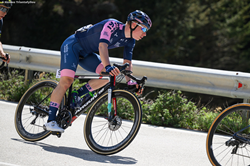
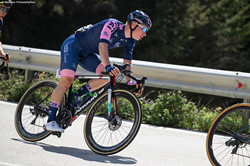
Young Belgian talent Quinten De Graeve is set to make the move up to the Team Novo Nordisk professional team after impressing for the development team during the first half of the season.

The 23-year-old puncheur will join the pro ranks with the world’s first all diabetes professional cycling team for the rest of the 2023 season with the focus primarily on gaining more experience.

“Quinten has impressed with his performances so far this season,” said General Manager Vassili Davidenko. “And we’re happy to be able to help his development and progress by giving this added incentive to step up.”

“The onus will be squarely on the learning process and maturing, but after the commitment and drive Quinten has shown this year, we feel he will be a strong addition to the senior professional team.”

In his first year with the Team Novo Nordisk development program De Graeve has produced good results in stage races on US soil at Redlands Bicycle Classic and the extremely challenging Tour of the Gila where the Belgian secured top 20 finishes on stages two and four and shown his strength and Flemish characteristics competing in gritty national races in Belgium.

“This winter it was great news for me to join the Team Novo Nordisk development team and the positive impact was noticeable straight away,” said De Graeve. “One of the many things the team taught me was how to start to live more and more professionally, diet, training, and diabetes management and as a result I became stronger. I’m sure I can learn a lot from the pro riders, and hope to keep growing.”

“Prior to my first season with the development team, I wasn’t thinking about becoming a member of the TNN – pro team. Of course this is a dream come true for me. I’m still developing, but I feel that I’m a pretty classic Flemish rider, I like the punchy courses, racing on the cobbles and against the wind are elements I can identify with and I’m looking forward to take this opportunity to progress with the pro team.”

Share article on social media or email:

ISPE Releases Report on its Work Supporting the Establishment of the European Health Emergency Preparedness and Response Authority (HERA)


“ISPE put together a multidisciplinary team that included experts from Roche, Novartis, Merck, Merck Darmstadt, Gilead, and others, to take on the project,” said Tom Hartman, ISPE President and CEO.

The International Society of Pharmaceutical Engineering (ISPE) is excited to release a new report summarizing its 2022 work that helped lay the groundwork for the establishment of the European Health Emergency Preparedness and Response Authority (HERA). ISPE worked with McKinsey & Company on two workstreams for the project, commissioned by the European Health and Digital Executive Agency (HaDEA).

HERA was launched as a new European Commission Directorate-General with a mission to prevent, detect, and rapidly respond to health emergencies. As part of the preparation for this new Authority, (HaDEA) selected McKinsey & Company to lead two assessments and studies. McKinsey & Company then engaged ISPE to provide technical and regulatory expertise and advice on chemistry, manufacturing, and control (CMC) aspects of manufacture and supply in two workstreams: stockpiling of antimicrobial resistance medical countermeasures and flexible manufacturing and innovation.

“ISPE put together a multidisciplinary team that included experts from Roche, Novartis, Merck, Merck Darmstadt, Gilead, and others, to take on the project,” said Tom Hartman, ISPE President and CEO. “We are very glad to apply our expertise for these particular workstreams by providing much-needed input and raising the right questions to ensure a diversity of perspectives.”

The objective of the stockpiling workstream was to develop a feasibility assessment on stockpiling of countermeasures in antimicrobial resistance (AMR). For this workstream, in May and July 2022, ISPE contributed subject matter experts for two virtual workshops with some follow-up, one-to-one discussions. The workshops covered options for stockpiling, needs and availability in the EU, as well as regulatory issues, appropriate funding mechanisms, and operational deployment issues.

For the flexible manufacturing workstream, in July 2022 ISPE conducted an anonymous response survey of its members and other industry professionals to better understand opportunities for flexible manufacturing of therapeutic API’s and associated drug products, to assist with alleviating drug shortages.

Ultimately, the ISPE team provided a substantial amount of technical and regulatory insight to McKinsey & Company for consideration in their discussions with DG HERA related to the two workstreams. The newly released report details inputs and outputs from the workshops as well as the results from the survey. The “Report on ISPE Work to Support Establishment of the European Health Emergency Preparedness and Response Authority (HERA)” is available for download as a bundle with the ISPE report “Increasing Domestic Resiliency in the Supply of Essential Active Pharmaceutical Ingredients” published December 2020 at the ISPE website.

“This engagement highlights the technical leadership and bench strengths of ISPE that is built on our 22,000+ members’ knowledge and commitment to assure reliable delivery of quality medicines to patients worldwide,” said Dr. Georg Singewald, ISPE Board Member. “We remain committed to providing support for major regulatory initiatives with development, manufacturing, and supply chain knowledge”.

For more information contact:

Carol Winfield, Senior Director of Regulatory Operations, ISPE

Tel: +1-301-364-9210

Email: cwinfield@ispe.org

http://www.ISPE.org

About ISPE

“The International Society for Pharmaceutical Engineering (ISPE) is a global nonprofit association serving its members through leading scientific, technical, and regulatory advancement across the entire pharmaceutical lifecycle. The 20,000+ members of ISPE provide solutions to complex pharmaceutical industry challenges through innovation, member and workforce development, and technical, regulatory, and compliance collaborations in more than 120 countries worldwide. Founded in 1980, ISPE has its worldwide headquarters and training center in North Bethesda, Maryland, USA, and its operations center in Tampa, Florida, USA. For more information, visit ISPE.org.

###

Share article on social media or email:

Mount Sinai Researchers Use New Deep Learning Approach to Enable Analysis of Electrocardiograms as Language


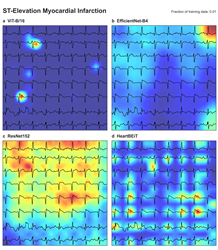
HeartBEiT is much more precise at highlighting areas of interest, in this case for diagnosing heart attacks (myocardial infarction).

Mount Sinai researchers have developed an innovative artificial intelligence (AI) model for electrocardiogram (ECG) analysis that allows for the interpretation of ECGs as language. This approach can enhance the accuracy and effectiveness of ECG-related diagnoses, especially for cardiac conditions where limited data is available on which to train.

In a study published in the June 6 online issue of npj Digital Medicine DOI: 10.1038/s41746-023-00840-9, the team reported that its new deep learning model, known as HeartBEiT, forms a foundation upon which specialized diagnostic models can be created. The team noted that in comparison tests, models created using HeartBEiT surpassed established methods for ECG analysis.

“Our model consistently outperformed convolutional neural networks [CNNs], which are commonly used machine learning algorithms for computer vision tasks. Such CNNs are often pretrained on publicly available images of real-world objects,” says first author Akhil Vaid, MD, Instructor of Data-Driven and Digital Medicine (D3M) at the Icahn School of Medicine at Mount Sinai. “Because HeartBEiT is specialized to ECGs, it can perform as well as, if not better than, these methods using a tenth of the data. This makes ECG-based diagnosis considerably more viable, especially for rare conditions which affect fewer patients and therefore have limited data available.”

Thanks to their low cost, non-invasiveness, and wide applicability to cardiac disease, more than 100 million electrocardiograms are performed each year in the United States alone. Nonetheless, the ECG’s usefulness is limited in scope since physicians cannot consistently identify, with the naked eye, patterns representative of disease, particularly for conditions which do not have established diagnostic criteria or where such patterns may be too subtle or chaotic for human interpretation. Artificial intelligence is now revolutionizing the science, however, with most of the work to date centered on CNNs.

Mount Sinai is taking the field in a bold new direction by building on the intense interest in so-called generative AI systems such as ChatGPT, which are built on transformers—deep learning models that are trained on massive datasets of text to generate human-like responses to prompts from users on almost any topic. Researchers are using a related image-generating model to create discrete representations of small parts of the ECG, enabling analysis of the ECG as language.

“These representations may be considered individual words, and the whole ECG a single document,” explains Dr. Vaid. “HeartBEiT understands the relationships between these representations and uses this understanding to perform downstream diagnostic tasks more effectively. The three tasks we tested the model on were learning if a patient is having a heart attack, if they have a genetic disorder called hypertrophic cardiomyopathy, and how effectively their heart is functioning. In each case, our model performed better than all other tested baselines.”

Researchers pretrained HeartBEiT on 8.5 million ECGs from 2.1 million patients collected over four decades from four hospitals within the Mount Sinai Health System. Then they tested its performance against standard CNN architectures in the three cardiac diagnostic areas. The study found that HeartBEiT had significantly higher performance at lower sample sizes, along with better “explainability.” Elaborates senior author Girish Nadkarni, MD, MPH, Irene and Dr. Arthur M. Fishberg Professor of Medicine at Icahn Mount Sinai, Director of The Charles Bronfman Institute of Personalized Medicine, and System Chief, Division of Data-Driven and Digital Medicine, Department of Medicine: “Neural networks are considered black boxes, but our model was much more specific in highlighting the region of the ECG responsible for a diagnosis, such as a heart attack, which helps clinicians to better understand the underlying pathology. By comparison, the CNN explanations were vague even when they correctly identified a diagnosis.”

Indeed, through its sophisticated new modeling architecture, the Mount Sinai team has greatly enhanced the manner and opportunities by which physicians can interact with the ECG. “We want to be clear that artificial intelligence is by no means replacing diagnosis by professionals from ECGs,” explained Dr. Nadkarni, “but rather augmenting the ability of that medium in an exciting and compelling new way to detect heart problems and monitor the heart’s health.”

The paper is titled “A foundational vision transformer improves diagnostic performance for electrocardiograms.”

This study was funded by the National Heart, Lung, and Blood Institute of the NIH, grant number R01HL155915, and by the National Center for Advancing Translational Sciences of the NIH, grant number UL1TR004419.

To view the full list of authors and competing interests, see DOI: 10.1038/s41746-023-00840-9.

####

About the Icahn School of Medicine at Mount Sinai

The Icahn School of Medicine at Mount Sinai is internationally renowned for its outstanding research, educational, and clinical care programs. It is the sole academic partner for the eight- member hospitals* of the Mount Sinai Health System, one of the largest academic health systems in the United States, providing care to a large and diverse patient population.

Ranked 14th nationwide in National Institutes of Health (NIH) funding and among the 99th percentile in research dollars per investigator according to the Association of American Medical Colleges, Icahn Mount Sinai has a talented, productive, and successful faculty. More than 3,000 full-time scientists, educators, and clinicians work within and across 44 academic departments and 36 multidisciplinary institutes, a structure that facilitates tremendous collaboration and synergy. Our emphasis on translational research and therapeutics is evident in such diverse areas as genomics/big data, virology, neuroscience, cardiology, geriatrics, as well as gastrointestinal and liver diseases.

Icahn Mount Sinai offers highly competitive MD, PhD, and Master’s degree programs, with current enrollment of approximately 1,300 students. It has the largest graduate medical education program in the country, with more than 2,000 clinical residents and fellows training throughout the Health System. In addition, more than 550 postdoctoral research fellows are in training within the Health System.

A culture of innovation and discovery permeates every Icahn Mount Sinai program. Mount Sinai’s technology transfer office, one of the largest in the country, partners with faculty and trainees to pursue optimal commercialization of intellectual property to ensure that Mount Sinai discoveries and innovations translate into healthcare products and services that benefit the public.

Icahn Mount Sinai’s commitment to breakthrough science and clinical care is enhanced by academic affiliations that supplement and complement the School’s programs.

Through the Mount Sinai Innovation Partners (MSIP), the Health System facilitates the real-world application and commercialization of medical breakthroughs made at Mount Sinai. Additionally, MSIP develops research partnerships with industry leaders such as Merck & Co., AstraZeneca, Novo Nordisk, and others.

The Icahn School of Medicine at Mount Sinai is located in New York City on the border between the Upper East Side and East Harlem, and classroom teaching takes place on a campus facing Central Park. Icahn Mount Sinai’s location offers many opportunities to interact with and care for diverse communities. Learning extends well beyond the borders of our physical campus, to the eight hospitals of the Mount Sinai Health System, our academic affiliates, and globally.


  • Mount Sinai Health System member hospitals: The Mount Sinai Hospital; Mount Sinai Beth Israel; Mount Sinai Brooklyn; Mount Sinai Morningside; Mount Sinai Queens; Mount Sinai South Nassau; Mount Sinai West; and New York Eye and Ear Infirmary of Mount Sinai.

Three SOLV Energy PV and BESS Sites Receive Top-Level Safety Recognition


Of 16 total participants in the state, SOLV Energy’s three jobsites are the only solar electric power generation projects to earn the recognition.

Three SOLV Energy projects in California were recognized as workplace safety and health leaders through the California Voluntary Protection Program (Cal/VPP) for non-fixed construction sites. Cal/VPP is Cal/OSHA’s top-level safety and leadership program recognizing employers who have voluntarily managed outstanding safety and health programs.

The VPP-Construction participants are Victory Pass PV & BESS, Arica PV & BESS and Oberon 1-2 PV & BESS, all located in Desert Center, CA. Of 16 total participants in the state, SOLV Energy’s three jobsites are the only solar electric power generation projects to earn the recognition.

Cal/VPP Construction participants are evaluated on management commitment to and employee involvement in the company’s health and safety programs. Among worksites in the same industry, Cal/VPP Construction worksites are expected to have significantly lower risks for accidents and injuries. SOLV Energy is the only solar Engineering, Procurement and Construction (EPC) contractor on the VPP-Construction Participant list.

A highlight of SOLV Energy’s safety system is the Near-Miss Program. Using the company’s proprietary project management app, Sunscreen, workers on jobsites can record near-misses in real-time on a tablet or mobile device. This company-wide platform increases transparency, encourages active participation and strengthens teamwork throughout the organization, keeping safety top-of-mind when working.

“Safety is at the foundation of everything we do. Providing safe workplaces and fostering a culture rooted in our core values puts our people first. This is an effort we all participate in, and the programs, tools and training our safety team designed for SOLV Energy empowers everyone to do their part to keep their teams safe,” said George Hershman, CEO of SOLV Energy.

Cal/OSHA will recognize the Arica, Oberon and Victory Pass sites as Cal/VPP Construction partners at a flag-raising ceremony on July 11th in Desert Center, CA.

Share article on social media or email:

Parkinson’s Disease Patients Gain Knowledge, Tools & Plans at One-of-a-Kind Summer School Designed to Improve Quality of Life.


People living with Parkinson's disease are encouraged to incorporate movement, exercise, and nutrition as part of a comprehensive, personlaized plan for health and well-being.

Parkinson’s Disease Summer School equips people living with Parkinson’s disease, and their partners, with evidence-based, real-world actions they can use to enhance quality of life.

Parkinson’s Disease Summer School participants and their partners go home with biologically plausible, real-world actions they can use.

Parkinson’s Disease (PD) Summer School starts Monday, July 31 through August 4 at Bastyr University in Kenmore; turn-out is expected to be the highest on record. This year the team will host a unique PD School Alumni Intensive weekend from Friday August 4 – August 6.

People living with Parkinson’s disease and their partners flock to the Northwest to learn how to reduce symptoms, regain function, and gather experiential guidance from some of the nation’s leading Parkinson’s disease experts at PD Summer School.

Laurie Mischley, ND, MPH, Ph.D., an acclaimed clinical researcher specializing in the study of Parkinson’s disease, leads PD Summer School. She started the program because Parkinson’s patients want to know what role they can play in everyday life to delay symptoms and live vibrantly.

“Parkinson’s Disease Summer School participants and their partners go home with biologically plausible, real-world actions they can use,” says Dr. Mischley. “The therapies we teach are evidence-based and supported by published peer-reviewed literature.”

All attendees get the latest information on medications, environmental toxins, rest and recovery, nutrition and diet, movement, exercise and more from some of the world’s top Parkinson’s disease experts. The roster of care providers includes:

  • Naturopathic doctors
  • Neurologists who focus on movement disorders
  • Physical therapists from the Parkinson’s Fitness Project
  • Yoga with a Parkinson’s Wellness Recovery (PWR) certified instructor
  • Counseling and mental health therapy for treatment-resistant conditions

First-time participants pay $3,750 for PD Summer Camp; partners pay $1,750. Included are:

  • Recommendations designed for participants’ unique symptoms, situations, and priorities.
  • Nutritionist-designed, chef-prepared meals
  • The newest evidence-based information about nutrition and diet, medications, environmental toxins, exercise, and more to support empowered decision-making and lifestyle choices
  • Therapeutic care including guided meditation, movement, and exercise classes

About Bastyr University

Bastyr University is a nonprofit, private university offering doctoral, graduate, and undergraduate degrees, with a multidisciplinary curriculum in science-based natural health and medicine. Recognized globally for its rigorous curriculum and strong research, Bastyr University has campuses in Kenmore, Washington, and San Diego, California. Bastyr’s international faculty educate future leaders in the natural health arts and sciences, with an emphasis on integrating mind, body, spirit, and nature. Parkinson’s Disease (PD) Summer School starts Monday, July 31 through August 4 at Bastyr University in Kenmore; turn-out is expected to be the highest on record. This year the team will host a unique PD School Alumni Intensive weekend from Friday August 4 – August 6.

People living with Parkinson’s disease and their partners flock to the Northwest to learn how to reduce symptoms, regain function, and gather experiential guidance from some of the nation’s leading Parkinson’s disease experts at PD Summer School.

Laurie Mischley, ND, MPH, Ph.D., an acclaimed clinical researcher specializing in the study of Parkinson’s disease, leads PD Summer School. She started the program because Parkinson’s patients want to know what role they can play in everyday life to delay symptoms and live vibrantly.

“Parkinson’s Disease Summer School participants and their partners go home with biologically plausible, real-world actions they can use,” says Dr. Mischley. “The therapies we teach are evidence-based and supported by published peer-reviewed literature.”

All attendees get the latest information on medications, environmental toxins, rest and recovery, nutrition and diet, movement, exercise and more from some of the world’s top Parkinson’s disease experts. The roster of care providers includes:

  • Naturopathic doctors
  • Neurologists who focus on movement disorders
  • Physical therapists from the Parkinson’s Fitness Project
  • Yoga with a Parkinson’s Wellness Recovery (PWR) certified instructor
  • Counseling and mental health therapy for treatment-resistant conditions

First-time participants pay $3,750 for PD Summer Camp; partners pay $1,750. Included are:

  • Recommendations designed for participants’ unique symptoms, situations, and priorities.
  • Nutritionist-designed, chef-prepared meals
  • The newest evidence-based information about nutrition and diet, medications, environmental toxins, exercise, and more to support empowered decision-making and lifestyle choices
  • Therapeutic care including guided meditation, movement, and exercise classes

About Bastyr University

Bastyr University is a nonprofit, private university offering doctoral, graduate, and undergraduate degrees, with a multidisciplinary curriculum in science-based natural health and medicine. Recognized globally for its rigorous curriculum and strong research, Bastyr University has campuses in Kenmore, Washington, and San Diego, California. Bastyr’s international faculty educate future leaders in the natural health arts and sciences, with an emphasis on integrating mind, body, spirit, and nature. For more information, please visit http://www.bastyr.edu.

Share article on social media or email:

Northeast Delta HSA to host Opioid Summit on June 15, “Building Resilience for Recovery through Trauma-Informed Care”


Northeast Delta HSA to host Opioid Summit on June 15,

Northeast Delta HSA to host Opioid Summit on June 15,

“With our Opioid Summit, we intend to inform, inspire, equip, and empower those who attend so that the regional safety net we are building can become even stronger and better able to serve those with complex addiction, mental illness, and primary healthcare needs.”

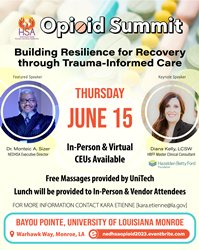
Northeast Delta Human Services Authority (NEDHSA) is set to host its 2023 Opioid Summit on Thursday, June 15, from 9 a.m. to 4 p.m. at the Bayou Pointe Event Center at the University of Louisiana Monroe. The theme for the 2023 Opioid Summit is “Building Resilience for Recovery through Trauma-Informed Care.”

NEDHSA Executive Director Dr. Monteic A. Sizer said, “we are seeing a resurgence of opioid-related treatment needs, arrests, hospitalizations, and deaths in our region, state, and across the nation. This event will help inspire others to learn how to work more collaboratively as we seek to resolve this complex issue collectively.”

“Our current opioid crisis will be mitigated when we learn how to effectively work across race, class, governmental silos, and political divisions. Additionally, opioid addiction will be mitigated once we develop enough compassion for those addicted and get them the evidence-based treatment they need, work to reduce those negative social determinants that drive their addiction, and help the people addicted to opioids find something to live for other than drugs,” Dr. Sizer said. “With our Opioid Summit, we intend to inform, inspire, equip, and empower those who attend so that the regional safety net we are building can become even stronger and better able to serve those with complex addiction, mental illness, and primary healthcare needs.”

NEDHSA’s Opioid Summit is an opportunity for behavioral health professionals, primary healthcare workers, law enforcement, federal, state, and local officials, clergy, and advocates to come together and collaborate on how to meet this complex societal issue with action. NARCAN training and distribution will also be available to all attendees.

Diana Kelly, Licensed Clinical Social Worker (LCSW), Master Clinical Consultant for the Consulting and Training Team at the Hazelden Betty Ford Foundation, will be this event’s keynote speaker.

Kelly is an LCSW, Clinician, Army Veteran, educator, and Master Clinical Consultant at the Hazelden Betty Ford Foundation and serves as an adjunct faculty member at the Indiana University School of Social Work in Indianapolis, Indiana. As a person in long-term recovery and a clinician working in substance use disorder recovery for over 13 years, Kelly has a deep personal passion for working with those impacted by trauma and substance use disorders, especially those impacted by the opioid crisis.

Other panelists and speakers include Dr. Sizer; Darryl Cowan, Drug Enforcement Agency (DEA) Agency; Dr. Avius Carroll, Director of NEDHSA’s Prevention & Wellness Department; along with a panel discussion, comprised of professionals and peers currently working with individuals affected by OUD/SUD.

To register for this event as a participant and/or vendor, visit: nedhsaopioid2023.eventbrite.com

For more information, contact Kara Etienne at kara.etienne@la.gov.

Share article on social media or email:

iCleanse Adds 30+ New Pilot Programs Including New England’s Second Largest Airport to Its Growing National Customer List


iCleanse is the leading device disinfection and Digital Out of Home (DOOH) media company.

“We’re thrilled to add more than 30 pilot programs to our customer list as we continue to grow our digital OOH network into more high traffic venues,” said iCleanse CEO Chris Allen.

iCleanse, the leading device disinfection and Digital Out of Home (DOOH) media company, announced today its first-of-its-kind disinfection product, Swift UV, has been installed in pilot programs at more than 30 locations nationwide.

Many of the new locations are in the hospitality industry and include: CT Science Center in Hartford, CT; Hartford Health Care Pain Treatment Center in West Hartford, CT; Swiches Coffee & Donuts in Berlin, CT; Kinsman Brewing Co. in Milldale, CT; Vagabond Inn in San Luis Obispo, CA; Ocean Palms Motel in Pismo Beach, CA; Harbor House Inn in Morro Bay, CA; Gateway Lodge in Seaside, CA; Beachwalker Inn in Pismo Beach, CA; ARI in Glastonbury, CT; Garde Art Center in New London, CT; Phenix Salon (464 & 465) in Woodbridge, NJ; Phenix Salon (1235) in Union, NJ; Sandwich Lodge & Resort in Sandwich, MA; Best Western – Bridgewood Hotel in Neenah, WI; Elmwood Barbershop in West Hartford, CT; American Distilling in East Hampton, CT; Holiday Inn Long Island Slip Airport in Holtsville, NY; Rancho Bernardo Inn in San Diego, CA; Candlewood Suites in Olive Branch, MS; Best Western Plus in Crawfordsville, IN; Econolodge in West Memphis, AR; Mircotel Inn & Suites by Wyndham in Tuscaloosa, AL; Motel 8 in Tuscaloosa, AL; SureStay Plus by Best Western in Smithfield, RI; Atlantic Motelin East Wareham, MA; Days Inn & Suites by Wyndham in Castle Rock, CO; Best Western Aurora in Aurora, CO; Aaspire NY Inc. in New York, NY; Motel 8 in Knoxville, TN.

Bradley International Airport in Connecticut, New England’s second largest airport, recently deployed four Swift UV devices from iCleanse joining more than 100 hospitals, organizations and retail locations nationwide that presently use the company’s patented and touchless UV disinfection that kills 99.99% of pathogens. To date, more than 1 million phones have been disinfected and 1 million impressions delivered using iCleanse’s Swift UV units.

“We’re thrilled to add more than 30 pilot programs to our customer list as we continue to grow our digital OOH network into more high traffic venues,” said iCleanse CEO Chris Allen. “Dozens of hospitals, organizations and retail locations already utilize our Swift UV product. We’ll continue to expand our footprint into airports, hotels, restaurants and other high traffic travel areas. This is a fantastic no-charge service that travelers appreciate. It also offers advertisers a unique one-to-one interaction with travelers and their brand. We look forward to deploying iCleanse in more locations nationwide this year.”

Swift UV is the most innovative new way for brands to directly engage one-on-one with their customers. Ad content can be fully customized and deployed across a fleet of units through the secure iCleanse Cloud. Companies can create their own design, or iCleanse will create custom content for the advertisers, that delivers an impactful interactive call-to-action for the Swift UV user. Brands can easily target and reach their desired consumer with coupon discount codes. Companies using iCleanse as an advertising and communication tool find they build sustainable brand loyalty and also expand their customer base.

Visit https://icleanse.com/ to learn more about iCleanse.

About iCleanse

In 2020, entrepreneur Chris Allen acquired ReadyDock, an established force in the UV-C hospital disinfection space since 2015. Allen re-branded the company as iCleanse and quickly transformed it into the leading device disinfection and Digital Out of Home (DOOH) media company it is today. iCleanse’s specialty is fast and chemical-free UV-C disinfection for mobile phones in high-traffic areas. The company’s first-of-its-kind product, Swift UV, features a display screen and advertising platform that allows the business owner to offer mobile phone disinfection while simultaneously monetizing traffic. More than 100 hospitals, organizations and retail locations nationwide use iCleanse for its fast and patented solution, while trusting its reliable and touchless UV disinfection.

Media Contact:

Chelsey Clapper, VP Marketing & Design

chelseyclapper@icleanse.com

Share article on social media or email:

ClinOne and Mural Health Partner to Maximize Patient Experience While Minimizing Site Burden


News Image

We are thrilled to be working with ClinOne, Andrea and her team share our values and mission. By embedding Mural Link into the ClinOne tech family, we will be able to further streamline site-level operations and empower ClinOne to improve the participant journey for studies its supports.

ClinOne, the leading provider of adaptive clinical trial experience solutions, has today announced a strategic partnership with Mural Health, a clinical trials technology company that improves the patient and caregiver experience in clinical trials. The move will integrate Mural Link, a next generation patient payments and participant management platform, into ClinOne’s patient support and trial management technology. The partnership will further streamline site-level operations and improve the participant journey.

Both companies are using technology to help sponsors overcome the stubborn challenges of drug development, including poor recruitment and retention, by focusing product design on the participant (the end-user). Both companies are also committed to reducing the administrative burden that clinical research sites can experience when sponsors require multiple technology platforms.

Mural Link is an innovative platform that optimizes the participant experience, strategically leveraging next-gen clinical trial payment technology, to continually engage patients and caregivers. Mural Link’s novel strategy and market leading technology platform eliminates financial barriers to enrollment, improves site-level operations, and, ultimately, speeds trial execution while improving the quality of the clinical data set. ClinOne shares the same mission, providing a selection of patient engagement solutions, including consent management, medication adherence monitoring, clinic visit ride hailing, a patient and caregiver portal, and e-diaries, in a single platform.

The partnership, announced today, embeds Mural Link into ClinOne’s suite of solutions, creating a seamless user experience for patients and sites alike.

“Mural Health offers a truly innovative approach to improving clinical trials,” Andrea Valente, CEO at ClinOne, said. “Making participation easy and focusing on efficient study operations align with our goals. We are very excited to partner with the Mural Health team to bring a superior experience to all participants during their clinical trial journey.”

Mural Health’s Co-Founder and Co-CEO, Sam Whitaker said: “We are thrilled to be working with ClinOne, Andrea and her team share our values and mission. By embedding Mural Link into the ClinOne tech family, we will be able to further streamline site-level operations and empower ClinOne to improve the participant journey for studies its supports.”

About Mural Health

Mural Health is a next-generation participant management platform. The Company’s Mural Link technology platform is designed to make it easier to participate in clinical trials, thereby improving study operation and the quality of clinical data sets. Mural Link offers next-generation participant payment technology that gives participants the power to choose how they receive payment, eliminates predatory fees related to prepaid debit cards, introduces functionality to help patients arrive at site visits (without incurring a cash expense), empowers communication between participants and site personnel, and captures participant data to predict individuals who are likely to drop-out. The Mural Link platform can be easily deployed to positively improve participant retention and engagement, increase protocol compliance, and increase enrollment rates. Please reach out to us to learn more about or capabilities, http://www.muralhealth.com or general@muralhealth.com.

About ClinOne

ClinOne connects, informs and empowers patients, caregivers and sites in clinical trials with a true single platform for trial awareness, consent management and patient engagement underpinned with comprehensive data insights tools. Used by more than 80 sponsors, CROs and site networks in 60 countries, our solutions are proven to reduce risk and simplify complex processes for therapeutic areas and patient populations including Oncology, Rare Disease, Pediatrics, the Elderly and CNS. Designed in collaboration with sites and with participants and caregivers in mind, ClinOne features the industry’s fastest deployment, cost-efficient scale for trials of all sizes and seamless API integrations to provide the results you need and the experience your patients deserve. Ready to keep patients, sites and study teams active and engaged throughout your clinical trial? Let’s get creative at http://www.clinone.com.

Share article on social media or email:

Medical Weight Loss Clinic Enhances Prescribed Medications for Patients


News Image

“Our goal is to continue to provide personalized weight loss solutions for each of our patients,” said Medical Weight Loss Clinic Medical Director, Dr. David Rabens. “We believe that enhancing our prescription medication programs will better help our patients while achieving that goal.”

Medical Weight Loss Clinic(MWLC), a leading provider of physician-supervised weight loss programs in Michigan and Ohio, announced that they are enhancing its prescription medication offerings as part of their comprehensive weight loss programs.

MWLC now offers weight loss medications, such as semaglutide and tirzepatide, at lower prices with no fulfillment issues due to a recent partnership with Nationally-Certified Compounding Pharmacy, ACA Pharmacy, based in Nashville. These medications will be prescribed on a case-by-case basis and will be closely monitored by the clinic’s medical professionals.

The medications now being offered comes after careful consideration and consultation with its medical staff. MWLC believes that prescription medication, when used in conjunction with a healthy diet and exercise, can be a useful tool in helping individuals achieve their weight loss goals.

“We are thrilled to be improving our prescription medication program for our patients,” said MWLC Medical Director, Dr. David Rabens. “Prescription medication can be especially beneficial for patients who have struggled to lose weight through traditional diet and exercise methods.”

In addition to prescription medication, MWLC offers a variety of weight loss programs tailored to meet the needs of each individual patient. These programs include meal planning, exercise guidance, and behavior modification techniques.

“Our goal is to continue to provide personalized weight loss solutions for each of our patients,” said Rabens. “We believe that enhancing our prescription medication programs will better help our patients while achieving that goal.”

For more information about MWLC’s weight loss programs or to schedule a consultation, please visit https://mwlc.com/prescriptions.

ABOUT MEDICAL WEIGHT LOSS CLINIC

Founded in 1986, Medical Weight Loss Clinic is a Southfield Mich.-based company celebrating 37 years of professional, clinical weight loss experience. The experienced team at Medical Weight Loss Clinic has helped tens of thousands of people gain control of their weight, and their lives, through individually customized, non-surgical weight loss programs. The Southfield-based company operates 30 locations across Michigan and Ohio. Learn more at http://www.mwlc.com or connect on Facebook and YouTube.

Share article on social media or email:

AI Outperformed Standard Risk Model for Predicting Breast Cancer


We’re looking for an accurate, efficient and scalable means of understanding a women’s breast cancer risk. Mammography-based AI risk models provide practical advantages over traditional clinical risk models because they use a single data source: the mammogram itself.

In a large study of thousands of mammograms, artificial intelligence (AI) algorithms outperformed the standard clinical risk model for predicting the five-year risk for breast cancer. The results of the study were published today, June 6, in Radiology, a journal of the Radiological Society of North America (RSNA).

A woman’s risk of breast cancer is typically calculated using clinical models such as the Breast Cancer Surveillance Consortium (BCSC) risk model, which uses self-reported and other information on the patient—including age, family history of the disease, whether she has given birth, and whether she has dense breasts—to calculate a risk score.

“Clinical risk models depend on gathering information from different sources, which isn’t always available or collected,” said lead researcher Vignesh A. Arasu, M.D., Ph.D., a research scientist and practicing radiologist at Kaiser Permanente Northern California. “Recent advances in AI deep learning provide us with the ability to extract hundreds to thousands of additional mammographic features.”

In the retrospective study, Dr. Arasu used data associated with negative (showing no visible evidence of cancer) screening 2D mammograms performed at Kaiser Permanente Northern California in 2016. Of the 324,009 women screened in 2016 who met eligibility criteria, a random sub-cohort of 13,628 women was selected for analysis. Additionally, all 4,584 patients from the eligibility pool who were diagnosed with cancer within five years of the original 2016 mammogram were also studied. All the women were followed until 2021.

“We selected from the entire year of screening mammograms performed in 2016, so our study population is representative of communities in Northern California,” Dr. Arasu said.

The researchers divided the five-year study period into three time periods: interval cancer risk, or incident cancers diagnosed between 0 and 1 years; future cancer risk, or incident cancers diagnosed from between one and five years; and all cancer risk, or incident cancers diagnosed between 0 and 5 years.

Using the 2016 screening mammograms, risk scores for breast cancer over the five-year period were generated by five AI algorithms, including two academic algorithms used by researchers and three commercially available algorithms. The risk scores were then compared to each other and to the BCSC clinical risk score.

“All five AI algorithms performed better than the BCSC risk model for predicting breast cancer risk at 0 to 5 years,” Dr. Arasu said. “This strong predictive performance over the five-year period suggests AI is identifying both missed cancers and breast tissue features that help predict future cancer development. Something in mammograms allows us to track breast cancer risk. This is the ‘black box’ of AI.”

Some of the AI algorithms excelled at predicting patients at high risk of interval cancer, which is often aggressive and may require a second reading of mammograms, supplementary screening or short-interval follow-up imaging. When evaluating women with the highest 10% risk as an example, AI predicted up to 28% of cancers compared to 21% predicted by BCSC.

Even AI algorithms trained for short time horizons (as low as 3 months) were able to predict the future risk of cancer up to five years when no cancer was clinically detected by screening mammography. When used in combination, the AI and BCSC risk models further improved cancer prediction.

“We’re looking for an accurate, efficient and scalable means of understanding a women’s breast cancer risk,” Dr. Arasu said. “Mammography-based AI risk models provide practical advantages over traditional clinical risk models because they use a single data source: the mammogram itself.”

Dr. Arasu said some institutions are already using AI to help radiologists detect cancer on mammograms. A person’s future risk score, which takes seconds for AI to generate, could be integrated into the radiology report shared with the patient and their physician.

“AI for cancer risk prediction offers us the opportunity to individualize every woman’s care, which isn’t systematically available,” he said. “It’s a tool that could help us provide personalized, precision medicine on a national level.”

###

“Comparison of Mammography AI Algorithms with a Clinical Risk Model for 5-year Breast Cancer Risk Prediction: An Observational Study.” Collaborating with Dr. Arasu were Laurel A. Habel, Ph.D., Ninah S. Achacoso, M.S., Diana S. M. Buist, Ph.D., Jason B. Cord, M.D., Laura J. Esserman, M.D., Nola. M. Hylton, Ph.D., M. Maria Glymour, Sc.D., John Kornak, Ph.D., Lawrence H. Kushi, Sc.D., Don A. Lewis, M.S., Vincent X. Liu, M.D., Caitlin M. Lydon, M.P.H., Diana L. Miglioretti, Ph.D., Daniel A. Navarro, M.D., Albert Pu, M.S., Li Shen, Ph.D., Weiva Sieh, M.D., Ph.D., Hyo-Chun Yoon, M.D., Ph.D., and Catherine Lee, Ph.D.

In 2023, Radiology is celebrating its 100th anniversary with 12 centennial issues, highlighting Radiology’s legacy of publishing exceptional and practical science to improve patient care.

Radiology is edited by Linda Moy, M.D., New York University, New York, N.Y., and owned and published by the Radiological Society of North America, Inc. (https://pubs.rsna.org/journal/radiology)

RSNA is an association of radiologists, radiation oncologists, medical physicists and related scientists promoting excellence in patient care and health care delivery through education, research and technologic innovation. The Society is based in Oak Brook, Illinois. (RSNA.org)

For patient-friendly information on breast imaging, visit RadiologyInfo.org.