All posts by imreal

AHN West Penn Hospital Recognized as one of the Nation’s Top 50 Hospitals for Obstetrics and Gynecology by U.S. News and World Report for Second Consecutive Year


AHN West Penn Hospital Recognized as one of the Nation’s Top 50 Hospitals for Obstetrics and Gynecology by U.S. News and World Report for Second Consecutive Year

“Congratulations to the entire team across AHN West Penn and AHN Women’s Institute, whose tireless work and compassionate care has placed us as the only top-ranked hospital in Pittsburgh for obstetrical and gynecological services,” said Brian Johnson, MD, president at AHN West Penn.

Allegheny Health Network (AHN) West Penn Hospital, AHN’s flagship hospital for women’s health care, has been named one of the top 50 hospitals in the nation for obstetrics and gynecology (OB/GYN), according to the U.S. News and World Report Best Hospitals Rankings, released to the public today.

AHN West Penn was ranked 30th in the nation for OB/GYN, making it the highest positioned hospital in western Pennsylvania for those specialties, and the only ranked hospital within the Greater Pittsburgh region. Today’s announcement marks the second consecutive year that AHN West Penn has placed within the top 50 hospitals for women’s care by U.S. News.

To identify the best hospitals in the country for obstetrics and gynecology, U.S. News evaluates facilities that provide a high volume of complex care related to pelvic, cervical, uterine and ovarian cancers, diseases and procedures. U.S. News considers factors such as 30-day survival for complex conditions, the number of patients served, and advanced technologies and services available. Also factored into the final ranking are the views of patients about the quality of their experience at hospitals, as well as the hospital’s reputation among board-certified physicians.

“On behalf of Allegheny Health Network, we are extremely proud of the entire team at AHN West Penn and the AHN Women’s Institute,” said Marcia Klein-Patel, MD, PhD, OB/GYN physician and chair of AHN Women’s Institute. “Today’s announcement marks the second consecutive year that U.S. News has recognized our remarkable physicians and clinicians for their steadfast commitment to the positive health outcomes and overall well-being of women and birthing people throughout our region.”

West Penn Hospital is home to AHN’s busiest labor and delivery center, delivering about 4,000 babies each year, and a Level III Neonatal Intensive Care Unit that offers high-level care to critically ill babies. The hospital also houses the AHN Women’s Behavioral Health and the Alexis Joy D’Achille Center for Perinatal Mental Health, supporting mothers during pregnancy, postpartum and beyond. In 2023, the program expanded to include a mother-baby intensive outpatient program.

“Congratulations to the entire team across AHN West Penn and AHN Women’s Institute, whose tireless work and compassionate care has placed us as the only top-ranked hospital in Pittsburgh for obstetrical and gynecological services. Today’s exciting recognition reflects the amazing clinical skill, expertise and dedication our clinicians bring to every patient that entrusts us with their care,” said Brian Johnson, MD, president at AHN West Penn.

AHN’s Allegheny General Hospital (AGH) was also recognized as a Best Regional Hospital by U.S. News for rating as a high performer in nine different procedures and conditions across cardiovascular medicine, stroke care, colon and lung cancer as well as knee replacement.

AHN hospitals were recognized as high performers in numerous other procedures and conditions, as follows. West Penn: heart attack care, ovarian cancer surgery, and leukemia and lymphoma cancers; Allegheny Valley Hospital: heart failure and COPD; Forbes Hospital: heart attack, heart failure and diabetes; Jefferson Hospital: heart failure, diabetes, stroke and hip replacement; Saint Vincent hospital: heart attack, heart failure and stroke.

###

About the Allegheny Health Network:

Allegheny Health Network (AHN.org) is an integrated healthcare delivery system serving the greater Western Pennsylvania region. The Network is composed of 14 hospitals, ambulatory surgery centers, Health + Wellness Pavilions, an employed physician organization, home and community-based health services, a research institute, and a group purchasing organization. The Network provides patients with access to a complete spectrum of advanced medical services, including nationally recognized programs for primary and emergency care, trauma care, cardiovascular disease, organ transplantation, cancer care, orthopedic surgery, neurology and neurosurgery, women’s health, diabetes, autoimmune disease and more. AHN employs approximately 21,000 people, has more than 2,600 physicians on its medical staff and serves as a clinical campus for Drexel University College of Medicine and the Lake Erie College of Osteopathic Medicine.

Share article on social media or email:

Icahn School of Medicine at Mount Sinai Receives $11.5 Million Grant Renewal to Study the Impact of Psychosocial Stress on Cardiovascular Disease


Psychosocial stress profoundly affects people’s lives globally, not least because it can be a critical risk factor for cardiovascular disease. Thanks to an $11.5 million award renewal from the National Heart, Lung, and Blood Institute (NHLBI) of the National Institutes of Health, distinguished researchers at the Icahn School of Medicine at Mount Sinai and elsewhere aim to gain a deeper understanding of how stress influences cardiovascular health.

“To address residual cardiovascular risk in patients, our research program aims to bolster our mechanistic understanding of how psychosocial stress impacts the immune system and inflammatory atherosclerosis,” says Principal Investigator Zahi Fayad, PhD, Director of the Biomedical Engineering and Imaging Institute and Lucy G. Moses Professor in Medical Imaging and Bioengineering at Icahn Mount Sinai. “We are delighted that NHLBI has validated the potential of our work by enabling this program through the renewal of this grant.”

Existing cardiovascular risk management strategies lack sufficient evidence-based interventions to tackle the adverse effects of psychological stress. Given the escalating burden of atherosclerotic heart disease, the investigators emphasize the urgent need to modulate the impact of stress.

Dr. Fayad reported on developments to come out of the initial five-year grant: “We significantly advanced knowledge on psychosocial stress and cardiovascular disease by identifying connections between the nervous, immune, and vascular systems. Our findings showed that stress perception mechanisms influence atherosclerosis development and regression. And we developed sophisticated tools to study brain regions involved in stress perception and made substantial progress in translational imaging studies to measure stress-associated neurobiology as it relates to cardiovascular disease. Additionally, our clinical studies are shedding light on the neuro-immune-arterial pathway. Collaboratively, we have generated innovative research questions we’re now eager to explore.”

Dr. Fayad will lead a multidisciplinary team from Icahn Mount Sinai, Massachusetts General Hospital (MGH), New York University (NYU), and Radboud University Medical Center (Radboudumc)

in the Netherlands to complete the interrelated experiments. The team includes Filip Swirski, PhD, Scott Russo, PhD, Philip Robson, PhD, Li Shen, PhD, Abraham Teunissen, PhD, MSc, BASc, Maria Giovanna Trivieri, MD, PhD, and Mandy van Leent, MD, PhD, from Icahn Mount Sinai; Willem Mulder, PhD, and Niels Riksen, MD, from Radboudumc; Edward Fisher, MD, PhD, MPH, from NYU; and Ahmed Tawakol, MD, Matthias Nahrendorf, MD, PhD, and Lisa Shin, PhD, from MGH.

Building on the previous five-year grant, the research team plans to broaden their perspective to better understand immune reprogramming in psychosocial stress-aggravated atherosclerotic disease. The work will involve:


  • Evaluating various brain circuits
  • Utilizing diverse imaging methods
  • Conducting in-depth analyses (omics) for optimal integration and harmonization of data

“This research has the potential to not only advance our scientific understanding of neural control of immune mechanisms that drive cardiovascular diseases, but also could offer approaches to managing such diseases in individuals experiencing prolonged psychosocial stress, including identifying novel therapeutic targets, treatments and preventive measures,” says Eric J. Nestler, MD, PhD, Nash Family Professor of Neuroscience, Director of The Friedman Brain Institute, and Dean for Academic Affairs at Icahn Mount Sinai, and Chief Scientific Officer of the Mount Sinai Health System.

The work is being supported by the National Heart, Lung, and Blood Institute (grant number P01HL131478).

-####-

The BioMedical Engineering and Imaging Institute is a state-of-the-art research facility housed in 20,000 square feet in the Hess Center for Science and Medicine on Mount Sinai’s Upper East Side campus. BMEII comprises more than 60 faculty, staff, and trainees with expertise in all aspects of translational imaging research. The faculty consists of chemical, biomedical, and electrical engineers; radiologists; cardiologists; immunologists; and data scientists, who are leading experts in neuroimaging, cardiovascular imaging, body/cancer imaging, and nanomedicine.

About the Icahn School of Medicine at Mount Sinai

The Icahn School of Medicine at Mount Sinai is internationally renowned for its outstanding research, educational, and clinical care programs. It is the sole academic partner for the eight- member hospitals* of the Mount Sinai Health System, one of the largest academic health systems in the United States, providing care to a large and diverse patient population.

Ranked 14th nationwide in National Institutes of Health (NIH) funding and among the 99th percentile in research dollars per investigator according to the Association of American Medical Colleges, Icahn Mount Sinai has a talented, productive, and successful faculty. More than 3,000 full-time scientists, educators, and clinicians work within and across 44 academic departments and 36 multidisciplinary institutes, a structure that facilitates tremendous collaboration and synergy. Our emphasis on translational research and therapeutics is evident in such diverse areas as genomics/big data, virology, neuroscience, cardiology, geriatrics, as well as gastrointestinal and liver diseases.

Icahn Mount Sinai offers highly competitive MD, PhD, and Master’s degree programs, with current enrollment of approximately 1,300 students. It has the largest graduate medical education program in the country, with more than 2,000 clinical residents and fellows training throughout the Health System. In addition, more than 550 postdoctoral research fellows are in training within the Health System.

A culture of innovation and discovery permeates every Icahn Mount Sinai program. Mount Sinai’s technology transfer office, one of the largest in the country, partners with faculty and trainees to pursue optimal commercialization of intellectual property to ensure that Mount Sinai discoveries and innovations translate into healthcare products and services that benefit the public.

Icahn Mount Sinai’s commitment to breakthrough science and clinical care is enhanced by academic affiliations that supplement and complement the School’s programs.

Through the Mount Sinai Innovation Partners (MSIP), the Health System facilitates the real-world application and commercialization of medical breakthroughs made at Mount Sinai. Additionally, MSIP develops research partnerships with industry leaders such as Merck & Co., AstraZeneca, Novo Nordisk, and others.

The Icahn School of Medicine at Mount Sinai is located in New York City on the border between the Upper East Side and East Harlem, and classroom teaching takes place on a campus facing Central Park. Icahn Mount Sinai’s location offers many opportunities to interact with and care for diverse communities. Learning extends well beyond the borders of our physical campus, to the eight hospitals of the Mount Sinai Health System, our academic affiliates, and globally.

——————————————————-

  • Mount Sinai Health System member hospitals: The Mount Sinai Hospital; Mount Sinai Beth Israel; Mount Sinai Brooklyn; Mount Sinai Morningside; Mount Sinai Queens; Mount Sinai South Nassau; Mount Sinai West; and New York Eye and Ear Infirmary of Mount Sinai.

Nine Yoga Scientist-Physicians To Teach Medical Colleagues Practices to Transform Their Burnout, Stress and Depression Into Creativity, Compassion and Optimism


Joshua Zamer MD
Board Certified in Family Medicine and Addiction Medicine

“Regardless of how challenging your circumstances might feel today, this conference can teach you how to free yourself from the pain and bondage of Burnout and Stress.”LEONARD PERLMUTTER, AMI Founder and Curriculum Developer

A panel of nine distinguished physicians, who have successfully integrated the principles and tools of Yoga Science into their medical practices and home life, will share their experiences at the American Meditation Institute’s 12th annual Heart and Science of Yoga CME Conference October 17-21, 2023 at the Equinox Resort and Spa in Manchester, Vermont. This proprietary, comprehensive training in Yoga Science as Holistic Mind/Body Medicine has been proven in a peer-reviewed clinical study to reduce Burnout and Secondary Traumatic Stress while increasing Compassion Satisfaction, and is accredited by the American Medical Association for 34 CME credit hours.

Previous conference attendee and 2023 panel speaker Joshua Zamer MD serves as medical director for Addiction Medicine, Saratoga Hospital Community Health Center, and is also chairman of their Department of Family Practice. He is board certified in Family Medicine and Addiction Medicine, and previously served as the physician for St. Peter’s Addiction Recovery Center (SPARC) Inpatient Detox Unit and Outpatient Suboxone Clinic. In speaking of his personal experiences with AMI’s Yoga Science curriculum, Dr. Zamer notes, “The AMI teachings have helped me become a more effective clinician. I am now more focused, more patient and more compassionate, as both a physician and human being.”

Upon completion of this conference, all participants will be able to: 1. Demonstrate knowledge of how Yoga Science as mind/body medicine can heal disease, manage addictive habits, and alleviate stress, inflammation and physician burnout; 2. Develop equanimity, discrimination, will power, creativity and energy through a daily practice of AMI MEDITATION and diaphragmatic breathing; 3. Incorporate long-term strategies for healthy lifestyle choices using Yoga Psychology; 4. Demonstrate knowledge of the principles of both Ayurveda and Epigenetics; 5. Identify yogic practices to transform trauma and increase resilience; 6. Utilize “Food as Medicine” (diet and nutrition) to maximize personal wellbeing; 7. Demonstrate knowledge of the research and therapeutic modalities of yoga and meditation as mind/body medicine; 8. Recognize the physiological benefits of Easy-Gentle Yoga, and identify and disable chronic pain mechanisms for improved exercise, health and pain relief; 9. Help themselves and patients reduce conditioned habits of negative thinking and other symptoms of burnout through the healing powers of AMI MEDITATION and mantra science; 10. Use Chakra Psychology (subtle emotional/mental causes of stress) to diagnose and to better understand and treat dis-ease; 11. Recognize how AMI MEDITATION and meditation-in-action change the neural pathways in the brain to help manage pain; 12. Identify altered pathways in the brain due to addiction, and recognize the ability of Yoga Science and AMI MEDITATION to assist the brain’s chemistry and circuitry to heal and rebuild itself; and, 13. Use the tools of Yoga Science to create a personal and medical culture of health and wellbeing.

The dedication, enthusiasm, and teaching methodology of the entire AMI faculty create a dynamic and interactive course for their students. Each faculty member is committed to the advancement and training of Yoga Science as holistic mind/body medicine. In addition to Dr. Zamer, other conference presenters will include Leonard Perlmutter, AMI founder and conference director; Mark Pettus MD, board certified internist and nephrologist and Director of Medical Education and Population Health of Berkshire Health Systems; Kristin Kaelber MD, PhD, board certified in Internal Medicine and Pediatrics; Renee Rodriguez-Goodemote MD, Medical Director of the Saratoga Hospital Community Health Center; Anthony Santilli MD, board certified in Pulmonary and Critical Care Medicine; Jesse Ritvo MD, Assistant Medical Director, Inpatient Psychiatry, University of Vermont Health Center; Jenness Cortez Perlmutter, co-founder and faculty member of The American Meditation Institute; Anita Burock-Stotts MD, board certified in Internal Medicine; Janine Pardo MD, board certified in Internal Medicine, and Gustavo Grodnitzky PhD, Chair of the AMI Psychological Education Committee.

Medical pioneers Dean Ornish MD, Bernie Siegel MD and Larry Dossey MD have endorsed Leonard Perlmutter’s award-winning “Heart and Science of Yoga” treatise, which serves as the primary curriculum for this 12th annual conference.

According to Farhana Riaz MD, a pediatric radiologist and past participant from Boston, Massachusetts, “This course has given me a new and better outlook on life–and the tools to make it stick!”

-30-

About the American Meditation Institute

The American Meditation Institute is a 501(c)3 non-profit educational organization devoted to the teaching and practice of Yoga Science, AMI Meditation® and its allied disciplines as Mind/Body Medicine. In its holistic approach to wellness, AMI combines the healing arts, philosophy and spirituality of the East with the practicality of modern Western medical science. The American Meditation Institute offers a wide variety of courses, conferences and webinars. AMI also publishes “Transformation” a bi-monthly journal of meditation as Holistic Mind/Body Medicine.

Call 518.674.8714 for interviews and an email subscription.

Media Contact:

Robert Washington

PO Box 430

Averill Park, NY 12018

Tel: 518-674-8714

Fax: 518-674-8714

Share article on social media or email:

McDonald’s Advances Global Happy Meal® Nutrition through Goals Set with Healthier Generation


Five Years, Five Happy Meal Goals infographic

“The impressive results of this report prove that meaningful change is possible when you combine the global scale of a corporation like McDonald’s with the expertise of Healthier Generation,” said Kathy Higgins, chief executive officer at Alliance for a Healthier Generation.

– New third-party report validates five-year progress against goals set in 2018

  • Introduced 70 new fruit, vegetable, low-fat dairy, whole grain, lean protein, and water options to the global Happy Meal menu
  • Significant reduction of calories, sodium, saturated fats and added sugar
  • Director of Global Nutrition at McDonald’s, Julia Braun, says efforts to introduce and market fruit and vegetable offerings are providing families with accessible, balanced meals they can feel good about


McDonald’s progress against their 2018 Happy Meal nutrition and marketing goals is detailed today in a report released by public policy economic consulting firm Keybridge, LLC. In collaboration with Alliance for a Healthier Generation, a leading U.S. children’s health organization, McDonald’s set Global Happy Meal Goals in 2018 aiming to make balanced meals more accessible to families and children across the world.

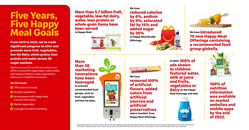
The report* concluded that between 2018-2022, McDonald’s:

  • Served more than 5.7 billion items containing fruit, vegetable, low-fat dairy, whole grain, lean protein, or water via the Happy Meal
  • Reduced average calories in Happy Meal Bundle Offerings by 6%, sodium by 9%, saturated fat by 15%, and added sugar by 26%
  • Introduced 70 new fruit, vegetable, low-fat dairy, whole grain, lean protein, and water options to the Happy Meal menu, including more than 30 fruit options
  • Removed 100% of artificial flavors, added colors from artificial sources, and artificial preservatives where feasible from Happy Meal Offerings
  • Promoted water, milk or juice as the beverage, and fruit, vegetable or dairy items as the side in 100% of Happy Meal ads
  • Made Happy Meal nutrition information accessible on websites and mobile ordering apps
  • Per external measurement and reporting in 20 of McDonald’s major markets, which collectively account for nearly 85% of global Happy Meal sales.

“The impressive results of this report prove that meaningful change is possible when you combine the global scale of a corporation like McDonald’s with the expertise of Healthier Generation,” said Kathy Higgins, chief executive officer at Alliance for a Healthier Generation. “When Healthier Generation collaborated with McDonald’s to set these goals in 2018, we could not have imagined the ways in which our world and businesses would have to adapt. Nevertheless, McDonald’s dedication and persistence toward the goals, and ultimately to families around the world, resulted in meaningful change.”

“Over the last five years, we’ve made significant improvements to our Happy Meal nutritional profile, ingredients, and marketing practices around the world, said Julia Braun, Director of Global Nutrition at McDonald’s. “As a Dietitian and Mom, I’m proud of our markets’ efforts to introduce and creatively promote fruit and vegetable offerings that are fun and accessible to kids, providing families with choices they can feel good about.”

The 2018 Global Happy Meal Goals build on McDonald’s and Healthier Generation’s longstanding relationship. McDonald’s initial set of global commitments, announced in 2013, focused on increasing families’ access to fruit, vegetables, low-fat dairy and water. These commitments greatly increased the variety of side options in Happy Meal, helping introduce items such as grape tomatoes in Australia, corn cups in Taiwan, and heart-shaped carrots in Austria. In 2018, McDonald’s renewed their commitment with five new global goals to offer more nutritious meals, simplify ingredients, increase transparency with Happy Meal nutrition information, reinforce responsible marketing practices to children, and leverage innovative marketing to promote the purchase of recommended food groups in Happy Meal. As part of these commitments, markets around the world continued to introduce new, exciting sides for children and families, such as cucumber sticks in the UK, a veggie cup in China and pear slices in France.    

About the report

The 20 McDonald’s markets measured in the report include: Argentina, Australia, Austria, Brazil, Canada, China, France, Germany, Hong Kong, Italy, Japan, Mexico, the Netherlands, Poland, Spain, Sweden, Switzerland, Taiwan, the United Kingdom, and the United States. 

The full findings, which detail McDonald’s progress against its five Global Happy Meal Goals are publicly available on McDonald’s as well as Healthier Generation’s websites.    

About Alliance for a Healthier Generation

Alliance for a Healthier Generation is a leading children’s health organization that advances equitable whole child health. Driven by our passion to ensure that every mind, every body, and every young person is healthy and ready to succeed, our work has reached over 31 million young people across the country. To learn more and help make a difference, visit HealthierGeneration.org and join us on Facebook, Twitter, and Instagram.

About McDonald’s     

McDonald’s is the world’s leading global foodservice retailer with over 40,000 locations in over 100 countries. Approximately 95% of McDonald’s restaurants worldwide are owned and operated by independent local business owners.

Share article on social media or email:


Want to Live a Heart-Healthy Life? Here are Tips from the Experts at Memorial Healthcare System


Regular exercise is one of the keys to maintaining heart health.

“75 minutes per week of rigorous exercise or 150 minutes of brisk walking is ideal. Share your goal with others to help you become more accountable.” – Dr. Helen-Valentine Chukwu, Memorial Healthcare System

EAT AN APPROPRIATE DIET

A great place to begin staying heart healthy is at the grocery store. It can be difficult to know what’s healthy and what’s not when you’re strolling among the hundreds or thousands of products on the stores’ shelves.

There’s an easy way to find the right food products and ingredients for a heart-healthy diet, says Helen-Valentine Chukwu, DO, internal medicine, Memorial Primary Care. Just follow this one simple rule: Look for the Heart Check.

The mark is a tool developed by the American Heart Association (AHA) to help shoppers identify foods that are healthy for the heart and rest of the body. For a product to become Heart-Check certified, it must meet three criteria:


  • Nutrients: It must have at least 10 percent of your daily value of one of the following nutrients: vitamin A, vitamin C, iron, calcium, protein or dietary fiber.
  • Low in bad fats: The food must have 1 gram or less of saturated fat per serving, or get 15 percent or less of its calories from saturated fats. Certified foods must also have less than a half gram per serving of trans fats, and they may not contain partially hydrogenated oils.
  • Limited sodium: The AHA has four sodium limits, depending on what type of food is being evaluated. They are up to 140 mg, 240 mg, 360 mg or 480 mg per serving.

STAY ACTIVE

You don’t need to train for a marathon or spend hours pumping iron to get your heart the exercise you need. In fact, the amount you need to help your heart is just 75 minutes per week of rigorous exercise or 150 minutes of brisk walking, Dr. Chukwu says. “Share your goal with others to help you become more accountable.”

It’s important to be as consistent as possible when it comes to exercise, and telling your friends or family about your goals can help you stick to them. Better yet, ask them to join you on a walk. Or find a gym buddy and make a schedule for when you’ll work out together.

If you’re newer to exercise, though, it’s also important to talk to your doctor about any concerns about whether you’re healthy enough to begin a fitness routine.

It’s also important to know that certain types of exercise can worsen any heart problems you already have. If you notice symptoms such as sudden dizziness, cold sweats or upper body pressure, don’t ignore it. Call your doctor, according to recommendations from the National Institutes of Health (NIH).

The benefits of exercise far outweigh the risks in most cases, though. In addition to helping your heart, it may also help prevent certain cancers, slow bone loss and strengthen your lungs.

KNOW YOUR RISK FACTORS

Some conditions related to heart health have risk factors caused by lifestyle choices or that run in the family. The lifestyle choices that can lead to poor heart health include:

  • Unhealthy eating
  • Engaging in little to no exercise
  • Smoking


The way to fix this is simple: Eat healthier foods (like the ones with the Health-Check mark), exercise more (start with the targets mentioned above) and work to quit smoking (health experts can help with that).

The factors that you can’t control have to do with family history. For example, if your dad or brother was diagnosed with heart disease before age 55, or if your mom or sister was diagnosed before turning 65, that is considered a risk factor for heart disease.

Women also have slightly different risks for heart disease. They tend to get it about a decade later than men, according to the NIH. And once a woman goes through menopause, her estrogen levels decrease, which can contribute to heart disease.

The NIH also notes that women who had preeclampsia (high blood pressure during pregnancy) have an increased risk of coronary heart disease. Unfortunately, that is an uncontrollable heart disease risk factor, the NIH says, but women who had it are encouraged to be extra watchful of their blood pressure and other contributing factors.

High cholesterol runs in families, too. If there’s a history of having high cholesterol in your family, be sure to tell your doctor. The physician may recommend checking your cholesterol levels more often.

SEE YOUR DOCTOR REGULARLY

Keeping annual appointments with your primary care doctor or cardiologist, if you have one, is critical so you can develop a customized heart-health plan with them, says Chukwu, the Memorial expert. In addition to sharing your family health history and any other concerns you may have, it’s important to ask your doctor about your heart health during annual checkups. The NIH has a list of questions to consider asking your doctor each year. It includes questions like:

  • What does my blood pressure mean, and do I need to address it?
  • What about my cholesterol levels?
  • Am I exercising enough to help my heart stay healthy?
  • What heart disease screenings should I get?

The heart health advice you find online can help only to a certain point. To get specific guidance tailored to you, regular doctor visits are key. To schedule a Memorial Primary Care appointment, call 954-276-5552 and learn more visit MHS.net/PrimaryCare. Should there be a need for a specialist, schedule an appointment with Memorial Cardiac and Vascular Institute at 855-400-6284.

Share article on social media or email:

Anderson Orthopaedic Clinic Partners with HURT! Mobile App for On-Demand, Virtual Access to Specialists in the District of Columbia, Maryland, Virginia


Anderson Orthopaedic Clinic Partners with HURT! Mobile App for On-Demand, Virtual Access to Specialists in District of Columbia, Maryland, Virginia

We are committed to evolving our practice to meet the needs of patients in our region – this includes improving access to our team through the HURT! platform that makes care coordination seamless.

Today, Anderson Orthopaedic Clinic, a leader in comprehensive orthopedic services and an M2 Orthopedics (M2O)-backed practice, is announcing a new collaboration with HURT!, the mobile app that delivers free virtual access to orthopedic specialists for the treatment of sudden, acute injuries. As the exclusive partner for patients in the District of Columbia, Maryland, and Virginia, Anderson offers patients on-demand access to a team of specialists outside of regular office hours. Through the HURT! app, patients can bypass unnecessary visits to the emergency room and receive the immediate attention they need from orthopedic experts, who can quickly review the injury virtually, assess what level of care is needed, and determine the most appropriate next steps.

“We are committed to evolving our practice to meet the needs of patients in our region – this includes improving access to our team through the HURT! platform that makes care coordination seamless,” said Ryan T. Hubbard, M.D., Physician Co-Chair of Anderson Orthopaedic Clinic Urgent Care. “We know that in most cases, injuries don’t happen during business hours, nor do they always require immediate care. With this collaboration, we can more easily assess needs and provide high-quality advice and care from our award-winning team to ensure injuries are addressed quickly.”

The news comes on the heels of the opening of Anderson’s Urgent Care Clinic, which provides patients with acute injuries access to Anderson’s team of specialists. The weekend clinic was developed to treat acute musculoskeletal injuries and to provide quality orthopedic care from the start to provide more patients with access to board-certified, fellowship-trained physicians and physician assistants for same-day service and state-of-the-art technology and treatments.

“We seek to partner with the best and brightest in the industry. As the undisputed orthopedic leader in the DMV, we know Anderson will help HURT! users get the best care,” said Dr. Brett Miller, founder of HURT! “Our team developed the first-of-its-kind app to connect patients to nearby orthopedic specialists so their injuries could be managed quickly – that includes evaluating needs before they rush to an ER to ensure they have a fast, free way to get the best care immediately.”

The HURT! smartphone app is free to download and is available on the App Store and Google Play. For more information, visit https://www.hurtapp.com/.

About HURT!

The HURT! mobile app provides painless access to urgent orthopedic care. Easily connect with a network of orthopaedic specialists from your phone to get the treatment you need, when and where you need it. For more information, visit https://www.hurtapp.com/

About Anderson Orthopaedic Clinic

Anderson Orthopaedic Clinic is widely recognized as a national leader in comprehensive orthopaedic services. The board-certified physicians of The Anderson Clinic have received specialized training in orthopaedic surgery and in subspecialty areas within the field of orthopaedic medicine and can diagnose and treat the most complicated orthopaedic conditions.

For more information, visit https://andersonclinic.com

About M2 Orthopedics

M2 Orthopedics is modernizing practice management for the nation’s best orthopedic practices and surgeons so they can focus on patient care. By combining expertise in orthopedics with a unique focus on long-term physician partnerships, M2O supports private practices through enhanced management capabilities and access to capital – empowering practices to sustain their independence and growth. M2O enables physicians to prioritize exceptional care and experiences so everyone has better outcomes – patients win, practices succeed, and ultimately, the broader orthopedic field thrives.

For more information, visit http://www.m2orthopartners.com

Share article on social media or email:

SignatureCare Emergency Center Riders Shine at the 39th Annual Tour De Paris Bike Rally


SignatureCare Emergency Center bike riding team at the 39th Annual Tour De Paris Bike Rally in Paris, TX.

To complete the 80-mile rally in triple-digit temperatures is an amazing feat and you have to be physically fit to participate in that rally.

Riders with SignatureCare Emergency Center recently braced sweltering triple-digit temperatures to complete the 80-mile 39th Annual Tour De Paris Bike Rally in Paris, TX.

Led by Dr. Steve Elsbecker, Medical Director for Greater Texas and Angel Cruz, SignatureCare ER Director of Nursing, the team from SignatureCare ER completed the bike rally in style.

Other riders wearing SignatureCare Emergency Center colors include Nick Starovic, Director of Radiology, Terra Brewton, Director of Patient Access, Felix Vega – Corporate Marketing, Nicholas Harrilal – Copperfield ER Marketing, Micheal Little – Paris ER RadTech, and Ameila Long – Paris ER Tech.

Dr. Elsbecker completed the eye-watering 80 miles in just 3.5 hours.

Congratulating the riders, Dr. Chris Langan, MD, SignatureCare Emergency Center Chief Operating Officer (COO) said completing the grueling rally was testament to their physical fitness.

“To complete the 80-mile rally in triple-digit temperatures is an amazing feat and you have to be physically fit to participate in that rally. Congratulations to everyone who participated in rally,” he said.

Speaking about the tough conditions encountered by the riders, Angel Cruz said the goal of the team was not just to participate but complete the rally.

Calling it a victorious day for all participants, he congratulated all the riders who signed up and set a goal to complete the rally.

“Congratulations to all the riders who signed up and set a goal. While we were mostly Team ‘We’ll Get There When We Get There,’ Dr. Elsbecker did cover an eye-watering 80 miles in just 3.5 hours. It was a victorious day for all,” Cruz said.

“A special thank you to Rebecca Scott and Kristal Conley (SignatureCare ER -Paris) for making this event possible for us. A big thank you to all our employee volunteers from different sites and from the corporate office for hosting “Rest Stop #1” and hydrating the event’s 1500+ cyclists,” he added.

SignatureCare Emergency Center employees were tasked with providing refreshments for the riders at rest stop #1 and Rebecca Scott, Paris ER Facility Manager, Kristal Conley – Paris ER Marketing, Kiara Ladell – Paris ER Registration, Claysel Cotham – Paris ER Radiology, Nicole Jackson – Director of Nursing for Central Texas, Cecilia Cauley – Corporate Executive Assistant, RTMC, and Kayla Waterman – Corporate Accounting, were up to the task.

Cruz said he and other SignatureCare riders are looking forward to participating in the Paris Bike Rally again next year.

About SignatureCare Emergency Center

Houston, TX-based SignatureCare Emergency Center own 24-hour emergency centers throughout Texas, including nine ER locations in the Houston area (Montrose, Houston Heights, Cypress/FM 1960, Copperfield, Memorial City, Westchase, Bellaire, Mission Bend/Sugar Land, and Stafford), Atascocita/Humble, Killeen, Austin, College Station/Bryan, Paris, Midland, Odessa, Pflugerville, Texarkana, Spring, and Lewisville, TX.

Share article on social media or email:

A Vision for Clinical Studies of Rare Diseases with Varied Prevalence Globally


Clinical Studies of Rare Diseases

Without true international collaboration, there will continue to be gaps in global patient registries and incomplete data due to a lack of multicultural sampling of patients, which decelerates the development of orphan pharmaceuticals and treatments

There are globally inconsistent definitions of what constitutes a rare disease. According to the Orphan Drug Act enacted by the U.S. Congress in 1983, a rare disease is a medical condition that affects fewer than 200,000 people.(1) A comprehensive 2022 study conducted by RARE-X concluded that there are 10,867 orphan, aka rare diseases, including genetic and non-genetic diseases, rare cancers, and diseases that are either poorly defined or not currently recognized in the major databases.(2) There are 459,912 clinical trial studies currently being conducted in the U.S. and 221 countries worldwide.(3) Yet, there continues to be underrepresentation in critical diversity categories, including age, gender, race, ethnicity, culture, and geography. International orphan drug clinical trials scarcely involve rare disease patients in Asia and India. According to the most recent estimate in 2020, about 258 million people in the Asia Pacific region were estimated to be impacted by rare diseases, with nearly half being children.(4) India comprises one-third of all rare disease cases worldwide.(5) Dr. Harsha Rajasimha is the Founder and Executive Chairman of the Indo-US Organization for Rare Diseases (IndoUSrare), a not-for-profit organization that seeks to bridge the gap that exists in the world when it comes to rare diseases.

Dr. Rajasimha notes, “Massive disparities exist between the Eastern and Western Hemispheres regarding access to diagnostics, clinical trials, drugs, medical devices, therapies, and cures. There is a disproportionate prevalence of certain rare diseases across different countries in the world. Without true international collaboration, there will continue to be gaps in global patient registries and incomplete data due to a lack of multicultural sampling of patients, which decelerates the development of orphan pharmaceuticals and treatments.”

The Public Library of Science (PLOS) Global Public Health published a research study to assess the involvement of rare disease patients in India in international clinical trials.(6) Researchers investigated Indian patients’ participation in international trials for orphan drugs and discovered that only 9 out of 202 trials registered in the U.S. took place in India. Taking the Indian diaspora into consideration, of the remaining 193 trials, approximately 1% recruited patients of Indian origin. It has been clinically proven that different ethnic and racial groups respond differently to specific drug treatments. India consists of a large ethnically diverse population, and their exclusion significantly limits the implications of diversity on trial outcomes.

A study published in Nature Genetics(7) reveals potential medical predispositions among various South Asian subpopulations due to genetic isolation caused by endogamy (the tradition of exclusively marrying within the confines of a local community, clan, or tribe) and cultural practices. For example, in specific states of Southern India, anesthesiologists inquire about Vysya heritage before surgery due to some fatal responses to muscle relaxants observed among individuals with Vysya ancestry.

The Nature Genetics study reveals that the South Asian population, consisting of over 1.5 billion people, is not a homogeneous entity but rather comprises thousands of distinct groups, including various castes and subcastes. These groups have been reinforced by cultural customs that encourage marrying within their own communities. Although there have been some recent shifts towards inter-caste and inter-subcaste marriages, especially in urban areas, gene flow between these populations has remained limited for thousands of years.

Over a span of more than 15 years, researchers have gathered DNA samples from over 2,800 individuals representing 260 South Asian groups. The study identified certain groups with strong founder effects, a reduction in genetic diversity that takes place when a small group from a larger population establishes a new population, leading to a reduction in genomic variability. This condition increases the risk of recessive diseases within these groups. Studying these distinct South Asian groups offers valuable insights into both rare and common diseases, presenting significant opportunities for genetic research.

The study also highlights the vulnerability to rare genetic diseases among residents of India and other South Asian nations; using genomic analysis, this research holds the promise of pinpointing and proactively preventing disorders that are specific to particular populations. While some South Asian-specific diseases have been previously identified, the root genetic causes of most of these conditions have remained largely unknown. The occurrence of population-specific, recessive diseases in the region has been amplified by the founder effect phenomenon, which arises when a small group of ancestors gives rise to a large number of descendants.

Spinocerebellar ataxias (SCA) are neurological disorders that result in abnormalities in gait and movement. This rare genetic condition has an estimated prevalence of around 2 cases per 100,000 people. SCA type 3, also called Machado Joseph Disease (MJD), is common worldwide but rare in India. However, in the district of Buldhana, India, several families from a close-knit community were affected. Genetic analysis confirmed SCA3 in these families, revealing a significant burden of the disease. The impact in this single village surpassed the total cases seen at the All India Institute of Medical Sciences (AIIMS) in the last two decades.(8)

Among rare diseases reported in India are hemophilia, thalassemia, sickle cell anemia, and primary immunodeficiency in children. Additionally, there are autoimmune diseases, lysosomal storage disorders such as Pompe disease, Hirschsprung disease, Gaucher’s disease, cystic fibrosis, hemangiomas, and certain forms of muscular dystrophy. The prevalence of rare diseases such as sickle cell anemia, ALS, muscular dystrophies, cystic fibrosis, and others are not homogeneous across the world or among all races and ethnicities. Sickle cell anemia, for example, is rare in the US but common in Africa, the Middle East, India, and other countries.

Recently, the Prime Minister of India launched the mission to eradicate sickle cell anemia, inviting all stakeholders to unite in the battle against this deadly disease that predominantly affects tribal communities in India. Earlier this year, Gautam Dongre from the National Alliance of Sickle Cell Organizations (NASCO) joined 40 other patient foundation members of the IndoUSrare patient alliance to maximize access to numerous investigational medicines under development by the US biopharmaceutical industry. Cystic Fibrosis and ALS are more common among rare genetic diseases in the US but rarer in India and elsewhere. This makes the distinct call for global collaborations critical in the research and development of diagnostics and therapies for all rare diseases.

As per the Ministry of Health and Family Welfare’s data,(9) India has documented approximately 450 rare disease types to date (contrast this with the 10,857 rare diseases acknowledged in the Western world). Based on estimates, half of the new cases occur in children, resulting in 35% of deaths before one year of age, 10% between the ages of one and five years, and 12% between five and 15 years.

The World Health Organization (WHO) defines these diseases as debilitating, lifelong conditions with a prevalence of less than one per 1,000 individuals. They encompass autoimmune disorders, congenital malformations, inherited cancers, and certain endemic infectious diseases with extremely low prevalence rates.

Managing rare diseases in the Asia Pacific region poses unique challenges due to socioeconomic disparities, limited research, expertise, and health policies specific to rare disease patients. The region also faces low medical awareness and a lack of momentum in recognizing and addressing the unmet needs of these patients. Additionally, the paternalistic health systems in the region further exacerbate these issues, often neglecting the voices and concerns of rare disease patients.(10) Participating in randomized controlled trials (RCTs) also burdens patients with psychological, physical, and financial challenges. Factors like poor trial information and disorganized follow-ups exacerbate the ordeal.(11)

India’s Ministry of Health and Family Welfare established the National Policy of Rare Diseases (NPRD) to increase indigenous research and local medicine production, lower the cost of treatment, promote early detection screening and prevention, and provide financial support for those suffering from rare diseases; however, the NPRD program has been plagued by ongoing funding and implementation challenges.(12)

IndoUSrare facilitates global collaboration among all stakeholders to accelerate research for rare diseases and enhance the development of efficient treatments. Their focus is on promoting equal opportunities, inclusiveness, and the availability of life-saving therapies to patients worldwide, regardless of age. The successful regulatory approval of treatments hinges on the essential partnership between patient groups, academic researchers, and industry partners.

The IndoUSrare Corporate Alliance is a coalition of biopharmaceutical, diagnostics, medical device, and other companies in the life science industry devoted to advancing orphan product development. Their shared goal is to educate, empower, and advocate for patients with rare diseases in the United States, India, and around the world, foster collaboration, and fill critical gaps to hasten diagnostics and therapies. IndoUSrare is working to create partnerships among different stakeholders, pooling resources across borders for affordable research and development.

Dr. Rajasimha explains, “Yes, there are umbrella organizations around the globe focused on rare diseases within their respective countries, but the key here is ‘within their own countries.’ The news publicizes their individual efforts, but very little focus is directed to true international collaborations — those that go beyond lip service and national borders and create a bridge between people, cultures, and medical science to find therapies and cures. This is the scenario in which IndoUSrare defined its mission and sprang into action — to make a difference in the world.”

To join the global crusade, Register Now for the Indo US Bridging RARE Summit 2023.

Connecting the Global Rare Disease Community

October 29–30, 2023

George Mason University, Arlington, VA, USA

About IndoUSrare

IndoUSrare is a humanitarian nonprofit 501(c)(3) tax-exempt public charity organization based in the United States. Founder and Executive Chairman Dr. Harsha Rajasimha, who lost a child to a rare disease in 2012, has been a rare disease advocate for more than 10 years. To address the unmet needs of diverse patients with rare diseases globally, the leadership team comprised of experienced professionals from research, advocacy, regulatory, and drug development seeks to build cross-border collaborations connecting stakeholders of rare diseases in low- and middle-income regions such as India, with their counterparts and clinical researchers in the United States to improve the diversity of clinical trial participants, accelerate research and development, and improve equitable access to life-saving therapies to diverse populations of rare disease patients. Visit https://indousrare.org.

References: 

1. Commissioner, O. of the. (n.d.). Rare diseases at FDA. U.S. Food and Drug Administration. fda.gov/patients/rare-diseases-fda.

2. Rare-X releases new report that uncovers large number of previously uncounted rare diseases. RARE. (2022, June 7). rare-x.org/blog/2022/06/07/rare-x-releases-new-report-that-uncovers-large-number-of-previously-uncounted-rare-diseases/.

3. Trends, charts, and maps. ClinicalTrials.gov. (n.d.). classic.clinicaltrials.gov/ct2/resources/trends.

4. Carter, J. (2023, February 14). Rare disease care across asia pacific. Sandpiper. sandpipercomms.com/health/rare-disease-care-across-asia-pacific/.

5. Patel, M. and S. (2022, July 18). Rare diseases in India: “orphan” no more? ORF. orfonline.org/research/rare-diseases-in-india-orphan-no-more/.

6. Chakraborty, M., Choudhury, M. C., Chakraborty, I., Saberwal, G. (n.d.). Rare disease patients in India are rarely involved in International Orphan Drug Trials. PLOS Global Public Health. journals.plos.org/globalpublichealth/article?id=10.1371%2Fjournal.pgph.0000890.

7. Nature Publishing Group. (2017, September 1). Ancestry-inspired Genomic Health. Nature News. nature.com/articles/ng.3953.

8. Uncovering the hidden burden of rare genetic diseases in India. Genomics and other omics tools for enabling Medical Decisions (GOMED). (n.d.). gomed.igib.in/impact-stories/uncoveringthehiddenburdenofraregeneticdiseasesinindia.

9. Rare diseases need not be neglected anymore. BioSpectrum India. (n.d.). biospectrumindia.com/features/73/22713/rare-diseases-need-not-be-neglected-anymore-.html.

10. Jain, R. (2020, July 20). Rare diseases in Asia and the Pacific must be tackled too. Asia Pathways. asiapathways-adbi.org/2020/07/rare-diseases-asia-pacific-must-be-tackled-too/.

11. Naidoo, N., Nguyen, V. T., Ravaud, P., Young, B., Amiel, P., Schant; eacute;, D., Clarke, M., Boutron, I. (2020, January 20). The research burden of randomized controlled trial participation: A systematic thematic synthesis of qualitative evidence – BMC medicine. BioMed Central. bmcmedicine.biomedcentral.com/articles/10.1186/s12916-019-1476-5.

12. Rare disease policy: Need of the hour. Times of India Blog. (2023, April 24). timesofindia.indiatimes.com/blogs/voices/rare-disease-policy-need-of-the-hour/.


Lake Nona’s WHIT and Welltech Ventures Announce Global Wellness and Health Innovation Competition


The competition is spearheaded by Lake Nona’s Wellness Home Built on Innovation and Technology (WHIT), and Welltech Ventures.

“It is our hope that these innovations will enable a whole new living experience and an immersive approach to health and wellness.” – Gloria A. Caulfield, Vice President of Strategic Alliances for Tavistock and President of the Lake Nona Institute.

Lake Nona’s Wellness Home Built on Innovation and Technology (WHIT), and Welltech Ventures, a prominent wellness and health innovation fund, today announced the establishment of a global call to action competition to discover groundbreaking technologies that tackle major challenges in wellness and ultimately answer the question: “what is a healthy home?”

Entrepreneurs and established companies dedicated to creating health and wellness solutions and experiences are invited to participate in this extraordinary opportunity. A distinguished panel of international CEOs and business leaders from the wellness and technology sectors will serve as judges, including Daniel Kraft, M.D., Founder & Chair, NextMed Health, and John Driscoll, EVP & President, U.S. Healthcare, Walgreens Boots Alliance. The judges will evaluate the submissions and provide feedback on the participating startups during a virtual demo day, which is scheduled for November 13, 2023. The winner will be announced in a news release following the event.

“We’re excited to partner with Lake Nona for this Call for Innovation, as they offer the perfect environment to evaluate the next generation of health and wellness technologies for the home within its WHIT house,” said Galit Horovitz, Co-Founder & Partner at Welltech Ventures. “We are witnessing health and wellness at the forefront of innovation in the home. This is just the beginning of an extraordinary revolution in wellness and health. In the contest, we will be looking for disruptive technologies helping people live happier, healthier, and longer lives in their home environment.”

WHIT, which was created by the Lake Nona Institute, stands as a pioneering home, purposefully designed to integrate wellness solutions and technologies while rigorously researching their effectiveness in enhancing health and wellbeing. Nestled in Lake Nona, a smart and sustainable city in Central Florida, WHIT exemplifies a forward-thinking approach to home design focused on optimizing health and well-being within the built environment.

“It’s our pleasure to support the global call for action this year,” said Gloria A. Caulfield, Vice President of Strategic Alliances for Tavistock and President of the Lake Nona Institute. “The focus on health and wellness in the home environment is timely, as sustainability and longevity practices continue to increase in popularity and necessity. It is our hope that these innovations will enable a whole new living experience and an immersive approach to health and wellness.”

Modern consumers care deeply about wellness. A recent report from McKinsey & Co. showed continued growth of consumer interest in health and wellness globally, with a market of more than $1.5 trillion and annual growth of 5 to 10 percent. Despite being an increasingly crowded space, there are still gaps in the market that present exciting opportunities to introduce novel products and solutions. This competition seeks to identify and pursue those opportunities, and offer the winner the chance to evaluate their product in the unique living lab setting of WHIT House. The winner will also receive a prize of $10,000.

The contest is now open: APPLY HERE

Deadline: September 30, 2023

About Welltech Ventures

Welltech Ventures is a leading venture capital firm solely focused on the wellness and health space. Our experience, thought leadership, vast global network, and founder-focused, fast-paced culture makes us the partner of choice for the most promising and profitable well-tech entrepreneurs.

We’re passionate about investing in early-stage startups that are harnessing new technologies to improve people’s lives in ways we never dreamed possible, innovating in areas such as remote care, preventive medicine, mental health, physical wellness, nutrition, longevity, wellness sustainability, and more. 

About Lake Nona

Planned and developed by the Tavistock Group, Lake Nona is one of the fastest growing and most innovative communities in America. Located in Orlando, Florida, the 17-square-mile community has established a new standard of living for its residents with groundbreaking initiatives around technology, mobility, and wellbeing. Lake Nona is located contiguous to Orlando International Airport in the most visited destination in the U.S. The smart and connected community’s advanced infrastructure and commitment to collaboration has drawn visionary companies and entrepreneurs from across the globe to join its living lab environment accelerating economic growth and opportunity across health and life sciences, education, hospitality, and sports and performance. Lake Nona’s attractive business ecosystem is enhanced by a thriving cultural landscape defined by iconic architecture and engaging public art installations, miles of trails and walkable green spaces, weekly signature events, shopping, dining and entertainment options set amongst Central Florida’s beautiful natural landscape and year-round sunshine. For more information, visit http://www.lakenona.com

About WHIT

The Wellness Home built on Innovation and Technology (WHIT) is a first-of-its-kind home designed to activate health solutions and technologies and research their ability to measurably improve health and wellbeing. It is both a livable space and a living laboratory to test new prototypes, evaluate solutions and assess health and wellness concepts within an established wellbeing centered community. For more information, visit http://www.meetwhit.com/.

About Tavistock Development Company

Tavistock Development Company is a diversified real estate firm located in Orlando, Fla. owned by Tavistock Group. Specializing in planning, design, finance, construction, and development of groundbreaking projects, Tavistock Development Company has built a portfolio of nationally-acclaimed residential, retail, commercial, and industrial projects highlighted by master-planned communities Lake Nona and Sunbridge in Central Florida and Pier Sixty-Six in Fort Lauderdale. For more information, visit tavistockdevelopment.com.

symplr’s Chief Nursing Officer Karlene Kerfoot Honored with the DAISY Foundation’s Lifetime Achievement Award


www.symplr.com

“Karlene is a beloved member of the symplr team, and everyone is thrilled to congratulate her for the well-deserved recognition of the prestigious DAISY Lifetime Achievement Award.” – BJ Schaknowski, CEO of symplr.

symplr®, the leading enterprise healthcare operations software provider, announced that Chief Nursing Officer Karlene Kerfoot, PhD, RN, FAAN, has received the DAISY Foundation’s Lifetime Achievement Award. This award was created to recognize nurses who have devoted their life’s work to the compassionate care of others and to advancing the nursing profession in delivering extraordinary excellence in ways that matter most to patients and families. Kerfoot, a DAISY Foundation Board Member, was honored in a surprise announcement by Bonnie Barnes, FAAN, co-founder of the DAISY Foundation™, who spoke to Kerfoot’s dedication, leadership, mentorship and advocacy for fellow nurses through professional roles and volunteer efforts.

“I’m honored to receive the DAISY Foundation’s Lifetime Achievement Award and to share the spirit for which it was created with every nurse I’ve ever worked with and every patient we’ve all cared for along the way,” Dr. Kerfoot said. “I also want to recognize the symplr team for the collaboration and commitment we share in enabling the nurse and other members of the care team to spend more time with patients through simpler healthcare operations.”    

Dr. Kerfoot has been a nurse for more than 40 years, and previously held positions in clinical practice, healthcare consulting, project management, as well as executive positions in large healthcare systems, academic appointments in Business Administration and Nursing. As CNO at symplr, she is responsible for integrating the science of patient care, staffing, and clinical informatics into hospital workflows. This year, she spearheaded a joint launch of the “Beyond Gratitude” campaign with DAISY and the American Organization for Nursing Leadership (AONL), to provide meaningful recognition to nurse managers and to support their emotional well-being.

“Karlene is a beloved member of the symplr team, and everyone is thrilled to congratulate her for the well-deserved recognition of the prestigious DAISY Lifetime Achievement Award,” said BJ Schaknowski, CEO of symplr. “We are very grateful and humbled to have someone in our organization who is as dedicated and compassionate about patient care and supporting the providers giving that care as Karlene has been throughout her career. We also thank the DAISY Foundation for making possible this recognition.”

“Karlene has done so much for healthcare and for the DAISY Foundation, and we can never thank her enough. She is an icon in nursing and in our hearts and passionate about what nurses do every day,” shares Barnes, co-founder of the DAISY Foundation.


  • View the recognition video featuring Linda Knodel, former Chief Nurse Executive, Kaiser Permanente, Patricia Mook, SVP of Nursing Operations at Advocate Health, MaryBeth Kingston, EVP, CNO of Advocate Aurora Health, and Robyn Begley, CEO of AONL, SVP Workforce, AHA.

Dr. Kerfoot has published over 400 articles in the areas of data-driven staffing, workforce management, leadership, and patient safety. She also writes a popular column on leadership for Nursing Economics. Dr. Kerfoot holds a PhD from the University of Illinois, Chicago, an MA and BSN from the University of Iowa, and has completed executive leadership programs such as the Wharton School for Nurse Executives.

The DAISY Foundation is a not-for-profit organization established in memory of J. Patrick Barnes. The compassionate care Patrick and his family received from nurses while he was ill inspired the creation of The DAISY Award® for Extraordinary Nurses, an evidenced-based means of providing nurse recognition wherever they practice, in whatever role they serve, and throughout their careers. The foundation partners with 6,000+ healthcare facilities and schools of nursing internationally and funds nursing research and evidence-based practice studies.

About symplr

symplr is the leader in enterprise healthcare operations software and services. For more than 30 years and with deployments in 9 of 10 U.S. hospitals, symplr has been committed to improving healthcare operations through its cloud-based solutions, driving better operations for better outcomes. Our provider data management, workforce management, and healthcare governance, risk management, and compliance (GRC) solutions improve the efficiency and efficacy of healthcare operations, enable caregivers to quickly handle administrative tasks so they have more time to do what they do best: provide high-quality patient care. Learn how at http://www.symplr.com.

Share article on social media or email: