All posts by imreal

Attorneys, at Blumenthal Nordrehaug Bhowmik De Blouw LLP, File Suit Against Rady Children’s Hospital-San Diego, Allegedly Failing to Provide Employees With Rest Breaks


Law Office of Blumenthal Nordrehaug Bhowmik De Blouw LLP

For more information about the class action lawsuit against Rady Children’s Hospital-San Diego, call (800) 568-8020 to speak to an experienced California employment attorney today.

The San Diego employment law attorneys, at Blumenthal Nordrehaug Bhowmik De Blouw LLP, filed a class action complaint alleging that Rady Children’s Hospital-San Diego violated the California Labor Code. The Rady Children’s Hospital-San Diego class action lawsuit, Case No. 37-2023-00027035-CU-OE-CTL, is currently pending in the San Diego County Superior Court of the State of California. A copy of the Complaint can be read here.

According to the lawsuit filed, Rady Children’s Hospital-San Diego allegedly (a) failed to pay minimum wages, (b) failed to pay overtime wages, (c) failed to provide legally required meal and rest periods, (d) failed to provide accurate itemized wage statements, (e) failed to reimburse for required expenses, (f) failed to pay sick wages, and (g) failed to pay wages when due, all in violation of the applicable Labor Code sections listed in California Labor Code Sections 201-204, 226, 226.7, 233, 246, 510, 512, 1194, 1197, 1197.1, 2802, and the applicable Wage Order(s), and thereby gives rise to civil penalties as a result of such alleged conduct.

The complaint further alleges Rady Children’s Hospital-San Diego restricted employees from unconstrained walks in which employees could not leave work premises during their rest period. The applicable California Wage Order requires employers to provide employees with off-duty rest periods, which the California Supreme Court defined as time during which an employee is relieved from all work related duties and free from employer control.

For more information about the class action lawsuit against Rady Children’s Hospital-San Diego, call (800) 568-8020 to speak to an experienced California employment attorney today.

Blumenthal Nordrehaug Bhowmik De Blouw LLP is an employment law firm with offices located in San Diego, San Francisco, Sacramento, Los Angeles, Riverside and Chicago that dedicates its practice to helping employees, investors and consumers fight back against unfair business practices, including violations of the California Labor Code and Fair Labor Standards Act. If you need help in collecting unpaid overtime wages, unpaid commissions, being wrongfully terminated from work, and other employment law claims, contact one of their attorneys today.

***THIS IS AN ATTORNEY ADVERTISEMENT***

Share article on social media or email:

Compass to Care Childhood Cancer Foundation Receives the SBB Research Group Foundation Grant


Compass to Care Childhood Cancer Foundation received a $5,000 grant from the SBB Research Group Foundation, which awards monthly grants to support impactful organizations.

Compass to Care Childhood Cancer Foundation is a nonprofit organization that eliminates transportation barriers to healthcare for children living in poverty who are being treated for cancer.

The Foundation accomplishes this through three non-emergency medical transportation solutions (NEMT) that allow families free transportation services for all cancer-related medical treatments. These solutions reduce cancer survival discrepancies, giving all children hope for a cancer cure.

Founder and CEO Michelle May of Compass to Care shares, “The social determinants of health and living in poverty are the differentiating factor that determines whether or not children can have survival rates of what is potentially possible.”

The organization’s success is due to Compass to Care’s strong relationships with hospitals and medical centers that treat pediatric cancer. Open communication with social workers and medical professionals allows families to connect with Compass and have their transportation needs tailored to their treatment requirements.

“Compass to Care gives families hope that their child can receive proper care without worrying about travel,” said Matt Aven, co-founder and board member of the SBB Research Group Foundation.

The organization will use the SBB Research Group Foundation grant for the transportation needs of children in the community. This grant will empower families to make timely decisions about getting their children to cancer care, with the hope of long-term survival.

About the SBB Research Group Foundation

The SBB Research Group Foundation is a 501(c)(3) nonprofit that furthers the philanthropic mission of SBB Research Group LLC (SBBRG), a Chicago-based investment management firm led by Sam Barnett, Ph.D., and Matt Aven. The Foundation provides grants to support ambitious organizations solving unmet needs with thoughtful, long-term strategies. In addition, the Foundation sponsors the SBBRG STEM Scholarship, which supports students pursuing science, technology, engineering, and mathematics degrees.

Share article on social media or email:

EEG Analysis Can Detect Risk for Anxiety Disorders in Children by Seven Years Old


“Our study shows that EEG recordings contain information about brain function that is useful for early detection of childhood anxiety disorders, creating new opportunities for early detection and intervention. With childhood anxiety disorders on the rise, these findings come at a critical time.”

A newly published study in the journal Frontiers in Psychiatry titled ‘A biomarker discovery framework for childhood anxiety’ suggests that latent factors extracted from electroencephalogram (EEG) recordings in childhood are promising candidate biomarkers for anxiety disorders and for externalizing disorders. This study found that appropriate age was important – with accuracy improving up to seven years of age for anxiety and three to five years of age for externalizing disorders (primarily ADHD). The study also suggests that anxiety emerges later than some other neurodevelopmental disorders.

The study was led by University of San Francisco (USF) Professor William Bosl, PhD, director of the USF Center for AI and Medicine and professor of Health Informatics, and co-first author Michelle Bosquet Enlow, PhD, together with colleagues at Harvard Medical School and Boston Children’s Hospital, where Dr. Bosl holds affiliate faculty appointments.

“Until now, it’s been widely accepted that anxiety disorders can only be effectively diagnosed after the emergence of clinical symptoms, which results in missed opportunities to intervene during critical formative periods,” stated Bosl. “Our study shows that EEG recordings contain information about brain function that is useful for early detection of childhood anxiety disorders, creating new opportunities for early detection and intervention. Importantly, new technical advances will soon make EEG widely available as a low-cost, easy-to-administer, time-efficient brain measurement method that could be included in routine clinical practice, transforming opportunities for wide screening for risk and preventative intervention. With childhood anxiety disorders on the rise, these findings come at a critical time.”

EEG recordings from two (5, 7 years) or three (3, 5, 7 years) sessions gave much better results than 7-year recordings alone, suggesting a developmental trajectory for anxiety disorders. However, the 7-year recordings were essential to detection. EEG recordings in the first year of life were not predictive of future anxiety outcomes.

The paper was co-authored by:

Michelle Bosquet Enlow, PhD, Department of Psychiatry and Behavioral Sciences, Boston Children’s Hospital, and Department of Psychiatry, Harvard Medical School

Charles Nelson, PhD, director of the Laboratories of Cognitive Neuroscience at Boston Children’s Hospital, the Department of Pediatrics at Harvard Medical School and the Harvard Graduate School of Education

Eric F. Lock, PhD, Division of Biostatistics, School of Public Health, University of Minnesota

The study was supported by the National Institute of Mental Health (R01MH078829), the Koret Foundation through the University of San Francisco, the Tommy Fuss Center for Neuropsychiatric Disease Research, the Program for Behavioral Science, Department of Psychiatry and Behavioral Sciences, Boston Children’s Hospital, and the National Institute of General Medical Sciences (R01GM130622).

Journalists interested in speaking with study author William Bosl, PhD, should contact Kellie Samson at (415) 601-1915 or ksamson@usfca.edu.

About the USF Center for AI and Medicine

The USF Center for AI and Medicine (CAIM) brings together faculty and staff from both the College of Arts and Sciences and the School of Nursing and Health Professions, together with clinical partners to develop computational algorithms to enable holistic personalized healthcare. The CAIM has particular expertise and focus on mental, neurological, and neurodevelopmental disorders and their role in health through the lifespan.

About the USF School of Nursing and Health Professions

The mission of the USF School of Nursing and Health Professions is to improve the health of all populations through equitable and compassionate service, value-driven research, and innovative education of health professionals, preparing them to use their hearts, minds, and souls to change the health of the world. For more information, visit our website.

About the University of San Francisco

The University of San Francisco is a private, Jesuit Catholic university that reflects the diversity, optimism, and opportunities of the city that surrounds it. USF offers more than 230 undergraduate, graduate, professional, and certificate programs in the arts and sciences, business, law, education, and nursing and health professions. At USF, each course is an intimate learning community in which top professors encourage students to turn learning into positive action, so the students graduate equipped to do well in the world — and inspired to change it for the better. For more information, visit usfca.edu.

About Boston Children’s Hospital

The research enterprise at Boston Children’s Hospital, comprising more than 3,000 researchers, is the largest and most highly funded pediatric research hospital in the world. Our work is fueled by a deep understanding of disease biology coupled with world-class discovery platforms, including genetics and genomics, gene editing, bioinformatics, proteomics, bioengineering, image analysis, biobanks, disease-specific stem cell lines, and a range of animal models. We have special expertise in rare disease discovery, a robust Translational Research Program and large, diverse patient populations for clinical research and trials. For more information, visit BCH Research.

AltaPointe Health plans three hiring events for August to fill positions across continuum


As part of our commitment to deliver the utmost care, we are eager to welcome new talent who share our passion for providing exceptional behavioral and primary care to our patients and their families.

AltaPointe Health, a leader in healthcare for more than 60 years, is excited to announce its upcoming hiring events for August.

“We are seeking compassionate, dedicated, and positive people to join our team,” said Tori Kraver, recruitment manager. “As part of our commitment to deliver the utmost care, we are eager to welcome new talent who share our passion for providing exceptional behavioral and primary care to our patients and their families.”

The hiring events will take place on the following dates and times.

August 15 – 3030 Knollwood Drive in Mobile, AL from 10 am – 2 pm

August 17 – 372 South Greeno Road in Fairhope, AL from 10 am – 2 pm

August 24 – 303 Knollwood Drive in Mobile, AL from 10 am – 2 pm

Prospective candidates can meet with program managers, learn about our services, and explore potential career opportunities that align with their talents and career goals. The hiring event is a chance for AltaPointe to identify individuals who will strengthen its mission to improve the health and wellness of all people across seven counties in Alabama.

Open positions available at the hiring event include but are not limited to nurses, certified medical assistants, office professionals, therapists, behavioral aides, direct care staff, and more.

“There is no need to register for the hiring events, but we would like for people to complete a job application online beforehand, but it is not required,” Kraver added. “Some potential candidates could be offered a job on the spot. We encourage you to bring a resume if you have one and hiring bonuses are available for some positions.”

Visit altapointe.org to learn more about open positions with AltaPointe.

AltaPointe Health is an extensive healthcare system providing primary and behavioral healthcare. Each year it provides more than 1 million services to 45,000 patients across Alabama. A national leader in behavioral health for more than 60 years, AltaPointe expanded its service array in 2018 to include primary care. With an even greater focus on the patient’s whole health, it operates Accordia Health, a Federally Qualified Health Center with six clinic sites. Rounding out the continuum, AltaPointe operates two psychiatric hospitals serving children and adults, a Behavioral Health Crisis Center, 27 outpatient behavioral and primary health care clinics, and BayView Professional Associates, its private practice arm serving southwest Alabama. Its team of 28 physicians and 16 physician extenders renders the medical care services throughout the organization and serves as the administration and faculty for the University of South Alabama, College of Medicine-Department of Psychiatry. J. Tuerk Schlesinger is its chief executive officer.

Share article on social media or email:

New Biological Markers Found That May Predict Which Patients Won’t Respond to Chemotherapy


The investigators identified new biological markers that may predict which ovarian cancer patients won’t respond to chemotherapy. Chowdhury et al, Cell.

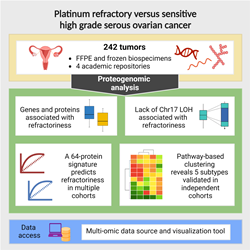
Using a novel proteogenomic strategy and a variety of machine learning tools, investigators from the Icahn School of Medicine at Mount Sinai and colleagues have identified a 64-protein signature that may predict a subset of ovarian cancer patients who are unlikely to respond to chemotherapy.

The multicenter study, published online August 3 in Cell [DOI#: 10.1016/j.cell.2023.07.004], reports on a pioneering analysis of chemo-refractoriness in high-grade serous ovarian cancer (HGSOC). The work also implicates possible therapeutic targets for these patients.

Epithelial ovarian cancer causes 185,000+ global deaths annually. HGSOC accounts for 60 percent of these deaths. Despite advances in treatment, mortality has remained the same for these patients in the past 40 years. Currently, there’s no way to distinguish refractory cases (who never respond to chemotherapy), leading some patients to unnecessarily experience the adverse effects of platinum-based chemotherapy without the benefits.

“To address this critical unmet need, we performed a proteogenomic analysis to identify molecular signatures of refractory HGSOC and potential treatment targets. Predictors of chemo-refractoriness could enable precision oncology, sparing patients the toxicity and helping to identify the most effective therapy through targeted clinical trials,” says Pei Wang, PhD, Professor of Genetics and Genomic Sciences at Icahn Mount Sinai and co-corresponding author on the paper.

The investigators studied 242 tumors samples collected from HGSOC patients comprising both chemo-refractory and chemo-responsive individuals before they received chemotherapy. Using advanced computer models to analyze protein and gene expression profiles of the tumors, they found a specific group of 64 proteins that can predict which tumors won’t respond well to the first-line platinum-based therapy. This prediction was confirmed in two independent cohorts of patients.

In addition, based on pathway activity measurements derived from the proteomics data, the team also identified five new HGSOC subtypes, validated in two independent patient groups and in lab-grown tumor mouse models, suggesting that different treatment strategies may be needed.

Next, the researchers plan to confirm their findings in additional retrospective and prospective studies.

Once validated, these tools, say the investigators, can be used by clinicians to design customized alternative treatments other than the current standard chemotherapy to help patients with refractory tumors.

As a part of the research, the lab of Amanda Paulovich, MD, PhD, a lead author of the study, is working on a new test that uses a multiplex assay panel to measure the proteins in the prediction model faster and more efficiently. Dr. Paulovich is a professor at Fred Hutchinson Cancer Center in Seattle, where she holds the Aven Foundation Endowed Chair.

The test will combine information from multiple proteins to create a single score that indicates the likelihood of chemo-refractory disease. If successful, say the investigators, it could be a significant development for about 35 percent of patients with ovarian cancer who could avoid treatments that won’t work for their specific type of cancer.

The paper is titled “Proteogenomic analysis of chemo-refractory high-grade serous ovarian cancer.”

Authors on the Cell paper include: Shrabanti Chowdhury, PhD, (Icahn Mount Sinai); Jacob J. Kennedy (Fred Hutchinson Cancer Center); Richard G. Ivey (Fred Hutchinson Cancer Center); Oscar D. Murillo (Fred Hutchinson Cancer Center); Noshad Hosseini, PhD candidate (University of Michigan School of Medicine); Xiaoyu Song, DrPH (Icahn Mount Sinai); Francesca Petralia, PhD (Icahn Mount Sinai); Anna Calinawan (Icahn Mount Sinai); Sara R. Savage, PhD (Baylor College of Medicine); Anna B. Berry, MD (Syapse, Inc.); Boris Reva, PhD (Icahn Mount Sinai); Umut Ozbek, PhD (Icahn Mount Sinai); Azra Krek, PhD (Icahn Mount Sinai); Weiping Ma, PhD (Icahn Mount Sinai); Felipe da Veiga Leprevost, PhD (University of Michigan School of Medicine); Jiayi Ji (Icahn Mount Sinai); Seungyeul Yoo, PhD (Sema4); Chenwei Lin, PhD (Fred Hutchinson Cancer Center); Uliana J. Voytovich (Fred Hutchinson Cancer Center); Yajue Huang, MD (Mayo Clinic); Sun-Hee Lee, PhD (Mayo Clinic); Lindsay Bergan (Fred Hutchinson Cancer Center); Travis D. Lorentzen (Fred Hutchinson Cancer Center); Mehdi Mesri, M.Med.Sci.PhD (National Cancer Institute); Henry Rodriguez, PhD, MS, MBA (National Cancer Institute); Andrew N. Hoofnagle, MD, PhD (University of Washington); Zachary T. Herbert, MS (Dana-Farber Cancer Institute); Alexey I. Nesvizhskii, PhD (University of Michigan School of Medicine); Bing Zhang, PhD (Baylor College of Medicine); Jeffrey R. Whiteaker, PhD (Fred Hutchinson Cancer Center); Samuel C. Mok, PhD (The University of Texas MD Anderson Cancer Center); Scott H. Kaufmann, MD, PhD (Mayo Clinic); Charles Drescher, MD (Fred Hutchinson Cancer Center); Marcin Cieslik, PhD (University of Michigan School of Medicine); Pei Wang, PhD (Icahn Mount Sinai); Michael J. Birrer, MD, PhD (University of Arkansas for Medical Sciences); Amanda G. Paulovich, Md, PhD (Fred Hutchinson Cancer Center); and Clinical Proteomic Tumor Analysis Consortium (CPTAC) Collaborators (NYU School of Medicine, University of Miami, University of California San Francisco, and University of Minnesota).

This work was done in collaboration with the U.S. National Cancer Institute’s Clinical Proteomic Tumor Analysis Consortium (CPTAC) and supported by grants U01CA214114, R50CA211499, U24CA210993, U24CA271114, U24CA210954, U24CA210967, U24CA210972, P30CA240139, P50CA136393, S10OD028685, and P30CA015704, as well as from a generous donation from the Aven Foundation.

To view competing interests, please see the paper at Cell.

About the Icahn School of Medicine at Mount Sinai

The Icahn School of Medicine at Mount Sinai is internationally renowned for its outstanding research, educational, and clinical care programs. It is the sole academic partner for the eight- member hospitals* of the Mount Sinai Health System, one of the largest academic health systems in the United States, providing care to a large and diverse patient population.

Ranked 14th nationwide in National Institutes of Health (NIH) funding and among the 99th percentile in research dollars per investigator according to the Association of American Medical Colleges, Icahn Mount Sinai has a talented, productive, and successful faculty. More than 3,000 full-time scientists, educators, and clinicians work within and across 44 academic departments and 36 multidisciplinary institutes, a structure that facilitates tremendous collaboration and synergy. Our emphasis on translational research and therapeutics is evident in such diverse areas as genomics/big data, virology, neuroscience, cardiology, geriatrics, as well as gastrointestinal and liver diseases.

Icahn Mount Sinai offers highly competitive MD, PhD, and Master’s degree programs, with current enrollment of approximately 1,300 students. It has the largest graduate medical education program in the country, with more than 2,000 clinical residents and fellows training throughout the Health System. In addition, more than 550 postdoctoral research fellows are in training within the Health System.

A culture of innovation and discovery permeates every Icahn Mount Sinai program. Mount Sinai’s technology transfer office, one of the largest in the country, partners with faculty and trainees to pursue optimal commercialization of intellectual property to ensure that Mount Sinai discoveries and innovations translate into healthcare products and services that benefit the public.

Icahn Mount Sinai’s commitment to breakthrough science and clinical care is enhanced by academic affiliations that supplement and complement the School’s programs.

Through the Mount Sinai Innovation Partners (MSIP), the Health System facilitates the real-world application and commercialization of medical breakthroughs made at Mount Sinai. Additionally, MSIP develops research partnerships with industry leaders such as Merck & Co., AstraZeneca, Novo Nordisk, and others.

The Icahn School of Medicine at Mount Sinai is located in New York City on the border between the Upper East Side and East Harlem, and classroom teaching takes place on a campus facing Central Park. Icahn Mount Sinai’s location offers many opportunities to interact with and care for diverse communities. Learning extends well beyond the borders of our physical campus, to the eight hospitals of the Mount Sinai Health System, our academic affiliates, and globally.

——————————————————-

  • Mount Sinai Health System member hospitals: The Mount Sinai Hospital; Mount Sinai Beth Israel; Mount Sinai Brooklyn; Mount Sinai Morningside; Mount Sinai Queens; Mount Sinai South Nassau; Mount Sinai West; and New York Eye and Ear Infirmary of Mount Sinai.

Hilary Framke to Build Relationships in the EHS Community and Beyond


“…this position affords me the opportunity to shape the SafetyStratus system and services into the most effective EHS software on the market—serving the industry’s ultimate goal of reducing risk to prevent injuries and environmental harm.”-Hilary Framke, VP of EHS Solutions

SafetyStratus, an enterprise EHS software platform company that works with partners across a variety of industries to optimize Environmental, Health, and Safety (EHS) programs, announced that Hilary Framke, a progressive leader for EHS in industrial and commercial markets, has joined the company as the first Vice President of EHS solutions. In this role, she will guide SafetyStratus’ strategic plan for building a space for the EHS community to contribute their voice in the shaping of products that meet the needs and advance the work of the industry.

Before joining the SafetyStratus team, Framke served as the Head of EHS for a global business line within Siemens Healthineers. During her time in this position at the third largest medical device manufacturer in the world, Framke led the environmental, health, safety, sustainability, and functional strategy to achieve record-breaking results in environmental protection and total recordable incident rates (TRIR). In this last year, Framke spearheaded global projects for all 68,000 Siemens Healthineers employees in major risk categories including ergonomics, global standards in electrical safety and the control of hazardous energy, diversity and inclusion for gender equality in leadership roles, and more.

Commenting on her appointment to VP of EHS Solutions, Framke said, “I was first introduced to the SafetyStratus platform in 2012. At the time, my organization was investigating options in the EHS software space, and I agreed to a demo. I was blown away by how intuitive and user-friendly the system was. I’ve spent my entire career in the manufacturing industry as an EHS leader, directly facing the work-related risks that lead to employee injuries/illnesses, compliance exposure, and environmental impact. I know firsthand how frustrating it can be when a software solution doesn’t provide the efficiency that was promised. I’ve always been a leader committed to change and this position affords me the opportunity to shape the SafetyStratus system and services into the most effective EHS software on the market—serving the industry’s ultimate goal of reducing risk to prevent injuries and environmental harm.

My mind is buzzing with the potential to make a huge impact, not just with one organization, but with all those clients that SafetyStratus currently serves and those we will meet in the future. This new position enables me to walk behind the ‘technology curtain’ and have a seat at the table for product development, capability, functionality, and value. I want to secure this same privilege for as many EHS professionals as I can so that they too can contribute their past experiences and skills to the shaping of solutions for EHS issues in today’s workplace.”

Delving deeper into how this transition into a position within a software company appealed to her, Framke explained, “the modern workplace is facing new environmental, resource, and workforce challenges and opportunities. EHS practitioners are seeing the boundaries of their responsibilities being pushed to include sustainability, remote work risk control, and mental health. All the while, expectations to improve KPI performance and compliance assurance are becoming more aggressive. This push-and-pull between expectations, resources, and scope can only be resolved through technology-driven efficiency. Software that provides real-time insights using the power of EHS data is how EHS leaders can prioritize efforts that add immediate value and communicate the biggest risks to all levels of the organization, from executives to frontline leadership. I’m thrilled to contribute my professional EHS experiences to make a real difference in how software enables world-class EHS performance.”

Operating within an environment of continuous improvement, Framke will collaborate with the entire SafetyStratus team—from operations, sales, and marketing to product development. The scope of these interactions will include Framke contributing recommendations and oversight of changes that translate to improvements in productivity, business integration, remote work engagement, employee collaboration, and data visibility. SafetyStratus will be promoting opportunities to introduce Framke both internally and externally, leading to discussions on system performance, usage, satisfaction, and EHS thought leadership that are expected to positively impact current operations and the overall EHS industry.

About SafetyStratus

Empowering digital transformation in EHS programs with the power of leading-edge technology backed by a team of safety professionals, SafetyStratus has been trusted to advance critical safety priorities across organizations within Academia, Healthcare, Construction, Manufacturing, Research & Development, and more. We support innovation in saving lives and the environment by successfully integrating knowledgeable people and sustainable processes with our multi-level, cloud-based platform. Incorporating a driving focus on our clients, we build and teach configurable solutions to evolving problems—moving institutions into the future.

With headquarters located in Plano, Texas, our company has an employee base of industry experts and innovators, spanning the globe.

For more information visit http://www.safetystratus.com or LinkedIn, Twitter, and Facebook.

Share article on social media or email:


The Lustgarten Foundation Announces Extraordinary Year of Research Grants Fueling Bold and Innovative Pancreatic Cancer Research


To date, the Lustgarten Foundation has funded more than $250 million in research grants and has been a leading force in every major advancement in pancreatic cancer research.

“For 25 years, Lustgarten has been an industry trailblazer, driving progress and inspiring hope throughout the community. Our commitment remains resolute as we build on this momentum with a clear vision of a future with pancreatic cancer cures,” said Linda Tantawi, CEO of the Lustgarten Foundation.

The Lustgarten Foundation, the nation’s largest private funder of pancreatic cancer research, today announced a remarkable year of funding, awarding 17 new grants to researchers at 13 leading institutions. These grants, totaling $23 million, support Lustgarten’s collaborative, science-focused strategy, which drives outcomes across three research pillars—early detection, new drug development, and personalized medicine. With the addition of these new grants, the Lustgarten Foundation supports a total of 59 active grants across 30 institutions. The Foundation concentrates on translating its understanding of the underlying biology of pancreatic cancer into clinical applications for patients.

“The Lustgarten Foundation was founded on the principle that funding innovative, cutting-edge research is the only way to improve patient outcomes and ultimately transform pancreatic cancer into a curable disease,” said Linda Tantawi, CEO of the Lustgarten Foundation. “For 25 years, Lustgarten has been an industry trailblazer, driving progress and inspiring hope throughout the community. Our commitment remains resolute as we build on this momentum with a clear vision of a future with pancreatic cancer cures.”

Of the $23 million awarded:


  • 24% supports early detection and interception efforts, aiming to develop and deliver tools enabling early diagnosis of pancreatic cancer; develop and optimize biomarkers enabling early detection in the general population; develop approaches for risk assessment and management of high-risk groups.
  • 60% supports new drug development projects, aiming to accelerate the development of therapies; identify novel drug targets based on an understanding of the biology of pancreatic cancer initiation and progression; accelerate preclinical and clinical testing of novel drugs and combinations in pancreatic cancer.
  • 16% supports personalized medicine studies, aiming to implement a personalized medicine program; better characterize and understand the heterogeneity of pancreatic cancer; develop tools to guide treatment decisions matching the right treatment to the right patient at the right time.

This investment reflects Lustgarten’s dedication to advancing pancreatic cancer research faster than ever before, driving new breakthroughs, and giving patients the best chance for survival and quality of life.

This year’s grants included:

The LABS (Lustgarten Advancing Breakthrough Science) Program, a hallmark of the Foundation’s unique research strategy, had an especially momentous year, with three out of the six dedicated laboratories up for renewal. After rigorous review, Lustgarten continued funding for all three labs, located at Cold Spring Harbor Laboratory, led by David Tuveson, MD, PhD, Massachusetts Institute of Technology, led by Tyler Jacks, PhD, and Dana-Farber Cancer Institute, led by Brian Wolpin, MD, MPH. The LABS Program provides long-term funding to promote the development of innovative ideas and speed the pace of discovery by incentivizing interdisciplinary team science, including groups with complementary expertise across the pipeline from target discovery and validation to preclinical development and clinical testing. Additionally, funding was also renewed for Dr. Tuveson’s study “Organoid Personalized Therapeutics Phase 4 Project-OPT4.” OPT4 will build on previous phases, which leverage patient-derived organoid (PDO) models to study pancreatic cancer and drive forward the development of early detection tools and therapeutic options.

Lustgarten Foundation-AACR Career Development Awards Honoring Ruth Bader Ginsburg and John Robert Lewis awarded to Ashley Kiemen, PhD, Assistant Professor of Oncology and Pathology, Johns Hopkins University School of Medicine, for her study “3D Morphological Analysis of Human Pancreatic Cancer Liver Metastases,” and Christina Ferrer, PhD, Assistant Professor of Pharmacology, University of Maryland, Baltimore, for her study “Metastasis-Initiating Cells in Pancreatic Cancer.” These awards foster and grow the number of early-career women and underrepresented scientists working in pancreatic cancer research and honor the lives and legacies of two iconic Americans lost to pancreatic cancer. The awards support trailblazing investigators committed to increasing the understanding and treatment of pancreatic cancer.

LEAD (Lustgarten Equity, Accessibility, and Diversity) Project grants awarded to Karyn Goodman, MD, MS, Vice Chair of Radiation Oncology and Associate Director of Clinical Research at Tisch Cancer Institute, Icahn School of Medicine at Mount Sinai, for her study “Navigating Pancreatic Cancer Multidisciplinary Care to Address Cultural and Language Barriers to Clinical Trial Enrollment among Mandarin and Spanish Speaking Patients with Pancreatic Cancer,” and Rebecca Snyder, MD, MPH, Associate Professor in the Departments of Surgical Oncology and Health Services Research at The University of Texas MD Anderson Cancer Center, for her study entitled “IMPACT Diversity: An Integrated Multi-level Plan to Address Clinical Trial Diversity.” The LEAD Grants were created to increase the recruitment and retention of underrepresented groups in pancreatic cancer clinical trials.

Lustgarten Foundation-Swim Across America-AACR Early Detection Research Grant awarded to Ajay Goel, PhD, Professor and Chair, Department of Molecular Diagnostics and Experimental Therapeutics Beckman Research Institute of the City of Hope, for his study “A Circulating Epigenetic Signature for Early Detection of Pancreatic Cancer.” This new partnership with Swim Across America will stimulate innovative work in the early detection of pancreatic cancer and bring new talent to the field.

Advancing pancreatic cancer detection efforts grants awarded to Elliot Fishman, MD, Director, Diagnostic Imaging and Body CT, and Professor of Radiology and Radiological Science, Johns Hopkins University School of Medicine, for his study “Felix 2.0: The Integration of AI into the Early Detection and Management of Pancreatic Cancer with Novel AI Algorithms and Advanced Data Analysis,” and Alan Yuille, PhD, Bloomberg Distinguished Professor, Department of Computer Science, Johns Hopkins Whiting School of Engineering, for his study “Felix Civitas.” These projects build on the success of the FELIX Program, funded by Lustgarten since 2016. The FELIX Program uses data from thousands of CT scans to teach computers to detect tumors small enough to be missed by even the most experienced radiologists.

Innovation and Collaboration Program grants awarded to Kacper Rogala, DPhil, MRes, Assistant Professor of Structural Biology and of Chemical and Systems Biology, Stanford University School of Medicine, for his study “Establishing Choline Transport as Selective Vulnerability of Pancreatic Cancers,” and David Kashatus, PhD, Associate Professor, Microbiology, Immunology, and Cancer Biology, University of Virginia, for his study “The Role of Lipid Droplets in Pancreatic Cancer Metastasis.” This program provides seed funding for highly innovative research projects with significant potential to accelerate Lustgarten Foundation’s mission to transform pancreatic cancer into a curable disease.

Dr. Robert F. Vizza Lustgarten Clinical Accelerator Initiative (CAI) grants awarded to Dafna Bar-Sagi, PhD, Executive Vice President, Vice Dean for Science, and Chief Scientific Officer, NYU Langone Health, for her study “Evaluation of the Mechanism and Efficacy of IL-15 Superagonist-based Neoadjuvant Chemo-Immunotherapy for Pancreatic Cancer,” Andrew Lowy, MD, Director of Surgical Oncology and Associate Professor, Moores Cancer Center at UC San Diego Health, for his study “A Phase 2 Trial of FOLFIRINOX plus Eganelisib in Patients with Borderline Resectable Pancreatic Cancer,” Michael Pishvaian, PhD, MD, Director of Gastrointestinal, Developmental Therapeutics and Clinical Research Programs Associate Professor of Oncology, Johns Hopkins University School of Medicine, for his study “A Phase II Trial of Olaparib, Pembrolizumab, and Lenvatinib as Second-Line Therapy for BRCA1, BRCA2, or PALB2-Mutated Metastatic Pancreatic Adenocarcinoma,” and Peter Allen, MD, Chief, Division of Surgical Oncology, Duke University School of Medicine, for his study “A Window-of-Opportunity Trial Using Neoadjuvant Hepatic Artery Chemotherapy for Patients With Localized Pancreas Cancer.” The CAI reduces the time from clinical trial concept to launch using a Lustgarten-developed process based on the best available science and employing innovative biomarkers. With four new trials added this year, there are now eight trials supported through this innovative program.

“We will continue to bring new and transformative research to light to help patients and families impacted by pancreatic cancer and to ensure that discoveries can move to the clinic as quickly as possible,” said Andrew Rakeman, Vice President of Research at the Lustgarten Foundation. “Now is our time to empower pancreatic cancer researchers and propel critical research forward.”

To date, the Lustgarten Foundation has funded more than $250 million in research grants and has been a leading force in every major advancement in pancreatic cancer research.

About Lustgarten Foundation

The Lustgarten Foundation funds the world’s preeminent pancreatic cancer researchers, driving the pursuit of bold and innovative science toward earlier detection, better treatments and transforming pancreatic cancer into a curable disease. Our mission is rooted in the belief that research is fundamental, in fact, it is the only way to produce real results. The Lustgarten Foundation is a catalyst in the field of pancreatic cancer research. Lustgarten-funded science has been a driving force in every major advancement in pancreatic cancer research since 1998. We believe time is everything for pancreatic cancer patients and their families. The Foundation funds research where creative risks yield high rewards to accelerate and expand life-saving treatment options. And we believe in the power of community. Lustgarten programs and events provide people affected by pancreatic cancer a voice and a place to create hope, together. The Lustgarten Foundation is the largest private funder of pancreatic cancer research and 100% of all donations fuel the research to advance understanding of this complex, devastating and historically underfunded cancer. For more information, visit  http://www.lustgarten.org.

Validation Institute Announces Program Validation Achievement


ValidationInstitute.com

Validation Institute confers Program-Level Validation only for vendors whose savings or outcomes are backed by actual double-blinded trials. Validation Institute backs the mathematical integrity of these validations with a unique $50,000 Credibility Guarantee.

Acacia Mental Health (“Acacia”), the leader in rapid, medication-free treatment of depression and anxiety, announced that it has achieved the prestigious Program Validation from Validation Institute for its BRAIN™ protocol. The Program Validation delivers unmatched cost reductions and better outcomes for treatment-resistant Obsessive Compulsive Disorder (OCD). Per the independent analysis, the BRAIN™ protocol is cost-effective in addressing treatment-resistant obsessive-compulsive disorder, with remission rates >30%. Further, 58% have a meaningful response.

This validation follows scientific publications co-authored by Acacia scientists. This research showed that remission was possible in many cases. Remarkably, the remission of symptoms was rapid – relief was experienced in days or weeks after treatment.

The approach is both safer, and less costly compared to the standard of care. “It’s been remarkable to see people regain hope,” says David Carreon, M.D., the Stanford-trained psychiatrist and co-founder of Acacia.

Acacia is the first mental health vendor and only the third solution provider to achieve a Program validation. They join two other companies, Kaia Health, and Virta Health, as program-level validated vendors.

“In a crowded marketplace, Acacia’s innovative OCD treatment with Behavioral Response Augmented Intelligent Neuromodulation™ (BRAIN) treatment stands out for proven impact on health outcomes and driving significant cost savings,” said Benny DiCecca, CEO of Validation Institute.

Robust solutions to the mental health crisis have never been more critical. Acacia treats a full range of patients, from depression and anxiety to severe OCD. “OCD has a 10x higher suicide rate compared to depression. Our rapid-acting, medication-free treatment available for OCD as part of a health benefit plan could be lifesaving,” said Owen Muir, M.D., SVP of Strategy for Acacia and a dual board-certified child and adult psychiatrist in Acacia’s New York Center of Excellence.

Meanwhile, payers struggle to manage skyrocketing employee medical costs. The Department of Labor issued recent guidance that could “crackdown” on mental health parity violations. Unlike mental health solutions that offer only medication or therapy, the Acacia approach goes further– even when other treatments have not helped.

Guarantees of Valid Outcomes Measurement

Validation Institute confers Program-Level Validation only for vendors whose savings or outcomes are backed by actual double-blinded trials rather than participants-vs-non-participants or other methodologies. Validation Institute backs the mathematical integrity of these validations with a unique $50,000 Credibility Guarantee.

Al Lewis, generally acknowledged as the country’s leading outcomes reviewer and author of the only textbook on vendor outcomes measurement, is adding his own $100,000 guarantee separately. He says, “No vendor in OCD even approaches this level of integrity in study design or outcomes. And certainly not both together. No need to take my word for this. I guarantee it.”

Read the Validation Report here.

About Validation Institute

Validation Institute is an independent, objective, third party organization on a mission to improve the quality and cost of healthcare. Based in Woburn, MA the organization is made up of a network of health benefits purchasers, health benefits advisors, and healthcare solution providers focused on delivering better health value and stronger outcomes than conventional healthcare. http://www.validationinstitute.com

To learn more, visit AcaciaClinics.com

Share article on social media or email:

Genedata Selector 9.0 Automates Critical Quality Attribute Assessment of Cell and Gene Therapy Products


Digitalizing Biopharma R&D

With Genedata Selector 9, we have made another major step forward in our goal to enable innovative biopharmaceutical R&D organizations to decrease the time-to-market of life-changing cell and gene therapy products. Othmar Pfannes, Ph.D., CEO at Genedata

Genedata, the leading provider of enterprise software solutions for biopharmaceutical R&D, today announced a new release of Genedata Selector®, the collaborative end-to-end solution that provides quality control automation support to companies striving to make safe and efficacious cell and gene therapies more accessible to patients worldwide.

Genedata Selector is an enterprise platform that automates the identification and monitoring of critical quality attributes during cell and gene therapy development and manufacturing. Equipped with out-of-the-box workflows named Playbooks, the platform enables scientists to perform data analyses accurately and efficiently, independent of data analysts. Bioinformaticians can include proprietary workflows for NGS data processing and analysis and make them available across an organization facilitating automation and improved process standardization. As a modular platform with sample management capabilities, Genedata Selector facilitates sample tracking and provides user-friendly decision-making tools that support in-depth analysis of pass/fail samples.

Selector 9, the latest release, focuses on providing specialized analytical workflows for biotherapeutic characterization and adventitious agent detection to meet required regulatory standards. In particular, this release has eliminated data handling redundancies and further improved the interoperability of Genedata Selector, for example by enabling easy integration of proprietary Nextflow pipelines into the platform for NGS data processing. This enables users to benefit from best practices for developing innovative cell and gene therapy products. Finally, the tighter integration with high-performance computing environments enables Genedata Selector users to manage system resources while gaining scalability and power.

Genedata Selector is fully compliant with FAIR (Findable, Accessible, Interoperable, and Reusable) data principles. During CGT product development, biopharmaceutical R&D organizations gather large volumes of highly diverse experimental data, for which Genedata Selector provides a centralized location that integrates those data and connects them to their respective sample metadata. Teams involved in product development can easily access these data, to for example monitor changes in critical quality attributes and make data-informed decisions about which products should proceed in the manufacturing process. Additionally, Genedata Selector is validation-ready for deployment in GxP environments, and if required, Genedata can also provide computer system validation support.

“With Genedata Selector 9, we have made another major step forward in our goal to enable innovative biopharmaceutical R&D organizations to decrease the time-to-market of life-changing cell and gene therapy products. With its best-in-class analytical capabilities, Genedata Selector enables the biopharma industry to apply NGS and efficiently monitor product quality during bioprocess development and product manufacturing”, said Othmar Pfannes, Ph.D., CEO of Genedata. “We will continue to invest in further accelerating experimental workflows and automating complex data analytical processes to help our customers efficiently develop biotherapeutics of the highest quality.”

About Genedata

Genedata transforms data into intelligence with innovative software solutions that incorporate extensive biopharma R&D domain knowledge. Multinational biopharmaceutical organizations and cutting-edge biotechs around the globe rely on Genedata to digitalize and automate data-rich and complex R&D processes. From early discovery all the way to the clinic, Genedata solutions help maximize the ROI in R&D expenditure. Founded in 1997, Genedata is headquartered in Basel, Switzerland with additional offices in Boston, London, Munich, San Francisco, Singapore, and Tokyo.

http://www.genedata.com

LinkedIn | Twitter | YouTube

________________________________________

Contact

Allison Kurz

Genedata

Public Relations

pr@genedata.com

Disclaimer

The statements in this press release that relate to future plans, events or performance are forward-looking statements that involve risks and uncertainties, including risks associated with uncertainties related to contract cancellations, developing risks, competitive factors, uncertainties pertaining to customer orders, demand for products and services, development of markets for the Company’s products and services. Readers are cautioned not to place undue reliance on these forward-looking statements, which speak only as of the date hereof. The Company undertakes no obligation to release publicly the result of any revisions to these forward-looking statements that may be made to reflect events or circumstances after the date hereof or to reflect the occurrence of unanticipated events.

All product and service names mentioned are the trademarks of their respective companies.

Share article on social media or email:


M&S Technologies Improves Active Eye Tracking with SMARTracker™ 2


Smart System® VR Headset

“Patients need to stay focused on that central cross, or else the test data will be inaccurate. Knowing exactly when that happens, and getting the patient back to the fixation point, means a huge leap forward for visual field testing.”


Niles, IL: M&S Technologies, makers of a line of visual testing equipment and software, today announced the release of an improved software feature for their Smart System Virtual Reality (VR) headset that better helps maintain patient fixation during visual field testing.

The new SMARTracker™ 2 technology uses a new generation of sophisticated eye tracking capabilities to register when patients have lost fixation on a central point or cross. The system will then pause testing and gently remind the patient to fixate again, at which time the test will resume.

“One of the biggest challenges for visual field tests is ensuring that patients maintain fixation during the test,” says Mike Umali, National Sales Manager for M&S Technologies. “Patients need to stay focused on that central cross, or else the test data will be inaccurate. Knowing exactly when that happens, and getting the patient back to the fixation point, means a huge leap forward for visual field testing.”

SMARTracker™ 2 is M&S Technologies’ next generation of eye tracking technology. Improving on an already advanced software, it can detect finer eye movements to increase test validity even further, making it the most advanced eye tracking software in the market.

“We were one of the first companies to offer eye tracking technology to begin with,” says Umali. “But our goal is to reach 100% accurate test results—that is what is going to give doctors the best data possible. Our long history and experience with vision testing software has allowed us to develop an advancement that gets us closer to that goal.”

“M&S Technologies providing accurate, reliable data,” emphasizes Umali, “is what ultimately allows eye care professionals to provide the best possible treatment plans and patient care.”

Unlike most available headsets on the market, the eye tracking software in the Smart System VR Headset surpasses the competition by detecting even the most subtle eye movements. This heightened sensitivity ensures exceptional accuracy, providing a direct and precise measure of the patient’s gaze in real-time.

Visual field tests are a common form of testing for eye disease such as glaucoma, which is one of the leading causes of irreversible blindness worldwide. Many of the worst cases of glaucoma can be avoided with early detection and timely intervention.

The Smart System VR Headset from M&S Technologies is a proven way to obtain various kinds of visual field testing data. It offers practices increased flexibility, allowing them to test in any environment, including a well lit room with no internet connection needed. It is especially helpful for patients with mobility issues or who have difficulty maintaining position for an extended period in a traditional visual field testing device.

About M&S Technologies: Founded in 1990, M&S Technologies is a software development and device manufacturer, rooted in state-of-the art software development, local manufacturing, and superior customer service. M&S is known worldwide for leading technological advancements in visual testing systems. M&S is dedicated to bringing high quality, extremely accurate testing products to eye-care professionals, optometry schools, and universities.

For more information, please visit http://www.mstech-eyes.com/vr-headset.

Share article on social media or email: