All posts by imreal

Companion Animal Parasite Council Forecasts High Risk for Ehrlichiosis Statewide in Tennessee; Higher-than-Normal Risk for Lyme Disease in Nashville for May 2022


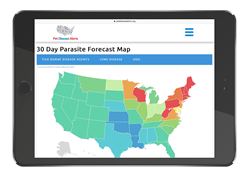
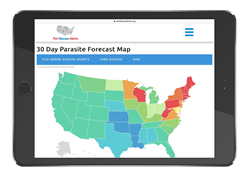
The new 30-Day Pet Parasite Forecast Maps at PetDiseaseAlerts.org are designed to alert pet owners and veterinarians about vector-borne diseases before they occur.

CAPC recommends pet owners in Tennessee talk to local veterinarians about year-round protection from Lyme and Ehrlichiosis – transmitted by ticks – with annual testing and preventatives.

The nonprofit Companion Animal Parasite Council (CAPC) — the nation’s leading source on parasitic diseases that threaten the health of pets and people — is forecasting higher-than-normal risk for Lyme disease in Nashville, Tennessee, as well as throughout Davidson, Sumner, Williamson and Cheatam counties for May 2022. In addition, CAPC is forecasting Ehrlichiosis, a year-round threat in Tennessee, as high risk across the entire state.

In its mission to monitor and report emerging threats to companion animals, CAPC developed 30-Day Pet Parasite Forecast Maps to alert pet owners of impending disease outbreaks in their local communities. These monthly forecast maps can be found at PetDiseaseAlerts.org and currently forecast four parasitic diseases (Lyme, Ehrlichiosis, Anaplasmosis and Heartworm) based on analysis of recent disease prevalence trends in every county across the United States.

“Lyme Disease and Ehrlichiosis are serious threats to pets in Tennessee that are increasingly vulnerable to these debilitating and potentially fatal illneses,” said Dr. Rick Marrinson, DVM, and CAPC board member. “The new 30-Day Pet Parasite Forecast Maps at PetDiseaseAlerts.org are designed to alert pet owners and veterinarians about vector-borne diseases before they occur.”

Please click here for pre-packaged video news segment for download/use highlighting details outlined below:


  • Lyme Disease and Ehrlichiosis Forecast in Tennessee – May 2022


Lyme disease and Ehrlichiosis are bacterial illnesses that can be transmitted to humans, dogs and other animals by certain species of ticks. The ticks that carry Lyme and Ehrlichiosis are often found in tall grass, thick brush, marshes and woods. Although found in Tennessee year-round, ticks tend to be more active in warm weather, so pets are at greater risk in the spring and summer. Analysis of the 30-Day Pet Parasite Forecast Maps indicate higher-than-usual activity for Lyme in Nashville and throughout Davidson County, with nearby counties such as Sumner, Williamson and Cheatam showing infection risk levels that are higher than past years. Throughout Tennessee, Ehrlichiosis is considered a year-round threat and is forecasted as a high risk across the entire state. Overall, the forecast maps for the state of Tennessee indicates the Ixodes tick that transmits Lyme and Ehrlichiosis is moving into Tennessee from the northeast with counties in the northeastern part of the state forecasted to be high risk, with the risk moving southward. CAPC expects this trend to continue throughout 2022.

  • Why Should Pet Owners Be Concerned?


Lyme disease and Ehrlichiosis are bacterial infections transmitted through the bite of an infected tick and can infect both dogs and their families. These diseases are similar in that many dogs don’t show signs of infection, but those that do exhibit symptoms such as fever, depression, loss of appetite, lethargy, joint pain and stiffness. In some cases, if undetected or untreated, Lyme disease can lead to issues such as kidney failure, heart issues and/or neurological issues. Similarly, dogs infected with Ehrlichiosis can experience eye issues, lameness and/or bleeding issues and anemia. People cannot catch Lyme disease or Ehrlichiosis directly from an infected dog, but the same ticks that bite dogs can also bite humans. This means that if there are infected dogs in an area, there are infected ticks that may transmit disease to humans.

  • What Should Pet Owners Do?


As we head into summer and spend more time outdoors with our pets, talk to your local veterinarian about testing for tick-borne diseases and year-round tick-prevention. Pet owners should be diligent about checking for ticks after spending time outdoors. Both Lyme and Ehrlichiosis are treatable with antibiotics if identified early.

It’s difficult to prevent a dog’s exposure to ticks, especially when they are outdoors in areas ticks inhabit. Year-round use of tick preventatives help limit infestations. This will also help prevent pets from bringing ticks into the home, limiting exposure to family members, as these diseases can also affect humans. For dogs in areas with high risk for Lyme disease, pet owners should also talk to their veterinarian about vaccinating against Lyme. Staying aware of the threat level of tick-borne disease in your local community and areas where you travel with your pet is also important.

Pet Disease Alert’s 30-Day Pet Parasite Forecast Maps help pet owners visualize high-risk areas for Lyme and Ehrlichiosis, and also serve as an early-warning system for areas of emerging risk. If dogs test positive in an area for Lyme or Ehrlichiosis, then humans are at increased risk too. The 30-Day Pet Parasite Forecasts are updated monthly so pet owners can see the risks at home and across the country before they occur. CAPC encourages pet owners and veterinarians to consult these maps regularly in order to protect pets and families from parasitic diseases.

Recognized as the global expert in forecasting vector-borne diseases of U.S. companion animals, CAPC indicates that risks have increased nationally due to:

  • Increased travel with pets
  • Rehoming of pets due to natural disaster and the transportation of rescue pets
  • Distribution and prevalence of vector (mosquito and tick) populations
  • Shifting wildlife populations, and their incursion into newly developed and reclaimed areas
  • Short- and long-term changes in climatic conditions
  • Changes in habitat due to natural or human-induced processes

CAPC’s forecasts – supported by ongoing research by parasitologists and statisticians in leading academic institutions across the United States – highlight areas where more should be done to lower the risk of companion animals’ exposure to disease vectors, such as mosquitos and ticks. The foundation of these prevention strategies are recommendations that veterinarians and pet owners test their pets annually for disease and protect them with products that kill or repel mosquitos and ticks, as well as year-round heartworm prevention.

“Because of the zoonotic potential of parasitic diseases – meaning they can be transmitted from animals to humans – we created our 30-Day Pet Parasite Forecasts to alert communities of the risk to people and pets locally,” said Dr. Christopher Carpenter, DVM, and CEO of CAPC. “Over the years, we’ve seen the risk for parasitic diseases increase and expand into areas that have had historically lower prevalence. CAPC’s monthly Pet Parasite Forecasts are critical to alerting pet owners to the risks and reinforcing CAPC’s recommendation that all pets need to be annually tested and protected year-round.”

To view local 30-Day Pet Parasite Forecast Maps, as well as the daily Flea Forecast, visit http://www.petdiseasealerts.org.

How the Forecasts Are Created

The 30-Day CAPC Pet Parasite Forecast Maps are a collaborative effort from parasitologists and statisticians in leading academic institutions across the United States who engage in ongoing research and data interpretation to better understand and monitor vector-borne disease agent transmission and changing life cycles of parasites. The forecasts are based on many factors including temperature, precipitation and population density.

About Pet Disease Alerts

Pet Disease Alerts (http://www.petdiseasealerts.org) is a nonprofit focused on alerting pet owners to the threat of pet diseases in their local areas. Established by the Companion Animal Parasite Council (CAPC) in 2018, Pet Disease Alerts was founded to directly communicate crucial, time-sensitive information about disease threats, encouraging pet owners to be proactive by visiting their veterinarian to get their pets tested and protected.

About the Companion Animal Parasite Council

The Companion Animal Parasite Council (http://www.capcvet.org) is an independent not-for-profit foundation comprised of parasitologists, veterinarians, medical, public health and other professionals that provides information for the optimal control of internal and external parasites that threaten the health of pets and people. Formed in 2002, CAPC works to help veterinary professionals and pet owners develop the best practices in parasite management that protect pets from parasitic infections and reduce the risk of zoonotic parasite transmission.

###

Peak Dental Services to Offer New Ownership Package for Hygiene Team


Peak Dental Services, a leading dental services organization with over 50 locations throughout Colorado and Texas, today announced a new ownership package for all the organizations’ hygienists, honoring the importance of their hygiene team, with the opportunity to expand their financial goals within the company. For the first time, Peak Dental Services will be providing hygienists with ownership opportunities similar to Peak Dental Services’ dentists.

Peak Dental Services’ hygiene team is led by a selected group of hygiene mentors, who not only see patients full time but also travel to other offices to welcome and onboard new hygiene recruits. An impressive 10% of the Peak Dental Services’ entire hygiene team chose to join the ownership program during its first round and can grow their wealth at the same rate of Peak Dental Services’ growth. These hygienists will join the nearly 60% owner dentists & specialists in Peak Dental Services and are now on an exponential growth curve together as the entire Peak Dental Services team celebrated reaching their 50th location last quarter.

“When the time came to make the choices for the ownership package, Peak Dental Services made a bold move and offered ownership in Peak itself, not just in the doctor or hygienist’s dental practice,” said, A.J. Peak, CEO of Peak Dental Services. “It is disingenuous to limit the ownership package to the dental practice because our providers’ prosperity would be limited to those 4 walls. Now, all our doctors and hygienists can grow their wealth with us as an owner of the whole company.”

Dentist ownership and now hygienist ownership has the potential to influence key clinical and technology decisions in addition to having the opportunity to participate in the development and prosperity of the DSO. The ownership opportunity for hygienists supports Peak Dental Service’s 6 core values including putting patients and providers first and valuing the dreams and contributions of each team member. The success of Peak Dental Services’ practices relies heavily on hygienists. The owner doctors voted unanimously to expand the ownership opportunities to the hygiene team this year

“Participation in the mentorship program (as a mentor and a mentee) is one of the ways that these dedicated team members give back to our company and our colleagues,” said Amanda Mendoza, Hygiene Director at Peak Dental Services. “It is with that spirit of collaboration and cooperation that Peak Dental Services decided to reward the hygiene team with an unprecedented ownership package and create a sense of community for colleagues to lean on.”

Peak Dental Services has dedicated experts in a wide range of disciplines to support partner dentists from hiring to billing. Further, the company has over 90 dentists and has custom-designed a professional development path with over 125 hours of continuing education for every team member in a dental office. Peak Dental Services is committed to high-quality staff and training, enabling our dental teams to produce a customer experience where both our partner dentists and our patients can see the difference.

About Peak:

Peak Dental Services, based in Colorado Springs, Colo., is a leading dental services organization with over 50 locations throughout Colorado and Texas supporting a network of over 90 dentists. It was founded in 2008 by dentist Dr. Douglas Peak and his son A.J. Peak, a former McKinsey and Co. consultant.

Share article on social media or email:

Companion Animal Parasite Council Forecasts High Risk for Heartworm Disease in Jackson, Mississippi, and Throughout Hinds County for May 2022


The new 30-Day Pet Parasite Forecast Maps at PetDiseaseAlerts.org are designed to alert pet owners and veterinarians about vector-borne diseases before they occur.

The risk just isn’t worth it. Heartworm preventatives are affordable, safe and effective. This is why CAPC recommends pet owners in Mississippi talk to local veterinarians about year-round protection from Heartworm – with annual testing and preventatives

The nonprofit Companion Animal Parasite Council (CAPC) — the nation’s leading source on parasitic diseases that threaten the health of pets and people — is forecasting high risk for heartworm disease in Jackson, Mississippi, and throughout the state, with Hinds County on the highest alert for May 2022.

In its mission to monitor and report emerging threats to companion animals, CAPC developed 30-Day Pet Parasite Forecast Maps to alert pet owners of impending disease outbreaks in their local communities. These monthly forecast maps can be found at PetDiseaseAlerts.org and currently forecast four parasitic diseases (Heartworm, Lyme, Ehrlichiosis and Anaplasmosis) based on analysis of recent disease prevalence trends in every county across the United States.

“Heartworm disease is serious threat to pets in Mississippi that are increasingly vulnerable to these debilitating and potentially fatal illneses,” said Dr. Rick Marrinson, DVM, and CAPC board member. “The new 30-Day Pet Parasite Forecast Maps at PetDiseaseAlerts.org are designed to alert pet owners and veterinarians about vector-borne diseases before they occur.”

Please click here for pre-packaged video news segment for download/use highlighting details outlined below:


  • Heartworm Disease Forecast in Mississippi – May 2022


With warm weather and humidity on the rise in Mississippi, so are mosquitos. Spring weather creates ideal breeding conditions for mosquitos, which can transmit heartworm larvae to pets. Heartworms are transmitted through the bite of an infected mosquito and can affect both dogs and cats, although the disease acts a bit differently in each. It only takes a single mosquito bite for a pet to become infected. Analysis of the 30-Day Pet Parasite Forecast Maps for the state of Mississippi indicate the risk of heartworm disease in Jackson and throughout Hinds County are at a high threat level – and actually even higher than usual for heartworm as compared to historical risk – with the entire state on high alert.

  • Why Should Pet Owners Be Concerned?


Heartworm disease is a serious condition in dogs and cats and is almost 100% preventable. If a dog is infected, heartworms can affect many organs including the heart, lungs, kidneys and liver. If left undetected or untreated, heartworms can be fatal to a pet.

It only takes a single mosquito bite for a pet to become infected with heartworm larvae. The larvae mature into adult worms in the heart and lungs, but can also affect other organs such as the liver and kidneys. Heartworms can grow up to 16 inches long and can live up to five to seven years, causing serious damage to vital organs over time.

Early in the disease, pets may not show any signs of infections. Veterinarians may suspect heartworms when a pet presents with coughing, trouble breathing or fatigue with exercise. Signs are often progressive over weeks to months, and if left untreated the infection can be fatal.

  • What Should Pet Owners Do?


As we head into summer and spend more time outdoors with our pets, talk to your local veterinarian about monthly heartworm protection and annual testing for both heartworm antigens and microfilariae. Once infected, treatment can be very difficult and expensive for dogs, and there is no treatment for cats. So, it is much easier, and less expensive, to prevent heartworms.

Staying aware of the threat level of heartworm disease in your local community and areas where you travel with your pet is also important. The 30-Day Pet Parasite Forecasts at PetDiseaseAlerts.org are updated monthly so pet owners can identify risk areas at home and across the country before they occur. CAPC encourages pet owners and veterinarians to consult these maps regularly in order to protect pets and families from parasitic diseases.

“Most people consider their pets as family members and wouldn’t knowingly expose them to infection with a potentially fatal disease that can ultimately compromise the length and quality of their lives. Yet millions who fail to protect their pets every month from heartworm infection are doing just that,” adds Dr. Marrison. “The risk just isn’t worth it. Heartworm preventatives are affordable, safe and effective. This is why CAPC recommends all pets, no matter where they live, be tested annually and placed on heartworm preventatives year round.”

Recognized as the global expert in forecasting vector-borne diseases of U.S. companion animals, CAPC indicates that risks have increased nationally due to:

  • Increased travel with pets
  • Rehoming of pets due to natural disaster and the transportation of rescue pets
  • Distribution and prevalence of vector (mosquito and tick) populations
  • Shifting wildlife populations, and their incursion into newly developed and reclaimed areas
  • Short- and long-term changes in climatic conditions
  • Changes in habitat due to natural or human-induced processes

CAPC’s forecasts – supported by ongoing research by parasitologists and statisticians in leading academic institutions across the United States – highlight areas where more should be done to lower the risk of companion animals’ exposure to disease vectors, such as mosquitos and ticks. The foundation of these prevention strategies are recommendations that veterinarians and pet owners test their pets annually for disease and protect them with products that kill or repel mosquitos and ticks, as well as year-round heartworm prevention.

“Because of the zoonotic potential of parasitic diseases – meaning they can be transmitted from animals to humans – we created our 30-Day Pet Parasite Forecasts to alert communities of the risk to people and pets locally,” said Dr. Christopher Carpenter, DVM, and CEO of CAPC. “Over the years, we’ve seen the risk for parasitic diseases increase and expand into areas that have had historically lower prevalence. CAPC’s monthly Pet Parasite Forecasts are critical to alerting pet owners to the risks and reinforcing CAPC’s recommendation that all pets need to be annually tested and protected year-round.”

To view local 30-Day Pet Parasite Forecast Maps, as well as the daily Flea Forecast, visit http://www.petdiseasealerts.org.

How the Forecasts Are Created

The 30-Day CAPC Pet Parasite Forecast Maps are a collaborative effort from parasitologists and statisticians in leading academic institutions across the United States who engage in ongoing research and data interpretation to better understand and monitor vector-borne disease agent transmission and changing life cycles of parasites. The forecasts are based on many factors including temperature, precipitation and population density.

About Pet Disease Alerts

Pet Disease Alerts (http://www.petdiseasealerts.org) is a nonprofit focused on alerting pet owners to the threat of pet diseases in their local areas. Established by the Companion Animal Parasite Council (CAPC) in 2018, Pet Disease Alerts was founded to directly communicate crucial, time-sensitive information about disease threats, encouraging pet owners to be proactive by visiting their veterinarian to get their pets tested and protected.

About the Companion Animal Parasite Council

The Companion Animal Parasite Council (http://www.capcvet.org) is an independent not-for-profit foundation comprised of parasitologists, veterinarians, medical, public health and other professionals that provides information for the optimal control of internal and external parasites that threaten the health of pets and people. Formed in 2002, CAPC works to help veterinary professionals and pet owners develop the best practices in parasite management that protect pets from parasitic infections and reduce the risk of zoonotic parasite transmission.

###

Share article on social media or email:

Joe DiMaggio Children’s Hospital Heart Surgeons Use Novel Occluder with a Metal-Free Frame on a Patient with ASD or Hole in the Heart Under Pivotal U.S. IDE Trial


Dr. Larry Latson, Joe DiMaggio Children’s Hospital Heart Institute

“With studies of this kind and world-wide collaboration, we are able to give our patients access to the most innovative treatments that will transform the way we treat congenital heart disease in the future, said Dr. Latson.”

Joe DiMaggio Children’s Hospital recently announced the successful treatment of a patient with atrial septal defects (ASD), or opening defect in the wall of the heart that separates the top two chambers of the heart, using the first transcatheter ASD occluder with a metal-free frame. The novel device has been implanted as part of the ASCENT ASD U.S. Investigational Device Exemption (IDE) pivotal trial, which will evaluate the safety and efficacy of the transcatheter reSept ASD Occluder in patients with clinically significant secundum ASDs. It was the hospital’s first patient with ASD enrolled in this trial.

Dr. Larry Latson, MD, Medical Director, Pediatric & Congenital Interventional Cardiology Program Co-Medical Director, Adult Congenital Heart Disease Program at Joe DiMaggio Children’s Hospital is National Co-Principal Investigator for this study, and part of the pediatric cardiac team that performed the transcatheter procedure. The prospective, single-arm study will enroll up to 250 patients at multiple sites globally Primary endpoints will be compared with established performance goals for previously FDA-approved transcatheter ASD occluders.

“We are pleased to be part of this global study and provide an innovative treatment to our pediatric patients who are suffering from this condition here in South Florida,” Dr. Latson said. “With studies of this kind and world-wide collaboration, we are able to give our patients access to the most innovative treatments that will transform the way we treat congenital heart disease in the future.”

Current ASD occluders have metallic frames that could place patients at risk for complications associated with long-term presence of metal in the heart and may limit future transseptal interventions. Initial clinical experience demonstrates effective closure of the ASDs treated with the novel investigational device.1

“The metal-free frame of the reSept ASD Occluder provides a low-profile that over time is replaced by the patient’s tissue, leaving a minimal implant behind and restoring a more natural septum when compared to current occluder devices,” stated Saibal Kar, MD, Interventional Cardiology at the Los Robles Regional Medical Center in Thousand Oaks, California and Co-Principal Investigator of the IDE trial. “This provides a unique opportunity for physicians to effectively address ASDs while being mindful of any patient’s potential transseptal procedures later in life.”

The reSept ASD Occluder is the first transcatheter ASD occluder with a metal-free frame. It is an investigational medical device manufactured by atHeart Medical.

“It is incredibly exciting to have the participation of Joe DiMaggio Children’s Hospital to this important pivotal trial,” said Laurent Grandidier, CEO of atHeart Medical. “I commend the team’s diligence to expanding the body of evidence supporting our reSept ASD Occluder and dedication to delivering innovation to patients with ASDs around the world.”

About ASCENT ASD Investigational Device Exemption (IDE) Trial

A prospective, single-arm, global multi-site clinical investigation study that will enroll a total of up to 250 patients. The study aims to demonstrate the safety and efficacy of the reSept™ ASD Occluder for treating clinically significant secundum ASD with a transcatheter approach as compared to pre-defined performance goals from other commercially available occluder devices. For more information, please visit http://www.clinicaltrials.gov – Trial Identifier: NCT04591392.

About ASDs

Commonly described as a “hole in the heart”, an ASD is an opening in the septum between the left and right atria. Most ASDs are congenital defects, affecting six in 10,000 births.2 They can also be the result of a procedure that requires transseptal crossing. A large atrial septal defect can cause extra blood to overfill the lungs and overwork the right side of the heart. If not treated, the right side of the heart eventually enlarges and weakens. The blood pressure in the lungs can also increase, leading to pulmonary hypertension. When ASDs require closure, the current standard of care is to implant a septal occluder with a metallic frame through a minimally invasive procedure.

About Joe DiMaggio Children’s Hospital

Joe DiMaggio Children’s Hospital is one of the nation’s leading pediatric hospitals, offering a comprehensive scope of healthcare services and programs in a caring, compassionate setting designed specifically for children. A level one trauma center, it combines advanced technology, the expertise of board-certified specialists, and a patient and family-centered approach to heal the body, mind, and spirit of those it touches. Its Heart Institute brings all the disciplines of heart care together in one place, including cardiology, surgery, electrophysiology and heart imaging.

Connect online at jdch.com and @jdchospital on Facebook, Twitter, YouTube, and Instagram.

About atHeart Medical

atHeart Medical is a medical device company with offices in Switzerland and the United States committed to establish a new standard of care for the treatment of atrial septal defects (ASD). For more information, please visit http://www.atheartmedical.com.

1 Sievert K, et al. Transcatheter closure of atrial septal defect and patent foramen ovale with Carag bioresorbable septal occluder: first-in-man experience with 24-month follow-up. EuroIntervention. 2021 Nov 1:EIJ-D-21-00740. doi: 10.4244/EIJ-D-21-00740. Epub ahead of print. PMID: 34726601.

2. https://www.cdc.gov/ncbddd/heartdefects/atrialseptaldefect.html

Share article on social media or email:


Companion Animal Parasite Council Forecasts High Risk for Heartworm Disease in Mobile, Alabama, and Throughout Mobile County for May 2022


The new 30-Day Pet Parasite Forecast Maps at PetDiseaseAlerts.org are designed to alert pet owners and veterinarians about vector-borne diseases before they occur.

The risk just isn’t worth it. Heartworm preventatives are affordable, safe and effective. This is why CAPC recommends pet owners in Alabama talk to local veterinarians about year-round protection from Heartworm – with annual testing and preventatives.

The nonprofit Companion Animal Parasite Council (CAPC) — the nation’s leading source on parasitic diseases that threaten the health of pets and people — is forecasting high risk for heartworm disease in Mobile, Alabama, and throughout the state, with Mobile County on the highest alert for May 2022.

In its mission to monitor and report emerging threats to companion animals, CAPC developed 30-Day Pet Parasite Forecast Maps to alert pet owners of impending disease outbreaks in their local communities. These monthly forecast maps can be found at PetDiseaseAlerts.org and currently forecast four parasitic diseases (Heartworm, Lyme, Ehrlichiosis and Anaplasmosis) based on analysis of recent disease prevalence trends in every county across the United States.

“Heartworm disease is serious threat to pets in Alabama that are increasingly vulnerable to these debilitating and potentially fatal illneses,” said Dr. Rick Marrinson, DVM, and CAPC board member. “The new 30-Day Pet Parasite Forecast Maps at PetDiseaseAlerts.org are designed to alert pet owners and veterinarians about vector-borne diseases before they occur.”

Please click here for pre-packaged video news segment for download/use highlighting details outlined below:


  • Heartworm Disease Forecast in Alabama – May 2022


With warm weather and humidity on the rise in Alabama, so are mosquitos. Spring weather creates ideal breeding conditions for mosquitos, which can transmit heartworm larvae to pets. Heartworms are transmitted through the bite of an infected mosquito and can affect both dogs and cats, although the disease acts a bit differently in each. It only takes a single mosquito bite for a pet to become infected. Analysis of the 30-Day Pet Parasite Forecast Maps for the state of Alabama indicate the risk of heartworm disease in Mobile and throughout Mobile County are at a high threat level – actually even higher than usual as compared to historical risk – with the entire state on high alert.

  • Why Should Pet Owners Be Concerned?


Heartworm disease is a serious condition in dogs and cats and is almost 100% preventable. If a dog is infected, heartworms can affect many organs including the heart, lungs, kidneys and liver. If left undetected or untreated, heartworms can be fatal to a pet.

It only takes a single mosquito bite for a pet to become infected with heartworm larvae. The larvae mature into adult worms in the heart and lungs, but can also affect other organs such as the liver and kidneys. Heartworms can grow up to 16 inches long and can live up to five to seven years, causing serious damage to vital organs over time.

Early in the disease, pets may not show any signs of infections. Veterinarians may suspect heartworms when a pet presents with coughing, trouble breathing or fatigue with exercise. Signs are often progressive over weeks to months, and if left untreated the infection can be fatal.

  • What Should Pet Owners Do?


As we head into summer and spend more time outdoors with our pets, talk to your local veterinarian about monthly heartworm protection and annual testing for both heartworm antigens and microfilariae. Once infected, treatment can be very difficult and expensive for dogs, and there is no treatment for cats. So, it is much easier, and less expensive, to prevent heartworms.

Staying aware of the threat level of heartworm disease in your local community and areas where you travel with your pet is also important. The 30-Day Pet Parasite Forecasts at PetDiseaseAlerts.org are updated monthly so pet owners can identify risk areas at home and across the country before they occur. CAPC encourages pet owners and veterinarians to consult these maps regularly in order to protect pets and families from parasitic diseases.

“Most people consider their pets as family members and wouldn’t knowingly expose them to infection with a potentially fatal disease that can ultimately compromise the length and quality of their lives. Yet millions who fail to protect their pets every month from heartworm infection are doing just that,” adds Dr. Marrison. “The risk just isn’t worth it. Heartworm preventatives are affordable, safe and effective. This is why CAPC recommends all pets, no matter where they live, be tested annually and placed on heartworm preventatives year round.”

Recognized as the global expert in forecasting vector-borne diseases of U.S. companion animals, CAPC indicates that risks have increased nationally due to:

  • Increased travel with pets
  • Rehoming of pets due to natural disaster and the transportation of rescue pets
  • Distribution and prevalence of vector (mosquito and tick) populations
  • Shifting wildlife populations, and their incursion into newly developed and reclaimed areas
  • Short- and long-term changes in climatic conditions
  • Changes in habitat due to natural or human-induced processes

CAPC’s forecasts – supported by ongoing research by parasitologists and statisticians in leading academic institutions across the United States – highlight areas where more should be done to lower the risk of companion animals’ exposure to disease vectors, such as mosquitos and ticks. The foundation of these prevention strategies are recommendations that veterinarians and pet owners test their pets annually for disease and protect them with products that kill or repel mosquitos and ticks, as well as year-round heartworm prevention.

“Because of the zoonotic potential of parasitic diseases – meaning they can be transmitted from animals to humans – we created our 30-Day Pet Parasite Forecasts to alert communities of the risk to people and pets locally,” said Dr. Christopher Carpenter, DVM, and CEO of CAPC. “Over the years, we’ve seen the risk for parasitic diseases increase and expand into areas that have had historically lower prevalence. CAPC’s monthly Pet Parasite Forecasts are critical to alerting pet owners to the risks and reinforcing CAPC’s recommendation that all pets need to be annually tested and protected year-round.”

To view local 30-Day Pet Parasite Forecast Maps, as well as the daily Flea Forecast, visit http://www.petdiseasealerts.org.

How the Forecasts Are Created

The 30-Day CAPC Pet Parasite Forecast Maps are a collaborative effort from parasitologists and statisticians in leading academic institutions across the United States who engage in ongoing research and data interpretation to better understand and monitor vector-borne disease agent transmission and changing life cycles of parasites. The forecasts are based on many factors including temperature, precipitation and population density.

About Pet Disease Alerts

Pet Disease Alerts (http://www.petdiseasealerts.org) is a nonprofit focused on alerting pet owners to the threat of pet diseases in their local areas. Established by the Companion Animal Parasite Council (CAPC) in 2018, Pet Disease Alerts was founded to directly communicate crucial, time-sensitive information about disease threats, encouraging pet owners to be proactive by visiting their veterinarian to get their pets tested and protected.

About the Companion Animal Parasite Council

The Companion Animal Parasite Council (http://www.capcvet.org) is an independent not-for-profit foundation comprised of parasitologists, veterinarians, medical, public health and other professionals that provides information for the optimal control of internal and external parasites that threaten the health of pets and people. Formed in 2002, CAPC works to help veterinary professionals and pet owners develop the best practices in parasite management that protect pets from parasitic infections and reduce the risk of zoonotic parasite transmission.

###

Share article on social media or email:

Q-Collar® from Q30 Innovations® Named Finalist in Consumer Products Category of Fast Company’s 2022 World Changing Ideas Awards


News Image

Fast Company’s 2022 World Changing Ideas Awards were announced today, and the Q-Collar from Q30 has been named among a select list of finalists in the Consumer Products category. The awards are focused on honoring ideas that are determined to have a positive potential impact on everything from social policy to human health. 

The Q-Collar is addressing a major medical epidemic; there are an estimated 3.8 million sports-related traumatic brain injuries (TBI) in the U.S. annually. The Q-Collar offers an innovative and verified approach to protecting the brain from repetitive head impacts in contact sports. Q30 has also recently launched Q30 Tactical to bring this breakthrough innovation to warfighters for their protection and advancement throughout their careers. The Q-Collar has been tested in the toughest environments and scenarios with the most elite U.S. soldiers. 


“We are consistently inspired by the novelty and creativity that people are applying to solve some of our society’s most pressing problems, from shelter to the climate crisis. Fast Company relishes its role in amplifying important, innovative work to address big challenges,” says David Lidsky, interim editor-in-chief of Fast Company. “Our journalists have identified some of the most ingenious initiatives to launch since the start of 2021, which we hope will both have a meaningful impact and lead others to join in being part of the solution.”


Since 2012, Q30 Innovations has been committed to reducing brain injuries for those at risk of head impacts. Through working with partners like the Premier Lacrosse League, as well as many of the top professional and NCAA athletes from several different sports including football, soccer, lacrosse, and hockey, the company is actively educating athletes on the benefits of the Q-Collar technology. Luke Kuechly, former 7x NFL Pro Bowl linebacker and advocate for mental health and safety, is also a member of Q30’s Athlete Advisory and has been active in educating the sports and military communities by sharing his experience wearing the Q-Collar during three seasons of play. 

“Our team is committed to thinking beyond the helmet to make a positive impact on the prevention of brain injuries, and we’re proud to be recognized for our innovative technology by the World Changing Ideas Awards,” said Q30’s Co-CEO Tom Hoey. “We have worked with the leading medical, academic, engineering and design institutions to research and develop the Q-Collar and look forward to continuing to inform and educate on how to protect against traumatic brain injuries. We hope to be a part of a positive change in the sports equipment and tactical industries.”

Now in its sixth year, the World Changing Ideas Awards showcase 39 winners, 350 finalists, and more than 600 honorable mentions—with climate, social justice, AI, and data among the most popular categories. A panel of eminent Fast Company editors and reporters selected winners and finalists from a pool of more than 2,997 entries across transportation, education, food, politics, technology, health, social justice, and more. Fast Company’s Summer 2022 issue (on newsstands May 10, 2022) will showcase some of the world’s most inventive entrepreneurs and companies tackling global challenges.

About Q30 Innovations

Based in Westport, Conn., Q30 Innovations’ mission is to help protect the brain from the effects of head impacts on the sports field and the battlefield. Since 2012, Q30 has worked with leading medical, academic, engineering and design institutions to research and develop the Q-Collar, an externally worn device that aids in the protection of the brain from the effects associated with repetitive sub-concussive head impacts. In February 2021, the Q-Collar became the first and only FDA-cleared protective equipment that helps protect athletes’ and warfighters’ brains during head impacts. For more information, please visit http://www.Q30.com


About the World Changing Ideas Awards

World Changing Ideas is one of Fast Company’s major annual awards programs and is focused on social good, seeking to elevate finished products and brave concepts that make the world better. A panel of judges from across sectors choose winners, finalists, and honorable mentions based on feasibility and the potential for impact. With the goals of awarding ingenuity and fostering innovation, Fast Company draws attention to ideas with great potential and helps them expand their reach to inspire more people to start working on solving the problems that affect us all.

For more information, contact:

Ryan Chuckel

Gunpowder, Inc.

414-698-7132

ryanc@gunpowderinc.com

Share article on social media or email:

Former City of Hope Endowed Chair, Department of Pediatrics Joins NDA Partners as Expert Consultant


News Image

Dr. Rosenthal’s extensive clinical and research experience in the field of pediatric hematopoietic stem cell transplantation will be valuable to our clients developing therapies for pediatric patients.

NDA Partners General Manager, Eric Fish, announced today that Joseph Rosenthal, MD, a board certified Pediatric Hematologist/Oncologist and expert in the field of hematopoietic stem cell transplantation, has joined the company as an Expert Consultant. Dr. Rosenthal has been associated with City of Hope for more than 20 years where he led the Pediatric Hematology/Oncology program and served as Endowed Chair of the Department of Pediatrics. Prior to these roles, he was a member of the leadership team of the Pediatric Hematology/Oncology/Bone Marrow Transplant Program at the Children’s Hospital of Orange County, California. He also served as a member of the Pediatric Oncology Faculty of Rambam Medical Center in Haifa, Israel and Pediatric Hematology and Oncology Faculty of the Soroka Medical Center in Beer Sheba, Israel.

Dr. Rosenthal’s research focuses on developing modalities that offer reduced organ toxicity, such as incorporation of total marrow and lymphoid irradiation (TMLI) as an alternative for total body irradiation (TBI) and investigating cord blood units and haplo-identical transplants to expand the donor pool for patients who lack related or unrelated matched donors. He is actively involved in the development of HCT as a treatment for sickle cell disease and developing gene-therapy modalities for genetic disorders. He serves as an investigator on clinical trials sponsored by the Pediatric Bone Marrow Transplant (BMT) Consortium and the BMT Clinical Trial Network. According to Dr. Ellen Feigal, Manager of NDA Partners’ biologics practice, “Dr. Rosenthal’s extensive clinical and research experience in the field of pediatric hematopoietic stem cell transplantation will be valuable to our clients developing therapies for pediatric patients. ”

Dr. Rosenthal earned his medical degree from Sackler School of Medicine at Tel Aviv University, Tel Aviv, Israel, master’s degree in health care management from Harvard School of Public Health, and bachelor’s degree from Hebrew University, Jerusalem, Israel. He completed his residency at the Soroka Medical Center, Beer Sheba, Israel and fellowship in Pediatric Hematology/Oncology at the University of Colorado School of Medicine in Denver, Colorado and Pediatric Cancer Research and Bone Marrow Transplantation at the Children’s Hospital of Orange County, Orange, California.

About NDA Partners

NDA Partners, a ProPharma Group company, is a life sciences management consulting and contract development organization focused on providing product development and regulatory services to the pharmaceutical, biotechnology, and medical device industries worldwide. The highly experienced Expert Consultants in NDA Partners include three former FDA Center Directors; the former Chief Executive Officer and Chief Science Officer at the United States Pharmacopeial Convention (USP); an international team of more than 100 former pharmaceutical industry and regulatory agency senior executives; and an extensive roster of highly proficient experts in specialized areas including nonclinical development, toxicology, pharmacokinetics, CMC, medical device design control and quality systems, clinical development, regulatory submissions, and development program management. Services include product development and regulatory strategy, product development program design and management, expert consulting, functional teams, project-based solutions, and clinical trial design and management.

Contact

Eric Fish, General Manager

Office: 540-738-2550

FishEric@ndapartners.com

Share article on social media or email:

Great Point Partners Invests in JPA Health, Leading Marketing Communications Agency


Today Great Point Partners (“GPP”), a Greenwich-based private investment firm focused on the health care industry, announced the growth recapitalization of JPA Health (“JPA” or the “Company”). JPA is a high growth and leading public relations, marketing, and patient advocacy firm, providing strategic and creative services across the health care industry. The Company was founded in 2007 by Carrie Jones, its Chief Executive Officer. The Company is headquartered in Washington D.C., with offices in Boston, New York, and London, and has more than 90 employees.

JPA has been recognized for its outstanding marketing campaign efforts across the life sciences and public health sectors.

“Carrie and the entire JPA team have done an extraordinary job serving their clients with best-in-class insights and responsiveness,” said Bret Tenenhaus, Principal at GPP. “We look forward to helping them expand their services by facilitating add-on acquisitions and partnerships in strategic, complementary services.”

“Our clients are increasingly relying on multi-disciplinary practices to achieve their goals. With our team of specialists, we synchronize insights, ideas and incredible execution for results that impress,” said Carrie Jones, CEO at JPA Health. “Building upon our expertise in the space and unparalleled commitment to client service, we are well positioned to expand as an integrated agency attracting the best talent in the sector.”

About Great Point Partners

Great Point Partners, founded in 2003 and based in Greenwich, CT, is a leading health care investment firm with 30 professionals, investing in the United States, Canada, and Western Europe. GPP is currently making new minority and majority private equity investments from GPP III. Great Point manages $1.2B of capital (including GPP IV which has been closed but not been activated) in its private funds and public life sciences equity strategy (BioMedical Value Fund). Great Point Partners has provided growth equity, growth recapitalization, and management buyout financing to more than 200 growing health care companies. The private equity funds invest across all sectors of the health care industry with a particular emphasis on biopharmaceutical services and supplies, alternate site care, medical device and information technology enabled businesses. The firm pursues a proactive and proprietary approach to sourcing investments and tuck-in acquisitions for its portfolio companies.

About JPA

JPA Health is an award-winning independent, full-service agency established in 2007. With offices in the U.S. and UK, the agency provides marketing, public relations and advocacy services. JPA Health works with many of the world’s leading healthcare companies, NGOs and federal government agencies. The firm is a leader in the health sector recognized for its work designing health campaigns that drive change and deliver measurable results. The JPA Health team is passionate about helping people live healthier lives. To learn more, visit http://www.jpa.com.

Share article on social media or email:

Quicker and Less Expensive Path to Degrees and Career Advancement for Nurses Opened Up by Partnership between National University and Palomar College


Working with Palomar College, we are able to create a clear and quick pathway for students and working nurses toward better opportunities and greater contributions. – Randy C. Frisch, NU Interim President

National University and Palomar College have partnered to create a new path for nursing students and professional nurses to more quickly earn advanced nursing degrees, save money on their education costs, and position themselves for better career opportunities after graduation.

“At National University, our mission is to provide workforce-relevant education to working adults, who can then go on to meet their goals and make meaningful contributions to society,” National University Interim President Randy C. Frisch said. “Working with Palomar College, we are able to create a clear and quick pathway for students and working nurses toward better opportunities and greater contributions.”

The nursing program at National University (NU), a non-profit with a 50-year history of serving adult learners, includes a pre-licensure Bachelor of Science in Nursing (BSN) program which is one of the largest in California. The program serves students in San Diego, Los Angeles, and Fresno. Other programs include the registered nurse (RN) to BSN, RN to Master of Science in Nursing (MSN), and MSN with specializations as a Family Nurse Practitioner (FNP) or Psychiatric Mental Health Nurse Practitioner (PMHNP). Students also have opportunities to pursue post-graduate certifications as FNPs or MHNPs.

“We are excited to partner with National University on this groundbreaking effort to provide our frontline healthcare workers with the training and certification they need in less time and at a lower cost,” said Palomar College Superintendent/President Dr. Star Rivera-Lacey. “This will give our nursing students a direct pathway to a bachelor’s degree, leading to better prospects and more options after graduation.”

The partnership creates a pipeline for students seeking their associate’s level Registered Nurse degrees and working RNs to quickly and easily transition to the NU Bachelor’s program, saving time by allowing them to take classes that simultaneously apply to both programs, saving money through 25 percent and 50 percent scholarship opportunities, and making themselves more competitive in the job market.

A nurse with a BSN has an advantage with increased qualifications and career advancement options. Nurses who earn a BSN are also able to pursue other nursing career paths, including advanced education, administration, and teaching, that are not available to nurses without a bachelor’s degree.

Palomar College graduates an average of 40 RN students every semester, all of whom could benefit from this new RN to BSN program. Starting in June of 2022, there will be an exclusively online RN-BSN cohort for RN Palomar College students and alumni. Once accreditation agencies approve the program for onsite instruction, it will be offered at Palomar College’s Rancho Bernardo location.

Working through the RN to BSN program, nursing students with associate’s degrees can complete their bachelor’s degrees in as few as eight to 11 months, take one-subject-per-month classes designed to allow them to continue working full time, enroll at any time in order to fit their schedules, gain hands-on experience working with leaders and community partners, and become eligible for the California Public Health Nurse (PHN) certificate upon graduation.

About National University: National University, a veteran-founded nonprofit, has been dedicated to meeting the needs of hard-working adults by providing accessible, affordable, achievable higher education opportunities since 1971. As San Diego’s largest private nonprofit university, NU offers over 75 online and on-campus programs and flexible four-week classes designed to help students reach their goals while balancing busy lives. Since its founding, the NU community has grown to over 30,000 students and 185,000 alumni around the globe, many of whom serve in helping industries such as business, education, health care, cybersecurity, and law and criminal justice. Learn more at NU.edu.

About Palomar College: Palomar College is a public two-year community college. Palomar College has four campus locations in San Diego County (Rancho Bernardo, Escondido, Fallbrook, and the main campus in San Marcos). A National University office is located on the second floor at the Palomar College, Rancho Bernardo location. Palomar enrolls approximately 25,000 full-time and part-time students. Residents of California are charged only $46 per unit. At Palomar, students may choose from more than 200 associate degree and certificate programs, complete the first two years of a bachelor’s degree, train for a career, or enjoy personal enrichment classes for lifelong learning.

Share article on social media or email:

Companion Animal Parasite Council Forecasts Higher-than-Normal Risk for Lyme Disease and Ehrlichiosis in Detroit, Michigan, for May 2022


The new 30-Day Pet Parasite Forecast Maps at PetDiseaseAlerts.org are designed to alert pet owners and veterinarians about vector-borne diseases before they occur.

CAPC recommends Michigan pet owners talk to local veterinarians about year-round protection from Lyme and Ehrlichiosis – transmitted by ticks – with annual testing and preventatives.

The nonprofit Companion Animal Parasite Council (CAPC) — the nation’s leading source on parasitic diseases that threaten the health of pets and people — is forecasting higher-than-normal risk for Lyme disease and Ehrlichiosis in Detroit, Michigan, as well as throughout Wayne, Washtenaw, Macomb, Oakland, and Livingston counties for May 2022.

In its mission to monitor and report emerging threats to companion animals, CAPC developed 30-Day Pet Parasite Forecast Maps to alert pet owners of impending disease outbreaks in their local communities. These monthly forecast maps can be found at PetDiseaseAlerts.org and currently forecast four parasitic diseases (Lyme, Ehrlichiosis, Anaplasmosis and Heartworm) based on analysis of recent disease prevalence trends in every county across the United States.

“Lyme Disease and Ehrlichiosis are serious threats to pets in Michigan that are increasingly vulnerable to these debilitating and potentially fatal illneses,” said Dr. Rick Marrinson, DVM, and CAPC board member. “The new 30-Day Pet Parasite Forecast Maps at PetDiseaseAlerts.org are designed to alert pet owners and veterinarians about vector-borne diseases before they occur.”

Please click here for pre-packaged video news segment for download/use highlighting details outlined below:


  • Lyme disease and Ehrlichiosis Forecast in Michigan – May 2022


Lyme disease and Ehrlichiosis are bacterial illnesses that can be transmitted to humans, dogs and other animals by certain species of ticks. The ticks that carry Lyme and Ehrlichiosis are often found in tall grass, thick brush, marshes and woods. Although found in Michigan year-round, ticks tend to be more active in warm weather, so pets are at greater risk in the spring and summer. Analysis of 30-Day Pet Parasite Forecast Maps for the state of Michigan indicate higher-than-usual activity in Detroit and throughout Wayne County, with nearby counties such as Washtenaw, Macomb, Oakland and Livingston showing infection risk levels that are higher than past years. Overall, the forecast maps indicates the Ixodes tick that transmits Lyme and Ehrlichiosis is moving into Michigan from the northwest with counties in the northwestern part of the state forecasted to be high risk, with the risk moving southward. CAPC expects this trend to continue throughout 2022.

  • Why Should Pet Owners Be Concerned?


Lyme disease and Ehrlichiosis are bacterial infections transmitted through the bite of an infected tick and can infect both dogs and their families. These diseases are similar in that many dogs don’t show signs of infection, but those that do exhibit symptoms such as fever, depression, loss of appetite, lethargy, joint pain and stiffness. In some cases, if undetected or untreated, Lyme disease can lead to issues such as kidney failure, heart issues and/or neurological issues. Similarly, dogs infected with Ehrlichiosis can experience eye issues, lameness and/or bleeding issues and anemia. People cannot catch Lyme disease or Ehrlichiosis directly from an infected dog, but the same ticks that bite dogs can also bite humans. This means that if there are infected dogs in an area, there are infected ticks that may transmit disease to humans.

  • What Should Pet Owners Do?


As we head into summer and spend more time outdoors with our pets, talk to your local veterinarian about testing for tick-borne diseases and year-round tick-prevention. Pet owners should be diligent about checking for ticks after spending time outdoors. Both Lyme and Ehrlichiosis are treatable with antibiotics if identified early.

It’s difficult to prevent a dog’s exposure to ticks, especially when they are outdoors in areas ticks inhabit. Year-round use of tick preventatives help limit infestations. This will also help prevent pets from bringing ticks into the home, limiting exposure to family members, as these diseases can also affect humans. For dogs in areas with high risk for Lyme disease, pet owners should also talk to their veterinarian about vaccinating against Lyme. Staying aware of the threat level of tick-borne disease in your local community and areas where you travel with your pet is also important.

Pet Disease Alert’s 30-Day Pet Parasite Forecast Maps help pet owners visualize high-risk areas for Lyme and Ehrlichiosis, and also serve as an early-warning system for areas of emerging risk. If dogs test positive in an area for Lyme or Ehrlichiosis, then humans are at increased risk too. The 30-Day Pet Parasite Forecasts are updated monthly so pet owners can see the risks at home and across the country before they occur. CAPC encourages pet owners and veterinarians to consult these maps regularly in order to protect pets and families from parasitic diseases.

Recognized as the global expert in forecasting vector-borne diseases of U.S. companion animals, CAPC indicates that risks have increased nationally due to:

  • Increased travel with pets
  • Rehoming of pets due to natural disaster and the transportation of rescue pets
  • Distribution and prevalence of vector (mosquito and tick) populations
  • Shifting wildlife populations, and their incursion into newly developed and reclaimed areas
  • Short- and long-term changes in climatic conditions
  • Changes in habitat due to natural or human-induced processes

CAPC’s forecasts – supported by ongoing research by parasitologists and statisticians in leading academic institutions across the United States – highlight areas where more should be done to lower the risk of companion animals’ exposure to disease vectors, such as mosquitos and ticks. The foundation of these prevention strategies are recommendations that veterinarians and pet owners test their pets annually for disease and protect them with products that kill or repel mosquitos and ticks, as well as year-round heartworm prevention.

“Because of the zoonotic potential of parasitic diseases – meaning they can be transmitted from animals to humans – we created our 30-Day Pet Parasite Forecasts to alert communities of the risk to people and pets locally,” said Dr. Christopher Carpenter, DVM, and CEO of CAPC. “Over the years, we’ve seen the risk for parasitic diseases increase and expand into areas that have had historically lower prevalence. CAPC’s monthly Pet Parasite Forecasts are critical to alerting pet owners to the risks and reinforcing CAPC’s recommendation that all pets need to be annually tested and protected year-round.”

To view local 30-Day Pet Parasite Forecast Maps, as well as the daily Flea Forecast, visit http://www.petdiseasealerts.org.

How the Forecasts Are Created

The 30-Day CAPC Pet Parasite Forecast Maps are a collaborative effort from parasitologists and statisticians in leading academic institutions across the United States who engage in ongoing research and data interpretation to better understand and monitor vector-borne disease agent transmission and changing life cycles of parasites. The forecasts are based on many factors including temperature, precipitation and population density.

About Pet Disease Alerts

Pet Disease Alerts (http://www.petdiseasealerts.org) is a nonprofit focused on alerting pet owners to the threat of pet diseases in their local areas. Established by the Companion Animal Parasite Council (CAPC) in 2018, Pet Disease Alerts was founded to directly communicate crucial, time-sensitive information about disease threats, encouraging pet owners to be proactive by visiting their veterinarian to get their pets tested and protected.

About the Companion Animal Parasite Council

The Companion Animal Parasite Council (http://www.capcvet.org) is an independent not-for-profit foundation comprised of parasitologists, veterinarians, medical, public health and other professionals that provides information for the optimal control of internal and external parasites that threaten the health of pets and people. Formed in 2002, CAPC works to help veterinary professionals and pet owners develop the best practices in parasite management that protect pets from parasitic infections and reduce the risk of zoonotic parasite transmission.

###

Share article on social media or email: