All posts by imreal

Rescue Agency and Three Seas embark on a mission to reach those struggling with an opioid use disorder to help break the vicious cycle


A New Game Plan — Opioid Use Disorder

Too many people struggling with an opioid use disorder find themselves alone in a losing game. Certain stories are best portrayed beyond the confines of our physical world.

The visual experts at Three Seas, together with Rescue: The Behavior Change Agency, personify the struggle against opioid use disorder in “A New Game Plan.” This public service announcement is part of Rethink Recovery—a public education campaign in partnership between the Illinois Department of Human Services and Prevention First and Rescue Agency.

“Too many people struggling with an opioid use disorder find themselves alone in a losing game,” laments the narrator in this 30-second PSA. “A New Game Plan” depicts this struggle as a lopsided, 4-on-1 basketball game with monsters representing the symptoms of the disorder that make the disease difficult to overcome. It features an actor who portrays a person with an opioid use disorder playing a skewed game of hoops against a team of 2-dimensional animated monsters.

In-house Director/Senior Editor Owen Lang and Senior Designer/Motion Graphics Artist Carmen Cothern collaborated with Rescue Agency to create this stark mash-up of real and imaginary worlds that reflects the reality that overcoming opioid use disorder is not a fair fight. View the case study here.

“Certain stories are best portrayed beyond the confines of our physical world. This spring, we embarked on telling such a story when San Diego-based Rescue Agency approached us with a mission to reach those struggling with an opioid use disorder to help them break the vicious cycle,” says Owen Lang.

“The result highlights what we do best – collaborative, creative thinking resulting in successful narrative outcomes, and what we appreciate most – the chance to make a difference. We are extremely pleased with how the spot turned out. We invite you to check it out here,” says Lee Konen, CEO of Three Seas.

ABOUT THREE SEAS

Three Seas is an award-winning collection of creative boutiques with studios in Baltimore and Washington, D.C. Our four sister companies (Clean Cuts, Cerebral Lounge, Gigawatt Group, and Noise Distillery). Specialize in creative strategy, visual storytelling, digital/social media marketing, podcasting and audio, sound design, and custom music for film, TV, advertising, streaming services, AAA video games, and more.

ABOUT RESCUE AGENCY

Rescue Agency is a social change advertising agency focused on promoting healthy behaviors for government agencies. Headquartered in San Diego, CA.

Share article on social media or email:

Jesse Adriance joins forces with Neil, Dymott, Frank, McCabe & Hudson APLC after 10 Years with Adriance Law


Jesse Adriance of Neil Dymott

Jesse’s has the right attitude and approach to law that makes him a great addition to the firm. – Bob Frank, named partner

Neil, Dymott, Frank, McCabe & Hudson APLC is excited to welcome Jesse Adriance to the firm! Jesse started Adriance Law 10 years ago primarily handling criminal defense cases, specializing in DUIs. While working on a case on opposing sides, Michael Neil approached Jesse at the end of the case and was impressed with how he handled the matter. He asked Jesse if he had any interest in practicing civil defense and expanding his legal expertise in other fields. Jesse explained, “Mr. Neil is extremely persuasive, probably due to his many years as a general in the U.S. Marine Corp, which I was not aware of at the time. He really got me thinking and I decided to take the leap!”

Jesse knew it was a commitment and a huge change after running his own practice for so many years, but he made the decision on July 15th to close Adriance Law and start a new chapter. Robert (Bob) W. Frank, a named partner and shareholder at Neil Dymott, is very happy now for an attorney to join his team to assist him with the wide array of cases that he tackles. Talent is not easy to find especially since the pandemic, and Mike Neil’s feedback about Jesse’s demeanor as well as his professionalism led Mr. Frank to interviewing Jesse as a potential candidate.

On Tuesday, August 2nd, Mr. Adriance became the 10th associate attorney with Neil Dymott. The Firm looks forward to having Jessie’s 10 years of experience added to the firm’s team approach to representing clients into the future.

Share article on social media or email:

Episcopal Relief & Development Supports the Episcopal Dioceses of Lexington and Southwestern Virginia after Flooding in the South


The Very Reverend Carol Wade and The Rev. Bryant Kibler, Episcopal Diocese of Lexington, help to load a truck of supplies for Eastern Kentucky flood relief. Photo by Amy Bridges.

“Our partners are committed to supporting vulnerable populations and working together with other organizations to rebuild after these storms,” said Lura Steele, Program Officer, US Disaster Program, Episcopal Relief & Development

Episcopal Relief & Development is partnering with the Episcopal dioceses of Lexington and Southwestern Virginia as they respond to those affected by flooding in eastern Kentucky and Virginia.

During a four-day period at the end of July, several storms dropped 14-16 inches of rain on the region, an amount that is historically unprecedented according to the National Weather Service. More than 500 people have been left without homes and thousands more have lost electricity and connection to water.

The Diocese of Lexington has mobilized to provide supplies such as water, food, bedding, hygiene products, cleaning supplies and gas to people who have been impacted. In partnership with Episcopal Relief & Development, they will also provide direct assistance to members of the community in need.

Some displaced by the floods traveled to Virginia, where the Diocese of Southwestern Virginia is expanding existing ministries to help with the influx of people in need. On the first day of flooding, All Saints Parish in Norton, Virginia opened their doors to serve dinner to those affected. With the support of Episcopal Relief & Development, they will assist local organizations as well as provide direct assistance and supplies to displaced people.

“Rebuilding after these storms will take time,” said Lura Steele, Program Officer, US Disaster Program, Episcopal Relief & Development. “Our partners, who have been supporting their communities during the COVID-19 pandemic, are committed to supporting vulnerable populations and working together with other organizations to help the most people.”

Please pray for the people impacted by the flooding. Learn more about the US Disaster Program here.

ABOUT EPISCOPAL RELIEF & DEVELOPMENT

For more than 80 years, Episcopal Relief & Development has been working together with supporters and partners for lasting change around the world. Each year the organization facilitates healthier, more fulfilling lives for close to 3 million people struggling with hunger, poverty, disaster and disease. Inspired by Jesus’ words in Matthew 25, Episcopal Relief & Development leverages the expertise and resources of Anglican and other partners to deliver measurable and sustainable change in three signature program areas: Women, Children and Climate.

Share article on social media or email:

PDHI Named Preferred Partner by the Association for Community Affiliated Plans


“We welcome PDHI to the Preferred Vendor program and look forward to learning how their technology can improve the function of health plans to promote the health of their respective beneficiaries,” said ACAP CEO Meg Murray.

PDHI, a leading software provider supporting health plans, point of care, and corporate wellness health initiatives, is proud to announce today that it has been named a Preferred Vendor by the Association for Community Affiliated Plans (ACAP).

Through a rigorous approval process, ACAP has created a network of the best-in-class applications and services that meet the needs of their membership of 78 Safety Net Health Plans that collectively provide medical coverage to more than 23 million covered lives. PDHI was selected to join the preferred vendor program based on its reputation for successfully helping several of their plans:


  • Meet accreditation requirements with NCQA WHP 5 certified health appraisals and WHP 7 certified self-management tools in a secure HITRUST r2 certified platform
  • Boost health appraisal completion with multi-channel tools for outreach and live agents
  • Improve gaps-in-care closure and increase completion with customizable incentives
  • Enrich member experience with interactive health improvement tools and information

“We welcome PDHI to the Preferred Vendor program and look forward to learning how their technology can improve the function of health plans to promote the health of their respective beneficiaries,” said ACAP CEO Meg Murray.

The ConXus Platform can be integrated with an existing member portal and customized with branding and processes for each Medicaid, Medicare, Marketplaces, and other public health coverage program.

“We are honored to be recognized as a Preferred Vendor by ACAP,” said Jennifer Jolley, Chief Executive Officer of PDHI. “Our aligned goals of equipping plans with efficient ways to engage members, close care gaps, and improve quality makes us a great fit to support ACAP-member plans.”

For more information about how health plans in the Association for Community Affiliated Plans (ACAP) utilize PDHI’s ConXus Platform, contact Andrew Lockerbie at andrewl@pdhi.com.

About PDHI PDHI developed the ConXus Platform to support population health management, point of care, and wellness programming. With a 25-year track record of successfully supporting national and localized programs, PDHI’s white-labeled and configurable platform is trusted by health plans, wellness providers, and large employers across the United States.

About ACAP

ACAP represents 78 health plans, providing health coverage to more than 20 million people. Safety Net Health Plans serve their members through Medicaid, Medicare, the Children’s Health Insurance Program (CHIP), the Marketplace, and other publicly sponsored health programs. For more information, visit http://www.communityplans.net.

Contact

Andrew Lockerbie

Vice President of Health Plans

317-514-3202

andrewl@pdhi.com

Share article on social media or email:

Grid Biosciences Announces License Agreement with NIH for Epstein-Barr Virus Vaccine


Grid Biosciences (“Grid”), a biotechnology company, today announced the signing of a license agreement for the development of a vaccine against Epstein-Barr virus (“EBV”) with the National Institute of Allergy and Infectious Diseases (“NIAID”), part of the National Institutes of Health (“NIH”). The agreement includes access to NIH’s patent rights in EBV envelope proteins that the virus uses to gain entry into human cells.

The agreement allows Grid to use these materials and patent rights owned by the NIH for the worldwide development, manufacture, and commercialization of EBV vaccines for the protection from viral infection and diseases associated with EBV. EBV is the causative agent of infectious mononucleosis and is associated with certain malignancies and autoimmune diseases, such as nasopharyngeal carcinoma, gastric cancer, Hodgkin’s Lymphoma, Burkitt’s lymphoma, and multiple sclerosis. There are no vaccines nor targeted therapies currently licensed for EBV infection.

To date, Dr. Jeffrey Cohen, Chief of the Laboratory of Infectious Diseases, and his laboratory in collaboration with the Vaccine Research Center at NIAID, have designed and constructed EBV vaccine candidates that employ fusion proteins consisting of the immunogenic portions of EBV envelope proteins. In preclinical testing, these vaccine candidates elicited neutralizing antibody titers in immunized mice which were substantially higher than those seen in humans naturally infected with EBV.

Daniel-Joseph Leung, Ph.D., CEO of Grid, commented, “This agreement paves the way for us to advance the development of Dr. Cohen and the NIH’s extraordinary work. It is an important step towards protecting people worldwide from infectious diseases.”

Additional terms of the agreement were not disclosed.

Forward-Looking Statements:

The forward-looking statements in this press release are neither promises nor guarantees, and they involve known and unknown risks, uncertainties, and other factors, many of which are beyond Grid’s control and which could cause actual results to differ materially from those expressed or implied by these forward-looking statements. The forward-looking statements in this press release are based on information available to Grid as of the date hereof.

Contact:

For Grid Biosciences

Robert (RAS) Sheffield

+1-646-902-1318

ras@rasheffield.com

http://www.gridbiosciences.com

For NIAID/NIH

National Institute of Allergy and Infectious Diseases

+1-301-402-1663

niaidnews@niaid.nih.gov

https://www.niaid.nih.gov

Share article on social media or email:

Risks & Considerations When Developing Modified Release Dosage Forms, Upcoming Webinar Hosted by Xtalks


Human gastrointestinal anatomy and physiology strongly influences drug release and performance of modified release dosage forms given regional variations in pH, fluid volumes and compositions, surface area, metabolizing enzymes and membrane transporters.

Oral modified release drug products remain highly prevalent in drug development pipelines. These dosage forms tailor the in vivo drug release profile to achieve improved therapeutic outcomes for drugs intended for both local (gastrointestinal) action and systemic delivery. Patients with chronic and acute conditions benefit from the use of modified release dosage forms given that they offer greater compliance and less frequent dosing regimens, coupled with potentially greater efficacy and fewer side effects in comparison to immediate release delivery systems.

Many modified release technologies are available to drug developers, each designed to fulfil very specific performance requirements, such as gastro-retention or sustained-, pulsatile-, or delayed- release formats. The design and development of an effective modified release formulation is however an inherently complex process, presenting many challenges for the development team. Human gastrointestinal anatomy and physiology strongly influences drug release and performance of modified release dosage forms given regional variations in pH, fluid volumes and compositions, surface area, metabolizing enzymes and membrane transporters. Challenges are exacerbated by an over-reliance on in vitro and preclinical test results to inform formulation prototype selection, despite evidence that these data often correlate poorly with pharmacokinetic (PK) performance in humans.

In this webinar, the featured speaker will use case studies to describe the specialized formulation technologies that are available in the “toolbox” to achieve an optimal target product profile (TPP), and the use of innovative integrated, adaptive clinical and manufacturing programs where human PK data is used to optimize modified release formulation compositions in real-time.

Join Dr. Vanessa Zann, Senior Drug Development Consultant, Quotient Sciences, for the live webinar on Tuesday, September 13, 2022, at 118:30am EDT (141:30pm BST/UK).

For more information, or to register for this event, visit Non-Clinical vs Clinical: Risks & Considerations When Developing Modified Release Dosage Forms.

ABOUT XTALKS

Xtalks, powered by Honeycomb Worldwide Inc., is a leading provider of educational webinars to the global life science, food and medical device community. Every year, thousands of industry practitioners (from life science, food and medical device companies, private & academic research institutions, healthcare centers, etc.) turn to Xtalks for access to quality content. Xtalks helps Life Science professionals stay current with industry developments, trends and regulations. Xtalks webinars also provide perspectives on key issues from top industry thought leaders and service providers.

To learn more about Xtalks visit http://xtalks.com

For information about hosting a webinar visit http://xtalks.com/why-host-a-webinar/

Contact:

Vera Kovacevic

Tel: +1 (416) 977-6555 x371

Email: vkovacevic@xtalks.com

Share article on social media or email:

Xtalks Webinar with Veeva Features Case Study on Maintaining Control and Visibility When Outsourcing Pharmacovigilance


Easily scaling with more studies or data, modern pharmacovigilance (PV) applications are intuitive and designed for teams to work together globally.

When seamlessly collaborating with partners on the same cloud-based safety solution, sponsors have real-time visibility and control while driving more efficient and faster processes. Easily scaling with more studies or data, modern pharmacovigilance (PV) applications are intuitive and designed for teams to work together globally.

Sponsors and CROs / service providers often have separate safety systems, or for smaller biotechs / pharmas, only use the partner’s solution. With limited to no direct system access for external users, there is significant overhead to support oversight, audits and inspections. Safety application owners must frequently generate reports and send them to all parties for visibility, with reporting delays potentially impacting decision-making and proactive action. By reducing manual overhead for outsourcing processes, PV teams can better scale the increasing number of adverse events, data sources and regulatory requirements.

Cloud technologies provide transparency for all stakeholders and simplify safety processes. Users can easily and securely access or share information, participate in PV activities and track tasks. With greater visibility and scalability, sponsors and partners can build trust and easily establish a successful and efficient working relationship.

Join industry expert Kelly Traverso, VP Vault Strategy, North America, Veeva Systems,

to learn more about outsourcing pharmacovigilance while maintaining control and visibility.

The live webinar takes place on Thursday, September 15, 2022, at 12pm EDT (9am PDT).

For more information, or to register for this event, visit Case Study: Maintaining Control and Visibility When Outsourcing Pharmacovigilance.

ABOUT XTALKS

Xtalks, powered by Honeycomb Worldwide Inc., is a leading provider of educational webinars to the global life science, food and medical device community. Every year, thousands of industry practitioners (from life science, food and medical device companies, private & academic research institutions, healthcare centers, etc.) turn to Xtalks for access to quality content. Xtalks helps Life Science professionals stay current with industry developments, trends and regulations. Xtalks webinars also provide perspectives on key issues from top industry thought leaders and service providers.

To learn more about Xtalks visit http://xtalks.com

For information about hosting a webinar visit http://xtalks.com/why-host-a-webinar/

Contact:

Vera Kovacevic

Tel: +1 (416) 977-6555 x371

Email: vkovacevic@xtalks.com

Share article on social media or email:

Best Practices to De-Risk & Shorten Time to Market for Wearable Injectors, Upcoming Webinar Hosted by Xtalks


The 2022 revisions were created in part to satisfy the increase in wearable injection devices, where no existing standard directly applied.

As the regulatory guidance and expectations around drug device combination products continues to develop, the agreed upon approaches to demonstrate safety and effectiveness likewise develops. One long awaited significant change involves the 2022 revision of ISO 11608, Needle-based injection systems for medical use — Requirements and test methods: Parts 1-5, along with the addition of Part 6, which is specific to On-Body Delivery Systems.

This new standard is a result of collaboration between industry and global regulatory authorities via the ISO Technical Committee 84 working groups. The 2022 versions of ISO 11608 Parts 1-6 were recognized by the US Food and Drug Administration (FDA) as consensus standards for on-body injectors (Product Code QLF) on May 30, 2022. The 2022 revisions were created in part to satisfy the increase in wearable injection devices, where no existing standard directly applied.

Although the prior versions of the ISO 11608 series of standards (Parts 1-5) have been in place, the expectation from the FDA is that compliance to the 2022 revisions should occur prior to July 9, 2023, and compliance with Part 6 is in effect as of May 30, 2022. Therefore, medicinal product manufacturers should work with their device counterparts on a plan for implementation to ensure timely global regulatory compliance. Understanding the impact of these new revisions on development timelines is vital as wearable injectors become more desirable by patients.

The featured speakers will cover highlights of the major updates, including the impact to both device and pharmaceutical manufacturers, and how holistic implementation strategies can decrease risk and shorten time to market. In addition, the speakers will showcase interactive best practices examples that provide real-world methods for aligning drug and device development pathways for a combination product-centric approach.

Register to learn how the new revisions and additions to the 2022 ISO 11608 series impacts the wearable injectors market.

Join Carolyn Dorgan, Principal Consulting Engineer – Regulatory Affairs, Suttons Creek, Inc.; and Lauren Orme, Director, Regulatory Policy and Intelligence West Pharmaceutical Services, Inc., for the live webinar on Tuesday, September 20, 2022, at 11am EST (4pm BST/UK).

For more information, or to register for this event, visit ISO 11608: Best Practices to De-Risk & Shorten Time to Market for Wearable Injectors.

ABOUT XTALKS

Xtalks, powered by Honeycomb Worldwide Inc., is a leading provider of educational webinars to the global life science, food and medical device community. Every year, thousands of industry practitioners (from life science, food and medical device companies, private & academic research institutions, healthcare centers, etc.) turn to Xtalks for access to quality content. Xtalks helps Life Science professionals stay current with industry developments, trends and regulations. Xtalks webinars also provide perspectives on key issues from top industry thought leaders and service providers.

To learn more about Xtalks visit http://xtalks.com

For information about hosting a webinar visit http://xtalks.com/why-host-a-webinar/

Contact:

Vera Kovacevic

Tel: +1 (416) 977-6555 x371

Email: vkovacevic@xtalks.com

Share article on social media or email:

Environmental Testing Services Launches NEW “Lead Paint Pet Detective” Brand


For the past 25 years Environmental Testing Services (ETS) has been providing lead-based paint inspections in homes built prior to 1978 for homeowners, contractors, landlords and government agencies. During those 25 years, we have noticed a recurring concern of homeowners that lead paint in their home may be hurting their pets. Cats and dogs are constantly on the floor. In the event the varnish of the hardwood floor contains lead, the animal’s nails may cause dust to release. It is not uncommon for pets to rub against woodwork that contains lead that could be released onto their fur. Cats are drawn to sleeping on windowsills which are friction surfaces that release the lead dust from paint. We know that when animals groom themselves, lead contaminated dust on their fur may be ingested.

More concerning is that a lot of pet owners may share a bed with a pet whose fur is lead contaminated. Young children pet their cat or dog and then put their hands in their mouth causing a potential lead poisoning event. Since the effects of lead poisoning compound over repeated exposures, the symptoms often take a long time to show.

At least one pet resides in approximately half of the homes that ETS inspects. Often, our inspectors will ask where the pet sleeps and test that spot. We also educate homeowners on the hazards of a pet living in a home with the presence of lead. The concept of pet contamination and cross contaminating the homeowner has been overlooked far too long. Only certain states require lead inspections for landlords, but there are no requirements for home buyers who are directly affected by the risk of exposure. Home buyers often just receive a lead notice that they sign before they purchase, accepting the risks of lead, a risk that their families, including their pets will bear.

Lead poisoning can cause attention deficit disorder (ADD) and other neurological problems in pets and people. ETS is proud to announce its new brand of “Lead Paint Pet Detective” services, available immediately to pet owners concerned about lead poisoning. We believe there is an opportunity to serve an untapped market of pet owners whose homes were built prior to 1978 or who are experiencing problems with their pets consuming toxic amounts of lead via the environment or household objects such as toys and ceramic bowls containing lead.

Any pet owner or homeowner interested in finding out more about ETS’s Lead Paint Pet Detective services should feel free to visit our site, http://www.ets-enviro.com and contact us for more information.

Share article on social media or email:

South Carolina and IntellectAbility Transform Supports for People With IDD With Cutting-Edge, Person-Centered Thinking Services


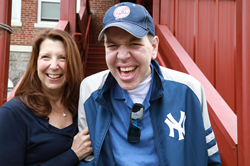
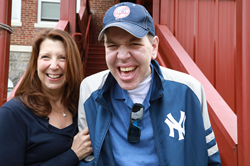
“Christopher” 2022 Rick Guidotti, Positive Exposure. All rights reserved.

“At SCDDSN, we understand that each person deserves respectful and dignified supports. We wanted to reframe our support model around that idea and encourage providers to support people with IDD without taking control of the person’s life,” says Dr. Michelle Fry, State Director of SCDDN.

Since 2019, the South Carolina Department of Disabilities and Special Needs (SCDDSN) and IntellectAbility have been working together to transform and improve services for people with intellectual and developmental disabilities (IDD). This successful partnership has positioned South Carolina as a leader in Person-Centered Thinking (PCT).

SCDDSN is the state agency tasked with planning, developing, overseeing, and funding services for South Carolinians with severe lifelong disabilities, including intellectual disability, autism, traumatic brain injury, spinal cord injury, and related conditions.

“At SCDDSN, we understand that each person deserves respectful and dignified supports. We wanted to reframe our support model around that idea and encourage providers to support people with IDD without taking control of the person’s life,” says Dr. Michelle Fry, State Director of SCDDN. “IntellectAbility was the natural choice for the type of training we wanted to offer staff. IntellectAbility’s program gives support staff the skill set to capture and easily share information learned about the person.”

SCDDSN leadership understood that person-centered thinking is an effective paradigm for providing appropriate and effective support to people with IDD. However, many support staff lack the practical skill set to apply this altruistic desire to help others; a skill set that must be uniquely crafted to support those with complex needs and significant social stigmas. In order to deliver the most effective training, SCDDSN contracted with IntellectAbility, a leader in person-centered support training, to deliver the specialized training staff would need.

According to Dr. Craig Escude, President of IntellectAbility, “knowing how to support people with IDD in a positive, person-centered way takes deliberate thought and training. IntellectAbility’s training models are designed to teach support staff how to adjust their thinking and practices to deliver services that best serve the unique needs of people with IDD.”

SCDDSN knew that a workforce that “wanted to help and do good” also needed to be supported by core foundational training on how to truly be person-centered. Using IntellectAbility’s PCT eLearn tools and a combination of in-person and Zoom training sessions, support staff engaged in a two-day training on person-centered support.

The training focused on teaching supporters eleven specific skills to develop Person-Centered Descriptions (PCD), a concise, well-organized record of essential human information about the person with IDD. The PCD is a vital tool for continuity of appropriate support because it can be easily shared among support staff so that no one loses sight of the unique characteristics of the person.

Since rolling out the program in 2020, 915 support staff have completed PCT eLearn modules, and approximately 1008 staff have completed live or virtual PCT training. Staff responded positively to the training giving it high ratings in their reviews.

SCDDSN has built upon the person-centered thinking training by adopting the use of IntellectAbility’s electronic Person-Centered Descriptions. These electronic PCDs are accessible to all staff who have contact with the person and ensure that daily support efforts and annual plans are driven by what is not only important FOR the person but also what is important TO the person. Currently, over 13,000 electronic Person-Centered Descriptions are maintained in the database and updated regularly. That number continues to grow.

Lorene Reagan, Director of Public Relations at IntellectAbility, noted, “what South Carolina is building will be a lasting foundation for providing comprehensive person-centered services for years to come. People with IDD may require SCDDSN services for longer than any particular staff member may remain with an agency. The electronic PCD records will ensure that staff turnover won’t lead to a loss of valuable information. New staff will be able to learn about the people they support immediately, with no guesswork.”

“I’m excited about these next phases of person-centered thinking training,” added Dr. Michelle Fry. “The tools IntellectAbility is giving staff are transforming supports for people with IDD in South Carolina. We are seeing professional growth among staff and quality of life improvements for the people supported. There is no question that this approach is beneficial to all.”

About IntellectAbility

IntellectAbility provides tools and training to agencies, governmental entities, and supporters of people with intellectual and developmental disabilities to foster early recognition and mitigation of health risks thereby improving health and wellness. One such tool is the Health Risk Screening Tool (HRST), of which they are the sole developer, producer, and distributor. The web-based HRST is the most widely used and validated health risk screening instrument for people with intellectual and developmental disabilities. IntellectAbility also provides numerous health-related and person-centered service trainings for supporters of people with IDD. With unrelenting focus, IntellectAbility works to fulfill its mission of improving health and quality of life for people with intellectual and developmental disabilities and other at-risk populations. For more information, visit http://www.ReplacingRisk.com


Share article on social media or email: